Family Games
Browse all Family board games in the Meeple Pulse database.
Styles
AbstractAbstract StrategyAdventureAnimalsCard GameChildren's GameCivilizationCo-operativeCompetitiveDiceEconomicEducationalEuroExpansion for Base-gameFamilyFantasyFightingHistoricalHorrorMedievalMedium HeavyMiniaturesPartyParty GamePrint & PlayPuzzle-LikeRacingReal-timeSpace ExplorationSportsStrategyTerritory BuildingThematicWargame
Themes
AbstractAdventureAncientAnimalsArtBusinessCard GameCo-operativeComic BookCooperativeCrimeEconomicEnvironmentalismExplorationFantasyFightingHistoricalHorrorHumorIntrigueLiteraryMagicMarvelMedievalModernMuseumMysteryMythologyNatureNauticalParty GamePoliticalPress Your LuckRacingSatireSci-FiSocial CommentarySocial InteractionSpaceSuperheroesThematicTravelWarWesternWord-Guessing
Mechanics
3D PlacementActingAction / DexterityAction DraftingAction Point AllowanceAction Point Allowance SystemAction Point SystemAction PointsAction ProgrammingAction QueueAction RetrievalAction SelectionAction/EventAlliancesAlternate ActivationApp-AssistedApp-DrivenArea ControlArea InfluenceArea MajorityArea Majority / InfluenceArea MovementArgumentationAsymmetricAsymmetric FactionsAsymmetric GameAsymmetric PowersAsymmetrical PowersAuction & BiddingAuction/BiddingAuctioningBag BuildingBettingBetting and BluffingBetting and WageringBetting and WagersBiddingBingoBlind BiddingBluffingCampaign / Battle Card DrivenCampaign / LegacyCampaign / Legacy GameCampaign / Mission-basedCampaign / ScenariosCampaign GameCampaign PlayCard DraftingCard DrawingCard DrivenCard Driven ActionCard Driven CombatCard Driven Dice AllocationCard Driven MovementCard ManagementCard PlayCard Play / Hand ManagementCard Play Conflict ResolutionCard SheddingCard-Driven MovementCharacter CreationCharacter ProgressionChit-Pull SystemCo-op PlayCo-operative GameCo-operative PlayCode-breakingCombat ResolutionCombo ChainCommand CardsCommodity SpeculationCommunication LimitsContract FulfillmentContractsCooperative GameCooperative GameplayCooperative PlayCooperative Trick-takingDebateDeck BuildingDeck ConstructionDeck, Bag, and Pool BuildingDeck-BuildingDeductionDexterityDice DraftingDice PlacementDice RollingDiplomatic InfluenceDraftingDynamic Battle SystemEnclosureEnd Game BonusesEngine BuildingEngine-BuildingEscape RoomEvent DrivenExplorationFarmingFlip and WriteFollowFollow ActionGrid CoverageGrid MovementHand ManagementHex-and-CounterHexagon GridHidden MovementHidden RolesI Cut You ChooseIncomeInfluence / Area MajorityLadder ClimbingLegacyLegacy ElementsLegacy GameLegacy SystemLimited CommunicationLine DrawingLine of SightMancalaMap AdditionMap MovementMarketMarket DraftingMarket ManipulationMarket MechanicMarket SpeculationMatchingMeasurement MovementMemoryMission ObjectivesModular BoardModular Board ConstructionMove Through DeckMovement PointsMovement TemplatesMulti-Use CardsMulti-use CardsMultiple ScenariosMust FollowNarrative ChoiceNarrative Choice / ParagraphNegotiationNegotiation MechanicsNetwork & Route BuildingNetwork BuildingNetwork and Route BuildingOne vs ManyOne vs. ManyOpen DraftingOwnershipPaper-and-PencilPartnershipsPattern BuildingPattern RecognitionPick-up and DeliverPlayer EliminationPlayer InteractionPlayer JudgePoint SaladPoint to Point MovementPolyominoesPush Your LuckPush-Your-LuckPuzzlePuzzle-LikePuzzle-SolvingRaceReal-TimeRecipe FulfillmentResource ManagementRole PlayingRole SelectionRoll / Spin and MoveRondelRoute BuildingRoute-BuildingRoute/Network BuildingSanity SystemScenario / Campaign PlayScenario / Mission / Campaign GameScenario / Mission FunctionSecret Unit DeploymentSemi-Cooperative GameSet CollectionSheddingSimulationSimultaneous ActionSimultaneous Action SelectionSimultaneous Hidden AllocationSocial DeductionSocial InteractionSolo / Solitaire GameSpace ExplorationStat Check / Skill CheckStat Check ResolutionStock HoldingStorytellingStrategic PlanningTableau BuildingTactical Decision-MakingTake ThatTargeted CluesTeam PlayTeam-Based GameTeam-Based GuessingTeamworkTech TreesTech Trees / Tech TracksTechnology & Armament TracksTechnology TreeTension & Aggression TracksTile DraftingTile LayingTile PlacementTime TrackTime TravelTower DefenseTrack MovementTradingTrick-takingTug of WarTurn Order: PassTurn Order: Stat-BasedUnit PlacementVariable Phase OrderVariable Player PowersVariable Set-upVariable SetupVictory Point TracksVotingWord AssociationWord GameWord GuessingWord-GuessingWord-guessingWordplayWorker Placement

RANK #13,724
"Tembo: Survival on the Savanna" invites players to embark on a cooperative journey of immense challenge and strategic depth. In this game, you don't compete against each other but work together as a unified team, guiding a majestic herd of elephants across the perilous African savanna. The ultimate goal is to navigate this vulnerable group through a series of key landmarks, ensuring they find adequate food and water, before reaching a final, safe destination. Success is a collective triumph, but failure is an ever-present threat. The herd's journey can be cut short if they are caught by the relentless lions that stalk the plains, if they run out of time as indicated by the dwindling draw deck, or if they succumb to starvation. This shared objective fosters a rich environment of communication and collaborative problem-solving, making every decision a critical one for the entire group.
The gameplay is driven by a clever and restrictive card-playing system that forms the core of its puzzle. On your turn, you will draw a card and face a simple but profound choice: use the card to expand the savanna, laying down a new piece of terrain for the herd to cross, or use it to add more elephants to your path, extending the line of your migrating herd. This seemingly straightforward decision is complicated by a significant constraint: cards often have a fixed orientation determined by each player's seating position around the table. You cannot simply rotate a piece to fit the perfect spot. This rule transforms the game from a simple tile-laying exercise into a complex spatial puzzle that demands constant discussion, foresight, and adaptive planning among all players to overcome the environmental challenges presented on the board.
The unique appeal of "Tembo" lies in this compelling fusion of accessible, family-friendly rules with a genuinely challenging cooperative puzzle. The restriction on card orientation is a masterstroke of design, forcing players to think from different perspectives and communicate their intentions clearly to forge a viable path forward. This core mechanic ensures that no two games feel exactly alike. Further enhancing its longevity, the game includes options for scaling difficulty to match the players' experience level, a thoughtfully designed solo mode for individual play, and an engaging campaign mode that weaves a longer narrative across multiple sessions. Combined with the evocative and beautiful artwork from celebrated artist Vincent Dutrait, "Tembo" promises a deeply thematic and highly replayable experience for gamers seeking a strategic and heartfelt cooperative adventure.
1-4 45m⚖️ 2.3

RANK #13,808
Skybridge
2006"Skybridge" (2006) is a tactile, three-dimensional abstract strategy game that challenges players to construct a bustling, vertical cityscape. Published by the renowned French company Gigamic, the game is celebrated for its premium, high-quality wooden components that double as architectural building blocks. In this fast-paced game of spatial planning, participants compete to score the most points by thoughtfully stacking blocks, claiming tall towers, and connecting them with bridges. As a beautiful centerpiece on the table, it seamlessly blends light city-building elements with strict placement constraints, forcing players to think critically about every move they make.
The gameplay loop centers around a shared grid where competitors take turns adding exactly one wooden piece from their personal, color-coded supply. The game includes forty-four blocks ranging from single-story and double-story cubes to connecting bridges and pointed roofs. A strict set of placement rules dictates the flow of construction: pieces of the exact same color can never physically touch each other, and blocks must typically be placed on the lowest available legal tier to ensure a gradual upward progression across the board. The most critical mechanic revolves around the roof pieces, which are used to cap and officially claim a tower. Once a player crowns a structure with their roof, nobody else can build upon it, securing points equal to the tower's overall height. This introduces a gripping dilemma of push-your-luck strategy. Do you cap a modest tower early to guarantee a safe point return, or do you risk building it higher, leaving it vulnerable to an opponent who might completely steal the structure out from under you? Additionally, players can deploy bridge components to link two separate towers of identical height, provided they belong to different colors, which yields valuable bonus points and multipliers at the end of the session.
What truly makes this game shine is its unique synthesis of accessible rules and surprising tactical depth. Despite its short playtime of just ten to twenty minutes, the tense spatial puzzle appeals heavily to both families and seasoned tabletop enthusiasts. The tactile satisfaction of manipulating chunky wooden pieces combined with the architectural beauty of the final board state provides a highly rewarding tabletop experience. Highly regarded as a beginner-friendly title, it naturally teaches foundational skills in geometry and risk assessment. Ultimately, the thrill of capping a massive tower just before an opponent can steal it, or perfectly aligning a bridge to multiply your final score, cements "Skybridge" as a timeless, visually striking abstract classic.
2-4 15m⚖️ 1.8

RANK #15,645
Step into the eerie elegance of the Hollywood Tower Hotel on a stormy night in 1939 with *Clue: The Twilight Zone – Tower of Terror*. This special Disney-themed edition of the classic mystery game transports players to a world of vintage Hollywood glamour and supernatural suspense. A famous movie star has vanished from the hotel during a violent tempest, taking a valuable movie prop with them. The objective for players is to be the first detective to solve this perplexing disappearance. By piecing together clues, you must correctly deduce the three secret elements of the crime: which of the six iconic Disney characters is the missing person, which movie prop they had, and in which room of the foreboding hotel they were last seen. This version, once sold exclusively at Walt Disney World, offers a unique narrative twist on a familiar and beloved board game framework.
The gameplay remains faithful to the time-tested mechanics of *Clue*, making it easy for both newcomers and seasoned detectives to jump right in. Players choose from a cast of Disney's most famous characters, including Mickey Mouse as the Leading Man and Goofy as the Bellhop, and move their pawns across the game board depicting various locations within the haunted hotel. Upon entering a room, a player can make a 'suggestion' by naming a character, a prop (like the Room Key or the Film Reel), and their current location. Opponents then work to disprove this theory in secret. If another player holds a card matching any of the three elements in the suggestion, they must privately reveal one of them to the active player. Through this clever process of elimination and careful note-taking, players gradually narrow down the possibilities until only one solution remains.
The primary appeal of this edition is its masterful blending of three distinct and beloved properties. It combines the strategic deduction of *Clue* with the timeless charm of Disney characters and the atmospheric storytelling of the iconic 'Tower of Terror' attraction. This creates a deeply thematic and immersive experience that resonates particularly well with fans of Disney parks and classic Hollywood lore. Its straightforward rules and low complexity make it an excellent choice for family game nights, offering a challenge that is accessible to younger players while still engaging for adults. For collectors, its status as a theme park exclusive adds a layer of rarity and desirability. It's more than just a game; it's a tangible piece of the magic and mystery that defines the Hollywood Tower Hotel, allowing players to relive a piece of that thrilling adventure in their own homes.
3-6 30m⚖️ 1.4

RANK #15,813
Keystone: North America – Second Edition invites players to step into the professional boots of a dedicated wildlife biologist, tasking them with the restoration and preservation of vibrant, interconnected ecosystems across the North American continent. The primary objective is to strategically arrange diverse species cards within a personal player grid to simulate a flourishing and stable natural habitat. Players must carefully balance the specific requirements of various flora and fauna, ensuring that their biological selections provide the necessary synergies to create a resilient environment. Whether you are competing head-to-head against a rival researcher or tackling the unique challenges of the wilderness in a solo capacity, the ultimate goal remains to generate the highest conservation score by fostering high levels of biodiversity and protecting essential keystone species.
The gameplay experience centers on a refined and engaging blend of open drafting and tile-placement mechanics. During each turn, players must select species cards from a common central market, weighing the specific habitat requirements and biological classifications of the animals they wish to introduce to their board. These cards are then placed onto a square grid, where their spatial relationship to neighboring cards becomes critical for scoring. Points are predominantly awarded based on color-coded habitat chains and numerical sequences, rewarding players who can visualize complex ecological patterns several turns in advance. The inclusion of special 'Keystone' animals provides powerful scoring bonuses but requires sophisticated planning to integrate effectively, making every placement a meaningful puzzle of tactical ecological balance.
What truly distinguishes this second edition is its impressive versatility and the depth of its thematic immersion. The game features a robust solo and cooperative narrative campaign through the 'Field Journal,' a fully illustrated adventure book that leads players through twenty unique scenarios across diverse North American climates. This edition has been specifically streamlined to provide a premium experience for one to two players while maintaining the 'brain-burning' strategic depth that enthusiasts of the original version celebrated. Featuring stunning, scientifically-inspired artwork from a talented team of illustrators, the game serves as both a challenging tactical exercise and a poignant tribute to the importance of conservation biology. Its elegant combination of beginner-friendly rules and rewarding strategic complexity makes it a definitive title for nature lovers and board game veterans alike.
1-2 45m⚖️ 2.0
BoxNo Cover Art
RANK #17,318
Tricky Twist
2025Tricky Twist is a vibrant and intellectually stimulating trick-taking card game that redefines the genre for the modern era. Released in 2025, it challenges players to navigate an ever-shifting landscape of rules and priorities where the standard hierarchy of cards is rarely static. The primary goal is to accumulate the most victory points over a series of rounds by winning specific "Twist" tricks and meeting hidden objectives that change as the deck thins. Unlike traditional trick-taking games where the highest card simply wins, Tricky Twist introduces a dynamic board element that tracks the current 'Twist Law', a mechanic that can flip the trump suit mid-hand or invert the winning conditions entirely. Players must remain agile, anticipating how their opponents might manipulate the board to render their high-value cards useless.
The gameplay loop of Tricky Twist revolves around a central "Twist Dial" that dictates the current state of play. Each round begins with a drafting phase where players select their hand from a shared pool, adding a layer of strategic foresight before the first card is even played. Notable mechanics include 'Trick-Taking' with a 'Follow Suit' requirement, but with the added complexity of 'Variable Player Powers' assigned through 'Character Roles' at the start of each round. When a player leads a card, others must follow, but certain cards allow a player to rotate the Twist Dial, changing the game's gravity—suddenly, the lowest card might win the trick, or a specific color might become 'Toxic', penalizing the winner. This 'Card Play Conflict' ensures that no two tricks feel the same, and the 'Hand Management' aspect becomes a tense exercise in risk mitigation and opportunistic scoring.
The unique appeal of Tricky Twist lies in its perfect balance between tactical depth and chaotic fun. Fans of the game praise its high replayability, driven by the unpredictable nature of the Twist Dial which ensures that "solved" strategies are impossible to maintain. It captures the social energy of a classic party game while providing the crunchy decision-making found in mid-weight strategy titles. The production value, often featuring high-quality linen-finish cards and a tactile wooden dial, adds a sensory satisfaction to the mechanical "twists." It is a game that rewards those who can read their opponents' intentions, making it a masterclass in psychological play and table talk. Ultimately, Tricky Twist is beloved because it transforms the familiar comfort of a card game into a thrilling, brain-teasing puzzle that keeps everyone on the edge of their seats until the final card is revealed.
3-5 45m⚖️ 2.6
RANK #18,974
Yotei
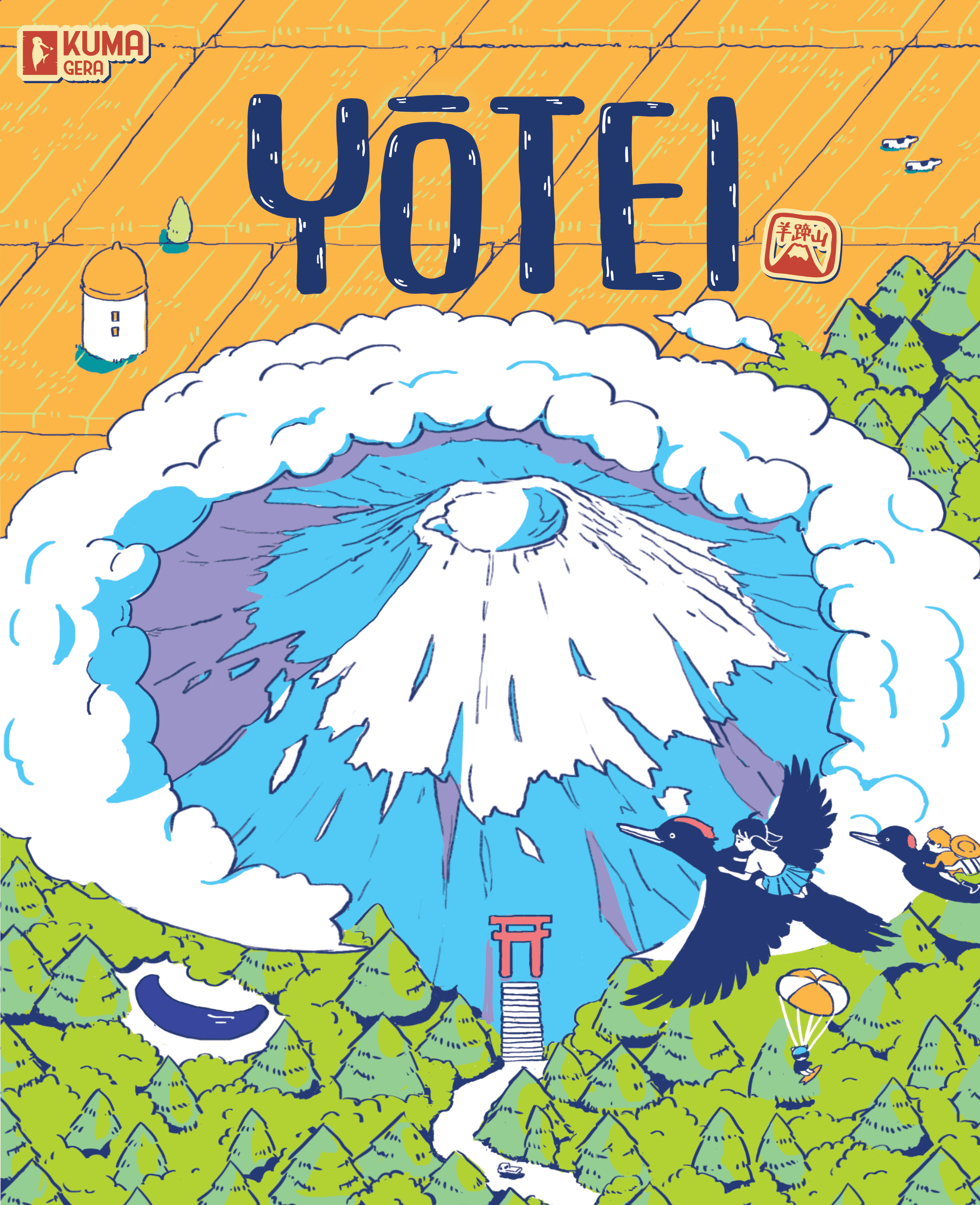
2025Set against the breathtaking backdrop of Mount Yotei in the snowy region of Hokkaido, Japan, 'Yotei' (2025) invites players to step into the roles of ambitious town developers. The primary objective is to construct the most charming, culturally rich Japanese village imaginable. Brimming with authentic local flavor, the game beautifully integrates regional staples such as steaming ramen bowls, tranquil hot springs, traditional shrines, and native wildlife. However, the true lifeblood of this picturesque community is potato farming. In a delightful thematic twist, potatoes serve as the central resource and currency, driving every aspect of your developing local economy as you strive to build the ultimate scenic destination.
At its core, 'Yotei' weaves together highly satisfying tableau and engine-building mechanics with clever worker placement. Players navigate a dynamic three-tiered central market consisting of Forests, Potatoes, and Vending Machines. By spending your hard-earned physical potato tokens, you can draft lower-tier cards that provide permanent icons and discounts, gradually establishing a robust economic engine that makes acquiring valuable higher-tier cards much easier. The action selection is driven by placing adorable, kawaii-style wooden character tokens onto specific spots. Placing a token allows you to claim a card, flip it over to utilize an alternative reward or block a rival, or draw from the unpredictable Mystery Card deck. The game also introduces a thrilling blind-bidding mechanism for highly sought-after market cards. Players secretly stash their potato bids into sealed physical boxes, creating moments of intense psychological bluffing before the big reveal during the round's Harvest Phase.
The experience shines because it perfectly balances accessible, family-friendly rules with surprising strategic depth and tactical player interaction. The inclusion of Mystery Cards injects a dash of take-that excitement, allowing players to freeze opponent's cards, force market reshuffles, or cunningly steal resources when least expected. The game races toward a climax, ending as soon as one developer manages to secure two top-tier Star cards, triggering a final tally of Charm Points represented by hearts on their completed tableau. Beyond the engaging gameplay loop, 'Yotei' is celebrated for its stunning visual presentation. Illustrator Maria Kato drew direct inspiration from real citizens, events, and landscapes of the Niseko region to create the game's captivating artwork. Furthermore, the physical production goes above and beyond by utilizing actual, sustainably sourced Hokkaido wood for its tokens, making the game a tactile joy that pays genuine homage to its beautiful real-world setting.
2-4 45m⚖️ 2.3

Hit Me!
2018Hit Me! is a vibrant and high-energy card game that immerses players in a comic book-inspired showdown where survival is the only objective. In this competitive experience, every participant begins with a personal Life deck, a small stack of face-down cards that represents their health and staying power in the battle. The ultimate goal is deceptively simple but difficult to achieve: be the final player left with cards in your Life deck after everyone else has been knocked out. The game captures the kinetic energy of a superhero skirmish or a street brawl, utilizing bold visuals and fast-paced turns to keep the table engaged from the first card draw to the final elimination.
The core of the gameplay revolves around a central Hit! deck, from which players draw and play cards to manipulate the board state and attack their rivals. Utilizing a distinct 'push your luck' mechanic, players must decide how aggressively they want to pursue their opponents. By playing Hit! cards, you can force other players to discard precious cards from their Life decks, bringing them one step closer to defeat. However, the game requires a careful balance of aggression and caution; pushing too hard can leave a player vulnerable or lead to unintended consequences. This creates a social dynamic filled with 'take that' moments, where alliances are temporary and the leader often finds themselves with a target on their back.
Fans of the game appreciate Hit Me! for its role as a perfect 'filler' game, offering a streamlined experience that is easy to teach and quick to play. Designed for groups of two to six, it thrives on social interaction and the unpredictable nature of the draw. The social aspect is heightened by the player elimination mechanic, which creates a tense atmosphere as the deck sizes dwindle. Its accessible ruleset makes it an excellent choice for family game nights or as an icebreaker for larger gatherings. With its unique comic book aesthetic and the thrill of narrowly escaping defeat, Hit Me! provides a satisfyingly punchy experience that rewards both tactical targeting and the courage to take a gamble.
2-6 30m⚖️ 1.2
Cheeky Monkeys
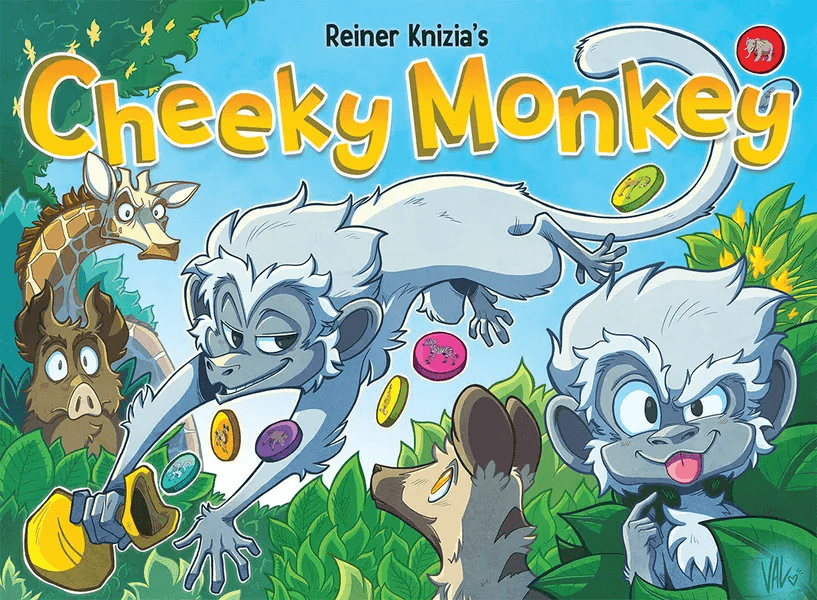
2016In Cheeky Monkeys, 2-4 players take on the role of mischievous monkeys, swinging through the jungle to collect bananas and outsmart their opponents. The goal is to be the first player to collect a set number of bananas, while navigating obstacles and stealing from others.
On each turn, players draw a card, which may allow them to move around the board, steal bananas from other players, or use special abilities to hinder their opponents. Players must strategically plan their moves to maximize their chances of winning, all while staying one step ahead of their competitors.
What makes Cheeky Monkeys unique is its blend of strategy and luck. Players need to balance the risks and rewards of each move, as well as adapt to changing circumstances on the board.
Despite its simple gameplay, Cheeky Monkeys requires a deep understanding of the game's mechanics and a keen sense of timing. As players navigate the jungle, they'll need to be clever and resourceful to emerge victorious.
2-4 30m⚖️ 2.0

Garden Club
2026Step into the tranquil yet surprisingly competitive world of 'Garden Club', a beautifully designed two-player board game where participants take on the roles of enthusiastic cultivators vying for the esteemed title of Club President. Over the course of three distinct seasons—Spring, Summer, and Fall—players must carefully curate a shared community garden while simultaneously nurturing their own personal harvests. By expertly planting a vibrant array of fruits, vegetables, and flowers, contenders strive to complete secret club objectives and cultivate the most impressive arrangements. With its welcoming nature theme and approachable rule set, it offers a cozy aesthetic masking a deeply engaging tactical puzzle that unfolds over an efficient 30 to 45 minutes of playtime.
The core gameplay loop centers around a clever combination of open drafting, tile placement, and engine building mechanics. Each turn, a player selects two double-sided tiles from four available stacks. One side features various types of produce and blooming flowers, while the reverse side displays harvest multipliers. Decisions carry significant weight, as one drafted tile must be added to the central shared garden, while the other is placed on the player's individual harvest board. During the initial Spring round, players establish a foundational four-by-four grid in the community area. However, as Summer and Fall arrive, the available actions decrease, and players must begin stacking tiles directly on top of previously planted flora. This three-dimensional layering dynamic forces constant tactical shifts, as players cover up opponents' carefully arranged patterns to score points through secret project cards and matching sets.
What truly sets 'Garden Club' apart is the brilliant tension between the shared play space and personal progression. End-of-season scoring introduces a fascinating area majority mechanic, where points for vegetable sets in the communal garden are only awarded to the player who controls the most of that specific produce type on their private harvest board. This delicate balancing act—deciding whether to improve your own multipliers or sabotage your rival's carefully laid garden plots—makes every single decision impactful. Aided by specialized tool cards like the Spade or Garden Fork, players can cleverly manipulate the grid to their advantage. Praised as highly accessible yet sneakily strategic, this lightweight duel perfectly caters to casual gaming couples and seasoned enthusiasts alike who appreciate a cutthroat spatial puzzle wrapped in a charming, botanical package.
2 45m⚖️ 2.3
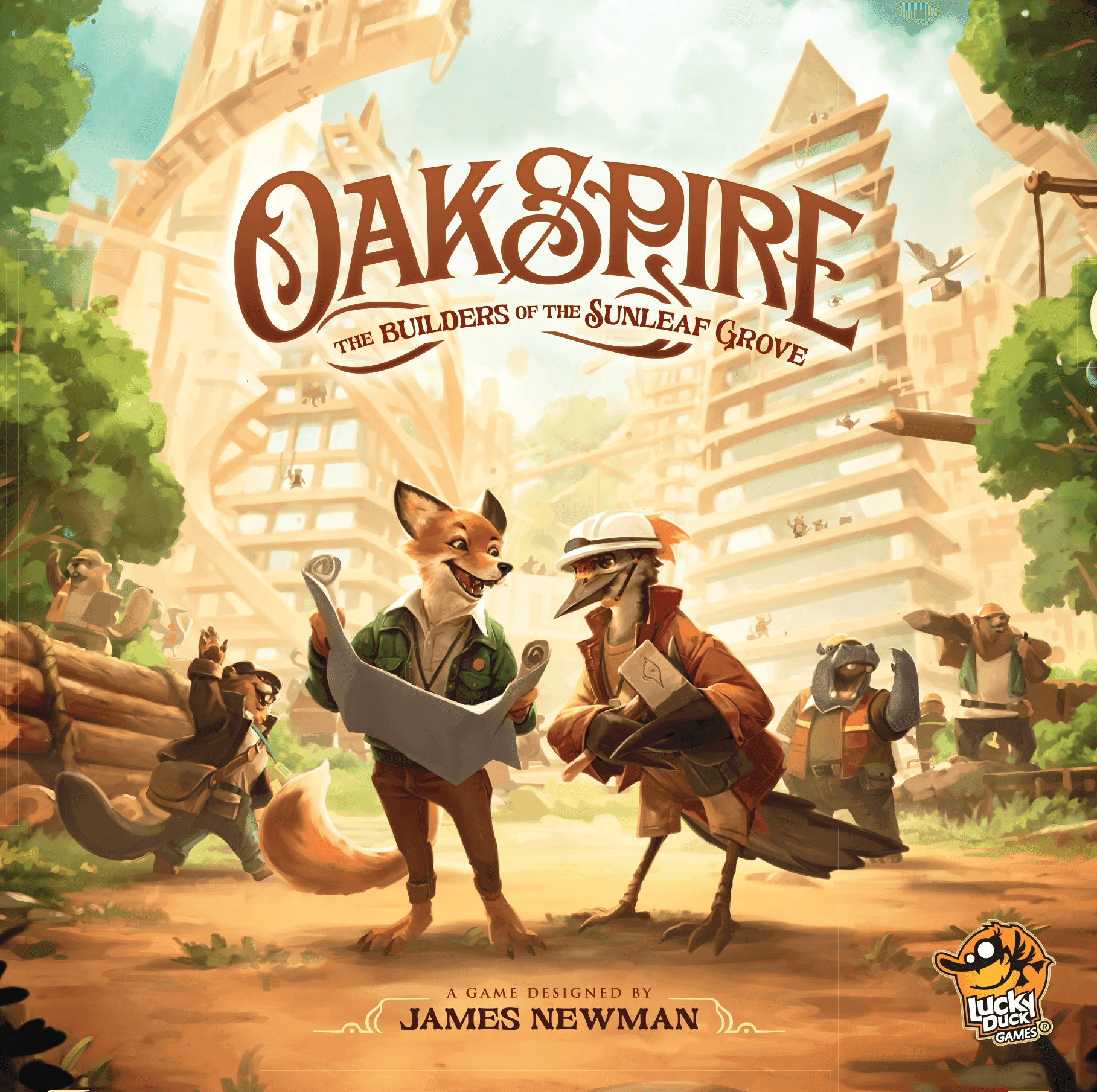
Welcome to the bustling forest metropolis of Sunleaf Grove, where ambitious anthropomorphic critters are taking charge of the local booming real estate market. In 'Oakspire: The Builders of the Sunleaf Grove', players step into the paws of charming animal architects tasked with running competing construction firms. Your primary objective in this cozy, medium-light tabletop experience is to erect magnificent, eco-friendly wooden structures that will serve the expanding woodland community. As the head of your very own building company, you must carefully manage resources, draft the perfect blueprints, and ultimately construct the most valuable architectural wonders before your rivals do, aiming to accumulate the highest number of Victory Points by the time the game concludes.
At the heart of the gameplay is a brilliantly streamlined single-resource economy centered entirely around wood. Players utilize an ingenious assembly line system on their personal player boards to process raw materials. Reclaimed wood floats down the river, gradually being refined into standard logs, then sturdy planks, and finally exquisite decorative panels. Every turn consists of taking exactly three actions, which might involve gathering materials from the market, upgrading your wood along the assembly line, or fulfilling project blueprints. A standout feature is the multi-use card system; every card can be tucked for raw materials, discarded to trigger special company upgrades, or committed to your tableau as a future blueprint. Built projects grant immediate points alongside ongoing passive benefits, end-game scoring conditions, or unique actions to fuel your engine. After the active player finishes, the rightmost market card enters the 'Community' slot, allowing off-turn players to snag a bonus action.
'Oakspire: The Builders of the Sunleaf Grove' has quickly captivated the board gaming community thanks to its beautifully serene puzzle-like flow and incredibly charming presentation. The asymmetric player powers—starting with a unique specialist card that can be leveled up for powerful abilities—add layers of replayability and strategic depth to the accessible core loop. Fans adore the satisfying progression of watching raw wood slowly transform into intricate buildings, combined with the incredibly smooth scaling of playtime, which clocks in at around twenty minutes per player. With over one hundred unique illustrations by Rio Sabda bringing the woodland realm to life, it masterfully strikes the perfect balance between approachability for families and engaging engine-building combos that strategy enthusiasts deeply appreciate.
1-5 60m⚖️ 2.3
BoxNo Cover Art
Happiness is a board game designed for 2-4 players, where the goal is to create a harmonious and fulfilling life by collecting and managing various aspects of happiness. Players take on the role of individuals seeking to achieve a balance between work, relationships, and personal growth. The game is played over several rounds, with each round representing a year in the player's life. At the end of each round, players reflect on their progress and make decisions about how to allocate their time and resources for the next year.
The game features various mechanics that allow players to collect and manage happiness tokens, which represent different aspects of well-being such as relationships, work-life balance, and personal growth. Players can also draw 'event' cards, which introduce challenges and opportunities that require them to adapt and make strategic decisions. The game includes a unique 'happiness meter', which tracks the player's overall level of happiness throughout the game.
One of the key features of Happiness is its focus on emotional intelligence and self-awareness. Players must navigate complex relationships and make difficult choices, all while maintaining a sense of balance and harmony in their lives. The game encourages players to think critically about what truly brings them happiness and to prioritize their values and goals accordingly.
Happiness has gained popularity among gamers who appreciate its unique blend of strategy and emotional intelligence. Players praise the game's engaging mechanics and its ability to spark meaningful conversations about what it means to live a happy and fulfilling life.
m⚖️ 2.5

Sagrada
2007Sagrada is a visually stunning dice-drafting game where players take on the role of artisans competing to construct the most beautiful stained-glass window for the Sagrada Família. The objective is to achieve the highest score by strategically placing colorful translucent dice onto a personal player board, which represents a window frame. Each player works with a unique pattern card that dictates specific placement requirements, ensuring that every session offers a fresh set of challenges. By balancing personal secret goals, shared public objectives, and strict construction rules, players must meticulously plan their moves to create a masterpiece that captures the essence of light and color.
The core of the game revolves around a drafting mechanic where a pool of colored dice is rolled each round. Players take turns selecting a single die and positioning it on their 4x5 grid, following a "snake draft" order where the last player picks twice in a row. Placement is governed by strict adjacency rules: dice cannot be placed next to others of the same color or value (orthogonally). Furthermore, the pattern cards inserted into the player boards often feature specific restrictions, requiring certain spaces to be filled with exact colors or shades. To navigate these constraints, players can spend favor tokens to utilize special Tool cards, which provide powerful abilities like moving already-placed dice, re-rolling, or ignoring certain placement rules. This interplay between the luck of the roll and the tactical use of tools creates a satisfying, low-stress puzzle-solving experience.
Sagrada is widely beloved for its accessibility and its breathtaking table presence. The high-quality components, particularly the vibrant, jewel-like dice, mimic the look of real stained glass when they catch the light, making it a favorite for both casual and serious gamers. Beyond its aesthetics, the game offers a deep tactical experience that rewards foresight and adaptability. Because the available tools and scoring objectives change every game, the replayability is exceptionally high. It manages to feel like a relaxing, meditative activity while simultaneously challenging the brain with its spatial constraints and optimization puzzles, firmly establishing itself as a modern classic in the abstract strategy genre.
1-4 45m⚖️ 2.3