Modern Games
Browse all Modern board games in the Meeple Pulse database.
Styles
Themes
AbstractAdventureAncientAnimalsArtBusinessCard GameCo-operativeComic BookCooperativeCrimeEconomicEnvironmentalismExplorationFantasyHistoricalHorrorHumorIntrigueLiteraryMagicMarvelMedievalModernMuseumMysteryMythologyNatureNauticalPoliticalPress Your LuckSatireSci-FiSocial CommentarySocial InteractionSpaceSuperheroesThematicTravelWarWesternWord-Guessing
Mechanics
3D PlacementActingAction / DexterityAction DraftingAction Point AllowanceAction Point Allowance SystemAction Point SystemAction PointsAction ProgrammingAction QueueAction RetrievalAction SelectionAction/EventAlliancesAlternate ActivationApp-AssistedApp-DrivenArea ControlArea InfluenceArea MajorityArea Majority / InfluenceArea MovementArgumentationAsymmetricAsymmetric FactionsAsymmetric GameAsymmetric PowersAsymmetrical PowersAuction & BiddingAuction/BiddingAuctioningBag BuildingBettingBetting and BluffingBetting and WageringBetting and WagersBiddingBingoBlind BiddingBluffingCampaign / Battle Card DrivenCampaign / LegacyCampaign / Legacy GameCampaign / Mission-basedCampaign / ScenariosCampaign GameCampaign PlayCard DraftingCard DrawingCard DrivenCard Driven ActionCard Driven CombatCard Driven Dice AllocationCard Driven MovementCard ManagementCard PlayCard Play / Hand ManagementCard Play Conflict ResolutionCard SheddingCard-Driven MovementCharacter CreationCharacter ProgressionChit-Pull SystemCo-op PlayCo-operative GameCo-operative PlayCode-breakingCombat ResolutionCombo ChainCommand CardsCommodity SpeculationCommunication LimitsContract FulfillmentContractsCooperative GameCooperative GameplayCooperative PlayCooperative Trick-takingDebateDeck BuildingDeck ConstructionDeck, Bag, and Pool BuildingDeck-BuildingDeductionDexterityDice DraftingDice PlacementDice RollingDiplomatic InfluenceDraftingDynamic Battle SystemEnclosureEnd Game BonusesEngine BuildingEngine-BuildingEscape RoomEvent DrivenExplorationFarmingFlip and WriteFollowFollow ActionGrid CoverageGrid MovementHand ManagementHex-and-CounterHexagon GridHidden MovementHidden RolesI Cut You ChooseIncomeInfluence / Area MajorityLadder ClimbingLegacyLegacy ElementsLegacy GameLegacy SystemLimited CommunicationLine DrawingLine of SightMancalaMap MovementMarketMarket DraftingMarket ManipulationMarket MechanicMarket SpeculationMatchingMeasurement MovementMemoryMission ObjectivesModular BoardModular Board ConstructionMove Through DeckMovement TemplatesMulti-Use CardsMulti-use CardsMultiple ScenariosMust FollowNarrative ChoiceNarrative Choice / ParagraphNegotiationNegotiation MechanicsNetwork & Route BuildingNetwork BuildingNetwork and Route BuildingOne vs ManyOne vs. ManyOpen DraftingPaper-and-PencilPartnershipsPattern BuildingPattern RecognitionPick-up and DeliverPlayer EliminationPlayer InteractionPlayer JudgePoint SaladPoint to Point MovementPolyominoesPush Your LuckPush-Your-LuckPuzzlePuzzle-LikePuzzle-SolvingRaceReal-TimeRecipe FulfillmentResource ManagementRole PlayingRole SelectionRoll / Spin and MoveRondelRoute BuildingRoute-BuildingRoute/Network BuildingSanity SystemScenario / Campaign PlayScenario / Mission / Campaign GameScenario / Mission FunctionSecret Unit DeploymentSemi-Cooperative GameSet CollectionSheddingSimulationSimultaneous ActionSimultaneous Action SelectionSimultaneous Hidden AllocationSocial DeductionSocial InteractionSolo / Solitaire GameSpace ExplorationStat Check / Skill CheckStock HoldingStorytellingStrategic PlanningTableau BuildingTactical Decision-MakingTake ThatTargeted CluesTeam PlayTeam-Based GameTeam-Based GuessingTeamworkTech TreesTech Trees / Tech TracksTechnology & Armament TracksTechnology TreeTension & Aggression TracksTile DraftingTile LayingTile PlacementTime TrackTime TravelTower DefenseTrack MovementTradingTrick-takingTug of WarTurn Order: PassTurn Order: Stat-BasedUnit PlacementVariable Phase OrderVariable Player PowersVariable Set-upVariable SetupVictory Point TracksVotingWord AssociationWord GameWord GuessingWord-GuessingWord-guessingWordplayWorker Placement

RANK #13,808
Skybridge
2006"Skybridge" (2006) is a tactile, three-dimensional abstract strategy game that challenges players to construct a bustling, vertical cityscape. Published by the renowned French company Gigamic, the game is celebrated for its premium, high-quality wooden components that double as architectural building blocks. In this fast-paced game of spatial planning, participants compete to score the most points by thoughtfully stacking blocks, claiming tall towers, and connecting them with bridges. As a beautiful centerpiece on the table, it seamlessly blends light city-building elements with strict placement constraints, forcing players to think critically about every move they make.
The gameplay loop centers around a shared grid where competitors take turns adding exactly one wooden piece from their personal, color-coded supply. The game includes forty-four blocks ranging from single-story and double-story cubes to connecting bridges and pointed roofs. A strict set of placement rules dictates the flow of construction: pieces of the exact same color can never physically touch each other, and blocks must typically be placed on the lowest available legal tier to ensure a gradual upward progression across the board. The most critical mechanic revolves around the roof pieces, which are used to cap and officially claim a tower. Once a player crowns a structure with their roof, nobody else can build upon it, securing points equal to the tower's overall height. This introduces a gripping dilemma of push-your-luck strategy. Do you cap a modest tower early to guarantee a safe point return, or do you risk building it higher, leaving it vulnerable to an opponent who might completely steal the structure out from under you? Additionally, players can deploy bridge components to link two separate towers of identical height, provided they belong to different colors, which yields valuable bonus points and multipliers at the end of the session.
What truly makes this game shine is its unique synthesis of accessible rules and surprising tactical depth. Despite its short playtime of just ten to twenty minutes, the tense spatial puzzle appeals heavily to both families and seasoned tabletop enthusiasts. The tactile satisfaction of manipulating chunky wooden pieces combined with the architectural beauty of the final board state provides a highly rewarding tabletop experience. Highly regarded as a beginner-friendly title, it naturally teaches foundational skills in geometry and risk assessment. Ultimately, the thrill of capping a massive tower just before an opponent can steal it, or perfectly aligning a bridge to multiply your final score, cements "Skybridge" as a timeless, visually striking abstract classic.
2-4 15m⚖️ 1.8

RANK #15,645
Step into the eerie elegance of the Hollywood Tower Hotel on a stormy night in 1939 with *Clue: The Twilight Zone – Tower of Terror*. This special Disney-themed edition of the classic mystery game transports players to a world of vintage Hollywood glamour and supernatural suspense. A famous movie star has vanished from the hotel during a violent tempest, taking a valuable movie prop with them. The objective for players is to be the first detective to solve this perplexing disappearance. By piecing together clues, you must correctly deduce the three secret elements of the crime: which of the six iconic Disney characters is the missing person, which movie prop they had, and in which room of the foreboding hotel they were last seen. This version, once sold exclusively at Walt Disney World, offers a unique narrative twist on a familiar and beloved board game framework.
The gameplay remains faithful to the time-tested mechanics of *Clue*, making it easy for both newcomers and seasoned detectives to jump right in. Players choose from a cast of Disney's most famous characters, including Mickey Mouse as the Leading Man and Goofy as the Bellhop, and move their pawns across the game board depicting various locations within the haunted hotel. Upon entering a room, a player can make a 'suggestion' by naming a character, a prop (like the Room Key or the Film Reel), and their current location. Opponents then work to disprove this theory in secret. If another player holds a card matching any of the three elements in the suggestion, they must privately reveal one of them to the active player. Through this clever process of elimination and careful note-taking, players gradually narrow down the possibilities until only one solution remains.
The primary appeal of this edition is its masterful blending of three distinct and beloved properties. It combines the strategic deduction of *Clue* with the timeless charm of Disney characters and the atmospheric storytelling of the iconic 'Tower of Terror' attraction. This creates a deeply thematic and immersive experience that resonates particularly well with fans of Disney parks and classic Hollywood lore. Its straightforward rules and low complexity make it an excellent choice for family game nights, offering a challenge that is accessible to younger players while still engaging for adults. For collectors, its status as a theme park exclusive adds a layer of rarity and desirability. It's more than just a game; it's a tangible piece of the magic and mystery that defines the Hollywood Tower Hotel, allowing players to relive a piece of that thrilling adventure in their own homes.
3-6 30m⚖️ 1.4

RANK #15,861
"The Ghost in the Attic" offers an award-winning, immersive experience that masterfully blends the thrill of an escape room with the tactile satisfaction of a high-quality board game. Presented as a mysterious, haunted board game from the 1950s, this intricate puzzle box invites players to step into the role of investigators. The primary objective is not simply to win a game, but to unravel a compelling central mystery. To even begin this journey, players are confronted with a physically chained and padlocked box, the first of many challenges. Success is measured by the ability to piece together clues, solve a series of interconnected puzzles, and ultimately unlock the secrets that have been sealed away for decades, bringing the haunting narrative to its conclusion.
Gameplay is a dynamic fusion of physical object manipulation and digital sleuthing. The experience begins before the box is even open, as players must first deduce the combination to the padlock shackling it shut. Once inside, they discover over two dozen beautifully crafted pieces of evidence that demand careful examination. These components are not mere props; they are integral to the puzzles themselves, and include a fully playable 'haunted' board game that forms a core part of the investigation. The journey requires more than just what's in the box, however. Players must use their wits to discover hidden websites and online resources, which hold crucial information needed to progress. For those who find themselves stumped by a particularly devious puzzle, a tiered online hint system is available to provide a gentle nudge or a clear solution, ensuring the story always moves forward.
What sets "The Ghost in the Attic" apart is its exceptional production quality and the strength of its narrative, crafted by Olivier award-winner Henry Lewis. The tangible, high-quality components create a profound sense of immersion, making players feel like genuine detectives handling real evidence. The puzzles are designed to be genuinely challenging, with one reviewer describing the initial lock as 'frustratingly fiendish,' which provides a deep sense of accomplishment upon solving. This game is perfect for dedicated puzzle enthusiasts and those who appreciate a well-told story. One of its most celebrated features is its reset-and-replay design; once the mystery is solved, the entire experience can be perfectly repacked, allowing it to be shared with friends and family, extending its life and value far beyond a single playthrough.
1-6 90m⚖️ 2.6
BoxNo Cover Art
RANK #17,318
Tricky Twist
2025Tricky Twist is a vibrant and intellectually stimulating trick-taking card game that redefines the genre for the modern era. Released in 2025, it challenges players to navigate an ever-shifting landscape of rules and priorities where the standard hierarchy of cards is rarely static. The primary goal is to accumulate the most victory points over a series of rounds by winning specific "Twist" tricks and meeting hidden objectives that change as the deck thins. Unlike traditional trick-taking games where the highest card simply wins, Tricky Twist introduces a dynamic board element that tracks the current 'Twist Law', a mechanic that can flip the trump suit mid-hand or invert the winning conditions entirely. Players must remain agile, anticipating how their opponents might manipulate the board to render their high-value cards useless.
The gameplay loop of Tricky Twist revolves around a central "Twist Dial" that dictates the current state of play. Each round begins with a drafting phase where players select their hand from a shared pool, adding a layer of strategic foresight before the first card is even played. Notable mechanics include 'Trick-Taking' with a 'Follow Suit' requirement, but with the added complexity of 'Variable Player Powers' assigned through 'Character Roles' at the start of each round. When a player leads a card, others must follow, but certain cards allow a player to rotate the Twist Dial, changing the game's gravity—suddenly, the lowest card might win the trick, or a specific color might become 'Toxic', penalizing the winner. This 'Card Play Conflict' ensures that no two tricks feel the same, and the 'Hand Management' aspect becomes a tense exercise in risk mitigation and opportunistic scoring.
The unique appeal of Tricky Twist lies in its perfect balance between tactical depth and chaotic fun. Fans of the game praise its high replayability, driven by the unpredictable nature of the Twist Dial which ensures that "solved" strategies are impossible to maintain. It captures the social energy of a classic party game while providing the crunchy decision-making found in mid-weight strategy titles. The production value, often featuring high-quality linen-finish cards and a tactile wooden dial, adds a sensory satisfaction to the mechanical "twists." It is a game that rewards those who can read their opponents' intentions, making it a masterclass in psychological play and table talk. Ultimately, Tricky Twist is beloved because it transforms the familiar comfort of a card game into a thrilling, brain-teasing puzzle that keeps everyone on the edge of their seats until the final card is revealed.
3-5 45m⚖️ 2.6

RANK #18,974
Yotei
2025Set against the breathtaking backdrop of Mount Yotei in the snowy region of Hokkaido, Japan, 'Yotei' (2025) invites players to step into the roles of ambitious town developers. The primary objective is to construct the most charming, culturally rich Japanese village imaginable. Brimming with authentic local flavor, the game beautifully integrates regional staples such as steaming ramen bowls, tranquil hot springs, traditional shrines, and native wildlife. However, the true lifeblood of this picturesque community is potato farming. In a delightful thematic twist, potatoes serve as the central resource and currency, driving every aspect of your developing local economy as you strive to build the ultimate scenic destination.
At its core, 'Yotei' weaves together highly satisfying tableau and engine-building mechanics with clever worker placement. Players navigate a dynamic three-tiered central market consisting of Forests, Potatoes, and Vending Machines. By spending your hard-earned physical potato tokens, you can draft lower-tier cards that provide permanent icons and discounts, gradually establishing a robust economic engine that makes acquiring valuable higher-tier cards much easier. The action selection is driven by placing adorable, kawaii-style wooden character tokens onto specific spots. Placing a token allows you to claim a card, flip it over to utilize an alternative reward or block a rival, or draw from the unpredictable Mystery Card deck. The game also introduces a thrilling blind-bidding mechanism for highly sought-after market cards. Players secretly stash their potato bids into sealed physical boxes, creating moments of intense psychological bluffing before the big reveal during the round's Harvest Phase.
The experience shines because it perfectly balances accessible, family-friendly rules with surprising strategic depth and tactical player interaction. The inclusion of Mystery Cards injects a dash of take-that excitement, allowing players to freeze opponent's cards, force market reshuffles, or cunningly steal resources when least expected. The game races toward a climax, ending as soon as one developer manages to secure two top-tier Star cards, triggering a final tally of Charm Points represented by hearts on their completed tableau. Beyond the engaging gameplay loop, 'Yotei' is celebrated for its stunning visual presentation. Illustrator Maria Kato drew direct inspiration from real citizens, events, and landscapes of the Niseko region to create the game's captivating artwork. Furthermore, the physical production goes above and beyond by utilizing actual, sustainably sourced Hokkaido wood for its tokens, making the game a tactile joy that pays genuine homage to its beautiful real-world setting.
2-4 45m⚖️ 2.3
BoxNo Cover Art
The Digital Safety Game is an interactive board game designed to educate players about online safety and digital citizenship. The game's primary goal is to teach players how to navigate the complexities of the internet, avoid potential dangers, and develop healthy online habits. Players take on the roles of digital citizens, tasked with completing various missions and challenges that simulate real-world online scenarios.
Gameplay involves rolling dice to determine movement and action points, which can be used to complete tasks, interact with other players, or access resources. The game board features a modular design, allowing for different scenarios and challenges to be created each time the game is played. Players must work together to overcome obstacles and achieve their objectives, promoting teamwork and collaboration.
One of the unique aspects of the Digital Safety Game is its focus on real-world issues and concerns. Players are introduced to topics such as cyberbullying, online harassment, and data protection, providing a comprehensive understanding of digital safety concepts. The game's mechanics are designed to be engaging and accessible, making it an excellent tool for educators and parents looking to teach children about online responsibility.
The Digital Safety Game has gained popularity among players due to its interactive and immersive gameplay. Players appreciate the opportunity to engage with real-world issues in a fun and educational way. The game's unique blend of strategy and social interaction makes it an appealing choice for families, classrooms, and community groups.
m⚖️ 2.0

Ready Set Bet: Let It Ride is an expansion that supercharges the already thrilling, real-time experience of its parent game, Ready Set Bet. It doesn't alter the fundamental goal: to walk away from the track with the most money after four frenetic horse races. Instead, it enriches the experience by throwing open the betting windows with a host of new wagers, strategic wrinkles, and game-changing powers. Players still find themselves in a chaotic flurry of placing bets as a caller (or an app) rolls dice to move the horses down the track. This expansion, however, ensures that the path to riches is far more varied and unpredictable, demanding more from veteran players while retaining the infectious energy that makes the original game a party favorite. It’s for anyone who felt the thrill of a photo finish and thought, 'I wish there were even more ways I could have bet on that.'
The heart of the Let It Ride expansion lies in its significant additions to the betting system. The core gameplay loop of placing tokens during a real-time race remains, but the decision space is vastly expanded. Players can now place highly specific "Exacta" bets, predicting the first and second-place finishers in precise order for a massive payout. For those who enjoy schadenfreude, a new "Last Place" bet allows you to profit from failure. New betting tokens also debut, such as "Box" chips for covering the top two horses in any order and "Baa" tokens that cleverly hedge a bet across two adjacent horses. Perhaps the most significant addition is a deck of 14 new VIP cards, which grant each player a unique special ability for the game. These powers can be dramatic, allowing a player to move an ill-fated bet mid-race or even trigger a one-time, game-altering power to completely restart a race just as it concludes.
The unique appeal of Let It Ride is how seamlessly it layers more strategic depth onto a light and accessible party game. It amplifies the excitement and player interaction without sacrificing the speed and simplicity that defined the original. The new wager types provide more avenues for clever risk assessment, while the asymmetric VIP powers give players a distinct identity and a reason to try different strategies each game. This added variety creates incredible replayability, as the combination of powers and available bets changes every session. The expansion is a perfect next step for groups who love Ready Set Bet and are ready to raise the stakes. It introduces just enough new rules to make the experience feel fresh and challenging again, ensuring that the shouts and groans around the table are louder and more frequent than ever before.
2-9 60m⚖️ 1.8
BoxNo Cover Art
Happiness is a board game designed for 2-4 players, where the goal is to create a harmonious and fulfilling life by collecting and managing various aspects of happiness. Players take on the role of individuals seeking to achieve a balance between work, relationships, and personal growth. The game is played over several rounds, with each round representing a year in the player's life. At the end of each round, players reflect on their progress and make decisions about how to allocate their time and resources for the next year.
The game features various mechanics that allow players to collect and manage happiness tokens, which represent different aspects of well-being such as relationships, work-life balance, and personal growth. Players can also draw 'event' cards, which introduce challenges and opportunities that require them to adapt and make strategic decisions. The game includes a unique 'happiness meter', which tracks the player's overall level of happiness throughout the game.
One of the key features of Happiness is its focus on emotional intelligence and self-awareness. Players must navigate complex relationships and make difficult choices, all while maintaining a sense of balance and harmony in their lives. The game encourages players to think critically about what truly brings them happiness and to prioritize their values and goals accordingly.
Happiness has gained popularity among gamers who appreciate its unique blend of strategy and emotional intelligence. Players praise the game's engaging mechanics and its ability to spark meaningful conversations about what it means to live a happy and fulfilling life.
m⚖️ 2.5
BoxNo Cover Art
Marvel: Crisis Protocol Alliances – Night of the Goblin is a standalone, fully cooperative board game that plunges one to four players into the vibrant world of Marvel's web-slingers. Published by Atomic Mass Games, this title marks the beginning of the new "Alliances" series, offering a distinct experience from the competitive skirmishes of the original "Marvel: Crisis Protocol." Players assemble a team from a roster of iconic heroes—Spectacular Spider-Man, Ultimate Spider-Man, Ghost Spider, and Black Cat—to directly confront the nefarious Green Goblin. The ultimate goal is to work together to overcome a series of narrative scenarios, known as Stages, thwarting the villain's escalating schemes and saving the city from his army of minions, including War Goblins and Spider Slayers. This game offers a story-driven campaign where success hinges on teamwork and tactical coordination.
The gameplay unfolds as a fast-paced, tactical "beat-em-up" on a hex-grid map. Each round is split into two phases. During the hero phase, players take turns activating their characters, spending energy to move across the board, attack enemies, and complete stage-specific objectives. Following the heroes, the enemy phase begins. The Green Goblin and his minions are controlled by an automated system, with their actions dictated by individual rules cards, ensuring a dynamic and unpredictable challenge. New enemies will spawn, existing ones will move and attack, creating constant pressure that players must manage. A central mechanic is the robust character progression system. By defeating foes and achieving objectives, heroes earn experience points, which are spent on "Level Up" cards to unlock powerful new abilities, allowing for significant customization throughout the campaign.
The unique appeal of "Night of the Goblin" lies in its accessible yet strategic cooperative gameplay, making it an ideal entry point for newcomers while retaining enough familiar mechanics—like its dice and iconography—to satisfy veterans of "Marvel: Crisis Protocol." The shift to a purely cooperative, story-focused campaign provides a fresh perspective on the universe. Furthermore, the game is designed with hobbyists in mind, featuring highly detailed, "push-fit" miniatures that assemble without glue using the new F.A.S.T. (Fusion Assembly System). A major draw for the wider community is its forward-looking design; it's the first in a line of cross-compatible "Alliances" games, with future installments promising team-ups with the X-Men and Avengers. This not only ensures high replayability but also builds a larger, interconnected cooperative gaming ecosystem.
1-4 120m⚖️ 2.8

Sagrada
2007Sagrada is a visually stunning dice-drafting game where players take on the role of artisans competing to construct the most beautiful stained-glass window for the Sagrada Família. The objective is to achieve the highest score by strategically placing colorful translucent dice onto a personal player board, which represents a window frame. Each player works with a unique pattern card that dictates specific placement requirements, ensuring that every session offers a fresh set of challenges. By balancing personal secret goals, shared public objectives, and strict construction rules, players must meticulously plan their moves to create a masterpiece that captures the essence of light and color.
The core of the game revolves around a drafting mechanic where a pool of colored dice is rolled each round. Players take turns selecting a single die and positioning it on their 4x5 grid, following a "snake draft" order where the last player picks twice in a row. Placement is governed by strict adjacency rules: dice cannot be placed next to others of the same color or value (orthogonally). Furthermore, the pattern cards inserted into the player boards often feature specific restrictions, requiring certain spaces to be filled with exact colors or shades. To navigate these constraints, players can spend favor tokens to utilize special Tool cards, which provide powerful abilities like moving already-placed dice, re-rolling, or ignoring certain placement rules. This interplay between the luck of the roll and the tactical use of tools creates a satisfying, low-stress puzzle-solving experience.
Sagrada is widely beloved for its accessibility and its breathtaking table presence. The high-quality components, particularly the vibrant, jewel-like dice, mimic the look of real stained glass when they catch the light, making it a favorite for both casual and serious gamers. Beyond its aesthetics, the game offers a deep tactical experience that rewards foresight and adaptability. Because the available tools and scoring objectives change every game, the replayability is exceptionally high. It manages to feel like a relaxing, meditative activity while simultaneously challenging the brain with its spatial constraints and optimization puzzles, firmly establishing itself as a modern classic in the abstract strategy genre.
1-4 45m⚖️ 2.3
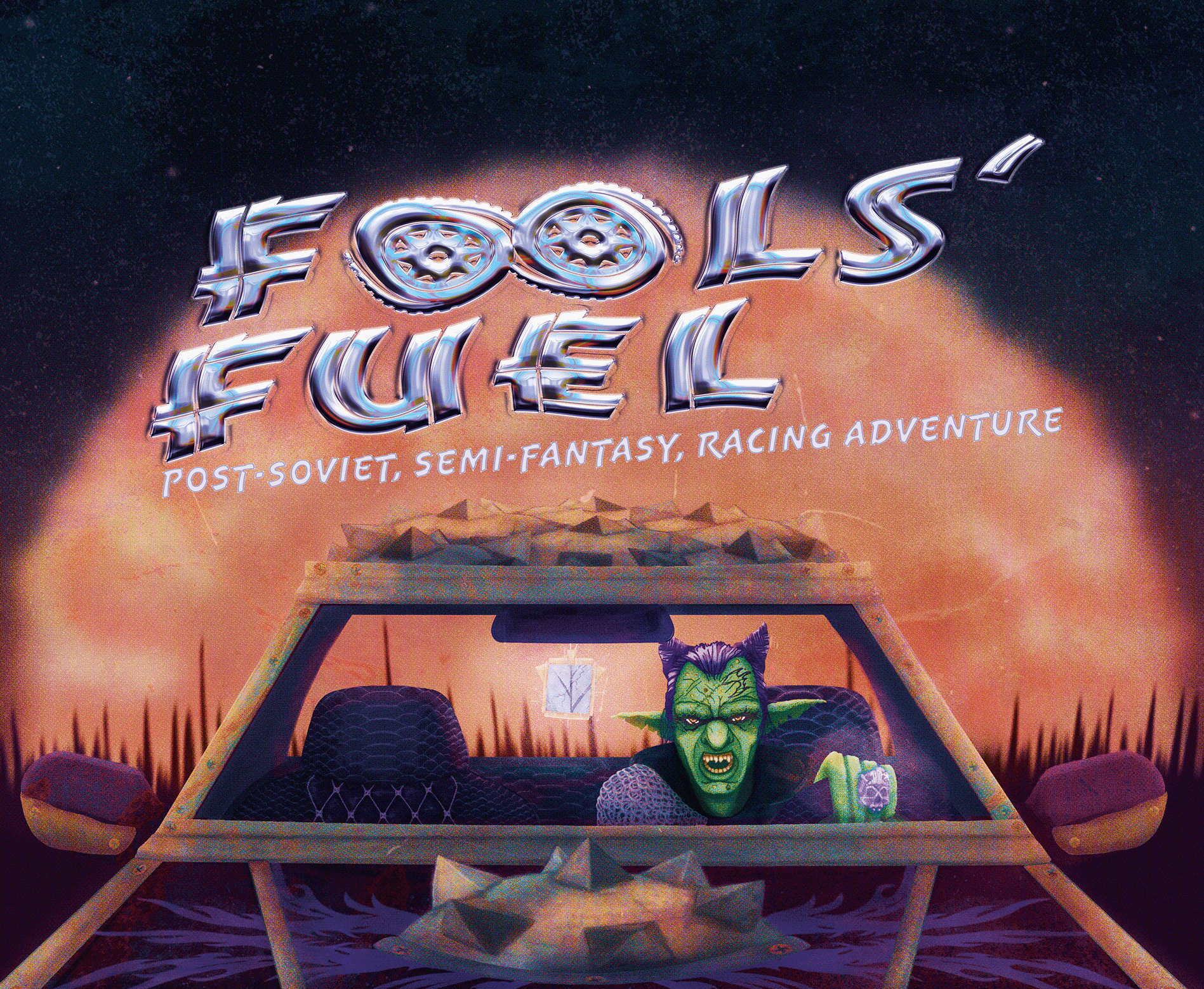
Fools' Fuel
2025Dive into the chaotic, magic-fueled streets of a post-Soviet urban fantasy world with Fools' Fuel, a vehicular skirmish miniatures game. Set in the unique "Slav Borg" universe, this title casts players as daring drivers in high-stakes, objective-based races where victory is about more than just being the fastest. Players must outmaneuver, outwit, and outgun their rivals on a dynamic battlefield, completing specific goals to claim supremacy. The game was envisioned as a complete experience, offering deep lore and a distinct thematic setting that blends gritty, futuristic vehicle combat with powerful and unpredictable magical abilities. It's a contest of speed, strategy, and survival in a world where fantastical power meets industrial decay.
The core of the gameplay revolves around a strategic dice pool management system. Each turn, players allocate dice to perform a variety of actions, from accelerating down a straightaway to activating potent vehicle upgrades. Movement is a critical phase, governed by a vehicle's "Speed" value. Players spend these points to move, make tight 90-degree turns, or even reverse out of trouble. Pushing your vehicle to its limits introduces a thrilling risk-reward element; consecutive forward movements or turns can result in 'Burn' or 'Drift' tokens. Accumulate too many, and you'll face a 'Drive Test' at the end of your turn. Failure means a catastrophic loss of control, adding a palpable layer of tension to every decision and creating cinematic moments of vehicular chaos.
What makes Fools' Fuel stand out is its deep customization and the seamless integration of its bizarre theme into the mechanics. The game promised extensive options for vehicle upgrades, allowing players to build a machine perfectly suited to their preferred playstyle, whether it be a heavily armored brawler or a nimble speedster. The magic-infused setting isn't just window dressing; it introduces game-changing abilities like teleportation and flight, completely altering tactical possibilities. This fusion of familiar vehicular combat with extraordinary powers creates a truly unique tabletop experience. Designed to be accessible to hobbyists of all kinds, the project planned for both high-quality physical miniatures and 3D-printable STL files, inviting players to fully immerse themselves in its vibrant and dangerous world.
1-4 60m⚖️ 2.4

Conflict of Heroes: Awakening the Bear – Firefight Generator is an expansion that fundamentally transforms its base game from a collection of historical scenarios into a dynamic battle-creation system. Instead of playing through a pre-designed mission, players become the architects of their own tactical engagements on the Eastern Front. The primary goal is to use a unique card-driven pre-game system to collaboratively but competitively establish the forces, objectives, and battlefield conditions for a unique firefight, ensuring that no two sessions are ever alike and adding boundless replay value to the core experience.
The gameplay loop begins before the first shot is fired, in a strategic 'meta-game' that takes less than ten minutes. Representing either the German or Soviet forces, players draw from their respective decks of Generator Cards. On their turn, a player chooses one card from their hand and decides to resolve one of its two distinct options. The top option typically introduces a special rule, a battlefield condition like fog or snow, or a unique event. The bottom option, conversely, allows the player to add specific military units—from infantry squads to powerful tanks—to their available forces. This turn-based card play continues until the scenario is fully built, defining everything from troop composition and victory point objectives to the very weather the battle will be fought in.
The unique appeal of the Firefight Generator lies in the deep layer of strategy and bluffing it introduces before the tactical combat even commences. This pre-game phase is a battle of wits, where players must anticipate their opponent's strategy and make difficult choices. Committing to a powerful armored unit might be tempting, but an opponent can immediately counter by playing a card that adds anti-tank guns to their force or introduces terrain that hinders vehicle movement. This creates a compelling and tense setup that tailors every battle to the players' choices. Its full integration with the Eastern Front Solo Expansion also allows a single player to generate an endless variety of custom missions, making it an essential addition for both competitive and solo wargamers.
1-4 120m⚖️ 3.7