Family Games
Browse all Family board games in the Meeple Pulse database.
Styles
Themes
AbstractAdventureAncientAnimalsArtBusinessCard GameCo-operativeComic BookCooperativeCrimeEconomicEnvironmentalismExplorationFantasyHistoricalHorrorHumorIntrigueLiteraryMagicMarvelMedievalModernMuseumMysteryMythologyNatureNauticalPoliticalPress Your LuckSatireSci-FiSocial CommentarySocial InteractionSpaceSuperheroesThematicTravelWarWesternWord-Guessing
Mechanics
3D PlacementActingAction / DexterityAction DraftingAction Point AllowanceAction Point Allowance SystemAction Point SystemAction PointsAction ProgrammingAction QueueAction RetrievalAction SelectionAction/EventAlliancesAlternate ActivationApp-AssistedApp-DrivenArea ControlArea InfluenceArea MajorityArea Majority / InfluenceArea MovementArgumentationAsymmetricAsymmetric FactionsAsymmetric GameAsymmetric PowersAsymmetrical PowersAuction & BiddingAuction/BiddingAuctioningBag BuildingBettingBetting and BluffingBetting and WageringBetting and WagersBiddingBingoBlind BiddingBluffingCampaign / Battle Card DrivenCampaign / LegacyCampaign / Legacy GameCampaign / Mission-basedCampaign / ScenariosCampaign GameCampaign PlayCard DraftingCard DrawingCard DrivenCard Driven ActionCard Driven CombatCard Driven Dice AllocationCard Driven MovementCard ManagementCard PlayCard Play / Hand ManagementCard Play Conflict ResolutionCard SheddingCard-Driven MovementCharacter CreationCharacter ProgressionChit-Pull SystemCo-op PlayCo-operative GameCo-operative PlayCode-breakingCombat ResolutionCombo ChainCommand CardsCommodity SpeculationCommunication LimitsContract FulfillmentContractsCooperative GameCooperative GameplayCooperative PlayCooperative Trick-takingDebateDeck BuildingDeck ConstructionDeck, Bag, and Pool BuildingDeck-BuildingDeductionDexterityDice DraftingDice PlacementDice RollingDiplomatic InfluenceDraftingDynamic Battle SystemEnclosureEnd Game BonusesEngine BuildingEngine-BuildingEscape RoomEvent DrivenExplorationFarmingFlip and WriteFollowFollow ActionGrid CoverageGrid MovementHand ManagementHex-and-CounterHexagon GridHidden MovementHidden RolesI Cut You ChooseIncomeInfluence / Area MajorityLadder ClimbingLegacyLegacy ElementsLegacy GameLegacy SystemLimited CommunicationLine DrawingLine of SightMancalaMap MovementMarketMarket DraftingMarket ManipulationMarket MechanicMarket SpeculationMatchingMeasurement MovementMemoryMission ObjectivesModular BoardModular Board ConstructionMovement TemplatesMulti-Use CardsMulti-use CardsMultiple ScenariosMust FollowNarrative ChoiceNarrative Choice / ParagraphNegotiationNegotiation MechanicsNetwork & Route BuildingNetwork BuildingNetwork and Route BuildingOne vs ManyOne vs. ManyOpen DraftingPaper-and-PencilPartnershipsPattern BuildingPattern RecognitionPick-up and DeliverPlayer EliminationPlayer InteractionPlayer JudgePoint SaladPoint to Point MovementPolyominoesPush Your LuckPush-Your-LuckPuzzlePuzzle-LikePuzzle-SolvingRaceReal-TimeRecipe FulfillmentResource ManagementRole PlayingRole SelectionRoll / Spin and MoveRondelRoute BuildingRoute-BuildingRoute/Network BuildingSanity SystemScenario / Campaign PlayScenario / Mission / Campaign GameScenario / Mission FunctionSecret Unit DeploymentSemi-Cooperative GameSet CollectionSheddingSimulationSimultaneous ActionSimultaneous Action SelectionSimultaneous Hidden AllocationSocial DeductionSocial InteractionSolo / Solitaire GameSpace ExplorationStat Check / Skill CheckStock HoldingStorytellingStrategic PlanningTableau BuildingTactical Decision-MakingTake ThatTargeted CluesTeam PlayTeam-Based GameTeam-Based GuessingTeamworkTech TreesTech Trees / Tech TracksTechnology & Armament TracksTechnology TreeTension & Aggression TracksTile DraftingTile LayingTile PlacementTime TrackTime TravelTower DefenseTrack MovementTradingTrick-takingTug of WarTurn Order: PassTurn Order: Stat-BasedUnit PlacementVariable Phase OrderVariable Player PowersVariable Set-upVariable SetupVictory Point TracksVotingWord AssociationWord GameWord GuessingWord-GuessingWord-guessingWordplayWorker Placement
RANK #267
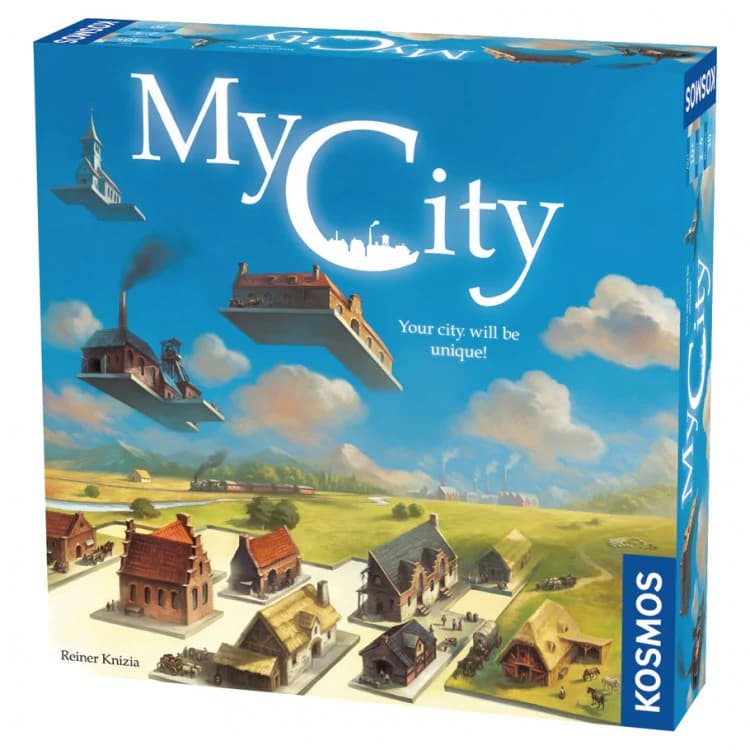
My City
2020My City is a captivating competitive legacy game from celebrated designer Reiner Knizia, where players embark on a journey to build and develop their own unique city. The game unfolds over an engaging 24-episode campaign, broken into eight distinct chapters. Players begin with a pristine, untouched plot of land and, over the course of the campaign, will see it transform into a bustling metropolis. The goal is to be the most successful city planner by scoring points based on evolving objectives that are introduced with each new episode. This narrative-driven progression allows players to create a personal history with their board, making each game a unique and memorable chapter in their city's story.
At its core, the gameplay is elegantly simple and accessible. Each round, a construction card is revealed, indicating a specific polyomino-shaped building that every player must simultaneously place onto their personal game board. This simultaneous action keeps downtime to a minimum and ensures all players are constantly engaged. The legacy element is the game's defining feature; players will permanently alter their boards by adding stickers, representing new discoveries, landmarks, or challenges. At the start of each new chapter, sealed envelopes are opened, revealing new rules, components, and scoring opportunities that add layers of complexity and strategic depth. Early decisions might revolve around simple adjacency rules and avoiding natural obstacles, but strategies must adapt as the city and its ruleset evolve.
The appeal of My City lies in its masterful blend of simplicity and evolving strategy, making it an ideal 'gateway' legacy experience for families and newcomers to the hobby. The rules are introduced gradually, preventing players from feeling overwhelmed while providing a steady stream of fresh challenges. The game also incorporates a clever catch-up mechanism, where players who perform less well in an episode receive small advantages in the next, ensuring the campaign remains competitive and exciting for everyone involved. For those seeking endless replayability after the 24-episode journey concludes, the reverse side of the game board offers a standardized, non-legacy version of the game, allowing the fun of tactical tile-laying to continue indefinitely.
2-4 30m⚖️ 1.9

RANK #270
Fantasy Realms
2017In Fantasy Realms, players are powerful rulers competing to forge the most legendary kingdom in the land. Your entire realm, with all its might and magic, is represented by a hand of just seven cards. The goal is to accumulate the highest score by the game's end by assembling a hand of cards that synergize in powerful and clever ways. You might build a mighty military force with Kings, Knights, and Armies, or perhaps you'll wield elemental magic with a Wildfire and a Wizard. The challenge is to find the most potent combination from the hundreds of possibilities, turning a simple hand of cards into a high-scoring epic.
The gameplay is deceptively simple and incredibly fast. On your turn, you perform just two steps: draw one card, then discard one card. The strategic tension comes from the draw; you can either take the unknown top card from the central deck or select any face-up card from the discard area. This shared discard pile creates a dynamic pool of options that all players are watching. Each unique card in the deck has a base strength and a crucial bonus or penalty text that dictates how it interacts with other cards in your hand. A single card can unlock a massive scoring chain, while another might blank the powers of several others. The game ends quickly and suddenly once the tenth card is placed in the discard area, at which point all players calculate their final scores.
Fantasy Realms is celebrated for its elegant design, perfectly balancing accessibility with profound strategic depth. It can be taught in a minute, making it an excellent gateway game, yet the puzzle it presents offers endless variety and challenge for veteran gamers. The true mastery of the game comes not from understanding complex rules, but from recognizing card synergies and adapting your strategy on the fly. You are constantly evaluating your hand, the tempting cards in the discard pile, and what your opponents might be collecting. This 'combo-licious' puzzle, combined with its brisk 20-minute playtime, makes it a highly replayable and addictive experience, perfect as a game night opener or a main event played over multiple rounds.
3-6 20m⚖️ 1.8
RANK #271
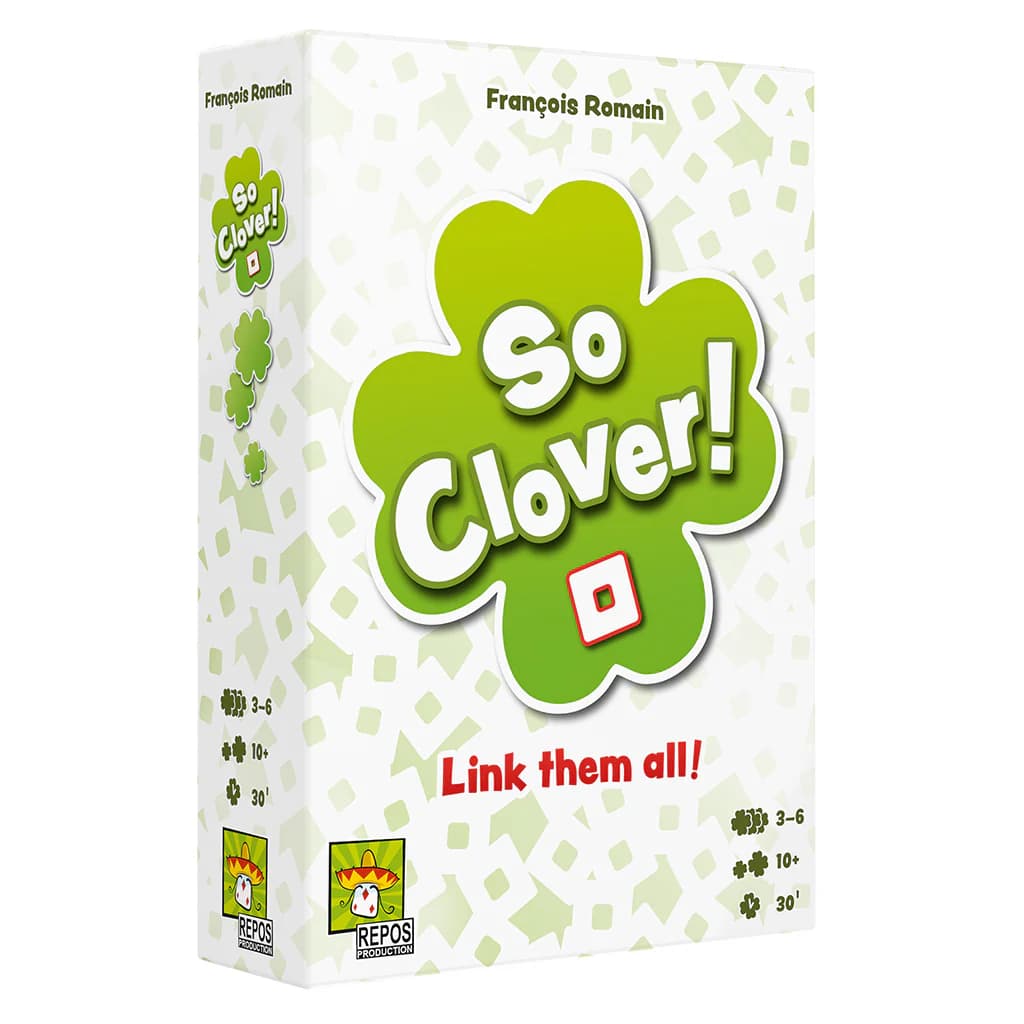
So Clover!
2021So Clover! is an incredibly engaging, highly interactive cooperative party game where players unite to demonstrate their collective cleverness. At its core, the game challenges participants to forge links between seemingly disparate concepts, creating an accessible but deeply rewarding word association experience. Your ultimate objective is not to defeat your friends, but rather to work alongside them to achieve the highest possible group score, which is then recorded in the prestigious Record of Legends. By tracking your progress over multiple sessions, the game naturally encourages a satisfying loop of continuous improvement and teamwork.
The gameplay unfolds across two distinct and meticulously crafted phases. Initially, during the simultaneous clue creation phase, every participant receives a unique four-leaf clover-shaped dry-erase board. You secretly draw four square cards, each featuring different words on all four edges, and slot them into your board's central grid. This arrangement naturally forms four pairs of outward-facing words. Your task is to write a single, unifying clue on each of the four leaves that connects the specific pair of words bordering it. Once everyone finishes writing, the cards are removed, a decoy card is added to the mix, and the stack is shuffled. The game then shifts into the resolution phase. Taking turns as the silent spectator, players present their clover boards with only the written clues visible, alongside their shuffled cards. The rest of the team must collaboratively deduce the correct orientation and placement of the cards to match the spectator's original grid.
What truly sets So Clover! apart from its contemporaries in the genre is its brilliant elimination of downtime. Because the initial setup is entirely simultaneous, players are constantly engaged from the very first minute. The puzzle-like deduction phase generates hilarious debates, sudden epiphanies, and a profound sense of shared triumph when a particularly abstract clue is correctly deciphered. The strict limitation on communication during the guessing phase ensures that the spectator must watch in agonizing amusement as their teammates either perfectly decode their logic or hilariously misinterpret it. Earning the 2021 Golden Geek Award for Best Party Game, this delightful experience thrives on its extreme accessibility, rules-light approach, and the sheer joy of cooperative problem-solving, making it an absolute staple for game nights, families, and casual gatherings alike.
3-6 30m⚖️ 1.1
RANK #272
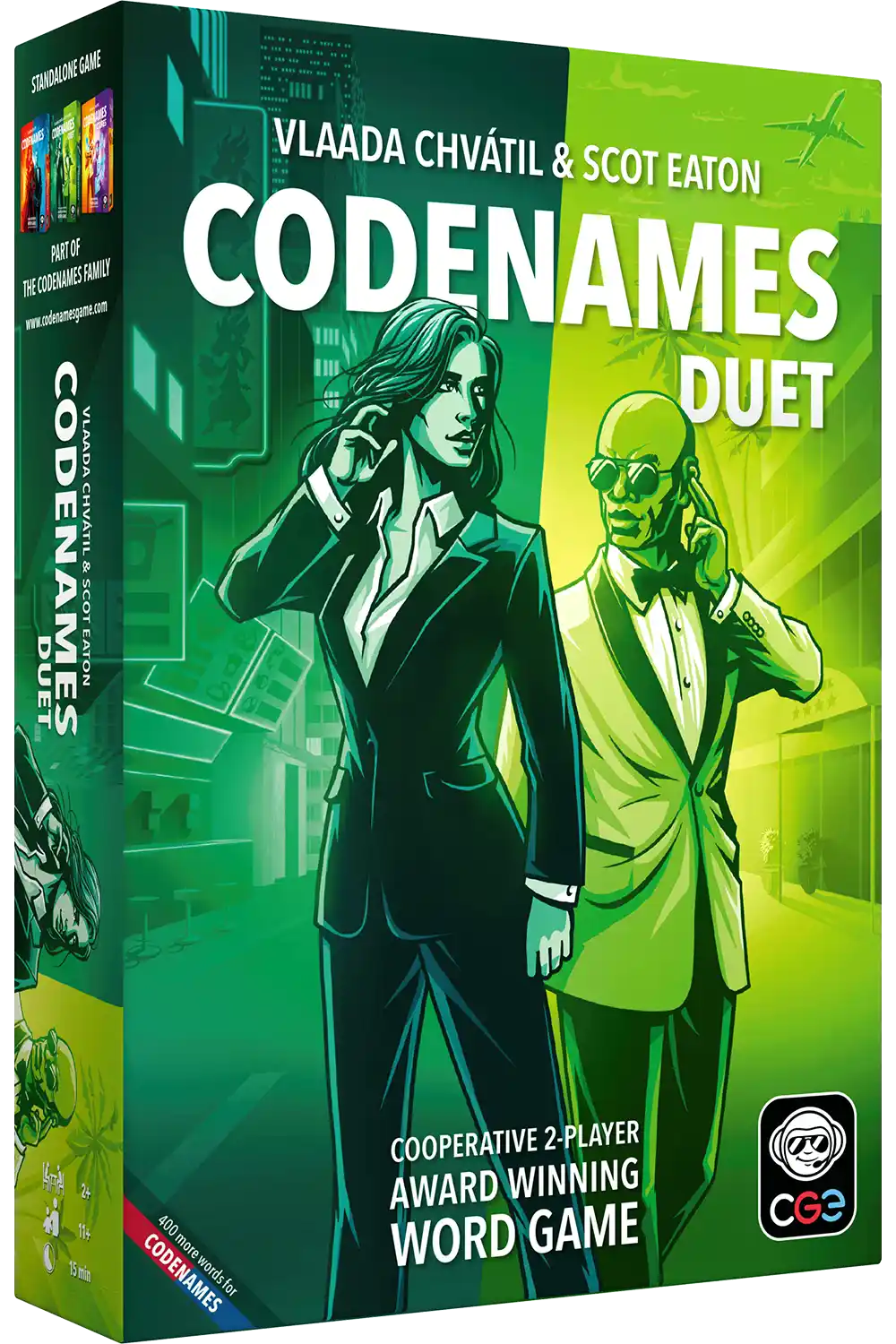
Codenames: Duet
2017Codenames: Duet is the cooperative, two-player evolution of the hit party game, Codenames. The objective is for both players to work in harmony to uncover all 15 of their shared secret agents from a grid of 25 word cards. Unlike its competitive predecessor, this version is a race against the clock, challenging the team to complete their mission within a limited number of turns, typically nine. Success hinges on clever word association and the ability to get on the same wavelength as your partner. The game presents a pure puzzle of communication and deduction, where players must navigate a minefield of innocent bystanders and deadly assassins, all represented by seemingly random words on the table.
The core of the game lies in its unique double-sided key card. This card, placed between the players, shows each person a different perspective of the 5x5 grid. On each side, nine words are marked as friendly agents (green), three are deadly assassins (black), and the rest are harmless bystanders (tan). The twist is that while some agents are unique to each player's side of the card, others overlap, creating a shared pool of 15 total agents that must be identified. Players alternate giving a single-word clue followed by a number, indicating how many words on the board correspond to their clue. If their partner correctly touches an agent card, it's covered, and they can continue guessing. Contacting a bystander immediately ends the turn, and touching an assassin results in an instant loss for the team. After each turn, a timer token is used, ratcheting up the pressure as the turn limit approaches.
Codenames: Duet is celebrated for its brilliant distillation of the original game's magic into an intimate and challenging experience for two. The cooperative dynamic transforms the game from a team-based competition into a collaborative puzzle. Players must think not only about the clues they give but also about the potential interpretations their partner might have, leading to moments of incredible synergy or hilarious miscommunication. The tension is palpable as each guess could be the one that uncovers a hidden agent or triggers a game-ending assassin. For those seeking even greater challenges and replayability, the game includes a mission map with a campaign-style progression, introducing new rules and constraints that alter the difficulty and win conditions. This combination of simple rules, profound strategic depth, and a focus on partnered thinking makes it a standout title for couples and pairs of friends.
2 15m⚖️ 1.1

RANK #276
Century: Golem Edition is a beautifully crafted, fantasy-themed reimagining of the critically acclaimed board game Century: Spice Road. Transporting players from the historical Silk Road to the vibrant and magical realm of Caravania, the game tasks participants with becoming ambitious caravan leaders. Your ultimate objective is to carefully gather and trade mystical soul crystals to construct and awaken magnificent, towering golems. The game is celebrated as the definitive aesthetic version of the series, enchanting players with its stunning artwork, manga-inspired illustrations, and deeply satisfying tactile components, most notably the chunky, brightly colored plastic crystals that replace standard wooden cubes.
At its core, the game revolves around a highly streamlined and lightning-fast engine-building and hand-management system. Participants manage an economy based on four distinct tiers of soul crystals, ranging from the easily acquired yellow crystals to the incredibly rare and valuable pink ones. Turns are remarkably quick, allowing players to execute just one of four precise actions. You can play a merchant card from your hand to gain, upgrade, or trade specific combinations of crystals, or acquire a new merchant card from a central public market to expand your trading engine. Alternatively, if you have accumulated the exact crystals required, you can claim an awoken golem for valuable victory points and bonus coins. Finally, players can choose to rest, retrieving all previously played merchant cards back into their hand to restart their carefully constructed engine.
The endgame is swiftly triggered the moment a player secures their fifth golem card, creating a tense, thrilling race to the finish line where every single crystal and copper coin counts. Fans absolutely adore Century: Golem Edition because it perfectly balances accessibility with genuine tactical depth. It serves as an exceptional gateway game for newcomers, expertly teaching the fundamentals of resource conversion without overwhelming rules. Often compared favorably to modern classics like Splendor, it still provides enough strategic meat to keep veteran hobbyists fully engaged. The charming combination of Studio Ghibli-esque character designs, incredibly fluid gameplay, and a highly rewarding economic loop makes it a beloved staple for both casual family game nights and dedicated tabletop gatherings.
2-5 40m⚖️ 1.6
RANK #284
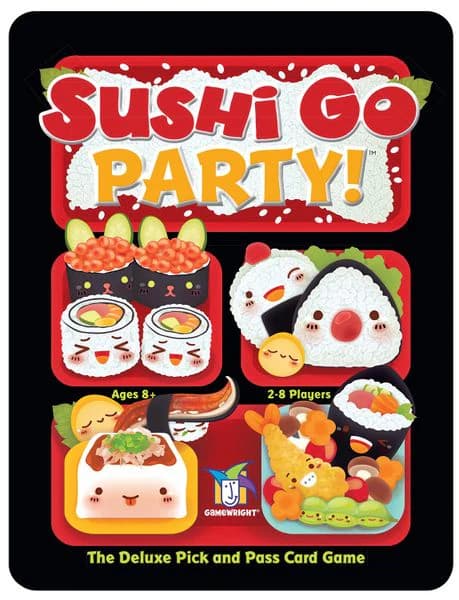
Sushi Go Party!
2016Sushi Go Party! is the expanded, deluxe version of the hit card-drafting game that tasks players with assembling the most delicious meal at a revolving sushi restaurant. Building upon the foundation of the original game, this version introduces a wider array of culinary dishes and a customizable menu system that allows for significantly more variety in every session. The primary goal is to score the most points over three rounds by selecting cards that create high-scoring combinations. Whether you are aiming for a massive platter of sashimi or trying to earn the most maki rolls at the table, the game rewards clever planning and a keen eye on your opponents' growing plates.
The core gameplay loop revolves around a simultaneous 'pick-and-pass' drafting mechanic. Each player starts with a hand of cards, chooses one to keep, reveals it, and then passes the remaining cards to the person sitting next to them. This continues until the hands are empty. The 'Party' edition elevates this experience by offering over twenty different card types. Players can mix and match appetizers, specials, and rolls to create a unique 'menu' for each game, ranging from beginner-friendly sets to more aggressive, cutthroat combinations. Points are tallied at the end of each round, with certain cards like Nigiri providing immediate bonuses—especially when paired with spicy Wasabi—while others like Desserts are stored and only scored at the very end of the meal.
One of the most significant draws of Sushi Go Party! is its incredible accessibility combined with surprising depth. The artwork uses a 'kawaii' aesthetic that makes the game instantly inviting for families and casual gamers. However, beneath the cute illustrations of smiling dumplings and puddings lies a strategic layer of card counting and selective drafting. Because you see almost every hand that rotates around the table, you must decide whether to take the card you need most or block an opponent from completing a high-value set. With support for up to eight players and a massive amount of replayability provided by the various menu configurations, it serves as an essential title for social gatherings and board game nights alike.
2-8 25m⚖️ 1.3
RANK #287
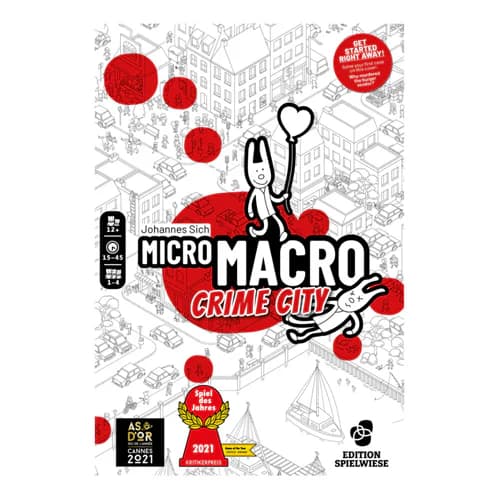
MicroMacro: Crime City is a groundbreaking cooperative experience that transforms the traditional 'hidden object' concept into a sophisticated investigative challenge. Set within a massive, intricately detailed 75 x 110 cm map of a monochrome metropolis, players take on the role of detectives tasked with solving 16 distinct criminal cases. The game's defining feature is its 'living' map, which functions as a temporal landscape where time and space are intertwined. Characters are not just static drawings; they appear multiple times across the city, allowing players to trace their movements from the moments leading up to a crime through to the aftermath.
The gameplay loop is elegantly simple yet intellectually stimulating. Each case begins with an introductory card that presents a victim or a suspicious event. Working together, players must scour the dense urban environment to find the starting point and then follow the trail of suspects and witnesses. This requires a sharp eye for detail and the ability to connect events chronologically as you 'rewind' or 'fast-forward' through the character's day. While the game provides a step-by-step investigation via scenario cards, an advanced 'Expert Mode' allows seasoned players to solve the entire mystery using only the initial prompt, relying solely on their own observation and logic to piece together the narrative.
The appeal of MicroMacro lies in its unique blend of visual storytelling and deductive gameplay. It successfully bridges the gap between casual puzzle-solving and deep narrative engagement, making it accessible to non-gamers while remaining deeply satisfying for hobbyists. The minimalist, whimsical art style often masks mature themes of crime and intrigue, creating a compelling contrast that keeps players immersed in the hunt. As a winner of the prestigious Spiel des Jahres award, it has been celebrated for its innovation and its ability to turn a simple piece of paper into a vibrant, interactive mystery world that is best enjoyed with a close group of friends or even as a solo challenge.
1-4 30m⚖️ 1.1
BoxNo Cover Art
RANK #289
Flamme Rouge
2016Flamme Rouge is a fast-paced, tactical bicycle racing game that transports players to the heart of a high-stakes 'one-day' classic race. Each player takes on the role of a team director managing two cyclists: the Rouleur, known for steady endurance, and the Sprinteur, capable of explosive bursts of speed. The objective is deceptively straightforward—cross the finish line first—but achieving this requires mastering the delicate balance of stamina, positioning, and timing. Set against the backdrop of the golden age of cycling, the game uses a modular track system to create unique courses every time you play, ranging from flat sprints to grueling mountain climbs that test even the most seasoned riders.
The gameplay loop revolves around a clever card-driven movement system that emphasizes hand management and deck depletion. Every round, players simultaneously draw cards for both their riders, choosing one to play and burying the others. The catch is that once a movement card is played, it is permanently removed from the game. This forces players to make difficult decisions: do you burn a high-value card now to break away from the pack, or save it for the final sprint? Positioning is critical, as the game rewards those who ride in groups through a 'slipstreaming' mechanic. If a rider ends exactly one space behind another, they are pulled forward for free, conserving their energy. Conversely, leading the pack or riding solo into the wind results in 'Exhaustion' cards being added to your deck, which act as dead weight and dilute your future drawing options.
What makes Flamme Rouge a modern classic is its ability to deliver a deep, thematic experience through incredibly accessible rules. It is easy enough for families to enjoy together but offers the tactical depth required to keep veteran strategy gamers engaged. The tension of the 'reveal' phase, where all players show their cards at once, captures the unpredictable nature of a real peloton. With its elegant design and high replayability thanks to the diverse track tiles, it offers a satisfying blend of luck and strategy. Whether you are carefully drafting to stay fresh or making a desperate dash for the flamme rouge—the red flag marking the final kilometer—every race is a cinematic experience.
2-4 45m⚖️ 1.7
RANK #291
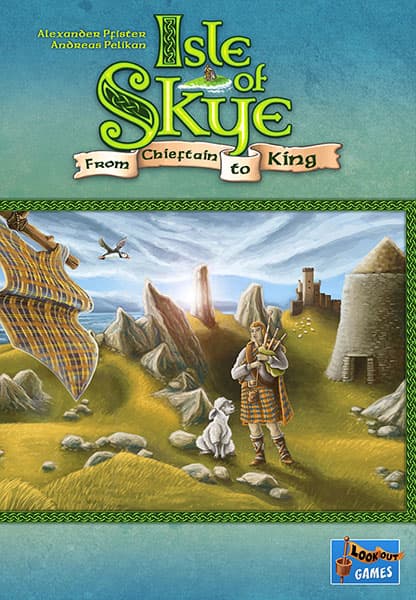
Isle of Skye: From Chieftain to King is a celebrated tile-placement and economic strategy game where players step into the shoes of ambitious clan leaders. Set against the rugged and beautiful backdrop of the Scottish Highlands, the ultimate objective is to expand your territory and accumulate the most victory points to become the rightful King of the Isle. Unlike many traditional tile-laying games, this title introduces a dynamic player-driven economy that ensures no two sessions feel the same. By strategically managing gold and territory, players must navigate a competitive landscape where every decision impacts both their own kingdom and the wealth of their opponents.
The heart of the game lies in its unique auction and pricing system. Each round, players draw three landscape tiles and secretly decide their fate behind a screen. One tile must be discarded using an 'Axe' token, while the remaining two are assigned a gold price from the player's personal reserve. This creates a fascinating risk-reward tension: pricing a tile too low makes it an easy target for rivals to purchase, while pricing it too high forces you to pay that exact amount to the bank if no one else buys it. Once prices are revealed, players take turns purchasing tiles from one another, with the remaining tiles being added to their own expanding kingdoms. Connectivity is crucial, as mountain, grass, and water edges must match perfectly. Whiskey barrels connected to the central castle via roads generate essential income, fueling future bids.
One of the most praised aspects of Isle of Skye is its variable scoring system. From a pool of sixteen different scoring tiles, only four are used in any given game, and their activation rotates through different rounds. This means players must constantly pivot their strategies—one game might reward large bodies of water, while the next focuses on the number of sheep or ships in your territory. The blend of a spatial puzzle with the cutthroat economic interaction of a price-setting auction makes it a standout 'connoisseur' level game that remains accessible to families. It offers deep strategic layers without overstaying its welcome, earning its place as a modern classic in the board gaming world.
2-5 45m⚖️ 2.3
RANK #297
Skull King
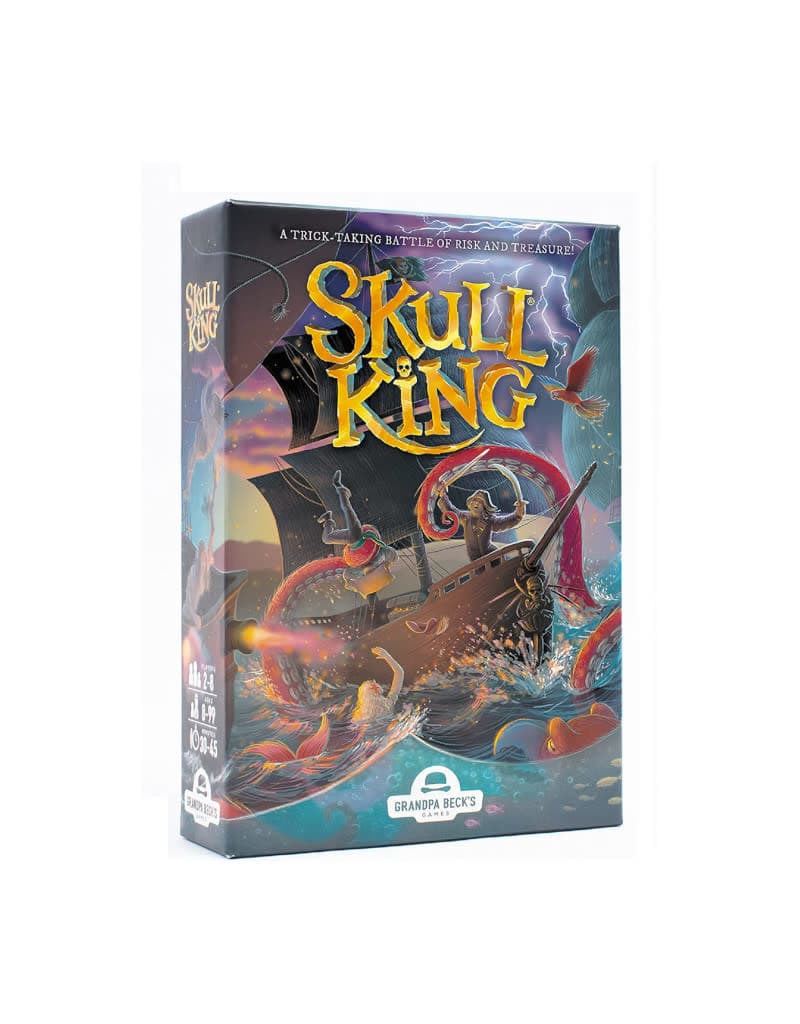
2013Skull King is a high-stakes, pirate-themed trick-taking game that invites players to set sail on the high seas in search of loot and glory. Originally released in 2013, it has established itself as a modern classic in the predictive bidding genre, often compared to legendary games like 'Wizard' or 'Oh Hell!'. The ultimate goal is to accumulate the most points over ten rounds by accurately predicting exactly how many tricks you will capture in each hand. Unlike traditional card games where the strongest hand always wins, Skull King rewards precision and psychological maneuvering, forcing players to balance aggression with calculated retreats.
The game progresses through ten rounds, with the hand size increasing by one card each round. After examining their cards, all players simultaneously declare their bids using the iconic 'Yo-Ho-Ho!' chant, revealing their intended trick count with their fists. The core of the game lies in its intricate power hierarchy. While players must follow the lead suit of Parrots, Maps, or Chests, they can pivot to the black Jolly Roger trump suit or deploy powerful special cards. Pirates can dominate numbered cards, but they are vulnerable to the dreaded Skull King. However, even the King can be lured to his doom by the alluring Mermaid. This rock-paper-scissors dynamic ensures that no lead is ever truly safe, and the tide of battle can turn with a single card.
What makes Skull King truly beloved by gaming groups is its blend of high-energy social interaction and deep strategic depth. The scoring system is brutal yet rewarding; players earn 20 points per trick for a correct bid but lose 10 points for every trick they are off. The legendary 'bid zero' strategy offers a high-risk, high-reward path to victory, potentially granting massive points or leading to a devastating shipwreck. The game's charm lies in these moments of triumph and betrayal, where a well-timed Escape card or a surprise Pirate can ruin an opponent's perfect round. It remains a staple for families and hobbyists alike due to its accessibility and the endless variety provided by its special character cards.
2-6 45m⚖️ 1.8

RANK #329
Winner of the prestigious 2023 Spiel des Jahres award, *Dorfromantik: The Board Game* masterfully translates the serene, creative spirit of the beloved video game into a cooperative tabletop experience. In this game, one to six players work together to craft a beautiful, sprawling pastoral landscape from hexagonal tiles. The collective goal is not to defeat opponents, but to harmoniously build a world that fulfills the requests of its tiny inhabitants, aiming to achieve the highest possible score. Players are challenged to think creatively and collaboratively as they lay down tiles featuring forests, grain fields, villages, railways, and streams, constructing an idyllic countryside that grows with every turn.
The gameplay is elegantly simple yet deeply engaging. On each turn, a player draws a landscape tile and adds it to the growing map, ensuring that any streams or train tracks seamlessly connect with existing ones. The core of the game revolves around fulfilling collective "Tasks." These tasks appear on the board and challenge players to connect a specific number of a certain landscape type to that point. Completing these objectives earns valuable points. Beyond these immediate goals, players are also rewarded for creating the longest continuous river and the longest railway line. The game concludes once the last tile is placed, and the final score is tallied from completed tasks, the major routes, and special flag tiles that grant bonuses for enclosing specific areas.
What truly sets *Dorfromantik* apart and makes it a cherished experience is its blend of tranquil, puzzle-like gameplay with a gentle sense of discovery. It is a wonderfully non-confrontational game, perfect for families, couples, or solo players seeking a relaxing yet thoughtful challenge. Its most innovative feature is a replayable "legacy-lite" campaign. As players reach certain score thresholds across multiple games, they unlock new components and rules from sealed boxes. This system gradually introduces new types of tiles, more complex tasks, and additional scoring opportunities, ensuring the game evolves and remains fresh over many sessions. This element of unlocking hidden content provides a delightful sense of progression without permanently altering the game, making it a highly replayable and rewarding journey.
1-6 45m⚖️ 1.3
RANK #524
Flip 7
2024Flip 7 is a fast-paced and wonderfully accessible card game where the goal is refreshingly simple: be the first player to empty your hand of all your cards. This straightforward objective, however, hides a delightful mix of light strategy, luck, and clever timing that makes each round an engaging puzzle. The game centers around a shared play area with seven distinct piles. Players start with a hand of seven cards and must thoughtfully play them onto these piles, racing against their opponents to shed their hand and claim victory. Its blend of familiar mechanics with a unique core concept makes it an instant hit for a wide variety of gaming groups.
The gameplay loop is elegant and easy to grasp. On a player's turn, they must select a card from their hand and play it onto one of the seven piles. The rule for a legal play is direct: the card being played must either have a higher numerical value than the top card of the pile or be the exact same color. If a player finds themselves unable to make a valid move, they must draw a card from the deck, momentarily pushing them further from victory. The game's namesake and most exciting mechanic is the "flip." When any player plays a card with the number 7, they get to flip that entire pile over, revealing the card that was originally at the bottom. This newly exposed card now dictates the rule for the next play on that stack, which can dramatically alter the strategic landscape of the board in an instant.
What makes Flip 7 so compelling is its brilliant fusion of classic card-shedding gameplay with this innovative 'flip' twist. It evokes the feel of mass-market classics but introduces an unpredictable element that keeps all players on their toes. A pile that was once an easy target can suddenly become unplayable, while a blocked pile might open up into a perfect opportunity. The strategic heart of the game lies in managing your hand and, most importantly, deciding when to deploy your powerful 7s. Using one can save you from drawing a card, but it might also inadvertently help the next player. This constant tactical tension, combined with its quick playtime and support for one to six players, makes it a perfectly versatile choice for family game nights, a party starter, or a quick filler game.
1-6 15m⚖️ 1.0