Strategy Games
Browse all Strategy board games in the Meeple Pulse database.
Styles
Themes
AbstractAdventureAncientAnimalsArtBusinessCard GameCo-operativeComic BookCooperativeCrimeEconomicEnvironmentalismExplorationFantasyHistoricalHorrorHumorIntrigueLiteraryMagicMarvelMedievalModernMuseumMysteryMythologyNatureNauticalPoliticalPress Your LuckSatireSci-FiSocial CommentarySocial InteractionSpaceSuperheroesThematicTravelWarWesternWord-Guessing
Mechanics
3D PlacementActingAction / DexterityAction DraftingAction Point AllowanceAction Point Allowance SystemAction Point SystemAction PointsAction ProgrammingAction QueueAction RetrievalAction SelectionAction/EventAlliancesAlternate ActivationApp-AssistedApp-DrivenArea ControlArea InfluenceArea MajorityArea Majority / InfluenceArea MovementArgumentationAsymmetricAsymmetric FactionsAsymmetric GameAsymmetric PowersAsymmetrical PowersAuction & BiddingAuction/BiddingAuctioningBag BuildingBettingBetting and BluffingBetting and WageringBetting and WagersBiddingBingoBlind BiddingBluffingCampaign / Battle Card DrivenCampaign / LegacyCampaign / Legacy GameCampaign / Mission-basedCampaign / ScenariosCampaign GameCampaign PlayCard DraftingCard DrawingCard DrivenCard Driven ActionCard Driven CombatCard Driven Dice AllocationCard Driven MovementCard ManagementCard PlayCard Play / Hand ManagementCard Play Conflict ResolutionCard SheddingCard-Driven MovementCharacter CreationCharacter ProgressionChit-Pull SystemCo-op PlayCo-operative GameCo-operative PlayCode-breakingCombat ResolutionCombo ChainCommand CardsCommodity SpeculationCommunication LimitsContract FulfillmentContractsCooperative GameCooperative GameplayCooperative PlayCooperative Trick-takingDebateDeck BuildingDeck ConstructionDeck, Bag, and Pool BuildingDeck-BuildingDeductionDexterityDice DraftingDice PlacementDice RollingDiplomatic InfluenceDraftingDynamic Battle SystemEnclosureEnd Game BonusesEngine BuildingEngine-BuildingEscape RoomEvent DrivenExplorationFarmingFlip and WriteFollowFollow ActionGrid CoverageGrid MovementHand ManagementHex-and-CounterHexagon GridHidden MovementHidden RolesI Cut You ChooseIncomeInfluence / Area MajorityLadder ClimbingLegacyLegacy ElementsLegacy GameLegacy SystemLimited CommunicationLine DrawingLine of SightMancalaMap MovementMarketMarket DraftingMarket ManipulationMarket MechanicMarket SpeculationMatchingMeasurement MovementMemoryMission ObjectivesModular BoardModular Board ConstructionMovement TemplatesMulti-Use CardsMulti-use CardsMultiple ScenariosMust FollowNarrative ChoiceNarrative Choice / ParagraphNegotiationNegotiation MechanicsNetwork & Route BuildingNetwork BuildingNetwork and Route BuildingOne vs ManyOne vs. ManyOpen DraftingPaper-and-PencilPartnershipsPattern BuildingPattern RecognitionPick-up and DeliverPlayer EliminationPlayer InteractionPlayer JudgePoint SaladPoint to Point MovementPolyominoesPush Your LuckPush-Your-LuckPuzzlePuzzle-LikePuzzle-SolvingRaceReal-TimeRecipe FulfillmentResource ManagementRole PlayingRole SelectionRoll / Spin and MoveRondelRoute BuildingRoute-BuildingRoute/Network BuildingSanity SystemScenario / Campaign PlayScenario / Mission / Campaign GameScenario / Mission FunctionSecret Unit DeploymentSemi-Cooperative GameSet CollectionSheddingSimulationSimultaneous ActionSimultaneous Action SelectionSimultaneous Hidden AllocationSocial DeductionSocial InteractionSolo / Solitaire GameSpace ExplorationStat Check / Skill CheckStock HoldingStorytellingStrategic PlanningTableau BuildingTactical Decision-MakingTake ThatTargeted CluesTeam PlayTeam-Based GameTeam-Based GuessingTeamworkTech TreesTech Trees / Tech TracksTechnology & Armament TracksTechnology TreeTension & Aggression TracksTile DraftingTile LayingTile PlacementTime TrackTime TravelTower DefenseTrack MovementTradingTrick-takingTug of WarTurn Order: PassTurn Order: Stat-BasedUnit PlacementVariable Phase OrderVariable Player PowersVariable Set-upVariable SetupVictory Point TracksVotingWord AssociationWord GameWord GuessingWord-GuessingWord-guessingWordplayWorker Placement
BoxNo Cover Art
RANK #219
In The Red Cathedral, players take on the roles of construction teams building Saint Basil's Cathedral in Moscow. Each player has a unique goal: to gain the favor of the Tsar by building and ornamenting sections of the church. Gameplay involves gathering resources, satisfying requirements to build or ornament a section, and other point-scoring opportunities. The game features a central rondel where players choose one of five dice to move based on what die face is showing, allowing for strategic planning and potential for plans to be thwarted by opponents.
1-4 30m⚖️ 2.5
RANK #225
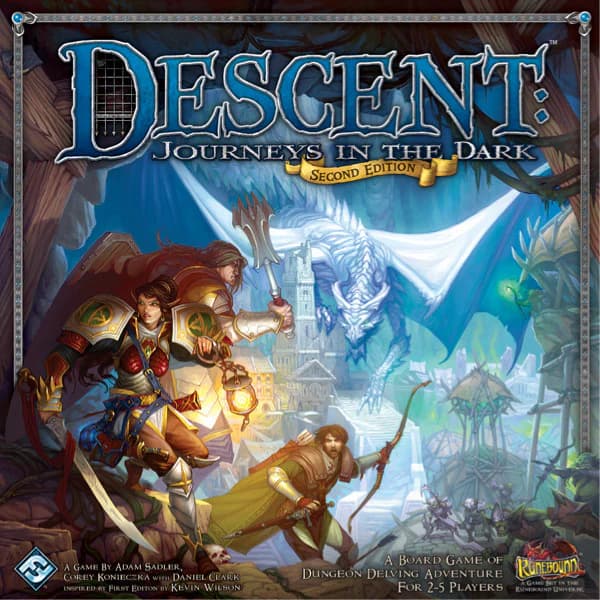
Descent: Journeys in the Dark (Second Edition) is a seminal board game that immerses players in the high-fantasy world of Terrinoth for an epic, one-versus-many dungeon-crawling adventure. In this asymmetrical contest, one player assumes the role of the treacherous Overlord, commanding an army of monsters and springing deadly traps from the shadows. The other players (up to four) form a courageous band of heroes, each with unique skills and abilities, who must work together to complete the objectives of a given quest. The game is scenario-driven, with each quest forming a chapter in a larger, branching campaign narrative. Success or failure in one encounter can have tangible consequences on the next, creating a dynamic and evolving story where the heroes strive for victory against the Overlord's nefarious plans.
The gameplay unfolds over a series of rounds, with heroes taking their turns first. Each hero can perform two actions, such as moving across the modular, tile-based map, attacking a monster, or using a special skill. Combat is a highlight of the experience, resolved through a custom dice-pool system. Players roll dice determined by their character's equipment and abilities, looking for symbols representing damage, range, and special 'surges.' These surges can be spent to trigger powerful effects, adding a layer of tactical decision-making to every attack. After the heroes have acted, the Overlord takes their turn, playing cards from a unique deck to activate monster groups, summon reinforcements, and unleash unexpected events to wear down the heroes and achieve their own secret objectives.
What makes Descent a beloved classic is its deep sense of progression and the escalating arms race that develops over a campaign. Between quests, both sides grow stronger. Heroes earn experience to learn new skills and spend gold on powerful new weapons and armor, customizing their characters to fit their playstyle. Simultaneously, the Overlord also gains experience, which is used to purchase more potent Overlord cards, unlocking deadlier plots and monsters. This persistent development ensures that the challenge constantly escalates, making each session feel meaningful. The combination of tactical combat, rich character customization, and an emergent, player-driven narrative provides a highly replayable and deeply engaging experience for any group that loves adventure and strategy.
2-5 120m⚖️ 3.2
RANK #230
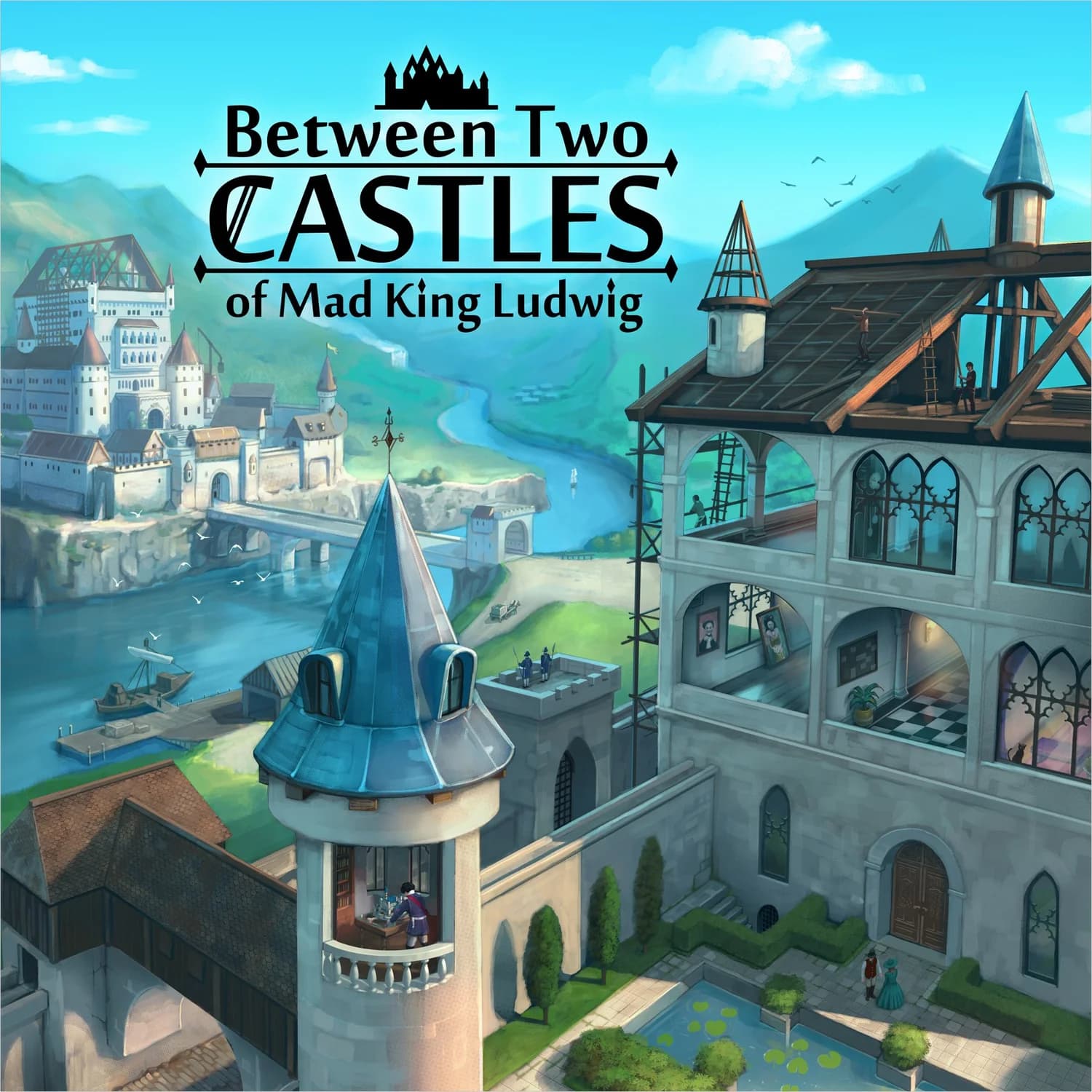
In "Castles of Mad King Ludwig," players enter the whimsical world of 19th-century Bavaria, tasked with building a magnificent castle for the eccentric King Ludwig II. As master architects, you compete to design the most impressive and valuable structure. This tile-laying game is a clever blend of spatial reasoning and economic management, where the ultimate goal is to earn the most victory points. Points are awarded for constructing specific room types, fulfilling the king's public demands, known as 'King's Favors', and achieving personal, secret objectives. Each player will finish the game with a completely unique, sprawling castle, a physical representation of their strategic decisions and architectural vision, all in the service of pleasing a very particular monarch.
The game's central pillar is its innovative 'Master Builder' mechanic. Each round, one player takes on this role, drawing a selection of room tiles and individually pricing them for the other players. In turn, opponents may purchase one room tile, paying the cost directly to the Master Builder. This creates a tense and engaging pricing dilemma: ask too much, and you'll earn nothing; ask too little, and your rivals will get a steal. The Master Builder takes the last available room but must pay their own listed price to the bank. Once a room is acquired, it's immediately added to the player's personal castle layout, connecting to other rooms via doorways. Judicious placement is key, as rooms can grant or cost points based on what they're adjacent to. Furthermore, completing a room by connecting all its entrances triggers a valuable bonus based on its type, which could be anything from extra cash to an immediate second turn.
The enduring appeal of "Castles of Mad King Ludwig" lies in this constant, engaging player interaction driven by the market and the deeply satisfying spatial puzzle of castle construction. The Master Builder system ensures every player is invested in every turn, evaluating prices and anticipating others' needs. The challenge of optimizing your layout—placing a Dining Room near a Kitchen for bonus points while avoiding placing an Activity Room near a Sleeping Room—is a delightful puzzle. With variable public goals, a huge stack of unique room tiles, and secret bonus cards, no two games are ever the same, offering immense replayability. Watching your nonsensical yet functional castle take shape is a wonderfully thematic and rewarding experience that has cemented the game's status as a modern classic in the genre.
1-4 90m⚖️ 2.7
RANK #233
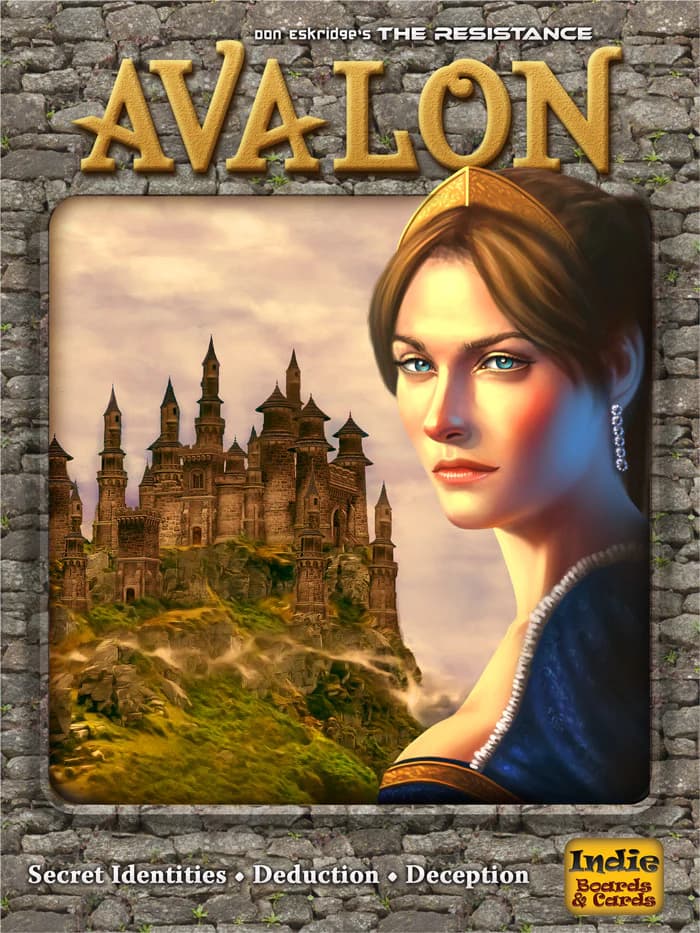
The Resistance: Avalon plunges players into the legendary turmoil of Camelot, a kingdom besieged not by external forces, but by treachery from within. In this intense game of social deduction and hidden identities, players are secretly assigned to one of two factions: the noble and loyal Servants of Arthur, fighting to secure the future of Britain, or the cunning Minions of Mordred, bent on sowing chaos and ensuring the kingdom's collapse. The ultimate goal is a struggle for control over a series of five critical Quests. The Servants of Arthur must successfully complete three of these missions to claim victory for their king and country. Conversely, the Minions of Mordred triumph if they can cause three Quests to fail, bringing Arthur's reign to a premature and disastrous end. The game is a constant battle of wits where trust is a fleeting resource and every word carries the potential for deception.
The gameplay unfolds in a structured but socially dynamic sequence of rounds. Each round, a new player assumes the role of Leader and is tasked with a crucial decision: selecting a team of knights to embark on the current Quest. This proposal is not accepted blindly; every player at the table, regardless of their allegiance, casts a public vote to either approve or reject the nominated team. This phase is the heart of the game's interaction, a crucible of open debate, pointed accusations, and masterful bluffs as players attempt to discern allies from enemies. If a team is approved, its members are given a profound and secret choice: to play a 'Success' card to help the Quest, or a 'Fail' card to sabotage it. For the loyal servants, the choice is simple. For the minions, it's an opportunity for destruction. Since a single 'Fail' card is often enough to doom a mission, the tension is palpable as the results are revealed.
What elevates The Resistance: Avalon to legendary status within its genre is the masterful inclusion of special character roles that add intricate layers of information and misdirection. The most pivotal of these is Merlin, a servant of Arthur who begins the game knowing the identities of the evil players. Merlin must subtly guide the forces of good without revealing his own identity, as an evil player known as the Assassin has a final, game-winning opportunity to correctly name Merlin if the heroes succeed in their Quests. This creates a fascinating and tense dynamic of veiled communication. Optional roles like Percival, who knows who Merlin is, and Morgana, who appears as Merlin to Percival, further complicate the web of lies and deduction. This brilliant system ensures that no two games are ever the same, making Avalon a highly replayable and deeply engaging experience celebrated for its pure player-driven drama and strategic depth.
5-10 30m⚖️ 1.7
RANK #235
A Game of Thrones: The Board Game (Second Edition) transports players to the war-torn continent of Westeros, drawing directly from the narrative depths of George R.R. Martin's 'A Song of Ice and Fire' series. In this grand strategy experience, three to six players assume the mantles of the Great Houses—such as Stark, Lannister, or Baratheon—competing for dominion over the Iron Throne. The ultimate objective is to secure the most castles and strongholds across the map through a blend of military conquest, political maneuvering, and calculated diplomacy. Set against a backdrop of impending winter and the looming threat of the Wildlings beyond the Wall, the game captures the high-stakes tension of the source material, where every move could lead to total victory or sudden betrayal.
The core gameplay revolves around a unique simultaneous planning phase where players place secret order tokens on territories they control. These tokens represent specific actions like marching armies, defending borders, consolidating power for resources, or raiding adjacent enemy positions. Once revealed, players resolve these actions in a specific sequence, requiring them to anticipate their opponents' intentions and bluff their way through contested borders. Combat is notably deterministic, relying on unit strength and support from neighboring regions rather than dice rolls. However, players can swing the tide of battle by playing 'House Cards' featuring iconic characters that grant special abilities. Beyond the battlefield, players must manage their influence on three critical tracks—the Iron Throne, the Fiefdoms, and the King's Court—which determine turn order and special perks.
What makes this game a modern classic is its emphasis on the 'human element' and high-level interaction. Unlike many wargames that rely on luck, this title thrives on negotiation and the constant threat of a 'backstab.' Players are frequently forced to forge temporary pacts to stop a leading player or to share the burden of repelling Wildling invasions, only to find those same allies marching into their undefended rear territories a turn later. The production quality of the second edition is exceptional, featuring a stunning map of Westeros, marbleized plastic units, and linen-finish cards that enhance the immersive, epic feel. It is a dense, rewarding experience that demands strategic foresight and a keen understanding of political psychology.
3-6 180m⚖️ 3.8
RANK #237
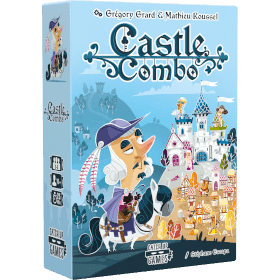
Castle Combo
2024In Castle Combo, players compete to assemble the most prosperous medieval domain by strategically recruiting a cast of unique characters. This fast-paced card game challenges you to build a personal 3x3 grid that represents your growing realm. Your goal is to skillfully place character cards to create powerful scoring synergies and maximize your victory points. By the game's end, the player whose tableau demonstrates the most clever combinations and generates the highest score will be declared the ruler of the most prestigious castle in the land, earning victory through careful planning and tactical recruitment.
At its core, the gameplay revolves around tableau building and card drafting from two distinct markets: the 'Village' and the 'Castle'. A 'Messenger' pawn dictates which of these two card rows is active for you to purchase from on your turn, adding a simple yet engaging tactical layer. Players must spend 'Gold' to acquire a new character, which is then placed orthogonally adjacent to an existing card in their personal grid. Each card not only provides an immediate effect, such as granting more Gold or special 'Keys', but also contributes to end-game scoring based on its final position relative to others. Keys can be spent to manipulate the Messenger or refresh the card market, offering crucial flexibility. The game concludes swiftly once all players have completed their nine-card grid, at which point final scores are tallied.
The unique appeal of Castle Combo lies in its elegant blend of accessibility and strategic depth. Its rules are straightforward enough to teach in minutes, making it an ideal gateway game for new players or a perfect 'filler' for game night. However, the puzzle of optimizing your 3x3 grid presents a compelling challenge for even seasoned gamers. The dual-market mechanic forces players to constantly adapt their plans, while the race to find the most effective card combinations ensures high replayability. Coupled with vibrant and playful art, the game provides a satisfying and engaging experience that packs a surprising amount of decision-making into a very short playtime.
2-5 20m⚖️ 1.9
RANK #239
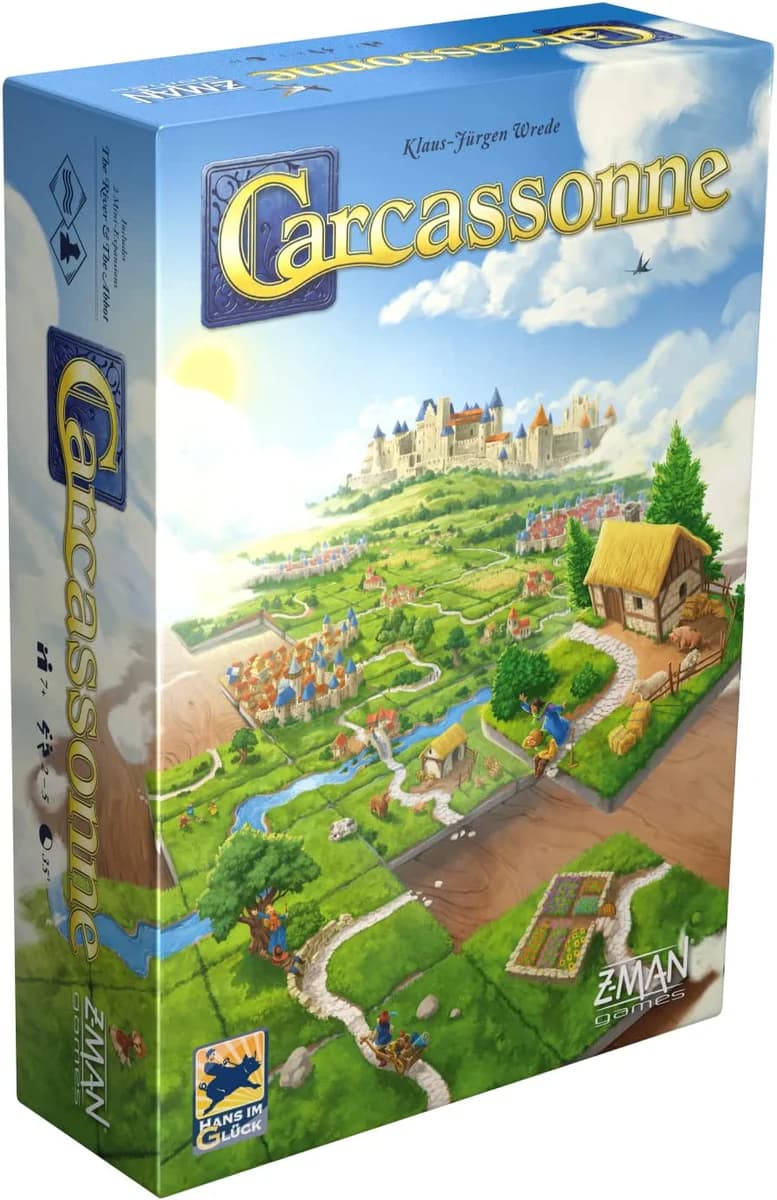
Carcassonne
2000Step into the role of a medieval lord in Carcassonne, the award-winning classic that has introduced millions to the modern world of tabletop gaming. In this celebrated title, players collectively construct the landscape of southern France, one tile at a time. The goal is to be the most successful ruler by strategically deploying your loyal followers—now famously known as 'meeples'—to claim and complete valuable features. By scoring points from magnificent walled cities, winding roads, pious monasteries, and sprawling fields, you will vie for dominance. Winner of the prestigious Spiel des Jahres in 2001, Carcassonne is a quintessential 'gateway' game, renowned for its elegant design and enduring appeal that has captivated players for decades.
The gameplay is deceptively simple yet offers compelling tactical decisions on every turn. The sequence of play is straightforward: draw a landscape tile, place it adjacent to an existing tile ensuring all features like roads and city walls match, and then decide whether to place one of your limited meeples on a feature of that newly placed tile. Placing a meeple as a knight in a city, a thief on a road, or a monk in a monastery commits that follower until the feature is completed. A completed city is fully enclosed, a road connects two distinct endpoints, and a monastery is surrounded by eight tiles. Upon completion, the feature scores points and the meeple is returned to your supply, making the management of your small band of followers a critical strategic challenge.
Carcassonne's brilliance lies in its seamless blend of accessibility and surprising strategic depth. While the rules can be taught in under five minutes, the game reveals layers of cunning tactics and cutthroat player interaction. Players can cleverly place tiles to merge their own fledgling features with an opponent's nearly-completed metropolis, either sharing the points or outright stealing control by having the majority of meeples. A unique long-term strategic element involves placing meeples as farmers in the fields, who remain on the board until the very end to score points for every completed city their pasture touches. This constant tension between short-term gains and long-term investment ensures that no two games are ever the same, making Carcassonne an infinitely replayable puzzle of spatial awareness and clever influence.
2-5 45m⚖️ 1.9
RANK #243
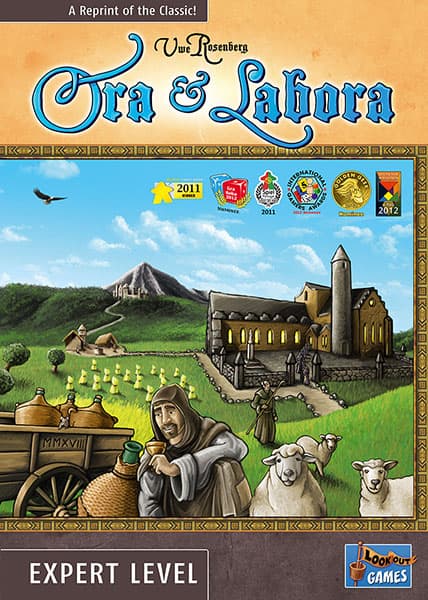
Ora et Labora
2011In *Ora et Labora*, Latin for 'Pray and Work', players step into the shoes of a monastic leader during the medieval era, tasked with expanding a small priory into a thriving and prosperous domain. Designed by the acclaimed Uwe Rosenberg, this game challenges players to skillfully manage resources, land, and labor to construct a powerful economic engine. The ultimate goal is to accumulate the most wealth and victory points by building an impressive landscape of buildings and settlements, proving your monastery to be the most industrious and prestigious. The game is a heavyweight strategic experience, demanding careful planning and foresight from its very first turn.
The gameplay revolves around a sophisticated blend of worker placement and resource management, elevated by several unique mechanical twists. Each player commands three clergymen who are placed on building cards to activate production or conversion actions. A key strategic consideration is that once a worker is placed, they cannot be used again until all three have been deployed. Players can also pay opponents to use their buildings, creating a layer of player interaction. A central feature is the innovative production wheel, which dictates the availability of basic resources each round. Instead of simply accumulating tokens, players must time their actions to gather goods when the wheel shows a high supply. These raw materials are then funneled through an intricate network of buildings to create refined goods like books, relics, and spirits, showcasing a deeply satisfying engine-building core.
*Ora et Labora* is celebrated by strategy gamers for its immense depth and high replayability. The spatial puzzle of arranging buildings on your personal landscape is a critical and engaging challenge; placement matters not only for optimizing your production chains but also for maximizing the scoring of settlements. The game further enhances its longevity by including two distinct scenarios, France and Ireland, which feature different buildings and resources, demanding new strategies with each playthrough. This combination of deep engine-building, a clever resource system, and a demanding spatial element makes *Ora et Labora* a classic and rewarding experience for those who relish complex, 'big box' eurogames.
1-4 120m⚖️ 4.3

RANK #246
Village
2011In Village, you are entrusted with the fate of a multi-generational family living in a medieval hamlet. Your primary objective is to guide your family members through their lives, helping them achieve greatness and earn the most prestige points. This is not just a game of prosperity but also of legacy. As your family members work in various professions—from farming and crafting to politics and religion—they contribute to your growing reputation. The game cleverly weaves the narrative of life and death into its core, where the ultimate goal is to have your most accomplished family members immortalized in the village chronicle, ensuring their story, and your victory, is remembered for ages.
The gameplay combines worker placement with a unique action selection mechanism. Each round begins with various action spaces on the board being populated with influence cubes of different colors. On your turn, you'll select a cube from a space, which then allows you to perform the associated action. These actions are diverse, allowing you to harvest grain, produce goods at a workshop, sell wares at the market, travel to distant lands, or gain influence in the church or village council. A standout mechanic is the treatment of time as a finite resource. Many actions cost time, which is tracked on your personal farm board. When your time marker completes a full circle, one of your oldest family members passes away. How and where they die is crucial; a life well-lived could mean a prestigious entry in the chronicle, while an uncelebrated death leads to an unmarked grave. The game concludes when either the chronicle or the graveyard fills, triggering the final scoring.
Village has earned critical acclaim, including the prestigious 2012 Kennerspiel des Jahres award, for its brilliant synthesis of theme and mechanics. Players love the poignant and surprisingly personal experience of managing a family lineage. The ever-present ticking clock and the inevitability of death add a layer of thematic depth rarely seen in Euro-style games. It forces players to make tough, long-term decisions about which family members to specialize and when to let them go for the sake of the family's legacy. This creates a compelling narrative arc within a strategically robust framework, offering a deeply engaging and memorable experience that goes beyond simple point optimization. It’s a game where every choice matters, not just for the score, but for the story you create for your family.
2-4 90m⚖️ 3.1
BoxNo Cover Art
RANK #250
Welcome to The Taverns of Tiefenthal, a strategic board game where you'll take on the role of a tavern owner in a small village. Your goal is to make your tavern the most successful by attracting the right customers and making the right improvements using dice placement and deck building mechanisms. Each player will begin with a slim deck of cards that includes 7 guests, a brewer, server, and a table. As you play, you'll upgrade your tavern board by flipping over pieces to reveal new areas for improvement. You'll also collect resources such as beer and Thaler (coins) to purchase new guests and nobles cards, or upgrade equipment in your tavern. The game consists of eight rounds, each with seven phases. Players will compete to have the most points at the end of round 8, gained from the cards in their deck and the upgrades in their tavern. The more special the cards in your deck, the more points you'll gain, especially from nobles. But don't forget the upgrades in your tavern, they'll also give you points and help you during the game with their special abilities. With its unique blend of dice placement and deck building, The Taverns of Tiefenthal offers a challenging and rewarding experience for players who enjoy strategic gameplay.
2-4 60m⚖️ 2.7

RANK #261
Coimbra
2018Step into the vibrant heart of Portugal during its golden Age of Discovery in Coimbra, a masterfully designed strategy game where players assume the roles of heads of the city's most influential houses. Your goal is to amass the most prestige and secure your family's legacy as the most prominent in all of Portugal. This is achieved by carefully currying favor with the city's most powerful citizens—clerics, scholars, merchants, and councilmen—as well as funding ambitious new voyages and supporting the local monasteries. Every decision is a calculated risk, a bid for influence in a city teeming with opportunity. Victory points are the ultimate measure of success, earned through a variety of avenues, demanding a flexible and forward-thinking strategy to outmaneuver your rivals.
The gameplay of Coimbra revolves around a clever and multi-faceted dice-drafting mechanism that serves as the engine for all your actions. Each round, players select dice from a central pool. The value of a chosen die dictates the turn order for actions and the price you'll pay, while its color determines which of the four main influence tracks you'll benefit from. These dice are then used to acquire powerful character cards from different city districts, each offering unique abilities, immediate resources, or crucial end-game scoring bonuses. As you gain characters, you'll advance on the corresponding influence tracks, which provide income in the form of coins, guards, pilgrim movements, and victory points. This intricate web of choices forces players to constantly evaluate the opportunity cost of every die they select.
Coimbra is highly regarded for the elegant way its systems interlock, creating a deeply engaging and satisfying puzzle. The dual nature of the dice—where both color and value are critically important—presents a fresh challenge on every turn, rewarding players who can best adapt their plans. With numerous paths to victory, from specializing in lucrative voyages to building a powerful engine from synergistic character cards and diploma sets, the game offers exceptional replayability. It strikes a perfect balance, being accessible enough for those new to mid-weight Eurogames while offering the strategic depth and tight competition that seasoned players crave. Its compelling decision-making and rewarding gameplay loop make it a standout title in the dice-drafting genre.
2-4 90m⚖️ 3.3

RANK #270
Fantasy Realms
2017In Fantasy Realms, players are powerful rulers competing to forge the most legendary kingdom in the land. Your entire realm, with all its might and magic, is represented by a hand of just seven cards. The goal is to accumulate the highest score by the game's end by assembling a hand of cards that synergize in powerful and clever ways. You might build a mighty military force with Kings, Knights, and Armies, or perhaps you'll wield elemental magic with a Wildfire and a Wizard. The challenge is to find the most potent combination from the hundreds of possibilities, turning a simple hand of cards into a high-scoring epic.
The gameplay is deceptively simple and incredibly fast. On your turn, you perform just two steps: draw one card, then discard one card. The strategic tension comes from the draw; you can either take the unknown top card from the central deck or select any face-up card from the discard area. This shared discard pile creates a dynamic pool of options that all players are watching. Each unique card in the deck has a base strength and a crucial bonus or penalty text that dictates how it interacts with other cards in your hand. A single card can unlock a massive scoring chain, while another might blank the powers of several others. The game ends quickly and suddenly once the tenth card is placed in the discard area, at which point all players calculate their final scores.
Fantasy Realms is celebrated for its elegant design, perfectly balancing accessibility with profound strategic depth. It can be taught in a minute, making it an excellent gateway game, yet the puzzle it presents offers endless variety and challenge for veteran gamers. The true mastery of the game comes not from understanding complex rules, but from recognizing card synergies and adapting your strategy on the fly. You are constantly evaluating your hand, the tempting cards in the discard pile, and what your opponents might be collecting. This 'combo-licious' puzzle, combined with its brisk 20-minute playtime, makes it a highly replayable and addictive experience, perfect as a game night opener or a main event played over multiple rounds.
3-6 20m⚖️ 1.8