Strategy Games
Browse all Strategy board games in the Meeple Pulse database.
Styles
Themes
AbstractAdventureAncientAnimalsArtBusinessCard GameCo-operativeComic BookCooperativeCrimeEconomicEnvironmentalismExplorationFantasyHistoricalHorrorHumorIntrigueLiteraryMagicMarvelMedievalModernMuseumMysteryMythologyNatureNauticalPoliticalPress Your LuckSatireSci-FiSocial CommentarySocial InteractionSpaceSuperheroesThematicTravelWarWesternWord-Guessing
Mechanics
3D PlacementActingAction / DexterityAction DraftingAction Point AllowanceAction Point Allowance SystemAction Point SystemAction PointsAction ProgrammingAction QueueAction RetrievalAction SelectionAction/EventAlliancesAlternate ActivationApp-AssistedApp-DrivenArea ControlArea InfluenceArea MajorityArea Majority / InfluenceArea MovementArgumentationAsymmetricAsymmetric FactionsAsymmetric GameAsymmetric PowersAsymmetrical PowersAuction & BiddingAuction/BiddingAuctioningBag BuildingBettingBetting and BluffingBetting and WageringBetting and WagersBiddingBingoBlind BiddingBluffingCampaign / Battle Card DrivenCampaign / LegacyCampaign / Legacy GameCampaign / Mission-basedCampaign / ScenariosCampaign GameCampaign PlayCard DraftingCard DrawingCard DrivenCard Driven ActionCard Driven CombatCard Driven Dice AllocationCard Driven MovementCard ManagementCard PlayCard Play / Hand ManagementCard Play Conflict ResolutionCard SheddingCard-Driven MovementCharacter CreationCharacter ProgressionChit-Pull SystemCo-op PlayCo-operative GameCo-operative PlayCode-breakingCombat ResolutionCombo ChainCommand CardsCommodity SpeculationCommunication LimitsContract FulfillmentContractsCooperative GameCooperative GameplayCooperative PlayCooperative Trick-takingDebateDeck BuildingDeck ConstructionDeck, Bag, and Pool BuildingDeck-BuildingDeductionDexterityDice DraftingDice PlacementDice RollingDiplomatic InfluenceDraftingDynamic Battle SystemEnclosureEnd Game BonusesEngine BuildingEngine-BuildingEscape RoomEvent DrivenExplorationFarmingFlip and WriteFollowFollow ActionGrid CoverageGrid MovementHand ManagementHex-and-CounterHexagon GridHidden MovementHidden RolesI Cut You ChooseIncomeInfluence / Area MajorityLadder ClimbingLegacyLegacy ElementsLegacy GameLegacy SystemLimited CommunicationLine DrawingLine of SightMancalaMap MovementMarketMarket DraftingMarket ManipulationMarket MechanicMarket SpeculationMatchingMeasurement MovementMemoryMission ObjectivesModular BoardModular Board ConstructionMovement TemplatesMulti-Use CardsMulti-use CardsMultiple ScenariosMust FollowNarrative ChoiceNarrative Choice / ParagraphNegotiationNegotiation MechanicsNetwork & Route BuildingNetwork BuildingNetwork and Route BuildingOne vs ManyOne vs. ManyOpen DraftingPaper-and-PencilPartnershipsPattern BuildingPattern RecognitionPick-up and DeliverPlayer EliminationPlayer InteractionPlayer JudgePoint SaladPoint to Point MovementPolyominoesPush Your LuckPush-Your-LuckPuzzlePuzzle-LikePuzzle-SolvingRaceReal-TimeRecipe FulfillmentResource ManagementRole PlayingRole SelectionRoll / Spin and MoveRondelRoute BuildingRoute-BuildingRoute/Network BuildingSanity SystemScenario / Campaign PlayScenario / Mission / Campaign GameScenario / Mission FunctionSecret Unit DeploymentSemi-Cooperative GameSet CollectionSheddingSimulationSimultaneous ActionSimultaneous Action SelectionSimultaneous Hidden AllocationSocial DeductionSocial InteractionSolo / Solitaire GameSpace ExplorationStat Check / Skill CheckStock HoldingStorytellingStrategic PlanningTableau BuildingTactical Decision-MakingTake ThatTargeted CluesTeam PlayTeam-Based GameTeam-Based GuessingTeamworkTech TreesTech Trees / Tech TracksTechnology & Armament TracksTechnology TreeTension & Aggression TracksTile DraftingTile LayingTile PlacementTime TrackTime TravelTower DefenseTrack MovementTradingTrick-takingTug of WarTurn Order: PassTurn Order: Stat-BasedUnit PlacementVariable Phase OrderVariable Player PowersVariable Set-upVariable SetupVictory Point TracksVotingWord AssociationWord GameWord GuessingWord-GuessingWord-guessingWordplayWorker Placement
BoxNo Cover Art
RANK #99
Fields of Arle
2014Fields of Arle immerses you in the challenging yet rewarding life of a farming family in 18th-century East Frisia. In this masterwork by acclaimed designer Uwe Rosenberg, players are tasked with developing a modest plot of land into a thriving and prosperous homestead. Over the course of four and a half years, you will shape the very landscape, manage livestock, and craft valuable goods. The game is a deeply thematic and strategic experience where the ultimate goal is to accumulate the most victory points by building a diverse and efficient agricultural engine, demonstrating your family's success through the tangible growth of your farmstead and the wealth of goods you've produced.
The gameplay is centered around a robust worker placement system that unfolds over nine rounds, each representing a half-season of either summer or winter. Each season offers a distinct set of actions, from plowing fields and shearing sheep in the summer to breeding animals and weaving cloth in the winter. Players strategically place their family members on action spaces to manage every aspect of their farm. This includes draining moors to create new pastures, building dikes to protect land from floods, raising cattle and horses, and constructing an array of buildings that provide crucial new abilities. A clever mechanic allows a player to perform an off-season action once per round, but this flexibility comes at the cost of giving up the first-player advantage, adding another layer of tactical decision-making.
What makes Fields of Arle a beloved classic among strategy gamers is its incredible depth and the sandbox-style freedom it offers. It is a quintessential heavy Eurogame, specifically tailored for a one or two-player experience, complete with a rich and engaging solo mode. There is no single prescribed path to victory; players can focus on animal husbandry, crop cultivation, trade, or building construction, leading to immense replayability as you explore different strategies with each playthrough. The satisfaction of watching your personal player board transform from barren land into a complex, bustling farm is a core part of its appeal, offering a deeply rewarding journey for those who enjoy intricate, low-interaction engine-building puzzles.
1-2 90m⚖️ 3.9
RANK #101
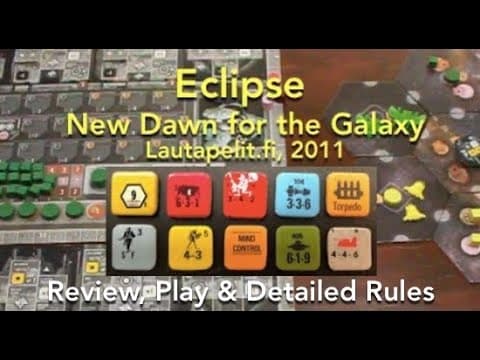
Eclipse: New Dawn for the Galaxy is a critically acclaimed 4X board game that places you at the head of a vast interstellar civilization. Over nine rounds, you must guide your people to dominance by exploring new star systems, researching powerful technologies, and engaging in both diplomacy and warfare. The ultimate goal is to accumulate the most Victory Points, which are earned through a variety of achievements, including controlling galactic sectors, winning decisive battles, forging alliances, and discovering ancient alien artifacts. The game masterfully blends the grand, thematic scope of an 'Ameritrash' space opera with the tight, resource-driven puzzles of a 'Euro-style' game, creating a rich and rewarding strategic experience.
The gameplay revolves around a clever action and upkeep system that forces difficult decisions. On your turn, you perform a single action, such as exploring the modular galaxy, building customized starships, or advancing on a shared technology tree. Each system you control or action you take requires placing an influence disc from your player board. As these discs are used, your civilization's end-of-round upkeep cost increases, creating a tense balance between rapid expansion and economic stability. Players must carefully manage three resources—Materials for building, Science for research, and Money to pay upkeep—generated by colonizing planets, forcing them to weigh every decision against its long-term cost.
What truly sets Eclipse apart is its deep and intuitive ship customization system. Players don't just build generic ships; they design them. Using the Upgrade action, you can add powerful components like improved engines, advanced computers, deadly weapons, and resilient shields directly onto your ship blueprints. This allows for incredible strategic flexibility, as you can tailor your fleets to counter specific opponents or pursue unique combat doctrines. Combat itself is resolved through dice rolls, but the odds are heavily influenced by your custom designs, rewarding clever engineering and tactical foresight. This combination of deep strategic planning, tense economic management, and thrilling, customizable combat makes Eclipse a modern classic in the space strategy genre.
2-6 150m⚖️ 3.7
BoxNo Cover Art
RANK #102
Concordia Venus
2018Concordia Venus invites players to a strategic journey across the ancient Roman world, where they will build an economic empire and expand their influence. The ultimate goal is to achieve prosperity and earn the most victory points by carefully establishing colonies, producing valuable goods, trading efficiently, and satisfying the favor of various Roman deities. This standalone expansion or module elevates the critically acclaimed Concordia experience with new challenges and opportunities for both competitive and cooperative play.
At its heart, Concordia Venus is an elegantly designed economic strategy game driven by clever hand management and an action point allowance system. Players use a limited hand of persona cards, each granting a specific action such as moving colonists across the point-to-point map, producing resources in their cities, or constructing new outposts. Mastering the timing of card play and the strategic use of the Tribune card to retrieve all spent actions is crucial for efficiency. The game beautifully blends set collection for resources and a subtle form of contract fulfillment through its diverse scoring criteria, rewarding thoughtful long-term planning over immediate gains.
Fans adore Concordia Venus for its profound strategic depth encased in remarkably straightforward rules, making it easy to learn yet challenging to master. Its unique appeal lies in the low-aggression yet highly interactive gameplay, where indirect competition for optimal city locations and resources keeps players engaged. With high replayability across different maps and a dynamic scoring system that rewards balanced development, Concordia Venus offers an intellectually stimulating and deeply satisfying experience for strategists seeking an economic engine-building game without excessive luck or complexity, now with added flexibility for team play.
2-6 120m⚖️ 2.8
RANK #111
Splendor Duel
2022Splendor Duel is a standalone, two-player board game that brilliantly reimagines the classic Splendor experience, transforming it into a tense and direct confrontation. Designed by the original's creator, Marc André, in collaboration with two-player specialist Bruno Cathala, this version is tailored specifically for head-to-head competition. The objective is to outmaneuver your opponent by being the first to achieve one of three distinct victory conditions: accumulating a total of 20 or more prestige points, collecting 10 or more crowns on your jewel cards, or achieving dominance in a single gem color by earning 10 or more prestige points from those cards alone. This multi-faceted goal creates a dynamic game state where players must constantly adapt their strategies and react to their rival's progress.
The gameplay retains the satisfying engine-building core of its predecessor but introduces several key mechanics that foster intense interaction. The most significant change is a shared game board where gem, pearl, and gold tokens are arranged in a pattern. On their turn, players must draft up to three adjacent tokens in a single straight line, creating a tight, tactical puzzle where every selection can either set up your own plans or thwart your opponent's. The game also introduces valuable Pearl tokens, required for some of the most powerful cards, and three Privilege scrolls, which offer a crucial dose of flexibility by allowing a player to snatch any single non-gold token from the board. Purchasing cards still provides permanent gem bonuses, but now many also come with powerful, one-time abilities that can swing the tempo, such as taking an extra turn or stealing a token directly from your opponent.
Splendor Duel is widely acclaimed for being an exemplary two-player adaptation that enhances what made the original great. It successfully injects a much higher degree of player interaction and strategic depth without sacrificing the accessibility and quick playtime that fans love. The token-drafting board forces a constant awareness of the opponent's strategy, making every decision meaningful. The multiple paths to victory ensure high replayability, as players can pivot their approach from game to game or even mid-game. It’s a perfect, compact game for couples or any pair of players seeking a competitive, engaging, and polished contest of wits and forward planning, solidifying its reputation as a standout title in the two-player genre.
2 30m⚖️ 2.1
RANK #114
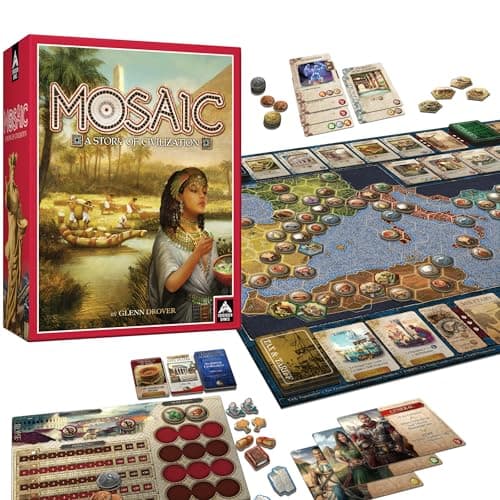
"Through the Ages: A Story of Civilization" is a monumental board game that tasks players with one of the grandest challenges imaginable: guiding a civilization from its humble beginnings in antiquity through to the complexities of the modern era. It's a game of epic scope where military might is just one tool among many. The ultimate objective is not world domination, but the creation of a lasting legacy. Victory is determined by the accumulation of culture points, a measure of your society's artistic, philosophical, and technological contributions to history. Players strive to build a civilization that will be remembered and celebrated for its profound impact, leaving an indelible mark on the annals of time.
The game's engine is driven by a clever card drafting mechanism. A central 'card row' displays a constantly shifting array of potential advancements, from new technologies and political systems to great leaders and world wonders. The cost to acquire these cards decreases the longer they remain unchosen, creating a tense and dynamic market of opportunities. On their turn, players spend a set number of civil and military actions to execute their grand strategy. These actions allow them to draft cards, increase their population, construct or upgrade buildings, and bolster their military forces. Success hinges on a delicate balancing act. You must carefully manage your production of food and resources, your investment in science to unlock new possibilities, and the strength of your army, as rivals can exploit any weakness through aggression or outright war to seize resources and disrupt your progress.
Players are drawn to "Through the Ages" for its profound strategic depth and the immensely rewarding experience of nurturing a civilization from a single settlement into a sprawling empire. It presents an intricate and fascinating puzzle, forcing players to make crucial long-term decisions while adapting to the tactical opportunities presented by the card row. The game's unique appeal lies in this synthesis of grand strategy and tactical execution. While player interaction can be direct and confrontational through the military system, the core conflict is often a race for efficiency and cultural prestige. This focus on building a superior internal engine, rather than simply conquering territory, has cemented its reputation as an essential title for serious hobbyists seeking a challenging, engrossing, and highly replayable masterpiece of game design.
2-4 180m⚖️ 4.2
RANK #115
7 Wonders
2010Step into the role of a leader of one of the seven great cities of the Ancient World in "7 Wonders," a celebrated civilization-building game. Your primary objective is to guide your city to glory by accumulating the most victory points over the course of three distinct historical Ages. Victory is not achieved through a single path, but through a masterful balance of developing your city's military might, advancing its scientific knowledge, constructing grand civic monuments, and fostering a robust commercial infrastructure. Each decision contributes to your final legacy, as you erect a wonder that will stand the test of time and create a civilization renowned throughout history.
The gameplay of "7 Wonders" is centered around an elegant and engaging card drafting mechanic. At the beginning of each of the three Ages, players receive a hand of cards representing various structures and advancements. Simultaneously, each player selects one card to play and then passes their remaining hand to an adjacent player, a direction that reverses each Age. This process continues until each player has played six cards per Age. With a chosen card, a player has three options: pay the resource cost to build the structure in their city's tableau, tuck the card under their Wonder board to build the next stage of their architectural marvel, or discard it to gain valuable coins. This simultaneous action selection brilliantly eliminates player downtime, keeping the game moving at a brisk pace regardless of the player count.
The game's enduring appeal lies in its remarkable blend of accessibility and strategic depth. New players can quickly grasp the core rules, while seasoned gamers will discover nuanced strategies and scoring synergies with every play. At the end of each Age, military conflicts are resolved with immediate neighbors, adding a layer of direct interaction. Final scoring is a satisfying culmination of your efforts, where points are tallied from military victories, scientific sets, completed wonder stages, civic buildings, commercial enterprises, powerful guilds, and your remaining treasury. This variety of scoring avenues ensures high replayability, as players can explore different strategies in every game, making "7 Wonders" a timeless classic that has earned its place as a cornerstone of modern board gaming.
3-7 30m⚖️ 2.3

RANK #126
Carnegie
2022Step into the shoes of an aspiring magnate during America's Gilded Age in *Carnegie*, a board game inspired by the legendary industrialist and philanthropist Andrew Carnegie. In this medium-heavy economic Eurogame, you are tasked with building a business empire from the ground up. Over the course of 20 rounds, you will manage employees, develop new technologies, invest in real estate across the nation, and expand your transport network. The ultimate goal is not just to be the wealthiest, but to build the most prestigious enterprise. Victory is determined by points earned through savvy business growth, strategic construction, and, crucially, generous contributions to society, proving that true success lies in both industry and philanthropy.
The gameplay is driven by a clever and highly interactive action-selection mechanism. Each round, the active player chooses one of four actions corresponding to a department in their company, and critically, all other players must also perform that same action. The 'Human Resources' department allows you to move your employees on your personal player board to activate different areas for future turns. 'Management' is used to acquire essential goods and money. 'Construction' lets you build new projects and expand your company's network on the main game board, while 'Research & Development' advances your company's technology, unlocking powerful new abilities and scoring paths. This system forces constant engagement and requires you to strategically anticipate your rivals' needs and intentions while optimizing your own.
What truly sets *Carnegie* apart is its brilliant integration of business acumen with philanthropic duty. Throughout the game, players are presented with opportunities to donate their wealth to charitable causes. This isn't merely a thematic element; these donations are a core mechanism for unlocking significant end-game scoring objectives. This creates a compelling strategic tension: do you reinvest your profits for immediate expansion and engine-building, or do you sacrifice short-term gains for long-term prestige and victory points? This dual focus, combined with the shared action system that ensures no downtime, makes for a deeply rewarding and thinky experience where every decision matters, not just for you, but for everyone at the table.
1-4 120m⚖️ 4.1

RANK #130
Galactic Cruise
2025Galactic Cruise invites players to the helm of a burgeoning interstellar tourism company in a competitive, heavyweight Eurogame experience. You take on the role of a supervisor, vying for the prestigious position of CEO within the galaxy's premier space travel corporation. Your objective is to prove your managerial prowess by accumulating the most victory points. This is achieved by building and operating a fleet of luxurious starships, designing incredible interstellar vacation packages, and attracting wealthy guests from across the cosmos. The game is a test of long-term strategy and economic acumen, where every decision contributes to your corporate legacy. Only the supervisor who can most effectively expand their operations and satisfy the discerning tastes of interstellar travelers will rise to the top of the corporate ladder.
The gameplay is driven by a sophisticated worker placement system set across three distinct 'eras'. Players assign their crew members to action spaces on a dynamic, modular main board to gather resources, acquire advanced blueprints, construct shuttle components, and build crucial developments that link locations and unlock new strategic pathways. A standout feature is the game's interactive 'bumping' mechanism; if you place a worker on an occupied space, the original worker is returned to its owner, who then receives a small income boost. This clever design choice ensures players are never truly locked out of actions, adding a tactical layer to placement decisions. The core loop revolves around assembling and launching your custom-built shuttles. Once launched, a crew member becomes a pilot, journeying to various destinations to reap valuable rewards while players manage a fluctuating resource market and invest in new technologies to gain a competitive edge.
What makes *Galactic Cruise* a compelling title for seasoned gamers is its deep, multi-layered strategic puzzle. The game rewards careful planning and efficient engine-building, offering immense satisfaction as you see your tourism empire grow from a small operation into a galactic powerhouse. The modular board ensures high replayability, as the available actions and connections will shift with every game. Renowned artist Ian O'Toole's distinctive visual style brings the futuristic setting to life, complementing the high-quality production. The clever worker-bumping mechanic fosters a healthy level of player interaction that feels engaging rather than punitive, keeping all players involved throughout the game's considerable playtime. It's a challenging and rewarding journey for those who relish complex economic simulations and the thrill of building a successful enterprise among the stars.
1-4 120m⚖️ 4.0

RANK #132
Keyflower
2012Keyflower is a celebrated strategic eurogame where players guide their fledgling settlements through four distinct seasons, from the promise of spring to the final scoring in winter. The ultimate goal is to amass the most victory points by building a prosperous and efficient village. This is achieved by strategically bidding on and acquiring new hexagonal village tiles, generating valuable resources like wood, stone, and iron, and expanding your workforce of colorful 'keyples'. Each player begins with a home tile and a small group of workers, but through clever play, they will expand their domain, upgrade buildings, and fulfill the scoring conditions presented by the lucrative winter tiles, which are only revealed at the game's outset, forcing players to plan their long-term strategy from the very first turn.
The game's brilliance lies in its seamless integration of several core mechanics, most notably worker placement and auctioning. The keyples are a dual-use component: they serve as both the currency for bidding on new tiles and the workers needed to activate the special abilities of those tiles. This creates a wonderfully tense decision space each turn. Do you commit your workers to a high-stakes bid for a powerful tile your opponent wants, or do you use them to activate buildings in your village—or even an opponent's village—to gather crucial resources? Actions are color-dependent; placing a worker on a tile requires matching its color if it's the first one there, after which any player can add more workers of that same color to take the same action, creating a dynamic and highly interactive system where timing and worker management are paramount.
Keyflower is beloved by strategy gamers for its depth, high player interaction, and immense replayability. The tension of the auction system, where bids are made publicly behind a player's screen, is a constant source of excitement and bluffing. The ability to use tiles in your opponents' villages (by sending one of your keyples to them, which they then get to keep) ensures that players are always engaged with what others are doing. No two games feel the same, as the selection and order of tiles that appear each season are randomized. This variability demands flexible thinking and rewards players who can build a synergistic engine to capitalize on the opportunities presented, making each journey from spring to winter a unique and deeply satisfying puzzle to solve.
2-6 105m⚖️ 3.4
RANK #133
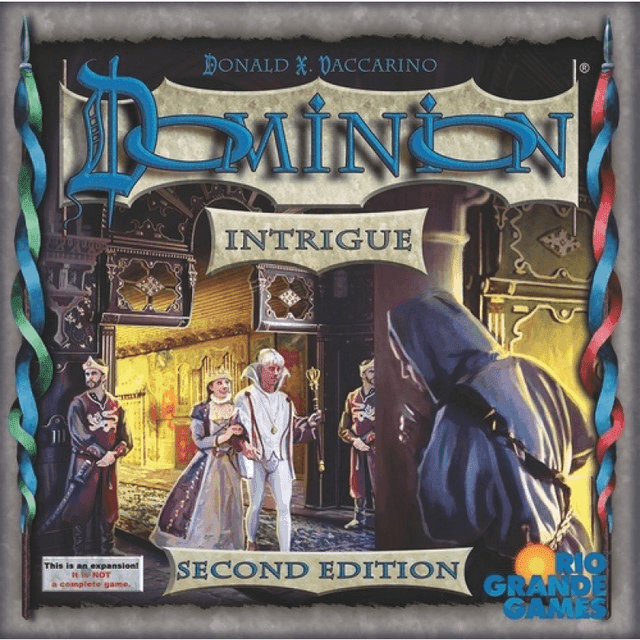
Dominion: Intrigue stands as the celebrated first expansion to the game that defined a genre. It can be played entirely on its own or seamlessly combined with the original base game and other expansions for endless variety. The objective remains the same: players compete to build the most prosperous and powerful kingdom, represented by the accumulation of Victory Point cards in their personal deck by the game's end. Starting with a meager and identical set of cards, each participant must strategically purchase cards from a shared central supply, crafting a unique deck that functions as their engine. This engine must be carefully balanced, generating wealth to acquire valuable provinces while simultaneously defending against the nefarious schemes of rival monarchs.
Gameplay in Intrigue retains the elegant 'ABC' turn structure of its predecessor: perform an Action, Buy a card, and Cleanup your hand to draw a new one. Where Intrigue carves its own identity is in its thematic focus on player choice and interaction. Many of its 26 new Kingdom cards present players with a dilemma, forcing a tactical decision between two powerful effects. The 'Steward' card, for example, lets a player choose to draw more cards, gain extra currency, or remove unwanted cards from their deck. This expansion also cleverly introduces hybrid-type cards, such as the 'Harem', which serves as both a Treasure card for buying power and a Victory card for end-game scoring. These dual-purpose cards help to solve the classic Dominion puzzle of when to start adding 'useless' Victory cards that can otherwise clog up a finely tuned deck.
What makes Intrigue an enduring favorite is the dramatic increase in direct player interaction and strategic depth it introduces. While the original game had attack cards, Intrigue's are often more subtle and choice-driven, leading to more engaging and dynamic confrontations. The constant decision-making required by the new card effects ensures that every turn is meaningful and no two games ever feel the same. It masterfully expands upon the core concepts of Dominion without adding burdensome rules, making it an ideal next step for players who have mastered the base set and a perfect, albeit slightly more complex, entry point for new players seeking a richer, more interactive deck-building experience.
2-4 30m⚖️ 2.4

RANK #137
Caylus
2005Caylus is a quintessential strategy game that casts players as master builders in 13th-century France. Tasked by King Philip the Fair, you must contribute your resources and labor to the grand construction of a new castle, while simultaneously developing the road and village that lead to it. The ultimate goal is to accumulate the most prestige points by the time the castle is complete, thereby earning the king's favor. Widely regarded as a foundational title in the worker placement genre, Caylus is celebrated for its strategic depth and minimal reliance on luck. Beyond the initial random setup of a few buildings, every decision rests squarely on the players' shoulders, making each victory a testament to superior planning and foresight.
The gameplay revolves around a central road where players, in turn order, place their workers on various buildings. This is the core 'worker placement' mechanic, where each placement costs money and grants access to specific actions—from gathering essential resources like wood, stone, and food, to constructing new commercial or residential buildings that expand the game board itself. A truly distinctive element is the movement of the Provost marker. Players can spend money to move this pawn along the road, and at the end of the round, any worker placed on a building beyond the Provost is not activated. This introduces a tense and highly interactive layer of blocking and manipulation, as players vie to ensure their own actions resolve while thwarting their opponents'. The game's pace is dictated by another marker, the Bailiff, whose movement can be accelerated or slowed by the Provost's final position, directly impacting the game's length.
What makes Caylus an enduring classic is its elegant fusion of simple rules with profound strategic possibilities. The Provost mechanism, in particular, elevates the game from a simple optimization puzzle to a dynamic and interactive struggle. It forces players to be constantly aware of their opponents' intentions and to balance the cost of moving the Provost against the potential benefits of activating their workers. This low-luck, high-interaction design ensures that every game is a unique challenge, full of difficult decisions and rewarding long-term planning. For enthusiasts of heavyweight Eurogames, Caylus offers a masterclass in design, providing a deeply satisfying and highly replayable experience that has rightfully earned its place as a cornerstone of modern board gaming.
2-5 120m⚖️ 3.8

RANK #139
Troyes
2010In Troyes, players are transported to the year 1200 in the Champagne region of France to lead a rich and influential family. Over the course of four centuries, you will guide the destiny of the city, leaving your mark on its history. The ultimate goal is to amass the greatest fame and glory, measured in victory points. This is achieved by contributing your family's resources and citizens to three key societal pillars: the military, the religious, and the civil domains. Players will work to construct the magnificent cathedral, a central project that demands shared effort, while simultaneously defending the city from a constant barrage of unfortunate events. Your success will be judged by your ability to navigate these challenges and strategically place your family members in positions of power throughout the city's burgeoning society.
The game's engine is driven by a unique and highly interactive dice-placement mechanism. At the start of each round, players roll a pool of dice determined by the number of their citizens (meeples) they have stationed in the city's three main guildhalls. These dice, colored red (military), white (religious), and yellow (civil), represent the available labor force for that round. On your turn, you'll group one to three dice of the same color to perform actions. These actions include activating powerful ability cards on the board, recruiting more citizens, earning money, fighting off negative event cards, or dedicating work towards the cathedral. The most compelling twist is that you are not limited to your own dice. For a price, you can purchase dice directly from your opponents' pools, forcing them to react and creating a tense, dynamic marketplace for actions each and every turn. This system forces constant evaluation of not only your own plans but the potential moves of everyone at the table.
Troyes is celebrated among strategy gamers for its brilliant fusion of classic Eurogame mechanics with an uncommonly high degree of player interaction. While many games in its weight class can feel like 'multiplayer solitaire', the ability to buy an opponent's dice ensures that you are always invested in their rolls and decisions. This creates a constant tension and a need for tactical flexibility. The game offers immense replayability through its modular setup; the specific action cards available in each of the three domains change from game to game, as do the events and character cards that grant secret end-game scoring objectives. This variability means that no two games of Troyes feel the same. It's a deeply rewarding and challenging puzzle that masterfully balances long-term strategic planning with the need for sharp, opportunistic tactical plays, making it an enduring classic of the genre.
2-4 90m⚖️ 3.5