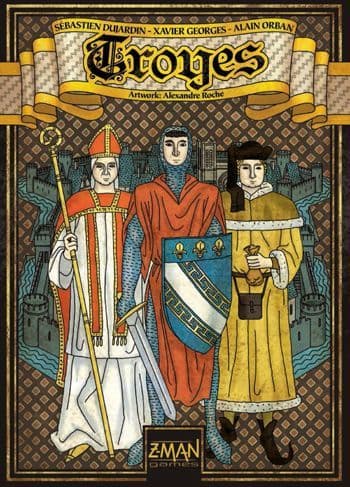
Troyes
Dice, Deniers, and Destiny in Champagne.
Overview
In Troyes, players are transported to the year 1200 in the Champagne region of France to lead a rich and influential family. Over the course of four centuries, you will guide the destiny of the city, leaving your mark on its history. The ultimate goal is to amass the greatest fame and glory, measured in victory points. This is achieved by contributing your family's resources and citizens to three key societal pillars: the military, the religious, and the civil domains. Players will work to construct the magnificent cathedral, a central project that demands shared effort, while simultaneously defending the city from a constant barrage of unfortunate events. Your success will be judged by your ability to navigate these challenges and strategically place your family members in positions of power throughout the city's burgeoning society.
The game's engine is driven by a unique and highly interactive dice-placement mechanism. At the start of each round, players roll a pool of dice determined by the number of their citizens (meeples) they have stationed in the city's three main guildhalls. These dice, colored red (military), white (religious), and yellow (civil), represent the available labor force for that round. On your turn, you'll group one to three dice of the same color to perform actions. These actions include activating powerful ability cards on the board, recruiting more citizens, earning money, fighting off negative event cards, or dedicating work towards the cathedral. The most compelling twist is that you are not limited to your own dice. For a price, you can purchase dice directly from your opponents' pools, forcing them to react and creating a tense, dynamic marketplace for actions each and every turn. This system forces constant evaluation of not only your own plans but the potential moves of everyone at the table.
Troyes is celebrated among strategy gamers for its brilliant fusion of classic Eurogame mechanics with an uncommonly high degree of player interaction. While many games in its weight class can feel like 'multiplayer solitaire', the ability to buy an opponent's dice ensures that you are always invested in their rolls and decisions. This creates a constant tension and a need for tactical flexibility. The game offers immense replayability through its modular setup; the specific action cards available in each of the three domains change from game to game, as do the events and character cards that grant secret end-game scoring objectives. This variability means that no two games of Troyes feel the same. It's a deeply rewarding and challenging puzzle that masterfully balances long-term strategic planning with the need for sharp, opportunistic tactical plays, making it an enduring classic of the genre.