Modern Games
Browse all Modern board games in the Meeple Pulse database.
Styles
Themes
AbstractAdventureAncientAnimalsArtBusinessCard GameCo-operativeComic BookCooperativeCrimeEconomicEnvironmentalismExplorationFantasyHistoricalHorrorHumorIntrigueLiteraryMagicMarvelMedievalModernMuseumMysteryMythologyNatureNauticalPoliticalPress Your LuckSatireSci-FiSocial CommentarySocial InteractionSpaceSuperheroesThematicTravelWarWesternWord-Guessing
Mechanics
3D PlacementActingAction / DexterityAction DraftingAction Point AllowanceAction Point Allowance SystemAction Point SystemAction PointsAction ProgrammingAction QueueAction RetrievalAction SelectionAction/EventAlliancesAlternate ActivationApp-AssistedApp-DrivenArea ControlArea InfluenceArea MajorityArea Majority / InfluenceArea MovementArgumentationAsymmetricAsymmetric FactionsAsymmetric GameAsymmetric PowersAsymmetrical PowersAuction & BiddingAuction/BiddingAuctioningBag BuildingBettingBetting and BluffingBetting and WageringBetting and WagersBiddingBingoBlind BiddingBluffingCampaign / Battle Card DrivenCampaign / LegacyCampaign / Legacy GameCampaign / Mission-basedCampaign / ScenariosCampaign GameCampaign PlayCard DraftingCard DrawingCard DrivenCard Driven ActionCard Driven CombatCard Driven Dice AllocationCard Driven MovementCard ManagementCard PlayCard Play / Hand ManagementCard Play Conflict ResolutionCard SheddingCard-Driven MovementCharacter CreationCharacter ProgressionChit-Pull SystemCo-op PlayCo-operative GameCo-operative PlayCode-breakingCombat ResolutionCombo ChainCommand CardsCommodity SpeculationCommunication LimitsContract FulfillmentContractsCooperative GameCooperative GameplayCooperative PlayCooperative Trick-takingDebateDeck BuildingDeck ConstructionDeck, Bag, and Pool BuildingDeck-BuildingDeductionDexterityDice DraftingDice PlacementDice RollingDiplomatic InfluenceDraftingDynamic Battle SystemEnclosureEnd Game BonusesEngine BuildingEngine-BuildingEscape RoomEvent DrivenExplorationFarmingFlip and WriteFollowFollow ActionGrid CoverageGrid MovementHand ManagementHex-and-CounterHexagon GridHidden MovementHidden RolesI Cut You ChooseIncomeInfluence / Area MajorityLadder ClimbingLegacyLegacy ElementsLegacy GameLegacy SystemLimited CommunicationLine DrawingLine of SightMancalaMap MovementMarketMarket DraftingMarket ManipulationMarket MechanicMarket SpeculationMatchingMeasurement MovementMemoryMission ObjectivesModular BoardModular Board ConstructionMovement TemplatesMulti-Use CardsMulti-use CardsMultiple ScenariosMust FollowNarrative ChoiceNarrative Choice / ParagraphNegotiationNegotiation MechanicsNetwork & Route BuildingNetwork BuildingNetwork and Route BuildingOne vs ManyOne vs. ManyOpen DraftingPaper-and-PencilPartnershipsPattern BuildingPattern RecognitionPick-up and DeliverPlayer EliminationPlayer InteractionPlayer JudgePoint SaladPoint to Point MovementPolyominoesPush Your LuckPush-Your-LuckPuzzlePuzzle-LikePuzzle-SolvingRaceReal-TimeRecipe FulfillmentResource ManagementRole PlayingRole SelectionRoll / Spin and MoveRondelRoute BuildingRoute-BuildingRoute/Network BuildingSanity SystemScenario / Campaign PlayScenario / Mission / Campaign GameScenario / Mission FunctionSecret Unit DeploymentSemi-Cooperative GameSet CollectionSheddingSimulationSimultaneous ActionSimultaneous Action SelectionSimultaneous Hidden AllocationSocial DeductionSocial InteractionSolo / Solitaire GameSpace ExplorationStat Check / Skill CheckStock HoldingStorytellingStrategic PlanningTableau BuildingTactical Decision-MakingTake ThatTargeted CluesTeam PlayTeam-Based GameTeam-Based GuessingTeamworkTech TreesTech Trees / Tech TracksTechnology & Armament TracksTechnology TreeTension & Aggression TracksTile DraftingTile LayingTile PlacementTime TrackTime TravelTower DefenseTrack MovementTradingTrick-takingTug of WarTurn Order: PassTurn Order: Stat-BasedUnit PlacementVariable Phase OrderVariable Player PowersVariable Set-upVariable SetupVictory Point TracksVotingWord AssociationWord GameWord GuessingWord-GuessingWord-guessingWordplayWorker Placement
RANK #218
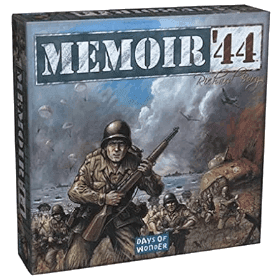
Memoir '44
2004Memoir '44 invites players to step into the role of commanders during the pivotal moments of World War II. Created by esteemed designer Richard Borg, this historically-themed board game, published by Days of Wonder, offers a streamlined and accessible entry into the wargaming genre. Players recreate iconic battles from the D-Day landings and other significant engagements of the war. The primary goal is to be the first to achieve a predetermined number of Victory Medals. These medals are typically awarded for eliminating enemy units from the hexagonal battlefield, but specific scenarios often introduce unique objectives, such as capturing and holding key terrain features or breaking through enemy lines, which also grant these crucial tokens of success. The game successfully abstracts the complexities of war into a fast-paced and engaging system, making historical conflict both approachable and exciting.
At the heart of Memoir '44 lies the innovative "Commands & Colors" game system, which elegantly blends strategy with an element of chance. A player's turn is driven by the playing of a single Command Card from their hand. These cards dictate which units can be activated and, crucially, in which of the three distinct sections of the board—left flank, center, or right flank—those orders can be given. Once a card is played, the player orders their chosen units, which can be infantry, armor, or artillery, to move and/or engage in combat. Combat is resolved through a quick and intuitive dice roll, using custom dice whose symbols determine hits, force retreats, or result in misses. The terrain itself is a critical tactical element, with hills, forests, and towns providing defensive cover, impeding movement, and blocking line of sight, forcing commanders to carefully consider their positioning and approach. After all actions are completed, the player draws a new Command Card, concluding their turn and setting the stage for their opponent's response.
The enduring appeal of Memoir '44 stems from its masterful balance of tactical depth and straightforward gameplay. It serves as a perfect 'gateway' wargame, welcoming players who might be intimidated by more complex simulations while still offering satisfying strategic decisions for veteran gamers. The scenario-driven design provides immense replayability; with over a dozen historical scenarios in the base game alone, each with a unique map layout, force composition, and victory conditions, no two games feel quite the same. The combination of strategic card management—knowing when to play a powerful card or when to hold back—and the luck inherent in dice rolls and card draws creates a constant and engaging tension. It brilliantly captures the narrative and drama of a WWII skirmish, delivering a complete and compelling experience in about an hour, securing its place as a classic in the world of historical board gaming.
2-8 45m⚖️ 2.0
RANK #227
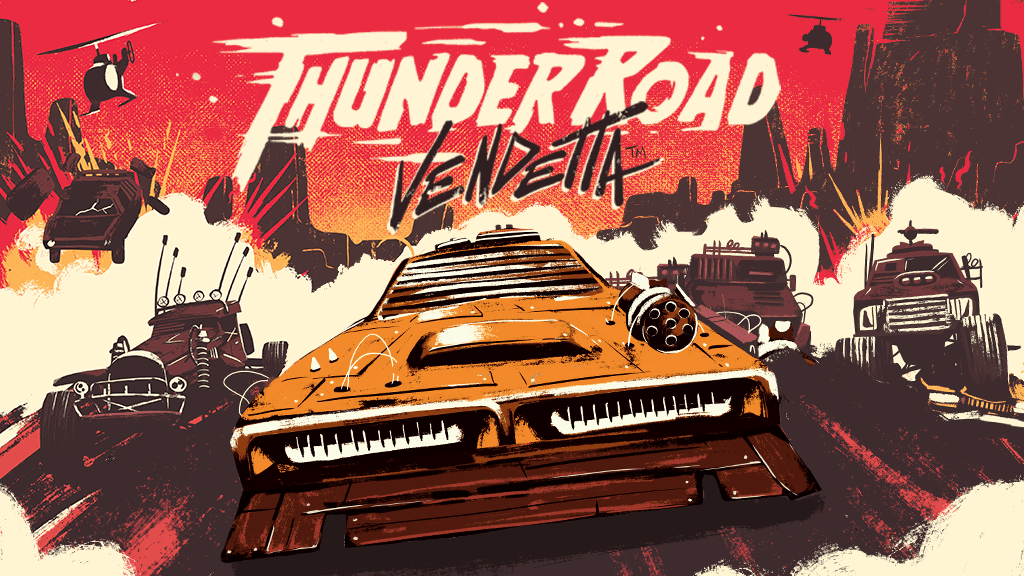
Thunder Road: Vendetta is the explosive, high-octane revival of the 1986 cult classic, putting players in the driver's seat for a brutal, post-apocalyptic death race. In this game of vehicular carnage, you control a crew of three unique vehicles—a small, medium, and large car—each with its own capabilities. Your goal is simple, yet fiercely contested: either be the first player to race one of your vehicles across the finish line, or simply outlast the competition by becoming the last crew with a vehicle left on the road. Survival is just as important as speed, and only the most cunning and ruthless driver will claim victory on this unforgiving stretch of asphalt.
The gameplay is fueled by a dynamic and accessible dice-driven system. Each round, all players simultaneously roll their dice and then take turns assigning them. Dice can be allocated to your cars to determine their movement speed, or to a special command board to unlock powerful, once-per-round abilities. You can activate a nitro boost for a burst of speed, drift around a hazard, perform crucial repairs, or even call in a devastating attack helicopter to rain fire upon your rivals. The road itself is a constantly evolving threat, thanks to a modular board system where the rearmost tile is removed and a new one is added to the front as the race progresses. This 'scrolling' effect means any vehicle left behind is eliminated, adding a relentless pressure to keep moving forward. Combat is direct and brutal; players can shoot at opponents ahead of them or slam into adjacent cars, triggering chaotic dice-rolls that can send vehicles careening across the board and into each other, creating spectacular chain reactions of destruction.
What makes Thunder Road: Vendetta a standout experience is its perfect blend of light strategy and cinematic, chaotic fun. The rules are easy to grasp, making it incredibly accessible for new players and families, yet the tactical decisions offer enough depth to engage seasoned gamers. The constant threat of player elimination, spectacular collisions, and the ever-present danger of being left behind by the board itself create an atmosphere of thrilling tension. It’s a game that revels in high player interaction and 'take that' moments, ensuring that no two races are ever the same. The unpredictable nature of the dice rolls, combined with the strategic use of command board abilities, generates hilarious, fist-pumping moments that will have your group cheering, groaning, and talking about their legendary wrecks long after the game is over.
2-4 60m⚖️ 2.1
RANK #236
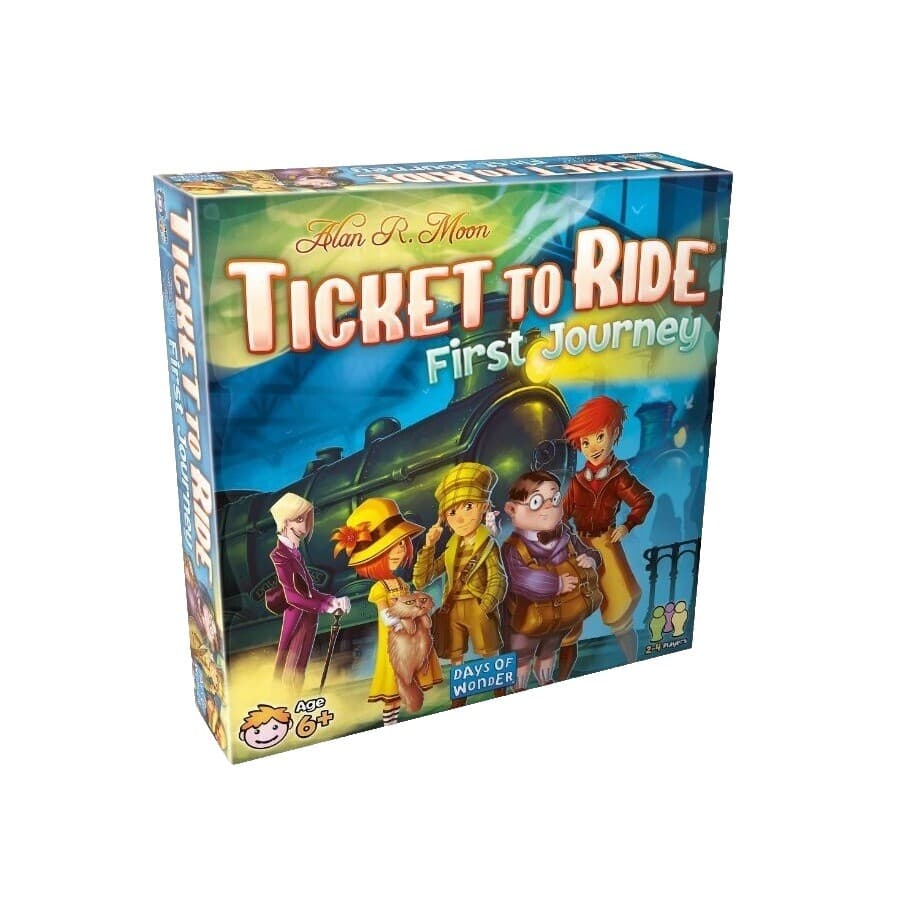
Embark on a frosty railway adventure with *Ticket to Ride: Nordic Countries*, a standalone installment in the award-winning series designed specifically for a more intimate and competitive experience. Set against the beautiful, snow-dusted backdrop of Denmark, Finland, Norway, and Sweden, this game challenges two or three players to become the region's greatest transportation magnate. The core objective remains familiar to fans of the series: collect colored train car cards to claim railway routes, strategically connecting cities across the map. Your primary source of points comes from fulfilling secret Destination Tickets, each one tasking you with linking two specific cities. Successfully completing these tickets adds to your score, but failure will cost you dearly. The player who has amassed the most points from their routes, completed tickets, and the coveted 'Globetrotter' bonus for the most tickets fulfilled, will be declared the winner.
The gameplay is elegantly simple yet rich with strategic choices. On your turn, you perform one of three actions: draw more train car cards, claim a route by discarding a matching set of cards, or draw new Destination Tickets to potentially increase your score. *Nordic Countries* introduces compelling twists on this classic formula with the inclusion of Ferries and Tunnels. Ferries are special sea routes that demand a specific number of powerful Locomotive wild cards to claim, making these cards exceptionally valuable. Tunnels add a thrilling element of risk; after committing your cards to a mountain route, you must reveal cards from the top of the deck, potentially forcing you to play extra cards to complete the connection. This version also uniquely alters the rules for Locomotives, restricting their use primarily to these special routes, which intensifies the strategic planning around their acquisition and use.
What makes *Ticket to Ride: Nordic Countries* a standout title is its brilliantly crafted map, which is significantly tighter and more constrained than its predecessors. This design choice inherently creates a high-stakes environment where player interaction is not just possible, but inevitable. Players must constantly watch their opponents, anticipate their moves, and decide whether to build their own network or defensively block a critical path. The scarcity of double-routes means competition for key connections is fierce from the very start. This heightened tension, combined with a brisk playtime of 30-60 minutes, makes it an exceptionally engaging and replayable game for couples, families, and anyone seeking a fast-paced, light-strategy experience with a healthy dose of direct competition.
2-3 45m⚖️ 1.9

RANK #247
Suburbia
2012In Suburbia, players take on the role of city planners, each tasked with transforming a small town into a thriving metropolis. The ultimate goal is to end the game with the highest population, which serves as your score. You achieve this by strategically purchasing and placing hexagonal building tiles from a shared real estate market into your personal borough. Each tile represents a different type of development—commercial, residential, industrial, civic, or cultural—and carries unique effects. These effects manipulate your borough's two key resources: Income, which provides the cash needed for expansion, and Reputation, which dictates how quickly your population grows. The core challenge lies in creating a balanced and synergistic economic engine, carefully managing your budget while attracting new residents to your burgeoning city.
The gameplay revolves around a simple turn structure with deeply tactical choices. On your turn, you will typically purchase a tile from the market and add it to your borough. The tile's placement is crucial, as its effects—and the effects of its neighbors—are triggered upon placement. A new airport might increase your income but decrease the reputation of adjacent residential areas, simulating real-world zoning challenges. As your population grows and crosses certain thresholds on the score track, both your income and reputation are reduced, representing the increased upkeep and complexity of a larger city. This clever mechanic forces players to constantly improve and adapt their city's engine rather than resting on early success. Players must also keep an eye on shared and secret goals, which provide significant population bonuses at the end of the game.
Suburbia's enduring appeal comes from the satisfying and tangible experience of building something from the ground up. The puzzle of optimizing tile placement to create powerful combinations is incredibly engaging, offering a strong sense of accomplishment as your humble town expands. The game masterfully integrates its theme, with mechanics that intuitively reflect the cause-and-effect relationships of urban development. With a variable tile market and different goals in every game, no two cities will ever be the same, ensuring high replayability. It perfectly blends strategic foresight with the tactical need to adapt to what becomes available, making it a celebrated classic in the city-building genre for both new and experienced gamers.
1-4 90m⚖️ 2.9
RANK #251
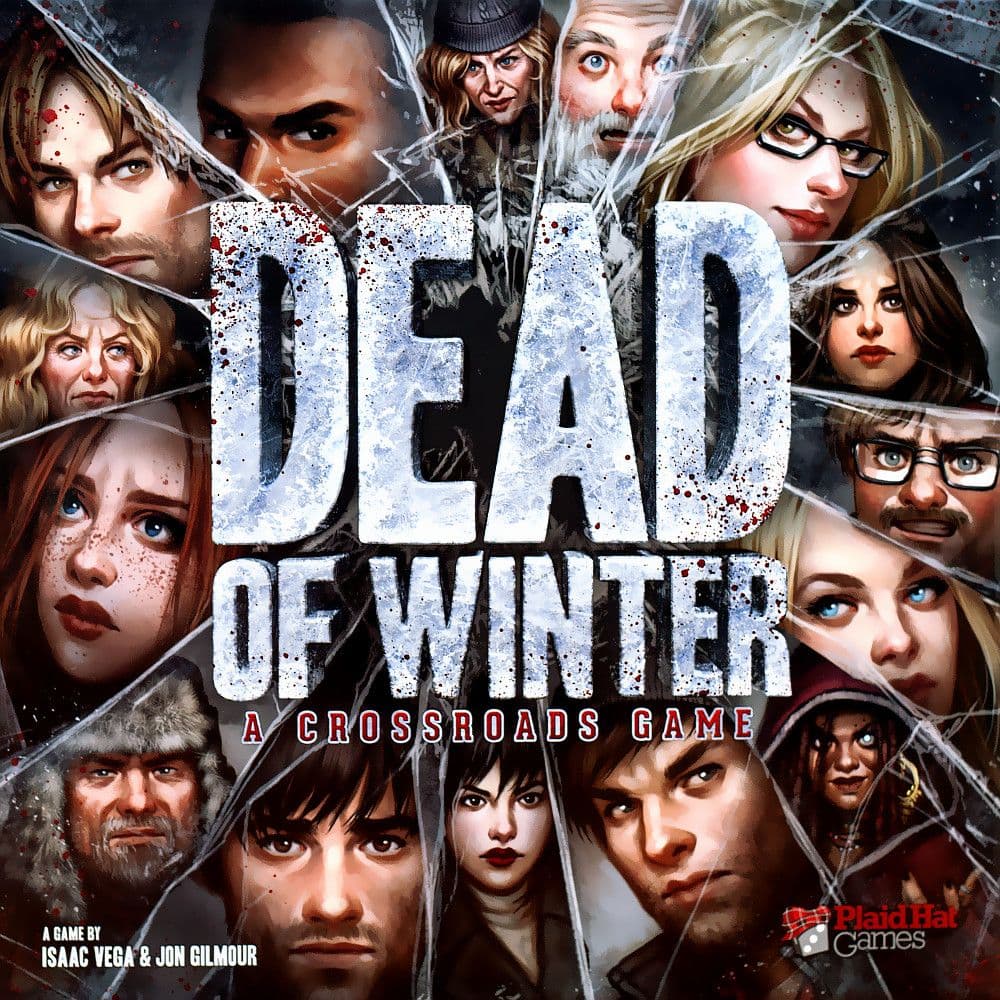
Dead of Winter: A Crossroads Game is a deeply thematic and psychological survival experience set in the harsh, unforgiving world of a zombie apocalypse. Players take on the roles of survivors in a struggling colony, forced to work together to fend off the undead, gather resources, and achieve a common objective to win the game. However, this is a 'meta-cooperative' game, meaning the group's success is only half the battle. Each player also harbors a secret personal objective they must fulfill to claim an individual victory. This dynamic masterfully creates an atmosphere of paranoia and suspense, as you can never be entirely sure of your fellow survivors' true intentions. The core conflict is a constant, tense negotiation between advancing the colony's welfare and pursuing your own self-interest, all while morale threatens to collapse.
The gameplay is structured into rounds, each containing a player turn phase followed by a colony phase. On your turn, you'll roll a set of action dice that dictate the tasks you can perform, such as scavenging for vital supplies like food and medicine, attacking zombies at various locations, constructing barricades for defense, or contributing to the ever-present crisis that threatens the colony each round. One of the game's most celebrated innovations is the Crossroads card system. At the start of each turn, another player draws a card that presents a narrative fork in the road, often forcing the active player to make a difficult, thematic choice with branching consequences. After all players have acted, the colony phase commences, during which survivors consume food, zombies press their attack, and the main objective's status is updated.
What makes Dead of Winter a modern classic is the powerful blend of strategic gameplay and emergent storytelling. The ever-present threat of a hidden traitor, a player whose secret objective is to sabotage the colony, fuels intense player interaction, accusation, and bluffing. Every decision is fraught with weight, not just for its mechanical impact but for how it is perceived by the other players. The Crossroads cards ensure no two games are ever alike, generating memorable, player-driven narratives of desperation, sacrifice, and betrayal. It is this focus on the human element and moral dilemmas, rather than just the zombies themselves, that provides a uniquely compelling and highly replayable experience, making it a perfect 'bridge' for players seeking deeper, more thematic board games.
2-5 90m⚖️ 3.4
RANK #267
My City
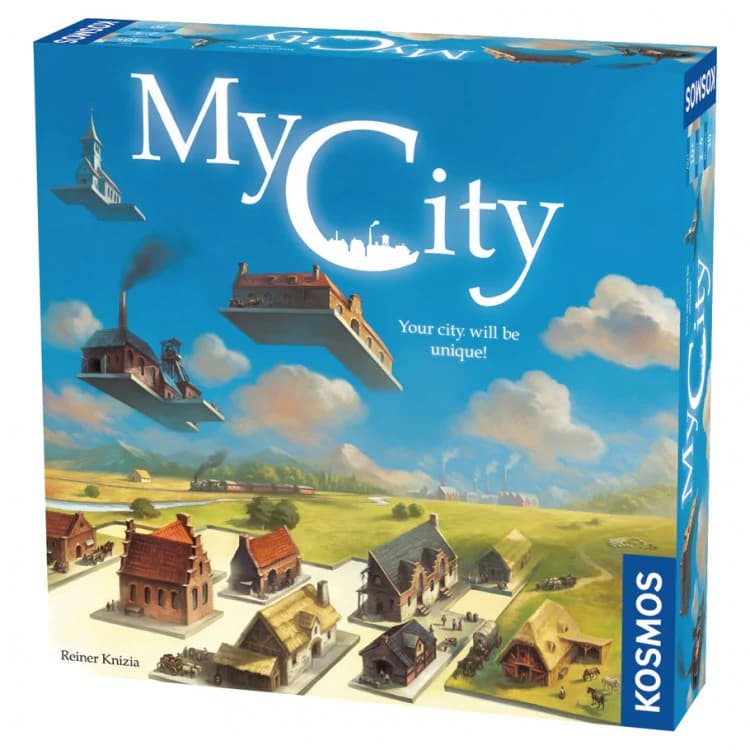
2020My City is a captivating competitive legacy game from celebrated designer Reiner Knizia, where players embark on a journey to build and develop their own unique city. The game unfolds over an engaging 24-episode campaign, broken into eight distinct chapters. Players begin with a pristine, untouched plot of land and, over the course of the campaign, will see it transform into a bustling metropolis. The goal is to be the most successful city planner by scoring points based on evolving objectives that are introduced with each new episode. This narrative-driven progression allows players to create a personal history with their board, making each game a unique and memorable chapter in their city's story.
At its core, the gameplay is elegantly simple and accessible. Each round, a construction card is revealed, indicating a specific polyomino-shaped building that every player must simultaneously place onto their personal game board. This simultaneous action keeps downtime to a minimum and ensures all players are constantly engaged. The legacy element is the game's defining feature; players will permanently alter their boards by adding stickers, representing new discoveries, landmarks, or challenges. At the start of each new chapter, sealed envelopes are opened, revealing new rules, components, and scoring opportunities that add layers of complexity and strategic depth. Early decisions might revolve around simple adjacency rules and avoiding natural obstacles, but strategies must adapt as the city and its ruleset evolve.
The appeal of My City lies in its masterful blend of simplicity and evolving strategy, making it an ideal 'gateway' legacy experience for families and newcomers to the hobby. The rules are introduced gradually, preventing players from feeling overwhelmed while providing a steady stream of fresh challenges. The game also incorporates a clever catch-up mechanism, where players who perform less well in an episode receive small advantages in the next, ensuring the campaign remains competitive and exciting for everyone involved. For those seeking endless replayability after the 24-episode journey concludes, the reverse side of the game board offers a standardized, non-legacy version of the game, allowing the fun of tactical tile-laying to continue indefinitely.
2-4 30m⚖️ 1.9
RANK #272
Codenames: Duet
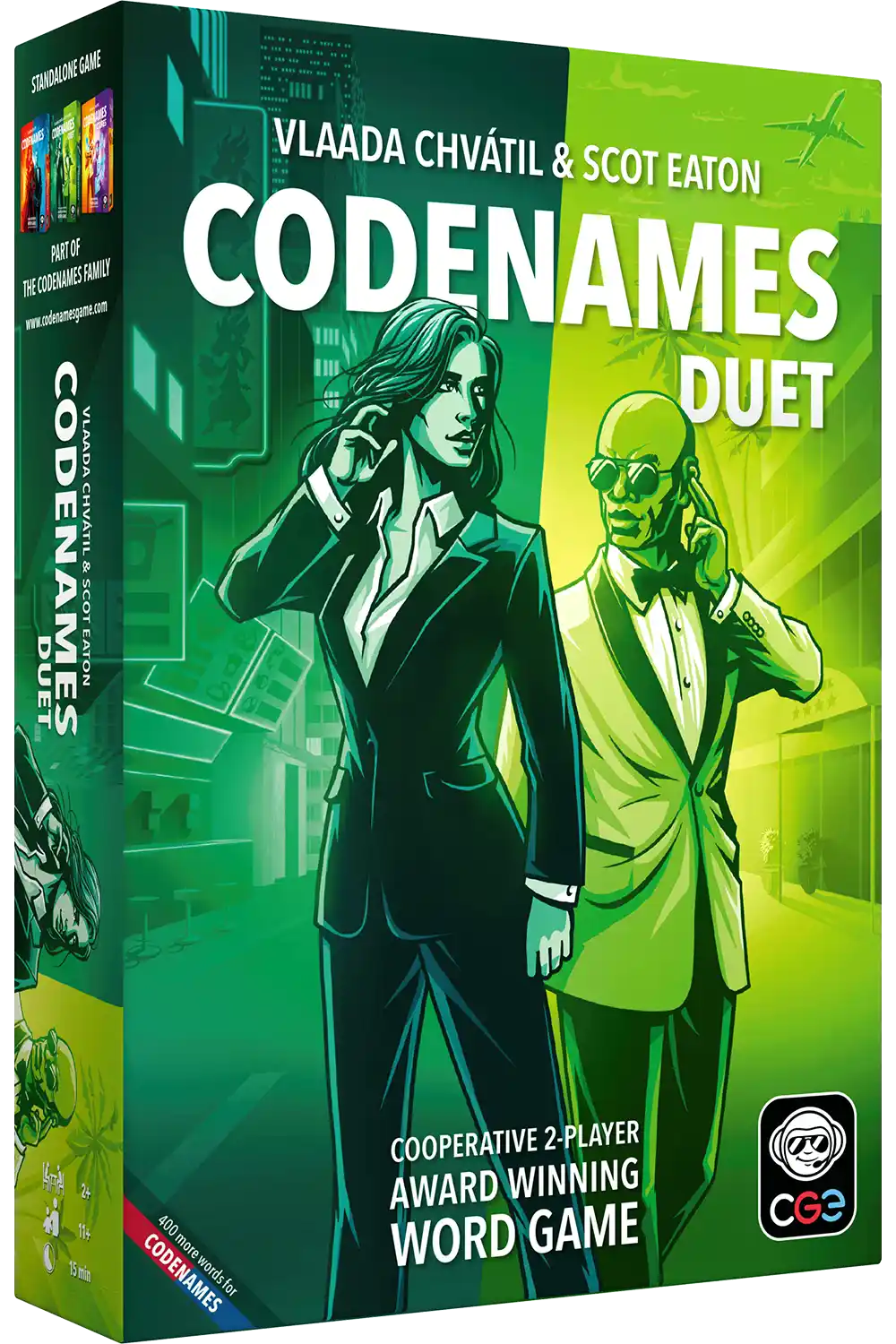
2017Codenames: Duet is the cooperative, two-player evolution of the hit party game, Codenames. The objective is for both players to work in harmony to uncover all 15 of their shared secret agents from a grid of 25 word cards. Unlike its competitive predecessor, this version is a race against the clock, challenging the team to complete their mission within a limited number of turns, typically nine. Success hinges on clever word association and the ability to get on the same wavelength as your partner. The game presents a pure puzzle of communication and deduction, where players must navigate a minefield of innocent bystanders and deadly assassins, all represented by seemingly random words on the table.
The core of the game lies in its unique double-sided key card. This card, placed between the players, shows each person a different perspective of the 5x5 grid. On each side, nine words are marked as friendly agents (green), three are deadly assassins (black), and the rest are harmless bystanders (tan). The twist is that while some agents are unique to each player's side of the card, others overlap, creating a shared pool of 15 total agents that must be identified. Players alternate giving a single-word clue followed by a number, indicating how many words on the board correspond to their clue. If their partner correctly touches an agent card, it's covered, and they can continue guessing. Contacting a bystander immediately ends the turn, and touching an assassin results in an instant loss for the team. After each turn, a timer token is used, ratcheting up the pressure as the turn limit approaches.
Codenames: Duet is celebrated for its brilliant distillation of the original game's magic into an intimate and challenging experience for two. The cooperative dynamic transforms the game from a team-based competition into a collaborative puzzle. Players must think not only about the clues they give but also about the potential interpretations their partner might have, leading to moments of incredible synergy or hilarious miscommunication. The tension is palpable as each guess could be the one that uncovers a hidden agent or triggers a game-ending assassin. For those seeking even greater challenges and replayability, the game includes a mission map with a campaign-style progression, introducing new rules and constraints that alter the difficulty and win conditions. This combination of simple rules, profound strategic depth, and a focus on partnered thinking makes it a standout title for couples and pairs of friends.
2 15m⚖️ 1.1
RANK #280
Legendary: A Marvel Deck Building Game is a prominent entry in the deck-building genre that brings the Marvel Universe to life on the tabletop. In this experience, players take on the role of SHIELD commanders tasked with assembling a powerful team of iconic heroes to thwart the nefarious plans of a Mastermind. The central goal is collective survival; players must work together to defeat the primary villain four times before they can complete a specific, game-altering Scheme. Unlike traditional deck builders where you simply compete for the highest score, Legendary introduces a looming threat that can cause everyone to lose if the city falls into chaos or the villain's plot reaches its conclusion.
The game utilizes a modular setup, meaning no two sessions are exactly alike. Players select a specific Mastermind like Magneto or Dr. Doom, a Scheme that sets the rules for the villain's victory, and a curated pool of hero decks. The core loop involves a Villain Phase, where enemies advance through a five-space city track, followed by a Hero Phase. Players start with basic SHIELD agents and must strategically recruit more powerful cards using Recruit Points or strike down foes using Attack Points. Managing these two distinct resources is vital, as players navigate the Headquarters (HQ) to draft synergies between characters like the Avengers and the X-Men. Successfully defeating villains and saving bystanders adds to a player's personal victory pile, which serves a dual purpose: it measures individual contribution while the team strives for a shared victory.
What makes Legendary stand out is its semi-cooperative nature. While the primary objective is to stop the Mastermind, the game crowns a single 'most legendary hero' based on the victory points accumulated during play. This creates a fascinating tension between helping the group and optimizing one's own deck for maximum point gain. The highly thematic integration of the Marvel license, featuring comic-accurate artwork and mechanics that reflect hero powers, ensures a high level of immersion. With its vast array of modular combinations and the threat of a board that evolves every turn, the game offers immense replayability. It strikes a balance between being accessible enough for casual fans while offering the strategic depth required to keep seasoned gamers engaged.
1-5 45m⚖️ 2.4
RANK #284
Sushi Go Party!
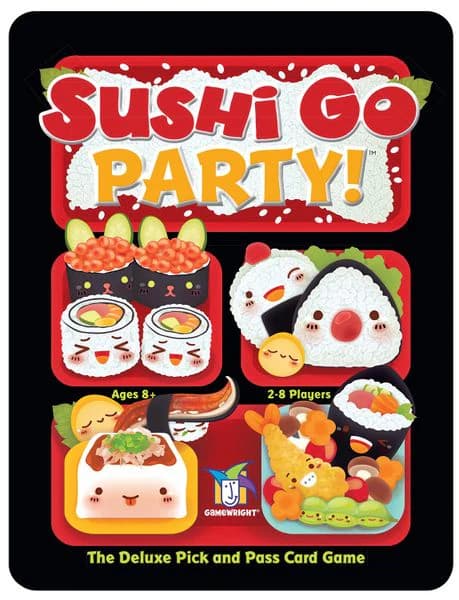
2016Sushi Go Party! is the expanded, deluxe version of the hit card-drafting game that tasks players with assembling the most delicious meal at a revolving sushi restaurant. Building upon the foundation of the original game, this version introduces a wider array of culinary dishes and a customizable menu system that allows for significantly more variety in every session. The primary goal is to score the most points over three rounds by selecting cards that create high-scoring combinations. Whether you are aiming for a massive platter of sashimi or trying to earn the most maki rolls at the table, the game rewards clever planning and a keen eye on your opponents' growing plates.
The core gameplay loop revolves around a simultaneous 'pick-and-pass' drafting mechanic. Each player starts with a hand of cards, chooses one to keep, reveals it, and then passes the remaining cards to the person sitting next to them. This continues until the hands are empty. The 'Party' edition elevates this experience by offering over twenty different card types. Players can mix and match appetizers, specials, and rolls to create a unique 'menu' for each game, ranging from beginner-friendly sets to more aggressive, cutthroat combinations. Points are tallied at the end of each round, with certain cards like Nigiri providing immediate bonuses—especially when paired with spicy Wasabi—while others like Desserts are stored and only scored at the very end of the meal.
One of the most significant draws of Sushi Go Party! is its incredible accessibility combined with surprising depth. The artwork uses a 'kawaii' aesthetic that makes the game instantly inviting for families and casual gamers. However, beneath the cute illustrations of smiling dumplings and puddings lies a strategic layer of card counting and selective drafting. Because you see almost every hand that rotates around the table, you must decide whether to take the card you need most or block an opponent from completing a high-value set. With support for up to eight players and a massive amount of replayability provided by the various menu configurations, it serves as an essential title for social gatherings and board game nights alike.
2-8 25m⚖️ 1.3

RANK #286
Deception: Murder in Hong Kong is an immersive social deduction experience that transports players into the heart of a high-stakes criminal investigation. In this tense mystery, one player assumes the role of the Forensic Scientist—a silent gamemaster who holds the objective truth—while others act as Investigators trying to identify the perpetrator hidden among them. However, one individual in the group is the secret Murderer, and in larger games, they may even have an Accomplice to help deflect suspicion. The goal is simple yet challenging: the Investigators must correctly identify two specific cards—the 'Means of Murder' and the 'Key Evidence'—selected by the killer before the trail goes cold.
The gameplay centers on a unique communication loop where the Forensic Scientist is strictly forbidden from speaking or gesturing. Instead, they provide hints by placing bullet markers on abstract Scene Tiles, which represent various aspects of the crime such as the location, the cause of death, or the victim's social state. During a hidden night phase at the start of the game, the Murderer secretly points to their chosen weapon and a piece of evidence. As the investigation progresses over three rounds, the Scientist adds or replaces tiles to refine the group's theories. Each Investigator has only one formal opportunity to 'Solve the Crime.' They must name both cards correctly; a single mistake results in the loss of their badge and their ability to make future official accusations, though they remain active in the group's heated debates.
What makes Deception stand out is its masterful blend of abstract logic and intense social manipulation. Unlike many deduction games that rely solely on bluffing, this title provides a tangible puzzle through visual clues that must be interpreted through the lens of the killer's possible choices. It creates a fascinating dynamic where players must argue over the subjective meaning of tiles while trying to read the body language of their peers. The addition of optional roles like the Witness and Accomplice adds further layers of complexity, requiring players to protect their information sources. It is an ideal choice for large groups because it eliminates player elimination and keeps everyone engaged in a collaborative, yet paranoid, atmosphere where the truth is often hidden in plain sight.
4-12 20m⚖️ 1.6
RANK #287
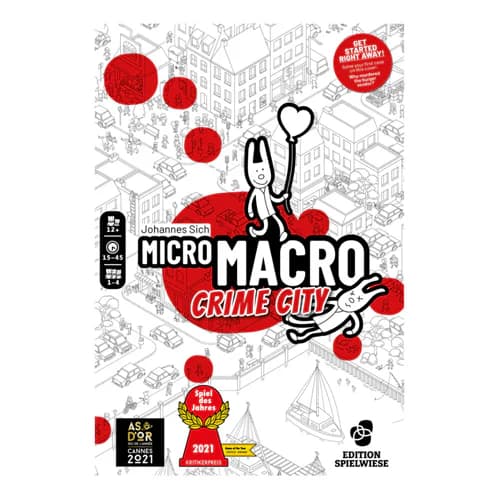
MicroMacro: Crime City is a groundbreaking cooperative experience that transforms the traditional 'hidden object' concept into a sophisticated investigative challenge. Set within a massive, intricately detailed 75 x 110 cm map of a monochrome metropolis, players take on the role of detectives tasked with solving 16 distinct criminal cases. The game's defining feature is its 'living' map, which functions as a temporal landscape where time and space are intertwined. Characters are not just static drawings; they appear multiple times across the city, allowing players to trace their movements from the moments leading up to a crime through to the aftermath.
The gameplay loop is elegantly simple yet intellectually stimulating. Each case begins with an introductory card that presents a victim or a suspicious event. Working together, players must scour the dense urban environment to find the starting point and then follow the trail of suspects and witnesses. This requires a sharp eye for detail and the ability to connect events chronologically as you 'rewind' or 'fast-forward' through the character's day. While the game provides a step-by-step investigation via scenario cards, an advanced 'Expert Mode' allows seasoned players to solve the entire mystery using only the initial prompt, relying solely on their own observation and logic to piece together the narrative.
The appeal of MicroMacro lies in its unique blend of visual storytelling and deductive gameplay. It successfully bridges the gap between casual puzzle-solving and deep narrative engagement, making it accessible to non-gamers while remaining deeply satisfying for hobbyists. The minimalist, whimsical art style often masks mature themes of crime and intrigue, creating a compelling contrast that keeps players immersed in the hunt. As a winner of the prestigious Spiel des Jahres award, it has been celebrated for its innovation and its ability to turn a simple piece of paper into a vibrant, interactive mystery world that is best enjoyed with a close group of friends or even as a solo challenge.
1-4 30m⚖️ 1.1
BoxNo Cover Art
RANK #289
Flamme Rouge
2016Flamme Rouge is a fast-paced, tactical bicycle racing game that transports players to the heart of a high-stakes 'one-day' classic race. Each player takes on the role of a team director managing two cyclists: the Rouleur, known for steady endurance, and the Sprinteur, capable of explosive bursts of speed. The objective is deceptively straightforward—cross the finish line first—but achieving this requires mastering the delicate balance of stamina, positioning, and timing. Set against the backdrop of the golden age of cycling, the game uses a modular track system to create unique courses every time you play, ranging from flat sprints to grueling mountain climbs that test even the most seasoned riders.
The gameplay loop revolves around a clever card-driven movement system that emphasizes hand management and deck depletion. Every round, players simultaneously draw cards for both their riders, choosing one to play and burying the others. The catch is that once a movement card is played, it is permanently removed from the game. This forces players to make difficult decisions: do you burn a high-value card now to break away from the pack, or save it for the final sprint? Positioning is critical, as the game rewards those who ride in groups through a 'slipstreaming' mechanic. If a rider ends exactly one space behind another, they are pulled forward for free, conserving their energy. Conversely, leading the pack or riding solo into the wind results in 'Exhaustion' cards being added to your deck, which act as dead weight and dilute your future drawing options.
What makes Flamme Rouge a modern classic is its ability to deliver a deep, thematic experience through incredibly accessible rules. It is easy enough for families to enjoy together but offers the tactical depth required to keep veteran strategy gamers engaged. The tension of the 'reveal' phase, where all players show their cards at once, captures the unpredictable nature of a real peloton. With its elegant design and high replayability thanks to the diverse track tiles, it offers a satisfying blend of luck and strategy. Whether you are carefully drafting to stay fresh or making a desperate dash for the flamme rouge—the red flag marking the final kilometer—every race is a cinematic experience.
2-4 45m⚖️ 1.7