Strategy Games
Browse all Strategy board games in the Meeple Pulse database.
Styles
Themes
AbstractAdventureAncientAnimalsArtBusinessCard GameCo-operativeComic BookCooperativeCrimeEconomicEnvironmentalismExplorationFantasyHistoricalHorrorHumorIntrigueLiteraryMagicMarvelMedievalModernMuseumMysteryMythologyNatureNauticalPoliticalPress Your LuckSatireSci-FiSocial CommentarySocial InteractionSpaceSuperheroesThematicTravelWarWesternWord-Guessing
Mechanics
3D PlacementActingAction / DexterityAction DraftingAction Point AllowanceAction Point Allowance SystemAction Point SystemAction PointsAction ProgrammingAction QueueAction RetrievalAction SelectionAction/EventAlliancesAlternate ActivationApp-AssistedApp-DrivenArea ControlArea InfluenceArea MajorityArea Majority / InfluenceArea MovementArgumentationAsymmetricAsymmetric FactionsAsymmetric GameAsymmetric PowersAsymmetrical PowersAuction & BiddingAuction/BiddingAuctioningBag BuildingBettingBetting and BluffingBetting and WageringBetting and WagersBiddingBingoBlind BiddingBluffingCampaign / Battle Card DrivenCampaign / LegacyCampaign / Legacy GameCampaign / Mission-basedCampaign / ScenariosCampaign GameCampaign PlayCard DraftingCard DrawingCard DrivenCard Driven ActionCard Driven CombatCard Driven Dice AllocationCard Driven MovementCard ManagementCard PlayCard Play / Hand ManagementCard Play Conflict ResolutionCard SheddingCard-Driven MovementCharacter CreationCharacter ProgressionChit-Pull SystemCo-op PlayCo-operative GameCo-operative PlayCode-breakingCombat ResolutionCombo ChainCommand CardsCommodity SpeculationCommunication LimitsContract FulfillmentContractsCooperative GameCooperative GameplayCooperative PlayCooperative Trick-takingDebateDeck BuildingDeck ConstructionDeck, Bag, and Pool BuildingDeck-BuildingDeductionDexterityDice DraftingDice PlacementDice RollingDiplomatic InfluenceDraftingDynamic Battle SystemEnclosureEnd Game BonusesEngine BuildingEngine-BuildingEscape RoomEvent DrivenExplorationFarmingFlip and WriteFollowFollow ActionGrid CoverageGrid MovementHand ManagementHex-and-CounterHexagon GridHidden MovementHidden RolesI Cut You ChooseIncomeInfluence / Area MajorityLadder ClimbingLegacyLegacy ElementsLegacy GameLegacy SystemLimited CommunicationLine DrawingLine of SightMancalaMap MovementMarketMarket DraftingMarket ManipulationMarket MechanicMarket SpeculationMatchingMeasurement MovementMemoryMission ObjectivesModular BoardModular Board ConstructionMovement TemplatesMulti-Use CardsMulti-use CardsMultiple ScenariosMust FollowNarrative ChoiceNarrative Choice / ParagraphNegotiationNegotiation MechanicsNetwork & Route BuildingNetwork BuildingNetwork and Route BuildingOne vs ManyOne vs. ManyOpen DraftingPaper-and-PencilPartnershipsPattern BuildingPattern RecognitionPick-up and DeliverPlayer EliminationPlayer InteractionPlayer JudgePoint SaladPoint to Point MovementPolyominoesPush Your LuckPush-Your-LuckPuzzlePuzzle-LikePuzzle-SolvingRaceReal-TimeRecipe FulfillmentResource ManagementRole PlayingRole SelectionRoll / Spin and MoveRondelRoute BuildingRoute-BuildingRoute/Network BuildingSanity SystemScenario / Campaign PlayScenario / Mission / Campaign GameScenario / Mission FunctionSecret Unit DeploymentSemi-Cooperative GameSet CollectionSheddingSimulationSimultaneous ActionSimultaneous Action SelectionSimultaneous Hidden AllocationSocial DeductionSocial InteractionSolo / Solitaire GameSpace ExplorationStat Check / Skill CheckStock HoldingStorytellingStrategic PlanningTableau BuildingTactical Decision-MakingTake ThatTargeted CluesTeam PlayTeam-Based GameTeam-Based GuessingTeamworkTech TreesTech Trees / Tech TracksTechnology & Armament TracksTechnology TreeTension & Aggression TracksTile DraftingTile LayingTile PlacementTime TrackTime TravelTower DefenseTrack MovementTradingTrick-takingTug of WarTurn Order: PassTurn Order: Stat-BasedUnit PlacementVariable Phase OrderVariable Player PowersVariable Set-upVariable SetupVictory Point TracksVotingWord AssociationWord GameWord GuessingWord-GuessingWord-guessingWordplayWorker Placement
RANK #151
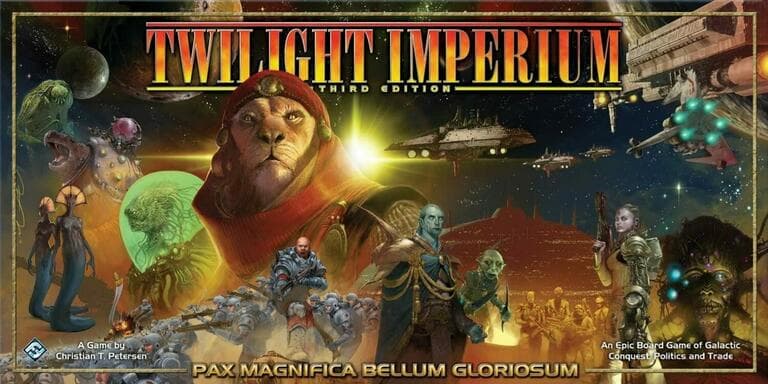
Twilight Imperium: Third Edition is a legendary title that defines the epic space opera genre in board gaming. It is a sprawling game of galactic conquest where players assume control of one of several unique alien civilizations, each with its own history and abilities, all vying for control of the imperial throne on Mecatol Rex. The ultimate goal is to become the new galactic emperor by being the first to accumulate 10 victory points. These points are not won through brute force alone; players must cleverly achieve a mix of public objectives revealed to all and secret objectives known only to them. This creates a tense strategic environment where players must carefully balance military expansion, technological research, economic development, and political cunning to navigate the path to victory, making every decision a critical step toward galactic domination.
The gameplay is structured into rounds, each containing three distinct phases that create a compelling rhythm of planning and execution. In the Strategy Phase, players select powerful Strategy Cards that grant unique, game-altering abilities and crucially determine the turn order for the round. This selection is a mini-game of its own, full of prediction and denial. The heart of the game is the Action Phase, where players use a finite pool of command counters to perform actions. These include moving fleets between star systems, engaging in dice-driven space and ground combat, and activating their strategy card's primary power. This resource management creates agonizing decisions about where to commit forces and focus efforts. Finally, the Status Phase sees players readying for the next round, collecting resources, and entering a political assembly to vote on laws and agendas that can permanently alter the rules of the game, ensuring a dynamic and ever-shifting political landscape.
What elevates Twilight Imperium to its iconic status is the sheer scale and the rich, player-driven narrative that emerges from its systems. It's more than a game; it's a sandbox for creating unforgettable sagas of ambition, betrayal, and glory. The deep interplay between military conflict, technological advancement via a detailed tech tree, and high-stakes diplomacy and negotiation ensures that no two sessions are ever alike. While its famously long playtime and complex rules present a steep learning curve, they are precisely what allows for such profound strategic depth and memorable moments. For players who crave an immersive, all-day gaming event that rewards long-term planning and clever social maneuvering, Twilight Imperium: Third Edition remains an unparalleled masterpiece of grand strategy.
3-6 420m⚖️ 4.7
RANK #185
Watergate
2019In the midst of the Watergate scandal, players must navigate the complex web of evidence and alliances to emerge victorious. As either Richard Nixon or a newspaper editor, each player has a unique set of goals and challenges that will test their strategic thinking and negotiation skills. The game is divided into two main components: the evidence web on the left side of the board, where players collect and analyze clues, and the evidence track on the right, where they use these findings to build momentum and discredit their opponents. With a simple yet engaging gameplay mechanic, Watergate challenges players to think critically about the flow of information and the power dynamics at play in this pivotal moment in American history. As tensions rise and alliances are forged and broken, players must carefully weigh their actions and make tough decisions that will ultimately determine the fate of their faction. Will Nixon's administration be able to cover up its misdeeds, or will the press uncover the truth and bring about a new era of transparency? The outcome is far from certain in this gripping game of cat and mouse, where strategy and luck combine to create an unforgettable experience. With each playthrough offering a unique set of challenges and opportunities, Watergate is a game that will keep you on the edge of your seat until the very end. Whether you're a history buff or simply a fan of strategic gameplay, this game has something for everyone. So gather your friends and get ready to immerse yourself in one of the most pivotal moments in American history – the Watergate scandal. With its engaging mechanics and rich thematic content, Watergate is an experience that will leave you questioning the nature of power and the importance of a free press. As you navigate the complex web of alliances and rivalries, you'll be forced to confront the darker aspects of human nature and the consequences of unchecked ambition. But don't worry – with its simple yet engaging gameplay mechanic, Watergate is accessible to players of all skill levels. So why not give it a try? With its unique blend of strategy and historical significance, Watergate is a game that will keep you coming back for more. And who knows – you might just learn something new about one of the most infamous scandals in American history.
m⚖️ N/A
RANK #214
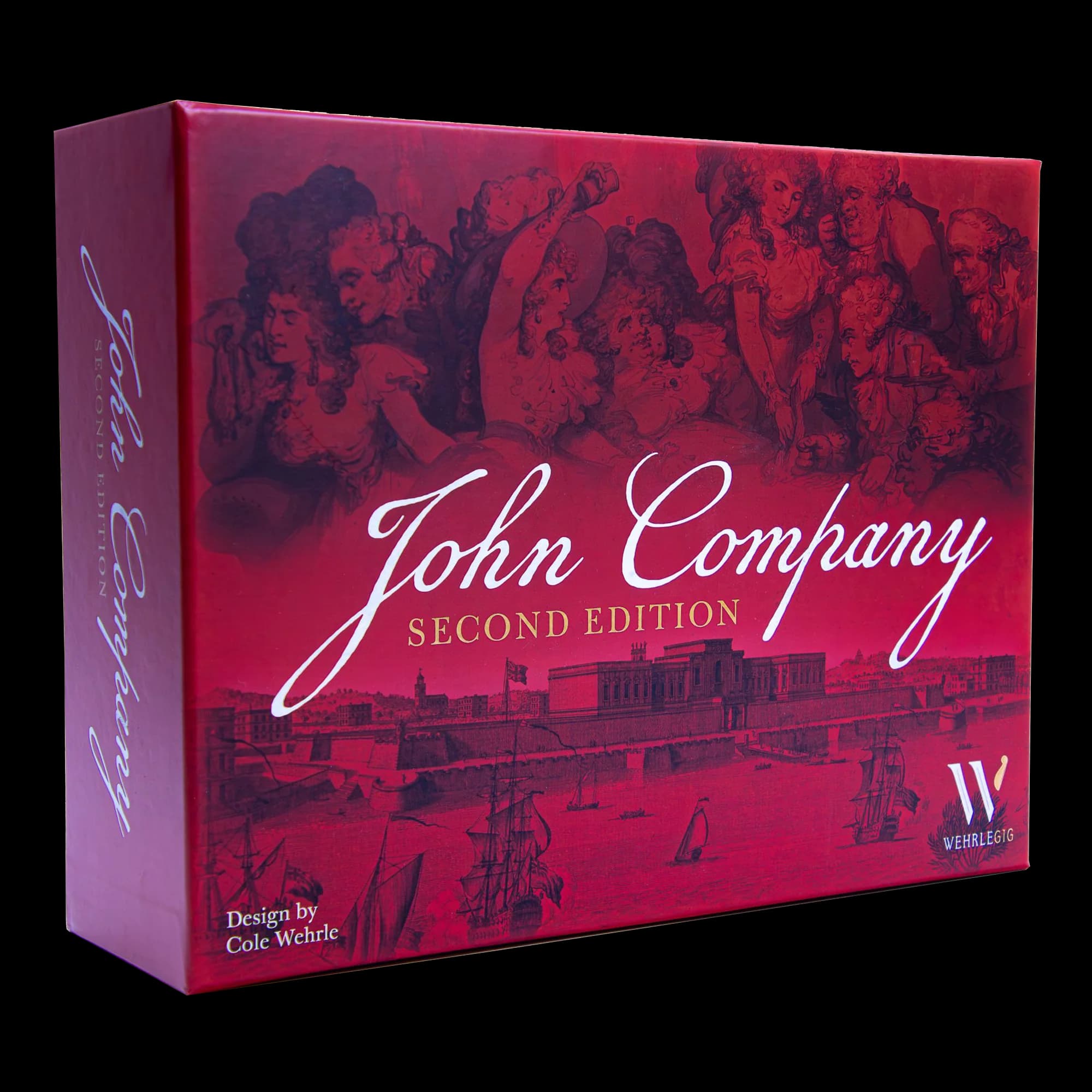
John Company: Second Edition is a deeply immersive and interactive simulation of the British East India Company, a historically powerful but notoriously dysfunctional trading corporation. Players represent ambitious British families seeking to exploit the Company for their own gain. The ultimate goal is not necessarily the Company's success, but rather amassing the greatest personal wealth and prestige for one's dynasty. This is achieved by securing lucrative positions, making shrewd investments, and ultimately retiring family members in a blaze of glory. This second edition is a significant redesign of the 2017 original, featuring a lavish production and refined rules that heighten the strategic depth and political maneuvering.
The gameplay is a masterful blend of semi-cooperative action and cutthroat individualism. On one hand, players must work together to keep the Company financially solvent, as its collapse brings ruin to all. On the other hand, victory is entirely individual. The game's structure revolves around players gaining control of key offices—from the prestigious Chairman to regional Presidents in India—often through tense auctions and brokered deals. In these roles, players execute Company actions like trade, shipping, and military campaigns, where success is often subject to the whims of dice rolls. The game progresses through distinct rounds that include managing private family affairs, voting on transformative laws in Parliament, and navigating the crucial London Season, where prestige is scored and legacies are made.
What truly distinguishes John Company is its unparalleled focus on negotiation and emergent narrative. Success is nearly impossible without engaging in constant deal-making, forming temporary alliances, and even resorting to bribery. The game is a political sandbox where the most memorable moments arise not from scripted events, but from the players' own schemes and betrayals. It brilliantly models a complex bureaucracy where individual ambition clashes with collective responsibility, creating a challenging and unforgettable experience. It appeals to players who relish high interaction, complex systems, and the thrill of turning a sprawling, failing institution into an engine for their own personal triumph.
1-6 180m⚖️ 4.4
RANK #228
Cosmic Encounter
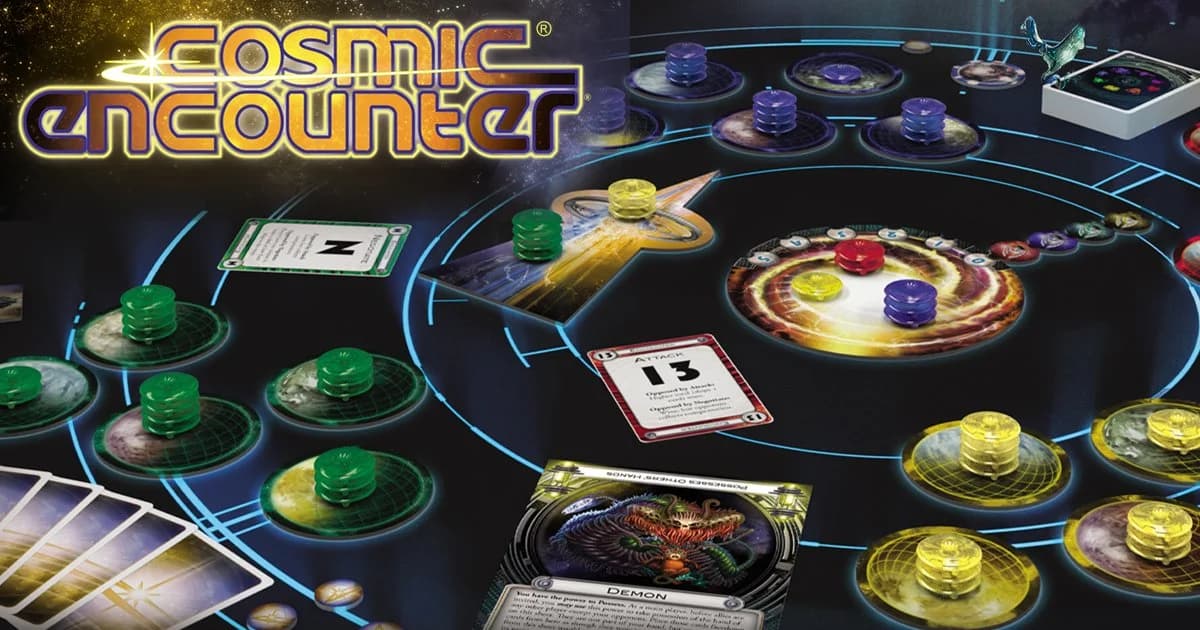
2008Cosmic Encounter is a legendary board game of galactic conquest where diplomacy is as crucial as military might. In this celebrated 2008 edition from Fantasy Flight Games, players assume the roles of bizarre and powerful alien species, each vying for control of the cosmos. The ultimate objective is simple yet challenging: establish five colonies on planets outside of your own home system. This goal is pursued through a series of 'encounters' with your rivals. The game masterfully blends straightforward rules with immense strategic depth, creating an environment where shifting alliances, cunning bluffs, and unexpected betrayals are not just possible, but are the very heart of the experience.
The gameplay revolves around a structured turn sequence where an active player, the 'offense', is directed by the Destiny Deck to engage another player, the 'defense'. The conflict begins as the offense commits ships to a target planet, but the situation quickly escalates as both sides can invite other players to join their cause as allies. The encounter's resolution hinges on the simultaneous reveal of a single card from each primary player's hand. These cards can be numbered Attack cards, which combine with ship counts to determine a victor, or a Negotiate card. Playing a Negotiate against an Attack results in an automatic loss, but the loser gets to demand compensation. If both players attempt to negotiate, they have a mere minute to strike a deal, such as trading cards or even allowing a peaceful colonization, before both suffer a penalty.
What elevates Cosmic Encounter to its classic status is the staggering variety of unique alien powers that each player wields. These abilities are designed to fundamentally break the game's core rules in some spectacular way, ensuring that no two games ever feel the same. One alien might be able to steal cards from the victor of a battle, another might always win tied conflicts, and a third might force players to play with their hands revealed. This asymmetry creates a dynamic and chaotic puzzle of interacting abilities, fostering immense replayability and forcing players to adapt their strategies on the fly. It is this brilliant combination of negotiation, tactical card play, and wildly unpredictable powers that makes Cosmic Encounter an enduring masterpiece of interactive tabletop gaming.
3-5 90m⚖️ 2.5
RANK #229
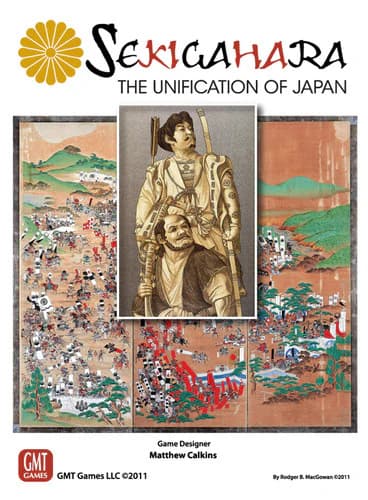
Sekigahara: The Unification of Japan transports two players back to the year 1600, placing them at the heart of a pivotal seven-week campaign that determined the nation's destiny. One player assumes command of Tokugawa Ieyasu's forces, while the other leads the armies of Ishida Mitsunari. The ultimate goal is to achieve supremacy and unify Japan under a single banner. Victory can be claimed in two ways: through a decisive military triumph by eliminating the opposing leader in battle, or by demonstrating superior strategic control at the end of the seventh week. The player who commands the most castles and valuable resource locations when the campaign concludes will be declared the winner, securing their place in history. This dual victory condition ensures that the conflict remains tense and dynamic from the first week to the last.
At its core, Sekigahara is a masterful blend of strategy and suspense, driven by a card-based system and the iconic 'fog of war' created by wooden blocks. These blocks represent armies, but their specific identity and strength remain hidden from the opponent, forcing players to rely on deduction, feints, and careful reconnaissance. You can see the size of an approaching force, but not its composition, creating palpable tension with every maneuver. Every action, from marching armies across the map to engaging in combat, requires the expenditure of cards from a player's unique deck. Each deck represents the various clans loyal to their cause. This creates a challenging resource management puzzle: do you spend cards to achieve a superior board position, or conserve them for the inevitable, decisive battles to come?
The game's combat system is a highlight, foregoing dice entirely in favor of a clever and thematic test of command. When armies clash, players commit their blocks to the fight, but a unit only contributes its strength if the player can play a matching clan card from their hand. An army, no matter how large, is rendered ineffective if its commander lacks the cards to inspire them to fight. This system emphasizes timing, bluffing, and shrewd hand management. Adding another layer of historical flavor are the 'loyalty challenge' cards, which allow players to attempt to sway an opponent's units to their side, reflecting the fragile and shifting allegiances of the period. Sekigahara is lauded for being an accessible entry into the wargaming hobby without sacrificing the tactical depth and high replayability that veteran strategists crave, making it a timeless classic.
2 180m⚖️ 2.8
RANK #231
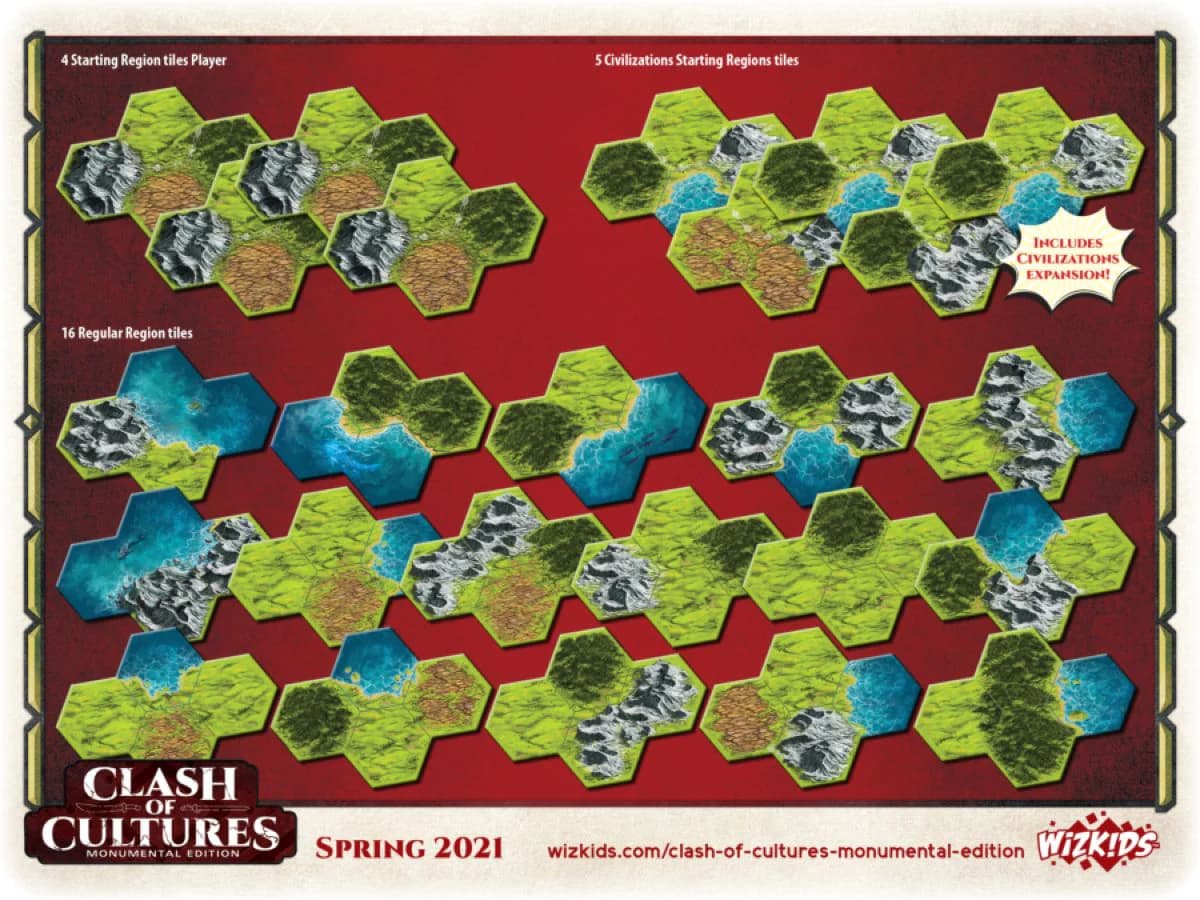
Clash of Cultures: Monumental Edition is a grand 4X civilization-building game where players guide a fledgling society from a single settlement into a sprawling, influential empire. This comprehensive 2021 edition revitalizes the beloved classic by integrating its core expansions, including "Civilizations" and "Aztecs," offering the definitive experience in a single box. The primary goal is to accumulate the most Victory Points by the end of the game's final age. These points are not earned through warfare alone; players are rewarded for developing a vibrant culture, constructing magnificent wonders, achieving specific objectives, and advancing their society's knowledge. Players must balance aggressive expansion and military might with economic stability and cultural growth to etch their civilization's name into the annals of history.
The game unfolds over six distinct "Ages," each comprising three rounds. On their turn, a player performs three actions, choosing from a wide array of options like exploring the modular, unknown world, founding new cities, researching technologies, or moving military units. A central pillar of the gameplay is the expansive and flexible technology tree, which features 48 unique Advances. This system allows players to customize their civilization's path, unlocking new buildings, units, and powerful abilities that can create unique strategic synergies. Combat is resolved through dice rolls, influenced by unit types and technological prowess, while resource management—balancing food, ore, wood, ideas, and gold—is crucial for funding your ambitions. Every few rounds, a Status Phase triggers scoring, provides a free technology, and introduces new objective cards, maintaining a dynamic pace throughout the game.
What makes Clash of Cultures: Monumental Edition a cherished classic is its remarkable strategic depth and high replayability. The freedom to pursue victory through multiple avenues—be it military conquest, technological supremacy, or cultural dominance—ensures that every game feels different. The modular board and variable objective cards create a unique landscape and set of goals for each session. This edition elevates the experience with stunning, newly sculpted miniatures and upgraded components that provide a commanding tabletop presence. It stands as a monumental achievement in the civilization genre, offering a deeply engaging and challenging experience for players who enjoy long-term strategy and the satisfaction of building a unique empire from the ground up.
2-4 210m⚖️ 4.1
RANK #233
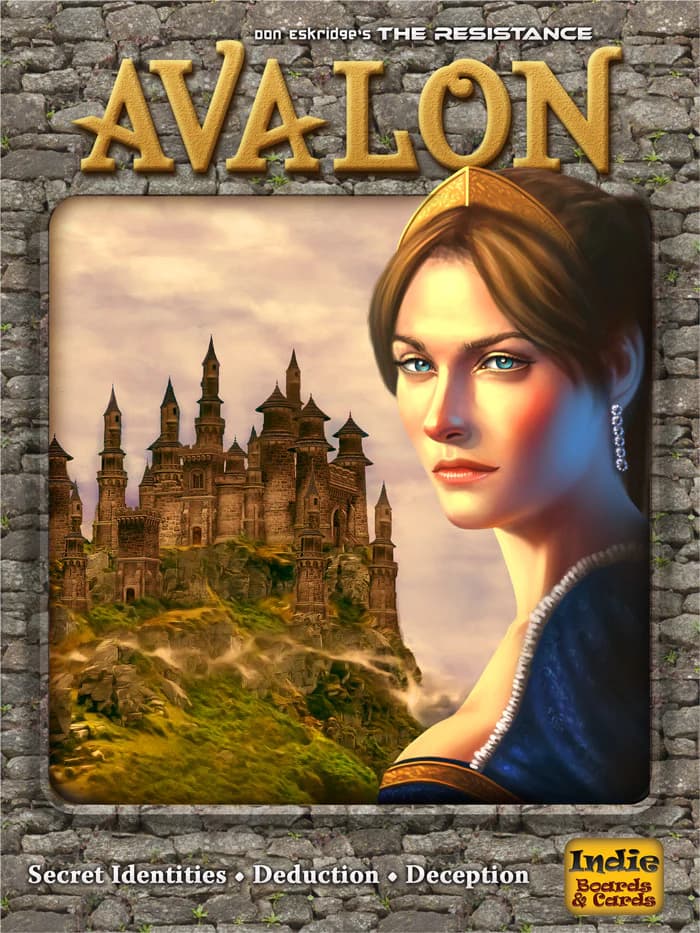
The Resistance: Avalon plunges players into the legendary turmoil of Camelot, a kingdom besieged not by external forces, but by treachery from within. In this intense game of social deduction and hidden identities, players are secretly assigned to one of two factions: the noble and loyal Servants of Arthur, fighting to secure the future of Britain, or the cunning Minions of Mordred, bent on sowing chaos and ensuring the kingdom's collapse. The ultimate goal is a struggle for control over a series of five critical Quests. The Servants of Arthur must successfully complete three of these missions to claim victory for their king and country. Conversely, the Minions of Mordred triumph if they can cause three Quests to fail, bringing Arthur's reign to a premature and disastrous end. The game is a constant battle of wits where trust is a fleeting resource and every word carries the potential for deception.
The gameplay unfolds in a structured but socially dynamic sequence of rounds. Each round, a new player assumes the role of Leader and is tasked with a crucial decision: selecting a team of knights to embark on the current Quest. This proposal is not accepted blindly; every player at the table, regardless of their allegiance, casts a public vote to either approve or reject the nominated team. This phase is the heart of the game's interaction, a crucible of open debate, pointed accusations, and masterful bluffs as players attempt to discern allies from enemies. If a team is approved, its members are given a profound and secret choice: to play a 'Success' card to help the Quest, or a 'Fail' card to sabotage it. For the loyal servants, the choice is simple. For the minions, it's an opportunity for destruction. Since a single 'Fail' card is often enough to doom a mission, the tension is palpable as the results are revealed.
What elevates The Resistance: Avalon to legendary status within its genre is the masterful inclusion of special character roles that add intricate layers of information and misdirection. The most pivotal of these is Merlin, a servant of Arthur who begins the game knowing the identities of the evil players. Merlin must subtly guide the forces of good without revealing his own identity, as an evil player known as the Assassin has a final, game-winning opportunity to correctly name Merlin if the heroes succeed in their Quests. This creates a fascinating and tense dynamic of veiled communication. Optional roles like Percival, who knows who Merlin is, and Morgana, who appears as Merlin to Percival, further complicate the web of lies and deduction. This brilliant system ensures that no two games are ever the same, making Avalon a highly replayable and deeply engaging experience celebrated for its pure player-driven drama and strategic depth.
5-10 30m⚖️ 1.7
RANK #235
A Game of Thrones: The Board Game (Second Edition) transports players to the war-torn continent of Westeros, drawing directly from the narrative depths of George R.R. Martin's 'A Song of Ice and Fire' series. In this grand strategy experience, three to six players assume the mantles of the Great Houses—such as Stark, Lannister, or Baratheon—competing for dominion over the Iron Throne. The ultimate objective is to secure the most castles and strongholds across the map through a blend of military conquest, political maneuvering, and calculated diplomacy. Set against a backdrop of impending winter and the looming threat of the Wildlings beyond the Wall, the game captures the high-stakes tension of the source material, where every move could lead to total victory or sudden betrayal.
The core gameplay revolves around a unique simultaneous planning phase where players place secret order tokens on territories they control. These tokens represent specific actions like marching armies, defending borders, consolidating power for resources, or raiding adjacent enemy positions. Once revealed, players resolve these actions in a specific sequence, requiring them to anticipate their opponents' intentions and bluff their way through contested borders. Combat is notably deterministic, relying on unit strength and support from neighboring regions rather than dice rolls. However, players can swing the tide of battle by playing 'House Cards' featuring iconic characters that grant special abilities. Beyond the battlefield, players must manage their influence on three critical tracks—the Iron Throne, the Fiefdoms, and the King's Court—which determine turn order and special perks.
What makes this game a modern classic is its emphasis on the 'human element' and high-level interaction. Unlike many wargames that rely on luck, this title thrives on negotiation and the constant threat of a 'backstab.' Players are frequently forced to forge temporary pacts to stop a leading player or to share the burden of repelling Wildling invasions, only to find those same allies marching into their undefended rear territories a turn later. The production quality of the second edition is exceptional, featuring a stunning map of Westeros, marbleized plastic units, and linen-finish cards that enhance the immersive, epic feel. It is a dense, rewarding experience that demands strategic foresight and a keen understanding of political psychology.
3-6 180m⚖️ 3.8

RANK #274
Set amidst the treacherous, sand-swept dunes of Frank Herbert's iconic universe, 'Dune: War for Arrakis' is a sprawling, deeply thematic strategy wargame that condenses a planetary conflict into an accessible, yet tactically rich experience. Serving as a spiritual successor to the acclaimed 'War of the Ring', this asymmetrical duel pits the ruthless House Harkonnen—backed by the Padishah Emperor's fierce Sardaukar—against the beleaguered House Atreides and their fierce Fremen allies. The ultimate goal depends entirely on the faction you command. The oppressive Harkonnens seek to secure an iron-fisted grip on the planet by achieving Supremacy Points, actively hunting down hidden Fremen Sietches while desperately striving to meet aggressive spice harvesting quotas. In stark contrast, the Atreides player fights a desperate guerrilla war to achieve Prescience Points, completing secret, narrative-driven objectives that echo the pivotal events of the classic novels.
At the mechanical core of this grand desert conflict lies a brilliant Action Dice system that drives every strategic decision. Each round, players roll a pool of custom, faction-specific dice that dictate the potential actions available to them, ranging from deploying legions and moving vehicles to initiating massive combat engagements and drawing powerful cards. House Harkonnen operates with overwhelming military force and aerial dominance through Carryalls and Ornithopters, but they are constantly burdened by the ticking clock of spice quotas. Failing to appease the Spacing Guild and the Imperium with adequate spice drastically reduces their future dice pool. Meanwhile, the Atreides player relies heavily on the environment, using 'Wormsign' tokens to obscure their troop movements and suddenly summoning terrifying Sandworms to swallow enemy harvesters whole. This creates a relentless cat-and-mouse dynamic where brute force meets cunning desert power.
Fans of heavy, narrative-driven strategy games have quickly fallen in love with 'Dune: War for Arrakis' because it masterfully balances thematic immersion with surprisingly streamlined mechanics. While it shares the robust DNA of its predecessors, it effectively strips away the overly burdensome rules to deliver a relentlessly paced 'dudes-on-a-map' conflict. The immense asymmetry guarantees that playing each side feels like an entirely distinct board game, offering incredibly high replay value. Whether you are leading elite legions to crush rebellions or riding the colossal makers into the heart of an Imperial stronghold, the game perfectly captures the lethal, high-stakes political warfare that defines the Dune franchise.
1-4 120m⚖️ 3.8

RANK #2,414
Pax Pamir
2015Set in the 19th-century 'Great Game,' Pax Pamir (2015) invites players into the high-stakes political landscape of Central Asia during the collapse of the Durrani Empire. As Afghan tribal leaders, players do not act as traditional conquerors seeking personal territory; instead, they navigate the competing interests of the British, Russian, and Afghan coalitions. The primary objective is to align oneself with the empire that eventually secures dominance over the region, while simultaneously ensuring you are the most influential figure within that specific coalition to claim ultimate victory.
The gameplay revolves around a volatile central market where players purchase cards representing agents, events, and historical figures to build a personal tableau. These cards allow players to exert influence over the map, deploying tribes to control routes and spies to infiltrate rival courts. A key mechanic involves area influence and shifting loyalties, as players can switch allegiances to a different empire if the current political tide turns. Dominance checks are triggered throughout the game, scoring players based on their coalition's standing or their personal influence if the board remains fragmented and no single empire prevails.
What makes Pax Pamir stand out is its deep historical flavor and intensely interactive nature. It is widely praised for its ability to simulate complex geopolitical struggles through a relatively tight card-driven system. Fans of the game appreciate the high level of player interaction, where every market purchase or board movement ripples across the table, forcing opponents to constantly pivot their strategies. The tension is palpable as players balance long-term engine building with the immediate need to sabotage a rival's rise. It remains a masterpiece of historical simulation, offering a unique and challenging perspective on power and diplomacy that rewards tactical flexibility and sharp social reading.
m⚖️ N/A

RANK #6,230
The Great Evening Banquet is a sophisticated board game that invites players into the high-stakes world of diplomatic event planning. Set within the prestigious walls of a brand-new state guest house, the game challenges you to act as a master of ceremonies tasked with organizing the ultimate social event. Your primary goal is to create harmonious seating arrangements for a diverse array of international dignitaries and VIPs. Each guest brings their own set of preferences and social requirements, turning the banquet hall into a complex grid of potential points and political pitfalls. The thematic essence of the game captures the tension and elegance of a formal gala, where the simple act of placing one person next to another can either foster international goodwill or result in a social faux pas.
The gameplay experience is built around a clever mix of token drafting and spatial puzzles. During each round, players draw guest tokens from a bag, introducing an element of controlled randomness that requires constant adaptation. These tokens are then selected through an open drafting mechanic, meaning you must stay vigilant about what your rivals are planning while securing the most beneficial guests for your own tables. The core challenge lies in the seating preferences of the VIPs; some may wish to be surrounded by their own entourage, while others provide bonuses based on the diversity of the table. The game progresses steadily until the grand chamber is filled, ensuring a tight, focused experience that rewards players who can think several moves ahead while managing the immediate tactical opportunities presented by the draft.
What truly distinguishes The Great Evening Banquet is its blend of approachable rules and deep, emergent strategy, a hallmark of the acclaimed publisher Saashi & Saashi. It offers a refined experience that appeals to fans of 'smart' family games, where the mechanics are easy to grasp but difficult to master. The inclusion of expert variants allows seasoned gamers to add layers of complexity, while the robust solo rules ensure that the seating puzzle is just as engaging when played alone. With its charming art style and the satisfying tactile feel of drawing tokens from a bag, the game provides a meditative yet competitive atmosphere. It perfectly captures the puzzle-like satisfaction of seeing a chaotic room transform into a perfectly ordered celebration, making it a standout title for anyone who enjoys abstract strategy with a strong thematic heartbeat.
1-4 45m⚖️ 2.2
RANK #16,467
The Brass Age
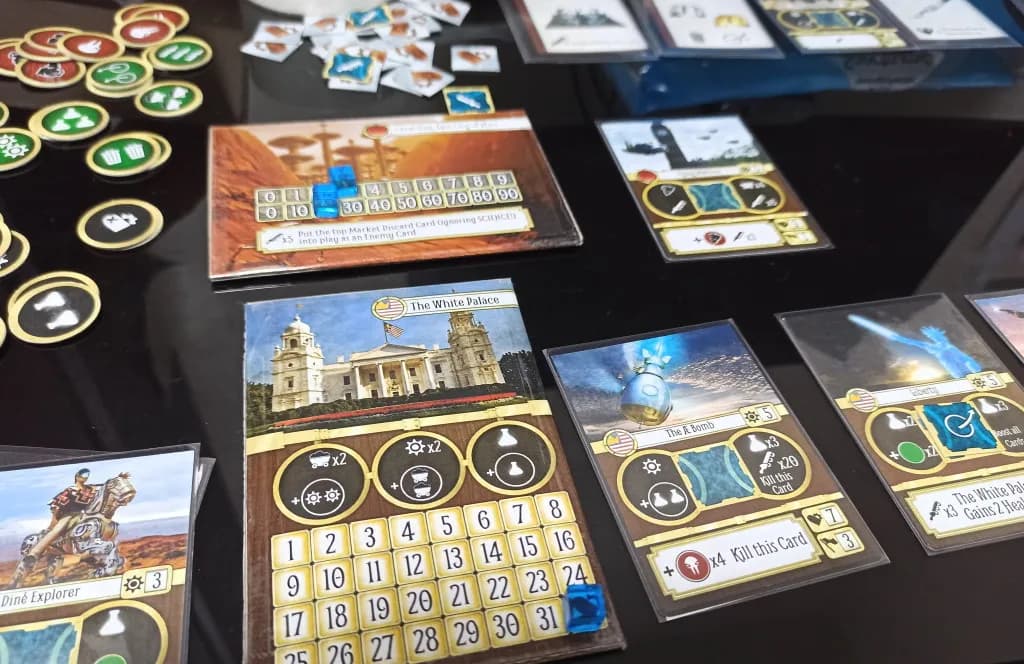
2021The Brass Age plunges you into a solo, steampunk-themed conflict where industrial might and aetheric power decide the fate of nations. This celebrated print-and-play wargame challenges you to lead one of three distinct factions—the British Imperium, the Kingdom of America, or the enigmatic Last City of Mars—in a decisive battle for supremacy. Your ultimate objective is straightforward but demanding: you must dismantle your opponent's war machine and reduce their nation's life force to zero before they do the same to you. The enemy is not a passive target but a dynamic, AI-controlled power that will relentlessly deploy its own forces and trigger unexpected events, ensuring that every game is a tense and unpredictable struggle for survival and dominance in a world of brass, steam, and circuits.
At the heart of the game lies an elegant fusion of bag-building and tableau-building mechanics. Each turn, you will draw a handful of resource tokens—representing vital materials like metal, coal, and aether—from a personal bag. These resources are the currency you'll use to acquire powerful new unit cards from a central market and to activate the unique abilities of the forces you have already deployed to your frontline. As the game progresses, you will strategically add more potent tokens to your bag, refining your economic engine and unlocking more powerful actions. Concurrently, you construct a tableau of units that represents your military presence. Managing the synergies between these units is key to launching effective attacks against the enemy nation and its deployed forces, which are governed by a clever AI card deck that keeps the pressure on.
What makes "The Brass Age" so compelling is its ability to deliver a deep, strategic solo experience in a compact and accessible package. Its victory in the 2021 BoardGameGeek Solitaire Print-and-Play Contest is a testament to its polished design and engaging gameplay. The game's gorgeous, unified steampunk aesthetic, with both art and design credited to Barny Skinner, creates a cohesive and immersive world. While the rules are smooth and straightforward once learned, the decisions they present are consistently meaningful. Players love the challenge of managing probability through bag-building while simultaneously crafting a synergistic combat tableau. It strikes a perfect balance, offering a rewarding puzzle that feels neither overly complex nor too simplistic, making it a standout title in the print-and-play community.
1 40m⚖️ 2.4