Thematic Games
Browse all Thematic board games in the Meeple Pulse database.
Styles
AbstractAbstract StrategyAdventureAnimalsCard GameChildren's GameCivilizationCo-operativeComic Book / StripCompetitiveDiceEconomicEducationalEuroExpansion for Base-gameFamilyFan ExpansionFantasyFightingHistoricalHorrorIndustry / ManufacturingMedievalMedium HeavyMiniaturesPartyParty GamePrint & PlayPuzzle-LikeRacingReal-timeSpace ExplorationSportsStrategyTerritory BuildingThematicTransportationWargame
Themes
AbstractAdventureAncientAnimalsArtBusinessCard GameCo-operativeComic BookCooperativeCrimeEconomicEnvironmentalismExplorationFantasyFightingHistoricalHorrorHumorIntrigueLiteraryMagicMarvelMedievalModernMuseumMysteryMythologyNatureNauticalParty GamePoliticalPress Your LuckRacingSatireSci-FiSocial CommentarySocial InteractionSpaceSuperheroesThematicTravelWarWesternWord-Guessing
Mechanics
3D PlacementActingAction / DexterityAction DraftingAction Point AllowanceAction Point Allowance SystemAction Point SystemAction PointsAction ProgrammingAction QueueAction RetrievalAction SelectionAction/EventAlliancesAlternate ActivationApp-AssistedApp-DrivenArea ControlArea InfluenceArea MajorityArea Majority / InfluenceArea MovementArgumentationAsymmetricAsymmetric FactionsAsymmetric GameAsymmetric PowersAsymmetrical PowersAuction & BiddingAuction/BiddingAuctioningBag BuildingBettingBetting and BluffingBetting and WageringBetting and WagersBiddingBingoBlind BiddingBluffingCampaign / Battle Card DrivenCampaign / LegacyCampaign / Legacy GameCampaign / Mission-basedCampaign / ScenariosCampaign GameCampaign PlayCard DraftingCard DrawingCard DrivenCard Driven ActionCard Driven CombatCard Driven Dice AllocationCard Driven MovementCard ManagementCard PlayCard Play / Hand ManagementCard Play Conflict ResolutionCard SheddingCard-Driven MovementCharacter CreationCharacter ProgressionChit-Pull SystemCo-op PlayCo-operative GameCo-operative PlayCode-breakingCombat ResolutionCombo ChainCommand CardsCommodity SpeculationCommunication LimitsContract FulfillmentContractsCooperative GameCooperative GameplayCooperative PlayCooperative Trick-takingDebateDeck BuildingDeck ConstructionDeck, Bag, and Pool BuildingDeck-BuildingDeductionDexterityDice DraftingDice PlacementDice RollingDiplomatic InfluenceDraftingDynamic Battle SystemEnclosureEnd Game BonusesEngine BuildingEngine-BuildingEscape RoomEvent DrivenExplorationFarmingFlip and WriteFollowFollow ActionGrid CoverageGrid MovementHand ManagementHex-and-CounterHexagon GridHidden MovementHidden RolesI Cut You ChooseIncomeInfluence / Area MajorityLadder ClimbingLegacyLegacy ElementsLegacy GameLegacy SystemLimited CommunicationLine DrawingLine of SightMancalaMap AdditionMap MovementMarketMarket DraftingMarket ManipulationMarket MechanicMarket SpeculationMatchingMeasurement MovementMemoryMission ObjectivesModular BoardModular Board ConstructionMove Through DeckMovement PointsMovement TemplatesMulti-Use CardsMulti-use CardsMultiple ScenariosMust FollowNarrative ChoiceNarrative Choice / ParagraphNegotiationNegotiation MechanicsNetwork & Route BuildingNetwork BuildingNetwork and Route BuildingOne vs ManyOne vs. ManyOpen DraftingOwnershipPaper-and-PencilPartnershipsPattern BuildingPattern RecognitionPick-up and DeliverPlayer EliminationPlayer InteractionPlayer JudgePoint SaladPoint to Point MovementPolyominoesPush Your LuckPush-Your-LuckPuzzlePuzzle-LikePuzzle-SolvingRaceReal-TimeRecipe FulfillmentResource ManagementRole PlayingRole SelectionRoll / Spin and MoveRondelRoute BuildingRoute-BuildingRoute/Network BuildingSanity SystemScenario / Campaign PlayScenario / Mission / Campaign GameScenario / Mission FunctionSecret Unit DeploymentSemi-Cooperative GameSet CollectionSheddingSimulationSimultaneous ActionSimultaneous Action SelectionSimultaneous Hidden AllocationSocial DeductionSocial InteractionSolo / Solitaire GameSpace ExplorationStat Check / Skill CheckStat Check ResolutionStock HoldingStorytellingStrategic PlanningTableau BuildingTactical Decision-MakingTake ThatTargeted CluesTeam PlayTeam-Based GameTeam-Based GuessingTeamworkTech TreesTech Trees / Tech TracksTechnology & Armament TracksTechnology TreeTension & Aggression TracksTile DraftingTile LayingTile PlacementTime TrackTime TravelTower DefenseTrack MovementTradingTrick-takingTug of WarTurn Order: PassTurn Order: Stat-BasedUnit PlacementVariable Phase OrderVariable Player PowersVariable Set-upVariable SetupVictory Point TracksVotingWord AssociationWord GameWord GuessingWord-GuessingWord-guessingWordplayWorker Placement
RANK #281
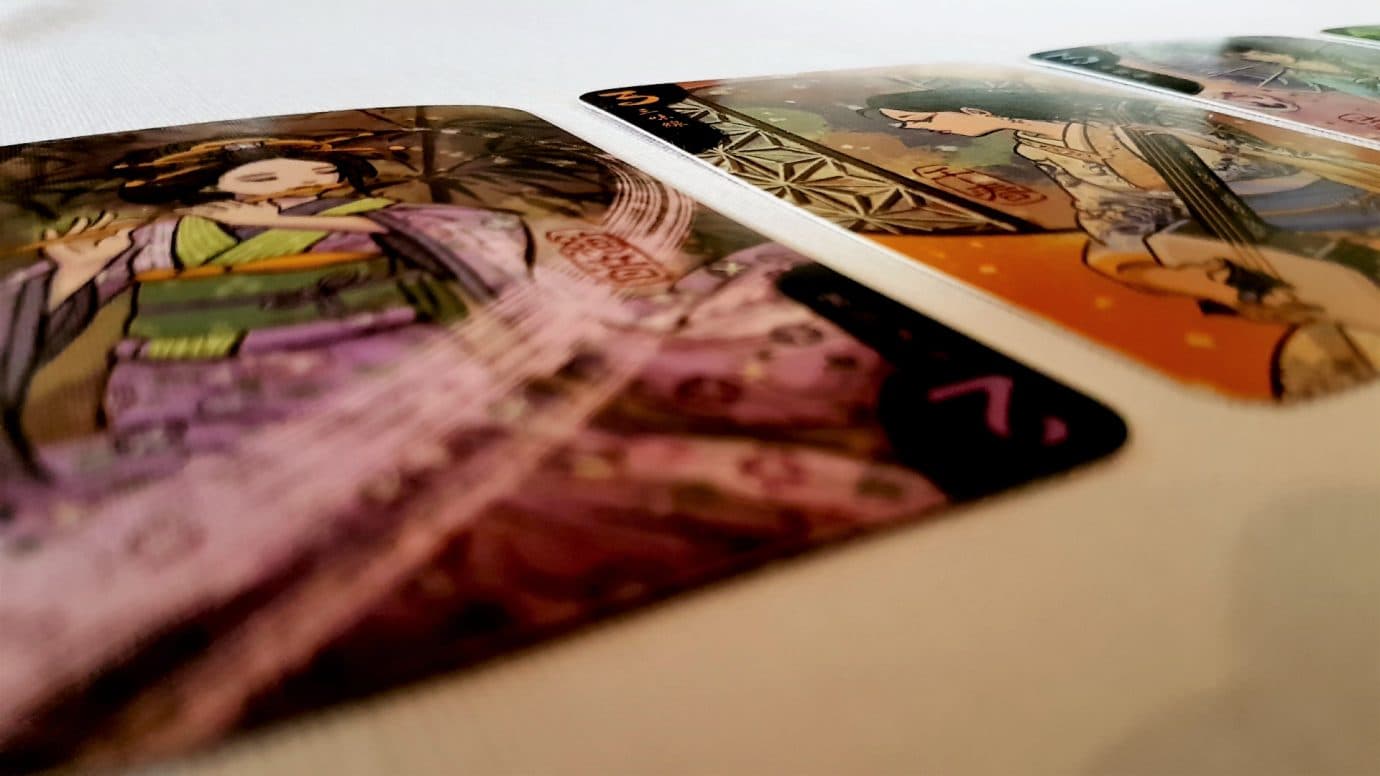
Hanamikoji
2013Situated in the renowned Hanamikoji street of old Kyoto, this tactical card game invites two players to compete for the attention of seven master Geishas. As owners of traditional restaurants, players aim to win the favor of these artists by presenting them with their preferred items, ranging from flutes and fans to tea ceremony tools. The central objective is a race to either secure the loyalty of four individual Geishas or to earn a combined charm value of eleven or more. This creates a constant, high-pressure tug-of-war across the table, where the balance of power shifts with every single card played.
The gameplay is structured around a brilliant 'I Cut, You Choose' system that transforms every turn into a psychological puzzle. Each round, players are granted exactly four mandatory actions, each usable only once. These actions require players to offer cards to their opponent: for instance, presenting three cards and letting the opponent take one, or splitting four cards into two pairs for the rival to choose between. There are also opportunities to discard cards secretly or tuck one away for end-of-round scoring. Because one card is randomly removed from the deck at the start of the game, players must navigate a landscape of hidden information, trying to deduce which resources are still in play while managing a hand of cards that their opponent might ultimately benefit from.
Hanamikoji is widely praised for its exceptional strategic depth despite having a minimal component count and a short playtime. It is a game of calculated sacrifices; you are frequently forced to hand your opponent exactly what they want just to ensure you retain the pieces necessary for your own victory. This dynamic ensures that player interaction is constant and intense throughout the fifteen-minute duration. With its breathtaking artwork and elegant rule set, the game offers a masterclass in tension, rewarding players who can read their opponent's intentions and manipulate the limited information available to claim victory in the heart of Kyoto.
2 15m⚖️ 1.7

RANK #283
Western Legends
2018Western Legends is a sweeping sandbox experience that transports players into the rugged landscape of the American Old West. Unlike traditional board games with linear objectives, this title offers a sprawling open-world environment where players assume the roles of legendary historical figures like Wyatt Earp, Calamity Jane, or Billy the Kid. The primary goal is to accumulate Legendary Points (LP) through various frontier activities, ultimately carving out a lasting legacy. Whether you choose to walk the path of a righteous lawman or a notorious outlaw, the game adapts to your playstyle, allowing for a personalized journey through its dusty towns and gold-filled hills.
The gameplay loop revolves around a flexible action system where players manage three actions per turn, which can be spent on movement, mining for gold, or engaging in local town activities. One of the most distinctive features is the moral alignment system, tracking players on either the Marshal or Wanted tracks. Law-abiding citizens can earn prestige by arresting criminals, fighting bandits, or driving cattle to the railhead. Conversely, those seeking a life of crime can rob the bank, rustle cattle to the rival ranch, or challenge other players to high-stakes robberies. Conflict resolution eschews dice in favor of a specialized poker deck, where players play cards simultaneously to determine outcomes. This card-based system adds a layer of bluffing and strategic management, mirroring the tension of a real saloon showdown.
What truly distinguishes Western Legends is its immersive freedom and high player interaction. The sandbox nature ensures that no two sessions feel identical, as the board state evolves based on player decisions. Some may focus on the economic engine of gold mining and selling nuggets at the bank, while others might spend their time hunting down 'Wanted' friends to claim bounties. The inclusion of authentic historical figures adds a rich layer of flavor, grounding the mechanical systems in a recognizable period setting. It captures the essence of frontier life, blending strategic depth with cinematic storytelling, making it a favorite for those who enjoy narrative-rich experiences with a competitive edge.
2-6 90m⚖️ 2.7
RANK #285
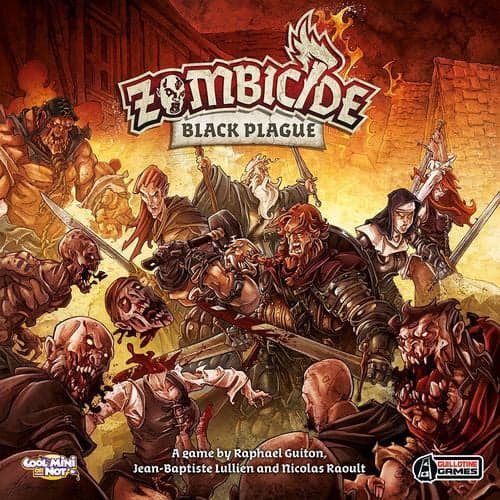
Zombicide: Black Plague reboots the high-octane zombie survival genre by plunging players into a dark, medieval fantasy world. In this cooperative experience, one to six survivors must unite to fend off hordes of the undead summoned by malevolent Necromancers. Unlike its modern-day predecessors, Black Plague introduces a magical twist where steel, sorcery, and shields are the primary tools of survival. The primary objective is to complete specific mission scenarios, which range from retrieving lost artifacts to cleansing infested vaults, all while managing the ever-growing threat of the zombie apocalypse. Each player controls a unique hero, navigating through modular map tiles that represent plagued villages and sinister dungeons.
The gameplay revolves around an intuitive action-point system where survivors spend points to move, attack, or scavenge for gear. As players slay zombies, they gain Adrenaline Points, which allow them to level up and unlock powerful new abilities. However, this progress comes with a catch: the game tracks the party's highest experience level, and as survivors grow stronger, the zombie spawn rates intensify through color-coded danger zones. This creates a tense balancing act where players must scale their power without overwhelming themselves with too many enemies. Unique to this edition are the Necromancers, specialized foes who attempt to escape the board while leaving permanent spawn points in their wake, and the introduction of armor saves, giving players a fighting chance against incoming damage.
Fans of the series praise Black Plague for its streamlined rules and significantly improved component quality, notably the recessed plastic dashboards that keep character cards and pegs securely in place. The shift to a fantasy setting allows for creative weapon combinations, such as magic staves and heavy plate mail, providing a distinct mechanical flavor compared to modern versions. With its high-quality miniatures, tactical depth, and 'beer and pretzels' accessibility, it remains a favorite for groups seeking an epic, narrative-driven challenge. The inclusion of solo rules and a variety of challenging scenarios ensures high replayability, making it a definitive entry in the dungeon-crawl and survival-horror board game genres.
1-6 120m⚖️ 2.5

RANK #286
Deception: Murder in Hong Kong is an immersive social deduction experience that transports players into the heart of a high-stakes criminal investigation. In this tense mystery, one player assumes the role of the Forensic Scientist—a silent gamemaster who holds the objective truth—while others act as Investigators trying to identify the perpetrator hidden among them. However, one individual in the group is the secret Murderer, and in larger games, they may even have an Accomplice to help deflect suspicion. The goal is simple yet challenging: the Investigators must correctly identify two specific cards—the 'Means of Murder' and the 'Key Evidence'—selected by the killer before the trail goes cold.
The gameplay centers on a unique communication loop where the Forensic Scientist is strictly forbidden from speaking or gesturing. Instead, they provide hints by placing bullet markers on abstract Scene Tiles, which represent various aspects of the crime such as the location, the cause of death, or the victim's social state. During a hidden night phase at the start of the game, the Murderer secretly points to their chosen weapon and a piece of evidence. As the investigation progresses over three rounds, the Scientist adds or replaces tiles to refine the group's theories. Each Investigator has only one formal opportunity to 'Solve the Crime.' They must name both cards correctly; a single mistake results in the loss of their badge and their ability to make future official accusations, though they remain active in the group's heated debates.
What makes Deception stand out is its masterful blend of abstract logic and intense social manipulation. Unlike many deduction games that rely solely on bluffing, this title provides a tangible puzzle through visual clues that must be interpreted through the lens of the killer's possible choices. It creates a fascinating dynamic where players must argue over the subjective meaning of tiles while trying to read the body language of their peers. The addition of optional roles like the Witness and Accomplice adds further layers of complexity, requiring players to protect their information sources. It is an ideal choice for large groups because it eliminates player elimination and keeps everyone engaged in a collaborative, yet paranoid, atmosphere where the truth is often hidden in plain sight.
4-12 20m⚖️ 1.6
BoxNo Cover Art
RANK #289
Flamme Rouge
2016Flamme Rouge is a fast-paced, tactical bicycle racing game that transports players to the heart of a high-stakes 'one-day' classic race. Each player takes on the role of a team director managing two cyclists: the Rouleur, known for steady endurance, and the Sprinteur, capable of explosive bursts of speed. The objective is deceptively straightforward—cross the finish line first—but achieving this requires mastering the delicate balance of stamina, positioning, and timing. Set against the backdrop of the golden age of cycling, the game uses a modular track system to create unique courses every time you play, ranging from flat sprints to grueling mountain climbs that test even the most seasoned riders.
The gameplay loop revolves around a clever card-driven movement system that emphasizes hand management and deck depletion. Every round, players simultaneously draw cards for both their riders, choosing one to play and burying the others. The catch is that once a movement card is played, it is permanently removed from the game. This forces players to make difficult decisions: do you burn a high-value card now to break away from the pack, or save it for the final sprint? Positioning is critical, as the game rewards those who ride in groups through a 'slipstreaming' mechanic. If a rider ends exactly one space behind another, they are pulled forward for free, conserving their energy. Conversely, leading the pack or riding solo into the wind results in 'Exhaustion' cards being added to your deck, which act as dead weight and dilute your future drawing options.
What makes Flamme Rouge a modern classic is its ability to deliver a deep, thematic experience through incredibly accessible rules. It is easy enough for families to enjoy together but offers the tactical depth required to keep veteran strategy gamers engaged. The tension of the 'reveal' phase, where all players show their cards at once, captures the unpredictable nature of a real peloton. With its elegant design and high replayability thanks to the diverse track tiles, it offers a satisfying blend of luck and strategy. Whether you are carefully drafting to stay fresh or making a desperate dash for the flamme rouge—the red flag marking the final kilometer—every race is a cinematic experience.
2-4 45m⚖️ 1.7

RANK #290
Wondrous Creatures invites players to a hidden, mystical island teeming with extraordinary fauna. As creature enthusiasts, players embark on an expedition to scout the wilderness and establish the most prestigious wildlife reserve. The core objective is to collect species, manage rare resources, and satisfy specific achievement criteria before your rivals. By balancing the expansion of your reserve with the discovery of new life forms, you aim to build a lasting legacy as the island's premier naturalist. This title blends the charm of biological discovery with the rigors of tactical management, offering a rich and competitive tableau-building experience.
The heart of the gameplay lies in its innovative 'double-hex' worker placement system. Instead of occupying a single spot, your crew members cover two adjacent spaces on a hexagonal grid, allowing for varied resource combinations such as coral, fruit, and mushrooms. Players spend these resources to play from a massive deck of 126 unique creature cards, each offering distinct powers—instant effects, ongoing passive abilities, or powerful 'recharge' actions. The flow is punctuated by the Recharge phase, where players pull back their workers to trigger their engine and advance the global time track. This tempo-based movement toward trophies and public achievements creates a race-like tension, as early movers claim the highest-valued rewards and shape the available landscape for others.
What truly sets Wondrous Creatures apart is its high production value and deep strategic synergy. Fans of mid-to-heavy tableau builders will appreciate the intricate engine-building and the satisfaction of chaining card abilities. The inclusion of magnetic meeples—where 'Captains' mount 'Crew Members'—and the sheer variety of the 126 unique cards ensure that no two reserves feel identical. Its whimsical art style, reminiscent of a fantasy field journal, complements the mechanical depth, making it a compelling choice for strategy gamers. Whether navigating the solo mode or competing in a full four-player session, the game offers a tactile, rewarding journey through a world of imagination and discovery.
1-4 80m⚖️ 3.0
RANK #292
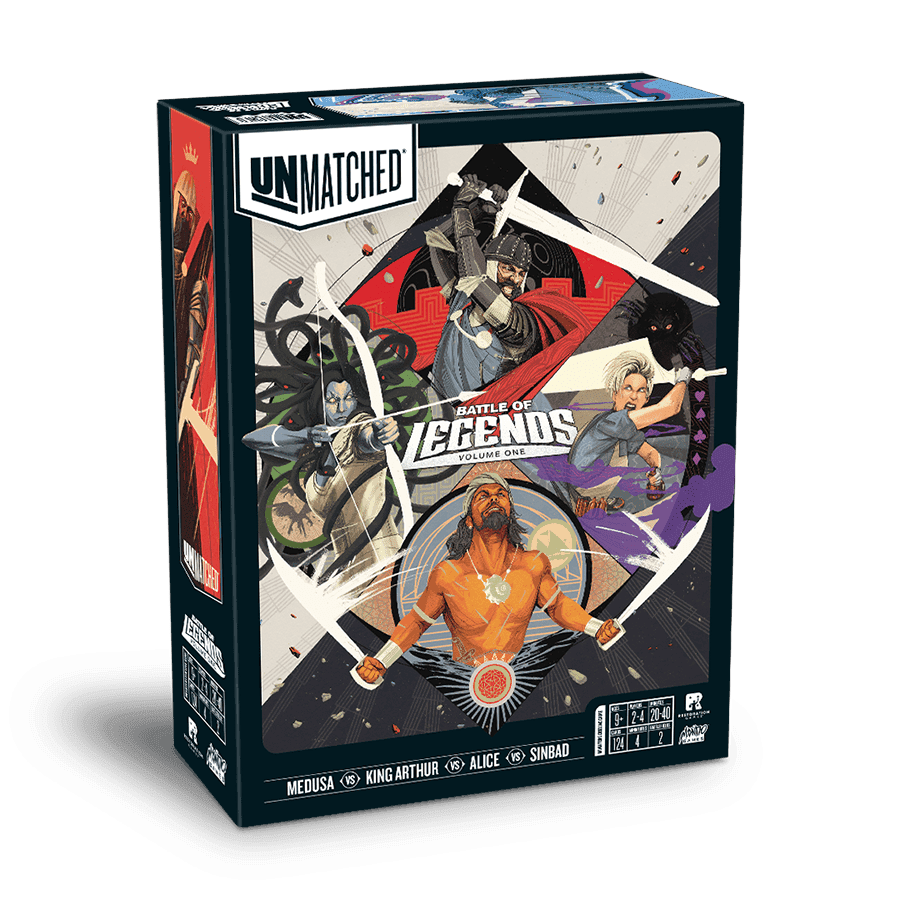
Unmatched: Battle of Legends, Volume One serves as the cornerstone of a widely acclaimed skirmish series, reinventing the tactical combat mechanics originally popularized by the Star Wars: Epic Duels system. This asymmetrical miniature game invites players to pit legendary figures from across folklore, literature, and history against one another in fast-paced duels. Whether it is the mythical Medusa staring down the Victorian Alice or King Arthur clashing with the seafaring Sinbad, the game thrives on the 'what if' scenarios of impossible combat. Each hero is accompanied by unique sidekicks and a specialized deck of cards, ensuring that no two fighters approach the battlefield with the same strategy or strengths.
The gameplay is defined by a 'no-luck' tactical system that replaces traditional dice rolling with strategic card management and precise positioning. On a turn, players must execute exactly two actions, choosing between maneuvering for better positioning, playing powerful utility schemes, or launching aggressive attacks. Movement is governed by a vibrant 'colored zone' system on the board, which simplifies line-of-sight calculations and encourages dynamic kiting or flanking maneuvers. Combat itself is a tense mind game where both the attacker and defender reveal cards simultaneously. Success depends on anticipating an opponent's defense and mastering the complex timing of effects that trigger 'Immediately', 'During Combat', or 'After Combat'. This layered timing system adds significant depth to the seemingly straightforward mechanics.
Part of the game's enduring appeal lies in its accessibility paired with high replayability. While the rules are simple enough to teach in minutes, the nuances of each character's 30-card deck provide a rich competitive environment. Players must learn to manage their hand carefully, as running out of cards leads to exhaustion and inevitable defeat. The visual presentation is equally striking, featuring the bold, graphic art style of Oliver Barrett, which gives the game a modern and sophisticated aesthetic. With its quick play sessions and the ability to mix and match heroes from other sets in the Unmatched line, this volume offers a perfect entry point for those seeking a 'bridge' title that balances light strategy with intense, thematic confrontation.
2-4 30m⚖️ 1.9
RANK #294
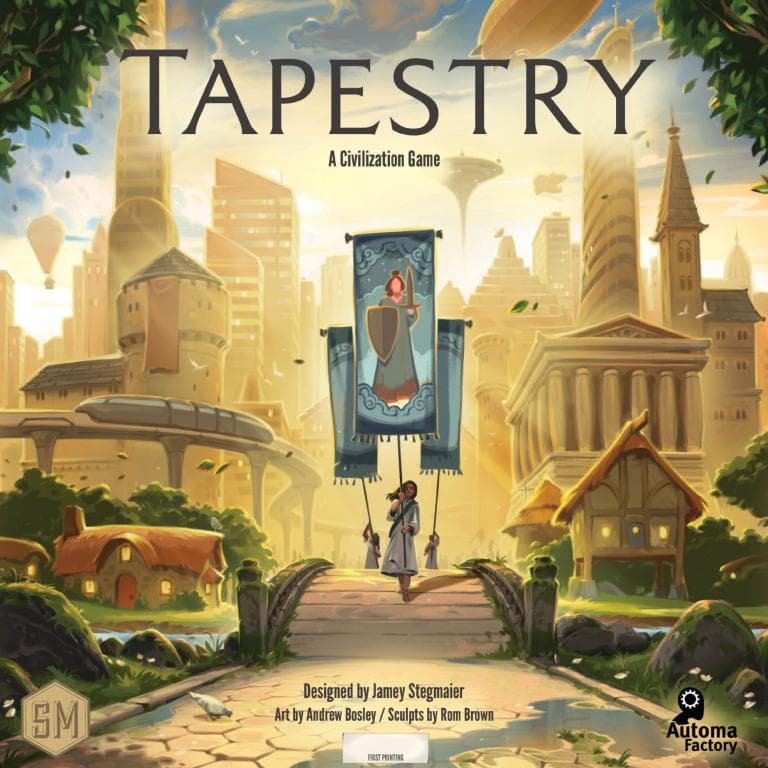
Tapestry
2019Tapestry is a civilization-building board game that breaks away from traditional historical simulations by offering a colorful, anachronistic approach to human development. Designed by Jamey Stegmaier, the game challenges players to guide a unique culture from the earliest days of discovery into the technological wonders of the near future. The primary goal is to accumulate the most victory points by advancing on four core tracks: Science, Technology, Exploration, and Military. Unlike typical '4X' games that focus heavily on combat, Tapestry emphasizes a strategic optimization puzzle where players craft their own narrative through cards and landmarks within their growing capital city.
The heart of the experience lies in a streamlined decision-making process. On every turn, a player chooses between an Advancement turn or an Income turn. Advancement involves spending resources to climb one of the four tracks, each providing immediate rewards, permanent upgrades, and powerful landmark miniatures. When resources run dry, players take an Income turn to transition into a new era. This phase allows them to collect income based on their current progress, play a Tapestry card that defines their civilization's special abilities for that era, and upgrade technology. This asymmetric structure is further enhanced by sixteen distinct civilization mats, each granting game-changing powers that require players to pivot their strategies constantly.
What truly sets Tapestry apart is its high production value and the 'simple rules, deep strategy' philosophy. The game features 18 prepainted landmark miniatures that players place on their Capital City grids to complete 3x3 districts, adding a tactile tile-laying element. Because players take exactly five income turns throughout the session, the pacing varies significantly between participants. One player might conclude their journey early while others are still in their fourth era, creating a unique tension in resource efficiency. It is a medium-weight engine-building experience that rewards long-term planning while remaining accessible to many due to its concise rulebook, offering high replayability through variable setups and asymmetric components.
1-5 105m⚖️ 2.9
RANK #295
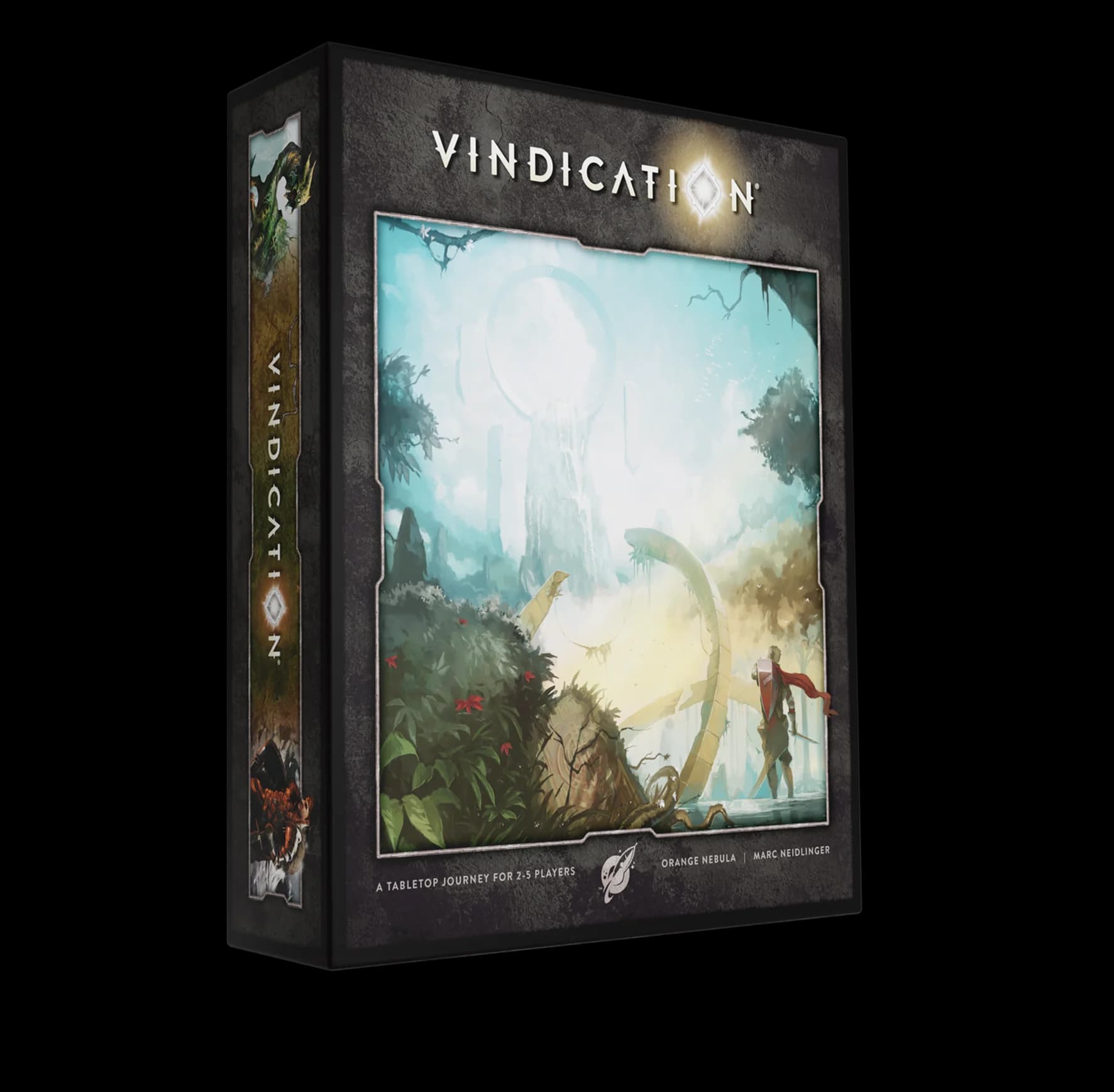
Vindication
2018Vindication is a highly modular strategy board game where players take on the role of a disgraced individual, cast overboard by their peers to die in the surf of a mysterious, magical island. From this lowly start as a 'wretched' character, you must navigate a path toward redemption and honor. The core objective is to accumulate the most Honor points by the time one of the variable endgame triggers is met. Set in a rich fantasy world, the game emphasizes player agency and high-production components, challenging participants to shed their dark past and become truly vindicated through heroic deeds and strategic growth.
The gameplay loop is centered on an elegant 'Action Trio' system. On every turn, players perform three distinct actions in any order: moving across the hexagonal modular board, activating companions or character abilities, and either visiting a specific tile or resting to recover power. The resource management is particularly unique, utilizing a three-tier system of power cubes. Players move cubes from 'Potential' to 'Influence' and finally to 'Conviction.' This engine powers 'Attribute Alchemy,' where basic resources like Inspiration, Knowledge, or Strength are combined into advanced traits like Wisdom or Courage. These elite attributes are necessary to recruit powerful allies, secure relics, and defeat the monstrous threats lurking on the island.
One of the most praised aspects of Vindication is its open-world feel and high degree of replayability. Because the endgame conditions are variable and based on player progress or deck depletion, no two sessions feel the same. The game avoids the rigid structure of fixed rounds, allowing for a dynamic tempo that responds to the players' strategies. Fans of the game are often drawn to its stunning aesthetics, including high-quality card art and tactile game trays, alongside the deeply satisfying feeling of building a powerful engine from nothing. Whether you are exploring new territories, mastering the alchemy of attributes, or taking permanent control of locations, the path to glory is as varied as the island itself.
1-5 90m⚖️ 3.1
RANK #296
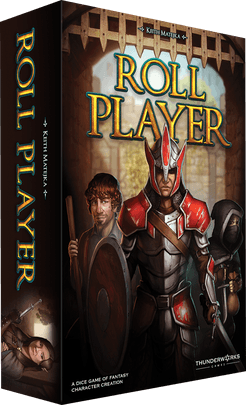
Roll Player
2016Roll Player is a creative board game that turns the classic tabletop RPG character creation process into a full competitive experience. Instead of embarking on a dungeon crawl, players are focused entirely on the preparation stage—building the most powerful and well-rounded fantasy hero possible. Set in the world of Ulos, each player takes on the role of a character with a specific race, class, and backstory. The primary objective is to earn the most Reputation Stars by the end of the game, which are awarded for meeting attribute requirements, fulfilling backstory goals, aligning your character's morality, and gathering powerful gear from the local market.
The gameplay revolves around a central dice-drafting mechanic spanning several rounds. Each round, dice are rolled and placed on initiative cards. Players take turns selecting a die to place on their character sheet in specific attribute rows like Strength, Intelligence, or Charisma. Each placement triggers a unique attribute action, allowing players to manipulate their dice by flipping them to opposite sides, re-rolling them, or swapping positions. This creates a deep, puzzle-like environment where players must carefully manage their resources and dice values. After the drafting phase, players visit the market to spend gold on skills, traits, and armor sets, all of which provide additional ways to score points or gain tactical advantages during future rounds.
What makes Roll Player so beloved is its ingenious 'gamification' of a meta-concept. It captures the nostalgic joy of rolling stats for a Dungeons & Dragons character while providing a rigorous strategic framework. The tension between picking the 'perfect' die for your stats versus picking an earlier initiative card to get the best equipment in the market makes for a compelling decision space. It is a highly satisfying optimization puzzle that feels thematic and rewarding, especially as you see your hero come together from a blank slate to a fully equipped champion. With a moderate complexity level, it is accessible enough for casual gamers while offering enough depth for strategy enthusiasts.
1-4 75m⚖️ 2.4
BoxNo Cover Art
RANK #298
Anno 1800: The Board Game, a captivating Eurogame released in 2020, beautifully translates the intricate city-building experience of its video game namesake into a tabletop format. Designed by the esteemed Martin Wallace, this strategy title immerses players in the heart of the Industrial Revolution, tasking them with developing a thriving island economy. The overarching goal is a strategic "race" to satisfy the increasingly complex needs of your population, represented by a hand of Population Cards that players aim to empty. It’s a game of careful planning, resource optimization, and dynamic player interaction, where every decision shapes your burgeoning industrial empire.
The core gameplay loop revolves around selecting one of nine distinct actions on your turn, a mechanism that provides a flexible yet constrained strategic environment. Instead of traditional resource accumulation, players "produce" goods by exhausting population cubes from various building tiles, instantly generating the necessary resources for current actions. These resources are then used to either play the crucial Population Cards from your hand, unlocking points and bonuses, or to construct new, higher-tier industries that produce more advanced goods. Population management is key: increasing your workforce grants more actions per round, but also forces you to draw more Population Cards, extending the challenge of fulfilling your citizens' demands and escalating the strategic race.
What truly sets Anno 1800 apart is its innovative and dynamic trade system. If a player lacks a specific resource, they can trade with any opponent who possesses the corresponding industry. This trade is non-refusable; the active player spends a trade token, and the recipient gains one gold, without expending their own resources or actions. This ingenious system strongly encourages players to specialize their industries rather than attempting to produce every good, fostering a high degree of player interaction and negotiation throughout the game. Fans praise its ability to replicate the video game's recursive production chains and satisfying engine-building without becoming overly bogged down in calculations, offering a rewarding, "puzzle-like" experience for strategists and optimization enthusiasts.
2-4 120m⚖️ 3.8
RANK #303
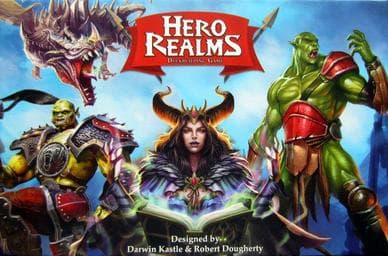
Hero Realms
2016Hero Realms is a fantasy-themed deck-building card game that serves as the spiritual and mechanical successor to the acclaimed Star Realms. Set in a vibrant world of wizards, warriors, and mythical beasts, the game pits players against each other in a race to deplete their opponent's health. Each participant begins with a standard fifty health points and a modest deck of basic cards. The primary objective is to strategically acquire more powerful cards from a central market to bolster your deck's efficiency and eventually reduce your rivals to zero health. By blending high-stakes combat with deep tactical decision-making, it transforms the familiar deck-building formula into a fast-paced battle for survival.
The core of the experience lies in the Market Row, a shifting array of cards that players purchase using gold generated from their hand. Cards are divided into four distinct factions—Imperial, Guild, Necros, and Wild—each specializing in different attributes like healing, card drawing, or raw damage. A standout mechanic is the 'Ally Ability,' which rewards players for playing multiple cards of the same faction in a single turn, triggering massive bonuses. Players must also manage two main card types: Actions and Champions. While Actions provide immediate, one-time benefits, Champions remain on the field across multiple turns to provide persistent bonuses and can even act as 'Guards,' shielding the player from incoming attacks until they are defeated. This creates a dynamic where players must balance immediate aggression with long-term defensive positioning.
Fans of the genre praise Hero Realms for its accessibility and engine-building depth. It offers the strategic weight of a collectible card game but in a self-contained box that is easy to teach and quick to play, typically wrapping up in under thirty minutes. The diverse nature of the factions allows for varied strategies, whether you prefer the relentless offense of the Wild faction or the manipulative control of the Guild. Beyond the standard competitive mode, the game is highly expandable, offering character packs that introduce unique starting decks and cooperative campaign modes that transform the competitive skirmish into a narrative-driven adventure. This versatility ensures that whether you are engaging in a quick head-to-head duel or a large multiplayer free-for-all, the game remains a staple for fans of card-driven strategy.
2-4 25m⚖️ 1.9