Strategy Games
Browse all Strategy board games in the Meeple Pulse database.
Styles
AbstractAbstract StrategyAdventureAnimalsCard GameChildren's GameCivilizationCo-operativeComic Book / StripCompetitiveDiceEconomicEducationalEuroExpansion for Base-gameFamilyFan ExpansionFantasyFightingHistoricalHorrorIndustry / ManufacturingMedievalMedium HeavyMiniaturesPartyParty GamePrint & PlayPuzzle-LikeRacingReal-timeSpace ExplorationSportsStrategyTerritory BuildingThematicTransportationWargame
Themes
AbstractAdventureAncientAnimalsArtBusinessCard GameCo-operativeComic BookCooperativeCrimeEconomicEnvironmentalismExplorationFantasyFightingHistoricalHorrorHumorIntrigueLiteraryMagicMarvelMedievalModernMuseumMysteryMythologyNatureNauticalParty GamePoliticalPress Your LuckRacingSatireSci-FiSocial CommentarySocial InteractionSpaceSuperheroesThematicTravelWarWesternWord-Guessing
Mechanics
3D PlacementActingAction / DexterityAction DraftingAction Point AllowanceAction Point Allowance SystemAction Point SystemAction PointsAction ProgrammingAction QueueAction RetrievalAction SelectionAction/EventAlliancesAlternate ActivationApp-AssistedApp-DrivenArea ControlArea InfluenceArea MajorityArea Majority / InfluenceArea MovementArgumentationAsymmetricAsymmetric FactionsAsymmetric GameAsymmetric PowersAsymmetrical PowersAuction & BiddingAuction/BiddingAuctioningBag BuildingBettingBetting and BluffingBetting and WageringBetting and WagersBiddingBingoBlind BiddingBluffingCampaign / Battle Card DrivenCampaign / LegacyCampaign / Legacy GameCampaign / Mission-basedCampaign / ScenariosCampaign GameCampaign PlayCard DraftingCard DrawingCard DrivenCard Driven ActionCard Driven CombatCard Driven Dice AllocationCard Driven MovementCard ManagementCard PlayCard Play / Hand ManagementCard Play Conflict ResolutionCard SheddingCard-Driven MovementCharacter CreationCharacter ProgressionChit-Pull SystemCo-op PlayCo-operative GameCo-operative PlayCode-breakingCombat ResolutionCombo ChainCommand CardsCommodity SpeculationCommunication LimitsContract FulfillmentContractsCooperative GameCooperative GameplayCooperative PlayCooperative Trick-takingDebateDeck BuildingDeck ConstructionDeck, Bag, and Pool BuildingDeck-BuildingDeductionDexterityDice DraftingDice PlacementDice RollingDiplomatic InfluenceDraftingDynamic Battle SystemEnclosureEnd Game BonusesEngine BuildingEngine-BuildingEscape RoomEvent DrivenExplorationFarmingFlip and WriteFollowFollow ActionGrid CoverageGrid MovementHand ManagementHex-and-CounterHexagon GridHidden MovementHidden RolesI Cut You ChooseIncomeInfluence / Area MajorityLadder ClimbingLegacyLegacy ElementsLegacy GameLegacy SystemLimited CommunicationLine DrawingLine of SightMancalaMap AdditionMap MovementMarketMarket DraftingMarket ManipulationMarket MechanicMarket SpeculationMatchingMeasurement MovementMemoryMission ObjectivesModular BoardModular Board ConstructionMove Through DeckMovement PointsMovement TemplatesMulti-Use CardsMulti-use CardsMultiple ScenariosMust FollowNarrative ChoiceNarrative Choice / ParagraphNegotiationNegotiation MechanicsNetwork & Route BuildingNetwork BuildingNetwork and Route BuildingOne vs ManyOne vs. ManyOpen DraftingOwnershipPaper-and-PencilPartnershipsPattern BuildingPattern RecognitionPick-up and DeliverPlayer EliminationPlayer InteractionPlayer JudgePoint SaladPoint to Point MovementPolyominoesPush Your LuckPush-Your-LuckPuzzlePuzzle-LikePuzzle-SolvingRaceReal-TimeRecipe FulfillmentResource ManagementRole PlayingRole SelectionRoll / Spin and MoveRondelRoute BuildingRoute-BuildingRoute/Network BuildingSanity SystemScenario / Campaign PlayScenario / Mission / Campaign GameScenario / Mission FunctionSecret Unit DeploymentSemi-Cooperative GameSet CollectionSheddingSimulationSimultaneous ActionSimultaneous Action SelectionSimultaneous Hidden AllocationSocial DeductionSocial InteractionSolo / Solitaire GameSpace ExplorationStat Check / Skill CheckStat Check ResolutionStock HoldingStorytellingStrategic PlanningTableau BuildingTactical Decision-MakingTake ThatTargeted CluesTeam PlayTeam-Based GameTeam-Based GuessingTeamworkTech TreesTech Trees / Tech TracksTechnology & Armament TracksTechnology TreeTension & Aggression TracksTile DraftingTile LayingTile PlacementTime TrackTime TravelTower DefenseTrack MovementTradingTrick-takingTug of WarTurn Order: PassTurn Order: Stat-BasedUnit PlacementVariable Phase OrderVariable Player PowersVariable Set-upVariable SetupVictory Point TracksVotingWord AssociationWord GameWord GuessingWord-GuessingWord-guessingWordplayWorker Placement
RANK #225
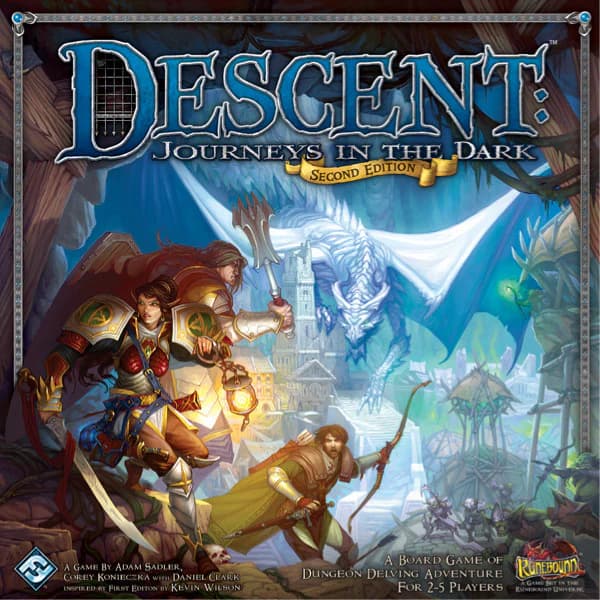
Descent: Journeys in the Dark (Second Edition) is a seminal board game that immerses players in the high-fantasy world of Terrinoth for an epic, one-versus-many dungeon-crawling adventure. In this asymmetrical contest, one player assumes the role of the treacherous Overlord, commanding an army of monsters and springing deadly traps from the shadows. The other players (up to four) form a courageous band of heroes, each with unique skills and abilities, who must work together to complete the objectives of a given quest. The game is scenario-driven, with each quest forming a chapter in a larger, branching campaign narrative. Success or failure in one encounter can have tangible consequences on the next, creating a dynamic and evolving story where the heroes strive for victory against the Overlord's nefarious plans.
The gameplay unfolds over a series of rounds, with heroes taking their turns first. Each hero can perform two actions, such as moving across the modular, tile-based map, attacking a monster, or using a special skill. Combat is a highlight of the experience, resolved through a custom dice-pool system. Players roll dice determined by their character's equipment and abilities, looking for symbols representing damage, range, and special 'surges.' These surges can be spent to trigger powerful effects, adding a layer of tactical decision-making to every attack. After the heroes have acted, the Overlord takes their turn, playing cards from a unique deck to activate monster groups, summon reinforcements, and unleash unexpected events to wear down the heroes and achieve their own secret objectives.
What makes Descent a beloved classic is its deep sense of progression and the escalating arms race that develops over a campaign. Between quests, both sides grow stronger. Heroes earn experience to learn new skills and spend gold on powerful new weapons and armor, customizing their characters to fit their playstyle. Simultaneously, the Overlord also gains experience, which is used to purchase more potent Overlord cards, unlocking deadlier plots and monsters. This persistent development ensures that the challenge constantly escalates, making each session feel meaningful. The combination of tactical combat, rich character customization, and an emergent, player-driven narrative provides a highly replayable and deeply engaging experience for any group that loves adventure and strategy.
2-5 120m⚖️ 3.2

RANK #226
Return to Dark Tower is a grand, cooperative fantasy adventure and a modern reimagining of the iconic 1981 electronic board game. In this app-driven epic, one to four players assume the roles of unique heroes who must unite to save the kingdoms from a great evil that has resurfaced. The central goal is to complete a major objective, which will lure the primary adversary out from the technologically advanced, malevolent tower for a final, decisive confrontation. Players are working against a strict timeline, needing to achieve victory before the end of the sixth in-game 'month'. The path to defeat is multifaceted; the heroes can lose if they run out of time, if the supply of skulls to feed the tower is exhausted, or if any single hero succumbs to overwhelming corruption, making every decision a tense and critical calculation.
The gameplay unfolds over a series of hero turns, each structured into distinct phases. A player's turn begins with an optional, character-specific 'Banner Action', followed by movement and a choice of one heroic action: battling monstrous foes, cleansing corrupting skulls from the land's buildings, or undertaking vital quests. Afterward, heroes can reinforce their strength by utilizing the special ability of the building they occupy to gain resources. The game's centerpiece is the towering electronic spire which, in conjunction with a companion app, dictates the flow of the adventure. At the conclusion of each turn, a player must drop a skull into the tower, which may then dispense them back onto the board, spreading corruption. The integrated app manages all quests, events, and combat encounters, ensuring a dynamic and unpredictable challenge every time you play.
Return to Dark Tower commands an impressive table presence, with its massive, interactive tower immediately drawing players into its world. It masterfully blends the nostalgia of the original classic with sophisticated modern mechanics, creating an experience that feels both familiar and refreshingly new. The game is celebrated for its highly immersive and cooperative gameplay, where teamwork and strategic planning are paramount to overcoming the app-controlled adversary. The constant pressure from the tower and the race against the clock generate a palpable tension that results in truly memorable gaming sessions. For those seeking a different challenge, the game also includes a competitive variant where heroes race to prove their individual worth.
1-4 110m⚖️ 2.6
RANK #227
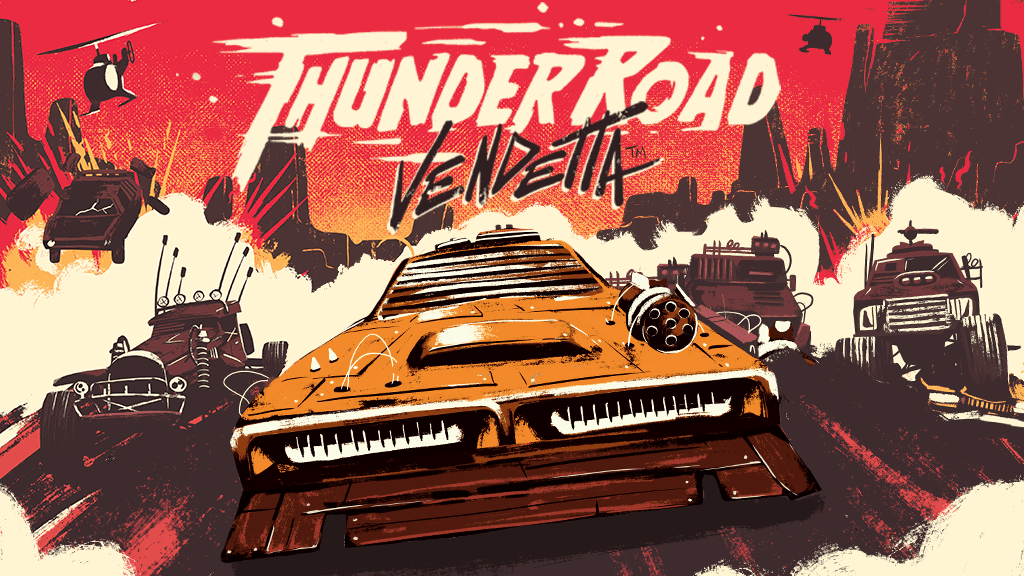
Thunder Road: Vendetta is the explosive, high-octane revival of the 1986 cult classic, putting players in the driver's seat for a brutal, post-apocalyptic death race. In this game of vehicular carnage, you control a crew of three unique vehicles—a small, medium, and large car—each with its own capabilities. Your goal is simple, yet fiercely contested: either be the first player to race one of your vehicles across the finish line, or simply outlast the competition by becoming the last crew with a vehicle left on the road. Survival is just as important as speed, and only the most cunning and ruthless driver will claim victory on this unforgiving stretch of asphalt.
The gameplay is fueled by a dynamic and accessible dice-driven system. Each round, all players simultaneously roll their dice and then take turns assigning them. Dice can be allocated to your cars to determine their movement speed, or to a special command board to unlock powerful, once-per-round abilities. You can activate a nitro boost for a burst of speed, drift around a hazard, perform crucial repairs, or even call in a devastating attack helicopter to rain fire upon your rivals. The road itself is a constantly evolving threat, thanks to a modular board system where the rearmost tile is removed and a new one is added to the front as the race progresses. This 'scrolling' effect means any vehicle left behind is eliminated, adding a relentless pressure to keep moving forward. Combat is direct and brutal; players can shoot at opponents ahead of them or slam into adjacent cars, triggering chaotic dice-rolls that can send vehicles careening across the board and into each other, creating spectacular chain reactions of destruction.
What makes Thunder Road: Vendetta a standout experience is its perfect blend of light strategy and cinematic, chaotic fun. The rules are easy to grasp, making it incredibly accessible for new players and families, yet the tactical decisions offer enough depth to engage seasoned gamers. The constant threat of player elimination, spectacular collisions, and the ever-present danger of being left behind by the board itself create an atmosphere of thrilling tension. It’s a game that revels in high player interaction and 'take that' moments, ensuring that no two races are ever the same. The unpredictable nature of the dice rolls, combined with the strategic use of command board abilities, generates hilarious, fist-pumping moments that will have your group cheering, groaning, and talking about their legendary wrecks long after the game is over.
2-4 60m⚖️ 2.1
RANK #228
Cosmic Encounter
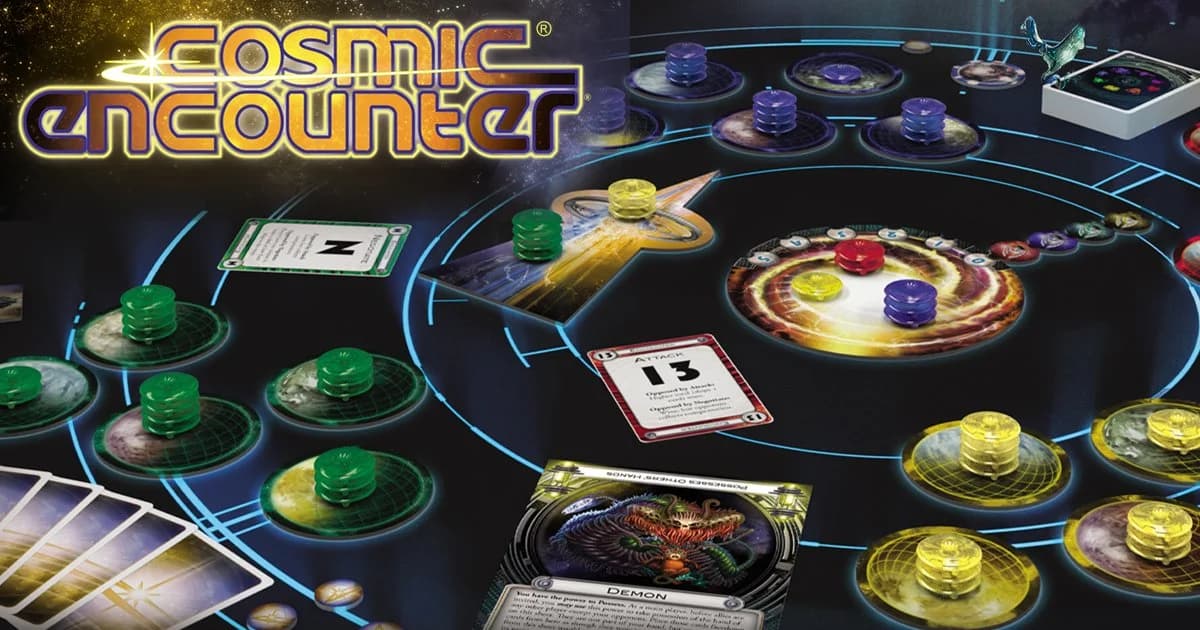
2008Cosmic Encounter is a legendary board game of galactic conquest where diplomacy is as crucial as military might. In this celebrated 2008 edition from Fantasy Flight Games, players assume the roles of bizarre and powerful alien species, each vying for control of the cosmos. The ultimate objective is simple yet challenging: establish five colonies on planets outside of your own home system. This goal is pursued through a series of 'encounters' with your rivals. The game masterfully blends straightforward rules with immense strategic depth, creating an environment where shifting alliances, cunning bluffs, and unexpected betrayals are not just possible, but are the very heart of the experience.
The gameplay revolves around a structured turn sequence where an active player, the 'offense', is directed by the Destiny Deck to engage another player, the 'defense'. The conflict begins as the offense commits ships to a target planet, but the situation quickly escalates as both sides can invite other players to join their cause as allies. The encounter's resolution hinges on the simultaneous reveal of a single card from each primary player's hand. These cards can be numbered Attack cards, which combine with ship counts to determine a victor, or a Negotiate card. Playing a Negotiate against an Attack results in an automatic loss, but the loser gets to demand compensation. If both players attempt to negotiate, they have a mere minute to strike a deal, such as trading cards or even allowing a peaceful colonization, before both suffer a penalty.
What elevates Cosmic Encounter to its classic status is the staggering variety of unique alien powers that each player wields. These abilities are designed to fundamentally break the game's core rules in some spectacular way, ensuring that no two games ever feel the same. One alien might be able to steal cards from the victor of a battle, another might always win tied conflicts, and a third might force players to play with their hands revealed. This asymmetry creates a dynamic and chaotic puzzle of interacting abilities, fostering immense replayability and forcing players to adapt their strategies on the fly. It is this brilliant combination of negotiation, tactical card play, and wildly unpredictable powers that makes Cosmic Encounter an enduring masterpiece of interactive tabletop gaming.
3-5 90m⚖️ 2.5
RANK #229
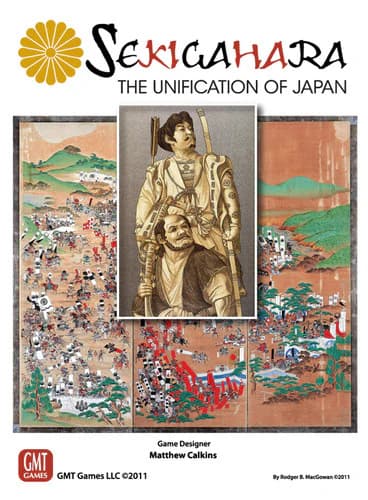
Sekigahara: The Unification of Japan transports two players back to the year 1600, placing them at the heart of a pivotal seven-week campaign that determined the nation's destiny. One player assumes command of Tokugawa Ieyasu's forces, while the other leads the armies of Ishida Mitsunari. The ultimate goal is to achieve supremacy and unify Japan under a single banner. Victory can be claimed in two ways: through a decisive military triumph by eliminating the opposing leader in battle, or by demonstrating superior strategic control at the end of the seventh week. The player who commands the most castles and valuable resource locations when the campaign concludes will be declared the winner, securing their place in history. This dual victory condition ensures that the conflict remains tense and dynamic from the first week to the last.
At its core, Sekigahara is a masterful blend of strategy and suspense, driven by a card-based system and the iconic 'fog of war' created by wooden blocks. These blocks represent armies, but their specific identity and strength remain hidden from the opponent, forcing players to rely on deduction, feints, and careful reconnaissance. You can see the size of an approaching force, but not its composition, creating palpable tension with every maneuver. Every action, from marching armies across the map to engaging in combat, requires the expenditure of cards from a player's unique deck. Each deck represents the various clans loyal to their cause. This creates a challenging resource management puzzle: do you spend cards to achieve a superior board position, or conserve them for the inevitable, decisive battles to come?
The game's combat system is a highlight, foregoing dice entirely in favor of a clever and thematic test of command. When armies clash, players commit their blocks to the fight, but a unit only contributes its strength if the player can play a matching clan card from their hand. An army, no matter how large, is rendered ineffective if its commander lacks the cards to inspire them to fight. This system emphasizes timing, bluffing, and shrewd hand management. Adding another layer of historical flavor are the 'loyalty challenge' cards, which allow players to attempt to sway an opponent's units to their side, reflecting the fragile and shifting allegiances of the period. Sekigahara is lauded for being an accessible entry into the wargaming hobby without sacrificing the tactical depth and high replayability that veteran strategists crave, making it a timeless classic.
2 180m⚖️ 2.8
RANK #230
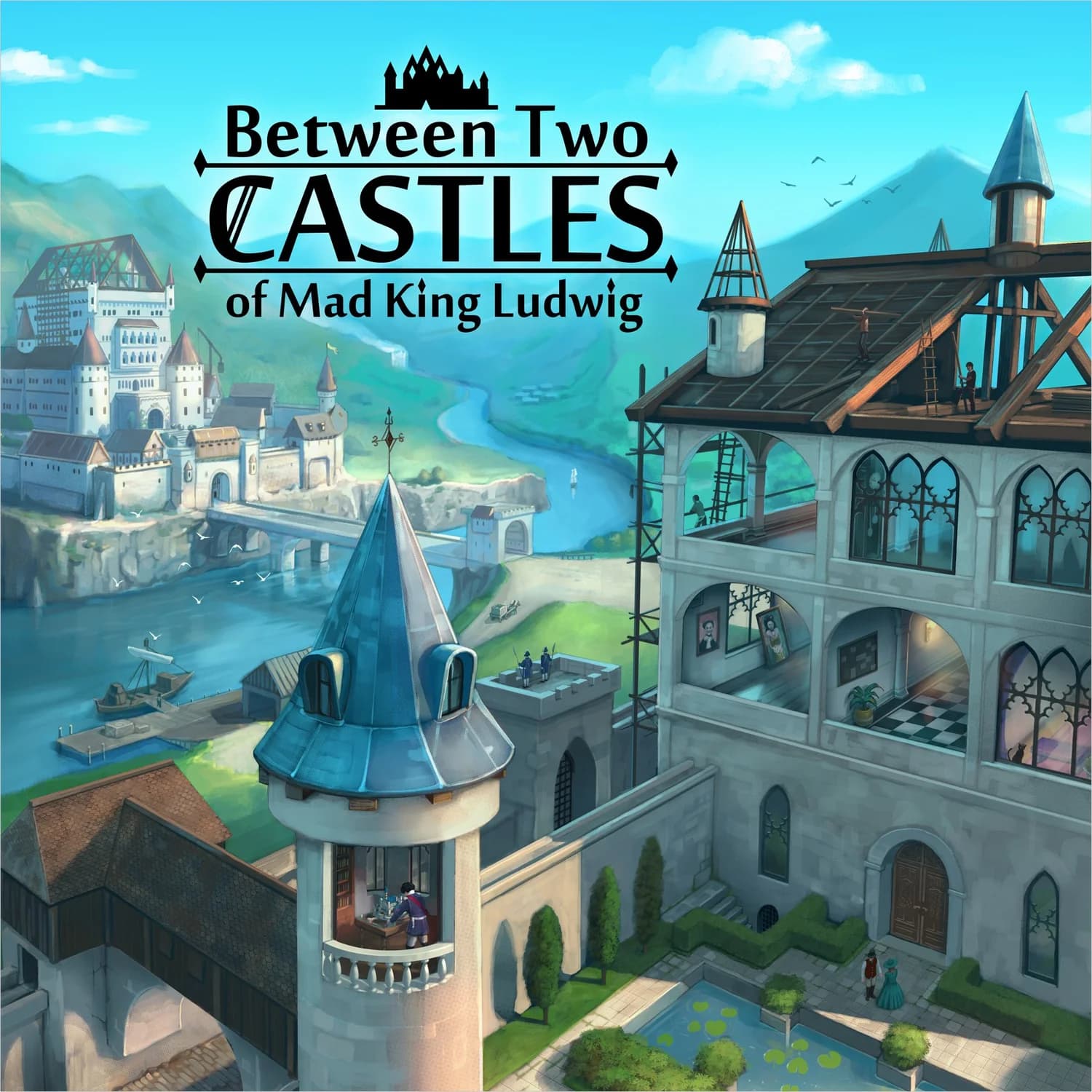
In "Castles of Mad King Ludwig," players enter the whimsical world of 19th-century Bavaria, tasked with building a magnificent castle for the eccentric King Ludwig II. As master architects, you compete to design the most impressive and valuable structure. This tile-laying game is a clever blend of spatial reasoning and economic management, where the ultimate goal is to earn the most victory points. Points are awarded for constructing specific room types, fulfilling the king's public demands, known as 'King's Favors', and achieving personal, secret objectives. Each player will finish the game with a completely unique, sprawling castle, a physical representation of their strategic decisions and architectural vision, all in the service of pleasing a very particular monarch.
The game's central pillar is its innovative 'Master Builder' mechanic. Each round, one player takes on this role, drawing a selection of room tiles and individually pricing them for the other players. In turn, opponents may purchase one room tile, paying the cost directly to the Master Builder. This creates a tense and engaging pricing dilemma: ask too much, and you'll earn nothing; ask too little, and your rivals will get a steal. The Master Builder takes the last available room but must pay their own listed price to the bank. Once a room is acquired, it's immediately added to the player's personal castle layout, connecting to other rooms via doorways. Judicious placement is key, as rooms can grant or cost points based on what they're adjacent to. Furthermore, completing a room by connecting all its entrances triggers a valuable bonus based on its type, which could be anything from extra cash to an immediate second turn.
The enduring appeal of "Castles of Mad King Ludwig" lies in this constant, engaging player interaction driven by the market and the deeply satisfying spatial puzzle of castle construction. The Master Builder system ensures every player is invested in every turn, evaluating prices and anticipating others' needs. The challenge of optimizing your layout—placing a Dining Room near a Kitchen for bonus points while avoiding placing an Activity Room near a Sleeping Room—is a delightful puzzle. With variable public goals, a huge stack of unique room tiles, and secret bonus cards, no two games are ever the same, offering immense replayability. Watching your nonsensical yet functional castle take shape is a wonderfully thematic and rewarding experience that has cemented the game's status as a modern classic in the genre.
1-4 90m⚖️ 2.7
RANK #231
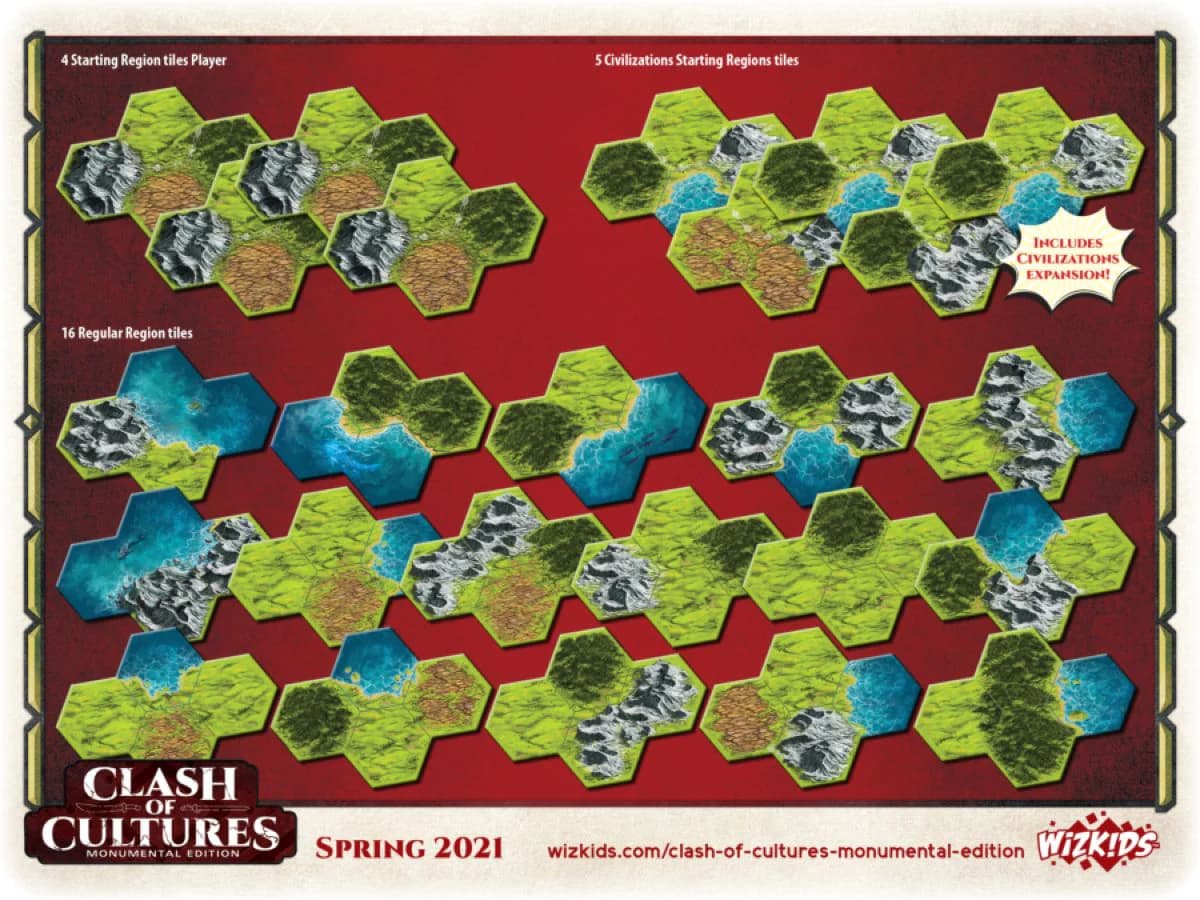
Clash of Cultures: Monumental Edition is a grand 4X civilization-building game where players guide a fledgling society from a single settlement into a sprawling, influential empire. This comprehensive 2021 edition revitalizes the beloved classic by integrating its core expansions, including "Civilizations" and "Aztecs," offering the definitive experience in a single box. The primary goal is to accumulate the most Victory Points by the end of the game's final age. These points are not earned through warfare alone; players are rewarded for developing a vibrant culture, constructing magnificent wonders, achieving specific objectives, and advancing their society's knowledge. Players must balance aggressive expansion and military might with economic stability and cultural growth to etch their civilization's name into the annals of history.
The game unfolds over six distinct "Ages," each comprising three rounds. On their turn, a player performs three actions, choosing from a wide array of options like exploring the modular, unknown world, founding new cities, researching technologies, or moving military units. A central pillar of the gameplay is the expansive and flexible technology tree, which features 48 unique Advances. This system allows players to customize their civilization's path, unlocking new buildings, units, and powerful abilities that can create unique strategic synergies. Combat is resolved through dice rolls, influenced by unit types and technological prowess, while resource management—balancing food, ore, wood, ideas, and gold—is crucial for funding your ambitions. Every few rounds, a Status Phase triggers scoring, provides a free technology, and introduces new objective cards, maintaining a dynamic pace throughout the game.
What makes Clash of Cultures: Monumental Edition a cherished classic is its remarkable strategic depth and high replayability. The freedom to pursue victory through multiple avenues—be it military conquest, technological supremacy, or cultural dominance—ensures that every game feels different. The modular board and variable objective cards create a unique landscape and set of goals for each session. This edition elevates the experience with stunning, newly sculpted miniatures and upgraded components that provide a commanding tabletop presence. It stands as a monumental achievement in the civilization genre, offering a deeply engaging and challenging experience for players who enjoy long-term strategy and the satisfaction of building a unique empire from the ground up.
2-4 210m⚖️ 4.1
RANK #232
Paleo
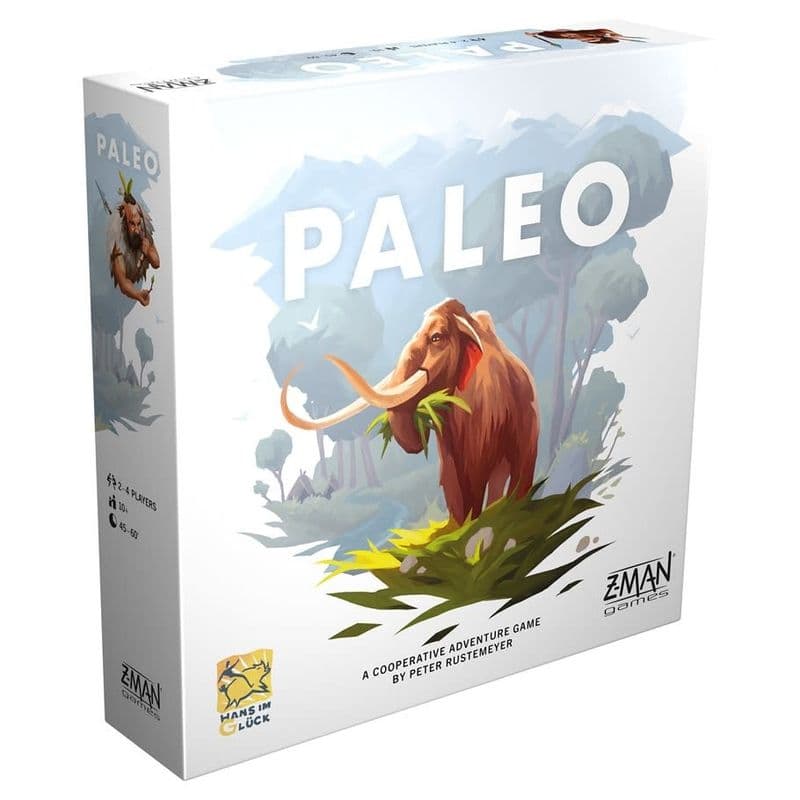
2020In Paleo, players embark on a cooperative adventure set in the Stone Age. The game is designed for 2-4 players and takes approximately 45-60 minutes to play. Players work together to keep their tribe alive while completing missions and creating a cave painting. The game includes 10 unique modules that can be mixed and matched to vary the difficulty level or try different rules variants, including a solo mode. Each player begins with a couple of humans, each with a skill and life points. On their turn, players send out their humans to explore, gathering resources and completing tasks while avoiding dangers such as skull tokens. The game requires strategy and cooperation to succeed, making it an engaging experience for players who enjoy cooperative games. One of the unique features of Paleo is its use of card-driven mechanics, where players draw cards with different backgrounds that provide clues about what's on the other side. This mechanic adds a layer of uncertainty and excitement to the game, as players must work together to uncover the secrets of the cards. The game also includes a variety of modules that can be added or removed to change the gameplay experience, making it suitable for players who enjoy replayability and customization. Overall, Paleo is an engaging cooperative game that challenges players to work together while exploring the Stone Age world. Its unique mechanics and modular design make it an attractive option for fans of cooperative games.
2-4 45m⚖️ 3.0
RANK #233
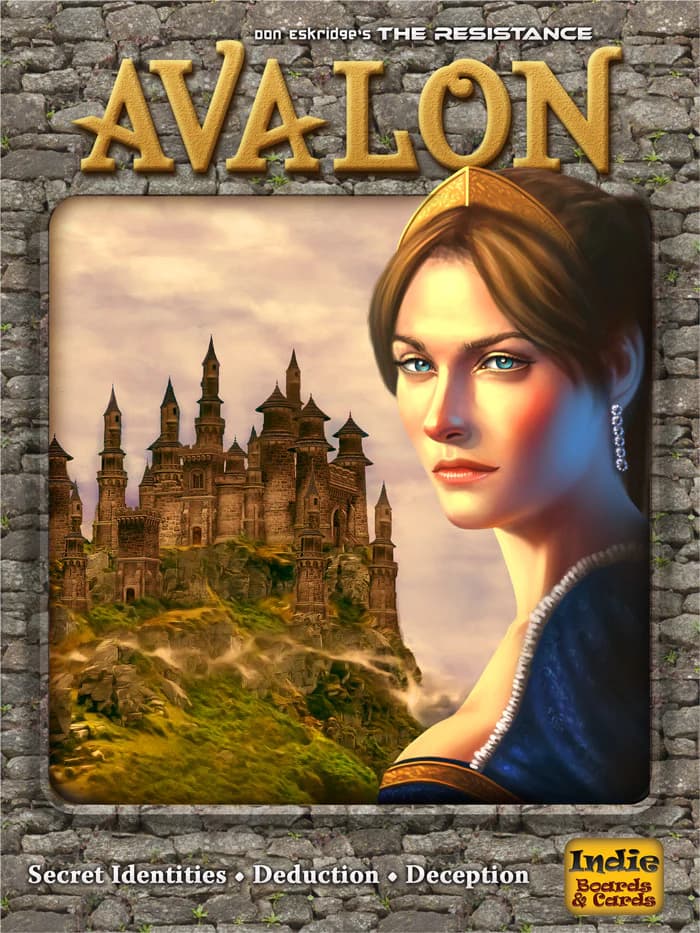
The Resistance: Avalon plunges players into the legendary turmoil of Camelot, a kingdom besieged not by external forces, but by treachery from within. In this intense game of social deduction and hidden identities, players are secretly assigned to one of two factions: the noble and loyal Servants of Arthur, fighting to secure the future of Britain, or the cunning Minions of Mordred, bent on sowing chaos and ensuring the kingdom's collapse. The ultimate goal is a struggle for control over a series of five critical Quests. The Servants of Arthur must successfully complete three of these missions to claim victory for their king and country. Conversely, the Minions of Mordred triumph if they can cause three Quests to fail, bringing Arthur's reign to a premature and disastrous end. The game is a constant battle of wits where trust is a fleeting resource and every word carries the potential for deception.
The gameplay unfolds in a structured but socially dynamic sequence of rounds. Each round, a new player assumes the role of Leader and is tasked with a crucial decision: selecting a team of knights to embark on the current Quest. This proposal is not accepted blindly; every player at the table, regardless of their allegiance, casts a public vote to either approve or reject the nominated team. This phase is the heart of the game's interaction, a crucible of open debate, pointed accusations, and masterful bluffs as players attempt to discern allies from enemies. If a team is approved, its members are given a profound and secret choice: to play a 'Success' card to help the Quest, or a 'Fail' card to sabotage it. For the loyal servants, the choice is simple. For the minions, it's an opportunity for destruction. Since a single 'Fail' card is often enough to doom a mission, the tension is palpable as the results are revealed.
What elevates The Resistance: Avalon to legendary status within its genre is the masterful inclusion of special character roles that add intricate layers of information and misdirection. The most pivotal of these is Merlin, a servant of Arthur who begins the game knowing the identities of the evil players. Merlin must subtly guide the forces of good without revealing his own identity, as an evil player known as the Assassin has a final, game-winning opportunity to correctly name Merlin if the heroes succeed in their Quests. This creates a fascinating and tense dynamic of veiled communication. Optional roles like Percival, who knows who Merlin is, and Morgana, who appears as Merlin to Percival, further complicate the web of lies and deduction. This brilliant system ensures that no two games are ever the same, making Avalon a highly replayable and deeply engaging experience celebrated for its pure player-driven drama and strategic depth.
5-10 30m⚖️ 1.7
RANK #235
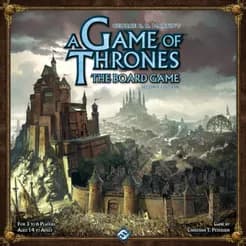
A Game of Thrones: The Board Game (Second Edition) transports players to the war-torn continent of Westeros, drawing directly from the narrative depths of George R.R. Martin's 'A Song of Ice and Fire' series. In this grand strategy experience, three to six players assume the mantles of the Great Houses—such as Stark, Lannister, or Baratheon—competing for dominion over the Iron Throne. The ultimate objective is to secure the most castles and strongholds across the map through a blend of military conquest, political maneuvering, and calculated diplomacy. Set against a backdrop of impending winter and the looming threat of the Wildlings beyond the Wall, the game captures the high-stakes tension of the source material, where every move could lead to total victory or sudden betrayal.
The core gameplay revolves around a unique simultaneous planning phase where players place secret order tokens on territories they control. These tokens represent specific actions like marching armies, defending borders, consolidating power for resources, or raiding adjacent enemy positions. Once revealed, players resolve these actions in a specific sequence, requiring them to anticipate their opponents' intentions and bluff their way through contested borders. Combat is notably deterministic, relying on unit strength and support from neighboring regions rather than dice rolls. However, players can swing the tide of battle by playing 'House Cards' featuring iconic characters that grant special abilities. Beyond the battlefield, players must manage their influence on three critical tracks—the Iron Throne, the Fiefdoms, and the King's Court—which determine turn order and special perks.
What makes this game a modern classic is its emphasis on the 'human element' and high-level interaction. Unlike many wargames that rely on luck, this title thrives on negotiation and the constant threat of a 'backstab.' Players are frequently forced to forge temporary pacts to stop a leading player or to share the burden of repelling Wildling invasions, only to find those same allies marching into their undefended rear territories a turn later. The production quality of the second edition is exceptional, featuring a stunning map of Westeros, marbleized plastic units, and linen-finish cards that enhance the immersive, epic feel. It is a dense, rewarding experience that demands strategic foresight and a keen understanding of political psychology.
3-6 180m⚖️ 3.8
RANK #236
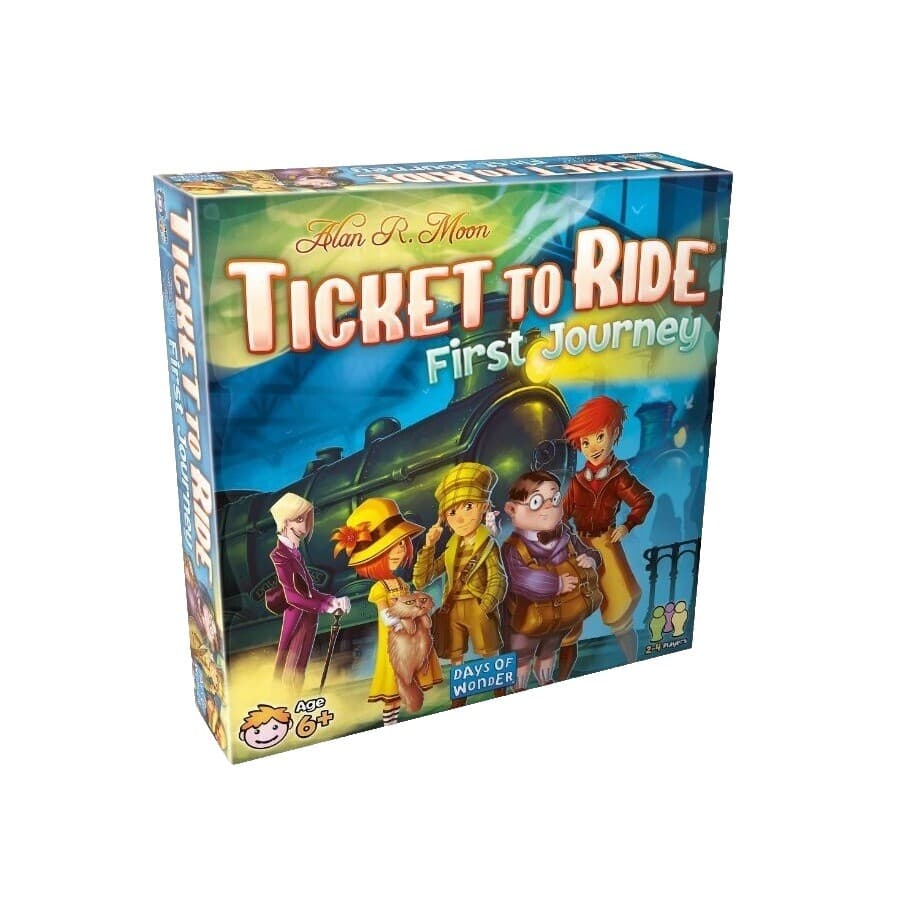
Embark on a frosty railway adventure with *Ticket to Ride: Nordic Countries*, a standalone installment in the award-winning series designed specifically for a more intimate and competitive experience. Set against the beautiful, snow-dusted backdrop of Denmark, Finland, Norway, and Sweden, this game challenges two or three players to become the region's greatest transportation magnate. The core objective remains familiar to fans of the series: collect colored train car cards to claim railway routes, strategically connecting cities across the map. Your primary source of points comes from fulfilling secret Destination Tickets, each one tasking you with linking two specific cities. Successfully completing these tickets adds to your score, but failure will cost you dearly. The player who has amassed the most points from their routes, completed tickets, and the coveted 'Globetrotter' bonus for the most tickets fulfilled, will be declared the winner.
The gameplay is elegantly simple yet rich with strategic choices. On your turn, you perform one of three actions: draw more train car cards, claim a route by discarding a matching set of cards, or draw new Destination Tickets to potentially increase your score. *Nordic Countries* introduces compelling twists on this classic formula with the inclusion of Ferries and Tunnels. Ferries are special sea routes that demand a specific number of powerful Locomotive wild cards to claim, making these cards exceptionally valuable. Tunnels add a thrilling element of risk; after committing your cards to a mountain route, you must reveal cards from the top of the deck, potentially forcing you to play extra cards to complete the connection. This version also uniquely alters the rules for Locomotives, restricting their use primarily to these special routes, which intensifies the strategic planning around their acquisition and use.
What makes *Ticket to Ride: Nordic Countries* a standout title is its brilliantly crafted map, which is significantly tighter and more constrained than its predecessors. This design choice inherently creates a high-stakes environment where player interaction is not just possible, but inevitable. Players must constantly watch their opponents, anticipate their moves, and decide whether to build their own network or defensively block a critical path. The scarcity of double-routes means competition for key connections is fierce from the very start. This heightened tension, combined with a brisk playtime of 30-60 minutes, makes it an exceptionally engaging and replayable game for couples, families, and anyone seeking a fast-paced, light-strategy experience with a healthy dose of direct competition.
2-3 45m⚖️ 1.9
RANK #237
Castle Combo
2024In Castle Combo, players compete to assemble the most prosperous medieval domain by strategically recruiting a cast of unique characters. This fast-paced card game challenges you to build a personal 3x3 grid that represents your growing realm. Your goal is to skillfully place character cards to create powerful scoring synergies and maximize your victory points. By the game's end, the player whose tableau demonstrates the most clever combinations and generates the highest score will be declared the ruler of the most prestigious castle in the land, earning victory through careful planning and tactical recruitment.
At its core, the gameplay revolves around tableau building and card drafting from two distinct markets: the 'Village' and the 'Castle'. A 'Messenger' pawn dictates which of these two card rows is active for you to purchase from on your turn, adding a simple yet engaging tactical layer. Players must spend 'Gold' to acquire a new character, which is then placed orthogonally adjacent to an existing card in their personal grid. Each card not only provides an immediate effect, such as granting more Gold or special 'Keys', but also contributes to end-game scoring based on its final position relative to others. Keys can be spent to manipulate the Messenger or refresh the card market, offering crucial flexibility. The game concludes swiftly once all players have completed their nine-card grid, at which point final scores are tallied.
The unique appeal of Castle Combo lies in its elegant blend of accessibility and strategic depth. Its rules are straightforward enough to teach in minutes, making it an ideal gateway game for new players or a perfect 'filler' for game night. However, the puzzle of optimizing your 3x3 grid presents a compelling challenge for even seasoned gamers. The dual-market mechanic forces players to constantly adapt their plans, while the race to find the most effective card combinations ensures high replayability. Coupled with vibrant and playful art, the game provides a satisfying and engaging experience that packs a surprising amount of decision-making into a very short playtime.
2-5 20m⚖️ 1.9