Strategy Games
Browse all Strategy board games in the Meeple Pulse database.
Styles
Themes
AbstractAdventureAncientAnimalsArtBusinessCard GameCo-operativeComic BookCooperativeCrimeEconomicEnvironmentalismExplorationFantasyHistoricalHorrorHumorIntrigueLiteraryMagicMarvelMedievalModernMuseumMysteryMythologyNatureNauticalPoliticalPress Your LuckSatireSci-FiSocial CommentarySocial InteractionSpaceSuperheroesThematicTravelWarWesternWord-Guessing
Mechanics
3D PlacementActingAction / DexterityAction DraftingAction Point AllowanceAction Point Allowance SystemAction Point SystemAction PointsAction ProgrammingAction QueueAction RetrievalAction SelectionAction/EventAlliancesAlternate ActivationApp-AssistedApp-DrivenArea ControlArea InfluenceArea MajorityArea Majority / InfluenceArea MovementArgumentationAsymmetricAsymmetric FactionsAsymmetric GameAsymmetric PowersAsymmetrical PowersAuction & BiddingAuction/BiddingAuctioningBag BuildingBettingBetting and BluffingBetting and WageringBetting and WagersBiddingBingoBlind BiddingBluffingCampaign / Battle Card DrivenCampaign / LegacyCampaign / Legacy GameCampaign / Mission-basedCampaign / ScenariosCampaign GameCampaign PlayCard DraftingCard DrawingCard DrivenCard Driven ActionCard Driven CombatCard Driven Dice AllocationCard Driven MovementCard ManagementCard PlayCard Play / Hand ManagementCard Play Conflict ResolutionCard SheddingCard-Driven MovementCharacter CreationCharacter ProgressionChit-Pull SystemCo-op PlayCo-operative GameCo-operative PlayCode-breakingCombat ResolutionCombo ChainCommand CardsCommodity SpeculationCommunication LimitsContract FulfillmentContractsCooperative GameCooperative GameplayCooperative PlayCooperative Trick-takingDebateDeck BuildingDeck ConstructionDeck, Bag, and Pool BuildingDeck-BuildingDeductionDexterityDice DraftingDice PlacementDice RollingDiplomatic InfluenceDraftingDynamic Battle SystemEnclosureEnd Game BonusesEngine BuildingEngine-BuildingEscape RoomEvent DrivenExplorationFarmingFlip and WriteFollowFollow ActionGrid CoverageGrid MovementHand ManagementHex-and-CounterHexagon GridHidden MovementHidden RolesI Cut You ChooseIncomeInfluence / Area MajorityLadder ClimbingLegacyLegacy ElementsLegacy GameLegacy SystemLimited CommunicationLine DrawingLine of SightMancalaMap MovementMarketMarket DraftingMarket ManipulationMarket MechanicMarket SpeculationMatchingMeasurement MovementMemoryMission ObjectivesModular BoardModular Board ConstructionMovement TemplatesMulti-Use CardsMulti-use CardsMultiple ScenariosMust FollowNarrative ChoiceNarrative Choice / ParagraphNegotiationNegotiation MechanicsNetwork & Route BuildingNetwork BuildingNetwork and Route BuildingOne vs ManyOne vs. ManyOpen DraftingPaper-and-PencilPartnershipsPattern BuildingPattern RecognitionPick-up and DeliverPlayer EliminationPlayer InteractionPlayer JudgePoint SaladPoint to Point MovementPolyominoesPush Your LuckPush-Your-LuckPuzzlePuzzle-LikePuzzle-SolvingRaceReal-TimeRecipe FulfillmentResource ManagementRole PlayingRole SelectionRoll / Spin and MoveRondelRoute BuildingRoute-BuildingRoute/Network BuildingSanity SystemScenario / Campaign PlayScenario / Mission / Campaign GameScenario / Mission FunctionSecret Unit DeploymentSemi-Cooperative GameSet CollectionSheddingSimulationSimultaneous ActionSimultaneous Action SelectionSimultaneous Hidden AllocationSocial DeductionSocial InteractionSolo / Solitaire GameSpace ExplorationStat Check / Skill CheckStock HoldingStorytellingStrategic PlanningTableau BuildingTactical Decision-MakingTake ThatTargeted CluesTeam PlayTeam-Based GameTeam-Based GuessingTeamworkTech TreesTech Trees / Tech TracksTechnology & Armament TracksTechnology TreeTension & Aggression TracksTile DraftingTile LayingTile PlacementTime TrackTime TravelTower DefenseTrack MovementTradingTrick-takingTug of WarTurn Order: PassTurn Order: Stat-BasedUnit PlacementVariable Phase OrderVariable Player PowersVariable Set-upVariable SetupVictory Point TracksVotingWord AssociationWord GameWord GuessingWord-GuessingWord-guessingWordplayWorker Placement
RANK #43
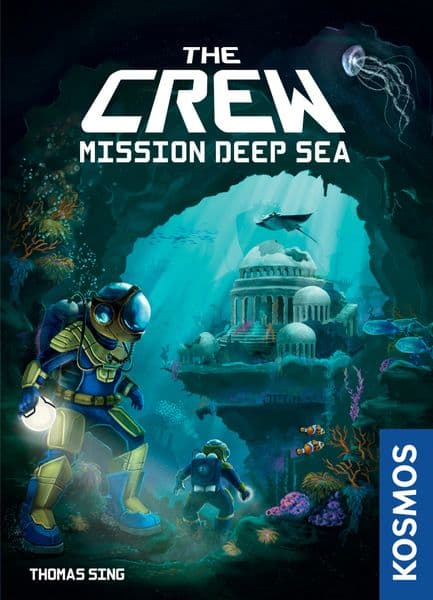
In The Crew: Mission Deep Sea, 1-5 players take on the roles of submarine commanders on a mission to explore the depths of the ocean and salvage valuable artifacts from sunken ships. To succeed, they must work together, using their unique skills and abilities to navigate treacherous underwater terrain, avoid deadly sea creatures, and overcome the challenges of deep-sea exploration. The game is a cooperative experience that requires strategy, teamwork, and quick thinking to achieve victory.
1-5 60m⚖️ 3.0

RANK #50
Underwater Cities is a strategic board game designed for 2-4 players, where each player takes on the role of an architect tasked with building and managing their own underwater city. The game's objective is to create a thriving metropolis by collecting resources, constructing buildings, and balancing the needs of your citizens. Players must carefully manage their resources, as the game features a dynamic resource system that changes over time.
2-4 60m⚖️ 3.5

RANK #55
Puerto Rico
2002Puerto Rico is widely celebrated as a pinnacle of the 'Eurogame' genre, a strategic masterpiece that has stood the test of time since its 2002 release. In this economic simulation, players assume the roles of colonial governors on the island of Puerto Rico during the age of sail. The ultimate objective is to accumulate the most victory points by building a prosperous and efficient colony. This is primarily achieved by cultivating valuable crops like corn, indigo, sugar, tobacco, and coffee; constructing influential buildings that grant special abilities; and shipping these goods back to the Old World. Players must carefully manage their resources, including doubloons (currency) and colonists (workers), to create a thriving economic engine that outpaces their rivals and cements their legacy as the most successful governor.
The game's revolutionary core mechanic is its 'variable phase order' system, often called 'role selection'. Each round, players take turns choosing one of seven roles, which then dictates the action that *all* players at the table will perform. The player who selected the role, however, receives a special privilege or bonus, adding a layer of tactical decision-making. These roles encompass the entire colonial economy: the Settler allows for new plantations; the Mayor brings in new colonists to work them; the Builder erects new structures; the Craftsman produces goods from active plantations; the Trader sells goods for doubloons; the Captain ships goods for victory points; and the Prospector provides a simple influx of cash. This creates a compelling loop where you must not only choose the action that benefits you most but also anticipate which roles your opponents need, potentially denying them a crucial action or piggybacking on a choice that will also advance your own strategy.
The enduring appeal of Puerto Rico lies in its remarkable balance of depth and elegance. There is very little randomness or luck involved; victory is almost always earned through superior long-term planning, shrewd tactical adjustments, and the ability to read your opponents' intentions. The high degree of player interaction, stemming directly from the role selection mechanism, ensures that no two games ever feel the same. Every decision to select a role has ripple effects across the table, creating a dynamic and constantly evolving puzzle. Players are forced to balance building their own economic engine with the need to time their shipping for maximum victory points, all while keeping an eye on the dwindling game-end resources. This tight, rewarding gameplay loop and its near-perfect design have cemented Puerto Rico's status as a foundational classic in the modern board gaming hobby.
3-5 120m⚖️ 3.3
RANK #80
Le Havre
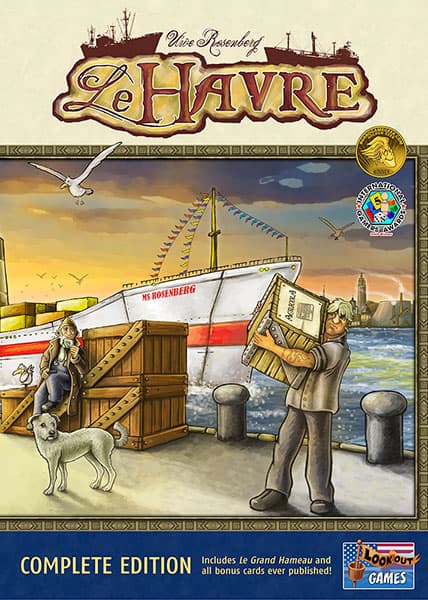
2008In "Le Havre," the celebrated design from Uwe Rosenberg, players are transported to the burgeoning port city of Le Havre in northwestern France. As magnates of the shipping industry, players compete to amass the greatest fortune. This is not achieved through simple commerce alone, but by strategically developing the city's infrastructure and managing a complex web of resources. The ultimate goal is to end the game with the highest net worth, a sum of your cash reserves plus the value of the buildings and ships you've constructed. The game challenges you to balance short-term gains with long-term investments, building a powerful economic engine that can outpace your rivals in this bustling harbor town. It's a deep and rewarding experience for those who enjoy meticulous economic planning and optimization.
The gameplay in "Le Havre" is elegantly structured around a two-part turn. First, goods are added to the offer spaces, creating an ever-changing marketplace. Then, the active player must choose one of two primary actions: either take all goods of a single type from an offer space, or utilize one of the many buildings on the board. Buildings are the heart of your strategy, enabling you to transform raw materials like fish and wood into more valuable processed goods, such as smoked fish or charcoal. This process of creating production chains is a classic engine-building challenge. A fascinating layer of player interaction emerges from building ownership; while any player can use any building, they must pay a fee to the owner, creating a dynamic flow of capital and forcing difficult choices about which actions are most profitable. Furthermore, players must acquire ships not just for their value, but to generate the food required to feed their workers at the end of each round, with failure resulting in costly loans.
"Le Havre" is beloved by strategy gamers for its immense strategic depth and the satisfying feeling of building an efficient economic machine from the ground up. The tension between expanding your industrial capabilities and meeting the recurring demand for food creates a compelling puzzle that requires constant foresight and adaptation. Unlike many other worker placement games, the core action is singular—you move your one worker pawn—which makes each decision incredibly significant. The indirect player interaction, where you must weigh the benefit of using an opponent's building against the cost of paying them, is a masterstroke of design that keeps all players engaged. The game's variable building display ensures high replayability, as the path to victory changes with each session. For players who relish a heavy, brain-burning economic simulation with tight resources and rewarding long-term planning, "Le Havre" stands as a monumental achievement in the genre.
1-5 150m⚖️ 4.1
BoxNo Cover Art
RANK #85
Endeavor: Deep Sea is an acclaimed mid-weight strategy Eurogame that submerges players into the world of oceanic research. Each participant takes the helm of a burgeoning research institute, tasked with the grand ambition of exploring the planet's final frontier. The primary objective is to earn prestige by conducting groundbreaking research, discovering new underwater locations, and championing marine conservation. Success requires a delicate balance between expanding your institute's scientific capabilities and making a tangible impact on the shared seascape. Recognized with the prestigious Kennerspiel des Jahres award, the game challenges players to think strategically about sustainable development and the preservation of delicate aquatic ecosystems, making every decision impactful.
The gameplay unfolds over six rounds in a structured, yet dynamic, sequence. Each round begins with a Preparation Phase, where players bolster their operations by recruiting specialists like divers and scientists, gaining action discs that fuel their turns, and readying their existing team for the tasks ahead. This flows into the Action Phase, where players take turns spending their discs to activate specialists and perform one of five key actions. These include 'Travel' to move a submarine across the modular board, 'Sonar' to discover and place new ocean tiles, 'Dive' to collect valuable research tokens, 'Journal' to acquire cards with endgame scoring goals, and 'Conservation' to protect marine life for various rewards. Players also contribute to a communal "Impact Board," which provides immediate bonuses and influences final scoring.
What makes Endeavor: Deep Sea so compelling is its remarkable blend of accessibility and strategic depth. The game’s unique appeal stems from its significant replayability, driven by a modular board that ensures no two expeditions are the same and ten distinct missions that alter starting conditions and objectives. Its flexible design supports competitive, cooperative, and solo play, making it a versatile choice for any gaming group. The central tension between building your institute’s 'engine'—improving its range and capabilities—and using those abilities to score points on the board creates a deeply engaging puzzle. The strong thematic integration, where every action feels connected to the narrative of deep-sea exploration, elevates the experience from a simple abstract puzzle to a memorable aquatic adventure.
1-4 90m⚖️ 3.3

RANK #117
Robinson Crusoe: Adventures on a Cursed Island is a deeply thematic and challenging cooperative board game that casts one to four players as survivors of a shipwreck on a remote, hostile island. The primary objective is not simply to endure, but to achieve the specific goal laid out by one of the game's many distinct scenarios. These missions vary widely, from building a signal fire to escape, to lifting a terrible curse that haunts the land, or even raising a family in this new, wild home. Players must work together with precision and foresight to complete their task before the harsh environment, unforgiving events, or the relentless passage of time overwhelms them. A loss for one is a loss for all; if any character succumbs to the island's dangers, the entire team has failed. This shared fate creates a tense, high-stakes atmosphere where every decision carries significant weight for the group's survival.
At its core, the game is a sophisticated worker placement experience where players must carefully allocate their limited actions each round to manage the island's threats. The game progresses through a series of structured phases, starting with an Event card that introduces unforeseen challenges or story elements. After managing morale, players gather resources from their campsite before delving into the crucial Action phase. Here, players assign their action pawns to various tasks: exploring the island to reveal new terrain, gathering vital food and wood, hunting dangerous beasts, inventing new tools and items, or improving their camp with a shelter and palisade. A standout mechanic is the risk-reward system for actions; assigning two pawns guarantees success, but assigning only one requires a dice roll that can result in success, a minor consolation, a painful injury, or an unexpected adventure that further complicates their situation. The round concludes with a Weather phase determined by dice, followed by a Night phase where survivors must eat and rest, potentially suffering wounds if their camp is inadequate.
The enduring appeal of *Robinson Crusoe* lies in its masterful fusion of mechanics and narrative, creating one of the most immersive survival simulations in the board game world. Players don't just move pawns; they feel the desperation of a dwindling food supply, the triumph of a successful hunt, and the anxiety of an approaching storm. The game is celebrated for its difficulty and unforgiving nature, demanding sharp strategic planning, efficient resource management, and constant communication among players. The vast number of event cards, inventions, and scenarios ensures that no two games are ever the same, offering immense replayability. Furthermore, its robust design makes it an exceptional solo experience, allowing a single player to tackle the island's challenges alone. This combination of rich, emergent storytelling, brutal but fair challenges, and tight cooperative gameplay has cemented its status as a classic in the thematic game genre.
1-4 90m⚖️ N/A
BoxNo Cover Art
RANK #134
Raiders of the North Sea is a strategic board game designed for 2-4 players, set in the Viking Age. Players take on the roles of Viking raiders, seeking to accumulate wealth and fame by plundering towns and villages. The game's objective is to be the first player to reach 12 victory points, which can be achieved through various means such as collecting valuable resources, completing quests, or pillaging settlements.
Gameplay involves a combination of resource management, strategic planning, and tactical execution. Players must manage their resources carefully, allocating them between different activities such as sailing, raiding, and trading. They must also navigate the risks associated with raiding, including the possibility of being caught by the authorities or encountering other Viking raiders.
One of the key mechanics in Raiders of the North Sea is the use of 'quest' cards, which provide players with specific objectives to complete. These quests can be lucrative, but they also come with risks and challenges that players must navigate. The game also features a unique 'raid' mechanism, where players can send their ships to raid towns and villages, collecting resources and victory points in the process.
Raiders of the North Sea has gained popularity among board game enthusiasts due to its engaging gameplay, strategic depth, and thematic appeal. Players love the game's Viking-themed setting, which immerses them in a rich and immersive world. The game's mechanics are also highly praised for their simplicity and elegance, making it accessible to players of all skill levels.
2-4 60m⚖️ 3.5

RANK #259
Sea Salt & Paper
2022Sea Salt & Paper is a captivating card game that has enchanted players with its distinct and beautiful aesthetic, featuring photographs of actual origami sea creatures. Beneath its serene surface lies a surprisingly tactical game of set collection and calculated risks. The primary objective is to outscore opponents over several rounds by carefully curating a hand of cards with point-scoring combinations. Players aim to reach a specific point threshold, which varies by player count, to secure victory. However, a thrilling alternate path to triumph exists: collecting all four unique mermaid cards instantly wins the game, adding a layer of suspense to every draw. This elegant design packs a wealth of strategic depth into a small, portable box, making it an ideal travel companion.
The gameplay loop is deceptively simple yet full of meaningful decisions. On your turn, you must acquire a card by either drawing two from the top of the deck, keeping one and discarding the other, or by picking up the top card from one of two face-up discard piles. After adding a card, you can play pairs of identical "duo" cards from your hand to trigger powerful one-time effects. For instance, a pair of crabs allows you to steal a card from a discard pile, while two boats grant you an immediate extra turn. The round's tension culminates when a player amasses at least seven points. They can then declare "Stop," prompting all players to score their hands immediately. Alternatively, if they are feeling confident, they can declare "Last Chance." This gives every other player one final turn to improve their hand before the reveal, introducing a high-stakes push-your-luck element where the declarer risks losing their own card points for the chance at a significant bonus.
The game's immense appeal stems from this brilliant blend of accessibility and strategic depth. The rules can be taught in minutes, making it a perfect 'gateway' game for new players or a fantastic choice for a family game night. Yet, experienced gamers will appreciate the subtle tactics involved in managing their hand, tracking discard piles, and timing the end of the round. The "Last Chance" mechanic is a masterstroke, creating memorable moments of bluffing and suspense. Above all, the visual presentation is a standout feature; the origami art is not just beautiful but integral to the game's charming identity. This combination of fast-paced play, clever card-combo possibilities, and stunning artwork makes Sea Salt & Paper a modern classic that offers high replayability and joy in every hand.
2-4 30m⚖️ 1.5
RANK #268
Cyclades
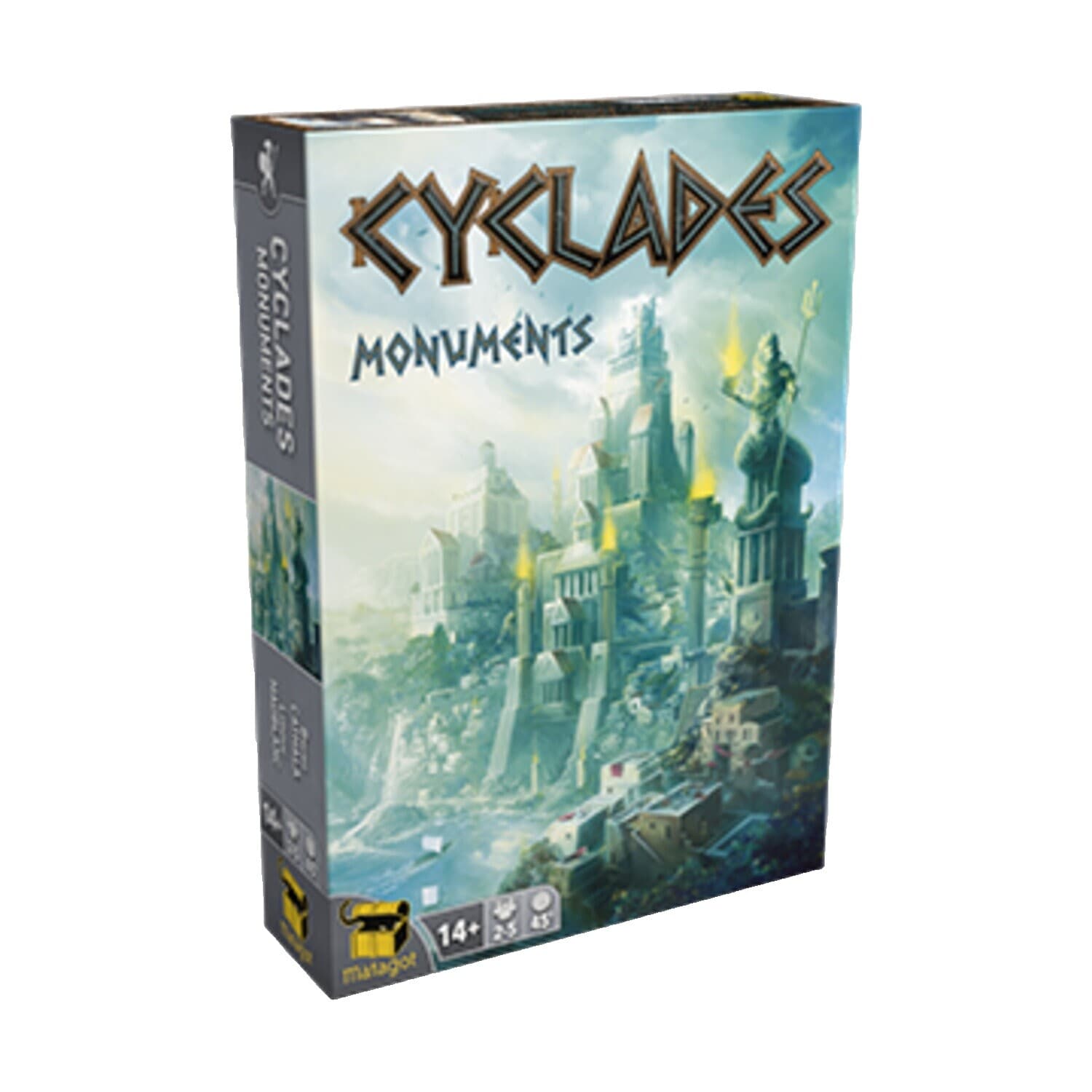
2009Immerse yourself in the golden age of Greek mythology with Cyclades, a masterful strategy game where players lead their people to glory in the Aegean Sea. Your ultimate goal is to achieve supremacy by being the first to erect two magnificent Metropolises. This grand feat can be accomplished through two distinct paths: demonstrating your civilization's prowess by constructing a full set of four specialized buildings—a Fortress, Port, Temple, and University—or by showcasing your cultural enlightenment through the acquisition of four Philosopher tokens. The race to this objective is a tense and dynamic struggle, forcing players to balance military conquest, economic development, and cultural influence to claim victory among the islands.
The game's engine is driven by a unique and compelling auction mechanic centered on earning the favor of the Olympian gods. Each round, players bid their precious gold to secure the patronage of Ares, Poseidon, Zeus, Athena, or Apollo. Winning a god's blessing grants a player the exclusive right to perform that deity's associated actions for the turn. Ares allows you to recruit and move armies, Poseidon commands the fleets, Zeus offers priests to cheapen future bids, and Athena provides the philosophers necessary for a cultural victory. This bidding phase is the strategic heart of Cyclades, creating a cauldron of intense player interaction where you must not only secure the actions you need but also deny critical opportunities to your rivals. Furthermore, players can summon legendary mythological creatures like the Kraken or Medusa, unleashing powerful, game-altering abilities that can dramatically shift the balance of power.
Cyclades is celebrated for its brilliant synthesis of a tight, money-driven auction with a direct and engaging area-control wargame. It cleverly avoids the pitfall of being solely about military might; a player focused entirely on combat can be outmaneuvered by an opponent who quietly builds an economic or cultural engine. The constant need to outbid and anticipate your opponents' desires ensures that there are no passive turns, making every decision meaningful. This elegant design, combined with the strong, evocative mythological theme and multiple paths to victory, provides a deeply strategic and highly replayable experience. It's a classic that challenges players to be cunning, adaptable, and ruthless in their quest to rule the Cyclades.
2-5 90m⚖️ 2.9
RANK #295
Vindication
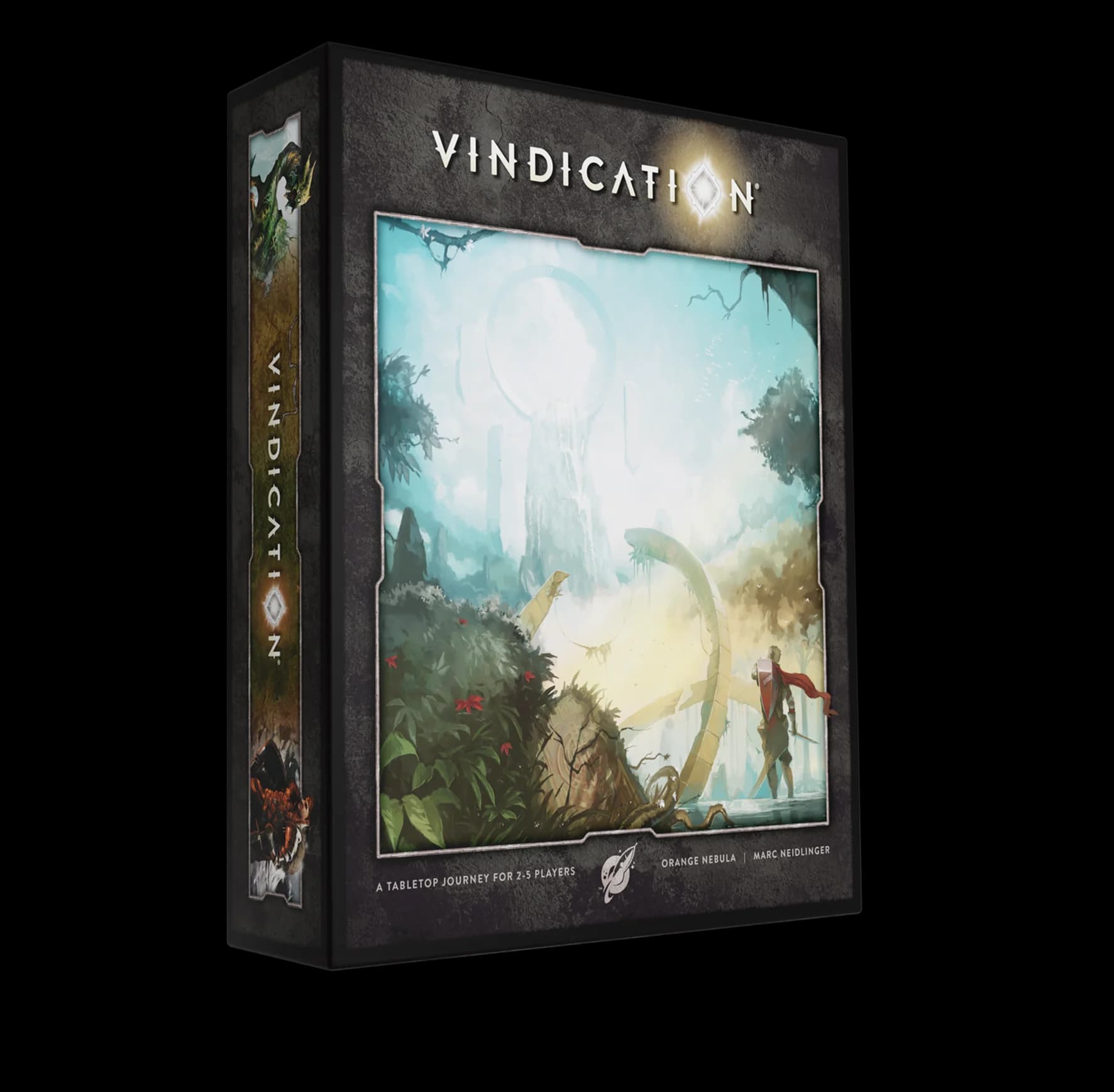
2018Vindication is a highly modular strategy board game where players take on the role of a disgraced individual, cast overboard by their peers to die in the surf of a mysterious, magical island. From this lowly start as a 'wretched' character, you must navigate a path toward redemption and honor. The core objective is to accumulate the most Honor points by the time one of the variable endgame triggers is met. Set in a rich fantasy world, the game emphasizes player agency and high-production components, challenging participants to shed their dark past and become truly vindicated through heroic deeds and strategic growth.
The gameplay loop is centered on an elegant 'Action Trio' system. On every turn, players perform three distinct actions in any order: moving across the hexagonal modular board, activating companions or character abilities, and either visiting a specific tile or resting to recover power. The resource management is particularly unique, utilizing a three-tier system of power cubes. Players move cubes from 'Potential' to 'Influence' and finally to 'Conviction.' This engine powers 'Attribute Alchemy,' where basic resources like Inspiration, Knowledge, or Strength are combined into advanced traits like Wisdom or Courage. These elite attributes are necessary to recruit powerful allies, secure relics, and defeat the monstrous threats lurking on the island.
One of the most praised aspects of Vindication is its open-world feel and high degree of replayability. Because the endgame conditions are variable and based on player progress or deck depletion, no two sessions feel the same. The game avoids the rigid structure of fixed rounds, allowing for a dynamic tempo that responds to the players' strategies. Fans of the game are often drawn to its stunning aesthetics, including high-quality card art and tactile game trays, alongside the deeply satisfying feeling of building a powerful engine from nothing. Whether you are exploring new territories, mastering the alchemy of attributes, or taking permanent control of locations, the path to glory is as varied as the island itself.
1-5 90m⚖️ 3.1
RANK #297
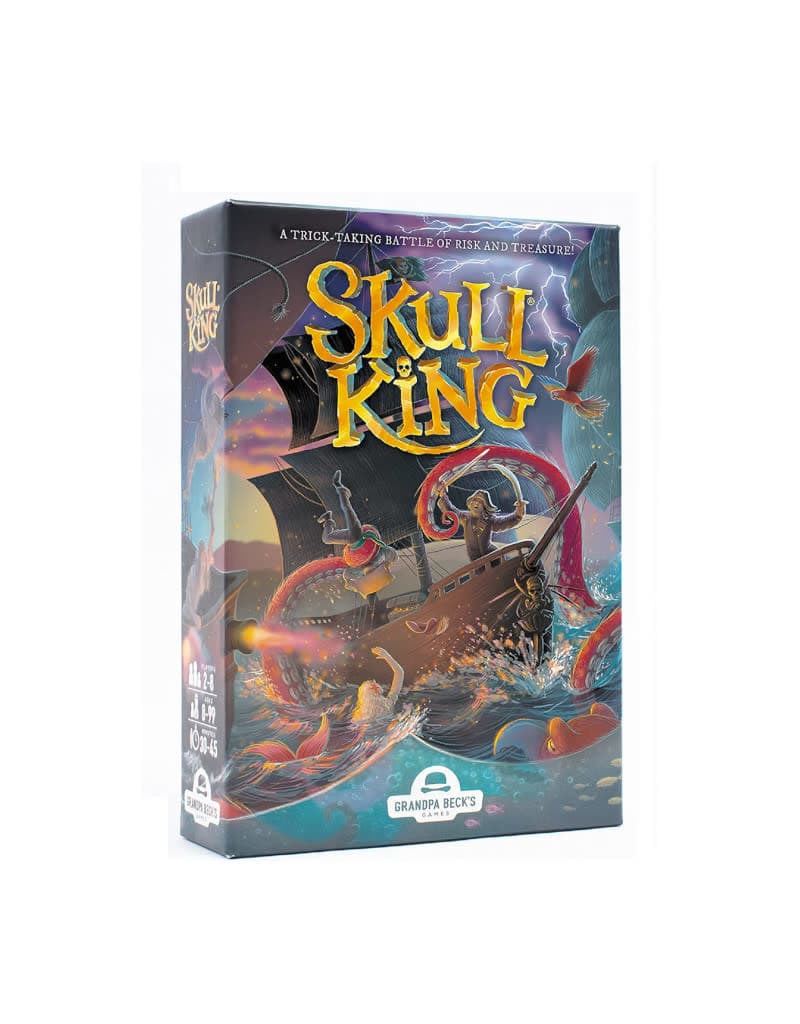
Skull King
2013Skull King is a high-stakes, pirate-themed trick-taking game that invites players to set sail on the high seas in search of loot and glory. Originally released in 2013, it has established itself as a modern classic in the predictive bidding genre, often compared to legendary games like 'Wizard' or 'Oh Hell!'. The ultimate goal is to accumulate the most points over ten rounds by accurately predicting exactly how many tricks you will capture in each hand. Unlike traditional card games where the strongest hand always wins, Skull King rewards precision and psychological maneuvering, forcing players to balance aggression with calculated retreats.
The game progresses through ten rounds, with the hand size increasing by one card each round. After examining their cards, all players simultaneously declare their bids using the iconic 'Yo-Ho-Ho!' chant, revealing their intended trick count with their fists. The core of the game lies in its intricate power hierarchy. While players must follow the lead suit of Parrots, Maps, or Chests, they can pivot to the black Jolly Roger trump suit or deploy powerful special cards. Pirates can dominate numbered cards, but they are vulnerable to the dreaded Skull King. However, even the King can be lured to his doom by the alluring Mermaid. This rock-paper-scissors dynamic ensures that no lead is ever truly safe, and the tide of battle can turn with a single card.
What makes Skull King truly beloved by gaming groups is its blend of high-energy social interaction and deep strategic depth. The scoring system is brutal yet rewarding; players earn 20 points per trick for a correct bid but lose 10 points for every trick they are off. The legendary 'bid zero' strategy offers a high-risk, high-reward path to victory, potentially granting massive points or leading to a devastating shipwreck. The game's charm lies in these moments of triumph and betrayal, where a well-timed Escape card or a surprise Pirate can ruin an opponent's perfect round. It remains a staple for families and hobbyists alike due to its accessibility and the endless variety provided by its special character cards.
2-6 45m⚖️ 1.8
BoxNo Cover Art
RANK #298
Anno 1800: The Board Game, a captivating Eurogame released in 2020, beautifully translates the intricate city-building experience of its video game namesake into a tabletop format. Designed by the esteemed Martin Wallace, this strategy title immerses players in the heart of the Industrial Revolution, tasking them with developing a thriving island economy. The overarching goal is a strategic "race" to satisfy the increasingly complex needs of your population, represented by a hand of Population Cards that players aim to empty. It’s a game of careful planning, resource optimization, and dynamic player interaction, where every decision shapes your burgeoning industrial empire.
The core gameplay loop revolves around selecting one of nine distinct actions on your turn, a mechanism that provides a flexible yet constrained strategic environment. Instead of traditional resource accumulation, players "produce" goods by exhausting population cubes from various building tiles, instantly generating the necessary resources for current actions. These resources are then used to either play the crucial Population Cards from your hand, unlocking points and bonuses, or to construct new, higher-tier industries that produce more advanced goods. Population management is key: increasing your workforce grants more actions per round, but also forces you to draw more Population Cards, extending the challenge of fulfilling your citizens' demands and escalating the strategic race.
What truly sets Anno 1800 apart is its innovative and dynamic trade system. If a player lacks a specific resource, they can trade with any opponent who possesses the corresponding industry. This trade is non-refusable; the active player spends a trade token, and the recipient gains one gold, without expending their own resources or actions. This ingenious system strongly encourages players to specialize their industries rather than attempting to produce every good, fostering a high degree of player interaction and negotiation throughout the game. Fans praise its ability to replicate the video game's recursive production chains and satisfying engine-building without becoming overly bogged down in calculations, offering a rewarding, "puzzle-like" experience for strategists and optimization enthusiasts.
2-4 120m⚖️ 3.8
Showing 1 to 12 of 18 games