Le Havre
Build France's greatest shipping empire from raw resources.
Overview
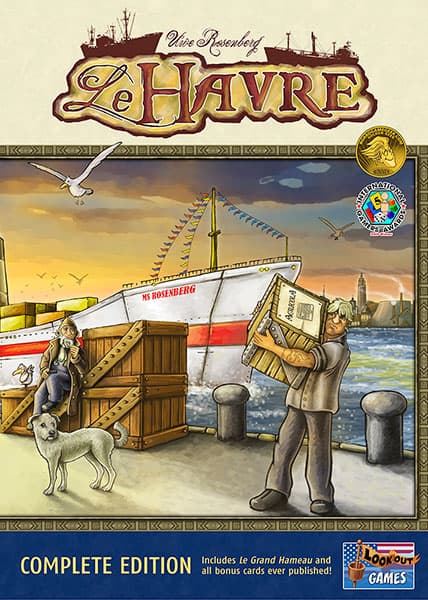
In "Le Havre," the celebrated design from Uwe Rosenberg, players are transported to the burgeoning port city of Le Havre in northwestern France. As magnates of the shipping industry, players compete to amass the greatest fortune. This is not achieved through simple commerce alone, but by strategically developing the city's infrastructure and managing a complex web of resources. The ultimate goal is to end the game with the highest net worth, a sum of your cash reserves plus the value of the buildings and ships you've constructed. The game challenges you to balance short-term gains with long-term investments, building a powerful economic engine that can outpace your rivals in this bustling harbor town. It's a deep and rewarding experience for those who enjoy meticulous economic planning and optimization.
The gameplay in "Le Havre" is elegantly structured around a two-part turn. First, goods are added to the offer spaces, creating an ever-changing marketplace. Then, the active player must choose one of two primary actions: either take all goods of a single type from an offer space, or utilize one of the many buildings on the board. Buildings are the heart of your strategy, enabling you to transform raw materials like fish and wood into more valuable processed goods, such as smoked fish or charcoal. This process of creating production chains is a classic engine-building challenge. A fascinating layer of player interaction emerges from building ownership; while any player can use any building, they must pay a fee to the owner, creating a dynamic flow of capital and forcing difficult choices about which actions are most profitable. Furthermore, players must acquire ships not just for their value, but to generate the food required to feed their workers at the end of each round, with failure resulting in costly loans.
"Le Havre" is beloved by strategy gamers for its immense strategic depth and the satisfying feeling of building an efficient economic machine from the ground up. The tension between expanding your industrial capabilities and meeting the recurring demand for food creates a compelling puzzle that requires constant foresight and adaptation. Unlike many other worker placement games, the core action is singular—you move your one worker pawn—which makes each decision incredibly significant. The indirect player interaction, where you must weigh the benefit of using an opponent's building against the cost of paying them, is a masterstroke of design that keeps all players engaged. The game's variable building display ensures high replayability, as the path to victory changes with each session. For players who relish a heavy, brain-burning economic simulation with tight resources and rewarding long-term planning, "Le Havre" stands as a monumental achievement in the genre.