Party Games
Browse all Party board games in the Meeple Pulse database.
Styles
Themes
AbstractAdventureAncientAnimalsArtBusinessCard GameCo-operativeComic BookCooperativeCrimeEconomicEnvironmentalismExplorationFantasyHistoricalHorrorHumorIntrigueLiteraryMagicMarvelMedievalModernMuseumMysteryMythologyNatureNauticalPoliticalPress Your LuckSatireSci-FiSocial CommentarySocial InteractionSpaceSuperheroesThematicTravelWarWesternWord-Guessing
Mechanics
3D PlacementActingAction / DexterityAction DraftingAction Point AllowanceAction Point Allowance SystemAction Point SystemAction PointsAction ProgrammingAction QueueAction RetrievalAction SelectionAction/EventAlliancesAlternate ActivationApp-AssistedApp-DrivenArea ControlArea InfluenceArea MajorityArea Majority / InfluenceArea MovementArgumentationAsymmetricAsymmetric FactionsAsymmetric GameAsymmetric PowersAsymmetrical PowersAuction & BiddingAuction/BiddingAuctioningBag BuildingBettingBetting and BluffingBetting and WageringBetting and WagersBiddingBingoBlind BiddingBluffingCampaign / Battle Card DrivenCampaign / LegacyCampaign / Legacy GameCampaign / Mission-basedCampaign / ScenariosCampaign GameCampaign PlayCard DraftingCard DrawingCard DrivenCard Driven ActionCard Driven CombatCard Driven Dice AllocationCard Driven MovementCard ManagementCard PlayCard Play / Hand ManagementCard Play Conflict ResolutionCard SheddingCard-Driven MovementCharacter CreationCharacter ProgressionChit-Pull SystemCo-op PlayCo-operative GameCo-operative PlayCode-breakingCombat ResolutionCombo ChainCommand CardsCommodity SpeculationCommunication LimitsContract FulfillmentContractsCooperative GameCooperative GameplayCooperative PlayCooperative Trick-takingDebateDeck BuildingDeck ConstructionDeck, Bag, and Pool BuildingDeck-BuildingDeductionDexterityDice DraftingDice PlacementDice RollingDiplomatic InfluenceDraftingDynamic Battle SystemEnclosureEnd Game BonusesEngine BuildingEngine-BuildingEscape RoomEvent DrivenExplorationFarmingFlip and WriteFollowFollow ActionGrid CoverageGrid MovementHand ManagementHex-and-CounterHexagon GridHidden MovementHidden RolesI Cut You ChooseIncomeInfluence / Area MajorityLadder ClimbingLegacyLegacy ElementsLegacy GameLegacy SystemLimited CommunicationLine DrawingLine of SightMancalaMap MovementMarketMarket DraftingMarket ManipulationMarket MechanicMarket SpeculationMatchingMeasurement MovementMemoryMission ObjectivesModular BoardModular Board ConstructionMovement TemplatesMulti-Use CardsMulti-use CardsMultiple ScenariosMust FollowNarrative ChoiceNarrative Choice / ParagraphNegotiationNegotiation MechanicsNetwork & Route BuildingNetwork BuildingNetwork and Route BuildingOne vs ManyOne vs. ManyOpen DraftingPaper-and-PencilPartnershipsPattern BuildingPattern RecognitionPick-up and DeliverPlayer EliminationPlayer InteractionPlayer JudgePoint SaladPoint to Point MovementPolyominoesPush Your LuckPush-Your-LuckPuzzlePuzzle-LikePuzzle-SolvingRaceReal-TimeRecipe FulfillmentResource ManagementRole PlayingRole SelectionRoll / Spin and MoveRondelRoute BuildingRoute-BuildingRoute/Network BuildingSanity SystemScenario / Campaign PlayScenario / Mission / Campaign GameScenario / Mission FunctionSecret Unit DeploymentSemi-Cooperative GameSet CollectionSheddingSimulationSimultaneous ActionSimultaneous Action SelectionSimultaneous Hidden AllocationSocial DeductionSocial InteractionSolo / Solitaire GameSpace ExplorationStat Check / Skill CheckStock HoldingStorytellingStrategic PlanningTableau BuildingTactical Decision-MakingTake ThatTargeted CluesTeam PlayTeam-Based GameTeam-Based GuessingTeamworkTech TreesTech Trees / Tech TracksTechnology & Armament TracksTechnology TreeTension & Aggression TracksTile DraftingTile LayingTile PlacementTime TrackTime TravelTower DefenseTrack MovementTradingTrick-takingTug of WarTurn Order: PassTurn Order: Stat-BasedUnit PlacementVariable Phase OrderVariable Player PowersVariable Set-upVariable SetupVictory Point TracksVotingWord AssociationWord GameWord GuessingWord-GuessingWord-guessingWordplayWorker Placement

RANK #33
Sky Team
2023In Sky Team, 2-3 players take on the role of pilots competing to deliver packages across a dynamic, modular board. The goal is to be the first team to deliver all their packages and return to base. Gameplay involves strategic route planning, package management, and clever use of special abilities and weather effects. With its unique blend of worker placement, route-building, and area control mechanics, Sky Team offers a thrilling experience that's both accessible to new players and challenging for veterans.
2-3 30m⚖️ 2.5
RANK #272
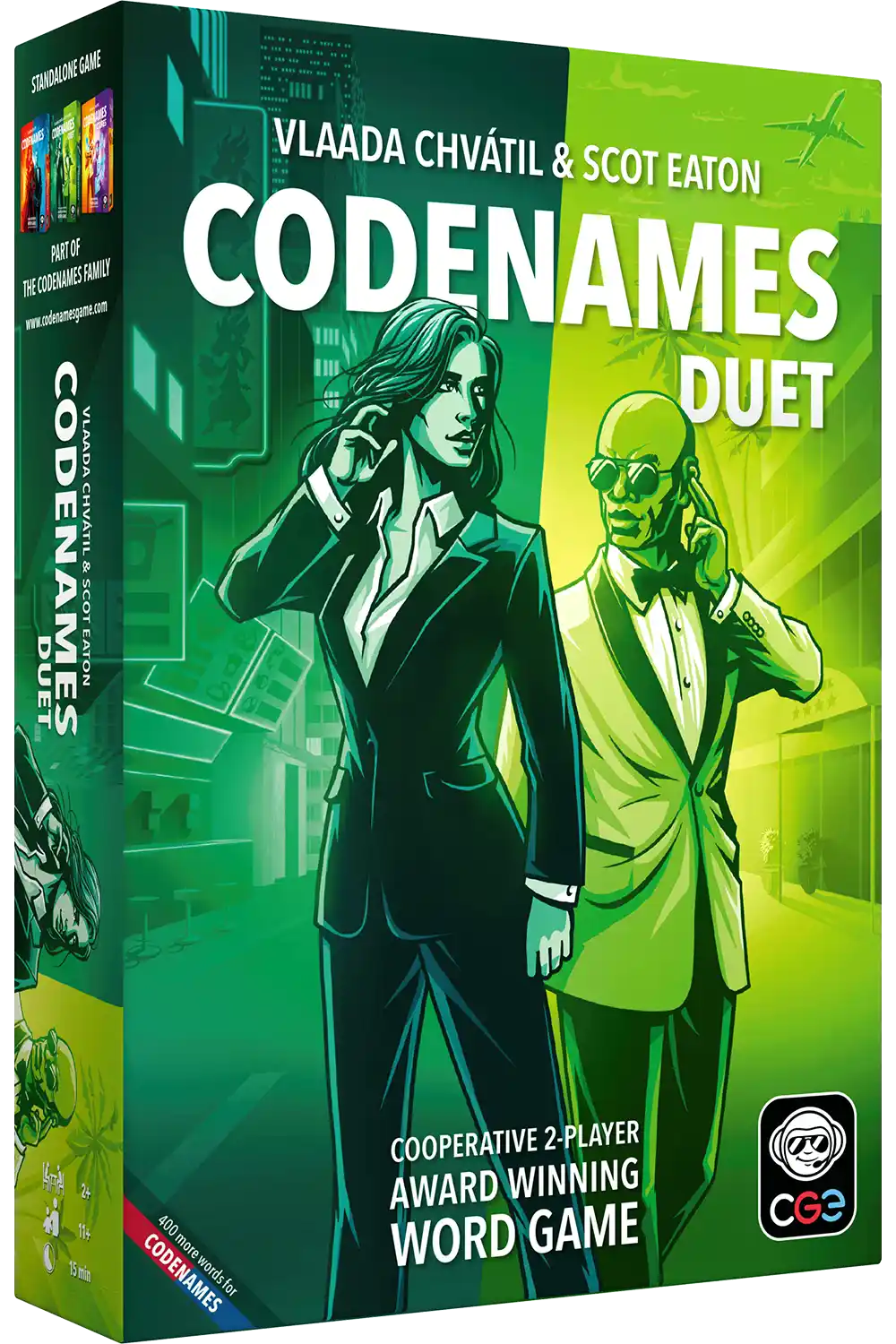
Codenames: Duet
2017Codenames: Duet is the cooperative, two-player evolution of the hit party game, Codenames. The objective is for both players to work in harmony to uncover all 15 of their shared secret agents from a grid of 25 word cards. Unlike its competitive predecessor, this version is a race against the clock, challenging the team to complete their mission within a limited number of turns, typically nine. Success hinges on clever word association and the ability to get on the same wavelength as your partner. The game presents a pure puzzle of communication and deduction, where players must navigate a minefield of innocent bystanders and deadly assassins, all represented by seemingly random words on the table.
The core of the game lies in its unique double-sided key card. This card, placed between the players, shows each person a different perspective of the 5x5 grid. On each side, nine words are marked as friendly agents (green), three are deadly assassins (black), and the rest are harmless bystanders (tan). The twist is that while some agents are unique to each player's side of the card, others overlap, creating a shared pool of 15 total agents that must be identified. Players alternate giving a single-word clue followed by a number, indicating how many words on the board correspond to their clue. If their partner correctly touches an agent card, it's covered, and they can continue guessing. Contacting a bystander immediately ends the turn, and touching an assassin results in an instant loss for the team. After each turn, a timer token is used, ratcheting up the pressure as the turn limit approaches.
Codenames: Duet is celebrated for its brilliant distillation of the original game's magic into an intimate and challenging experience for two. The cooperative dynamic transforms the game from a team-based competition into a collaborative puzzle. Players must think not only about the clues they give but also about the potential interpretations their partner might have, leading to moments of incredible synergy or hilarious miscommunication. The tension is palpable as each guess could be the one that uncovers a hidden agent or triggers a game-ending assassin. For those seeking even greater challenges and replayability, the game includes a mission map with a campaign-style progression, introducing new rules and constraints that alter the difficulty and win conditions. This combination of simple rules, profound strategic depth, and a focus on partnered thinking makes it a standout title for couples and pairs of friends.
2 15m⚖️ 1.1
RANK #284
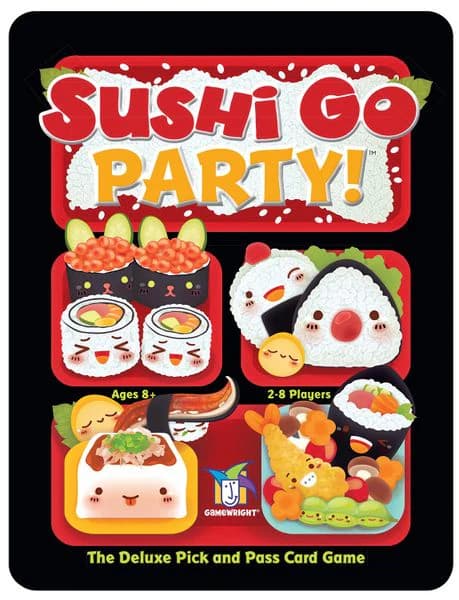
Sushi Go Party!
2016Sushi Go Party! is the expanded, deluxe version of the hit card-drafting game that tasks players with assembling the most delicious meal at a revolving sushi restaurant. Building upon the foundation of the original game, this version introduces a wider array of culinary dishes and a customizable menu system that allows for significantly more variety in every session. The primary goal is to score the most points over three rounds by selecting cards that create high-scoring combinations. Whether you are aiming for a massive platter of sashimi or trying to earn the most maki rolls at the table, the game rewards clever planning and a keen eye on your opponents' growing plates.
The core gameplay loop revolves around a simultaneous 'pick-and-pass' drafting mechanic. Each player starts with a hand of cards, chooses one to keep, reveals it, and then passes the remaining cards to the person sitting next to them. This continues until the hands are empty. The 'Party' edition elevates this experience by offering over twenty different card types. Players can mix and match appetizers, specials, and rolls to create a unique 'menu' for each game, ranging from beginner-friendly sets to more aggressive, cutthroat combinations. Points are tallied at the end of each round, with certain cards like Nigiri providing immediate bonuses—especially when paired with spicy Wasabi—while others like Desserts are stored and only scored at the very end of the meal.
One of the most significant draws of Sushi Go Party! is its incredible accessibility combined with surprising depth. The artwork uses a 'kawaii' aesthetic that makes the game instantly inviting for families and casual gamers. However, beneath the cute illustrations of smiling dumplings and puddings lies a strategic layer of card counting and selective drafting. Because you see almost every hand that rotates around the table, you must decide whether to take the card you need most or block an opponent from completing a high-value set. With support for up to eight players and a massive amount of replayability provided by the various menu configurations, it serves as an essential title for social gatherings and board game nights alike.
2-8 25m⚖️ 1.3

RANK #286
Deception: Murder in Hong Kong is an immersive social deduction experience that transports players into the heart of a high-stakes criminal investigation. In this tense mystery, one player assumes the role of the Forensic Scientist—a silent gamemaster who holds the objective truth—while others act as Investigators trying to identify the perpetrator hidden among them. However, one individual in the group is the secret Murderer, and in larger games, they may even have an Accomplice to help deflect suspicion. The goal is simple yet challenging: the Investigators must correctly identify two specific cards—the 'Means of Murder' and the 'Key Evidence'—selected by the killer before the trail goes cold.
The gameplay centers on a unique communication loop where the Forensic Scientist is strictly forbidden from speaking or gesturing. Instead, they provide hints by placing bullet markers on abstract Scene Tiles, which represent various aspects of the crime such as the location, the cause of death, or the victim's social state. During a hidden night phase at the start of the game, the Murderer secretly points to their chosen weapon and a piece of evidence. As the investigation progresses over three rounds, the Scientist adds or replaces tiles to refine the group's theories. Each Investigator has only one formal opportunity to 'Solve the Crime.' They must name both cards correctly; a single mistake results in the loss of their badge and their ability to make future official accusations, though they remain active in the group's heated debates.
What makes Deception stand out is its masterful blend of abstract logic and intense social manipulation. Unlike many deduction games that rely solely on bluffing, this title provides a tangible puzzle through visual clues that must be interpreted through the lens of the killer's possible choices. It creates a fascinating dynamic where players must argue over the subjective meaning of tiles while trying to read the body language of their peers. The addition of optional roles like the Witness and Accomplice adds further layers of complexity, requiring players to protect their information sources. It is an ideal choice for large groups because it eliminates player elimination and keeps everyone engaged in a collaborative, yet paranoid, atmosphere where the truth is often hidden in plain sight.
4-12 20m⚖️ 1.6
RANK #302
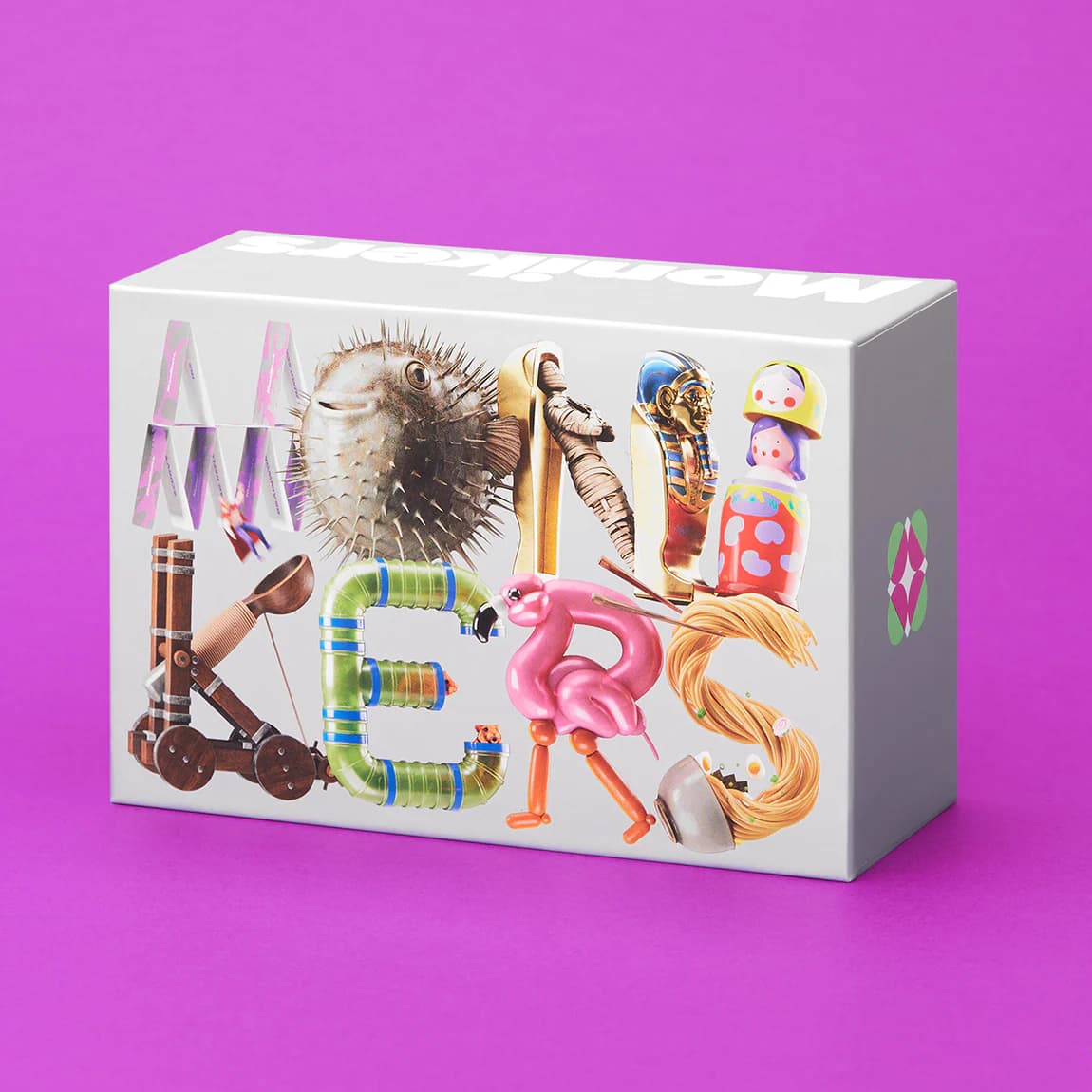
Monikers
2015Monikers is a high-energy, contemporary party game that revitalizes the classic parlor game known as Celebrities or 'The Hat Game'. Designed for large groups, the objective is simple: teams compete to guess as many names as possible from a shared deck of cards over three increasingly difficult rounds. The game is celebrated for its ability to transform even the most obscure references into hilarious inside jokes that persist long after the session ends. Because players participate in the selection of the cards at the very beginning, the game feels personalized and ensures that someone at the table always has a baseline understanding of the entries in play.
The structure of Monikers revolves around a clever three-round progression using a single, unchanging deck of cards. In the first round, players can say almost anything to get their teammates to guess the name on the card, provided they do not use the name itself. Once the deck is exhausted, it is reshuffled for the second round, where clue-givers are restricted to using only a single word. This shift forces players to rely on their memory of the clues from the previous round. The final round escalates the challenge significantly by banning speech altogether, requiring players to use charades, gestures, and sound effects. This iterative loop creates a shared language among the players, turning a difficult historical figure or a weird internet meme into a recognizable physical gesture by the end of the night.
What makes Monikers a staple for social gatherings is its focus on creativity and collective memory rather than trivia knowledge. Each card features a point value ranging from one to four, reflecting its inherent difficulty, and includes a short, humorous description to help players who might be unfamiliar with the subject. The game is famously easy to teach, with rules that can be explained in mere minutes, making it highly accessible to non-gamers. Its modular nature allows for quick games or long, raucous evenings, and while the standard edition features mature humor, it is easily adapted for different crowds. Ultimately, Monikers is less about winning and more about the absurd situations and hysterical failures that occur when friends try to communicate through frantic movements.
4-16 45m⚖️ 1.1
RANK #528
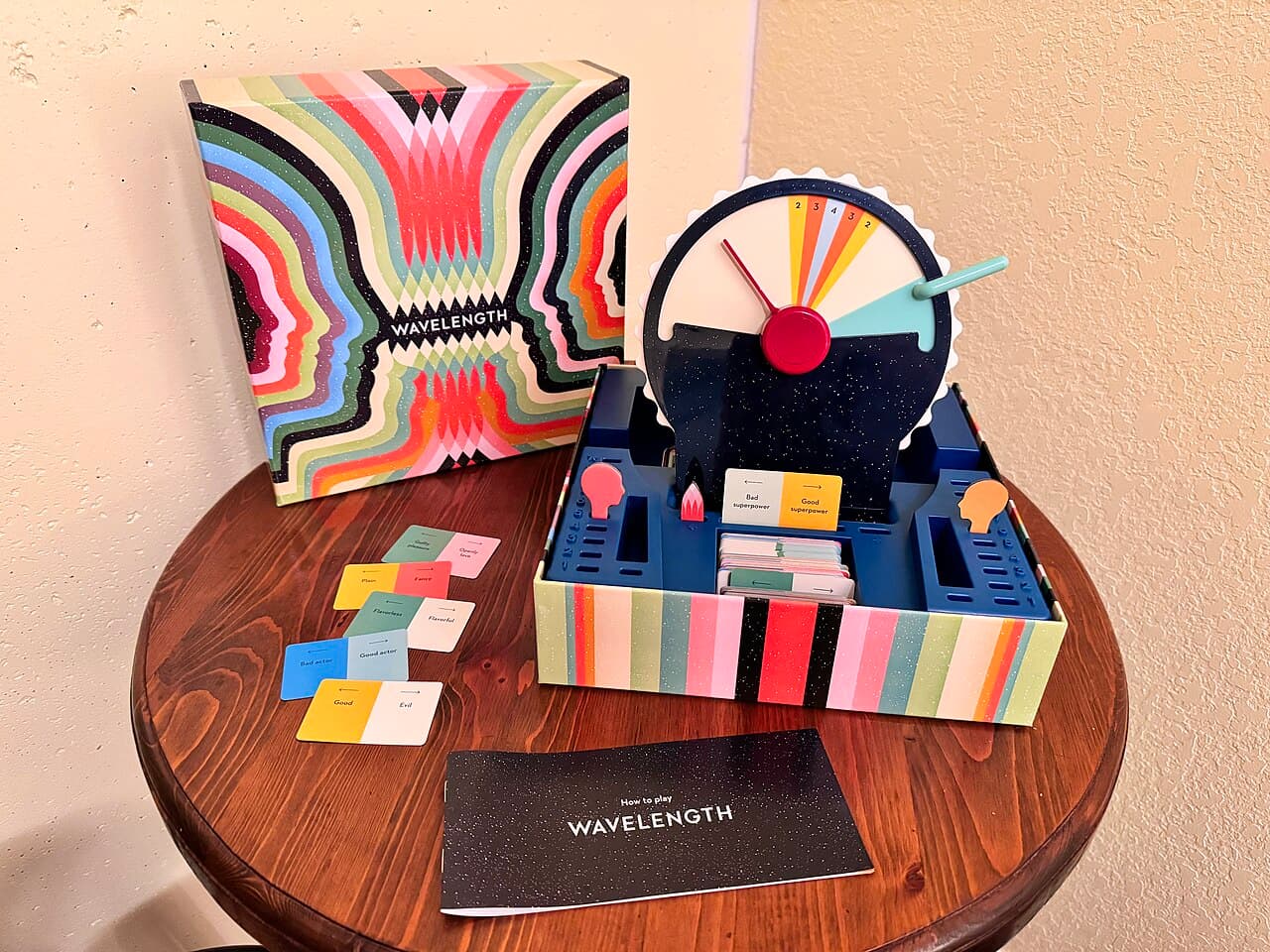
Wavelength
2019Wavelength is an immensely engaging team-based party experience that centers entirely on social guessing, empathy, and intuitive communication. At its heart, this brilliant tabletop offering challenges players to read their friends' minds while utilizing a striking, custom three-dimensional dial device. The primary objective is to successfully guide your squad to a hidden location on a spectrum using only a single conceptual hint. It is highly celebrated within the tabletop community for its unparalleled ability to spark hilarious, profound, and sometimes bizarre debates about how different individuals perceive the exact same concepts in our strange world.
The fundamental gameplay loop splits participants into two competing factions, with a designated device placed in the center of the table. During a turn, one individual on the active side takes on the role of the 'Psychic.' This key participant draws a Spectrum Card that displays two opposing binaries, such as 'Hot' versus 'Cold' or 'Utopia' versus 'Dystopia.' The Psychic then randomly spins the wheel inside the plastic device and peeks behind the viewing screen to locate a hidden bullseye containing varying scoring zones. After closing the screen to conceal the target from everyone else, the Psychic must provide precisely one conceptual clue to guide their allies to that exact spot on the spectrum. For instance, if the target leans slightly toward the cold side, the Psychic might simply say the word 'Salad.'
Following the clue, the active group must collaborate, discuss, and often argue playfully as they physically rotate the red dial to the position they believe matches the hint. At this juncture, the opposing squad engages in a push-your-luck betting mechanic, guessing whether the true target lies to the left or the right of the active team's placement. Finally, the screen is opened to reveal the truth. The active participants score points based on how close they landed to the exact center of the bullseye, while the opponents can snag a bonus point for a correct directional bet.
Teams continue taking turns in this manner until one reaches the winning threshold of ten points. People absolutely adore this title because of its immense accessibility; boasting a remarkably low complexity, the rules can be explained in mere minutes, making it incredibly welcoming for non-gamers. Furthermore, its versatile structure comfortably accommodates large crowds or can be adapted into a fully cooperative mode for smaller gatherings, ensuring it shines on nearly any game night.
2-12 45m⚖️ 1.1

RANK #10,160
"Why Did the Chicken...?" is a remarkably inventive and open-ended party game that leans heavily on the improvisational humor and linguistic creativity of its participants. Originally published in 2004, this engaging title takes the familiar structure of fill-in-the-blank party experiences and injects a massive dose of active joke writing. The primary goal is to craft the most amusing, bizarre, or downright hilarious punchlines to randomly generated riddles. Instead of relying on pre-written responses like many modern casual tabletop games, players must utilize their own wit, drawing upon pads of paper and pencils to brainstorm their best comedic material. It is a fantastic exercise in spontaneous creativity where the funniest individual at the table often walks away with the victory, making it an absolute blast for gatherings of friends and family.
The gameplay loop is incredibly intuitive and perfectly suited for groups of four to eight players. Each round, one participant assumes the role of the rotating Judge. This individual draws a specific Question card that features intriguing blank spaces, such as 'What is the difference between [Blank] and [Blank]?' To complete the prompt, the Judge then draws two random Noun cards, instantly producing an absurd and often surreal riddle. Once the prompt is established, a two-minute sand timer is flipped. The remaining players furiously scribble down as many clever answers as they can muster before time expires. These written punchlines are subsequently gathered into a central pile, shuffled to ensure anonymity, and read aloud to the group. The Judge listens carefully to the comedic offerings and selects their absolute two favorite responses, awarding a Noun card as a point to the authors of those winning jokes. The role of the Judge then shifts to the next person, continuing until everyone has had three opportunities to evaluate the humor.
What truly sets "Why Did the Chicken...?" apart from other titles in the casual board game market is its boundless potential for memorable, laugh-out-loud moments. Because the punchlines are generated purely from the minds of the players rather than a static deck of cards, no two sessions will ever feel the same. This open-ended mechanic ensures infinite replayability and allows the humor to naturally tailor itself to the specific personalities, inside jokes, and sensibilities of the group playing. With a remarkably low rules complexity, it can be taught to absolute beginners in under a minute, completely removing any barriers to entry. The minimal component list highlights the reality that the true magic of the game resides in the social interactions and shared creativity of the participants. For anyone seeking a deeply interactive experience that champions quick thinking, this game remains a phenomenal choice.
4-8 45m⚖️ 1.1

Ready Set Bet: Let It Ride is an expansion that supercharges the already thrilling, real-time experience of its parent game, Ready Set Bet. It doesn't alter the fundamental goal: to walk away from the track with the most money after four frenetic horse races. Instead, it enriches the experience by throwing open the betting windows with a host of new wagers, strategic wrinkles, and game-changing powers. Players still find themselves in a chaotic flurry of placing bets as a caller (or an app) rolls dice to move the horses down the track. This expansion, however, ensures that the path to riches is far more varied and unpredictable, demanding more from veteran players while retaining the infectious energy that makes the original game a party favorite. It’s for anyone who felt the thrill of a photo finish and thought, 'I wish there were even more ways I could have bet on that.'
The heart of the Let It Ride expansion lies in its significant additions to the betting system. The core gameplay loop of placing tokens during a real-time race remains, but the decision space is vastly expanded. Players can now place highly specific "Exacta" bets, predicting the first and second-place finishers in precise order for a massive payout. For those who enjoy schadenfreude, a new "Last Place" bet allows you to profit from failure. New betting tokens also debut, such as "Box" chips for covering the top two horses in any order and "Baa" tokens that cleverly hedge a bet across two adjacent horses. Perhaps the most significant addition is a deck of 14 new VIP cards, which grant each player a unique special ability for the game. These powers can be dramatic, allowing a player to move an ill-fated bet mid-race or even trigger a one-time, game-altering power to completely restart a race just as it concludes.
The unique appeal of Let It Ride is how seamlessly it layers more strategic depth onto a light and accessible party game. It amplifies the excitement and player interaction without sacrificing the speed and simplicity that defined the original. The new wager types provide more avenues for clever risk assessment, while the asymmetric VIP powers give players a distinct identity and a reason to try different strategies each game. This added variety creates incredible replayability, as the combination of powers and available bets changes every session. The expansion is a perfect next step for groups who love Ready Set Bet and are ready to raise the stakes. It introduces just enough new rules to make the experience feel fresh and challenging again, ensuring that the shouts and groans around the table are louder and more frequent than ever before.
2-9 60m⚖️ 1.8
Welcome to the high-stakes, high-calorie world of Chicken Fried Dice, a savory press-your-luck experience that transports players to the heart of a bustling Southern diner. In this 2026 release, you step into the grease-stained apron of a short-order cook competing to become the legendary 'King of the Skillet.' The primary objective is simple yet challenging: fulfill complex food orders by rolling specific combinations of ingredients using custom chunky dice. Each successful dish earns you points and prestige, but the clock is ticking and the customers are hungry. The game captures the chaotic energy of a lunchtime rush, blending thematic flavor with snappy, accessible gameplay that keeps everyone at the table engaged from the first sizzle to the final plating.
The core gameplay of Chicken Fried Dice revolves around a sophisticated 'Roll-and-Risk' system. On your turn, you will roll a handful of specialized Ingredient Dice—featuring icons like Flour, Spices, Chicken, and the dreaded 'Grease Fire.' You must strategically decide which dice to 'lock' into your prep area to fulfill the requirements of the active Order Cards on the table. However, much like real frying, the more you push your luck, the higher the temperature rises. Rolling too many Grease Fire icons results in a kitchen catastrophe, forcing you to discard your current progress and pass the turn. Notable mechanics include 'Side Dish' bonuses which allow for minor dice manipulation and 'Seasoning Tokens' that act as a strategic currency to reroll stubborn results, adding a layer of tactical depth to the otherwise frantic dice-chucking action.
What truly sets Chicken Fried Dice apart and makes it a must-have for any collection is its infectious charm and 'just one more turn' appeal. The game balances the tension of a gambling-style mechanic with a whimsical, vibrant art style that celebrates Southern culinary culture. Players love the social interaction that comes from 'hate-ordering'—snatching up a recipe another cook was clearly eyeing—and the raucous cheers or groans that accompany a final, desperate roll. It is a perfect 'filler' game that bridges the gap between casual party games and light strategy titles. Whether you are a seasoned board game veteran or a newcomer looking for a fun way to spend twenty minutes, the combination of tactile satisfaction, fast-paced decision making, and the hilarious risk of a burnt biscuit makes every session of Chicken Fried Dice a memorable feast.
2-5 25m⚖️ 1.4

Hit Me!
2018Hit Me! is a vibrant and high-energy card game that immerses players in a comic book-inspired showdown where survival is the only objective. In this competitive experience, every participant begins with a personal Life deck, a small stack of face-down cards that represents their health and staying power in the battle. The ultimate goal is deceptively simple but difficult to achieve: be the final player left with cards in your Life deck after everyone else has been knocked out. The game captures the kinetic energy of a superhero skirmish or a street brawl, utilizing bold visuals and fast-paced turns to keep the table engaged from the first card draw to the final elimination.
The core of the gameplay revolves around a central Hit! deck, from which players draw and play cards to manipulate the board state and attack their rivals. Utilizing a distinct 'push your luck' mechanic, players must decide how aggressively they want to pursue their opponents. By playing Hit! cards, you can force other players to discard precious cards from their Life decks, bringing them one step closer to defeat. However, the game requires a careful balance of aggression and caution; pushing too hard can leave a player vulnerable or lead to unintended consequences. This creates a social dynamic filled with 'take that' moments, where alliances are temporary and the leader often finds themselves with a target on their back.
Fans of the game appreciate Hit Me! for its role as a perfect 'filler' game, offering a streamlined experience that is easy to teach and quick to play. Designed for groups of two to six, it thrives on social interaction and the unpredictable nature of the draw. The social aspect is heightened by the player elimination mechanic, which creates a tense atmosphere as the deck sizes dwindle. Its accessible ruleset makes it an excellent choice for family game nights or as an icebreaker for larger gatherings. With its unique comic book aesthetic and the thrill of narrowly escaping defeat, Hit Me! provides a satisfyingly punchy experience that rewards both tactical targeting and the courage to take a gamble.
2-6 30m⚖️ 1.2
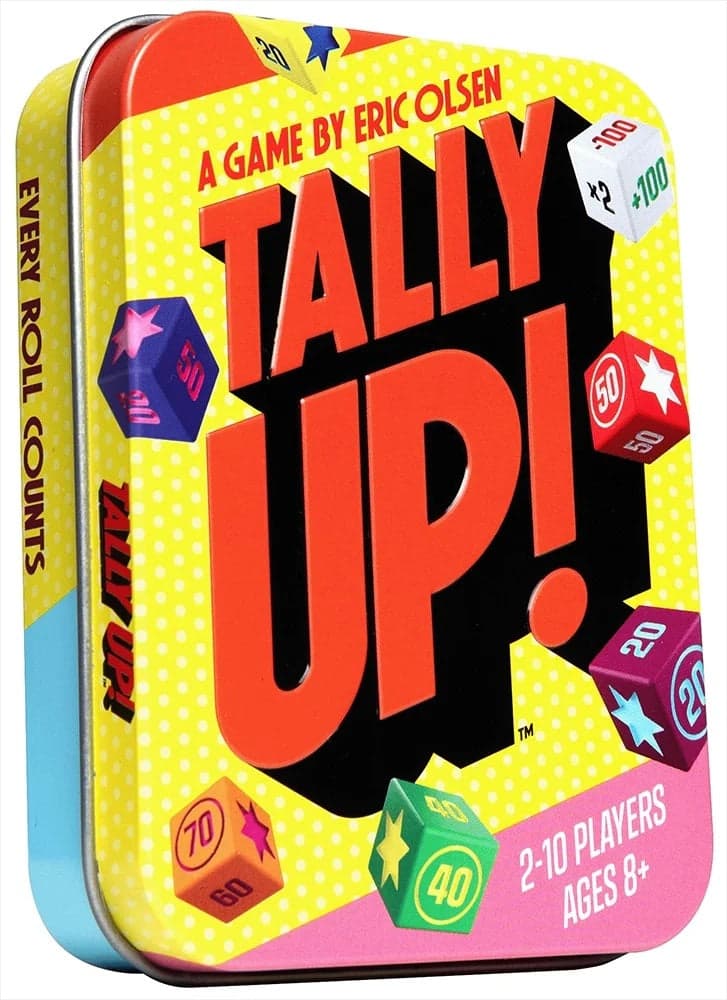
Tally Up! is a delightful, fast-paced board game that challenges players to think quickly and strategically as they race to accumulate points. Perfect for family game nights or casual gatherings, this engaging experience revolves around observation and rapid decision-making. The ultimate goal is simple: be the first player to "tally up" the required number of points, showcasing your keen eye and tactical acumen to claim victory as the master counter!
Gameplay in Tally Up! typically involves players drawing or revealing cards, each featuring various symbols, numbers, or categories. Players must quickly identify patterns, count specific elements, or make rapid matches according to evolving rules or objectives. A core mechanic often involves simultaneously revealing cards and then racing to be the first to declare a correct "tally." This could be a specific number of items, a sum, or a sequence. Success hinges on a combination of quick perception and the ability to adapt to new challenges with each round, making every turn a fresh, exciting puzzle to solve.
What makes Tally Up! stand out is its blend of accessibility and thrilling competitive energy. It's incredibly easy to learn, making it welcoming for new players of all ages, yet it offers surprising depth for those who love to optimize their quick-thinking skills. The high player interaction, coupled with the suspense of rapid fire counting and calling, ensures that every game is filled with laughter, 'oohs,' and 'aahs.' It's a fantastic choice for anyone seeking a game that fosters mental agility in a fun, pressure-filled, and highly replayable format, promising endless entertainment.
m⚖️ N/A