Family Games
Browse all Family board games in the Meeple Pulse database.
Styles
Themes
AbstractAdventureAncientAnimalsArtBusinessCard GameCo-operativeComic BookCooperativeCrimeEconomicEnvironmentalismExplorationFantasyHistoricalHorrorHumorIntrigueLiteraryMagicMarvelMedievalModernMuseumMysteryMythologyNatureNauticalPoliticalPress Your LuckSatireSci-FiSocial CommentarySocial InteractionSpaceSuperheroesThematicTravelWarWesternWord-Guessing
Mechanics
3D PlacementActingAction / DexterityAction DraftingAction Point AllowanceAction Point Allowance SystemAction Point SystemAction PointsAction ProgrammingAction QueueAction RetrievalAction SelectionAction/EventAlliancesAlternate ActivationApp-AssistedApp-DrivenArea ControlArea InfluenceArea MajorityArea Majority / InfluenceArea MovementArgumentationAsymmetricAsymmetric FactionsAsymmetric GameAsymmetric PowersAsymmetrical PowersAuction & BiddingAuction/BiddingAuctioningBag BuildingBettingBetting and BluffingBetting and WageringBetting and WagersBiddingBingoBlind BiddingBluffingCampaign / Battle Card DrivenCampaign / LegacyCampaign / Legacy GameCampaign / Mission-basedCampaign / ScenariosCampaign GameCampaign PlayCard DraftingCard DrawingCard DrivenCard Driven ActionCard Driven CombatCard Driven Dice AllocationCard Driven MovementCard ManagementCard PlayCard Play / Hand ManagementCard Play Conflict ResolutionCard SheddingCard-Driven MovementCharacter CreationCharacter ProgressionChit-Pull SystemCo-op PlayCo-operative GameCo-operative PlayCode-breakingCombat ResolutionCombo ChainCommand CardsCommodity SpeculationCommunication LimitsContract FulfillmentContractsCooperative GameCooperative GameplayCooperative PlayCooperative Trick-takingDebateDeck BuildingDeck ConstructionDeck, Bag, and Pool BuildingDeck-BuildingDeductionDexterityDice DraftingDice PlacementDice RollingDiplomatic InfluenceDraftingDynamic Battle SystemEnclosureEnd Game BonusesEngine BuildingEngine-BuildingEscape RoomEvent DrivenExplorationFarmingFlip and WriteFollowFollow ActionGrid CoverageGrid MovementHand ManagementHex-and-CounterHexagon GridHidden MovementHidden RolesI Cut You ChooseIncomeInfluence / Area MajorityLadder ClimbingLegacyLegacy ElementsLegacy GameLegacy SystemLimited CommunicationLine DrawingLine of SightMancalaMap MovementMarketMarket DraftingMarket ManipulationMarket MechanicMarket SpeculationMatchingMeasurement MovementMemoryMission ObjectivesModular BoardModular Board ConstructionMovement TemplatesMulti-Use CardsMulti-use CardsMultiple ScenariosMust FollowNarrative ChoiceNarrative Choice / ParagraphNegotiationNegotiation MechanicsNetwork & Route BuildingNetwork BuildingNetwork and Route BuildingOne vs ManyOne vs. ManyOpen DraftingPaper-and-PencilPartnershipsPattern BuildingPattern RecognitionPick-up and DeliverPlayer EliminationPlayer InteractionPlayer JudgePoint SaladPoint to Point MovementPolyominoesPush Your LuckPush-Your-LuckPuzzlePuzzle-LikePuzzle-SolvingRaceReal-TimeRecipe FulfillmentResource ManagementRole PlayingRole SelectionRoll / Spin and MoveRondelRoute BuildingRoute-BuildingRoute/Network BuildingSanity SystemScenario / Campaign PlayScenario / Mission / Campaign GameScenario / Mission FunctionSecret Unit DeploymentSemi-Cooperative GameSet CollectionSheddingSimulationSimultaneous ActionSimultaneous Action SelectionSimultaneous Hidden AllocationSocial DeductionSocial InteractionSolo / Solitaire GameSpace ExplorationStat Check / Skill CheckStock HoldingStorytellingStrategic PlanningTableau BuildingTactical Decision-MakingTake ThatTargeted CluesTeam PlayTeam-Based GameTeam-Based GuessingTeamworkTech TreesTech Trees / Tech TracksTechnology & Armament TracksTechnology TreeTension & Aggression TracksTile DraftingTile LayingTile PlacementTime TrackTime TravelTower DefenseTrack MovementTradingTrick-takingTug of WarTurn Order: PassTurn Order: Stat-BasedUnit PlacementVariable Phase OrderVariable Player PowersVariable Set-upVariable SetupVictory Point TracksVotingWord AssociationWord GameWord GuessingWord-GuessingWord-guessingWordplayWorker Placement
RANK #146
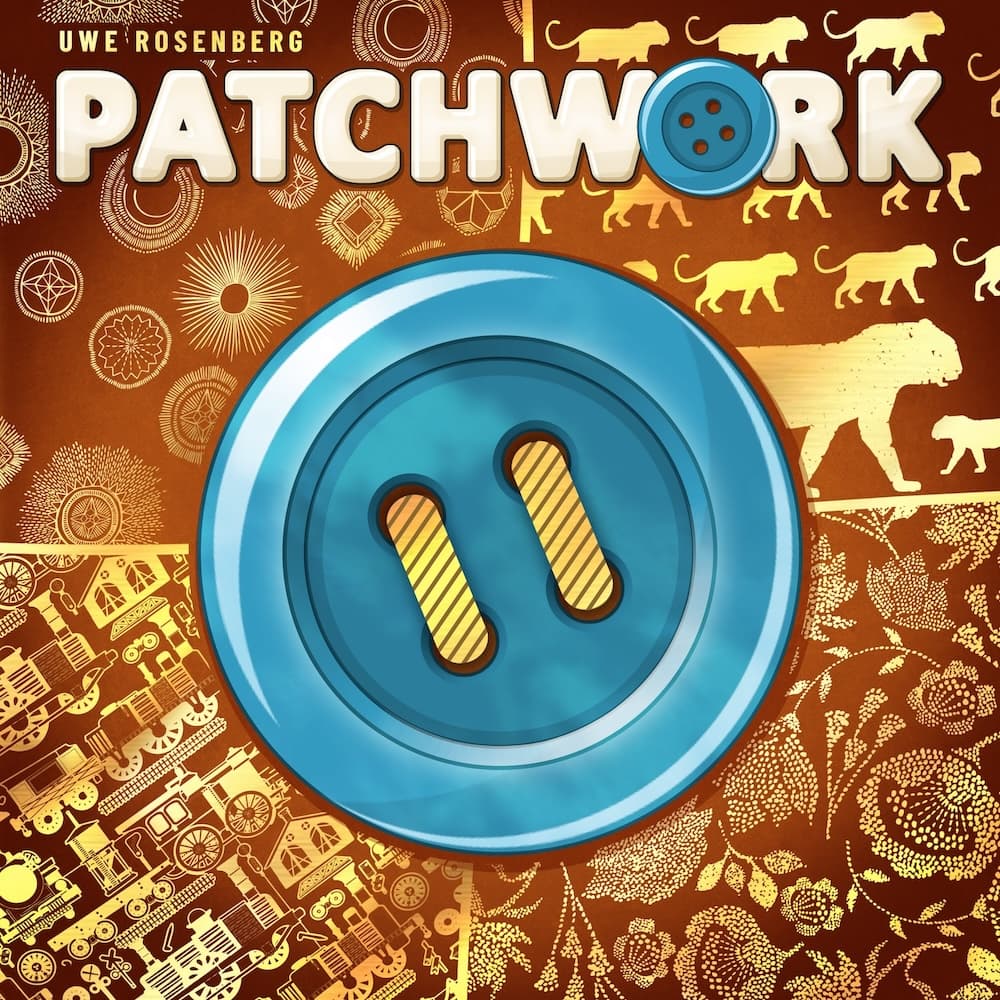
Patchwork
2014Patchwork is a celebrated two-player abstract strategy game from famed designer Uwe Rosenberg. In this charmingly themed contest, players compete to craft the most complete and valuable quilt on their personal 9x9 game boards. The game's currency and victory points are one and the same: buttons. Players must skillfully manage their button economy to purchase irregularly shaped fabric patches, each with its own cost in both buttons and 'time'. The ultimate goal is to fill your board as completely as possible, accumulating a hoard of buttons while avoiding empty spaces, as each uncovered square on your quilt results in a penalty at the end of the game. It's a delightful blend of economic management and a satisfying spatial puzzle.
The gameplay is driven by a unique time track mechanism that dictates the entire flow of the game. Rather than alternating turns, the player whose token is further behind on the central time board is the one to take the next action. When you purchase a patch, you move your token forward a number of spaces equal to its time cost, potentially allowing your opponent to take several turns in a row while you wait. Alternatively, a player can choose to pass and advance their token to the space just ahead of their rival, collecting one button for each space they moved. This creates a fascinating tactical dilemma. Furthermore, as tokens pass specific points on the time track, players receive button income based on the cumulative icons on the patches they've already placed, adding a light engine-building element to the experience.
The enduring appeal of Patchwork lies in its accessible ruleset, which hides a surprising amount of strategic depth. The game presents players with a constant stream of interesting decisions. Do you spend a lot of time to grab a large, valuable patch that fits perfectly, or do you take smaller, cheaper pieces to maximize your number of turns? The Tetris-like joy of slotting a piece perfectly into your quilt is immense, but it must always be weighed against your position on the time track and your button supply. With a special bonus for the first player to complete a 7x7 square, the game feels both tactical and rewarding, making it a beloved classic that is just as engaging for new players as it is for seasoned strategists.
2 30m⚖️ 1.6
RANK #227
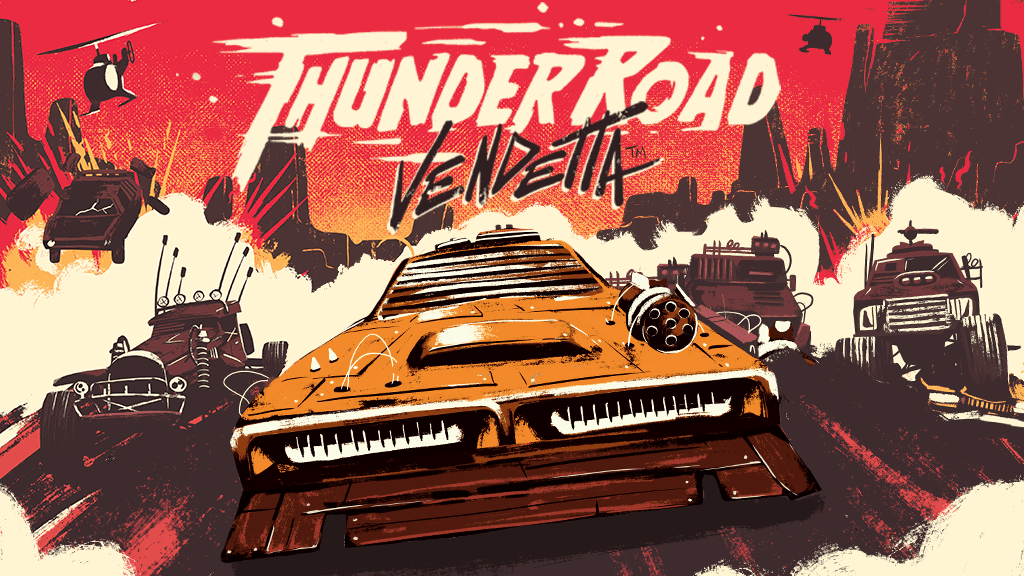
Thunder Road: Vendetta is the explosive, high-octane revival of the 1986 cult classic, putting players in the driver's seat for a brutal, post-apocalyptic death race. In this game of vehicular carnage, you control a crew of three unique vehicles—a small, medium, and large car—each with its own capabilities. Your goal is simple, yet fiercely contested: either be the first player to race one of your vehicles across the finish line, or simply outlast the competition by becoming the last crew with a vehicle left on the road. Survival is just as important as speed, and only the most cunning and ruthless driver will claim victory on this unforgiving stretch of asphalt.
The gameplay is fueled by a dynamic and accessible dice-driven system. Each round, all players simultaneously roll their dice and then take turns assigning them. Dice can be allocated to your cars to determine their movement speed, or to a special command board to unlock powerful, once-per-round abilities. You can activate a nitro boost for a burst of speed, drift around a hazard, perform crucial repairs, or even call in a devastating attack helicopter to rain fire upon your rivals. The road itself is a constantly evolving threat, thanks to a modular board system where the rearmost tile is removed and a new one is added to the front as the race progresses. This 'scrolling' effect means any vehicle left behind is eliminated, adding a relentless pressure to keep moving forward. Combat is direct and brutal; players can shoot at opponents ahead of them or slam into adjacent cars, triggering chaotic dice-rolls that can send vehicles careening across the board and into each other, creating spectacular chain reactions of destruction.
What makes Thunder Road: Vendetta a standout experience is its perfect blend of light strategy and cinematic, chaotic fun. The rules are easy to grasp, making it incredibly accessible for new players and families, yet the tactical decisions offer enough depth to engage seasoned gamers. The constant threat of player elimination, spectacular collisions, and the ever-present danger of being left behind by the board itself create an atmosphere of thrilling tension. It’s a game that revels in high player interaction and 'take that' moments, ensuring that no two races are ever the same. The unpredictable nature of the dice rolls, combined with the strategic use of command board abilities, generates hilarious, fist-pumping moments that will have your group cheering, groaning, and talking about their legendary wrecks long after the game is over.
2-4 60m⚖️ 2.1
RANK #236
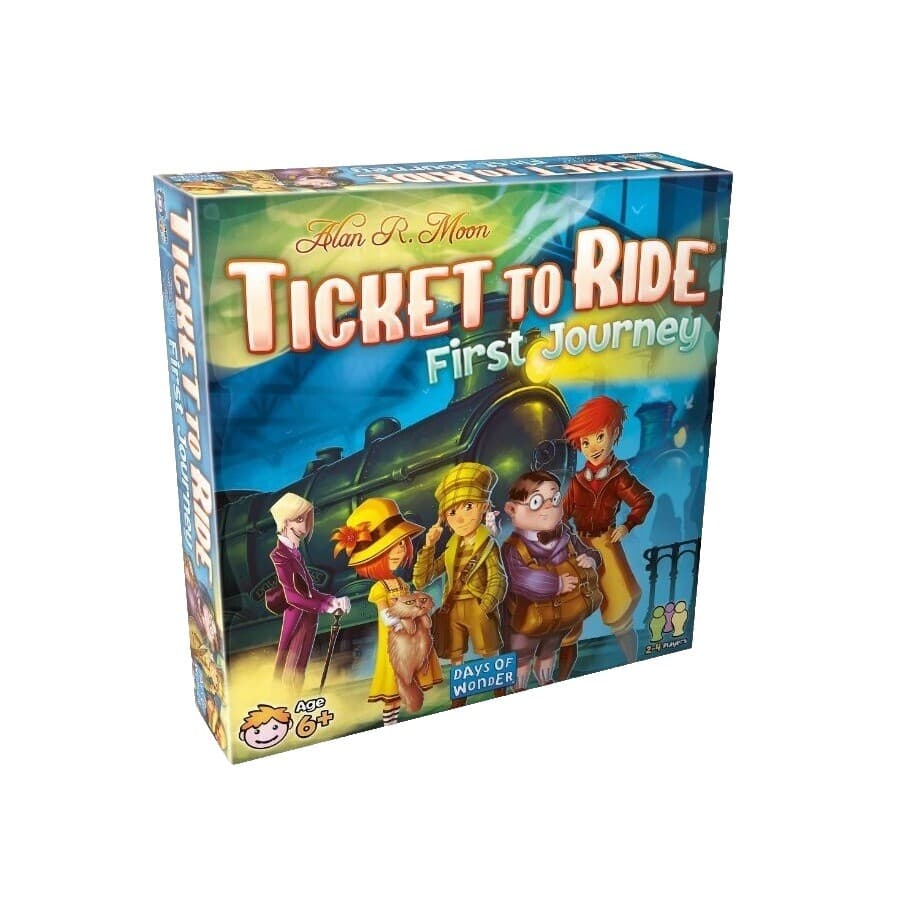
Embark on a frosty railway adventure with *Ticket to Ride: Nordic Countries*, a standalone installment in the award-winning series designed specifically for a more intimate and competitive experience. Set against the beautiful, snow-dusted backdrop of Denmark, Finland, Norway, and Sweden, this game challenges two or three players to become the region's greatest transportation magnate. The core objective remains familiar to fans of the series: collect colored train car cards to claim railway routes, strategically connecting cities across the map. Your primary source of points comes from fulfilling secret Destination Tickets, each one tasking you with linking two specific cities. Successfully completing these tickets adds to your score, but failure will cost you dearly. The player who has amassed the most points from their routes, completed tickets, and the coveted 'Globetrotter' bonus for the most tickets fulfilled, will be declared the winner.
The gameplay is elegantly simple yet rich with strategic choices. On your turn, you perform one of three actions: draw more train car cards, claim a route by discarding a matching set of cards, or draw new Destination Tickets to potentially increase your score. *Nordic Countries* introduces compelling twists on this classic formula with the inclusion of Ferries and Tunnels. Ferries are special sea routes that demand a specific number of powerful Locomotive wild cards to claim, making these cards exceptionally valuable. Tunnels add a thrilling element of risk; after committing your cards to a mountain route, you must reveal cards from the top of the deck, potentially forcing you to play extra cards to complete the connection. This version also uniquely alters the rules for Locomotives, restricting their use primarily to these special routes, which intensifies the strategic planning around their acquisition and use.
What makes *Ticket to Ride: Nordic Countries* a standout title is its brilliantly crafted map, which is significantly tighter and more constrained than its predecessors. This design choice inherently creates a high-stakes environment where player interaction is not just possible, but inevitable. Players must constantly watch their opponents, anticipate their moves, and decide whether to build their own network or defensively block a critical path. The scarcity of double-routes means competition for key connections is fierce from the very start. This heightened tension, combined with a brisk playtime of 30-60 minutes, makes it an exceptionally engaging and replayable game for couples, families, and anyone seeking a fast-paced, light-strategy experience with a healthy dose of direct competition.
2-3 45m⚖️ 1.9
RANK #267
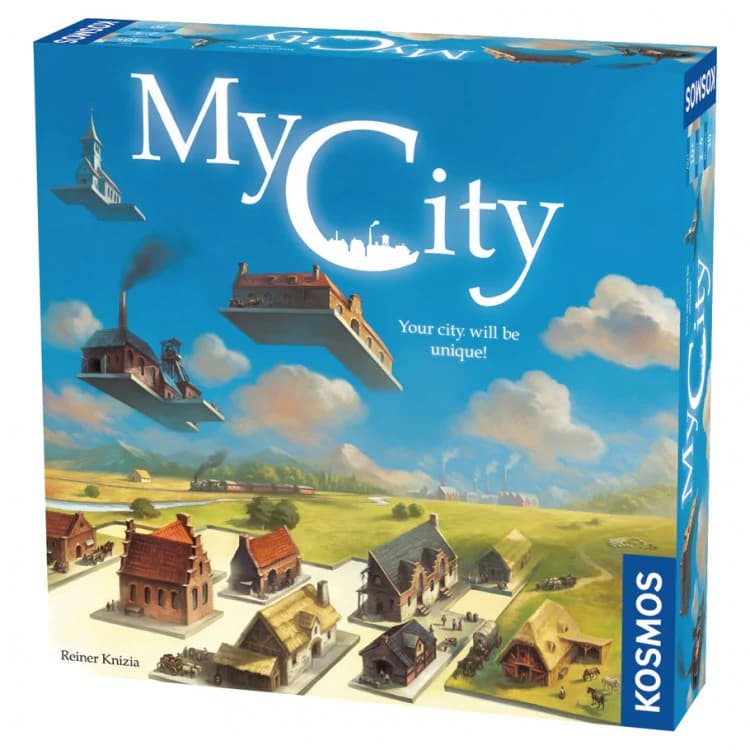
My City
2020My City is a captivating competitive legacy game from celebrated designer Reiner Knizia, where players embark on a journey to build and develop their own unique city. The game unfolds over an engaging 24-episode campaign, broken into eight distinct chapters. Players begin with a pristine, untouched plot of land and, over the course of the campaign, will see it transform into a bustling metropolis. The goal is to be the most successful city planner by scoring points based on evolving objectives that are introduced with each new episode. This narrative-driven progression allows players to create a personal history with their board, making each game a unique and memorable chapter in their city's story.
At its core, the gameplay is elegantly simple and accessible. Each round, a construction card is revealed, indicating a specific polyomino-shaped building that every player must simultaneously place onto their personal game board. This simultaneous action keeps downtime to a minimum and ensures all players are constantly engaged. The legacy element is the game's defining feature; players will permanently alter their boards by adding stickers, representing new discoveries, landmarks, or challenges. At the start of each new chapter, sealed envelopes are opened, revealing new rules, components, and scoring opportunities that add layers of complexity and strategic depth. Early decisions might revolve around simple adjacency rules and avoiding natural obstacles, but strategies must adapt as the city and its ruleset evolve.
The appeal of My City lies in its masterful blend of simplicity and evolving strategy, making it an ideal 'gateway' legacy experience for families and newcomers to the hobby. The rules are introduced gradually, preventing players from feeling overwhelmed while providing a steady stream of fresh challenges. The game also incorporates a clever catch-up mechanism, where players who perform less well in an episode receive small advantages in the next, ensuring the campaign remains competitive and exciting for everyone involved. For those seeking endless replayability after the 24-episode journey concludes, the reverse side of the game board offers a standardized, non-legacy version of the game, allowing the fun of tactical tile-laying to continue indefinitely.
2-4 30m⚖️ 1.9
RANK #272
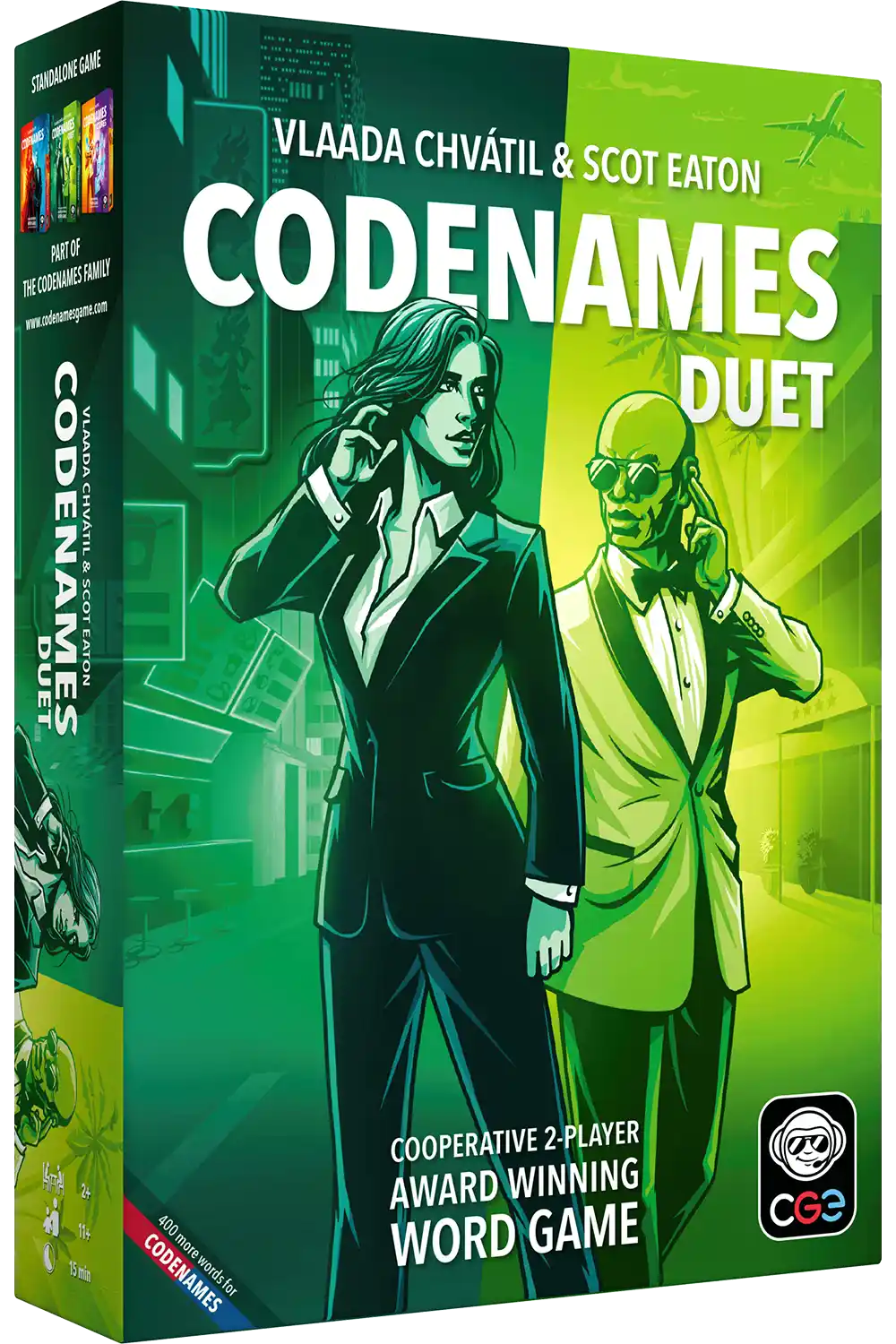
Codenames: Duet
2017Codenames: Duet is the cooperative, two-player evolution of the hit party game, Codenames. The objective is for both players to work in harmony to uncover all 15 of their shared secret agents from a grid of 25 word cards. Unlike its competitive predecessor, this version is a race against the clock, challenging the team to complete their mission within a limited number of turns, typically nine. Success hinges on clever word association and the ability to get on the same wavelength as your partner. The game presents a pure puzzle of communication and deduction, where players must navigate a minefield of innocent bystanders and deadly assassins, all represented by seemingly random words on the table.
The core of the game lies in its unique double-sided key card. This card, placed between the players, shows each person a different perspective of the 5x5 grid. On each side, nine words are marked as friendly agents (green), three are deadly assassins (black), and the rest are harmless bystanders (tan). The twist is that while some agents are unique to each player's side of the card, others overlap, creating a shared pool of 15 total agents that must be identified. Players alternate giving a single-word clue followed by a number, indicating how many words on the board correspond to their clue. If their partner correctly touches an agent card, it's covered, and they can continue guessing. Contacting a bystander immediately ends the turn, and touching an assassin results in an instant loss for the team. After each turn, a timer token is used, ratcheting up the pressure as the turn limit approaches.
Codenames: Duet is celebrated for its brilliant distillation of the original game's magic into an intimate and challenging experience for two. The cooperative dynamic transforms the game from a team-based competition into a collaborative puzzle. Players must think not only about the clues they give but also about the potential interpretations their partner might have, leading to moments of incredible synergy or hilarious miscommunication. The tension is palpable as each guess could be the one that uncovers a hidden agent or triggers a game-ending assassin. For those seeking even greater challenges and replayability, the game includes a mission map with a campaign-style progression, introducing new rules and constraints that alter the difficulty and win conditions. This combination of simple rules, profound strategic depth, and a focus on partnered thinking makes it a standout title for couples and pairs of friends.
2 15m⚖️ 1.1
RANK #284
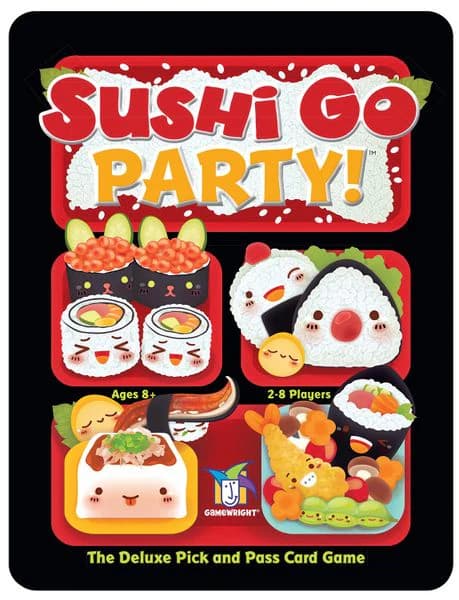
Sushi Go Party!
2016Sushi Go Party! is the expanded, deluxe version of the hit card-drafting game that tasks players with assembling the most delicious meal at a revolving sushi restaurant. Building upon the foundation of the original game, this version introduces a wider array of culinary dishes and a customizable menu system that allows for significantly more variety in every session. The primary goal is to score the most points over three rounds by selecting cards that create high-scoring combinations. Whether you are aiming for a massive platter of sashimi or trying to earn the most maki rolls at the table, the game rewards clever planning and a keen eye on your opponents' growing plates.
The core gameplay loop revolves around a simultaneous 'pick-and-pass' drafting mechanic. Each player starts with a hand of cards, chooses one to keep, reveals it, and then passes the remaining cards to the person sitting next to them. This continues until the hands are empty. The 'Party' edition elevates this experience by offering over twenty different card types. Players can mix and match appetizers, specials, and rolls to create a unique 'menu' for each game, ranging from beginner-friendly sets to more aggressive, cutthroat combinations. Points are tallied at the end of each round, with certain cards like Nigiri providing immediate bonuses—especially when paired with spicy Wasabi—while others like Desserts are stored and only scored at the very end of the meal.
One of the most significant draws of Sushi Go Party! is its incredible accessibility combined with surprising depth. The artwork uses a 'kawaii' aesthetic that makes the game instantly inviting for families and casual gamers. However, beneath the cute illustrations of smiling dumplings and puddings lies a strategic layer of card counting and selective drafting. Because you see almost every hand that rotates around the table, you must decide whether to take the card you need most or block an opponent from completing a high-value set. With support for up to eight players and a massive amount of replayability provided by the various menu configurations, it serves as an essential title for social gatherings and board game nights alike.
2-8 25m⚖️ 1.3
RANK #287
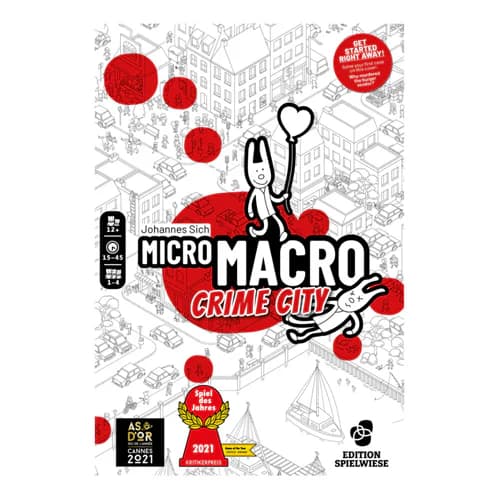
MicroMacro: Crime City is a groundbreaking cooperative experience that transforms the traditional 'hidden object' concept into a sophisticated investigative challenge. Set within a massive, intricately detailed 75 x 110 cm map of a monochrome metropolis, players take on the role of detectives tasked with solving 16 distinct criminal cases. The game's defining feature is its 'living' map, which functions as a temporal landscape where time and space are intertwined. Characters are not just static drawings; they appear multiple times across the city, allowing players to trace their movements from the moments leading up to a crime through to the aftermath.
The gameplay loop is elegantly simple yet intellectually stimulating. Each case begins with an introductory card that presents a victim or a suspicious event. Working together, players must scour the dense urban environment to find the starting point and then follow the trail of suspects and witnesses. This requires a sharp eye for detail and the ability to connect events chronologically as you 'rewind' or 'fast-forward' through the character's day. While the game provides a step-by-step investigation via scenario cards, an advanced 'Expert Mode' allows seasoned players to solve the entire mystery using only the initial prompt, relying solely on their own observation and logic to piece together the narrative.
The appeal of MicroMacro lies in its unique blend of visual storytelling and deductive gameplay. It successfully bridges the gap between casual puzzle-solving and deep narrative engagement, making it accessible to non-gamers while remaining deeply satisfying for hobbyists. The minimalist, whimsical art style often masks mature themes of crime and intrigue, creating a compelling contrast that keeps players immersed in the hunt. As a winner of the prestigious Spiel des Jahres award, it has been celebrated for its innovation and its ability to turn a simple piece of paper into a vibrant, interactive mystery world that is best enjoyed with a close group of friends or even as a solo challenge.
1-4 30m⚖️ 1.1
BoxNo Cover Art
RANK #289
Flamme Rouge
2016Flamme Rouge is a fast-paced, tactical bicycle racing game that transports players to the heart of a high-stakes 'one-day' classic race. Each player takes on the role of a team director managing two cyclists: the Rouleur, known for steady endurance, and the Sprinteur, capable of explosive bursts of speed. The objective is deceptively straightforward—cross the finish line first—but achieving this requires mastering the delicate balance of stamina, positioning, and timing. Set against the backdrop of the golden age of cycling, the game uses a modular track system to create unique courses every time you play, ranging from flat sprints to grueling mountain climbs that test even the most seasoned riders.
The gameplay loop revolves around a clever card-driven movement system that emphasizes hand management and deck depletion. Every round, players simultaneously draw cards for both their riders, choosing one to play and burying the others. The catch is that once a movement card is played, it is permanently removed from the game. This forces players to make difficult decisions: do you burn a high-value card now to break away from the pack, or save it for the final sprint? Positioning is critical, as the game rewards those who ride in groups through a 'slipstreaming' mechanic. If a rider ends exactly one space behind another, they are pulled forward for free, conserving their energy. Conversely, leading the pack or riding solo into the wind results in 'Exhaustion' cards being added to your deck, which act as dead weight and dilute your future drawing options.
What makes Flamme Rouge a modern classic is its ability to deliver a deep, thematic experience through incredibly accessible rules. It is easy enough for families to enjoy together but offers the tactical depth required to keep veteran strategy gamers engaged. The tension of the 'reveal' phase, where all players show their cards at once, captures the unpredictable nature of a real peloton. With its elegant design and high replayability thanks to the diverse track tiles, it offers a satisfying blend of luck and strategy. Whether you are carefully drafting to stay fresh or making a desperate dash for the flamme rouge—the red flag marking the final kilometer—every race is a cinematic experience.
2-4 45m⚖️ 1.7
RANK #624
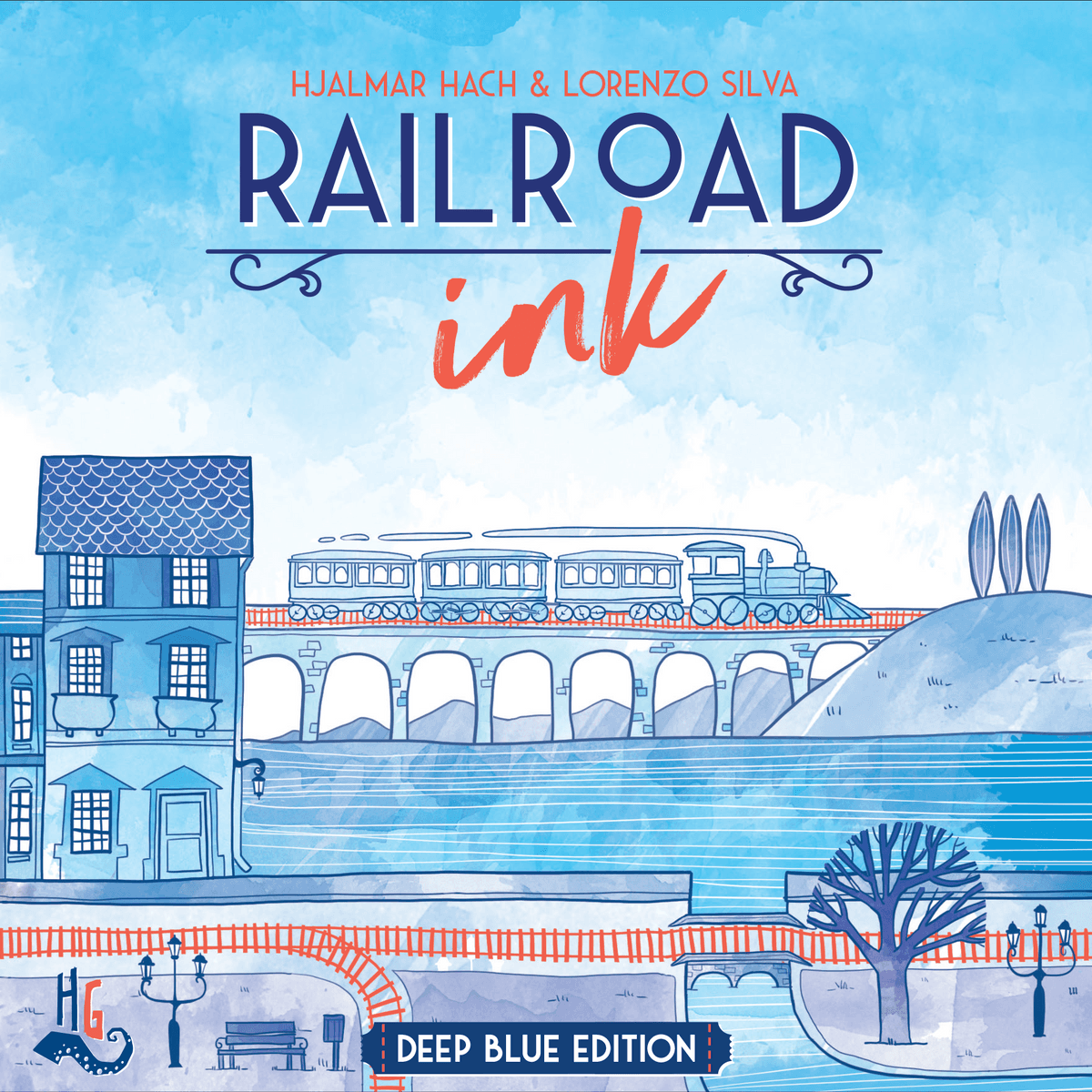
Railroad Ink: Deep Blue Edition is a captivating roll-and-write puzzle game where players strive to build the most efficient transportation network on their personal 7x7 grid. The core objective is to connect as many exits as possible around the perimeter of the board using highways and railways. Released as part of a series, the Deep Blue Edition specifically includes the River and Lake expansions, adding a serene but challenging aquatic twist to the land-based construction. Players compete to earn points by creating long routes, connecting exits, and filling the central squares of their map, all while avoiding incomplete paths that lead to point deductions at the end of the game.
Each round, a set of route dice is rolled, showing various configurations of straight roads, curved rails, or T-junctions. Every player must draw these specific results on their own dry-erase board simultaneously. The catch lies in the placement rules: new segments must connect to existing ones or to an exit. While everyone uses the same dice results, the diverging paths chosen by players quickly lead to unique map configurations. In addition to the standard dice, the Deep Blue Edition introduces expansion dice. Rivers add a separate network that cannot connect to roads or rails (except via a bridge) but offers high scoring potential, while Lakes allow for the creation of massive open water bodies that connect distant ports, maximizing network efficiency in a more fluid, non-linear way.
The appeal of Railroad Ink lies in its elegant simplicity paired with deep tactical decision-making. It is the quintessential 'coffee shop' game—portable, quick to play, and visually satisfying as your network grows. Unlike many competitive games, it features low player interaction, focusing instead on the individual puzzle of optimization. People love it because it rewards both careful long-term planning and the ability to adapt to the luck of the roll. The Deep Blue Edition is particularly praised for its calming theme and the way the water expansions introduce a layer of spatial complexity without bloating the ruleset. Whether played solo to beat a high score or in a large group setting where everyone shares the same dice, it offers a meditative yet mentally stimulating experience that keeps players coming back.
1-6 30m⚖️ 1.5

RANK #1,145
Point City
2023Point City is a streamlined card-drafting game that challenges players to architect a flourishing urban environment from the ground up. Serving as a spiritual successor to the popular Point Salad, this title elevates the experience by introducing more complex layers of engine-building and resource management. The primary objective is to accumulate the most victory points by strategically selecting cards from a dynamic market grid. Players must balance the acquisition of raw materials with the construction of civic structures, all while competing against others to secure the most lucrative developments for their growing cityscape.
The heart of the game lies in its unique dual-sided cards. One side represents basic resources—such as energy, industry, or ecology—while the flip side features a specific building with unique costs and scoring opportunities. On their turn, a player drafts two adjacent cards from a central four-by-four grid. If they take a resource, it is added to their pool; if they take a building, they must be able to pay the required resource cost using cards in their hand or permanent resources provided by previously constructed buildings. This engine building aspect is crucial, as every building constructed makes future projects easier to complete. As the grid is depleted, it is constantly replenished with new cards from the deck, ensuring that the market is always evolving and forcing players to adapt their strategies to the available options.
What makes Point City so compelling is its elegant blend of accessibility and depth. It retains the 'pick two' simplicity of its predecessor but adds a satisfying layer of progression that rewards long-term planning. The game is highly regarded for its fast-paced nature, typically wrapping up in under thirty minutes, making it an ideal choice for families or as a 'filler' for more dedicated gaming groups. Its vibrant artwork and intuitive iconography lower the barrier to entry, while the sheer variety of building combinations ensures high replayability. Fans of the genre appreciate the clever tension between taking a needed resource now or grabbing a powerful building before an opponent can. Ultimately, it offers a rewarding puzzle that feels both fresh and familiar, cementing its place as a modern staple in the card-drafting genre.
m⚖️ N/A

RANK #6,230
The Great Evening Banquet is a sophisticated board game that invites players into the high-stakes world of diplomatic event planning. Set within the prestigious walls of a brand-new state guest house, the game challenges you to act as a master of ceremonies tasked with organizing the ultimate social event. Your primary goal is to create harmonious seating arrangements for a diverse array of international dignitaries and VIPs. Each guest brings their own set of preferences and social requirements, turning the banquet hall into a complex grid of potential points and political pitfalls. The thematic essence of the game captures the tension and elegance of a formal gala, where the simple act of placing one person next to another can either foster international goodwill or result in a social faux pas.
The gameplay experience is built around a clever mix of token drafting and spatial puzzles. During each round, players draw guest tokens from a bag, introducing an element of controlled randomness that requires constant adaptation. These tokens are then selected through an open drafting mechanic, meaning you must stay vigilant about what your rivals are planning while securing the most beneficial guests for your own tables. The core challenge lies in the seating preferences of the VIPs; some may wish to be surrounded by their own entourage, while others provide bonuses based on the diversity of the table. The game progresses steadily until the grand chamber is filled, ensuring a tight, focused experience that rewards players who can think several moves ahead while managing the immediate tactical opportunities presented by the draft.
What truly distinguishes The Great Evening Banquet is its blend of approachable rules and deep, emergent strategy, a hallmark of the acclaimed publisher Saashi & Saashi. It offers a refined experience that appeals to fans of 'smart' family games, where the mechanics are easy to grasp but difficult to master. The inclusion of expert variants allows seasoned gamers to add layers of complexity, while the robust solo rules ensure that the seating puzzle is just as engaging when played alone. With its charming art style and the satisfying tactile feel of drawing tokens from a bag, the game provides a meditative yet competitive atmosphere. It perfectly captures the puzzle-like satisfaction of seeing a chaotic room transform into a perfectly ordered celebration, making it a standout title for anyone who enjoys abstract strategy with a strong thematic heartbeat.
1-4 45m⚖️ 2.2

RANK #13,808
Skybridge
2006"Skybridge" (2006) is a tactile, three-dimensional abstract strategy game that challenges players to construct a bustling, vertical cityscape. Published by the renowned French company Gigamic, the game is celebrated for its premium, high-quality wooden components that double as architectural building blocks. In this fast-paced game of spatial planning, participants compete to score the most points by thoughtfully stacking blocks, claiming tall towers, and connecting them with bridges. As a beautiful centerpiece on the table, it seamlessly blends light city-building elements with strict placement constraints, forcing players to think critically about every move they make.
The gameplay loop centers around a shared grid where competitors take turns adding exactly one wooden piece from their personal, color-coded supply. The game includes forty-four blocks ranging from single-story and double-story cubes to connecting bridges and pointed roofs. A strict set of placement rules dictates the flow of construction: pieces of the exact same color can never physically touch each other, and blocks must typically be placed on the lowest available legal tier to ensure a gradual upward progression across the board. The most critical mechanic revolves around the roof pieces, which are used to cap and officially claim a tower. Once a player crowns a structure with their roof, nobody else can build upon it, securing points equal to the tower's overall height. This introduces a gripping dilemma of push-your-luck strategy. Do you cap a modest tower early to guarantee a safe point return, or do you risk building it higher, leaving it vulnerable to an opponent who might completely steal the structure out from under you? Additionally, players can deploy bridge components to link two separate towers of identical height, provided they belong to different colors, which yields valuable bonus points and multipliers at the end of the session.
What truly makes this game shine is its unique synthesis of accessible rules and surprising tactical depth. Despite its short playtime of just ten to twenty minutes, the tense spatial puzzle appeals heavily to both families and seasoned tabletop enthusiasts. The tactile satisfaction of manipulating chunky wooden pieces combined with the architectural beauty of the final board state provides a highly rewarding tabletop experience. Highly regarded as a beginner-friendly title, it naturally teaches foundational skills in geometry and risk assessment. Ultimately, the thrill of capping a massive tower just before an opponent can steal it, or perfectly aligning a bridge to multiply your final score, cements "Skybridge" as a timeless, visually striking abstract classic.
2-4 15m⚖️ 1.8
Showing 1 to 12 of 23 games