Economic Games
Browse all Economic board games in the Meeple Pulse database.
Styles
Themes
AbstractAdventureAncientAnimalsArtBusinessCard GameCo-operativeComic BookCooperativeCrimeEconomicEnvironmentalismExplorationFantasyHistoricalHorrorHumorIntrigueLiteraryMagicMarvelMedievalModernMuseumMysteryMythologyNatureNauticalPoliticalPress Your LuckSatireSci-FiSocial CommentarySocial InteractionSpaceSuperheroesThematicTravelWarWesternWord-Guessing
Mechanics
3D PlacementActingAction / DexterityAction DraftingAction Point AllowanceAction Point Allowance SystemAction Point SystemAction PointsAction ProgrammingAction QueueAction RetrievalAction SelectionAction/EventAlliancesAlternate ActivationApp-AssistedApp-DrivenArea ControlArea InfluenceArea MajorityArea Majority / InfluenceArea MovementArgumentationAsymmetricAsymmetric FactionsAsymmetric GameAsymmetric PowersAsymmetrical PowersAuction & BiddingAuction/BiddingAuctioningBag BuildingBettingBetting and BluffingBetting and WageringBetting and WagersBiddingBingoBlind BiddingBluffingCampaign / Battle Card DrivenCampaign / LegacyCampaign / Legacy GameCampaign / Mission-basedCampaign / ScenariosCampaign GameCampaign PlayCard DraftingCard DrawingCard DrivenCard Driven ActionCard Driven CombatCard Driven Dice AllocationCard Driven MovementCard ManagementCard PlayCard Play / Hand ManagementCard Play Conflict ResolutionCard SheddingCard-Driven MovementCharacter CreationCharacter ProgressionChit-Pull SystemCo-op PlayCo-operative GameCo-operative PlayCode-breakingCombat ResolutionCombo ChainCommand CardsCommodity SpeculationCommunication LimitsContract FulfillmentContractsCooperative GameCooperative GameplayCooperative PlayCooperative Trick-takingDebateDeck BuildingDeck ConstructionDeck, Bag, and Pool BuildingDeck-BuildingDeductionDexterityDice DraftingDice PlacementDice RollingDiplomatic InfluenceDraftingDynamic Battle SystemEnclosureEnd Game BonusesEngine BuildingEngine-BuildingEscape RoomEvent DrivenExplorationFarmingFlip and WriteFollowFollow ActionGrid CoverageGrid MovementHand ManagementHex-and-CounterHexagon GridHidden MovementHidden RolesI Cut You ChooseIncomeInfluence / Area MajorityLadder ClimbingLegacyLegacy ElementsLegacy GameLegacy SystemLimited CommunicationLine DrawingLine of SightMancalaMap MovementMarketMarket DraftingMarket ManipulationMarket MechanicMarket SpeculationMatchingMeasurement MovementMemoryMission ObjectivesModular BoardModular Board ConstructionMovement TemplatesMulti-Use CardsMulti-use CardsMultiple ScenariosMust FollowNarrative ChoiceNarrative Choice / ParagraphNegotiationNegotiation MechanicsNetwork & Route BuildingNetwork BuildingNetwork and Route BuildingOne vs ManyOne vs. ManyOpen DraftingPaper-and-PencilPartnershipsPattern BuildingPattern RecognitionPick-up and DeliverPlayer EliminationPlayer InteractionPlayer JudgePoint SaladPoint to Point MovementPolyominoesPush Your LuckPush-Your-LuckPuzzlePuzzle-LikePuzzle-SolvingRaceReal-TimeRecipe FulfillmentResource ManagementRole PlayingRole SelectionRoll / Spin and MoveRondelRoute BuildingRoute-BuildingRoute/Network BuildingSanity SystemScenario / Campaign PlayScenario / Mission / Campaign GameScenario / Mission FunctionSecret Unit DeploymentSemi-Cooperative GameSet CollectionSheddingSimulationSimultaneous ActionSimultaneous Action SelectionSimultaneous Hidden AllocationSocial DeductionSocial InteractionSolo / Solitaire GameSpace ExplorationStat Check / Skill CheckStock HoldingStorytellingStrategic PlanningTableau BuildingTactical Decision-MakingTake ThatTargeted CluesTeam PlayTeam-Based GameTeam-Based GuessingTeamworkTech TreesTech Trees / Tech TracksTechnology & Armament TracksTechnology TreeTension & Aggression TracksTile DraftingTile LayingTile PlacementTime TrackTime TravelTower DefenseTrack MovementTradingTrick-takingTug of WarTurn Order: PassTurn Order: Stat-BasedUnit PlacementVariable Phase OrderVariable Player PowersVariable Set-upVariable SetupVictory Point TracksVotingWord AssociationWord GameWord GuessingWord-GuessingWord-guessingWordplayWorker Placement
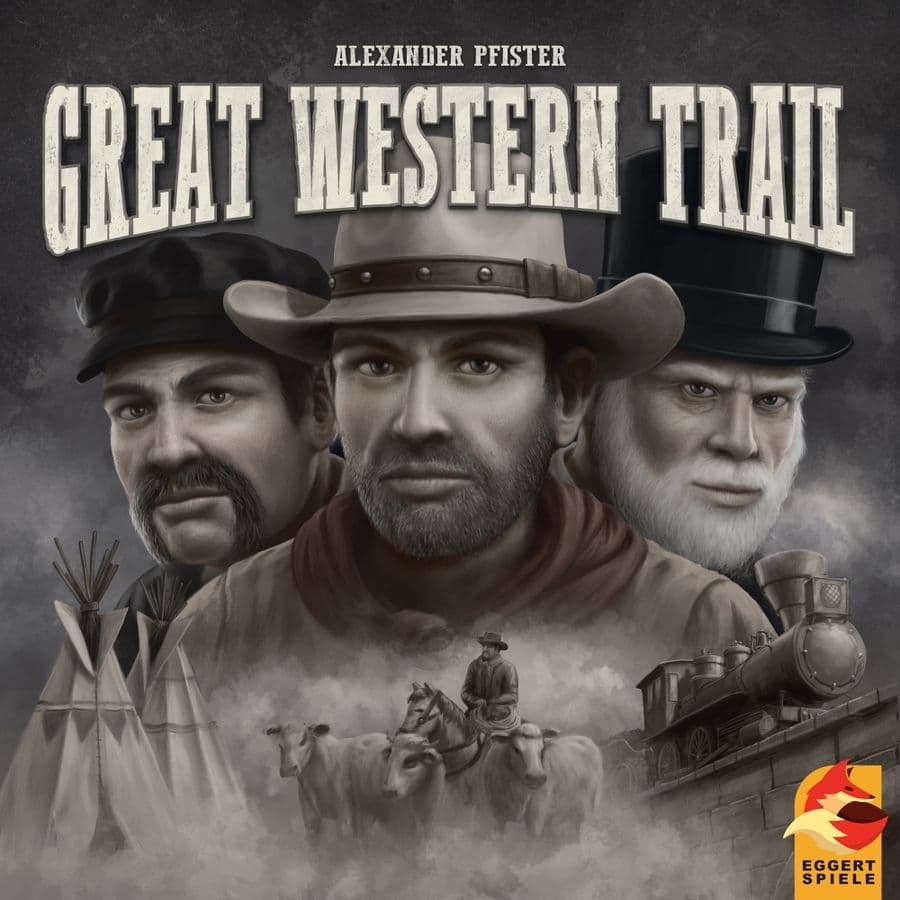
RANK #19
Embark on an epic cattle drive in Great Western Trail, a highly acclaimed eurogame set against the backdrop of 19th-century America. As astute ranchers, players will guide their herds from the heart of Texas all the way to Kansas City, ultimately dispatching them to distant, lucrative cities across the United States. The ultimate goal is to amass the most victory points by strategically managing your ranch, optimizing your trail, and delivering your prime cattle to become the most renowned cattle baron of the West.
The game masterfully blends multiple interconnected mechanics, creating a rich and dynamic gameplay experience. Players navigate a modular board, moving their cowboy pawn along the trail, activating various action spaces. Core mechanics include hand management, where players strategically collect and play cattle cards to achieve the best possible delivery sets; deck building, as you acquire better cattle throughout the game; and worker placement, hiring essential personnel like cowboys, craftsmen, and engineers to enhance your actions and expand your capabilities. The strategic movement of your train also plays a crucial role, unlocking new opportunities and mitigating hazards.
Great Western Trail is beloved for its exceptional strategic depth, emergent gameplay, and immense replayability. The intricate web of scoring opportunities—from cattle deliveries and building construction to hazard removal and worker specialization—provides players with significant freedom to explore diverse strategies. The constant tension between pushing your luck on a long cattle drive and meticulously optimizing your trail, combined with the elegant integration of its core mechanisms, offers a uniquely satisfying and engaging challenge that has cemented its status as a modern classic among board game enthusiasts.
m⚖️ N/A
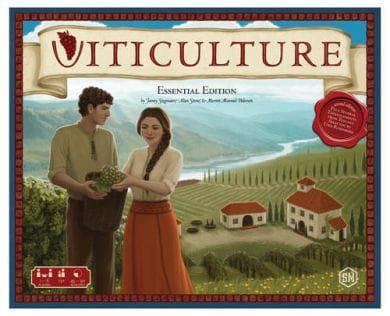
RANK #44
Viticulture: Essential Edition is a strategic game where 2-3 players take on the role of vintners, managing their vineyard and producing wine to sell at market. The goal is to accumulate the most victory points by harvesting grapes, creating blends, and selling your wines. This game plays out over multiple seasons, with each season bringing new challenges and opportunities. Players must balance the demands of grape production, fermentation, and sales while also managing their resources and optimizing their strategies.
2-3 30m⚖️ 3.0
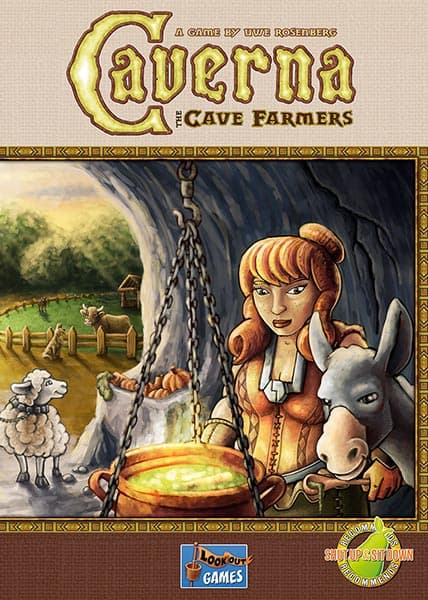
RANK #62
In "Caverna: The Cave Farmers," players step into the sturdy boots of a small dwarf family carving out a living within a mountain. As a spiritual successor to the designer's acclaimed game *Agricola*, Caverna expands upon the core worker-placement formula with a greater sense of freedom and discovery. Your goal is to develop the most prosperous homestead over twelve rounds of play. This is measured in victory points, awarded for the size of your family, the livestock you've raised, the crops you've harvested, precious gems you've mined, and the unique furnishings you've installed in your ever-expanding cave network. Success requires a delicate balance between cultivating the forest on one side of your player board and excavating the mountain on the other, transforming a humble hovel into a thriving underground domain.
The game's engine is driven by a classic worker-placement mechanism. Each round, players take turns placing their dwarf tokens on a central board of action spaces. These actions allow you to gather essential resources like wood and stone, dig new tunnels and caverns in your mountain, or clear forests to create fields and pastures. As the game progresses, new and more powerful action spaces become available, escalating the strategic possibilities. Notable mechanics include raising a variety of animals—sheep, donkeys, boars, and cattle—which breed during harvest phases, and forging ore into weapons. These weapons equip your dwarves for expeditions, a key feature where they venture forth to gain a diverse range of resources and even new board components, offering an alternative path to prosperity away from the competitive main action spaces. Throughout this, you must also manage your food supply to feed your growing family at the end of key rounds, a central puzzle that demands foresight and efficient planning.
"Caverna: The Cave Farmers" is beloved for its 'sandbox' nature, offering a vast and less restrictive strategic landscape compared to its predecessors. While the pressure to feed your family remains, the options for generating food and victory points are abundant, empowering players to pursue many different viable strategies. This freedom makes each game feel like a unique puzzle. Players can become master farmers, expert miners who outfit their caves with dozens of unique furnishing tiles for powerful bonuses, or intrepid adventurers who rely on expeditions for their wealth. The sheer variety of room tiles and strategic paths ensures immense replayability, inviting players back to explore new ways to build their perfect dwarven home. It is a deeply rewarding, medium-to-heavyweight experience for gamers who relish complex engine-building and optimizing their own personal tableau.
1-7 120m⚖️ 3.8
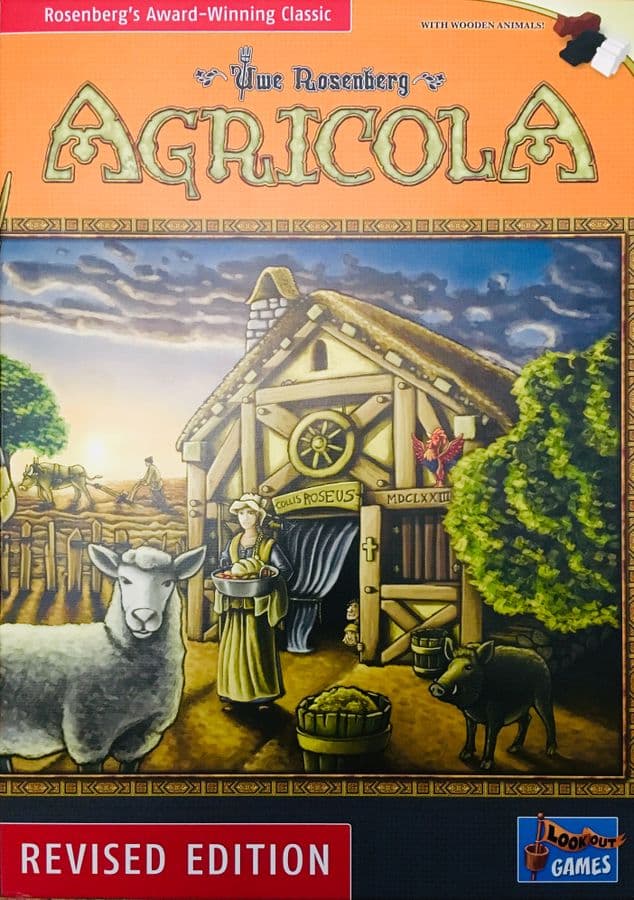
RANK #63
Agricola
2007In Agricola, players step into the well-worn boots of a 17th-century farming family, starting with little more than a spouse and a two-room wooden hut. The singular goal is to cultivate the most prosperous and well-rounded homestead over 14 rounds of play. This isn't just about accumulating wealth; it's about survival and balanced development. Victory points are awarded for a diverse farm that includes plowed fields, various crops, fenced pastures, different types of livestock, and an expanded family living in an upgraded home. The game masterfully punishes over-specialization, penalizing players for neglected areas of their farm, ensuring that true prosperity comes from being a jack-of-all-trades.
The game's engine is driven by a tense worker placement mechanism. Each round, players take turns placing their limited family members on action spaces to gather resources, build improvements, or grow their family. Since each action space can only be used once per round, players are in constant, indirect competition for critical actions like collecting wood or plowing a field. As the game progresses, new, more powerful actions become available, broadening strategic possibilities. This steady development is punctuated by six harvest phases, where the true pressure of Agricola is felt. During a harvest, you reap what you've sown, your animals may breed, but most importantly, you must feed your family. Failing to produce enough food forces a player to take a "Begging" card, which carries a steep point penalty, creating a persistent, challenging tension between expanding your farm and simply providing for your household.
Agricola's enduring appeal lies in this brilliant balance of long-term strategic planning and short-term tactical necessity. The struggle to feed your family is a constant, pressing puzzle that forces difficult decisions every single round. Its depth and replayability are legendary, largely due to the massive decks of Occupation and Minor Improvement cards dealt to each player. These cards provide unique abilities and scoring opportunities, ensuring no two games ever feel the same and allowing for countless strategic pathways. It is this combination of a deeply thematic, relatable struggle and a highly rewarding, complex strategic framework that has cemented Agricola's status as a masterpiece of the Eurogame genre and a benchmark for worker placement games.
1-5 90m⚖️ 3.6
BoxNo Cover Art
RANK #66
Obsession
2018Obsession is a game where players take on the roles of wealthy collectors, each vying to amass the most valuable collection of rare and exotic items. The game's goal is simple: be the first player to collect three 'Obsessions' - highly prized artifacts that are worth a fortune. However, the journey to achieving this goal is far from straightforward.
Each player starts with a set amount of money and a small collection of items. On their turn, they can choose to either buy new items at auction or sell existing ones for profit. The twist in Obsession lies in its unique 'Obsession' mechanism, where players can focus on collecting specific types of items, such as art, antiques, or even rare books.
As players collect more items, the game's tension builds up. Players must carefully manage their finances and make strategic decisions about which items to buy and sell. The game also features a 'Reputation' system, where players earn reputation points for collecting rare and valuable items. This adds an extra layer of strategy, as players must balance their desire to collect Obsessions with the need to maintain a good reputation.
One of the unique aspects of Obsession is its high replayability. The game comes with a variety of item cards, each with its own value and rarity. Players can also create their own custom item cards, adding an extra layer of depth to the game. This means that no two games are ever the same, making Obsession a great choice for players who enjoy strategic gameplay and variety.
Overall, Obsession is a game that will appeal to fans of strategy and collection-building games. Its unique mechanics and high replayability make it an excellent addition to any board game collection.
2-4 60m⚖️ 3.5
RANK #80
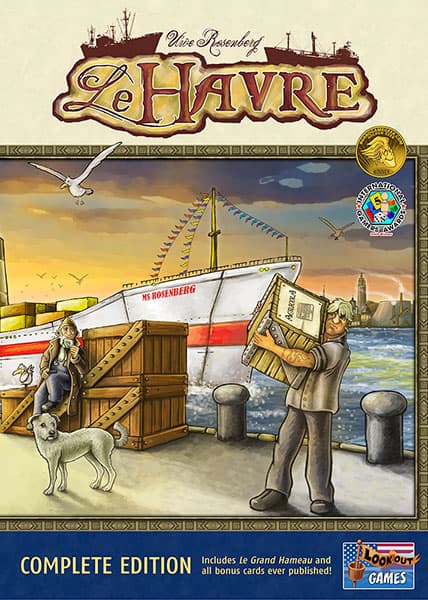
Le Havre
2008In "Le Havre," the celebrated design from Uwe Rosenberg, players are transported to the burgeoning port city of Le Havre in northwestern France. As magnates of the shipping industry, players compete to amass the greatest fortune. This is not achieved through simple commerce alone, but by strategically developing the city's infrastructure and managing a complex web of resources. The ultimate goal is to end the game with the highest net worth, a sum of your cash reserves plus the value of the buildings and ships you've constructed. The game challenges you to balance short-term gains with long-term investments, building a powerful economic engine that can outpace your rivals in this bustling harbor town. It's a deep and rewarding experience for those who enjoy meticulous economic planning and optimization.
The gameplay in "Le Havre" is elegantly structured around a two-part turn. First, goods are added to the offer spaces, creating an ever-changing marketplace. Then, the active player must choose one of two primary actions: either take all goods of a single type from an offer space, or utilize one of the many buildings on the board. Buildings are the heart of your strategy, enabling you to transform raw materials like fish and wood into more valuable processed goods, such as smoked fish or charcoal. This process of creating production chains is a classic engine-building challenge. A fascinating layer of player interaction emerges from building ownership; while any player can use any building, they must pay a fee to the owner, creating a dynamic flow of capital and forcing difficult choices about which actions are most profitable. Furthermore, players must acquire ships not just for their value, but to generate the food required to feed their workers at the end of each round, with failure resulting in costly loans.
"Le Havre" is beloved by strategy gamers for its immense strategic depth and the satisfying feeling of building an efficient economic machine from the ground up. The tension between expanding your industrial capabilities and meeting the recurring demand for food creates a compelling puzzle that requires constant foresight and adaptation. Unlike many other worker placement games, the core action is singular—you move your one worker pawn—which makes each decision incredibly significant. The indirect player interaction, where you must weigh the benefit of using an opponent's building against the cost of paying them, is a masterstroke of design that keeps all players engaged. The game's variable building display ensures high replayability, as the path to victory changes with each session. For players who relish a heavy, brain-burning economic simulation with tight resources and rewarding long-term planning, "Le Havre" stands as a monumental achievement in the genre.
1-5 150m⚖️ 4.1
BoxNo Cover Art
RANK #84
Agricola is a farming-themed strategy board game where players take on the role of farmers in rural Germany during the late 16th century. The goal is to build and manage their farm, collecting resources, and constructing buildings to support their family's growth. Players must balance resource management with long-term planning, as they strive to become the most successful farmer in the region.
The game features a unique worker placement mechanic, where players assign their farmers to various tasks such as plowing fields, harvesting crops, or tending to animals. This mechanic allows for a high degree of flexibility and strategy, as players must carefully plan their actions to maximize their resource collection and building construction. Additionally, the game includes a variety of buildings and improvements that can be constructed on the farm, each with its own unique benefits and requirements.
One of the key aspects of Agricola is its thematic depth. The game's designers have meticulously researched the period and included many historical details to create an immersive experience for players. From the types of crops grown in different regions to the social dynamics between farmers, every aspect of the game has been carefully crafted to transport players to rural Germany during this time.
Agricola is a highly strategic game that requires careful planning and resource management. Players must balance short-term needs with long-term goals, making it an engaging experience for fans of strategy games.
1-4 60m⚖️ 3.5
BoxNo Cover Art
RANK #85
Endeavor: Deep Sea is an acclaimed mid-weight strategy Eurogame that submerges players into the world of oceanic research. Each participant takes the helm of a burgeoning research institute, tasked with the grand ambition of exploring the planet's final frontier. The primary objective is to earn prestige by conducting groundbreaking research, discovering new underwater locations, and championing marine conservation. Success requires a delicate balance between expanding your institute's scientific capabilities and making a tangible impact on the shared seascape. Recognized with the prestigious Kennerspiel des Jahres award, the game challenges players to think strategically about sustainable development and the preservation of delicate aquatic ecosystems, making every decision impactful.
The gameplay unfolds over six rounds in a structured, yet dynamic, sequence. Each round begins with a Preparation Phase, where players bolster their operations by recruiting specialists like divers and scientists, gaining action discs that fuel their turns, and readying their existing team for the tasks ahead. This flows into the Action Phase, where players take turns spending their discs to activate specialists and perform one of five key actions. These include 'Travel' to move a submarine across the modular board, 'Sonar' to discover and place new ocean tiles, 'Dive' to collect valuable research tokens, 'Journal' to acquire cards with endgame scoring goals, and 'Conservation' to protect marine life for various rewards. Players also contribute to a communal "Impact Board," which provides immediate bonuses and influences final scoring.
What makes Endeavor: Deep Sea so compelling is its remarkable blend of accessibility and strategic depth. The game’s unique appeal stems from its significant replayability, driven by a modular board that ensures no two expeditions are the same and ten distinct missions that alter starting conditions and objectives. Its flexible design supports competitive, cooperative, and solo play, making it a versatile choice for any gaming group. The central tension between building your institute’s 'engine'—improving its range and capabilities—and using those abilities to score points on the board creates a deeply engaging puzzle. The strong thematic integration, where every action feels connected to the narrative of deep-sea exploration, elevates the experience from a simple abstract puzzle to a memorable aquatic adventure.
1-4 90m⚖️ 3.3
BoxNo Cover Art
RANK #99
Fields of Arle
2014Fields of Arle immerses you in the challenging yet rewarding life of a farming family in 18th-century East Frisia. In this masterwork by acclaimed designer Uwe Rosenberg, players are tasked with developing a modest plot of land into a thriving and prosperous homestead. Over the course of four and a half years, you will shape the very landscape, manage livestock, and craft valuable goods. The game is a deeply thematic and strategic experience where the ultimate goal is to accumulate the most victory points by building a diverse and efficient agricultural engine, demonstrating your family's success through the tangible growth of your farmstead and the wealth of goods you've produced.
The gameplay is centered around a robust worker placement system that unfolds over nine rounds, each representing a half-season of either summer or winter. Each season offers a distinct set of actions, from plowing fields and shearing sheep in the summer to breeding animals and weaving cloth in the winter. Players strategically place their family members on action spaces to manage every aspect of their farm. This includes draining moors to create new pastures, building dikes to protect land from floods, raising cattle and horses, and constructing an array of buildings that provide crucial new abilities. A clever mechanic allows a player to perform an off-season action once per round, but this flexibility comes at the cost of giving up the first-player advantage, adding another layer of tactical decision-making.
What makes Fields of Arle a beloved classic among strategy gamers is its incredible depth and the sandbox-style freedom it offers. It is a quintessential heavy Eurogame, specifically tailored for a one or two-player experience, complete with a rich and engaging solo mode. There is no single prescribed path to victory; players can focus on animal husbandry, crop cultivation, trade, or building construction, leading to immense replayability as you explore different strategies with each playthrough. The satisfaction of watching your personal player board transform from barren land into a complex, bustling farm is a core part of its appeal, offering a deeply rewarding journey for those who enjoy intricate, low-interaction engine-building puzzles.
1-2 90m⚖️ 3.9

RANK #126
Carnegie
2022Step into the shoes of an aspiring magnate during America's Gilded Age in *Carnegie*, a board game inspired by the legendary industrialist and philanthropist Andrew Carnegie. In this medium-heavy economic Eurogame, you are tasked with building a business empire from the ground up. Over the course of 20 rounds, you will manage employees, develop new technologies, invest in real estate across the nation, and expand your transport network. The ultimate goal is not just to be the wealthiest, but to build the most prestigious enterprise. Victory is determined by points earned through savvy business growth, strategic construction, and, crucially, generous contributions to society, proving that true success lies in both industry and philanthropy.
The gameplay is driven by a clever and highly interactive action-selection mechanism. Each round, the active player chooses one of four actions corresponding to a department in their company, and critically, all other players must also perform that same action. The 'Human Resources' department allows you to move your employees on your personal player board to activate different areas for future turns. 'Management' is used to acquire essential goods and money. 'Construction' lets you build new projects and expand your company's network on the main game board, while 'Research & Development' advances your company's technology, unlocking powerful new abilities and scoring paths. This system forces constant engagement and requires you to strategically anticipate your rivals' needs and intentions while optimizing your own.
What truly sets *Carnegie* apart is its brilliant integration of business acumen with philanthropic duty. Throughout the game, players are presented with opportunities to donate their wealth to charitable causes. This isn't merely a thematic element; these donations are a core mechanism for unlocking significant end-game scoring objectives. This creates a compelling strategic tension: do you reinvest your profits for immediate expansion and engine-building, or do you sacrifice short-term gains for long-term prestige and victory points? This dual focus, combined with the shared action system that ensures no downtime, makes for a deeply rewarding and thinky experience where every decision matters, not just for you, but for everyone at the table.
1-4 120m⚖️ 4.1

RANK #130
Galactic Cruise
2025Galactic Cruise invites players to the helm of a burgeoning interstellar tourism company in a competitive, heavyweight Eurogame experience. You take on the role of a supervisor, vying for the prestigious position of CEO within the galaxy's premier space travel corporation. Your objective is to prove your managerial prowess by accumulating the most victory points. This is achieved by building and operating a fleet of luxurious starships, designing incredible interstellar vacation packages, and attracting wealthy guests from across the cosmos. The game is a test of long-term strategy and economic acumen, where every decision contributes to your corporate legacy. Only the supervisor who can most effectively expand their operations and satisfy the discerning tastes of interstellar travelers will rise to the top of the corporate ladder.
The gameplay is driven by a sophisticated worker placement system set across three distinct 'eras'. Players assign their crew members to action spaces on a dynamic, modular main board to gather resources, acquire advanced blueprints, construct shuttle components, and build crucial developments that link locations and unlock new strategic pathways. A standout feature is the game's interactive 'bumping' mechanism; if you place a worker on an occupied space, the original worker is returned to its owner, who then receives a small income boost. This clever design choice ensures players are never truly locked out of actions, adding a tactical layer to placement decisions. The core loop revolves around assembling and launching your custom-built shuttles. Once launched, a crew member becomes a pilot, journeying to various destinations to reap valuable rewards while players manage a fluctuating resource market and invest in new technologies to gain a competitive edge.
What makes *Galactic Cruise* a compelling title for seasoned gamers is its deep, multi-layered strategic puzzle. The game rewards careful planning and efficient engine-building, offering immense satisfaction as you see your tourism empire grow from a small operation into a galactic powerhouse. The modular board ensures high replayability, as the available actions and connections will shift with every game. Renowned artist Ian O'Toole's distinctive visual style brings the futuristic setting to life, complementing the high-quality production. The clever worker-bumping mechanic fosters a healthy level of player interaction that feels engaging rather than punitive, keeping all players involved throughout the game's considerable playtime. It's a challenging and rewarding journey for those who relish complex economic simulations and the thrill of building a successful enterprise among the stars.
1-4 120m⚖️ 4.0

RANK #132
Keyflower
2012Keyflower is a celebrated strategic eurogame where players guide their fledgling settlements through four distinct seasons, from the promise of spring to the final scoring in winter. The ultimate goal is to amass the most victory points by building a prosperous and efficient village. This is achieved by strategically bidding on and acquiring new hexagonal village tiles, generating valuable resources like wood, stone, and iron, and expanding your workforce of colorful 'keyples'. Each player begins with a home tile and a small group of workers, but through clever play, they will expand their domain, upgrade buildings, and fulfill the scoring conditions presented by the lucrative winter tiles, which are only revealed at the game's outset, forcing players to plan their long-term strategy from the very first turn.
The game's brilliance lies in its seamless integration of several core mechanics, most notably worker placement and auctioning. The keyples are a dual-use component: they serve as both the currency for bidding on new tiles and the workers needed to activate the special abilities of those tiles. This creates a wonderfully tense decision space each turn. Do you commit your workers to a high-stakes bid for a powerful tile your opponent wants, or do you use them to activate buildings in your village—or even an opponent's village—to gather crucial resources? Actions are color-dependent; placing a worker on a tile requires matching its color if it's the first one there, after which any player can add more workers of that same color to take the same action, creating a dynamic and highly interactive system where timing and worker management are paramount.
Keyflower is beloved by strategy gamers for its depth, high player interaction, and immense replayability. The tension of the auction system, where bids are made publicly behind a player's screen, is a constant source of excitement and bluffing. The ability to use tiles in your opponents' villages (by sending one of your keyples to them, which they then get to keep) ensures that players are always engaged with what others are doing. No two games feel the same, as the selection and order of tiles that appear each season are randomized. This variability demands flexible thinking and rewards players who can build a synergistic engine to capitalize on the opportunities presented, making each journey from spring to winter a unique and deeply satisfying puzzle to solve.
2-6 105m⚖️ 3.4
Showing 1 to 12 of 35 games