Variable Player Powers Games
Browse all Variable Player Powers board games in the Meeple Pulse database.
Styles
Themes
AbstractAdventureAncientAnimalsArtBusinessCard GameCo-operativeComic BookCooperativeCrimeEconomicEnvironmentalismExplorationFantasyHistoricalHorrorHumorIntrigueLiteraryMagicMarvelMedievalModernMuseumMysteryMythologyNatureNauticalPoliticalPress Your LuckSatireSci-FiSocial CommentarySocial InteractionSpaceSuperheroesThematicTravelWarWesternWord-Guessing
Mechanics
3D PlacementActingAction / DexterityAction DraftingAction Point AllowanceAction Point Allowance SystemAction Point SystemAction PointsAction ProgrammingAction QueueAction RetrievalAction SelectionAction/EventAlliancesAlternate ActivationApp-AssistedApp-DrivenArea ControlArea InfluenceArea MajorityArea Majority / InfluenceArea MovementArgumentationAsymmetricAsymmetric FactionsAsymmetric GameAsymmetric PowersAsymmetrical PowersAuction & BiddingAuction/BiddingAuctioningBag BuildingBettingBetting and BluffingBetting and WageringBetting and WagersBiddingBingoBlind BiddingBluffingCampaign / Battle Card DrivenCampaign / LegacyCampaign / Legacy GameCampaign / Mission-basedCampaign / ScenariosCampaign GameCampaign PlayCard DraftingCard DrawingCard DrivenCard Driven ActionCard Driven CombatCard Driven Dice AllocationCard Driven MovementCard ManagementCard PlayCard Play / Hand ManagementCard Play Conflict ResolutionCard SheddingCard-Driven MovementCharacter CreationCharacter ProgressionChit-Pull SystemCo-op PlayCo-operative GameCo-operative PlayCode-breakingCombat ResolutionCombo ChainCommand CardsCommodity SpeculationCommunication LimitsContract FulfillmentContractsCooperative GameCooperative GameplayCooperative PlayCooperative Trick-takingDebateDeck BuildingDeck ConstructionDeck, Bag, and Pool BuildingDeck-BuildingDeductionDexterityDice DraftingDice PlacementDice RollingDiplomatic InfluenceDraftingDynamic Battle SystemEnclosureEnd Game BonusesEngine BuildingEngine-BuildingEscape RoomEvent DrivenExplorationFarmingFlip and WriteFollowFollow ActionGrid CoverageGrid MovementHand ManagementHex-and-CounterHexagon GridHidden MovementHidden RolesI Cut You ChooseIncomeInfluence / Area MajorityLadder ClimbingLegacyLegacy ElementsLegacy GameLegacy SystemLimited CommunicationLine DrawingLine of SightMancalaMap MovementMarketMarket DraftingMarket ManipulationMarket MechanicMarket SpeculationMatchingMeasurement MovementMemoryMission ObjectivesModular BoardModular Board ConstructionMovement TemplatesMulti-Use CardsMulti-use CardsMultiple ScenariosMust FollowNarrative ChoiceNarrative Choice / ParagraphNegotiationNegotiation MechanicsNetwork & Route BuildingNetwork BuildingNetwork and Route BuildingOne vs ManyOne vs. ManyOpen DraftingPaper-and-PencilPartnershipsPattern BuildingPattern RecognitionPick-up and DeliverPlayer EliminationPlayer InteractionPlayer JudgePoint SaladPoint to Point MovementPolyominoesPush Your LuckPush-Your-LuckPuzzlePuzzle-LikePuzzle-SolvingRaceReal-TimeRecipe FulfillmentResource ManagementRole PlayingRole SelectionRoll / Spin and MoveRondelRoute BuildingRoute-BuildingRoute/Network BuildingSanity SystemScenario / Campaign PlayScenario / Mission / Campaign GameScenario / Mission FunctionSecret Unit DeploymentSemi-Cooperative GameSet CollectionSheddingSimulationSimultaneous ActionSimultaneous Action SelectionSimultaneous Hidden AllocationSocial DeductionSocial InteractionSolo / Solitaire GameSpace ExplorationStat Check / Skill CheckStock HoldingStorytellingStrategic PlanningTableau BuildingTactical Decision-MakingTake ThatTargeted CluesTeam PlayTeam-Based GameTeam-Based GuessingTeamworkTech TreesTech Trees / Tech TracksTechnology & Armament TracksTechnology TreeTension & Aggression TracksTile DraftingTile LayingTile PlacementTime TrackTime TravelTower DefenseTrack MovementTradingTrick-takingTug of WarTurn Order: PassTurn Order: Stat-BasedUnit PlacementVariable Phase OrderVariable Player PowersVariable Set-upVariable SetupVictory Point TracksVotingWord AssociationWord GameWord GuessingWord-GuessingWord-guessingWordplayWorker Placement
RANK #225
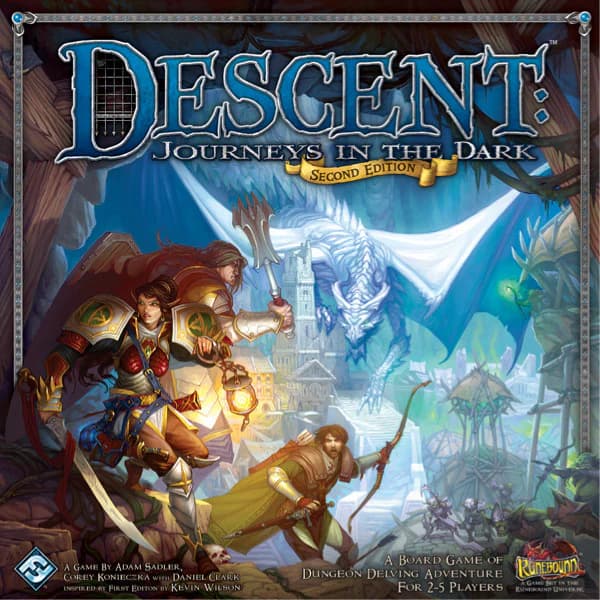
Descent: Journeys in the Dark (Second Edition) is a seminal board game that immerses players in the high-fantasy world of Terrinoth for an epic, one-versus-many dungeon-crawling adventure. In this asymmetrical contest, one player assumes the role of the treacherous Overlord, commanding an army of monsters and springing deadly traps from the shadows. The other players (up to four) form a courageous band of heroes, each with unique skills and abilities, who must work together to complete the objectives of a given quest. The game is scenario-driven, with each quest forming a chapter in a larger, branching campaign narrative. Success or failure in one encounter can have tangible consequences on the next, creating a dynamic and evolving story where the heroes strive for victory against the Overlord's nefarious plans.
The gameplay unfolds over a series of rounds, with heroes taking their turns first. Each hero can perform two actions, such as moving across the modular, tile-based map, attacking a monster, or using a special skill. Combat is a highlight of the experience, resolved through a custom dice-pool system. Players roll dice determined by their character's equipment and abilities, looking for symbols representing damage, range, and special 'surges.' These surges can be spent to trigger powerful effects, adding a layer of tactical decision-making to every attack. After the heroes have acted, the Overlord takes their turn, playing cards from a unique deck to activate monster groups, summon reinforcements, and unleash unexpected events to wear down the heroes and achieve their own secret objectives.
What makes Descent a beloved classic is its deep sense of progression and the escalating arms race that develops over a campaign. Between quests, both sides grow stronger. Heroes earn experience to learn new skills and spend gold on powerful new weapons and armor, customizing their characters to fit their playstyle. Simultaneously, the Overlord also gains experience, which is used to purchase more potent Overlord cards, unlocking deadlier plots and monsters. This persistent development ensures that the challenge constantly escalates, making each session feel meaningful. The combination of tactical combat, rich character customization, and an emergent, player-driven narrative provides a highly replayable and deeply engaging experience for any group that loves adventure and strategy.
2-5 120m⚖️ 3.2

RANK #226
Return to Dark Tower is a grand, cooperative fantasy adventure and a modern reimagining of the iconic 1981 electronic board game. In this app-driven epic, one to four players assume the roles of unique heroes who must unite to save the kingdoms from a great evil that has resurfaced. The central goal is to complete a major objective, which will lure the primary adversary out from the technologically advanced, malevolent tower for a final, decisive confrontation. Players are working against a strict timeline, needing to achieve victory before the end of the sixth in-game 'month'. The path to defeat is multifaceted; the heroes can lose if they run out of time, if the supply of skulls to feed the tower is exhausted, or if any single hero succumbs to overwhelming corruption, making every decision a tense and critical calculation.
The gameplay unfolds over a series of hero turns, each structured into distinct phases. A player's turn begins with an optional, character-specific 'Banner Action', followed by movement and a choice of one heroic action: battling monstrous foes, cleansing corrupting skulls from the land's buildings, or undertaking vital quests. Afterward, heroes can reinforce their strength by utilizing the special ability of the building they occupy to gain resources. The game's centerpiece is the towering electronic spire which, in conjunction with a companion app, dictates the flow of the adventure. At the conclusion of each turn, a player must drop a skull into the tower, which may then dispense them back onto the board, spreading corruption. The integrated app manages all quests, events, and combat encounters, ensuring a dynamic and unpredictable challenge every time you play.
Return to Dark Tower commands an impressive table presence, with its massive, interactive tower immediately drawing players into its world. It masterfully blends the nostalgia of the original classic with sophisticated modern mechanics, creating an experience that feels both familiar and refreshingly new. The game is celebrated for its highly immersive and cooperative gameplay, where teamwork and strategic planning are paramount to overcoming the app-controlled adversary. The constant pressure from the tower and the race against the clock generate a palpable tension that results in truly memorable gaming sessions. For those seeking a different challenge, the game also includes a competitive variant where heroes race to prove their individual worth.
1-4 110m⚖️ 2.6
RANK #228
Cosmic Encounter
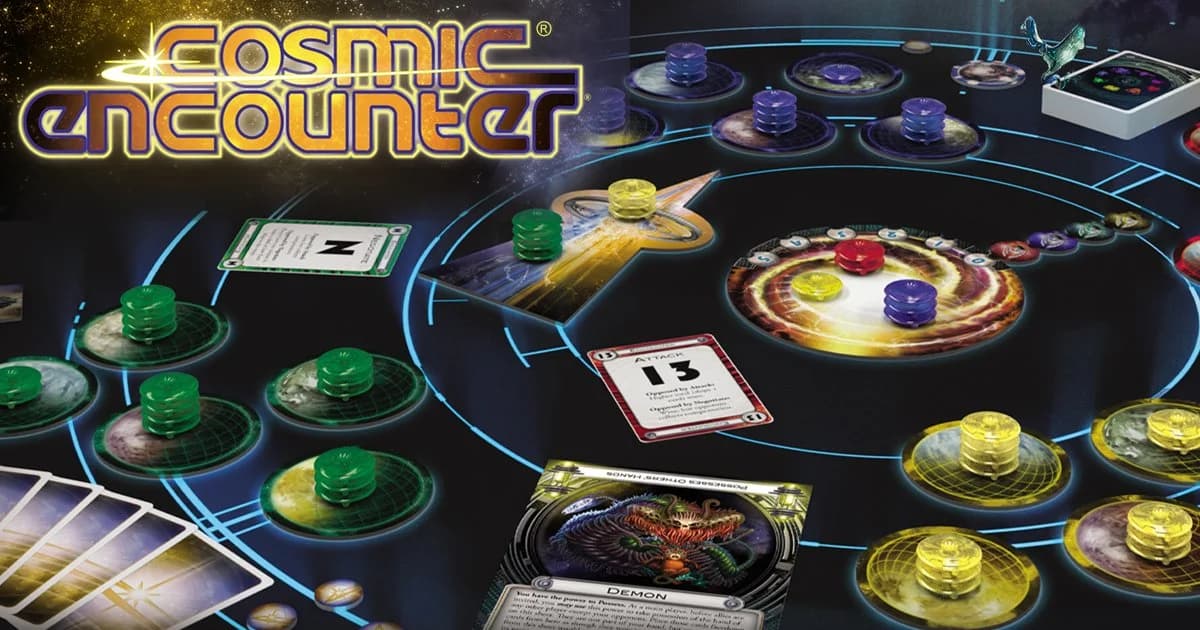
2008Cosmic Encounter is a legendary board game of galactic conquest where diplomacy is as crucial as military might. In this celebrated 2008 edition from Fantasy Flight Games, players assume the roles of bizarre and powerful alien species, each vying for control of the cosmos. The ultimate objective is simple yet challenging: establish five colonies on planets outside of your own home system. This goal is pursued through a series of 'encounters' with your rivals. The game masterfully blends straightforward rules with immense strategic depth, creating an environment where shifting alliances, cunning bluffs, and unexpected betrayals are not just possible, but are the very heart of the experience.
The gameplay revolves around a structured turn sequence where an active player, the 'offense', is directed by the Destiny Deck to engage another player, the 'defense'. The conflict begins as the offense commits ships to a target planet, but the situation quickly escalates as both sides can invite other players to join their cause as allies. The encounter's resolution hinges on the simultaneous reveal of a single card from each primary player's hand. These cards can be numbered Attack cards, which combine with ship counts to determine a victor, or a Negotiate card. Playing a Negotiate against an Attack results in an automatic loss, but the loser gets to demand compensation. If both players attempt to negotiate, they have a mere minute to strike a deal, such as trading cards or even allowing a peaceful colonization, before both suffer a penalty.
What elevates Cosmic Encounter to its classic status is the staggering variety of unique alien powers that each player wields. These abilities are designed to fundamentally break the game's core rules in some spectacular way, ensuring that no two games ever feel the same. One alien might be able to steal cards from the victor of a battle, another might always win tied conflicts, and a third might force players to play with their hands revealed. This asymmetry creates a dynamic and chaotic puzzle of interacting abilities, fostering immense replayability and forcing players to adapt their strategies on the fly. It is this brilliant combination of negotiation, tactical card play, and wildly unpredictable powers that makes Cosmic Encounter an enduring masterpiece of interactive tabletop gaming.
3-5 90m⚖️ 2.5
BoxNo Cover Art
RANK #241
Horrified
2019Horrified is a cooperative board game where players work together to defend their town against the classic Universal movie monsters. The game takes place in a small town plagued by not one, but seven of the most terrifying creatures from horror history. Players must use their unique skills and abilities to defeat each monster, while also working together to protect the town's inhabitants. With its simple yet engaging gameplay, Horrified is an excellent entry-level cooperative game that appeals to both adults and children alike. The game's high replayability value comes from the different strategies required for each monster, making it a great choice for players who enjoy cooperative games with a unique twist.
The game's components are well-designed, with intricately sculpted miniatures and a beautifully illustrated board. The rules are clear and concise, making it easy to learn and play. With its short playing time of approximately 60 minutes, Horrified is an excellent choice for families or groups of friends looking for a fun and challenging game.
One of the standout features of Horrified is its ability to create a sense of urgency and tension among players. As the monsters wreak havoc on the town, players must work together to defeat them before it's too late. This creates a thrilling experience that keeps players engaged and invested in the game. Additionally, the game's theme and artwork are well-executed, immersing players in the world of classic horror movies.
Overall, Horrified is an excellent choice for anyone looking for a cooperative board game with a unique twist. Its engaging gameplay, high replayability value, and well-designed components make it a great addition to any game collection.
1-5 60m⚖️ 2.0
RANK #252
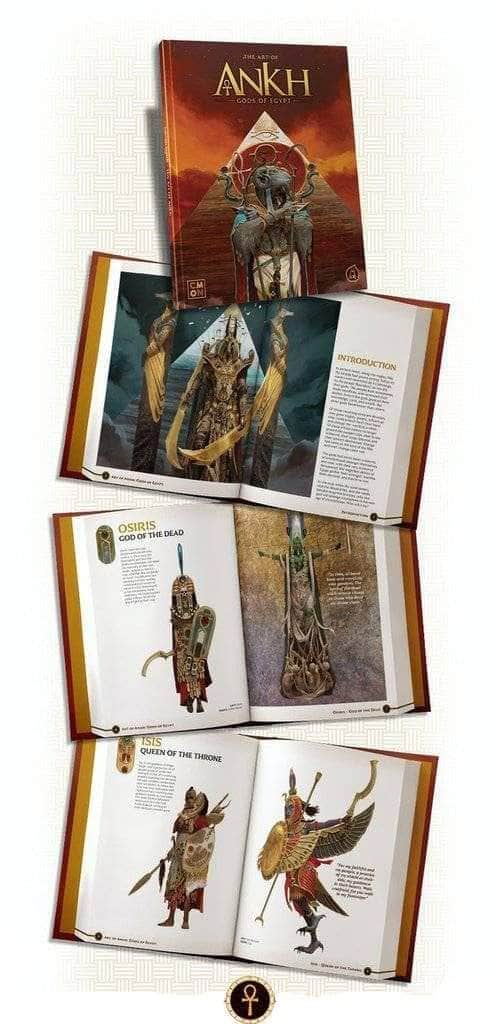
Ankh: Gods of Egypt transports players to a mythical past where the old ways are fading and the people of Egypt are beginning to favor a single, monotheistic religion. In this fiercely competitive game, 2 to 5 players take on the roles of legendary Egyptian deities like Ra, Anubis, and Isis, each struggling for dominance and survival. The ultimate goal is to become the last god standing, the sole object of worship for all of Egypt. This is achieved by accumulating Devotion, the game's victory points, which are earned through strategic control of monuments, demonstrations of power in battle, and the loyalty of your followers. As the game progresses, the stakes get higher, and gods who fall too far behind in Devotion face the ultimate threat: being forgotten by history forever.
The gameplay is driven by an elegant and highly tactical action selection system. On their turn, a player performs one or two of four possible actions—moving their figures, summoning units, gaining followers, or unlocking unique Ankh powers—and advances a corresponding marker on a shared event track. When a marker reaches the end of its path, a game-altering event is triggered for all players. These events include claiming control of powerful monuments, strategically dividing the board into new regions with camel caravans, and, most importantly, initiating Conflict. Combat is a deterministic affair, completely free of dice rolls. Players commit battle cards from their hand and sum the strength of their god and warriors in a region to determine the victor. A truly unique and dramatic feature for games with three or more players is the Merge event, where the two players with the lowest Devotion scores are forced to combine their powers, becoming a single, more powerful entity for the remainder of the game.
What makes Ankh: Gods of Egypt so compelling is its blend of pure strategy and intense player interaction. The absence of randomness in combat means every victory and defeat rests squarely on the players' shoulders, rewarding careful planning and clever card play. The shared action track creates a fascinating puzzle, as every action you take brings the game closer to an event that might benefit your opponents more than you. The game is a constant battle of wits, where you must anticipate your rivals' moves while advancing your own position. The god-merging mechanic is a brilliant twist, ensuring that no player feels completely out of the running and introducing a surprising cooperative dynamic into a cutthroat competitive game. It is a stunning conclusion to a celebrated trilogy of mythology-themed games, offering a deep, rewarding, and unforgettable strategic experience.
2-5 90m⚖️ 3.1

RANK #274
Set amidst the treacherous, sand-swept dunes of Frank Herbert's iconic universe, 'Dune: War for Arrakis' is a sprawling, deeply thematic strategy wargame that condenses a planetary conflict into an accessible, yet tactically rich experience. Serving as a spiritual successor to the acclaimed 'War of the Ring', this asymmetrical duel pits the ruthless House Harkonnen—backed by the Padishah Emperor's fierce Sardaukar—against the beleaguered House Atreides and their fierce Fremen allies. The ultimate goal depends entirely on the faction you command. The oppressive Harkonnens seek to secure an iron-fisted grip on the planet by achieving Supremacy Points, actively hunting down hidden Fremen Sietches while desperately striving to meet aggressive spice harvesting quotas. In stark contrast, the Atreides player fights a desperate guerrilla war to achieve Prescience Points, completing secret, narrative-driven objectives that echo the pivotal events of the classic novels.
At the mechanical core of this grand desert conflict lies a brilliant Action Dice system that drives every strategic decision. Each round, players roll a pool of custom, faction-specific dice that dictate the potential actions available to them, ranging from deploying legions and moving vehicles to initiating massive combat engagements and drawing powerful cards. House Harkonnen operates with overwhelming military force and aerial dominance through Carryalls and Ornithopters, but they are constantly burdened by the ticking clock of spice quotas. Failing to appease the Spacing Guild and the Imperium with adequate spice drastically reduces their future dice pool. Meanwhile, the Atreides player relies heavily on the environment, using 'Wormsign' tokens to obscure their troop movements and suddenly summoning terrifying Sandworms to swallow enemy harvesters whole. This creates a relentless cat-and-mouse dynamic where brute force meets cunning desert power.
Fans of heavy, narrative-driven strategy games have quickly fallen in love with 'Dune: War for Arrakis' because it masterfully balances thematic immersion with surprisingly streamlined mechanics. While it shares the robust DNA of its predecessors, it effectively strips away the overly burdensome rules to deliver a relentlessly paced 'dudes-on-a-map' conflict. The immense asymmetry guarantees that playing each side feels like an entirely distinct board game, offering incredibly high replay value. Whether you are leading elite legions to crush rebellions or riding the colossal makers into the heart of an Imperial stronghold, the game perfectly captures the lethal, high-stakes political warfare that defines the Dune franchise.
1-4 120m⚖️ 3.8
RANK #280
Legendary: A Marvel Deck Building Game is a prominent entry in the deck-building genre that brings the Marvel Universe to life on the tabletop. In this experience, players take on the role of SHIELD commanders tasked with assembling a powerful team of iconic heroes to thwart the nefarious plans of a Mastermind. The central goal is collective survival; players must work together to defeat the primary villain four times before they can complete a specific, game-altering Scheme. Unlike traditional deck builders where you simply compete for the highest score, Legendary introduces a looming threat that can cause everyone to lose if the city falls into chaos or the villain's plot reaches its conclusion.
The game utilizes a modular setup, meaning no two sessions are exactly alike. Players select a specific Mastermind like Magneto or Dr. Doom, a Scheme that sets the rules for the villain's victory, and a curated pool of hero decks. The core loop involves a Villain Phase, where enemies advance through a five-space city track, followed by a Hero Phase. Players start with basic SHIELD agents and must strategically recruit more powerful cards using Recruit Points or strike down foes using Attack Points. Managing these two distinct resources is vital, as players navigate the Headquarters (HQ) to draft synergies between characters like the Avengers and the X-Men. Successfully defeating villains and saving bystanders adds to a player's personal victory pile, which serves a dual purpose: it measures individual contribution while the team strives for a shared victory.
What makes Legendary stand out is its semi-cooperative nature. While the primary objective is to stop the Mastermind, the game crowns a single 'most legendary hero' based on the victory points accumulated during play. This creates a fascinating tension between helping the group and optimizing one's own deck for maximum point gain. The highly thematic integration of the Marvel license, featuring comic-accurate artwork and mechanics that reflect hero powers, ensures a high level of immersion. With its vast array of modular combinations and the threat of a board that evolves every turn, the game offers immense replayability. It strikes a balance between being accessible enough for casual fans while offering the strategic depth required to keep seasoned gamers engaged.
1-5 45m⚖️ 2.4

RANK #283
Western Legends
2018Western Legends is a sweeping sandbox experience that transports players into the rugged landscape of the American Old West. Unlike traditional board games with linear objectives, this title offers a sprawling open-world environment where players assume the roles of legendary historical figures like Wyatt Earp, Calamity Jane, or Billy the Kid. The primary goal is to accumulate Legendary Points (LP) through various frontier activities, ultimately carving out a lasting legacy. Whether you choose to walk the path of a righteous lawman or a notorious outlaw, the game adapts to your playstyle, allowing for a personalized journey through its dusty towns and gold-filled hills.
The gameplay loop revolves around a flexible action system where players manage three actions per turn, which can be spent on movement, mining for gold, or engaging in local town activities. One of the most distinctive features is the moral alignment system, tracking players on either the Marshal or Wanted tracks. Law-abiding citizens can earn prestige by arresting criminals, fighting bandits, or driving cattle to the railhead. Conversely, those seeking a life of crime can rob the bank, rustle cattle to the rival ranch, or challenge other players to high-stakes robberies. Conflict resolution eschews dice in favor of a specialized poker deck, where players play cards simultaneously to determine outcomes. This card-based system adds a layer of bluffing and strategic management, mirroring the tension of a real saloon showdown.
What truly distinguishes Western Legends is its immersive freedom and high player interaction. The sandbox nature ensures that no two sessions feel identical, as the board state evolves based on player decisions. Some may focus on the economic engine of gold mining and selling nuggets at the bank, while others might spend their time hunting down 'Wanted' friends to claim bounties. The inclusion of authentic historical figures adds a rich layer of flavor, grounding the mechanical systems in a recognizable period setting. It captures the essence of frontier life, blending strategic depth with cinematic storytelling, making it a favorite for those who enjoy narrative-rich experiences with a competitive edge.
2-6 90m⚖️ 2.7
RANK #285
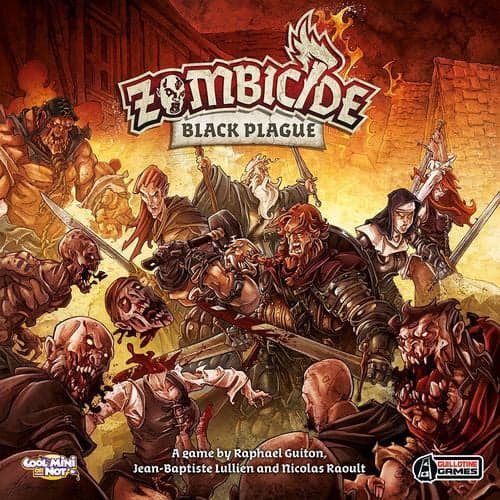
Zombicide: Black Plague reboots the high-octane zombie survival genre by plunging players into a dark, medieval fantasy world. In this cooperative experience, one to six survivors must unite to fend off hordes of the undead summoned by malevolent Necromancers. Unlike its modern-day predecessors, Black Plague introduces a magical twist where steel, sorcery, and shields are the primary tools of survival. The primary objective is to complete specific mission scenarios, which range from retrieving lost artifacts to cleansing infested vaults, all while managing the ever-growing threat of the zombie apocalypse. Each player controls a unique hero, navigating through modular map tiles that represent plagued villages and sinister dungeons.
The gameplay revolves around an intuitive action-point system where survivors spend points to move, attack, or scavenge for gear. As players slay zombies, they gain Adrenaline Points, which allow them to level up and unlock powerful new abilities. However, this progress comes with a catch: the game tracks the party's highest experience level, and as survivors grow stronger, the zombie spawn rates intensify through color-coded danger zones. This creates a tense balancing act where players must scale their power without overwhelming themselves with too many enemies. Unique to this edition are the Necromancers, specialized foes who attempt to escape the board while leaving permanent spawn points in their wake, and the introduction of armor saves, giving players a fighting chance against incoming damage.
Fans of the series praise Black Plague for its streamlined rules and significantly improved component quality, notably the recessed plastic dashboards that keep character cards and pegs securely in place. The shift to a fantasy setting allows for creative weapon combinations, such as magic staves and heavy plate mail, providing a distinct mechanical flavor compared to modern versions. With its high-quality miniatures, tactical depth, and 'beer and pretzels' accessibility, it remains a favorite for groups seeking an epic, narrative-driven challenge. The inclusion of solo rules and a variety of challenging scenarios ensures high replayability, making it a definitive entry in the dungeon-crawl and survival-horror board game genres.
1-6 120m⚖️ 2.5

RANK #286
Deception: Murder in Hong Kong is an immersive social deduction experience that transports players into the heart of a high-stakes criminal investigation. In this tense mystery, one player assumes the role of the Forensic Scientist—a silent gamemaster who holds the objective truth—while others act as Investigators trying to identify the perpetrator hidden among them. However, one individual in the group is the secret Murderer, and in larger games, they may even have an Accomplice to help deflect suspicion. The goal is simple yet challenging: the Investigators must correctly identify two specific cards—the 'Means of Murder' and the 'Key Evidence'—selected by the killer before the trail goes cold.
The gameplay centers on a unique communication loop where the Forensic Scientist is strictly forbidden from speaking or gesturing. Instead, they provide hints by placing bullet markers on abstract Scene Tiles, which represent various aspects of the crime such as the location, the cause of death, or the victim's social state. During a hidden night phase at the start of the game, the Murderer secretly points to their chosen weapon and a piece of evidence. As the investigation progresses over three rounds, the Scientist adds or replaces tiles to refine the group's theories. Each Investigator has only one formal opportunity to 'Solve the Crime.' They must name both cards correctly; a single mistake results in the loss of their badge and their ability to make future official accusations, though they remain active in the group's heated debates.
What makes Deception stand out is its masterful blend of abstract logic and intense social manipulation. Unlike many deduction games that rely solely on bluffing, this title provides a tangible puzzle through visual clues that must be interpreted through the lens of the killer's possible choices. It creates a fascinating dynamic where players must argue over the subjective meaning of tiles while trying to read the body language of their peers. The addition of optional roles like the Witness and Accomplice adds further layers of complexity, requiring players to protect their information sources. It is an ideal choice for large groups because it eliminates player elimination and keeps everyone engaged in a collaborative, yet paranoid, atmosphere where the truth is often hidden in plain sight.
4-12 20m⚖️ 1.6
RANK #292
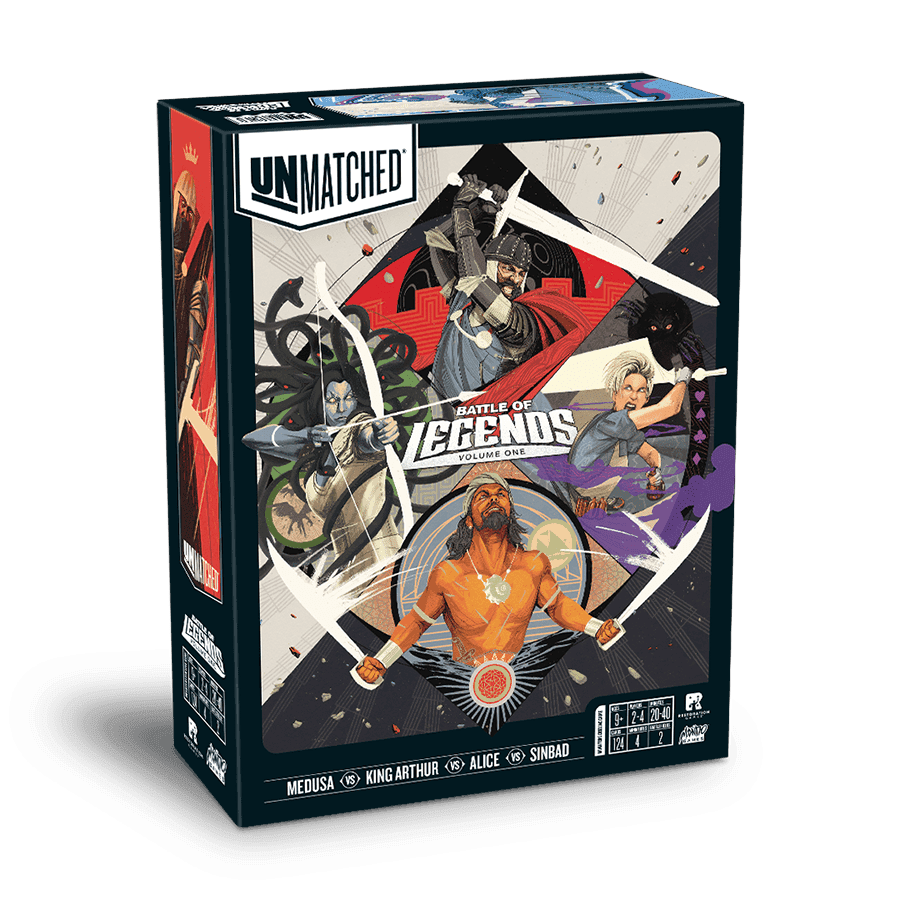
Unmatched: Battle of Legends, Volume One serves as the cornerstone of a widely acclaimed skirmish series, reinventing the tactical combat mechanics originally popularized by the Star Wars: Epic Duels system. This asymmetrical miniature game invites players to pit legendary figures from across folklore, literature, and history against one another in fast-paced duels. Whether it is the mythical Medusa staring down the Victorian Alice or King Arthur clashing with the seafaring Sinbad, the game thrives on the 'what if' scenarios of impossible combat. Each hero is accompanied by unique sidekicks and a specialized deck of cards, ensuring that no two fighters approach the battlefield with the same strategy or strengths.
The gameplay is defined by a 'no-luck' tactical system that replaces traditional dice rolling with strategic card management and precise positioning. On a turn, players must execute exactly two actions, choosing between maneuvering for better positioning, playing powerful utility schemes, or launching aggressive attacks. Movement is governed by a vibrant 'colored zone' system on the board, which simplifies line-of-sight calculations and encourages dynamic kiting or flanking maneuvers. Combat itself is a tense mind game where both the attacker and defender reveal cards simultaneously. Success depends on anticipating an opponent's defense and mastering the complex timing of effects that trigger 'Immediately', 'During Combat', or 'After Combat'. This layered timing system adds significant depth to the seemingly straightforward mechanics.
Part of the game's enduring appeal lies in its accessibility paired with high replayability. While the rules are simple enough to teach in minutes, the nuances of each character's 30-card deck provide a rich competitive environment. Players must learn to manage their hand carefully, as running out of cards leads to exhaustion and inevitable defeat. The visual presentation is equally striking, featuring the bold, graphic art style of Oliver Barrett, which gives the game a modern and sophisticated aesthetic. With its quick play sessions and the ability to mix and match heroes from other sets in the Unmatched line, this volume offers a perfect entry point for those seeking a 'bridge' title that balances light strategy with intense, thematic confrontation.
2-4 30m⚖️ 1.9
RANK #293
Glory to Rome
2005Set in the aftermath of the Great Fire of Rome in 64 A.D., Glory to Rome is a masterpiece of card-driven design that tasks players with the monumental reconstruction of the empire's capital. As influential Roman patricians, players must compete to build structures, manage resources, and accumulate prestige points to emerge as the most powerful figure in the city. The game is celebrated for its dense, interconnected economy where every decision ripples through the state of the board. The ultimate objective is to earn the most Influence, which can be secured through building completion, stocking a private Vault with valuable materials, and strategic exploitation of special card abilities that can provide massive end-game scoring bonuses.
The engine of the game is its revolutionary multi-use card system. Each card in a player's hand can serve multiple functions: it can be played as a role to lead an action, used as a resource to fund construction, recruited as a client for permanent action bonuses, or placed as a building foundation. The core gameplay loop revolves around the 'Lead and Follow' mechanism. When the active player selects a role, such as the Architect to build or the Merchant to trade, opponents face a critical choice: they can follow the action by playing a matching card from their hand, or they can 'think' to replenish their hand or take a wildcard Jack. This ensures that every player remains engaged on every turn. Additionally, played cards flow into a central 'Pool,' creating a shared resource market that players must cleverly manipulate.
Glory to Rome is widely considered a 'grail game' within the hobby, largely due to its incredible depth and the high-octane synergy of its card effects. Fans admire how a single well-placed building can create powerful combos that fundamentally shift the game's momentum. The tension between using a card for its immediate action versus committing it as a long-term asset is constant and rewarding. Although it has faced distribution challenges and remains difficult to find in certain editions, its influence persists through successor games. It remains a definitive example of how complex strategy can be distilled into a single deck of cards, offering a medium-weight experience that rewards repeat plays and deep tactical familiarity.
2-5 60m⚖️ 2.9