Economic Games
Browse all Economic board games in the Meeple Pulse database.
Styles
Themes
AbstractAdventureAncientAnimalsArtBusinessCard GameCo-operativeComic BookCooperativeCrimeEconomicEnvironmentalismExplorationFantasyHistoricalHorrorHumorIntrigueLiteraryMagicMarvelMedievalModernMuseumMysteryMythologyNatureNauticalPoliticalPress Your LuckSatireSci-FiSocial CommentarySocial InteractionSpaceSuperheroesThematicTravelWarWesternWord-Guessing
Mechanics
3D PlacementActingAction / DexterityAction DraftingAction Point AllowanceAction Point Allowance SystemAction Point SystemAction PointsAction ProgrammingAction QueueAction RetrievalAction SelectionAction/EventAlliancesAlternate ActivationApp-AssistedApp-DrivenArea ControlArea InfluenceArea MajorityArea Majority / InfluenceArea MovementArgumentationAsymmetricAsymmetric FactionsAsymmetric GameAsymmetric PowersAsymmetrical PowersAuction & BiddingAuction/BiddingAuctioningBag BuildingBettingBetting and BluffingBetting and WageringBetting and WagersBiddingBingoBlind BiddingBluffingCampaign / Battle Card DrivenCampaign / LegacyCampaign / Legacy GameCampaign / Mission-basedCampaign / ScenariosCampaign GameCampaign PlayCard DraftingCard DrawingCard DrivenCard Driven ActionCard Driven CombatCard Driven Dice AllocationCard Driven MovementCard ManagementCard PlayCard Play / Hand ManagementCard Play Conflict ResolutionCard SheddingCard-Driven MovementCharacter CreationCharacter ProgressionChit-Pull SystemCo-op PlayCo-operative GameCo-operative PlayCode-breakingCombat ResolutionCombo ChainCommand CardsCommodity SpeculationCommunication LimitsContract FulfillmentContractsCooperative GameCooperative GameplayCooperative PlayCooperative Trick-takingDebateDeck BuildingDeck ConstructionDeck, Bag, and Pool BuildingDeck-BuildingDeductionDexterityDice DraftingDice PlacementDice RollingDiplomatic InfluenceDraftingDynamic Battle SystemEnclosureEnd Game BonusesEngine BuildingEngine-BuildingEscape RoomEvent DrivenExplorationFarmingFlip and WriteFollowFollow ActionGrid CoverageGrid MovementHand ManagementHex-and-CounterHexagon GridHidden MovementHidden RolesI Cut You ChooseIncomeInfluence / Area MajorityLadder ClimbingLegacyLegacy ElementsLegacy GameLegacy SystemLimited CommunicationLine DrawingLine of SightMancalaMap MovementMarketMarket DraftingMarket ManipulationMarket MechanicMarket SpeculationMatchingMeasurement MovementMemoryMission ObjectivesModular BoardModular Board ConstructionMovement TemplatesMulti-Use CardsMulti-use CardsMultiple ScenariosMust FollowNarrative ChoiceNarrative Choice / ParagraphNegotiationNegotiation MechanicsNetwork & Route BuildingNetwork BuildingNetwork and Route BuildingOne vs ManyOne vs. ManyOpen DraftingPaper-and-PencilPartnershipsPattern BuildingPattern RecognitionPick-up and DeliverPlayer EliminationPlayer InteractionPlayer JudgePoint SaladPoint to Point MovementPolyominoesPush Your LuckPush-Your-LuckPuzzlePuzzle-LikePuzzle-SolvingRaceReal-TimeRecipe FulfillmentResource ManagementRole PlayingRole SelectionRoll / Spin and MoveRondelRoute BuildingRoute-BuildingRoute/Network BuildingSanity SystemScenario / Campaign PlayScenario / Mission / Campaign GameScenario / Mission FunctionSecret Unit DeploymentSemi-Cooperative GameSet CollectionSheddingSimulationSimultaneous ActionSimultaneous Action SelectionSimultaneous Hidden AllocationSocial DeductionSocial InteractionSolo / Solitaire GameSpace ExplorationStat Check / Skill CheckStock HoldingStorytellingStrategic PlanningTableau BuildingTactical Decision-MakingTake ThatTargeted CluesTeam PlayTeam-Based GameTeam-Based GuessingTeamworkTech TreesTech Trees / Tech TracksTechnology & Armament TracksTechnology TreeTension & Aggression TracksTile DraftingTile LayingTile PlacementTime TrackTime TravelTower DefenseTrack MovementTradingTrick-takingTug of WarTurn Order: PassTurn Order: Stat-BasedUnit PlacementVariable Phase OrderVariable Player PowersVariable Set-upVariable SetupVictory Point TracksVotingWord AssociationWord GameWord GuessingWord-GuessingWord-guessingWordplayWorker Placement
RANK #13
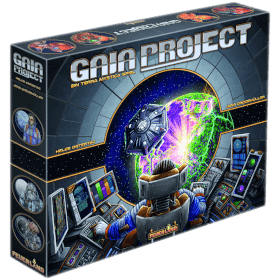
Gaia Project
2017Gaia Project, the acclaimed 2017 strategy board game, challenges players to lead one of fifteen unique alien factions in a grand cosmic race for galactic supremacy. Expertly terraform planets to suit your species' specific needs, leveraging powerful engine building, astute resource management, and strategic space colonization to expand your empire. Every decision is critical, from researching advanced technologies to developing specialized structures, as you navigate a dynamic star map and outmaneuver rivals. This deeply engaging sci-fi experience offers unparalleled replayability and a profound tactical challenge for enthusiasts of competitive, cerebral strategy games.
m⚖️ N/A

RANK #63
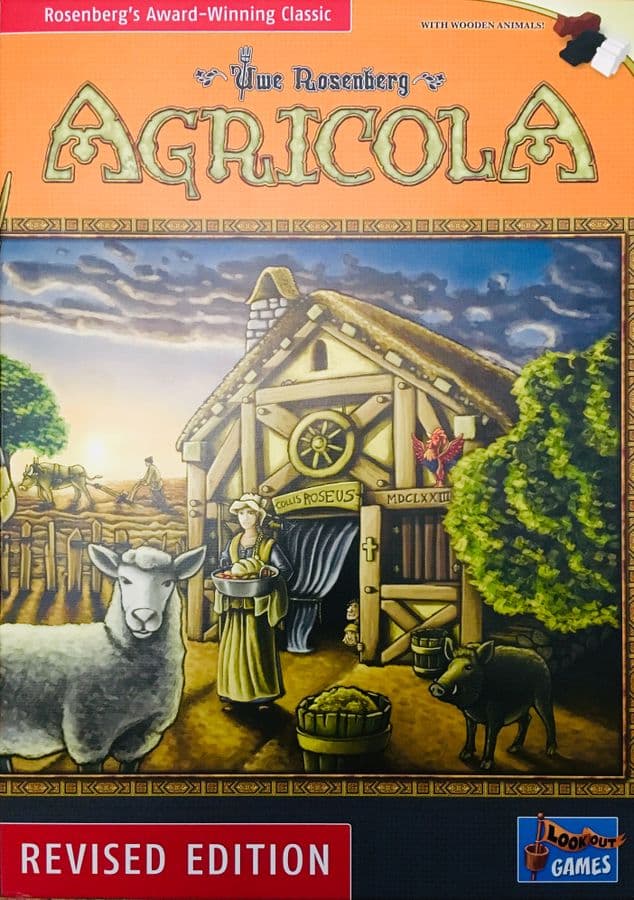
Agricola
2007In Agricola, players step into the well-worn boots of a 17th-century farming family, starting with little more than a spouse and a two-room wooden hut. The singular goal is to cultivate the most prosperous and well-rounded homestead over 14 rounds of play. This isn't just about accumulating wealth; it's about survival and balanced development. Victory points are awarded for a diverse farm that includes plowed fields, various crops, fenced pastures, different types of livestock, and an expanded family living in an upgraded home. The game masterfully punishes over-specialization, penalizing players for neglected areas of their farm, ensuring that true prosperity comes from being a jack-of-all-trades.
The game's engine is driven by a tense worker placement mechanism. Each round, players take turns placing their limited family members on action spaces to gather resources, build improvements, or grow their family. Since each action space can only be used once per round, players are in constant, indirect competition for critical actions like collecting wood or plowing a field. As the game progresses, new, more powerful actions become available, broadening strategic possibilities. This steady development is punctuated by six harvest phases, where the true pressure of Agricola is felt. During a harvest, you reap what you've sown, your animals may breed, but most importantly, you must feed your family. Failing to produce enough food forces a player to take a "Begging" card, which carries a steep point penalty, creating a persistent, challenging tension between expanding your farm and simply providing for your household.
Agricola's enduring appeal lies in this brilliant balance of long-term strategic planning and short-term tactical necessity. The struggle to feed your family is a constant, pressing puzzle that forces difficult decisions every single round. Its depth and replayability are legendary, largely due to the massive decks of Occupation and Minor Improvement cards dealt to each player. These cards provide unique abilities and scoring opportunities, ensuring no two games ever feel the same and allowing for countless strategic pathways. It is this combination of a deeply thematic, relatable struggle and a highly rewarding, complex strategic framework that has cemented Agricola's status as a masterpiece of the Eurogame genre and a benchmark for worker placement games.
1-5 90m⚖️ 3.6
BoxNo Cover Art
RANK #87
Voidfall
2023Voidfall invites players to take command of a crumbling galactic empire in a universe on the brink of collapse. This is a grand-scale, science-fiction 4X (eXplore, eXpand, eXploit, eXterminate) game that masterfully fuses its epic theme with deep, European-style strategic mechanisms. As the leader of one of fourteen unique and asymmetrical Great Houses, your objective is to restore your faction's influence and power over three tense cycles. You must not only contend with the rival ambitions of other players but also fight back the encroaching, malevolent entity known as the Voidborn. Victory is not achieved through simple conquest, but by earning the most points through shrewd economic management, technological supremacy, and fulfilling specific galactic and personal objectives.
The gameplay is structured and methodical, unfolding across three distinct phases each cycle: Preparation, Focus, and Evaluation. During Preparation, a new Galactic Event sets a unique rule or scoring condition for the round. The heart of the game is the Focus phase, where players execute their grand strategies. Instead of rolling dice, players select one of their Focus cards and choose two of its three associated actions. These actions are the engine of your empire, allowing you to manage five different resources, build and command powerful fleets, research game-changing technologies, and advance along three civilization tracks to define your society's strengths. Combat, a cornerstone of the 4X genre, is entirely deterministic, making every engagement a calculated puzzle of positioning and power rather than a gamble.
What sets Voidfall apart is its commitment to being a 'heavy' Euro experience wrapped in a compelling 4X package. The complete removal of luck from combat appeals to strategists who crave perfect information and despise random outcomes. The immense variability between the Great Houses ensures that no two games feel the same, offering tremendous replayability. With dedicated modes for competitive, cooperative, and solo play, it caters to a wide range of player preferences. Voidfall is a demanding yet rewarding challenge for those who relish complex economic puzzles, intricate engine-building, and the satisfaction of seeing a long-term, meticulously crafted plan come to fruition in the vastness of space.
1-4 180m⚖️ 4.6
BoxNo Cover Art
RANK #95
In the fabled Sultanate of Naqala, the old Sultan has died, leaving the throne vacant. The future of the city is in your hands as you compete to gain the favor of the legendary Five Tribes. In a clever twist on the worker placement genre, Five Tribes begins with the game board already populated with meeples. Your objective is not to place workers, but to skillfully maneuver the existing tribes across the grid of tiles, claiming valuable territories and invoking the power of ancient Djinns to secure your path to victory. To win, you must accumulate the most Victory Points by the end of the game, proving you have the wisdom and influence to become the next Sultan.
The game's signature mechanic is its elegant, Mancala-style movement system. On your turn, you will choose a tile, pick up all the meeples on it, and distribute them one-by-one onto adjacent tiles. Your final meeple must land on a tile containing another meeple of the same color. This triggers your main action: you collect all meeples of that color from the final tile and perform their tribe's special ability. Yellow Viziers provide points, White Elders can summon Djinns, Green Merchants gather valuable goods, Blue Builders generate gold, and Red Assassins can remove other meeples from play. If your move completely clears a tile of its occupants, you gain control of it by placing one of your camels, locking in its point value for the end of the game.
Five Tribes is beloved for its remarkable strategic depth packed into a relatively straightforward ruleset. The sheer number of possible moves on any given turn creates a rich, puzzle-like experience that rewards careful planning and foresight. A tense bidding phase kicks off each round, forcing players to spend their hard-earned currency to secure a favorable turn order, creating a constant trade-off between acting early and preserving points. The ability to recruit powerful Djinns, each offering a unique and often game-breaking rule modification, adds immense variety and replayability. With multiple scoring avenues—from controlling land to collecting merchandise sets and assembling powerful entourages—the game remains a dynamic and engaging modern classic.
2-4 60m⚖️ 2.9
RANK #101
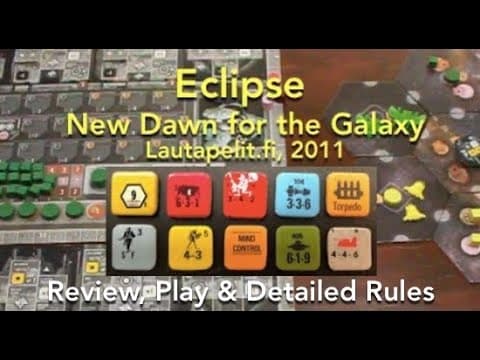
Eclipse: New Dawn for the Galaxy is a critically acclaimed 4X board game that places you at the head of a vast interstellar civilization. Over nine rounds, you must guide your people to dominance by exploring new star systems, researching powerful technologies, and engaging in both diplomacy and warfare. The ultimate goal is to accumulate the most Victory Points, which are earned through a variety of achievements, including controlling galactic sectors, winning decisive battles, forging alliances, and discovering ancient alien artifacts. The game masterfully blends the grand, thematic scope of an 'Ameritrash' space opera with the tight, resource-driven puzzles of a 'Euro-style' game, creating a rich and rewarding strategic experience.
The gameplay revolves around a clever action and upkeep system that forces difficult decisions. On your turn, you perform a single action, such as exploring the modular galaxy, building customized starships, or advancing on a shared technology tree. Each system you control or action you take requires placing an influence disc from your player board. As these discs are used, your civilization's end-of-round upkeep cost increases, creating a tense balance between rapid expansion and economic stability. Players must carefully manage three resources—Materials for building, Science for research, and Money to pay upkeep—generated by colonizing planets, forcing them to weigh every decision against its long-term cost.
What truly sets Eclipse apart is its deep and intuitive ship customization system. Players don't just build generic ships; they design them. Using the Upgrade action, you can add powerful components like improved engines, advanced computers, deadly weapons, and resilient shields directly onto your ship blueprints. This allows for incredible strategic flexibility, as you can tailor your fleets to counter specific opponents or pursue unique combat doctrines. Combat itself is resolved through dice rolls, but the odds are heavily influenced by your custom designs, rewarding clever engineering and tactical foresight. This combination of deep strategic planning, tense economic management, and thrilling, customizable combat makes Eclipse a modern classic in the space strategy genre.
2-6 150m⚖️ 3.7

RANK #139
Troyes
2010In Troyes, players are transported to the year 1200 in the Champagne region of France to lead a rich and influential family. Over the course of four centuries, you will guide the destiny of the city, leaving your mark on its history. The ultimate goal is to amass the greatest fame and glory, measured in victory points. This is achieved by contributing your family's resources and citizens to three key societal pillars: the military, the religious, and the civil domains. Players will work to construct the magnificent cathedral, a central project that demands shared effort, while simultaneously defending the city from a constant barrage of unfortunate events. Your success will be judged by your ability to navigate these challenges and strategically place your family members in positions of power throughout the city's burgeoning society.
The game's engine is driven by a unique and highly interactive dice-placement mechanism. At the start of each round, players roll a pool of dice determined by the number of their citizens (meeples) they have stationed in the city's three main guildhalls. These dice, colored red (military), white (religious), and yellow (civil), represent the available labor force for that round. On your turn, you'll group one to three dice of the same color to perform actions. These actions include activating powerful ability cards on the board, recruiting more citizens, earning money, fighting off negative event cards, or dedicating work towards the cathedral. The most compelling twist is that you are not limited to your own dice. For a price, you can purchase dice directly from your opponents' pools, forcing them to react and creating a tense, dynamic marketplace for actions each and every turn. This system forces constant evaluation of not only your own plans but the potential moves of everyone at the table.
Troyes is celebrated among strategy gamers for its brilliant fusion of classic Eurogame mechanics with an uncommonly high degree of player interaction. While many games in its weight class can feel like 'multiplayer solitaire', the ability to buy an opponent's dice ensures that you are always invested in their rolls and decisions. This creates a constant tension and a need for tactical flexibility. The game offers immense replayability through its modular setup; the specific action cards available in each of the three domains change from game to game, as do the events and character cards that grant secret end-game scoring objectives. This variability means that no two games of Troyes feel the same. It's a deeply rewarding and challenging puzzle that masterfully balances long-term strategic planning with the need for sharp, opportunistic tactical plays, making it an enduring classic of the genre.
2-4 90m⚖️ 3.5
RANK #293
Glory to Rome
2005Set in the aftermath of the Great Fire of Rome in 64 A.D., Glory to Rome is a masterpiece of card-driven design that tasks players with the monumental reconstruction of the empire's capital. As influential Roman patricians, players must compete to build structures, manage resources, and accumulate prestige points to emerge as the most powerful figure in the city. The game is celebrated for its dense, interconnected economy where every decision ripples through the state of the board. The ultimate objective is to earn the most Influence, which can be secured through building completion, stocking a private Vault with valuable materials, and strategic exploitation of special card abilities that can provide massive end-game scoring bonuses.
The engine of the game is its revolutionary multi-use card system. Each card in a player's hand can serve multiple functions: it can be played as a role to lead an action, used as a resource to fund construction, recruited as a client for permanent action bonuses, or placed as a building foundation. The core gameplay loop revolves around the 'Lead and Follow' mechanism. When the active player selects a role, such as the Architect to build or the Merchant to trade, opponents face a critical choice: they can follow the action by playing a matching card from their hand, or they can 'think' to replenish their hand or take a wildcard Jack. This ensures that every player remains engaged on every turn. Additionally, played cards flow into a central 'Pool,' creating a shared resource market that players must cleverly manipulate.
Glory to Rome is widely considered a 'grail game' within the hobby, largely due to its incredible depth and the high-octane synergy of its card effects. Fans admire how a single well-placed building can create powerful combos that fundamentally shift the game's momentum. The tension between using a card for its immediate action versus committing it as a long-term asset is constant and rewarding. Although it has faced distribution challenges and remains difficult to find in certain editions, its influence persists through successor games. It remains a definitive example of how complex strategy can be distilled into a single deck of cards, offering a medium-weight experience that rewards repeat plays and deep tactical familiarity.
2-5 60m⚖️ 2.9
RANK #294
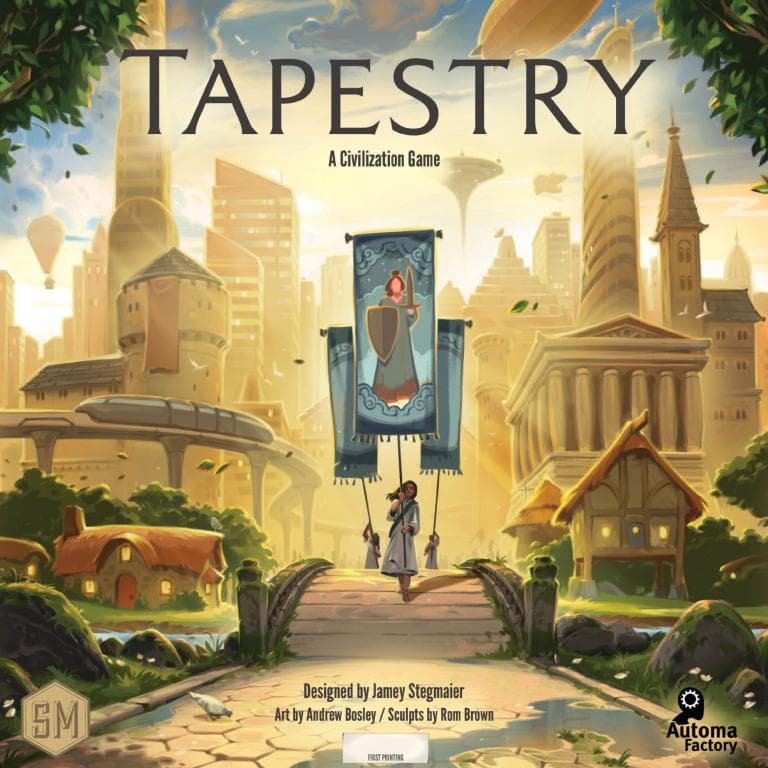
Tapestry
2019Tapestry is a civilization-building board game that breaks away from traditional historical simulations by offering a colorful, anachronistic approach to human development. Designed by Jamey Stegmaier, the game challenges players to guide a unique culture from the earliest days of discovery into the technological wonders of the near future. The primary goal is to accumulate the most victory points by advancing on four core tracks: Science, Technology, Exploration, and Military. Unlike typical '4X' games that focus heavily on combat, Tapestry emphasizes a strategic optimization puzzle where players craft their own narrative through cards and landmarks within their growing capital city.
The heart of the experience lies in a streamlined decision-making process. On every turn, a player chooses between an Advancement turn or an Income turn. Advancement involves spending resources to climb one of the four tracks, each providing immediate rewards, permanent upgrades, and powerful landmark miniatures. When resources run dry, players take an Income turn to transition into a new era. This phase allows them to collect income based on their current progress, play a Tapestry card that defines their civilization's special abilities for that era, and upgrade technology. This asymmetric structure is further enhanced by sixteen distinct civilization mats, each granting game-changing powers that require players to pivot their strategies constantly.
What truly sets Tapestry apart is its high production value and the 'simple rules, deep strategy' philosophy. The game features 18 prepainted landmark miniatures that players place on their Capital City grids to complete 3x3 districts, adding a tactile tile-laying element. Because players take exactly five income turns throughout the session, the pacing varies significantly between participants. One player might conclude their journey early while others are still in their fourth era, creating a unique tension in resource efficiency. It is a medium-weight engine-building experience that rewards long-term planning while remaining accessible to many due to its concise rulebook, offering high replayability through variable setups and asymmetric components.
1-5 105m⚖️ 2.9

RANK #2,187
Hamburg
2022Hamburg (2022) invites players to step into the bustling shoes of influential merchants during the Hanseatic League era, aiming to build the most prosperous and prestigious city districts. As a standalone title by Mac Gerdts, it challenges you to optimize your actions and resources to construct magnificent buildings, acquire valuable goods, and expand your influence across the historic city. The ultimate goal is to accumulate the most victory points by the game's end, demonstrating your superior strategic acumen and urban planning prowess within this vibrant economic simulation.
At its core, Hamburg features an innovative rondel-based action selection system, a signature mechanic of Mac Gerdts. Players move their marker around a circular track, choosing an action at their destination and potentially paying to access actions further along. This forces tough decisions: take a nearby, cheaper action now, or pay more for a preferred action later? Complementing this is a robust market system where commodity prices fluctuate based on player actions, demanding careful timing and resource management. Players will acquire building permits, collect resources, construct various types of buildings (houses, churches, city walls), and leverage their unique player powers to gain an advantage.
Hamburg is celebrated for its deep strategic gameplay, offering a rich eurogame experience that rewards intricate decision-making without overwhelming complexity. Its tight economic engine, dynamic market, and the elegant rondel mechanic create a constant push and pull, ensuring high replayability and engaging player interaction. Fans praise its intricate decision-making, where every action has ripple effects, and the satisfaction of watching your city grow from a few humble houses to a thriving metropolis. It's a game for those who appreciate elegant design, economic puzzles, and the reward of long-term strategic planning.
2-4 120m⚖️ 3.6

RANK #2,718
Forestry
2025Forestry invites players to step into the boots of dedicated forest stewards, tasked with the monumental challenge of balancing industrial demands with environmental preservation. Set against the backdrop of a world increasingly aware of its ecological footprint, the game challenges you to harvest timber and resources without permanently damaging the landscape. The ultimate goal is to cultivate a thriving, sustainable forest while simultaneously meeting the resource needs of a growing society. Victory is not achieved simply through the largest harvest, but through the most strategic management of nature's delicate equilibrium, where every tree cut down must be weighed against the long-term health of the ecosystem. It is a game of deep foresight, requiring players to consider the legacy they leave behind on the forest floor with every action they take.
The gameplay centers on a sophisticated action-selection system and hexagonal tile management. Players interact with a central board where forest regions are represented by tiles that can shift from lush environments to depleted states if not managed with care. This dynamic board state requires players to think several turns ahead, particularly when upgrading their sawmill rooms or constructing specialized water and forest structures. A significant highlight of the mechanics is the technology track, which offers a progression system that experienced strategy gamers will find both deep and rewarding. Furthermore, the inclusion of asymmetric player boards and alternate 'B-side' technology tracks allows for a high degree of variability, forcing players to adapt their tactics based on their unique character strengths and the specific layout of the game.
What truly distinguishes Forestry from other efficiency-focused Euro games is its deep commitment to thematic realism. The developers collaborated with wood science and forestry experts to ensure that every card and rule reflects the actual complexities of forest management. This scientific grounding provides a rich narrative layer to the mathematical puzzle, making every decision feel impactful and grounded in reality. Players often praise the game for its lack of unnecessary fluff, focusing instead on tight, meaningful choices and a high level of replayability. Whether navigating the depletion of forest hexes in a tense two-player session or optimizing a complex engine of upgrades, Forestry offers a rewarding and intellectually stimulating experience for those who appreciate the intersection of nature and industry.
m⚖️ N/A
RANK #2,974
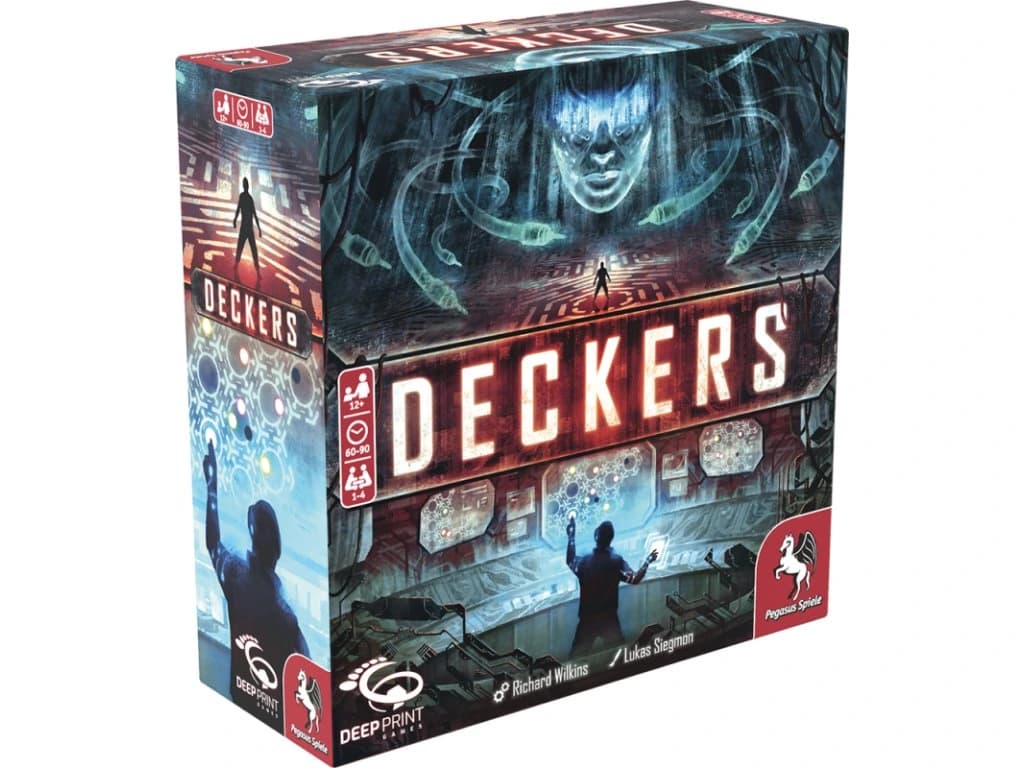
Deckers
2025Deckers is an exciting, competitive card game set in a near-future world where elite "deckers" vie for supremacy in high-stakes card tournaments. Players will meticulously craft their unique decks, strategically acquiring powerful new cards and leveraging potent abilities to outmaneuver their rivals. The ultimate goal is to accumulate the most victory points by executing brilliant card combinations, completing tactical objectives, and dominating key strategic phases before the final round concludes. Get ready for intense, strategic card-driven action!
At its core, Deckers combines innovative deck-building mechanics with tactical hand management and card drafting. Each turn, players will make critical decisions: drafting new cards from a central market, playing cards from their hand to activate powerful effects, and managing their resources to fuel their strategies. As the game progresses, decks evolve, offering dynamic gameplay where players must adapt their strategies based on opponent's moves and the available cards. Noteworthy features include 'Synergy Chains' – a mechanic where specific card combinations unlock bonus actions – and 'Adaptive Playbooks' that offer unique starting advantages, ensuring no two games feel quite the same.
Players will adore Deckers for its deep strategic gameplay wrapped in accessible rules, offering an immensely satisfying experience for both seasoned card game enthusiasts and newcomers alike. Its high replayability stems from a vast card pool, diverse starting conditions, and the ever-changing market, encouraging players to explore countless deck archetypes and strategies. The thrill of optimizing your deck, executing a perfectly timed combo, and watching your engine hum to victory provides an unparalleled sense of accomplishment. Dive into Deckers to experience the ultimate test of card-crafting prowess and strategic foresight!
m⚖️ N/A
Showing 1 to 12 of 17 games