Modern Games
Browse all Modern board games in the Meeple Pulse database.
Styles
Themes
AbstractAdventureAncientAnimalsArtBusinessCard GameCo-operativeComic BookCooperativeCrimeEconomicEnvironmentalismExplorationFantasyHistoricalHorrorHumorIntrigueLiteraryMagicMarvelMedievalModernMuseumMysteryMythologyNatureNauticalPoliticalPress Your LuckSatireSci-FiSocial CommentarySocial InteractionSpaceSuperheroesThematicTravelWarWesternWord-Guessing
Mechanics
3D PlacementActingAction / DexterityAction DraftingAction Point AllowanceAction Point Allowance SystemAction Point SystemAction PointsAction ProgrammingAction QueueAction RetrievalAction SelectionAction/EventAlliancesAlternate ActivationApp-AssistedApp-DrivenArea ControlArea InfluenceArea MajorityArea Majority / InfluenceArea MovementArgumentationAsymmetricAsymmetric FactionsAsymmetric GameAsymmetric PowersAsymmetrical PowersAuction & BiddingAuction/BiddingAuctioningBag BuildingBettingBetting and BluffingBetting and WageringBetting and WagersBiddingBingoBlind BiddingBluffingCampaign / Battle Card DrivenCampaign / LegacyCampaign / Legacy GameCampaign / Mission-basedCampaign / ScenariosCampaign GameCampaign PlayCard DraftingCard DrawingCard DrivenCard Driven ActionCard Driven CombatCard Driven Dice AllocationCard Driven MovementCard ManagementCard PlayCard Play / Hand ManagementCard Play Conflict ResolutionCard SheddingCard-Driven MovementCharacter CreationCharacter ProgressionChit-Pull SystemCo-op PlayCo-operative GameCo-operative PlayCode-breakingCombat ResolutionCombo ChainCommand CardsCommodity SpeculationCommunication LimitsContract FulfillmentContractsCooperative GameCooperative GameplayCooperative PlayCooperative Trick-takingDebateDeck BuildingDeck ConstructionDeck, Bag, and Pool BuildingDeck-BuildingDeductionDexterityDice DraftingDice PlacementDice RollingDiplomatic InfluenceDraftingDynamic Battle SystemEnclosureEnd Game BonusesEngine BuildingEngine-BuildingEscape RoomEvent DrivenExplorationFarmingFlip and WriteFollowFollow ActionGrid CoverageGrid MovementHand ManagementHex-and-CounterHexagon GridHidden MovementHidden RolesI Cut You ChooseIncomeInfluence / Area MajorityLadder ClimbingLegacyLegacy ElementsLegacy GameLegacy SystemLimited CommunicationLine DrawingLine of SightMancalaMap MovementMarketMarket DraftingMarket ManipulationMarket MechanicMarket SpeculationMatchingMeasurement MovementMemoryMission ObjectivesModular BoardModular Board ConstructionMovement TemplatesMulti-Use CardsMulti-use CardsMultiple ScenariosMust FollowNarrative ChoiceNarrative Choice / ParagraphNegotiationNegotiation MechanicsNetwork & Route BuildingNetwork BuildingNetwork and Route BuildingOne vs ManyOne vs. ManyOpen DraftingPaper-and-PencilPartnershipsPattern BuildingPattern RecognitionPick-up and DeliverPlayer EliminationPlayer InteractionPlayer JudgePoint SaladPoint to Point MovementPolyominoesPush Your LuckPush-Your-LuckPuzzlePuzzle-LikePuzzle-SolvingRaceReal-TimeRecipe FulfillmentResource ManagementRole PlayingRole SelectionRoll / Spin and MoveRondelRoute BuildingRoute-BuildingRoute/Network BuildingSanity SystemScenario / Campaign PlayScenario / Mission / Campaign GameScenario / Mission FunctionSecret Unit DeploymentSemi-Cooperative GameSet CollectionSheddingSimulationSimultaneous ActionSimultaneous Action SelectionSimultaneous Hidden AllocationSocial DeductionSocial InteractionSolo / Solitaire GameSpace ExplorationStat Check / Skill CheckStock HoldingStorytellingStrategic PlanningTableau BuildingTactical Decision-MakingTake ThatTargeted CluesTeam PlayTeam-Based GameTeam-Based GuessingTeamworkTech TreesTech Trees / Tech TracksTechnology & Armament TracksTechnology TreeTension & Aggression TracksTile DraftingTile LayingTile PlacementTime TrackTime TravelTower DefenseTrack MovementTradingTrick-takingTug of WarTurn Order: PassTurn Order: Stat-BasedUnit PlacementVariable Phase OrderVariable Player PowersVariable Set-upVariable SetupVictory Point TracksVotingWord AssociationWord GameWord GuessingWord-GuessingWord-guessingWordplayWorker Placement
RANK #272
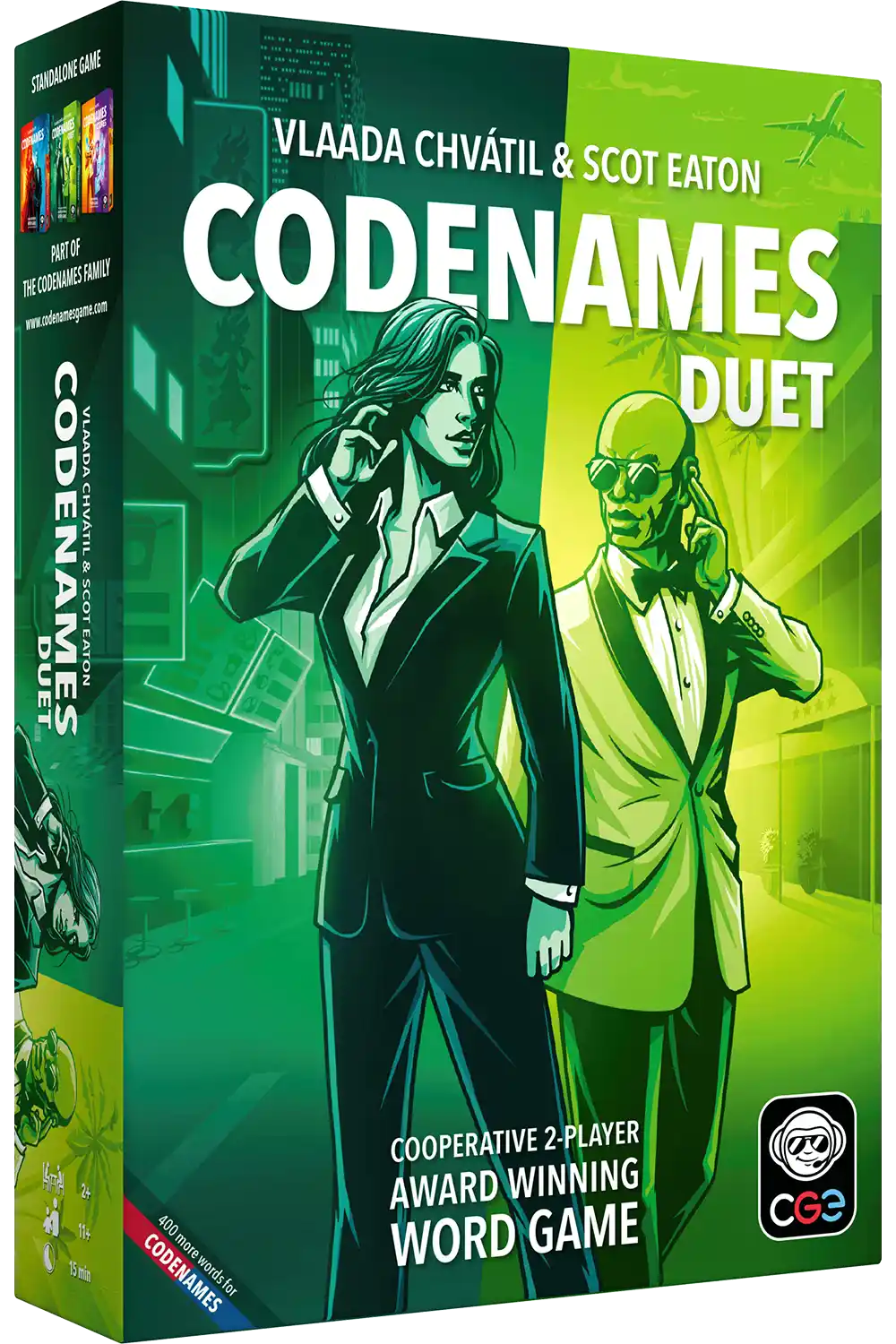
Codenames: Duet
2017Codenames: Duet is the cooperative, two-player evolution of the hit party game, Codenames. The objective is for both players to work in harmony to uncover all 15 of their shared secret agents from a grid of 25 word cards. Unlike its competitive predecessor, this version is a race against the clock, challenging the team to complete their mission within a limited number of turns, typically nine. Success hinges on clever word association and the ability to get on the same wavelength as your partner. The game presents a pure puzzle of communication and deduction, where players must navigate a minefield of innocent bystanders and deadly assassins, all represented by seemingly random words on the table.
The core of the game lies in its unique double-sided key card. This card, placed between the players, shows each person a different perspective of the 5x5 grid. On each side, nine words are marked as friendly agents (green), three are deadly assassins (black), and the rest are harmless bystanders (tan). The twist is that while some agents are unique to each player's side of the card, others overlap, creating a shared pool of 15 total agents that must be identified. Players alternate giving a single-word clue followed by a number, indicating how many words on the board correspond to their clue. If their partner correctly touches an agent card, it's covered, and they can continue guessing. Contacting a bystander immediately ends the turn, and touching an assassin results in an instant loss for the team. After each turn, a timer token is used, ratcheting up the pressure as the turn limit approaches.
Codenames: Duet is celebrated for its brilliant distillation of the original game's magic into an intimate and challenging experience for two. The cooperative dynamic transforms the game from a team-based competition into a collaborative puzzle. Players must think not only about the clues they give but also about the potential interpretations their partner might have, leading to moments of incredible synergy or hilarious miscommunication. The tension is palpable as each guess could be the one that uncovers a hidden agent or triggers a game-ending assassin. For those seeking even greater challenges and replayability, the game includes a mission map with a campaign-style progression, introducing new rules and constraints that alter the difficulty and win conditions. This combination of simple rules, profound strategic depth, and a focus on partnered thinking makes it a standout title for couples and pairs of friends.
2 15m⚖️ 1.1
RANK #528
Wavelength
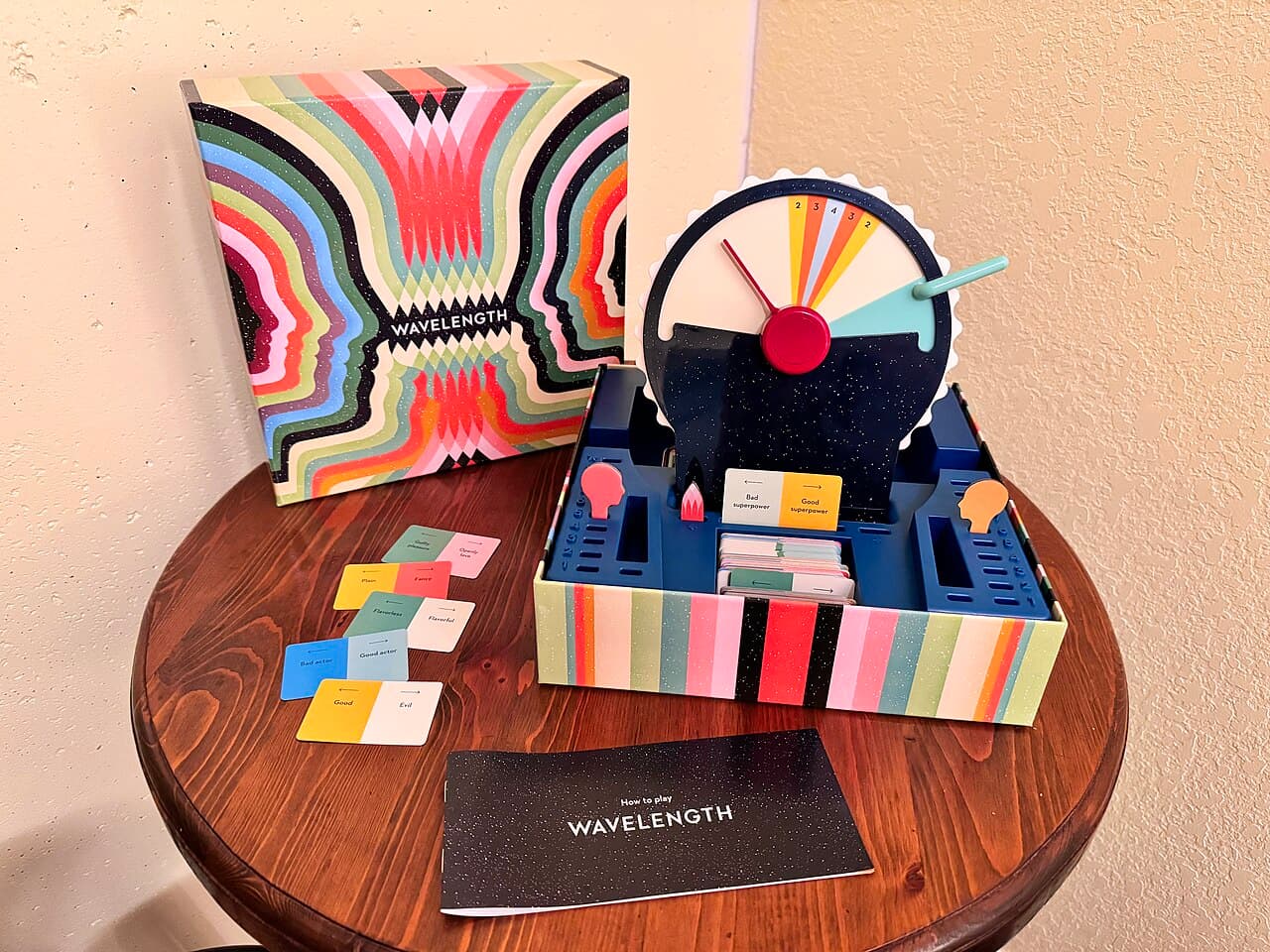
2019Wavelength is an immensely engaging team-based party experience that centers entirely on social guessing, empathy, and intuitive communication. At its heart, this brilliant tabletop offering challenges players to read their friends' minds while utilizing a striking, custom three-dimensional dial device. The primary objective is to successfully guide your squad to a hidden location on a spectrum using only a single conceptual hint. It is highly celebrated within the tabletop community for its unparalleled ability to spark hilarious, profound, and sometimes bizarre debates about how different individuals perceive the exact same concepts in our strange world.
The fundamental gameplay loop splits participants into two competing factions, with a designated device placed in the center of the table. During a turn, one individual on the active side takes on the role of the 'Psychic.' This key participant draws a Spectrum Card that displays two opposing binaries, such as 'Hot' versus 'Cold' or 'Utopia' versus 'Dystopia.' The Psychic then randomly spins the wheel inside the plastic device and peeks behind the viewing screen to locate a hidden bullseye containing varying scoring zones. After closing the screen to conceal the target from everyone else, the Psychic must provide precisely one conceptual clue to guide their allies to that exact spot on the spectrum. For instance, if the target leans slightly toward the cold side, the Psychic might simply say the word 'Salad.'
Following the clue, the active group must collaborate, discuss, and often argue playfully as they physically rotate the red dial to the position they believe matches the hint. At this juncture, the opposing squad engages in a push-your-luck betting mechanic, guessing whether the true target lies to the left or the right of the active team's placement. Finally, the screen is opened to reveal the truth. The active participants score points based on how close they landed to the exact center of the bullseye, while the opponents can snag a bonus point for a correct directional bet.
Teams continue taking turns in this manner until one reaches the winning threshold of ten points. People absolutely adore this title because of its immense accessibility; boasting a remarkably low complexity, the rules can be explained in mere minutes, making it incredibly welcoming for non-gamers. Furthermore, its versatile structure comfortably accommodates large crowds or can be adapted into a fully cooperative mode for smaller gatherings, ensuring it shines on nearly any game night.
2-12 45m⚖️ 1.1

RANK #13,808
Skybridge
2006"Skybridge" (2006) is a tactile, three-dimensional abstract strategy game that challenges players to construct a bustling, vertical cityscape. Published by the renowned French company Gigamic, the game is celebrated for its premium, high-quality wooden components that double as architectural building blocks. In this fast-paced game of spatial planning, participants compete to score the most points by thoughtfully stacking blocks, claiming tall towers, and connecting them with bridges. As a beautiful centerpiece on the table, it seamlessly blends light city-building elements with strict placement constraints, forcing players to think critically about every move they make.
The gameplay loop centers around a shared grid where competitors take turns adding exactly one wooden piece from their personal, color-coded supply. The game includes forty-four blocks ranging from single-story and double-story cubes to connecting bridges and pointed roofs. A strict set of placement rules dictates the flow of construction: pieces of the exact same color can never physically touch each other, and blocks must typically be placed on the lowest available legal tier to ensure a gradual upward progression across the board. The most critical mechanic revolves around the roof pieces, which are used to cap and officially claim a tower. Once a player crowns a structure with their roof, nobody else can build upon it, securing points equal to the tower's overall height. This introduces a gripping dilemma of push-your-luck strategy. Do you cap a modest tower early to guarantee a safe point return, or do you risk building it higher, leaving it vulnerable to an opponent who might completely steal the structure out from under you? Additionally, players can deploy bridge components to link two separate towers of identical height, provided they belong to different colors, which yields valuable bonus points and multipliers at the end of the session.
What truly makes this game shine is its unique synthesis of accessible rules and surprising tactical depth. Despite its short playtime of just ten to twenty minutes, the tense spatial puzzle appeals heavily to both families and seasoned tabletop enthusiasts. The tactile satisfaction of manipulating chunky wooden pieces combined with the architectural beauty of the final board state provides a highly rewarding tabletop experience. Highly regarded as a beginner-friendly title, it naturally teaches foundational skills in geometry and risk assessment. Ultimately, the thrill of capping a massive tower just before an opponent can steal it, or perfectly aligning a bridge to multiply your final score, cements "Skybridge" as a timeless, visually striking abstract classic.
2-4 15m⚖️ 1.8
Fools' Fuel
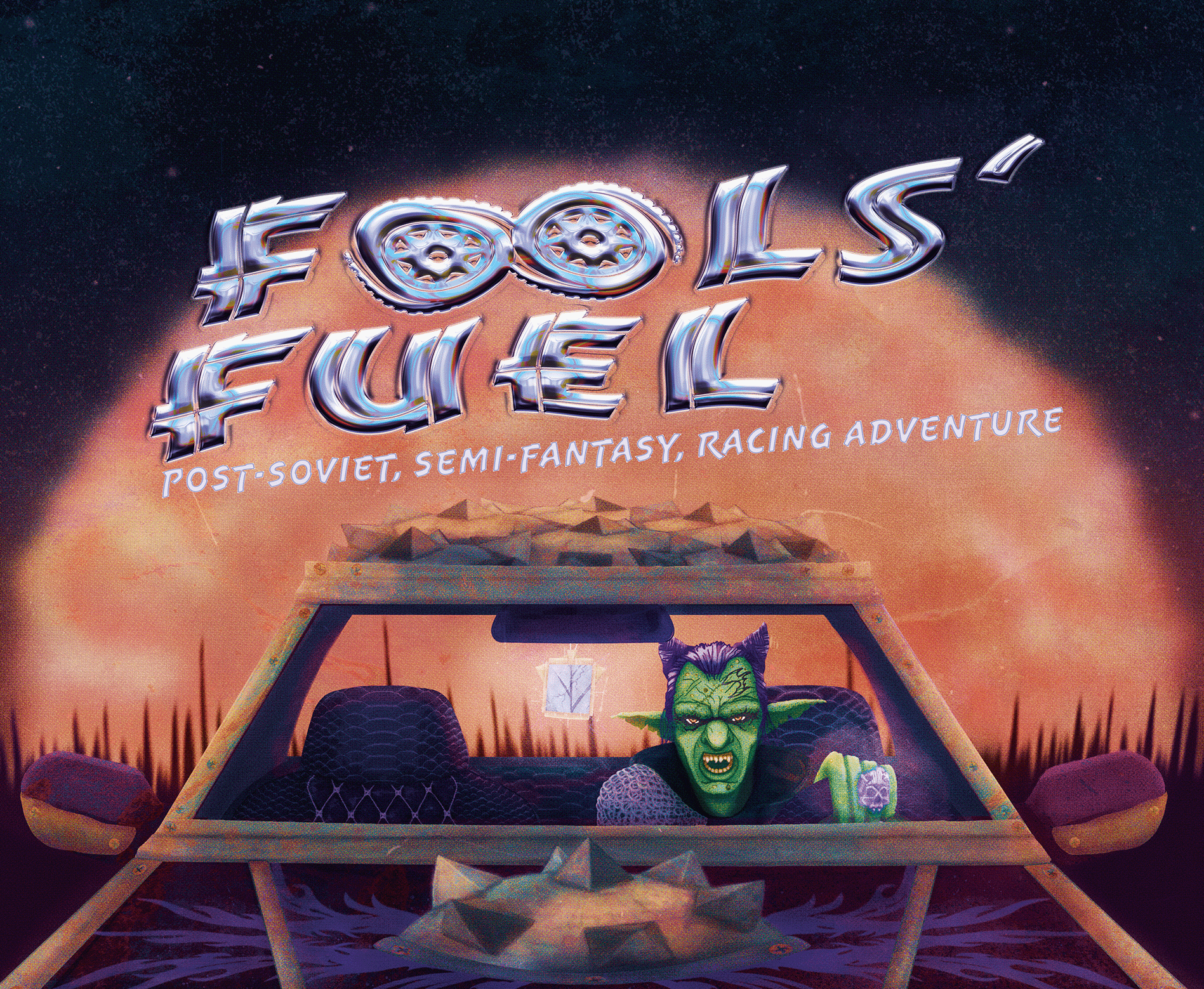
2025Dive into the chaotic, magic-fueled streets of a post-Soviet urban fantasy world with Fools' Fuel, a vehicular skirmish miniatures game. Set in the unique "Slav Borg" universe, this title casts players as daring drivers in high-stakes, objective-based races where victory is about more than just being the fastest. Players must outmaneuver, outwit, and outgun their rivals on a dynamic battlefield, completing specific goals to claim supremacy. The game was envisioned as a complete experience, offering deep lore and a distinct thematic setting that blends gritty, futuristic vehicle combat with powerful and unpredictable magical abilities. It's a contest of speed, strategy, and survival in a world where fantastical power meets industrial decay.
The core of the gameplay revolves around a strategic dice pool management system. Each turn, players allocate dice to perform a variety of actions, from accelerating down a straightaway to activating potent vehicle upgrades. Movement is a critical phase, governed by a vehicle's "Speed" value. Players spend these points to move, make tight 90-degree turns, or even reverse out of trouble. Pushing your vehicle to its limits introduces a thrilling risk-reward element; consecutive forward movements or turns can result in 'Burn' or 'Drift' tokens. Accumulate too many, and you'll face a 'Drive Test' at the end of your turn. Failure means a catastrophic loss of control, adding a palpable layer of tension to every decision and creating cinematic moments of vehicular chaos.
What makes Fools' Fuel stand out is its deep customization and the seamless integration of its bizarre theme into the mechanics. The game promised extensive options for vehicle upgrades, allowing players to build a machine perfectly suited to their preferred playstyle, whether it be a heavily armored brawler or a nimble speedster. The magic-infused setting isn't just window dressing; it introduces game-changing abilities like teleportation and flight, completely altering tactical possibilities. This fusion of familiar vehicular combat with extraordinary powers creates a truly unique tabletop experience. Designed to be accessible to hobbyists of all kinds, the project planned for both high-quality physical miniatures and 3D-printable STL files, inviting players to fully immerse themselves in its vibrant and dangerous world.
1-4 60m⚖️ 2.4
Welcome to the high-stakes, high-calorie world of Chicken Fried Dice, a savory press-your-luck experience that transports players to the heart of a bustling Southern diner. In this 2026 release, you step into the grease-stained apron of a short-order cook competing to become the legendary 'King of the Skillet.' The primary objective is simple yet challenging: fulfill complex food orders by rolling specific combinations of ingredients using custom chunky dice. Each successful dish earns you points and prestige, but the clock is ticking and the customers are hungry. The game captures the chaotic energy of a lunchtime rush, blending thematic flavor with snappy, accessible gameplay that keeps everyone at the table engaged from the first sizzle to the final plating.
The core gameplay of Chicken Fried Dice revolves around a sophisticated 'Roll-and-Risk' system. On your turn, you will roll a handful of specialized Ingredient Dice—featuring icons like Flour, Spices, Chicken, and the dreaded 'Grease Fire.' You must strategically decide which dice to 'lock' into your prep area to fulfill the requirements of the active Order Cards on the table. However, much like real frying, the more you push your luck, the higher the temperature rises. Rolling too many Grease Fire icons results in a kitchen catastrophe, forcing you to discard your current progress and pass the turn. Notable mechanics include 'Side Dish' bonuses which allow for minor dice manipulation and 'Seasoning Tokens' that act as a strategic currency to reroll stubborn results, adding a layer of tactical depth to the otherwise frantic dice-chucking action.
What truly sets Chicken Fried Dice apart and makes it a must-have for any collection is its infectious charm and 'just one more turn' appeal. The game balances the tension of a gambling-style mechanic with a whimsical, vibrant art style that celebrates Southern culinary culture. Players love the social interaction that comes from 'hate-ordering'—snatching up a recipe another cook was clearly eyeing—and the raucous cheers or groans that accompany a final, desperate roll. It is a perfect 'filler' game that bridges the gap between casual party games and light strategy titles. Whether you are a seasoned board game veteran or a newcomer looking for a fun way to spend twenty minutes, the combination of tactile satisfaction, fast-paced decision making, and the hilarious risk of a burnt biscuit makes every session of Chicken Fried Dice a memorable feast.
2-5 25m⚖️ 1.4
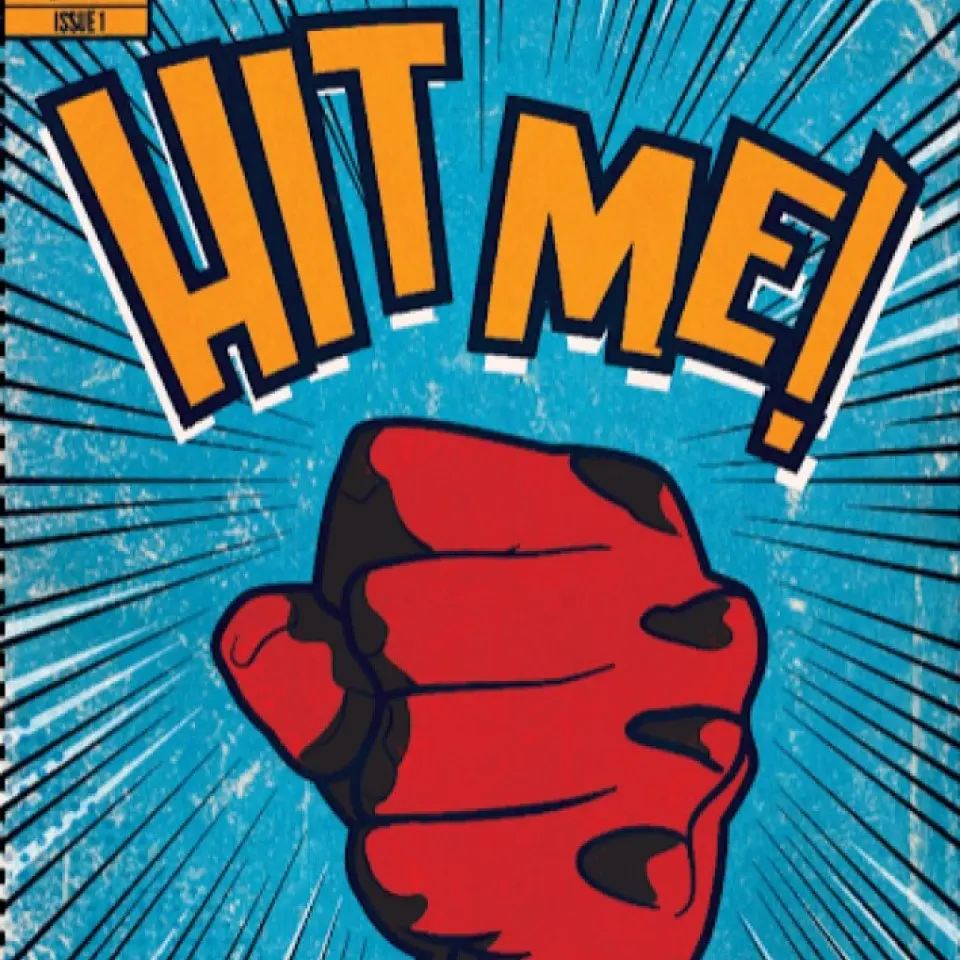
Hit Me!
2018Hit Me! is a vibrant and high-energy card game that immerses players in a comic book-inspired showdown where survival is the only objective. In this competitive experience, every participant begins with a personal Life deck, a small stack of face-down cards that represents their health and staying power in the battle. The ultimate goal is deceptively simple but difficult to achieve: be the final player left with cards in your Life deck after everyone else has been knocked out. The game captures the kinetic energy of a superhero skirmish or a street brawl, utilizing bold visuals and fast-paced turns to keep the table engaged from the first card draw to the final elimination.
The core of the gameplay revolves around a central Hit! deck, from which players draw and play cards to manipulate the board state and attack their rivals. Utilizing a distinct 'push your luck' mechanic, players must decide how aggressively they want to pursue their opponents. By playing Hit! cards, you can force other players to discard precious cards from their Life decks, bringing them one step closer to defeat. However, the game requires a careful balance of aggression and caution; pushing too hard can leave a player vulnerable or lead to unintended consequences. This creates a social dynamic filled with 'take that' moments, where alliances are temporary and the leader often finds themselves with a target on their back.
Fans of the game appreciate Hit Me! for its role as a perfect 'filler' game, offering a streamlined experience that is easy to teach and quick to play. Designed for groups of two to six, it thrives on social interaction and the unpredictable nature of the draw. The social aspect is heightened by the player elimination mechanic, which creates a tense atmosphere as the deck sizes dwindle. Its accessible ruleset makes it an excellent choice for family game nights or as an icebreaker for larger gatherings. With its unique comic book aesthetic and the thrill of narrowly escaping defeat, Hit Me! provides a satisfyingly punchy experience that rewards both tactical targeting and the courage to take a gamble.
2-6 30m⚖️ 1.2