Family Games
Browse all Family board games in the Meeple Pulse database.
Styles
Themes
AbstractAdventureAncientAnimalsArtBusinessCard GameCo-operativeComic BookCooperativeCrimeEconomicEnvironmentalismExplorationFantasyHistoricalHorrorHumorIntrigueLiteraryMagicMarvelMedievalModernMuseumMysteryMythologyNatureNauticalPoliticalPress Your LuckSatireSci-FiSocial CommentarySocial InteractionSpaceSuperheroesThematicTravelWarWesternWord-Guessing
Mechanics
3D PlacementActingAction / DexterityAction DraftingAction Point AllowanceAction Point Allowance SystemAction Point SystemAction PointsAction ProgrammingAction QueueAction RetrievalAction SelectionAction/EventAlliancesAlternate ActivationApp-AssistedApp-DrivenArea ControlArea InfluenceArea MajorityArea Majority / InfluenceArea MovementArgumentationAsymmetricAsymmetric FactionsAsymmetric GameAsymmetric PowersAsymmetrical PowersAuction & BiddingAuction/BiddingAuctioningBag BuildingBettingBetting and BluffingBetting and WageringBetting and WagersBiddingBingoBlind BiddingBluffingCampaign / Battle Card DrivenCampaign / LegacyCampaign / Legacy GameCampaign / Mission-basedCampaign / ScenariosCampaign GameCampaign PlayCard DraftingCard DrawingCard DrivenCard Driven ActionCard Driven CombatCard Driven Dice AllocationCard Driven MovementCard ManagementCard PlayCard Play / Hand ManagementCard Play Conflict ResolutionCard SheddingCard-Driven MovementCharacter CreationCharacter ProgressionChit-Pull SystemCo-op PlayCo-operative GameCo-operative PlayCode-breakingCombat ResolutionCombo ChainCommand CardsCommodity SpeculationCommunication LimitsContract FulfillmentContractsCooperative GameCooperative GameplayCooperative PlayCooperative Trick-takingDebateDeck BuildingDeck ConstructionDeck, Bag, and Pool BuildingDeck-BuildingDeductionDexterityDice DraftingDice PlacementDice RollingDiplomatic InfluenceDraftingDynamic Battle SystemEnclosureEnd Game BonusesEngine BuildingEngine-BuildingEscape RoomEvent DrivenExplorationFarmingFlip and WriteFollowFollow ActionGrid CoverageGrid MovementHand ManagementHex-and-CounterHexagon GridHidden MovementHidden RolesI Cut You ChooseIncomeInfluence / Area MajorityLadder ClimbingLegacyLegacy ElementsLegacy GameLegacy SystemLimited CommunicationLine DrawingLine of SightMancalaMap MovementMarketMarket DraftingMarket ManipulationMarket MechanicMarket SpeculationMatchingMeasurement MovementMemoryMission ObjectivesModular BoardModular Board ConstructionMovement TemplatesMulti-Use CardsMulti-use CardsMultiple ScenariosMust FollowNarrative ChoiceNarrative Choice / ParagraphNegotiationNegotiation MechanicsNetwork & Route BuildingNetwork BuildingNetwork and Route BuildingOne vs ManyOne vs. ManyOpen DraftingPaper-and-PencilPartnershipsPattern BuildingPattern RecognitionPick-up and DeliverPlayer EliminationPlayer InteractionPlayer JudgePoint SaladPoint to Point MovementPolyominoesPush Your LuckPush-Your-LuckPuzzlePuzzle-LikePuzzle-SolvingRaceReal-TimeRecipe FulfillmentResource ManagementRole PlayingRole SelectionRoll / Spin and MoveRondelRoute BuildingRoute-BuildingRoute/Network BuildingSanity SystemScenario / Campaign PlayScenario / Mission / Campaign GameScenario / Mission FunctionSecret Unit DeploymentSemi-Cooperative GameSet CollectionSheddingSimulationSimultaneous ActionSimultaneous Action SelectionSimultaneous Hidden AllocationSocial DeductionSocial InteractionSolo / Solitaire GameSpace ExplorationStat Check / Skill CheckStock HoldingStorytellingStrategic PlanningTableau BuildingTactical Decision-MakingTake ThatTargeted CluesTeam PlayTeam-Based GameTeam-Based GuessingTeamworkTech TreesTech Trees / Tech TracksTechnology & Armament TracksTechnology TreeTension & Aggression TracksTile DraftingTile LayingTile PlacementTime TrackTime TravelTower DefenseTrack MovementTradingTrick-takingTug of WarTurn Order: PassTurn Order: Stat-BasedUnit PlacementVariable Phase OrderVariable Player PowersVariable Set-upVariable SetupVictory Point TracksVotingWord AssociationWord GameWord GuessingWord-GuessingWord-guessingWordplayWorker Placement

RANK #259
Sea Salt & Paper
2022Sea Salt & Paper is a captivating card game that has enchanted players with its distinct and beautiful aesthetic, featuring photographs of actual origami sea creatures. Beneath its serene surface lies a surprisingly tactical game of set collection and calculated risks. The primary objective is to outscore opponents over several rounds by carefully curating a hand of cards with point-scoring combinations. Players aim to reach a specific point threshold, which varies by player count, to secure victory. However, a thrilling alternate path to triumph exists: collecting all four unique mermaid cards instantly wins the game, adding a layer of suspense to every draw. This elegant design packs a wealth of strategic depth into a small, portable box, making it an ideal travel companion.
The gameplay loop is deceptively simple yet full of meaningful decisions. On your turn, you must acquire a card by either drawing two from the top of the deck, keeping one and discarding the other, or by picking up the top card from one of two face-up discard piles. After adding a card, you can play pairs of identical "duo" cards from your hand to trigger powerful one-time effects. For instance, a pair of crabs allows you to steal a card from a discard pile, while two boats grant you an immediate extra turn. The round's tension culminates when a player amasses at least seven points. They can then declare "Stop," prompting all players to score their hands immediately. Alternatively, if they are feeling confident, they can declare "Last Chance." This gives every other player one final turn to improve their hand before the reveal, introducing a high-stakes push-your-luck element where the declarer risks losing their own card points for the chance at a significant bonus.
The game's immense appeal stems from this brilliant blend of accessibility and strategic depth. The rules can be taught in minutes, making it a perfect 'gateway' game for new players or a fantastic choice for a family game night. Yet, experienced gamers will appreciate the subtle tactics involved in managing their hand, tracking discard piles, and timing the end of the round. The "Last Chance" mechanic is a masterstroke, creating memorable moments of bluffing and suspense. Above all, the visual presentation is a standout feature; the origami art is not just beautiful but integral to the game's charming identity. This combination of fast-paced play, clever card-combo possibilities, and stunning artwork makes Sea Salt & Paper a modern classic that offers high replayability and joy in every hand.
2-4 30m⚖️ 1.5
RANK #272
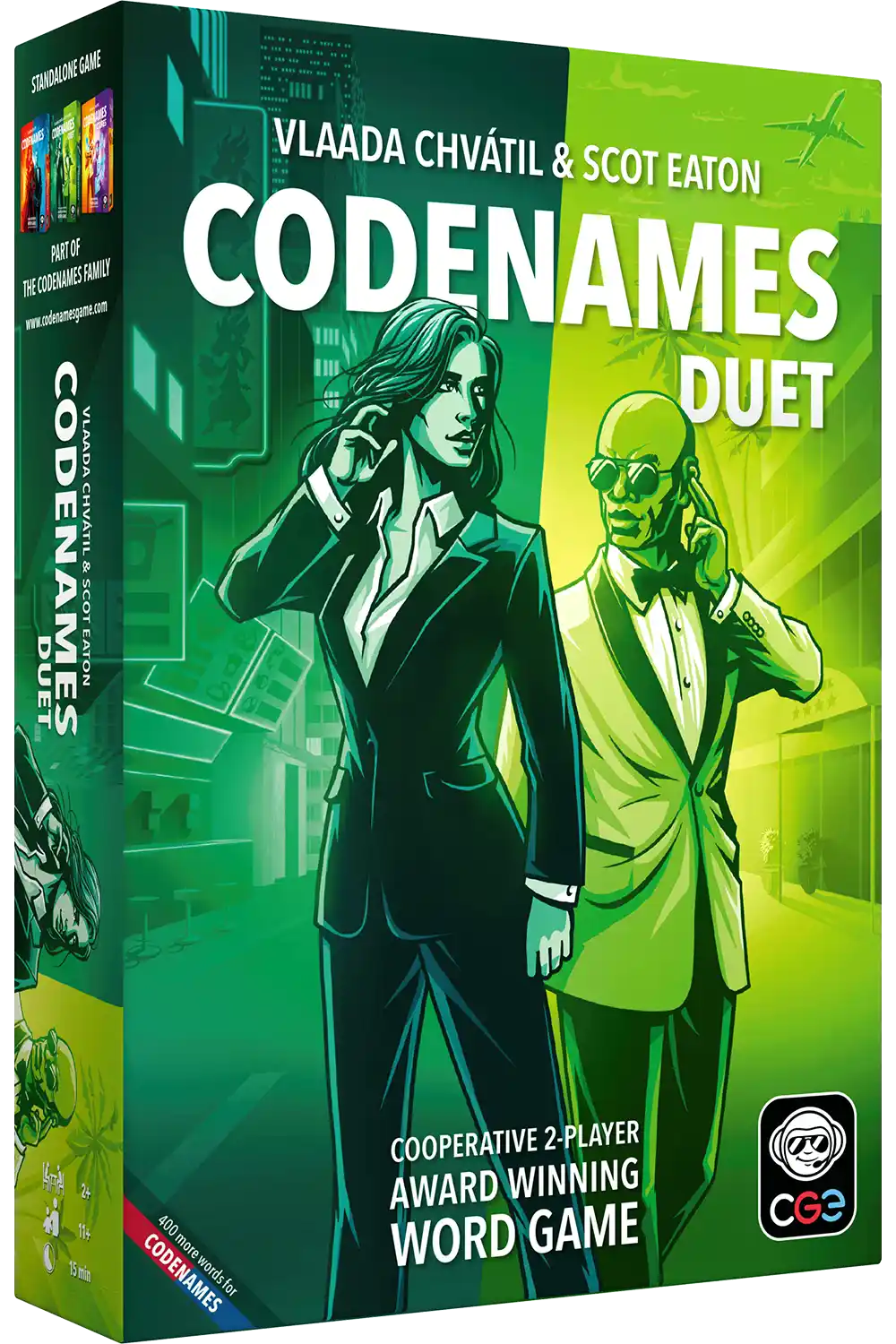
Codenames: Duet
2017Codenames: Duet is the cooperative, two-player evolution of the hit party game, Codenames. The objective is for both players to work in harmony to uncover all 15 of their shared secret agents from a grid of 25 word cards. Unlike its competitive predecessor, this version is a race against the clock, challenging the team to complete their mission within a limited number of turns, typically nine. Success hinges on clever word association and the ability to get on the same wavelength as your partner. The game presents a pure puzzle of communication and deduction, where players must navigate a minefield of innocent bystanders and deadly assassins, all represented by seemingly random words on the table.
The core of the game lies in its unique double-sided key card. This card, placed between the players, shows each person a different perspective of the 5x5 grid. On each side, nine words are marked as friendly agents (green), three are deadly assassins (black), and the rest are harmless bystanders (tan). The twist is that while some agents are unique to each player's side of the card, others overlap, creating a shared pool of 15 total agents that must be identified. Players alternate giving a single-word clue followed by a number, indicating how many words on the board correspond to their clue. If their partner correctly touches an agent card, it's covered, and they can continue guessing. Contacting a bystander immediately ends the turn, and touching an assassin results in an instant loss for the team. After each turn, a timer token is used, ratcheting up the pressure as the turn limit approaches.
Codenames: Duet is celebrated for its brilliant distillation of the original game's magic into an intimate and challenging experience for two. The cooperative dynamic transforms the game from a team-based competition into a collaborative puzzle. Players must think not only about the clues they give but also about the potential interpretations their partner might have, leading to moments of incredible synergy or hilarious miscommunication. The tension is palpable as each guess could be the one that uncovers a hidden agent or triggers a game-ending assassin. For those seeking even greater challenges and replayability, the game includes a mission map with a campaign-style progression, introducing new rules and constraints that alter the difficulty and win conditions. This combination of simple rules, profound strategic depth, and a focus on partnered thinking makes it a standout title for couples and pairs of friends.
2 15m⚖️ 1.1
RANK #524
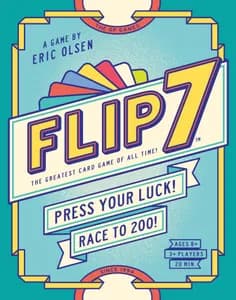
Flip 7
2024Flip 7 is a fast-paced and wonderfully accessible card game where the goal is refreshingly simple: be the first player to empty your hand of all your cards. This straightforward objective, however, hides a delightful mix of light strategy, luck, and clever timing that makes each round an engaging puzzle. The game centers around a shared play area with seven distinct piles. Players start with a hand of seven cards and must thoughtfully play them onto these piles, racing against their opponents to shed their hand and claim victory. Its blend of familiar mechanics with a unique core concept makes it an instant hit for a wide variety of gaming groups.
The gameplay loop is elegant and easy to grasp. On a player's turn, they must select a card from their hand and play it onto one of the seven piles. The rule for a legal play is direct: the card being played must either have a higher numerical value than the top card of the pile or be the exact same color. If a player finds themselves unable to make a valid move, they must draw a card from the deck, momentarily pushing them further from victory. The game's namesake and most exciting mechanic is the "flip." When any player plays a card with the number 7, they get to flip that entire pile over, revealing the card that was originally at the bottom. This newly exposed card now dictates the rule for the next play on that stack, which can dramatically alter the strategic landscape of the board in an instant.
What makes Flip 7 so compelling is its brilliant fusion of classic card-shedding gameplay with this innovative 'flip' twist. It evokes the feel of mass-market classics but introduces an unpredictable element that keeps all players on their toes. A pile that was once an easy target can suddenly become unplayable, while a blocked pile might open up into a perfect opportunity. The strategic heart of the game lies in managing your hand and, most importantly, deciding when to deploy your powerful 7s. Using one can save you from drawing a card, but it might also inadvertently help the next player. This constant tactical tension, combined with its quick playtime and support for one to six players, makes it a perfectly versatile choice for family game nights, a party starter, or a quick filler game.
1-6 15m⚖️ 1.0

RANK #7,159
The Lord of the Rings: Journey to Mordor is a fast-paced dice-rolling adventure where players step into the hairy feet of the iconic Hobbits from the Shire. Set against the backdrop of J.R.R. Tolkien's legendary Middle-earth, this title tasks players with a desperate race to reach Mount Doom. Unlike the cooperative nature of the original story, this version pits the Ringbearers against one another in a competitive sprint to see who can cast the One Ring into the fires first. However, the path is fraught with danger, as the shadowy Nazgûl are relentlessly pursuing the fellowship. Players must balance their desire for speed with the constant threat of being overtaken by Sauron’s most terrifying servants, making every roll a high-stakes decision.
Gameplay revolves around a set of five custom dice and a pad of paper maps representing the journey from Bag End to Mordor. On their turn, a player rolls all the dice and must set aside at least one, continuing until all five are locked in. The 'push your luck' mechanic is central here; players want to roll Ring symbols to advance their Hobbit along the track, but they must also deal with less favorable results. Rolling Nazgûl symbols forces the player to advance the enemy on their personal track, potentially leading to elimination if they reach the end. Gandalf symbols provide a buffer by blocking enemy progress, while Orcs can be neutralized by Fellowship symbols. The game also features an 'Advanced' side of the map, adding unique effects to specific locations like Rivendell or Shelob’s Lair, which introduces more tactical depth to the dice management.
Fans of the franchise and casual gamers alike are drawn to Journey to Mordor because of its accessibility and portable nature. It distills the epic scale of the trilogy into a 20-minute experience that fits easily on a small table. The tension is palpable as players watch their opponents inch closer to the goal while their own Nazgûl track fills up. It captures the 'race against time' feeling of the books perfectly through its dice-driven mechanics. Whether you are using the basic rules for a quick family session or the advanced rules for a more strategic challenge, the game offers a satisfying blend of luck management and thematic immersion. The inclusion of classic Middle-earth artwork further enhances the experience, making it a must-have for Tolkien enthusiasts looking for a light yet engaging filler game.
2-4 20m⚖️ 1.5

RANK #13,808
Skybridge
2006"Skybridge" (2006) is a tactile, three-dimensional abstract strategy game that challenges players to construct a bustling, vertical cityscape. Published by the renowned French company Gigamic, the game is celebrated for its premium, high-quality wooden components that double as architectural building blocks. In this fast-paced game of spatial planning, participants compete to score the most points by thoughtfully stacking blocks, claiming tall towers, and connecting them with bridges. As a beautiful centerpiece on the table, it seamlessly blends light city-building elements with strict placement constraints, forcing players to think critically about every move they make.
The gameplay loop centers around a shared grid where competitors take turns adding exactly one wooden piece from their personal, color-coded supply. The game includes forty-four blocks ranging from single-story and double-story cubes to connecting bridges and pointed roofs. A strict set of placement rules dictates the flow of construction: pieces of the exact same color can never physically touch each other, and blocks must typically be placed on the lowest available legal tier to ensure a gradual upward progression across the board. The most critical mechanic revolves around the roof pieces, which are used to cap and officially claim a tower. Once a player crowns a structure with their roof, nobody else can build upon it, securing points equal to the tower's overall height. This introduces a gripping dilemma of push-your-luck strategy. Do you cap a modest tower early to guarantee a safe point return, or do you risk building it higher, leaving it vulnerable to an opponent who might completely steal the structure out from under you? Additionally, players can deploy bridge components to link two separate towers of identical height, provided they belong to different colors, which yields valuable bonus points and multipliers at the end of the session.
What truly makes this game shine is its unique synthesis of accessible rules and surprising tactical depth. Despite its short playtime of just ten to twenty minutes, the tense spatial puzzle appeals heavily to both families and seasoned tabletop enthusiasts. The tactile satisfaction of manipulating chunky wooden pieces combined with the architectural beauty of the final board state provides a highly rewarding tabletop experience. Highly regarded as a beginner-friendly title, it naturally teaches foundational skills in geometry and risk assessment. Ultimately, the thrill of capping a massive tower just before an opponent can steal it, or perfectly aligning a bridge to multiply your final score, cements "Skybridge" as a timeless, visually striking abstract classic.
2-4 15m⚖️ 1.8
Welcome to the high-stakes, high-calorie world of Chicken Fried Dice, a savory press-your-luck experience that transports players to the heart of a bustling Southern diner. In this 2026 release, you step into the grease-stained apron of a short-order cook competing to become the legendary 'King of the Skillet.' The primary objective is simple yet challenging: fulfill complex food orders by rolling specific combinations of ingredients using custom chunky dice. Each successful dish earns you points and prestige, but the clock is ticking and the customers are hungry. The game captures the chaotic energy of a lunchtime rush, blending thematic flavor with snappy, accessible gameplay that keeps everyone at the table engaged from the first sizzle to the final plating.
The core gameplay of Chicken Fried Dice revolves around a sophisticated 'Roll-and-Risk' system. On your turn, you will roll a handful of specialized Ingredient Dice—featuring icons like Flour, Spices, Chicken, and the dreaded 'Grease Fire.' You must strategically decide which dice to 'lock' into your prep area to fulfill the requirements of the active Order Cards on the table. However, much like real frying, the more you push your luck, the higher the temperature rises. Rolling too many Grease Fire icons results in a kitchen catastrophe, forcing you to discard your current progress and pass the turn. Notable mechanics include 'Side Dish' bonuses which allow for minor dice manipulation and 'Seasoning Tokens' that act as a strategic currency to reroll stubborn results, adding a layer of tactical depth to the otherwise frantic dice-chucking action.
What truly sets Chicken Fried Dice apart and makes it a must-have for any collection is its infectious charm and 'just one more turn' appeal. The game balances the tension of a gambling-style mechanic with a whimsical, vibrant art style that celebrates Southern culinary culture. Players love the social interaction that comes from 'hate-ordering'—snatching up a recipe another cook was clearly eyeing—and the raucous cheers or groans that accompany a final, desperate roll. It is a perfect 'filler' game that bridges the gap between casual party games and light strategy titles. Whether you are a seasoned board game veteran or a newcomer looking for a fun way to spend twenty minutes, the combination of tactile satisfaction, fast-paced decision making, and the hilarious risk of a burnt biscuit makes every session of Chicken Fried Dice a memorable feast.
2-5 25m⚖️ 1.4

Hit Me!
2018Hit Me! is a vibrant and high-energy card game that immerses players in a comic book-inspired showdown where survival is the only objective. In this competitive experience, every participant begins with a personal Life deck, a small stack of face-down cards that represents their health and staying power in the battle. The ultimate goal is deceptively simple but difficult to achieve: be the final player left with cards in your Life deck after everyone else has been knocked out. The game captures the kinetic energy of a superhero skirmish or a street brawl, utilizing bold visuals and fast-paced turns to keep the table engaged from the first card draw to the final elimination.
The core of the gameplay revolves around a central Hit! deck, from which players draw and play cards to manipulate the board state and attack their rivals. Utilizing a distinct 'push your luck' mechanic, players must decide how aggressively they want to pursue their opponents. By playing Hit! cards, you can force other players to discard precious cards from their Life decks, bringing them one step closer to defeat. However, the game requires a careful balance of aggression and caution; pushing too hard can leave a player vulnerable or lead to unintended consequences. This creates a social dynamic filled with 'take that' moments, where alliances are temporary and the leader often finds themselves with a target on their back.
Fans of the game appreciate Hit Me! for its role as a perfect 'filler' game, offering a streamlined experience that is easy to teach and quick to play. Designed for groups of two to six, it thrives on social interaction and the unpredictable nature of the draw. The social aspect is heightened by the player elimination mechanic, which creates a tense atmosphere as the deck sizes dwindle. Its accessible ruleset makes it an excellent choice for family game nights or as an icebreaker for larger gatherings. With its unique comic book aesthetic and the thrill of narrowly escaping defeat, Hit Me! provides a satisfyingly punchy experience that rewards both tactical targeting and the courage to take a gamble.
2-6 30m⚖️ 1.2