Paper-and-Pencil Games
Browse all Paper-and-Pencil board games in the Meeple Pulse database.
Styles
Themes
AbstractAdventureAncientAnimalsArtBusinessCard GameCo-operativeComic BookCooperativeCrimeEconomicEnvironmentalismExplorationFantasyHistoricalHorrorHumorIntrigueLiteraryMagicMarvelMedievalModernMuseumMysteryMythologyNatureNauticalPoliticalPress Your LuckSatireSci-FiSocial CommentarySocial InteractionSpaceSuperheroesThematicTravelWarWesternWord-Guessing
Mechanics
3D PlacementActingAction / DexterityAction DraftingAction Point AllowanceAction Point Allowance SystemAction Point SystemAction PointsAction ProgrammingAction QueueAction RetrievalAction SelectionAction/EventAlliancesAlternate ActivationApp-AssistedApp-DrivenArea ControlArea InfluenceArea MajorityArea Majority / InfluenceArea MovementArgumentationAsymmetricAsymmetric FactionsAsymmetric GameAsymmetric PowersAsymmetrical PowersAuction & BiddingAuction/BiddingAuctioningBag BuildingBettingBetting and BluffingBetting and WageringBetting and WagersBiddingBingoBlind BiddingBluffingCampaign / Battle Card DrivenCampaign / LegacyCampaign / Legacy GameCampaign / Mission-basedCampaign / ScenariosCampaign GameCampaign PlayCard DraftingCard DrawingCard DrivenCard Driven ActionCard Driven CombatCard Driven Dice AllocationCard Driven MovementCard ManagementCard PlayCard Play / Hand ManagementCard Play Conflict ResolutionCard SheddingCard-Driven MovementCharacter CreationCharacter ProgressionChit-Pull SystemCo-op PlayCo-operative GameCo-operative PlayCode-breakingCombat ResolutionCombo ChainCommand CardsCommodity SpeculationCommunication LimitsContract FulfillmentContractsCooperative GameCooperative GameplayCooperative PlayCooperative Trick-takingDebateDeck BuildingDeck ConstructionDeck, Bag, and Pool BuildingDeck-BuildingDeductionDexterityDice DraftingDice PlacementDice RollingDiplomatic InfluenceDraftingDynamic Battle SystemEnclosureEnd Game BonusesEngine BuildingEngine-BuildingEscape RoomEvent DrivenExplorationFarmingFlip and WriteFollowFollow ActionGrid CoverageGrid MovementHand ManagementHex-and-CounterHexagon GridHidden MovementHidden RolesI Cut You ChooseIncomeInfluence / Area MajorityLadder ClimbingLegacyLegacy ElementsLegacy GameLegacy SystemLimited CommunicationLine DrawingLine of SightMancalaMap MovementMarketMarket DraftingMarket ManipulationMarket MechanicMarket SpeculationMatchingMeasurement MovementMemoryMission ObjectivesModular BoardModular Board ConstructionMovement TemplatesMulti-Use CardsMulti-use CardsMultiple ScenariosMust FollowNarrative ChoiceNarrative Choice / ParagraphNegotiationNegotiation MechanicsNetwork & Route BuildingNetwork BuildingNetwork and Route BuildingOne vs ManyOne vs. ManyOpen DraftingPaper-and-PencilPartnershipsPattern BuildingPattern RecognitionPick-up and DeliverPlayer EliminationPlayer InteractionPlayer JudgePoint SaladPoint to Point MovementPolyominoesPush Your LuckPush-Your-LuckPuzzlePuzzle-LikePuzzle-SolvingRaceReal-TimeRecipe FulfillmentResource ManagementRole PlayingRole SelectionRoll / Spin and MoveRondelRoute BuildingRoute-BuildingRoute/Network BuildingSanity SystemScenario / Campaign PlayScenario / Mission / Campaign GameScenario / Mission FunctionSecret Unit DeploymentSemi-Cooperative GameSet CollectionSheddingSimulationSimultaneous ActionSimultaneous Action SelectionSimultaneous Hidden AllocationSocial DeductionSocial InteractionSolo / Solitaire GameSpace ExplorationStat Check / Skill CheckStock HoldingStorytellingStrategic PlanningTableau BuildingTactical Decision-MakingTake ThatTargeted CluesTeam PlayTeam-Based GameTeam-Based GuessingTeamworkTech TreesTech Trees / Tech TracksTechnology & Armament TracksTechnology TreeTension & Aggression TracksTile DraftingTile LayingTile PlacementTime TrackTime TravelTower DefenseTrack MovementTradingTrick-takingTug of WarTurn Order: PassTurn Order: Stat-BasedUnit PlacementVariable Phase OrderVariable Player PowersVariable Set-upVariable SetupVictory Point TracksVotingWord AssociationWord GameWord GuessingWord-GuessingWord-guessingWordplayWorker Placement

RANK #212
Embark on an epic science-fiction journey in "Welcome to the Moon," a narrative-driven campaign game that builds upon the celebrated 'flip-and-write' system. In this ambitious sequel, players are tasked with a monumental mission: saving humanity by establishing a thriving colony on the moon. The game is ingeniously structured as a series of eight distinct 'adventures,' each representing a critical phase of the colonization project. These adventures are linked by a branching, overarching story where your successes and failures in one chapter directly influence the challenges and opportunities you'll face in the next. The goal isn't just to score points on a single map, but to navigate a multi-stage campaign, making shrewd decisions that will guide your faction's progress and ultimately determine the fate of your lunar settlement across a generation-spanning saga.
The core gameplay loop is elegantly simple yet rich with strategic depth. Each round, three sets of cards are revealed, with each set containing a number card and an action card. All players simultaneously choose one pair to use on their personal, dry-erase adventure sheet for that mission. The number must be written into a space, adhering to the fundamental rule of placing values in ascending order within defined zones. The chosen action grants a powerful bonus, such as activating special abilities, collecting resources, or advancing mission objectives. What truly sets the experience apart is that each of the eight adventures features a completely unique player sheet with its own rules, spatial puzzles, and thematic scoring conditions, transforming the gameplay from launching your ship in Adventure 1 to developing a lunar city in a later mission.
"Welcome to the Moon" captivates players with its unique blend of accessible mechanics and deep, long-term strategy. Its most celebrated feature is the campaign system, which elevates the game far beyond a standard flip-and-write by creating a persistent, evolving world. The sense of discovery as you unlock new adventures and see the consequences of your choices unfold is a powerful hook that encourages repeated play. This versatility is a major strength; you can easily pull out any of the eight adventures for a quick, satisfying standalone game, or immerse yourself in the full campaign for a richer, more narrative experience. This flexibility, combined with its capacity for solo play, makes it a remarkable and highly replayable package for anyone who enjoys clever puzzles and grand, thematic stories.
1-6 30m⚖️ 2.4
RANK #624
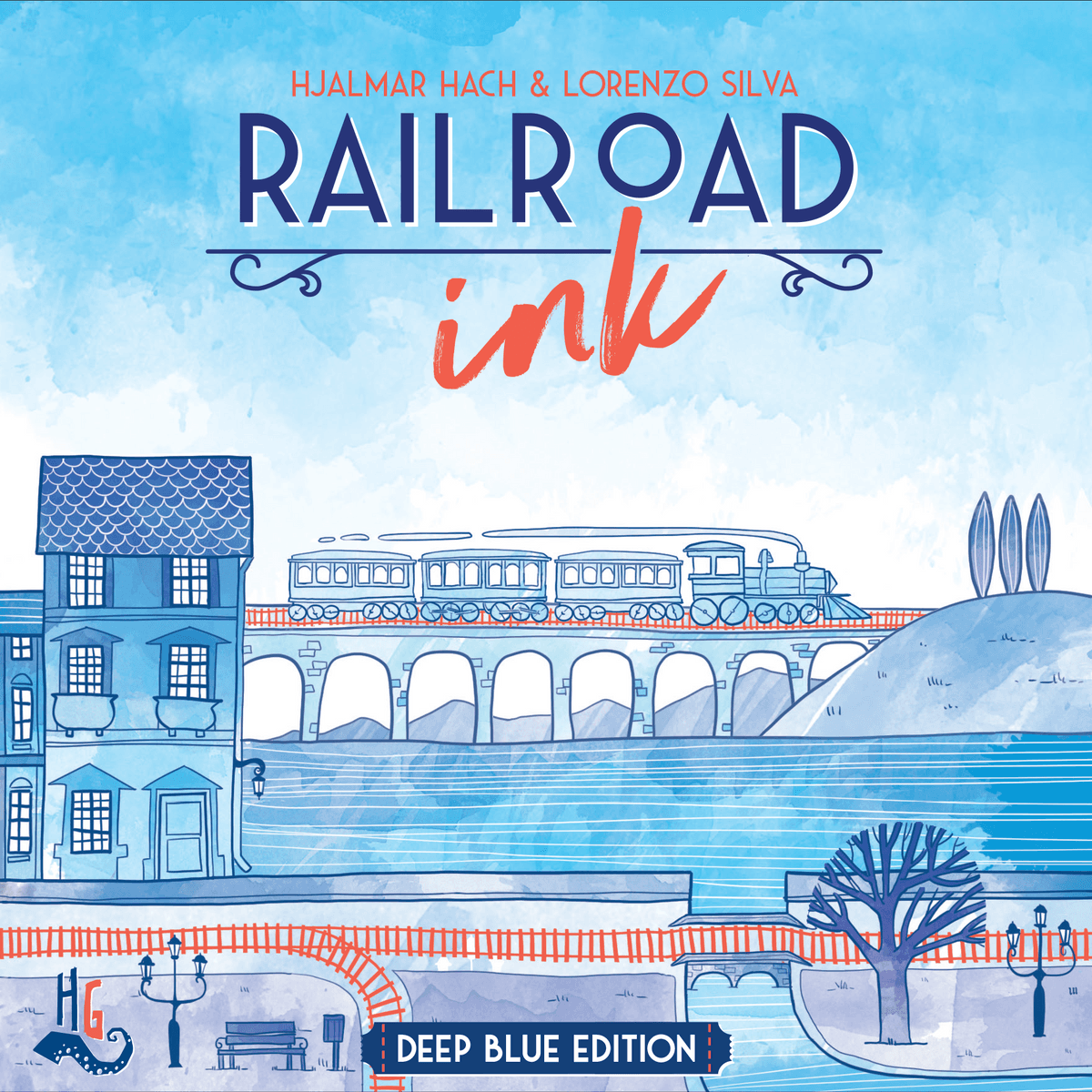
Railroad Ink: Deep Blue Edition is a captivating roll-and-write puzzle game where players strive to build the most efficient transportation network on their personal 7x7 grid. The core objective is to connect as many exits as possible around the perimeter of the board using highways and railways. Released as part of a series, the Deep Blue Edition specifically includes the River and Lake expansions, adding a serene but challenging aquatic twist to the land-based construction. Players compete to earn points by creating long routes, connecting exits, and filling the central squares of their map, all while avoiding incomplete paths that lead to point deductions at the end of the game.
Each round, a set of route dice is rolled, showing various configurations of straight roads, curved rails, or T-junctions. Every player must draw these specific results on their own dry-erase board simultaneously. The catch lies in the placement rules: new segments must connect to existing ones or to an exit. While everyone uses the same dice results, the diverging paths chosen by players quickly lead to unique map configurations. In addition to the standard dice, the Deep Blue Edition introduces expansion dice. Rivers add a separate network that cannot connect to roads or rails (except via a bridge) but offers high scoring potential, while Lakes allow for the creation of massive open water bodies that connect distant ports, maximizing network efficiency in a more fluid, non-linear way.
The appeal of Railroad Ink lies in its elegant simplicity paired with deep tactical decision-making. It is the quintessential 'coffee shop' game—portable, quick to play, and visually satisfying as your network grows. Unlike many competitive games, it features low player interaction, focusing instead on the individual puzzle of optimization. People love it because it rewards both careful long-term planning and the ability to adapt to the luck of the roll. The Deep Blue Edition is particularly praised for its calming theme and the way the water expansions introduce a layer of spatial complexity without bloating the ruleset. Whether played solo to beat a high score or in a large group setting where everyone shares the same dice, it offers a meditative yet mentally stimulating experience that keeps players coming back.
1-6 30m⚖️ 1.5

RANK #10,160
"Why Did the Chicken...?" is a remarkably inventive and open-ended party game that leans heavily on the improvisational humor and linguistic creativity of its participants. Originally published in 2004, this engaging title takes the familiar structure of fill-in-the-blank party experiences and injects a massive dose of active joke writing. The primary goal is to craft the most amusing, bizarre, or downright hilarious punchlines to randomly generated riddles. Instead of relying on pre-written responses like many modern casual tabletop games, players must utilize their own wit, drawing upon pads of paper and pencils to brainstorm their best comedic material. It is a fantastic exercise in spontaneous creativity where the funniest individual at the table often walks away with the victory, making it an absolute blast for gatherings of friends and family.
The gameplay loop is incredibly intuitive and perfectly suited for groups of four to eight players. Each round, one participant assumes the role of the rotating Judge. This individual draws a specific Question card that features intriguing blank spaces, such as 'What is the difference between [Blank] and [Blank]?' To complete the prompt, the Judge then draws two random Noun cards, instantly producing an absurd and often surreal riddle. Once the prompt is established, a two-minute sand timer is flipped. The remaining players furiously scribble down as many clever answers as they can muster before time expires. These written punchlines are subsequently gathered into a central pile, shuffled to ensure anonymity, and read aloud to the group. The Judge listens carefully to the comedic offerings and selects their absolute two favorite responses, awarding a Noun card as a point to the authors of those winning jokes. The role of the Judge then shifts to the next person, continuing until everyone has had three opportunities to evaluate the humor.
What truly sets "Why Did the Chicken...?" apart from other titles in the casual board game market is its boundless potential for memorable, laugh-out-loud moments. Because the punchlines are generated purely from the minds of the players rather than a static deck of cards, no two sessions will ever feel the same. This open-ended mechanic ensures infinite replayability and allows the humor to naturally tailor itself to the specific personalities, inside jokes, and sensibilities of the group playing. With a remarkably low rules complexity, it can be taught to absolute beginners in under a minute, completely removing any barriers to entry. The minimal component list highlights the reality that the true magic of the game resides in the social interactions and shared creativity of the participants. For anyone seeking a deeply interactive experience that champions quick thinking, this game remains a phenomenal choice.
4-8 45m⚖️ 1.1