Economic Games
Browse all Economic board games in the Meeple Pulse database.
Styles
AbstractAbstract StrategyAdventureAnimalsCard GameChildren's GameCivilizationCo-operativeCompetitiveDiceEconomicEducationalEuroExpansion for Base-gameFamilyFantasyFightingHistoricalHorrorMedievalMedium HeavyMiniaturesPartyParty GamePrint & PlayPuzzle-LikeRacingReal-timeSpace ExplorationSportsStrategyTerritory BuildingThematicWargame
Themes
AbstractAdventureAncientAnimalsArtBusinessCard GameCo-operativeComic BookCooperativeCrimeEconomicEnvironmentalismExplorationFantasyFightingHistoricalHorrorHumorIntrigueLiteraryMagicMarvelMedievalModernMuseumMysteryMythologyNatureNauticalParty GamePoliticalPress Your LuckRacingSatireSci-FiSocial CommentarySocial InteractionSpaceSuperheroesThematicTravelWarWesternWord-Guessing
Mechanics
3D PlacementActingAction / DexterityAction DraftingAction Point AllowanceAction Point Allowance SystemAction Point SystemAction PointsAction ProgrammingAction QueueAction RetrievalAction SelectionAction/EventAlliancesAlternate ActivationApp-AssistedApp-DrivenArea ControlArea InfluenceArea MajorityArea Majority / InfluenceArea MovementArgumentationAsymmetricAsymmetric FactionsAsymmetric GameAsymmetric PowersAsymmetrical PowersAuction & BiddingAuction/BiddingAuctioningBag BuildingBettingBetting and BluffingBetting and WageringBetting and WagersBiddingBingoBlind BiddingBluffingCampaign / Battle Card DrivenCampaign / LegacyCampaign / Legacy GameCampaign / Mission-basedCampaign / ScenariosCampaign GameCampaign PlayCard DraftingCard DrawingCard DrivenCard Driven ActionCard Driven CombatCard Driven Dice AllocationCard Driven MovementCard ManagementCard PlayCard Play / Hand ManagementCard Play Conflict ResolutionCard SheddingCard-Driven MovementCharacter CreationCharacter ProgressionChit-Pull SystemCo-op PlayCo-operative GameCo-operative PlayCode-breakingCombat ResolutionCombo ChainCommand CardsCommodity SpeculationCommunication LimitsContract FulfillmentContractsCooperative GameCooperative GameplayCooperative PlayCooperative Trick-takingDebateDeck BuildingDeck ConstructionDeck, Bag, and Pool BuildingDeck-BuildingDeductionDexterityDice DraftingDice PlacementDice RollingDiplomatic InfluenceDraftingDynamic Battle SystemEnclosureEnd Game BonusesEngine BuildingEngine-BuildingEscape RoomEvent DrivenExplorationFarmingFlip and WriteFollowFollow ActionGrid CoverageGrid MovementHand ManagementHex-and-CounterHexagon GridHidden MovementHidden RolesI Cut You ChooseIncomeInfluence / Area MajorityLadder ClimbingLegacyLegacy ElementsLegacy GameLegacy SystemLimited CommunicationLine DrawingLine of SightMancalaMap AdditionMap MovementMarketMarket DraftingMarket ManipulationMarket MechanicMarket SpeculationMatchingMeasurement MovementMemoryMission ObjectivesModular BoardModular Board ConstructionMove Through DeckMovement PointsMovement TemplatesMulti-Use CardsMulti-use CardsMultiple ScenariosMust FollowNarrative ChoiceNarrative Choice / ParagraphNegotiationNegotiation MechanicsNetwork & Route BuildingNetwork BuildingNetwork and Route BuildingOne vs ManyOne vs. ManyOpen DraftingOwnershipPaper-and-PencilPartnershipsPattern BuildingPattern RecognitionPick-up and DeliverPlayer EliminationPlayer InteractionPlayer JudgePoint SaladPoint to Point MovementPolyominoesPush Your LuckPush-Your-LuckPuzzlePuzzle-LikePuzzle-SolvingRaceReal-TimeRecipe FulfillmentResource ManagementRole PlayingRole SelectionRoll / Spin and MoveRondelRoute BuildingRoute-BuildingRoute/Network BuildingSanity SystemScenario / Campaign PlayScenario / Mission / Campaign GameScenario / Mission FunctionSecret Unit DeploymentSemi-Cooperative GameSet CollectionSheddingSimulationSimultaneous ActionSimultaneous Action SelectionSimultaneous Hidden AllocationSocial DeductionSocial InteractionSolo / Solitaire GameSpace ExplorationStat Check / Skill CheckStat Check ResolutionStock HoldingStorytellingStrategic PlanningTableau BuildingTactical Decision-MakingTake ThatTargeted CluesTeam PlayTeam-Based GameTeam-Based GuessingTeamworkTech TreesTech Trees / Tech TracksTechnology & Armament TracksTechnology TreeTension & Aggression TracksTile DraftingTile LayingTile PlacementTime TrackTime TravelTower DefenseTrack MovementTradingTrick-takingTug of WarTurn Order: PassTurn Order: Stat-BasedUnit PlacementVariable Phase OrderVariable Player PowersVariable Set-upVariable SetupVictory Point TracksVotingWord AssociationWord GameWord GuessingWord-GuessingWord-guessingWordplayWorker Placement
RANK #240
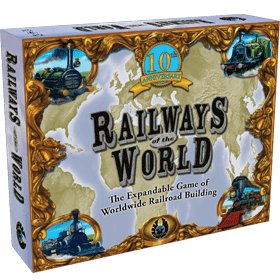
Originally released as Railroad Tycoon, Railways of the World is a quintessential 'train game' that tasks players with building the most successful and profitable railway empire. A more approachable and streamlined version of Martin Wallace's heavier game, Age of Steam, it challenges players to become titans of the 19th-century railroad industry. The goal is to accumulate the most victory points by the end of the game, which are primarily earned by making lucrative deliveries of goods between burgeoning cities. Players must balance aggressive expansion and operational efficiency, managing their finances carefully to lay track, upgrade their locomotives, and fulfill valuable contracts before their rivals can claim them.
The gameplay is structured over a series of rounds, each containing three distinct phases. First, players participate in a crucial auction to determine the turn order for the round, a phase where bidding aggressively can grant a significant strategic advantage. Next is the action phase, the heart of the game, where players take turns performing actions like building track tiles to expand their network across the hex-grid map, upgrading their engines to haul goods over longer distances, and delivering goods cubes by picking them up from one city and moving them to another along their connected routes. A key interactive element is that players can use their opponents' tracks for a delivery, but the track owner earns the points for that portion of the journey. Players can also take on debt by issuing bonds to gain an immediate influx of cash, but this will cost them income and victory points later on.
Railways of the World is beloved for its grand scale and high level of player interaction, which keeps all participants engaged throughout the game. The auction mechanism ensures tense decisions from the very start of each round, while the shared network system creates indirect competition and strategic dilemmas. Do you build a critical link that an opponent might exploit, or do you focus on a more isolated, personal network? This blend of economic management, route optimization, and tactical bidding creates a deeply satisfying and highly replayable experience. With its impressive table presence and the tangible reward of watching your rail network snake across the board, it has cemented its status as a masterpiece in the economic strategy genre.
2-6 120m⚖️ 3.2
RANK #242
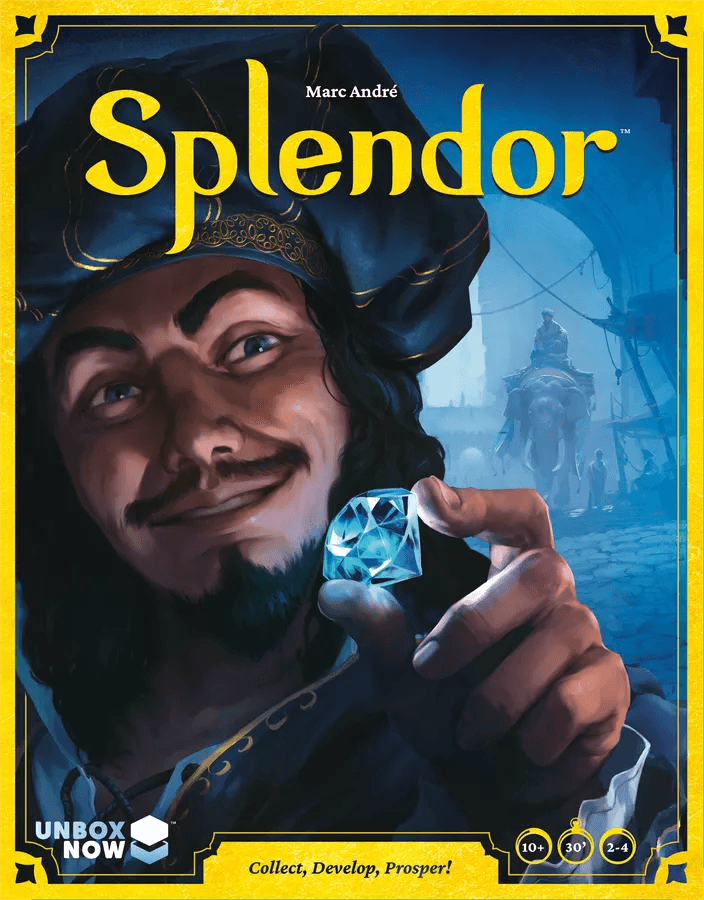
Splendor
2014In Splendor, players assume the roles of ambitious gem merchants during the Renaissance, all vying to become the most influential and prestigious trader in the land. The ultimate goal is to be the first to accumulate 15 prestige points. You will strategically invest your resources to acquire gem mines, develop better methods of transportation, and commission artisans to transform raw jewels into magnificent works of art. These investments not only build your wealth but also attract the attention of powerful nobles, whose patronage is crucial for securing victory and establishing your legacy as a master merchant.
The gameplay is celebrated for its streamlined and intuitive turn structure. Each turn, a player chooses just one of a few simple actions: take gem tokens that act as currency, reserve a valuable development card for future acquisition, or purchase a development card from the central display. These cards are the core of the game's compelling engine-building mechanic. Every card you purchase grants a permanent gem bonus, making subsequent purchases cheaper and creating a satisfying sense of escalating power. As you collect specific combinations of card bonuses, you automatically earn the favor of noble patrons, who grant substantial prestige points. The game ends once a player reaches 15 points, and at the end of that round, the merchant with the highest score wins.
Splendor's enduring popularity lies in its perfect balance of accessibility and strategic depth, making it an ideal 'gateway' game for those new to the hobby. The high-quality, weighty gem tokens provide a wonderfully tactile experience that elevates the gameplay. While the rules are easy to learn, the game presents meaningful choices on every turn. Players must constantly weigh the benefits of expanding their economic engine against the immediate need to score points. This elegant tension, combined with a brisk playing time and significant replay value, has solidified Splendor's reputation as a modern classic for families and strategy enthusiasts alike.
2-4 30m⚖️ 1.8
RANK #243
Ora et Labora
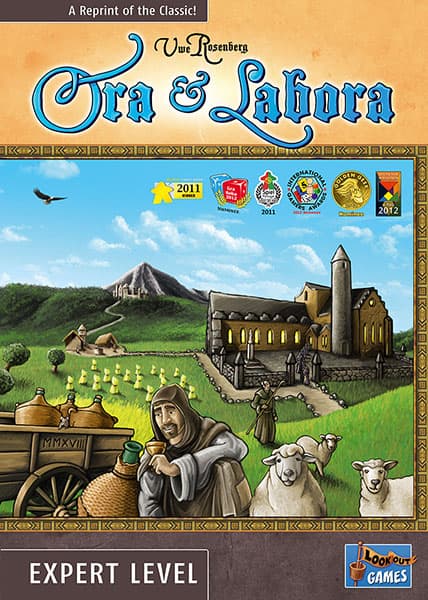
2011In *Ora et Labora*, Latin for 'Pray and Work', players step into the shoes of a monastic leader during the medieval era, tasked with expanding a small priory into a thriving and prosperous domain. Designed by the acclaimed Uwe Rosenberg, this game challenges players to skillfully manage resources, land, and labor to construct a powerful economic engine. The ultimate goal is to accumulate the most wealth and victory points by building an impressive landscape of buildings and settlements, proving your monastery to be the most industrious and prestigious. The game is a heavyweight strategic experience, demanding careful planning and foresight from its very first turn.
The gameplay revolves around a sophisticated blend of worker placement and resource management, elevated by several unique mechanical twists. Each player commands three clergymen who are placed on building cards to activate production or conversion actions. A key strategic consideration is that once a worker is placed, they cannot be used again until all three have been deployed. Players can also pay opponents to use their buildings, creating a layer of player interaction. A central feature is the innovative production wheel, which dictates the availability of basic resources each round. Instead of simply accumulating tokens, players must time their actions to gather goods when the wheel shows a high supply. These raw materials are then funneled through an intricate network of buildings to create refined goods like books, relics, and spirits, showcasing a deeply satisfying engine-building core.
*Ora et Labora* is celebrated by strategy gamers for its immense depth and high replayability. The spatial puzzle of arranging buildings on your personal landscape is a critical and engaging challenge; placement matters not only for optimizing your production chains but also for maximizing the scoring of settlements. The game further enhances its longevity by including two distinct scenarios, France and Ireland, which feature different buildings and resources, demanding new strategies with each playthrough. This combination of deep engine-building, a clever resource system, and a demanding spatial element makes *Ora et Labora* a classic and rewarding experience for those who relish complex, 'big box' eurogames.
1-4 120m⚖️ 4.3

RANK #246
Village
2011In Village, you are entrusted with the fate of a multi-generational family living in a medieval hamlet. Your primary objective is to guide your family members through their lives, helping them achieve greatness and earn the most prestige points. This is not just a game of prosperity but also of legacy. As your family members work in various professions—from farming and crafting to politics and religion—they contribute to your growing reputation. The game cleverly weaves the narrative of life and death into its core, where the ultimate goal is to have your most accomplished family members immortalized in the village chronicle, ensuring their story, and your victory, is remembered for ages.
The gameplay combines worker placement with a unique action selection mechanism. Each round begins with various action spaces on the board being populated with influence cubes of different colors. On your turn, you'll select a cube from a space, which then allows you to perform the associated action. These actions are diverse, allowing you to harvest grain, produce goods at a workshop, sell wares at the market, travel to distant lands, or gain influence in the church or village council. A standout mechanic is the treatment of time as a finite resource. Many actions cost time, which is tracked on your personal farm board. When your time marker completes a full circle, one of your oldest family members passes away. How and where they die is crucial; a life well-lived could mean a prestigious entry in the chronicle, while an uncelebrated death leads to an unmarked grave. The game concludes when either the chronicle or the graveyard fills, triggering the final scoring.
Village has earned critical acclaim, including the prestigious 2012 Kennerspiel des Jahres award, for its brilliant synthesis of theme and mechanics. Players love the poignant and surprisingly personal experience of managing a family lineage. The ever-present ticking clock and the inevitability of death add a layer of thematic depth rarely seen in Euro-style games. It forces players to make tough, long-term decisions about which family members to specialize and when to let them go for the sake of the family's legacy. This creates a compelling narrative arc within a strategically robust framework, offering a deeply engaging and memorable experience that goes beyond simple point optimization. It’s a game where every choice matters, not just for the score, but for the story you create for your family.
2-4 90m⚖️ 3.1

RANK #247
Suburbia
2012In Suburbia, players take on the role of city planners, each tasked with transforming a small town into a thriving metropolis. The ultimate goal is to end the game with the highest population, which serves as your score. You achieve this by strategically purchasing and placing hexagonal building tiles from a shared real estate market into your personal borough. Each tile represents a different type of development—commercial, residential, industrial, civic, or cultural—and carries unique effects. These effects manipulate your borough's two key resources: Income, which provides the cash needed for expansion, and Reputation, which dictates how quickly your population grows. The core challenge lies in creating a balanced and synergistic economic engine, carefully managing your budget while attracting new residents to your burgeoning city.
The gameplay revolves around a simple turn structure with deeply tactical choices. On your turn, you will typically purchase a tile from the market and add it to your borough. The tile's placement is crucial, as its effects—and the effects of its neighbors—are triggered upon placement. A new airport might increase your income but decrease the reputation of adjacent residential areas, simulating real-world zoning challenges. As your population grows and crosses certain thresholds on the score track, both your income and reputation are reduced, representing the increased upkeep and complexity of a larger city. This clever mechanic forces players to constantly improve and adapt their city's engine rather than resting on early success. Players must also keep an eye on shared and secret goals, which provide significant population bonuses at the end of the game.
Suburbia's enduring appeal comes from the satisfying and tangible experience of building something from the ground up. The puzzle of optimizing tile placement to create powerful combinations is incredibly engaging, offering a strong sense of accomplishment as your humble town expands. The game masterfully integrates its theme, with mechanics that intuitively reflect the cause-and-effect relationships of urban development. With a variable tile market and different goals in every game, no two cities will ever be the same, ensuring high replayability. It perfectly blends strategic foresight with the tactical need to adapt to what becomes available, making it a celebrated classic in the city-building genre for both new and experienced gamers.
1-4 90m⚖️ 2.9
BoxNo Cover Art
RANK #250
Welcome to The Taverns of Tiefenthal, a strategic board game where you'll take on the role of a tavern owner in a small village. Your goal is to make your tavern the most successful by attracting the right customers and making the right improvements using dice placement and deck building mechanisms. Each player will begin with a slim deck of cards that includes 7 guests, a brewer, server, and a table. As you play, you'll upgrade your tavern board by flipping over pieces to reveal new areas for improvement. You'll also collect resources such as beer and Thaler (coins) to purchase new guests and nobles cards, or upgrade equipment in your tavern. The game consists of eight rounds, each with seven phases. Players will compete to have the most points at the end of round 8, gained from the cards in their deck and the upgrades in their tavern. The more special the cards in your deck, the more points you'll gain, especially from nobles. But don't forget the upgrades in your tavern, they'll also give you points and help you during the game with their special abilities. With its unique blend of dice placement and deck building, The Taverns of Tiefenthal offers a challenging and rewarding experience for players who enjoy strategic gameplay.
2-4 60m⚖️ 2.7

RANK #261
Coimbra
2018Step into the vibrant heart of Portugal during its golden Age of Discovery in Coimbra, a masterfully designed strategy game where players assume the roles of heads of the city's most influential houses. Your goal is to amass the most prestige and secure your family's legacy as the most prominent in all of Portugal. This is achieved by carefully currying favor with the city's most powerful citizens—clerics, scholars, merchants, and councilmen—as well as funding ambitious new voyages and supporting the local monasteries. Every decision is a calculated risk, a bid for influence in a city teeming with opportunity. Victory points are the ultimate measure of success, earned through a variety of avenues, demanding a flexible and forward-thinking strategy to outmaneuver your rivals.
The gameplay of Coimbra revolves around a clever and multi-faceted dice-drafting mechanism that serves as the engine for all your actions. Each round, players select dice from a central pool. The value of a chosen die dictates the turn order for actions and the price you'll pay, while its color determines which of the four main influence tracks you'll benefit from. These dice are then used to acquire powerful character cards from different city districts, each offering unique abilities, immediate resources, or crucial end-game scoring bonuses. As you gain characters, you'll advance on the corresponding influence tracks, which provide income in the form of coins, guards, pilgrim movements, and victory points. This intricate web of choices forces players to constantly evaluate the opportunity cost of every die they select.
Coimbra is highly regarded for the elegant way its systems interlock, creating a deeply engaging and satisfying puzzle. The dual nature of the dice—where both color and value are critically important—presents a fresh challenge on every turn, rewarding players who can best adapt their plans. With numerous paths to victory, from specializing in lucrative voyages to building a powerful engine from synergistic character cards and diploma sets, the game offers exceptional replayability. It strikes a perfect balance, being accessible enough for those new to mid-weight Eurogames while offering the strategic depth and tight competition that seasoned players crave. Its compelling decision-making and rewarding gameplay loop make it a standout title in the dice-drafting genre.
2-4 90m⚖️ 3.3

RANK #266
Welcome to the wildest race in the desert! In Camel Up (Second Edition), players are not the jockeys but wealthy spectators hoping to strike it rich by betting on a frantic camel race. The goal is simple: end the game with the most money. To do this, you'll place bets on which camel will lead at the end of each round, or 'leg', as well as which camel will be the overall champion and which will be the ignominious loser. The game's vibrant, high-quality production, featuring a stunning 3D palm tree and an ingenious pyramid dice shaker, immediately draws players into the excitement of race day.
Gameplay is a delightful mix of calculated risk and hilarious chaos. On your turn, you choose one of four actions: grab a leg betting tile for a specific camel, place a spectator tile on the track to help or hinder the race, make a long-shot bet on the final winner or loser, or commit to moving a camel. This last action involves grabbing the pyramid, giving it a shake, and releasing a single colored die. The die's color dictates which camel moves, and the number (1, 2, or 3) shows how far. The game's signature mechanic is 'stacking'—if a camel lands on an occupied space, it climbs on top of the other camel(s). When the bottom camel in a stack is activated, it carries the entire pile with it, and only the camel on top is considered in the lead! This edition also introduces rogue camels, which start at the finish line and run backward, potentially dragging entire stacks away from victory.
The unique appeal of Camel Up lies in its sheer unpredictability and the social excitement it generates. It's a game where a long-shot bet can pay off spectacularly and the race leader can suddenly find itself at the back of the pack. This level playing field makes it an exceptional 'gateway' game for newcomers and a fantastic choice for family game nights, yet the subtle timing of when to bet versus when to move a camel offers enough depth to keep experienced players engaged. It truly shines with a larger group, creating a boisterous, party-like atmosphere filled with cheers and groans as the camels stack, stumble, and sprint toward the finish line.
3-8 45m⚖️ 1.5
RANK #267
My City
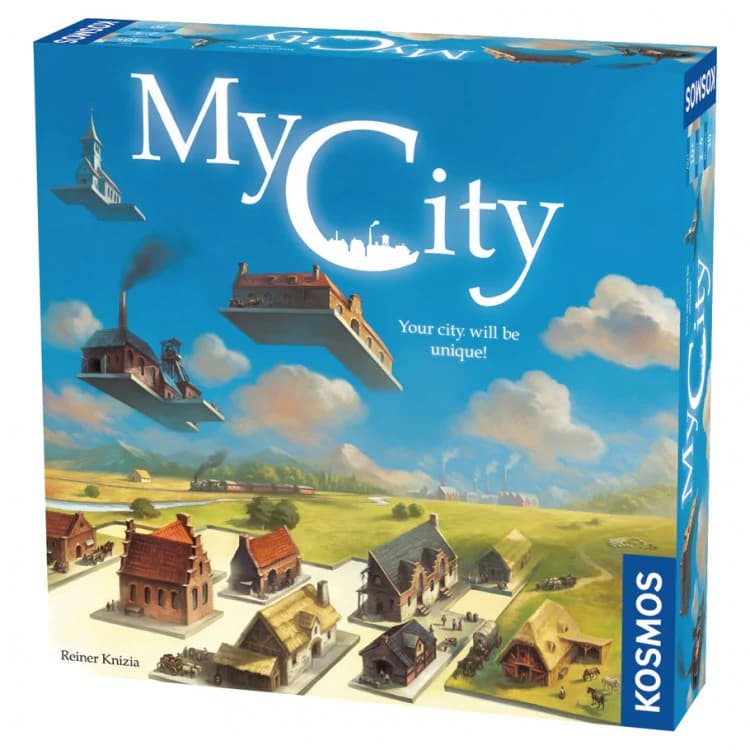
2020My City is a captivating competitive legacy game from celebrated designer Reiner Knizia, where players embark on a journey to build and develop their own unique city. The game unfolds over an engaging 24-episode campaign, broken into eight distinct chapters. Players begin with a pristine, untouched plot of land and, over the course of the campaign, will see it transform into a bustling metropolis. The goal is to be the most successful city planner by scoring points based on evolving objectives that are introduced with each new episode. This narrative-driven progression allows players to create a personal history with their board, making each game a unique and memorable chapter in their city's story.
At its core, the gameplay is elegantly simple and accessible. Each round, a construction card is revealed, indicating a specific polyomino-shaped building that every player must simultaneously place onto their personal game board. This simultaneous action keeps downtime to a minimum and ensures all players are constantly engaged. The legacy element is the game's defining feature; players will permanently alter their boards by adding stickers, representing new discoveries, landmarks, or challenges. At the start of each new chapter, sealed envelopes are opened, revealing new rules, components, and scoring opportunities that add layers of complexity and strategic depth. Early decisions might revolve around simple adjacency rules and avoiding natural obstacles, but strategies must adapt as the city and its ruleset evolve.
The appeal of My City lies in its masterful blend of simplicity and evolving strategy, making it an ideal 'gateway' legacy experience for families and newcomers to the hobby. The rules are introduced gradually, preventing players from feeling overwhelmed while providing a steady stream of fresh challenges. The game also incorporates a clever catch-up mechanism, where players who perform less well in an episode receive small advantages in the next, ensuring the campaign remains competitive and exciting for everyone involved. For those seeking endless replayability after the 24-episode journey concludes, the reverse side of the game board offers a standardized, non-legacy version of the game, allowing the fun of tactical tile-laying to continue indefinitely.
2-4 30m⚖️ 1.9
RANK #269
Nations
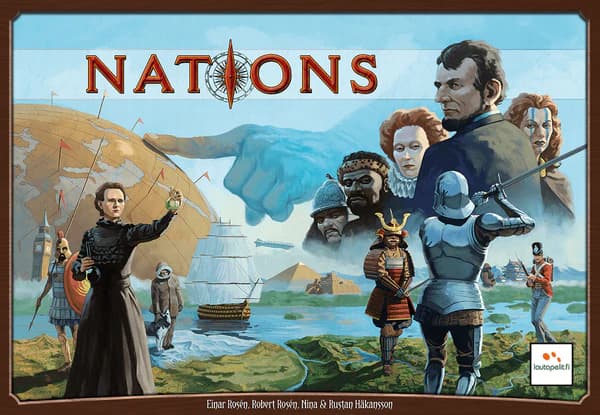
2013In Nations, you take the helm of a burgeoning civilization, guiding it from the annals of antiquity to the cusp of the First World War. Your ultimate objective is not conquest, but the creation of a lasting legacy, measured in victory points earned through cultural achievements, magnificent wonders, valuable colonies, and historical renown. Players must skillfully navigate the challenges of history to build the most prestigious and prosperous nation. The game is an epic race to accumulate the most 'books', which symbolize your civilization's accumulated knowledge and cultural impact, proving your dominance through wisdom and development rather than brute force.
The game unfolds over eight rounds, divided into four historical ages: Antiquity, Medieval, Renaissance, and Industrial. Each round is a meticulously structured sequence of phases. Players begin by preparing for the challenges ahead, revealing new progress cards and a pivotal event card. The heart of the game is the action phase, where players take turns performing one action at a time, with the player possessing the strongest military going first. Actions are varied and strategic: you might purchase a new technology or building from a shared card row, deploy your workers to activate structures for resources, or assign an architect to the monumental task of constructing a world wonder. Competition is indirect but fierce, as players vie for military superiority to set the turn order and manage the effects of historical events, all while managing resources and keeping their populace stable.
Nations is celebrated for offering a profound and satisfying civilization-building experience within a streamlined and manageable playtime. It captures the grand sweep of history without the complex combat systems or map-based conflicts common to the genre, instead focusing on a tense, indirect struggle for supremacy. Its unique appeal stems from the delicate balancing act required to succeed. You must constantly weigh the immediate needs of your people—food and stability—against long-term investments in military, culture, and economic infrastructure. The variable card market and unpredictable events ensure that each game presents a new strategic puzzle, making Nations a highly replayable and engaging journey through time for strategy enthusiasts.
1-5 120m⚖️ 3.4

RANK #273
La Granja
2014Set on the picturesque island of Mallorca, 'La Granja' invites players to take the reins of their very own small farm estates located near the tranquil Alpich pond, just outside the quaint village of Esporles. As ambitious agricultural entrepreneurs, your primary objective over the course of six calculated rounds is to expand your property, cultivate lucrative crops like olives, grain, and grapes, and successfully breed a thriving population of pigs. The ultimate goal is to process these raw materials and deliver your valuable commodities directly to the local village market. By completing these deliveries and managing your rural enterprise more efficiently than your rivals, you will amass Victory Points and claim the prestigious, titular rank of 'La Granja' for your sprawling estate.
Often described by enthusiasts as a brilliant 'Eurogame potpourri,' the design masterfully weaves together several beloved mechanics into a highly cohesive and challenging experience. The standout feature is its ingenious implementation of multi-use cards. Every card drawn can be tucked under one of the four edges of your personal player board, fundamentally changing its function. Slotted on the left, it expands your fields; on the right, it upgrades farm extensions for pig capacity and income; at the top, it becomes a market barrow contract; and at the bottom, it acts as a specialized helper providing powerful ongoing abilities. This card-driven engine building is perfectly complemented by a communal dice drafting system. Each round, a shared pool of dice is rolled, and players must tactically draft them to execute core actions like upgrading resources or gaining coins, adding a beautifully calculated layer of unpredictability to the core loop.
Beyond the personal farm boards, the central village market creates a fierce, competitive arena for area control and influence. During the critical Transportation Phase, players secretly choose donkey tiles to dictate their delivery capacity and advancement on the crucial Siesta Track, which dictates future turn order. Delivering goods fulfills barrow contracts and places your hexagonal markers onto the main board. Completing higher-value deliveries allows you to aggressively bump your opponents' markers out of the village spaces, turning a traditionally solitary farming theme into a highly interactive scramble for dominance and passive scoring. This brilliant friction, combined with the game's deep, crunchy resource management and rewarding learning curve, is exactly why 'La Granja' remains a critically acclaimed heavyweight strategy staple.
1-4 120m⚖️ 3.3
RANK #278
Dinosaur Island
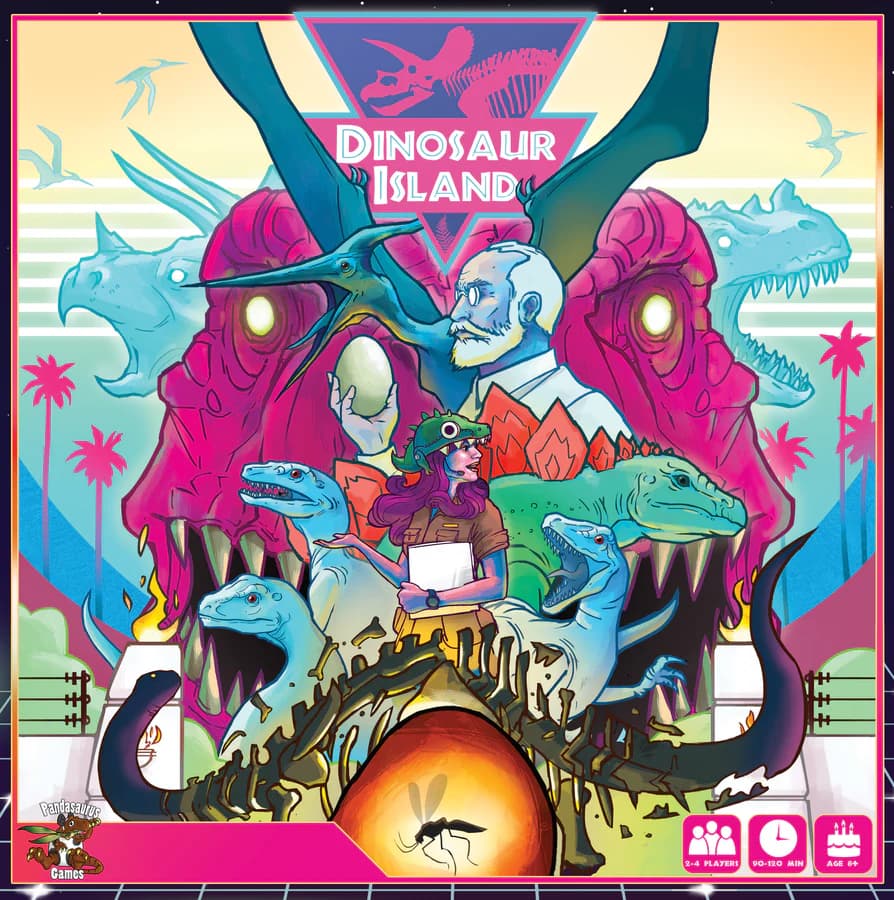
2017Dinosaur Island invites players to take the helm of a sprawling, neon-drenched biological amusement park where bringing prehistoric creatures back to life is just part of the daily grind. Channeling a vibrant, nostalgic aesthetic inspired by the pop culture of the 1980s and 90s, this thematic strategy game tasks you with synthesizing ancient DNA, erecting thrilling rides, and keeping your visitors entertained. Your ultimate objective is to run the most successful and profitable park possible, carefully balancing the awe-inspiring excitement of your newly minted dinosaurs against the ever-present danger of a catastrophic, guest-eating breakout.
The gameplay loop operates across several distinct phases and utilizes a clever blend of worker placement, set collection, and dice drafting. In the initial research phase, players deploy scientists to extract vital genetic sequences from custom amber dice, expand cold-storage capacities, and discover new dinosaur recipes. Next, managers hit the market to purchase essential upgrades, hire skilled specialists, and build amenities like food stands or rollercoasters. The core action then shifts to personal laboratory boards, where workers are simultaneously assigned to refine DNA, breed creatures into paddocks, and bolster park security. Finally, the park opens its gates to a blind draw of visitor meeples. While paying guests bring in much-needed revenue and victory points, sneaky hooligans take up valuable space for free, and any lapse in security will lead to rampaging carnivores devouring the clientele.
What truly sets Dinosaur Island apart is its masterful integration of a deeply engaging theme with satisfying Euro-style mechanics. Fans adore the striking visual presentation, largely driven by vivid pinks and retro graphic design that makes the table presence absolutely pop. Beyond its stunning looks, the game offers remarkable flexibility; players can tailor the experience's length by selecting different sets of objective cards to accommodate quick sessions or sprawling engagements. With a well-regarded solo mode and multiple strategic avenues to explore—from focusing on massive, high-risk carnivores to building a safe, amenity-rich resort—the game provides a robust, replayable puzzle that keeps managers coming back for more thrilling park management.
1-4 120m⚖️ 3.0