Family Games
Browse all Family board games in the Meeple Pulse database.
Styles
Themes
AbstractAdventureAncientAnimalsArtBusinessCard GameCo-operativeComic BookCooperativeCrimeEconomicEnvironmentalismExplorationFantasyHistoricalHorrorHumorIntrigueLiteraryMagicMarvelMedievalModernMuseumMysteryMythologyNatureNauticalPoliticalPress Your LuckSatireSci-FiSocial CommentarySocial InteractionSpaceSuperheroesThematicTravelWarWesternWord-Guessing
Mechanics
3D PlacementActingAction / DexterityAction DraftingAction Point AllowanceAction Point Allowance SystemAction Point SystemAction PointsAction ProgrammingAction QueueAction RetrievalAction SelectionAction/EventAlliancesAlternate ActivationApp-AssistedApp-DrivenArea ControlArea InfluenceArea MajorityArea Majority / InfluenceArea MovementArgumentationAsymmetricAsymmetric FactionsAsymmetric GameAsymmetric PowersAsymmetrical PowersAuction & BiddingAuction/BiddingAuctioningBag BuildingBettingBetting and BluffingBetting and WageringBetting and WagersBiddingBingoBlind BiddingBluffingCampaign / Battle Card DrivenCampaign / LegacyCampaign / Legacy GameCampaign / Mission-basedCampaign / ScenariosCampaign GameCampaign PlayCard DraftingCard DrawingCard DrivenCard Driven ActionCard Driven CombatCard Driven Dice AllocationCard Driven MovementCard ManagementCard PlayCard Play / Hand ManagementCard Play Conflict ResolutionCard SheddingCard-Driven MovementCharacter CreationCharacter ProgressionChit-Pull SystemCo-op PlayCo-operative GameCo-operative PlayCode-breakingCombat ResolutionCombo ChainCommand CardsCommodity SpeculationCommunication LimitsContract FulfillmentContractsCooperative GameCooperative GameplayCooperative PlayCooperative Trick-takingDebateDeck BuildingDeck ConstructionDeck, Bag, and Pool BuildingDeck-BuildingDeductionDexterityDice DraftingDice PlacementDice RollingDiplomatic InfluenceDraftingDynamic Battle SystemEnclosureEnd Game BonusesEngine BuildingEngine-BuildingEscape RoomEvent DrivenExplorationFarmingFlip and WriteFollowFollow ActionGrid CoverageGrid MovementHand ManagementHex-and-CounterHexagon GridHidden MovementHidden RolesI Cut You ChooseIncomeInfluence / Area MajorityLadder ClimbingLegacyLegacy ElementsLegacy GameLegacy SystemLimited CommunicationLine DrawingLine of SightMancalaMap MovementMarketMarket DraftingMarket ManipulationMarket MechanicMarket SpeculationMatchingMeasurement MovementMemoryMission ObjectivesModular BoardModular Board ConstructionMovement TemplatesMulti-Use CardsMulti-use CardsMultiple ScenariosMust FollowNarrative ChoiceNarrative Choice / ParagraphNegotiationNegotiation MechanicsNetwork & Route BuildingNetwork BuildingNetwork and Route BuildingOne vs ManyOne vs. ManyOpen DraftingPaper-and-PencilPartnershipsPattern BuildingPattern RecognitionPick-up and DeliverPlayer EliminationPlayer InteractionPlayer JudgePoint SaladPoint to Point MovementPolyominoesPush Your LuckPush-Your-LuckPuzzlePuzzle-LikePuzzle-SolvingRaceReal-TimeRecipe FulfillmentResource ManagementRole PlayingRole SelectionRoll / Spin and MoveRondelRoute BuildingRoute-BuildingRoute/Network BuildingSanity SystemScenario / Campaign PlayScenario / Mission / Campaign GameScenario / Mission FunctionSecret Unit DeploymentSemi-Cooperative GameSet CollectionSheddingSimulationSimultaneous ActionSimultaneous Action SelectionSimultaneous Hidden AllocationSocial DeductionSocial InteractionSolo / Solitaire GameSpace ExplorationStat Check / Skill CheckStock HoldingStorytellingStrategic PlanningTableau BuildingTactical Decision-MakingTake ThatTargeted CluesTeam PlayTeam-Based GameTeam-Based GuessingTeamworkTech TreesTech Trees / Tech TracksTechnology & Armament TracksTechnology TreeTension & Aggression TracksTile DraftingTile LayingTile PlacementTime TrackTime TravelTower DefenseTrack MovementTradingTrick-takingTug of WarTurn Order: PassTurn Order: Stat-BasedUnit PlacementVariable Phase OrderVariable Player PowersVariable Set-upVariable SetupVictory Point TracksVotingWord AssociationWord GameWord GuessingWord-GuessingWord-guessingWordplayWorker Placement

RANK #624
Railroad Ink: Deep Blue Edition is a captivating roll-and-write puzzle game where players strive to build the most efficient transportation network on their personal 7x7 grid. The core objective is to connect as many exits as possible around the perimeter of the board using highways and railways. Released as part of a series, the Deep Blue Edition specifically includes the River and Lake expansions, adding a serene but challenging aquatic twist to the land-based construction. Players compete to earn points by creating long routes, connecting exits, and filling the central squares of their map, all while avoiding incomplete paths that lead to point deductions at the end of the game.
Each round, a set of route dice is rolled, showing various configurations of straight roads, curved rails, or T-junctions. Every player must draw these specific results on their own dry-erase board simultaneously. The catch lies in the placement rules: new segments must connect to existing ones or to an exit. While everyone uses the same dice results, the diverging paths chosen by players quickly lead to unique map configurations. In addition to the standard dice, the Deep Blue Edition introduces expansion dice. Rivers add a separate network that cannot connect to roads or rails (except via a bridge) but offers high scoring potential, while Lakes allow for the creation of massive open water bodies that connect distant ports, maximizing network efficiency in a more fluid, non-linear way.
The appeal of Railroad Ink lies in its elegant simplicity paired with deep tactical decision-making. It is the quintessential 'coffee shop' game—portable, quick to play, and visually satisfying as your network grows. Unlike many competitive games, it features low player interaction, focusing instead on the individual puzzle of optimization. People love it because it rewards both careful long-term planning and the ability to adapt to the luck of the roll. The Deep Blue Edition is particularly praised for its calming theme and the way the water expansions introduce a layer of spatial complexity without bloating the ruleset. Whether played solo to beat a high score or in a large group setting where everyone shares the same dice, it offers a meditative yet mentally stimulating experience that keeps players coming back.
1-6 30m⚖️ 1.5

RANK #1,145
Point City
2023Point City is a streamlined card-drafting game that challenges players to architect a flourishing urban environment from the ground up. Serving as a spiritual successor to the popular Point Salad, this title elevates the experience by introducing more complex layers of engine-building and resource management. The primary objective is to accumulate the most victory points by strategically selecting cards from a dynamic market grid. Players must balance the acquisition of raw materials with the construction of civic structures, all while competing against others to secure the most lucrative developments for their growing cityscape.
The heart of the game lies in its unique dual-sided cards. One side represents basic resources—such as energy, industry, or ecology—while the flip side features a specific building with unique costs and scoring opportunities. On their turn, a player drafts two adjacent cards from a central four-by-four grid. If they take a resource, it is added to their pool; if they take a building, they must be able to pay the required resource cost using cards in their hand or permanent resources provided by previously constructed buildings. This engine building aspect is crucial, as every building constructed makes future projects easier to complete. As the grid is depleted, it is constantly replenished with new cards from the deck, ensuring that the market is always evolving and forcing players to adapt their strategies to the available options.
What makes Point City so compelling is its elegant blend of accessibility and depth. It retains the 'pick two' simplicity of its predecessor but adds a satisfying layer of progression that rewards long-term planning. The game is highly regarded for its fast-paced nature, typically wrapping up in under thirty minutes, making it an ideal choice for families or as a 'filler' for more dedicated gaming groups. Its vibrant artwork and intuitive iconography lower the barrier to entry, while the sheer variety of building combinations ensures high replayability. Fans of the genre appreciate the clever tension between taking a needed resource now or grabbing a powerful building before an opponent can. Ultimately, it offers a rewarding puzzle that feels both fresh and familiar, cementing its place as a modern staple in the card-drafting genre.
m⚖️ N/A
RANK #3,205
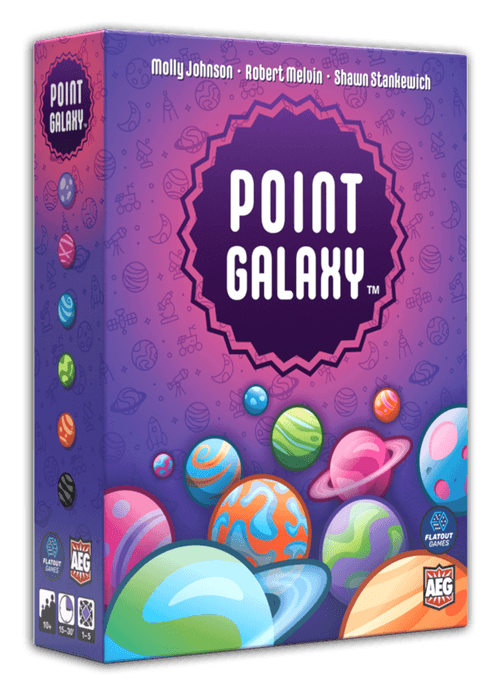
Point Galaxy
2025Point Galaxy is a vibrant, card-drafting experience that expands upon the foundations laid by its predecessors in the 'Point' series. As the spiritual successor to popular titles like Point Salad and Point City, this game challenges players to construct a celestial tapestry of stars, planets, and cosmic phenomena. The primary objective is straightforward yet deep: accumulate the most victory points by strategically selecting cards from a central market. In this galaxy-building adventure, every card serves a dual purpose, either acting as a celestial object within your tableau or providing unique scoring criteria that can turn a modest collection into a high-scoring powerhouse.
The gameplay loop is elegant and fast-paced, ensuring that players remain engaged from the first turn to the last. On a typical turn, participants draft two cards from a dynamic, ever-shifting market and incorporate them into their personal galaxy. This mechanic forces players to constantly weigh short-term gains against long-term scoring potential. Because the market is shared, there is a layer of interaction as you observe what your opponents are collecting and potentially deny them the cards they need. The middle-ground complexity of the game allows it to bridge the gap between casual family play and more involved strategy sessions, offering hundreds of ways to score and ensuring that no two galaxies ever look or play exactly the same.
What truly sets Point Galaxy apart is its incredible replayability and the satisfaction of watching an engine come to life. The game manages to capture the awe of space exploration through colorful, thematic artwork while maintaining a tight, mechanical focus. Enthusiasts of the series will appreciate the refined balance and the increased depth of card combinations available. It is a puzzle-like experience where every choice matters, yet it remains accessible enough for newcomers to jump in immediately. Whether you are playing solo or with a full group of five, the game delivers a snappy, rewarding experience that fits perfectly into a thirty-minute window. Its blend of simple rules and complex scoring possibilities makes it a standout addition to any tabletop collection.
m⚖️ N/A

RANK #3,418
Wispwood
2025Wispwood invites players into a luminous, enchanted woodland where the primary objective is to harness the ethereal glow of magical wisps to guide a wandering cat through the shadows. In this visually striking experience, players act as tenders of the forest, strategically placing light sources to illuminate the dense foliage and create paths that appeal to the feline's natural curiosity. The game strikes a delicate balance between a peaceful, thematic journey and a calculated spatial puzzle. As the forest floor becomes a canvas of color and light, every tile placed serves the dual purpose of expanding the illuminated reaches of the woods and securing the favor of the elusive forest inhabitant. The overarching goal is not just to build a beautiful landscape, but to optimize the placement of these glowing elements to maximize influence over the game's final scoring conditions.
The core gameplay revolves around a drafting board featuring eight distinct positions, each offering a combination of face-up wisp tiles and specific polyomino shapes that range from two to four blocks in size. Over the course of three distinct rounds, players must carefully select their pieces to build out their personal forest tableau. The mechanic of tile-laying is elevated by the presence of conditional scoring elements that change based on goal cards, ensuring that no two sessions feel the same. Between rounds, the forest undergoes a phase of transformation where it fades and expands, forcing players to adapt their long-term strategies to the shifting landscape while maintaining the wisps they have already established. This evolution adds a layer of depth to the drafting process, as players must consider not just the immediate utility of a shape, but how it will interact with future expansions and the ever-changing requirements of the forest's magic.
What truly distinguishes Wispwood from other polyomino-based games is its blend of accessible drafting and surprisingly intricate scoring logic. While the act of placing colorful shapes is intuitive, the high volume of conditional bonuses requires players to maintain a sharp focus on efficiency and spatial planning. The game's appeal lies in its puzzle-like nature, where every decision carries weight, yet the theme remains light and enchanting. Enthusiasts of the genre will appreciate the solo-friendly design and the tactical flexibility required to navigate the drafting board's eight spots. Whether you are navigating solo challenges or competing in a four-player group, the game offers a satisfying progression as your forest grows from a few scattered lights into a radiant, interconnected ecosystem. With its quick playtime and high replayability, it serves as an excellent mid-weight title that rewards both casual play and more intense, analytical approaches to tile optimization.
1-4 45m⚖️ 2.2
RANK #4,046
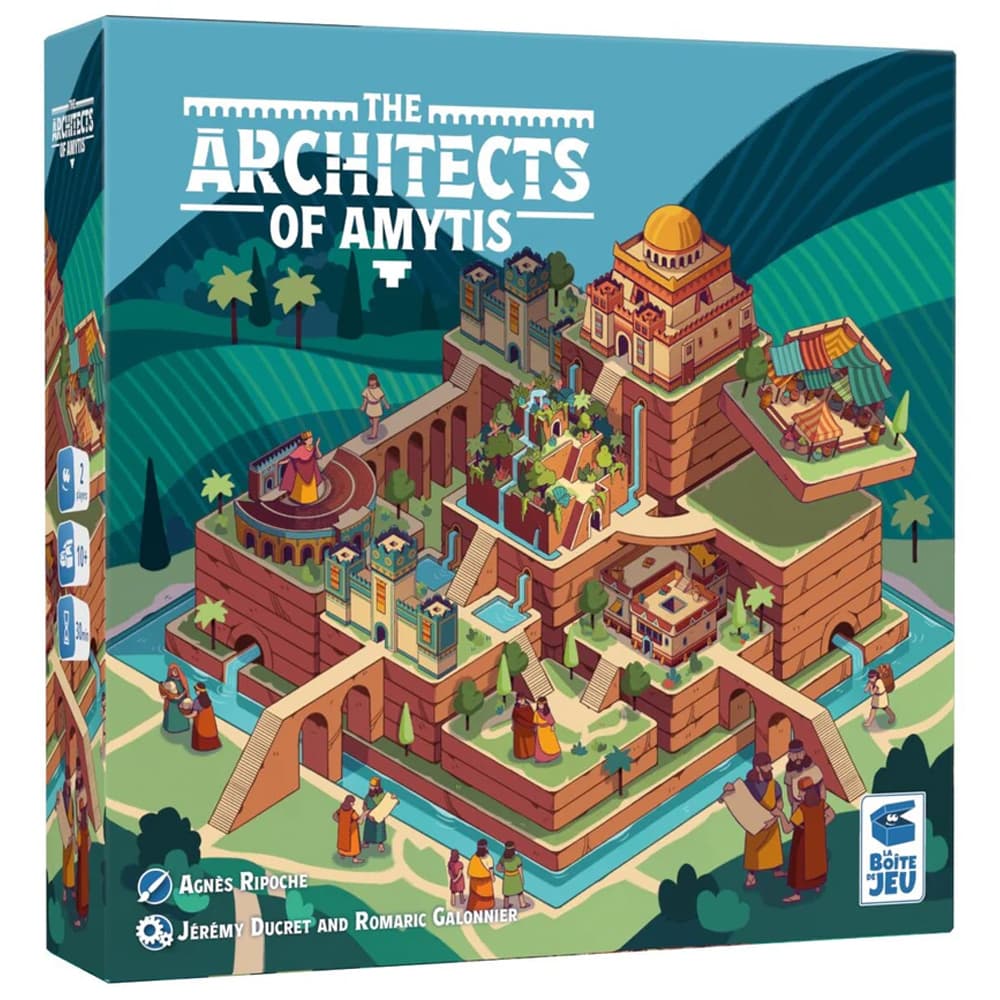
In The Architects of Amytis, two players are transported to ancient Babylon, where they assume the roles of rival architects competing for royal prestige. Commissioned by King Nebuchadnezzar II, your singular goal is to construct the most impressive and magnificent city district for his beloved wife, Queen Amytis. Victory is not achieved through a single grand gesture, but by meticulously accumulating points throughout the game. Players earn points by strategically placing building tiles, completing specific color patterns to satisfy royal 'Project Cards', and cleverly outmaneuvering their opponent to gain the 'King's Favor' for powerful endgame bonuses. The architect with the highest score when the final tile is laid will be celebrated as the greatest builder in all of Babylon.
The gameplay elegantly fuses several mechanics into a tight, interactive duel. The heart of the game is a shared 3x3 market grid, each space holding a stack of building tiles. On your turn, you select and draft one tile from any available stack. However, this choice comes with a crucial consequence: you must immediately place one of your architect pawns onto the now-vacant spot, blocking that stack from both players until your pawn is retrieved. The drafted tile is then placed onto your personal 3x3 city board, either on an empty space or atop an existing tile. Each placement triggers immediate scoring based on the building's type, with variable scoring cards ensuring no two games feel the same. This core loop is complicated by a brilliant spatial mini-game on the market board; if you successfully align three of your architect pawns in a row, column, or diagonal—much like tic-tac-toe—you earn a significant scoring bonus.
The Architects of Amytis is celebrated for its remarkable depth within a very accessible and fast-paced framework. While the rules can be taught in minutes, the strategic implications of each move are profound. The constant tension between improving your own city and blocking your opponent on the shared market creates a highly interactive and engaging experience. Players must constantly weigh their options: Do you take the perfect tile for your city, or do you draft a less optimal tile purely to block your rival or set up a tic-tac-toe victory on the market? This dual-layer puzzle, combined with high replayability from its modular scoring system, makes it a standout two-player game that offers a sharp, tactical challenge that respects players' time.
2 25m⚖️ 2.1

RANK #6,230
The Great Evening Banquet is a sophisticated board game that invites players into the high-stakes world of diplomatic event planning. Set within the prestigious walls of a brand-new state guest house, the game challenges you to act as a master of ceremonies tasked with organizing the ultimate social event. Your primary goal is to create harmonious seating arrangements for a diverse array of international dignitaries and VIPs. Each guest brings their own set of preferences and social requirements, turning the banquet hall into a complex grid of potential points and political pitfalls. The thematic essence of the game captures the tension and elegance of a formal gala, where the simple act of placing one person next to another can either foster international goodwill or result in a social faux pas.
The gameplay experience is built around a clever mix of token drafting and spatial puzzles. During each round, players draw guest tokens from a bag, introducing an element of controlled randomness that requires constant adaptation. These tokens are then selected through an open drafting mechanic, meaning you must stay vigilant about what your rivals are planning while securing the most beneficial guests for your own tables. The core challenge lies in the seating preferences of the VIPs; some may wish to be surrounded by their own entourage, while others provide bonuses based on the diversity of the table. The game progresses steadily until the grand chamber is filled, ensuring a tight, focused experience that rewards players who can think several moves ahead while managing the immediate tactical opportunities presented by the draft.
What truly distinguishes The Great Evening Banquet is its blend of approachable rules and deep, emergent strategy, a hallmark of the acclaimed publisher Saashi & Saashi. It offers a refined experience that appeals to fans of 'smart' family games, where the mechanics are easy to grasp but difficult to master. The inclusion of expert variants allows seasoned gamers to add layers of complexity, while the robust solo rules ensure that the seating puzzle is just as engaging when played alone. With its charming art style and the satisfying tactile feel of drawing tokens from a bag, the game provides a meditative yet competitive atmosphere. It perfectly captures the puzzle-like satisfaction of seeing a chaotic room transform into a perfectly ordered celebration, making it a standout title for anyone who enjoys abstract strategy with a strong thematic heartbeat.
1-4 45m⚖️ 2.2

RANK #7,159
The Lord of the Rings: Journey to Mordor is a fast-paced dice-rolling adventure where players step into the hairy feet of the iconic Hobbits from the Shire. Set against the backdrop of J.R.R. Tolkien's legendary Middle-earth, this title tasks players with a desperate race to reach Mount Doom. Unlike the cooperative nature of the original story, this version pits the Ringbearers against one another in a competitive sprint to see who can cast the One Ring into the fires first. However, the path is fraught with danger, as the shadowy Nazgûl are relentlessly pursuing the fellowship. Players must balance their desire for speed with the constant threat of being overtaken by Sauron’s most terrifying servants, making every roll a high-stakes decision.
Gameplay revolves around a set of five custom dice and a pad of paper maps representing the journey from Bag End to Mordor. On their turn, a player rolls all the dice and must set aside at least one, continuing until all five are locked in. The 'push your luck' mechanic is central here; players want to roll Ring symbols to advance their Hobbit along the track, but they must also deal with less favorable results. Rolling Nazgûl symbols forces the player to advance the enemy on their personal track, potentially leading to elimination if they reach the end. Gandalf symbols provide a buffer by blocking enemy progress, while Orcs can be neutralized by Fellowship symbols. The game also features an 'Advanced' side of the map, adding unique effects to specific locations like Rivendell or Shelob’s Lair, which introduces more tactical depth to the dice management.
Fans of the franchise and casual gamers alike are drawn to Journey to Mordor because of its accessibility and portable nature. It distills the epic scale of the trilogy into a 20-minute experience that fits easily on a small table. The tension is palpable as players watch their opponents inch closer to the goal while their own Nazgûl track fills up. It captures the 'race against time' feeling of the books perfectly through its dice-driven mechanics. Whether you are using the basic rules for a quick family session or the advanced rules for a more strategic challenge, the game offers a satisfying blend of luck management and thematic immersion. The inclusion of classic Middle-earth artwork further enhances the experience, making it a must-have for Tolkien enthusiasts looking for a light yet engaging filler game.
2-4 20m⚖️ 1.5
RANK #7,304
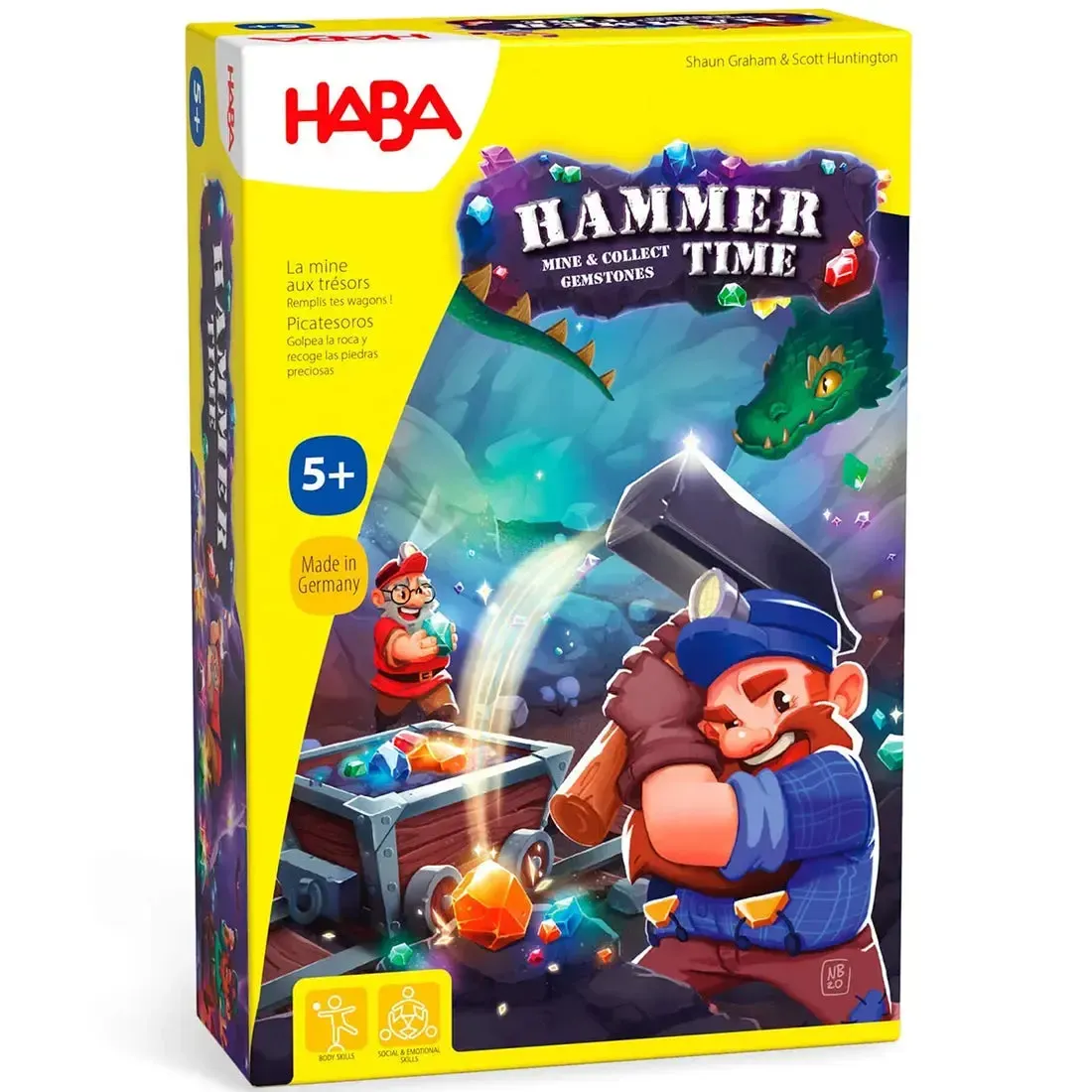
Hammer Time
2020In Hammer Time, players are transformed into industrious gnome miners on a quest for riches deep within Sparkle Mountain. This delightful children's game stands out with its incredibly tactile and clever setup: the game box itself is inverted to become the mountain, a raised platform topped with a neoprene mat where a trove of colorful plastic gemstones is scattered. The objective is a straightforward race. Each player must be the first to complete their four personal "wagon" cards, each of which depicts a specific recipe of gems that must be collected from the mountain. It’s a game of physical skill, gentle persuasion, and a little bit of luck, perfect for engaging the whole family in a treasure-hunting adventure.
The core gameplay loop is centered around a unique dexterity challenge. On your turn, you take the chunky wooden hammer and carefully tap the side of the box. The goal is to create just enough vibration to cause a few precious gems to tumble off the edge. As soon as at least one gem falls, your tapping phase must end. You collect all the fallen gems and assign them to your wagon cards, with clear gems acting as valuable wilds. However, brute force is punished! If a player gets overzealous and knocks nine or more gems off in a single turn, they've made too much noise, woken the fearsome dragon Dragomir, and forfeit their turn, gaining no gems. This creates a wonderful tension between ambition and caution. Players can also work on secondary Task Cards, which reward them with special bonuses for completing smaller objectives.
Hammer Time is beloved for its immediate, hands-on fun that appeals to both children and the adults playing with them. The simple act of tapping the box is satisfying, and the risk-reward calculation of how hard to hit keeps every turn exciting. The game brilliantly teaches fine motor control and strategic restraint in a playful context. For those seeking an extra layer of zany fun, the 'Master Variant' introduces a die that imposes hilarious restrictions on players, such as having to hammer with their eyes closed or using a fist instead of the hammer. This combination of clever component use, accessible rules, and laugh-out-loud moments makes Hammer Time a standout title for any family game night.
2-4 20m⚖️ 1.0

RANK #9,353
Onstage
2024Onstage invites players to the vibrant world of Vietnamese Hát Bội theater in a beautifully presented trick-taking card game. More than just a game of playing the highest card, "Onstage" is a dynamic contest of strategy and adaptation where the very rules of engagement can change from moment to moment. The centerpiece of the game is a stunning 3D pop-up stage, which is not merely decorative but central to the entire experience. Players aim to win tricks in order to claim performer tokens from this stage, as these tokens represent victory points. The player who skillfully navigates the shifting theatrical landscape and collects the most valuable troupe of performers by the end of the final act will be declared the winner. It's a unique blend of classic card play and innovative mechanics, all wrapped in a culturally rich and visually striking package.
The gameplay follows the familiar "must-follow" structure of many trick-taking games, but introduces a revolutionary twist: a dynamic trump suit. At any given time, the trump is determined by the performers currently occupying the pop-up stage. The suit with the highest total value of performers on display becomes trump for the current trick, demanding constant awareness from the players. Winning a trick allows a player to claim a performer from the stage that corresponds to the suit of the card they played. This adds a crucial layer of decision-making, as winning a trick isn't just about taking cards, but about strategically capturing the right point-scoring performers. Furthermore, special cards numbered 1, 4, and 7 grant players powerful abilities to manipulate the stage directly—adding, removing, or even swapping performers. This can lead to clever, tactical plays where the trump suit changes mid-trick, upending everyone's plans. A "shoot the moon" mechanism also rewards players who manage to skillfully avoid taking any performers at all.
What makes "Onstage" a standout title is its elegant fusion of accessibility and strategic depth, driven by the constantly shifting trump suit. This core mechanic ensures that no two games feel the same and forces players to remain flexible, adapting their hand management and long-term strategy on the fly. The ability to manipulate the stage with special cards creates a high degree of player interaction and opens the door for surprising comebacks and cunning maneuvers. The game's gorgeous artwork and unique 3D component provide a strong table presence that immediately draws players in. Offering a quick playtime of 15-30 minutes and an included 2-vs-2 team variant for four players, "Onstage" is a perfect fit for both family game nights and gatherings of more experienced gamers looking for a fresh, engaging, and beautiful take on the trick-taking genre.
3-5 25m⚖️ 2.1
BoxNo Cover Art
RANK #9,934
Snow Colony
2025Snow Colony is a vibrant and engaging board game that transports players to the icy reaches of the southern poles, where they take on the roles of industrious penguin city planners. Set against a backdrop of glistening frost and deep-blue waters, the primary objective is to waddle your way to victory by constructing the most prestigious and efficient penguin paradise imaginable. Unlike traditional city-building games that might focus on sprawling maps, Snow Colony centers the action on a personal town board consisting of ten distinct squares. Players are tasked with developing these plots of land, turning a humble gathering of igloos into a thriving metropolis of ice and snow. The competition is fierce but friendly, as every participant strives to maximize their Victory Points and earn the title of the premier colony architect by the game's conclusion.
The core gameplay loop is heavily influenced by the classic Sugoroku style, incorporating a sophisticated roll-and-move system that emphasizes player agency over pure luck. On each turn, players roll dice and must carefully choose which results to utilize for their movement across their personal ten-square town tracks. This movement is not merely a race to the finish but a strategic journey to grow and enhance the squares themselves. By extending buildings and upgrading infrastructure, players transform their personal boards into powerful engines of progress. The mechanic of selecting specific dice for movement adds a layer of tactical decision-making, allowing planners to target specific landing spots that offer the best growth opportunities or resource yields. It is a harmonious blend of familiar board game traditions and modern development mechanics.
What makes Snow Colony particularly appealing is its position as a light yet deeply satisfying experience, a hallmark of many contemporary designs emerging from the Asian board gaming scene. The game strikes a perfect balance between being accessible to newcomers and offering enough depth to keep seasoned hobbyists engaged. Fans of the genre often praise the game for its unique twist on the standard roll-and-move formula, which breathes new life into a classic format. The charming penguin theme, combined with the tactile satisfaction of watching a personal town expand, ensures that every session is filled with moments of discovery and delight. It is a quick-playing, visually striking title that proves you do not need hundreds of components to create a rich, strategic environment.
m⚖️ N/A
BoxNo Cover Art
RANK #10,357
Embrace your wicked side in Disney Villains: The Card Game, a deviously clever and fast-paced game where it pays to be bad. Players take on the roles of one of six iconic Disney antagonists—Maleficent, Ursula, Jafar, Captain Hook, Scar, or Cruella de Vil—each with their own unique powers. The objective is to outwit your fellow villains and end the game with the highest score. Unlike simple card-shedding games, victory here depends on strategic placement and careful hand management. You must not only empty your hand and deck but also control which cards end up in your scoring pile, all while meddling with the plans of your rivals. It's a dastardly contest to prove who is the most villainous of all.
The gameplay is deceptively simple to learn, making it accessible for families and new players. On your turn, you attempt to play a card from your hand onto your personal discard pile, matching either the color or the number of the card on top. The core twist, however, introduces a delightful layer of player interaction. If the card you wish to play also matches the top card on an adjacent opponent's pile, you are forced to play it there instead. This can inadvertently gift them valuable points, turning a simple move into a tricky tactical decision. If you can't make a legal play, you must play a card face-down, revealing a hero who will penalize your score at the game's end. Furthermore, each villain wields powerful special ability cards, such as Jafar's "Hypnosis" to steal a card or Ursula's "Whirlpool" to shift everyone's discard piles, ensuring no two games play out the same.
The game's appeal lies in this brilliant fusion of straightforward mechanics and meaningful strategic choices. The end-game scoring is particularly clever: players count the number of hero cards they were forced to take, and that number cancels out all villain cards of the corresponding value in their pile. Four hero cards, for example, render all '4' value villain cards worthless. This creates a tense finale where a seemingly strong lead can vanish. Players love the constant interaction and the thematic integration of villain powers, which makes them feel truly cunning. It's a quick, engaging, and highly replayable game that perfectly captures the mischievous spirit of its characters.
3-6 20m⚖️ 1.3
BoxNo Cover Art
RANK #12,629
Splendor Kids
2025Splendor Kids emerges as a delightful and expertly simplified gateway game, brilliantly adapting the award-winning mechanics of its predecessor, Splendor, for a younger audience. The game transports players to a whimsical world where they collect charming animal tokens instead of precious gems. The primary objective is straightforward yet engaging: be the first player to accumulate a target number of victory points. These points are earned by purchasing character cards from a central display, each one beautifully illustrated and contributing to a player's growing prestige. This streamlined goal provides a clear path to victory, allowing children to grasp the game's purpose quickly while still offering meaningful choices and a satisfying sense of accomplishment with every card they acquire.
The gameplay loop is elegant in its simplicity, making it incredibly easy for children to learn. On their turn, a player faces a simple choice between two actions: either collect resources by taking up to three animal tokens from the board, or spend their collected tokens to buy one of the available character cards. This binary choice removes analysis paralysis and keeps the game moving at a brisk pace. The true genius lies in how the cards function. Beyond providing immediate victory points, many cards also grant a permanent animal 'bonus'. This bonus acts as a perpetual discount on future card purchases of that animal type, introducing the foundational concept of engine-building in a tangible and intuitive way. Kids quickly learn the joy of planning ahead, seeing how one purchase can make subsequent ones easier, creating a rewarding cycle of growth and progress.
What makes Splendor Kids a standout title is its ability to serve as a perfect 'first real board game' for families. It successfully distills the compelling core of resource management and strategic acquisition into a format that is not just accessible, but genuinely fun for its intended age group. The game teaches valuable skills like forward-thinking, basic economic principles, and set collection without ever feeling like an educational tool. With a play time of around fifteen minutes, it holds the attention of young players from start to finish, making it an ideal choice for a quick, engaging family activity. It strikes a rare balance, offering a light strategic puzzle that empowers children with meaningful decisions while remaining a breezy and enjoyable experience for the adults at the table.
2-4 15m⚖️ 1.1