Sci-Fi Games
Browse all Sci-Fi board games in the Meeple Pulse database.
Styles
Themes
AbstractAdventureAncientAnimalsArtBusinessCard GameCo-operativeComic BookCooperativeCrimeEconomicEnvironmentalismExplorationFantasyHistoricalHorrorHumorIntrigueLiteraryMagicMarvelMedievalModernMuseumMysteryMythologyNatureNauticalPoliticalPress Your LuckSatireSci-FiSocial CommentarySocial InteractionSpaceSuperheroesThematicTravelWarWesternWord-Guessing
Mechanics
3D PlacementActingAction / DexterityAction DraftingAction Point AllowanceAction Point Allowance SystemAction Point SystemAction PointsAction ProgrammingAction QueueAction RetrievalAction SelectionAction/EventAlliancesAlternate ActivationApp-AssistedApp-DrivenArea ControlArea InfluenceArea MajorityArea Majority / InfluenceArea MovementArgumentationAsymmetricAsymmetric FactionsAsymmetric GameAsymmetric PowersAsymmetrical PowersAuction & BiddingAuction/BiddingAuctioningBag BuildingBettingBetting and BluffingBetting and WageringBetting and WagersBiddingBingoBlind BiddingBluffingCampaign / Battle Card DrivenCampaign / LegacyCampaign / Legacy GameCampaign / Mission-basedCampaign / ScenariosCampaign GameCampaign PlayCard DraftingCard DrawingCard DrivenCard Driven ActionCard Driven CombatCard Driven Dice AllocationCard Driven MovementCard ManagementCard PlayCard Play / Hand ManagementCard Play Conflict ResolutionCard SheddingCard-Driven MovementCharacter CreationCharacter ProgressionChit-Pull SystemCo-op PlayCo-operative GameCo-operative PlayCode-breakingCombat ResolutionCombo ChainCommand CardsCommodity SpeculationCommunication LimitsContract FulfillmentContractsCooperative GameCooperative GameplayCooperative PlayCooperative Trick-takingDebateDeck BuildingDeck ConstructionDeck, Bag, and Pool BuildingDeck-BuildingDeductionDexterityDice DraftingDice PlacementDice RollingDiplomatic InfluenceDraftingDynamic Battle SystemEnclosureEnd Game BonusesEngine BuildingEngine-BuildingEscape RoomEvent DrivenExplorationFarmingFlip and WriteFollowFollow ActionGrid CoverageGrid MovementHand ManagementHex-and-CounterHexagon GridHidden MovementHidden RolesI Cut You ChooseIncomeInfluence / Area MajorityLadder ClimbingLegacyLegacy ElementsLegacy GameLegacy SystemLimited CommunicationLine DrawingLine of SightMancalaMap MovementMarketMarket DraftingMarket ManipulationMarket MechanicMarket SpeculationMatchingMeasurement MovementMemoryMission ObjectivesModular BoardModular Board ConstructionMovement TemplatesMulti-Use CardsMulti-use CardsMultiple ScenariosMust FollowNarrative ChoiceNarrative Choice / ParagraphNegotiationNegotiation MechanicsNetwork & Route BuildingNetwork BuildingNetwork and Route BuildingOne vs ManyOne vs. ManyOpen DraftingPaper-and-PencilPartnershipsPattern BuildingPattern RecognitionPick-up and DeliverPlayer EliminationPlayer InteractionPlayer JudgePoint SaladPoint to Point MovementPolyominoesPush Your LuckPush-Your-LuckPuzzlePuzzle-LikePuzzle-SolvingRaceReal-TimeRecipe FulfillmentResource ManagementRole PlayingRole SelectionRoll / Spin and MoveRondelRoute BuildingRoute-BuildingRoute/Network BuildingSanity SystemScenario / Campaign PlayScenario / Mission / Campaign GameScenario / Mission FunctionSecret Unit DeploymentSemi-Cooperative GameSet CollectionSheddingSimulationSimultaneous ActionSimultaneous Action SelectionSimultaneous Hidden AllocationSocial DeductionSocial InteractionSolo / Solitaire GameSpace ExplorationStat Check / Skill CheckStock HoldingStorytellingStrategic PlanningTableau BuildingTactical Decision-MakingTake ThatTargeted CluesTeam PlayTeam-Based GameTeam-Based GuessingTeamworkTech TreesTech Trees / Tech TracksTechnology & Armament TracksTechnology TreeTension & Aggression TracksTile DraftingTile LayingTile PlacementTime TrackTime TravelTower DefenseTrack MovementTradingTrick-takingTug of WarTurn Order: PassTurn Order: Stat-BasedUnit PlacementVariable Phase OrderVariable Player PowersVariable Set-upVariable SetupVictory Point TracksVotingWord AssociationWord GameWord GuessingWord-GuessingWord-guessingWordplayWorker Placement
RANK #223
Vantage
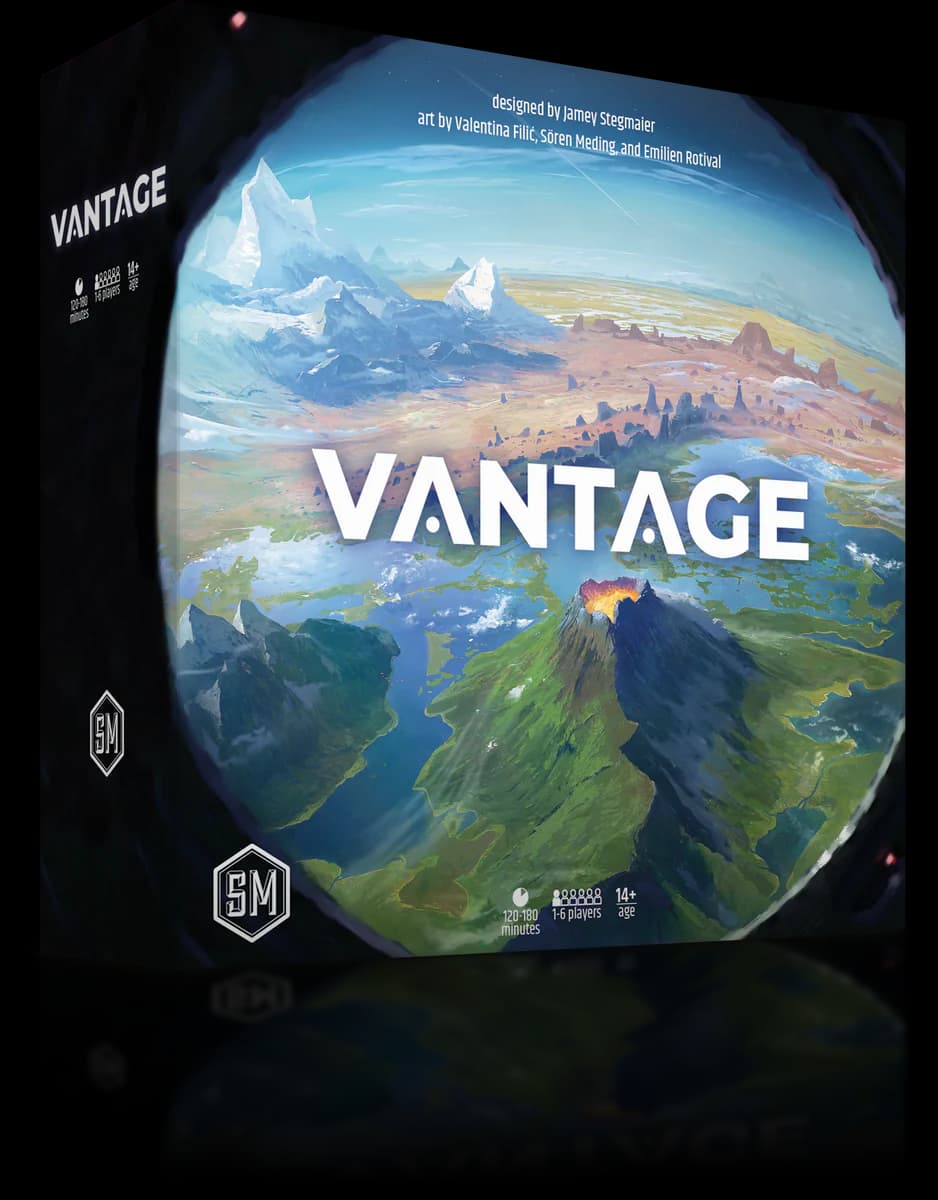
2025In Vantage, players take on the roles of explorers who have survived a crash landing on a mysterious, uncharted planet. This is a cooperative, narrative-driven game of adventure where survival depends on teamwork, intuition, and a willingness to face the unknown. The primary goal is to navigate and understand this new world together, but victory can be achieved in multiple ways. The group might succeed by completing a challenging shared mission, or an individual player could achieve a personal destiny hidden from the others. For the ultimate triumph, a team can strive for an epic victory by accomplishing both their collective and private objectives in a single, memorable session. Each game is a complete, standalone story; while players' knowledge of the world will grow with each playthrough, there are no persistent campaign elements, making every game a fresh expedition.
The gameplay of Vantage is built around a truly unique core mechanic that emphasizes a first-person perspective and shared storytelling. On their turn, a player can only see their current location card, forcing them to rely on the descriptions and guidance of their teammates to build a mental map of the world. The action system introduces a fascinating layer of risk and reward: players choose a basic action—such as move, look, engage, or help—without knowing the specific costs or challenges involved. Another player then reads the outcome from one of eight expansive storybooks, revealing the consequences of the chosen action. Success is determined through dice rolls, where players must strategically manage their challenge dice, mitigating negative results by placing them onto a 3x3 grid on their character and equipment cards. This creates a compelling loop of making intuitive choices, facing unexpected narrative twists, and collaboratively solving the problems that arise.
Vantage's appeal lies in its massive, open world and the genuine sense of discovery it fosters. With over 400 double-sided location cards creating more than 800 interconnected places to visit and over 900 other cards to uncover, the game promises immense replayability. No two journeys will ever be the same. The innovative first-person viewpoint and the blind action-selection mechanic create a tense and immersive experience that is different from typical exploration games. It's not just about moving a pawn on a map; it's about communicating effectively, trusting your teammates, and making gut decisions that have real, story-altering consequences. Designed by Jamey Stegmaier, the game skillfully balances accessible rules with deep strategic choices, offering a rich, thematic adventure that is both a compelling puzzle and an unforgettable story you create together.
1-6 150m⚖️ 3.3
RANK #227
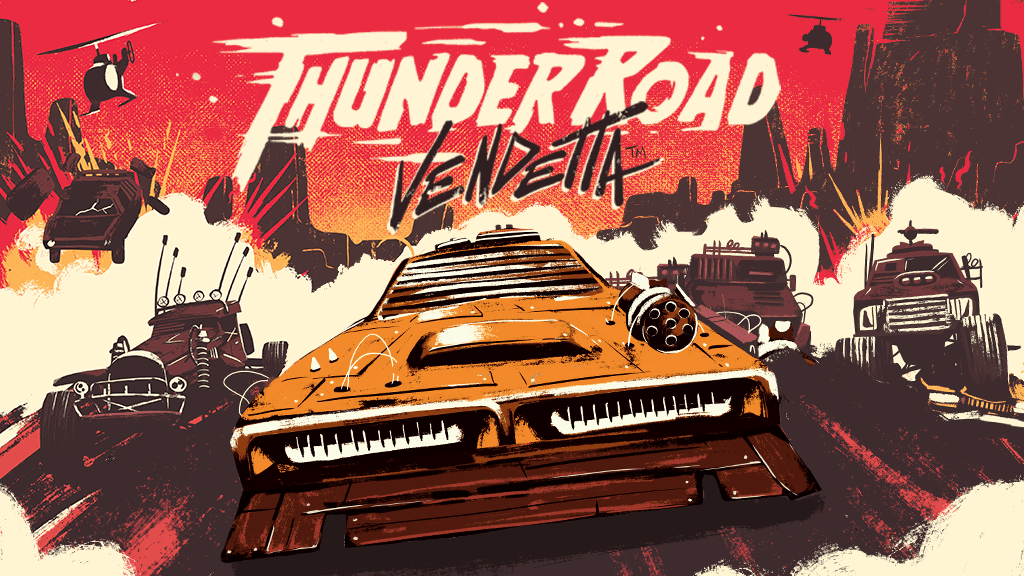
Thunder Road: Vendetta is the explosive, high-octane revival of the 1986 cult classic, putting players in the driver's seat for a brutal, post-apocalyptic death race. In this game of vehicular carnage, you control a crew of three unique vehicles—a small, medium, and large car—each with its own capabilities. Your goal is simple, yet fiercely contested: either be the first player to race one of your vehicles across the finish line, or simply outlast the competition by becoming the last crew with a vehicle left on the road. Survival is just as important as speed, and only the most cunning and ruthless driver will claim victory on this unforgiving stretch of asphalt.
The gameplay is fueled by a dynamic and accessible dice-driven system. Each round, all players simultaneously roll their dice and then take turns assigning them. Dice can be allocated to your cars to determine their movement speed, or to a special command board to unlock powerful, once-per-round abilities. You can activate a nitro boost for a burst of speed, drift around a hazard, perform crucial repairs, or even call in a devastating attack helicopter to rain fire upon your rivals. The road itself is a constantly evolving threat, thanks to a modular board system where the rearmost tile is removed and a new one is added to the front as the race progresses. This 'scrolling' effect means any vehicle left behind is eliminated, adding a relentless pressure to keep moving forward. Combat is direct and brutal; players can shoot at opponents ahead of them or slam into adjacent cars, triggering chaotic dice-rolls that can send vehicles careening across the board and into each other, creating spectacular chain reactions of destruction.
What makes Thunder Road: Vendetta a standout experience is its perfect blend of light strategy and cinematic, chaotic fun. The rules are easy to grasp, making it incredibly accessible for new players and families, yet the tactical decisions offer enough depth to engage seasoned gamers. The constant threat of player elimination, spectacular collisions, and the ever-present danger of being left behind by the board itself create an atmosphere of thrilling tension. It’s a game that revels in high player interaction and 'take that' moments, ensuring that no two races are ever the same. The unpredictable nature of the dice rolls, combined with the strategic use of command board abilities, generates hilarious, fist-pumping moments that will have your group cheering, groaning, and talking about their legendary wrecks long after the game is over.
2-4 60m⚖️ 2.1
RANK #228
Cosmic Encounter
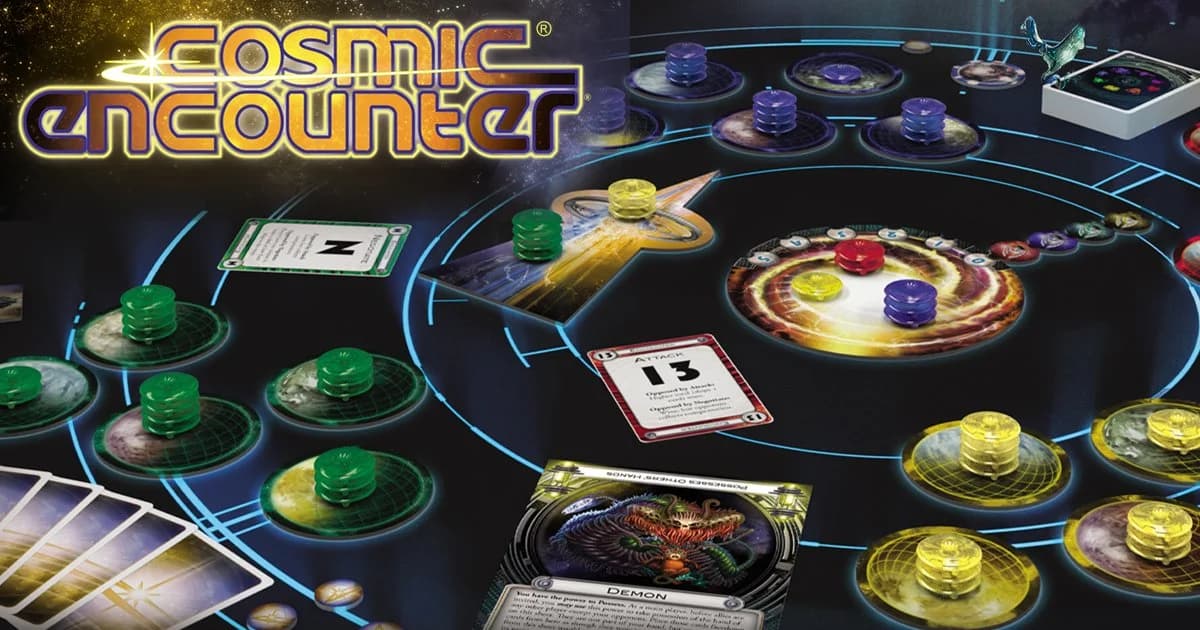
2008Cosmic Encounter is a legendary board game of galactic conquest where diplomacy is as crucial as military might. In this celebrated 2008 edition from Fantasy Flight Games, players assume the roles of bizarre and powerful alien species, each vying for control of the cosmos. The ultimate objective is simple yet challenging: establish five colonies on planets outside of your own home system. This goal is pursued through a series of 'encounters' with your rivals. The game masterfully blends straightforward rules with immense strategic depth, creating an environment where shifting alliances, cunning bluffs, and unexpected betrayals are not just possible, but are the very heart of the experience.
The gameplay revolves around a structured turn sequence where an active player, the 'offense', is directed by the Destiny Deck to engage another player, the 'defense'. The conflict begins as the offense commits ships to a target planet, but the situation quickly escalates as both sides can invite other players to join their cause as allies. The encounter's resolution hinges on the simultaneous reveal of a single card from each primary player's hand. These cards can be numbered Attack cards, which combine with ship counts to determine a victor, or a Negotiate card. Playing a Negotiate against an Attack results in an automatic loss, but the loser gets to demand compensation. If both players attempt to negotiate, they have a mere minute to strike a deal, such as trading cards or even allowing a peaceful colonization, before both suffer a penalty.
What elevates Cosmic Encounter to its classic status is the staggering variety of unique alien powers that each player wields. These abilities are designed to fundamentally break the game's core rules in some spectacular way, ensuring that no two games ever feel the same. One alien might be able to steal cards from the victor of a battle, another might always win tied conflicts, and a third might force players to play with their hands revealed. This asymmetry creates a dynamic and chaotic puzzle of interacting abilities, fostering immense replayability and forcing players to adapt their strategies on the fly. It is this brilliant combination of negotiation, tactical card play, and wildly unpredictable powers that makes Cosmic Encounter an enduring masterpiece of interactive tabletop gaming.
3-5 90m⚖️ 2.5
RANK #260
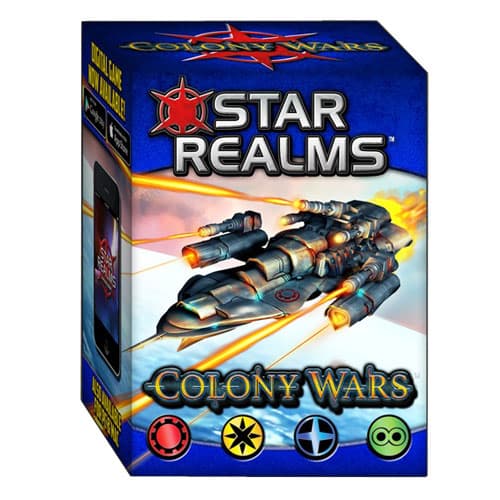
Star Realms: Colony Wars is a thrilling standalone expansion to the acclaimed deck-building game, Star Realms. Set in a newly discovered sector of the galaxy teeming with resources, players are thrust into a fast-paced conflict for interstellar dominance. The game can be enjoyed as a complete two-player experience right out of the box or seamlessly integrated with the original core set to support larger multiplayer battles. Each player assumes command of a fledgling star-fleet, represented by a personal deck of cards, and starts with 50 Authority points. The ultimate objective is straightforward yet challenging: amass a powerful armada, unleash devastating attacks, and reduce your opponent's Authority to zero to claim victory over the contested colonies.
The gameplay is quick to learn but offers deep strategic possibilities. Every turn, players draw a five-card hand from their deck, using these cards to generate Trade for acquiring new ships and bases, or Combat for attacking the enemy. The game's central marketplace, a five-card 'Trade Row', constantly presents new opportunities to enhance your fleet. Purchased cards are added to your discard pile, eventually cycling into your deck to strengthen future hands. This core deck-building mechanic is what drives the game's dynamic arc, as players evolve from their weak starting hands to commanding potent fleets. Cards are divided into four distinct factions—the militaristic Star Empire, the deck-culling Machine Cult, the prosperous Trade Federation, and the aggressive Blobs. Many cards feature powerful 'ally' abilities that trigger only when another card of the same faction is in play, rewarding players who build synergistic, faction-focused decks.
What makes Star Realms: Colony Wars so compelling is its perfect blend of accessibility and tactical depth. The simple ruleset allows new players to jump into the action within minutes, while the vast number of card combinations and strategic pathways ensures high replayability. The direct, head-to-head conflict creates constant tension and exciting, game-swinging turns. As an expansion, Colony Wars introduces a host of new ships and bases that add fresh strategies and powerful combos, including some cards that can be placed directly into a player's hand from the Trade Row, accelerating the game's tempo. Whether played as a self-contained duel or as part of a larger cosmic war, Colony Wars delivers a complete and satisfying sci-fi combat experience in a compact package.
2-4 20m⚖️ 1.9
RANK #264
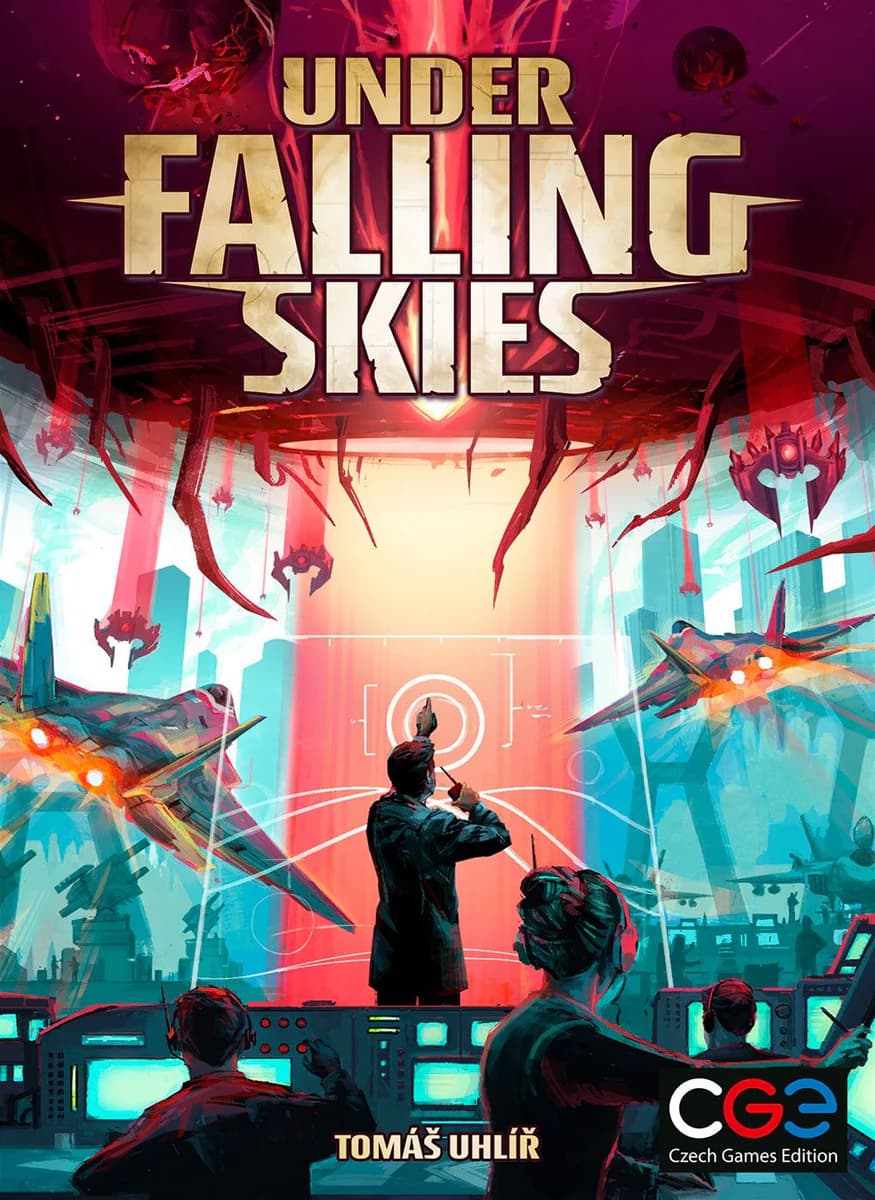
In Under Falling Skies, you are thrust into the role of humanity's last hope, leading the defense of a besieged city against a relentless alien invasion. This is a dedicated solo experience where you must manage an underground base, balancing immediate threats with your long-term objective. The ultimate goal is to complete a critical research project before the colossal alien mothership descends far enough to annihilate you or before enemy fighters breach your defenses and destroy your city. The game can be enjoyed as a tense, standalone scenario or as an evolving, multi-mission campaign that adds new rules, characters, and challenges over a series of interconnected games.
The gameplay is centered around a truly innovative dice placement mechanism that creates a palpable sense of tension. Each round, you roll five dice and must place them into different columns of your underground base. This is where the crucial dilemma lies: the value of the die you place dictates the power of the room's action, but it also determines how quickly the enemy ships in that column descend toward your city. Using a high-value die for a powerful effect, like generating energy or excavating new rooms, comes at the cost of accelerating the very threat you're trying to stop. This constant risk-reward calculation makes every single placement a weighty, strategic decision. The system is further enhanced by special dice that force re-rolls, injecting a dose of calculated uncertainty into your plans.
What makes Under Falling Skies so compelling is its ability to blend a tight, strategic puzzle with a strong thematic narrative of desperate defense. The pressure is constant as the mothership inches closer each round, limiting your options and applying new negative effects. Players love the 'analysis paralysis' it can induce, as you ponder the perfect placement to thread the needle between advancing your research and holding back the alien fleet. With its modular city boards and an expansive, replayable campaign system, the game offers tremendous variety and longevity. It’s a challenging and deeply rewarding brain-burner that forces you to squeeze every ounce of efficiency from your base to achieve a hard-won victory.
1 30m⚖️ 2.4

RANK #274
Set amidst the treacherous, sand-swept dunes of Frank Herbert's iconic universe, 'Dune: War for Arrakis' is a sprawling, deeply thematic strategy wargame that condenses a planetary conflict into an accessible, yet tactically rich experience. Serving as a spiritual successor to the acclaimed 'War of the Ring', this asymmetrical duel pits the ruthless House Harkonnen—backed by the Padishah Emperor's fierce Sardaukar—against the beleaguered House Atreides and their fierce Fremen allies. The ultimate goal depends entirely on the faction you command. The oppressive Harkonnens seek to secure an iron-fisted grip on the planet by achieving Supremacy Points, actively hunting down hidden Fremen Sietches while desperately striving to meet aggressive spice harvesting quotas. In stark contrast, the Atreides player fights a desperate guerrilla war to achieve Prescience Points, completing secret, narrative-driven objectives that echo the pivotal events of the classic novels.
At the mechanical core of this grand desert conflict lies a brilliant Action Dice system that drives every strategic decision. Each round, players roll a pool of custom, faction-specific dice that dictate the potential actions available to them, ranging from deploying legions and moving vehicles to initiating massive combat engagements and drawing powerful cards. House Harkonnen operates with overwhelming military force and aerial dominance through Carryalls and Ornithopters, but they are constantly burdened by the ticking clock of spice quotas. Failing to appease the Spacing Guild and the Imperium with adequate spice drastically reduces their future dice pool. Meanwhile, the Atreides player relies heavily on the environment, using 'Wormsign' tokens to obscure their troop movements and suddenly summoning terrifying Sandworms to swallow enemy harvesters whole. This creates a relentless cat-and-mouse dynamic where brute force meets cunning desert power.
Fans of heavy, narrative-driven strategy games have quickly fallen in love with 'Dune: War for Arrakis' because it masterfully balances thematic immersion with surprisingly streamlined mechanics. While it shares the robust DNA of its predecessors, it effectively strips away the overly burdensome rules to deliver a relentlessly paced 'dudes-on-a-map' conflict. The immense asymmetry guarantees that playing each side feels like an entirely distinct board game, offering incredibly high replay value. Whether you are leading elite legions to crush rebellions or riding the colossal makers into the heart of an Imperial stronghold, the game perfectly captures the lethal, high-stakes political warfare that defines the Dune franchise.
1-4 120m⚖️ 3.8
RANK #278
Dinosaur Island
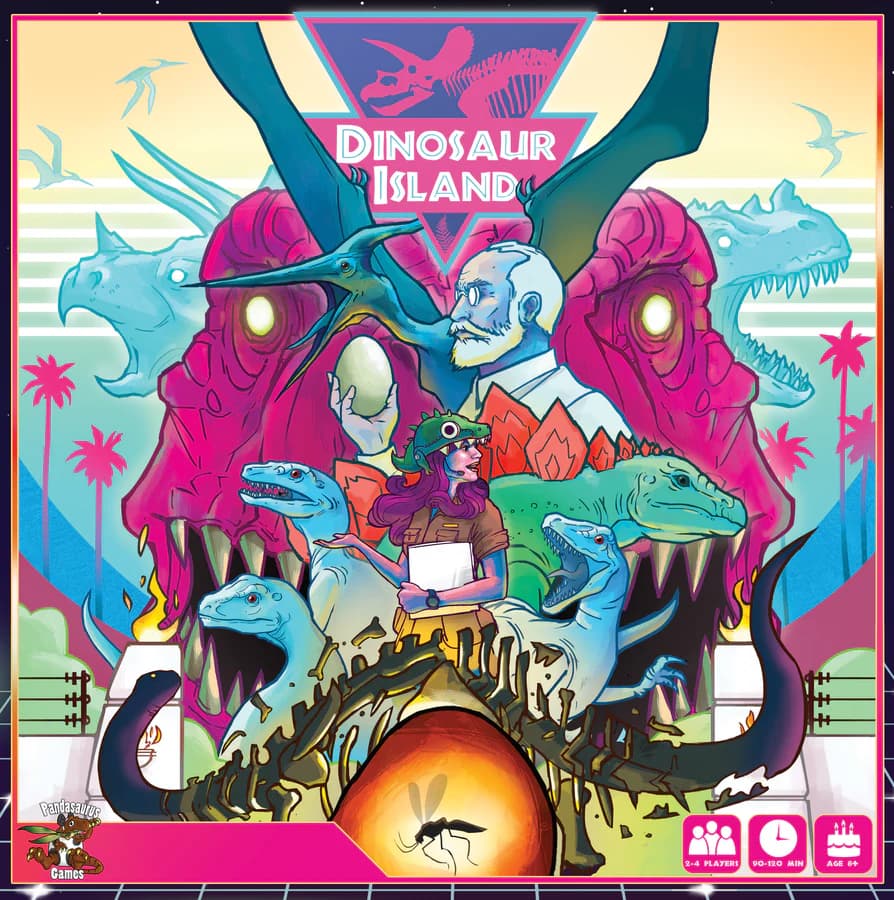
2017Dinosaur Island invites players to take the helm of a sprawling, neon-drenched biological amusement park where bringing prehistoric creatures back to life is just part of the daily grind. Channeling a vibrant, nostalgic aesthetic inspired by the pop culture of the 1980s and 90s, this thematic strategy game tasks you with synthesizing ancient DNA, erecting thrilling rides, and keeping your visitors entertained. Your ultimate objective is to run the most successful and profitable park possible, carefully balancing the awe-inspiring excitement of your newly minted dinosaurs against the ever-present danger of a catastrophic, guest-eating breakout.
The gameplay loop operates across several distinct phases and utilizes a clever blend of worker placement, set collection, and dice drafting. In the initial research phase, players deploy scientists to extract vital genetic sequences from custom amber dice, expand cold-storage capacities, and discover new dinosaur recipes. Next, managers hit the market to purchase essential upgrades, hire skilled specialists, and build amenities like food stands or rollercoasters. The core action then shifts to personal laboratory boards, where workers are simultaneously assigned to refine DNA, breed creatures into paddocks, and bolster park security. Finally, the park opens its gates to a blind draw of visitor meeples. While paying guests bring in much-needed revenue and victory points, sneaky hooligans take up valuable space for free, and any lapse in security will lead to rampaging carnivores devouring the clientele.
What truly sets Dinosaur Island apart is its masterful integration of a deeply engaging theme with satisfying Euro-style mechanics. Fans adore the striking visual presentation, largely driven by vivid pinks and retro graphic design that makes the table presence absolutely pop. Beyond its stunning looks, the game offers remarkable flexibility; players can tailor the experience's length by selecting different sets of objective cards to accommodate quick sessions or sprawling engagements. With a well-regarded solo mode and multiple strategic avenues to explore—from focusing on massive, high-risk carnivores to building a safe, amenity-rich resort—the game provides a robust, replayable puzzle that keeps managers coming back for more thrilling park management.
1-4 120m⚖️ 3.0
RANK #280
Legendary: A Marvel Deck Building Game is a prominent entry in the deck-building genre that brings the Marvel Universe to life on the tabletop. In this experience, players take on the role of SHIELD commanders tasked with assembling a powerful team of iconic heroes to thwart the nefarious plans of a Mastermind. The central goal is collective survival; players must work together to defeat the primary villain four times before they can complete a specific, game-altering Scheme. Unlike traditional deck builders where you simply compete for the highest score, Legendary introduces a looming threat that can cause everyone to lose if the city falls into chaos or the villain's plot reaches its conclusion.
The game utilizes a modular setup, meaning no two sessions are exactly alike. Players select a specific Mastermind like Magneto or Dr. Doom, a Scheme that sets the rules for the villain's victory, and a curated pool of hero decks. The core loop involves a Villain Phase, where enemies advance through a five-space city track, followed by a Hero Phase. Players start with basic SHIELD agents and must strategically recruit more powerful cards using Recruit Points or strike down foes using Attack Points. Managing these two distinct resources is vital, as players navigate the Headquarters (HQ) to draft synergies between characters like the Avengers and the X-Men. Successfully defeating villains and saving bystanders adds to a player's personal victory pile, which serves a dual purpose: it measures individual contribution while the team strives for a shared victory.
What makes Legendary stand out is its semi-cooperative nature. While the primary objective is to stop the Mastermind, the game crowns a single 'most legendary hero' based on the victory points accumulated during play. This creates a fascinating tension between helping the group and optimizing one's own deck for maximum point gain. The highly thematic integration of the Marvel license, featuring comic-accurate artwork and mechanics that reflect hero powers, ensures a high level of immersion. With its vast array of modular combinations and the threat of a board that evolves every turn, the game offers immense replayability. It strikes a balance between being accessible enough for casual fans while offering the strategic depth required to keep seasoned gamers engaged.
1-5 45m⚖️ 2.4
RANK #294
Tapestry
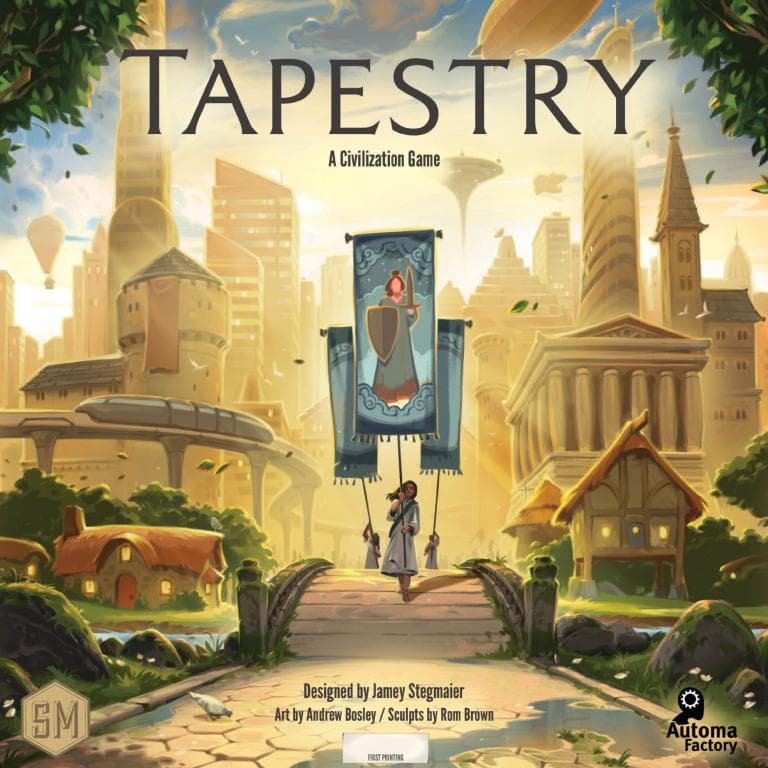
2019Tapestry is a civilization-building board game that breaks away from traditional historical simulations by offering a colorful, anachronistic approach to human development. Designed by Jamey Stegmaier, the game challenges players to guide a unique culture from the earliest days of discovery into the technological wonders of the near future. The primary goal is to accumulate the most victory points by advancing on four core tracks: Science, Technology, Exploration, and Military. Unlike typical '4X' games that focus heavily on combat, Tapestry emphasizes a strategic optimization puzzle where players craft their own narrative through cards and landmarks within their growing capital city.
The heart of the experience lies in a streamlined decision-making process. On every turn, a player chooses between an Advancement turn or an Income turn. Advancement involves spending resources to climb one of the four tracks, each providing immediate rewards, permanent upgrades, and powerful landmark miniatures. When resources run dry, players take an Income turn to transition into a new era. This phase allows them to collect income based on their current progress, play a Tapestry card that defines their civilization's special abilities for that era, and upgrade technology. This asymmetric structure is further enhanced by sixteen distinct civilization mats, each granting game-changing powers that require players to pivot their strategies constantly.
What truly sets Tapestry apart is its high production value and the 'simple rules, deep strategy' philosophy. The game features 18 prepainted landmark miniatures that players place on their Capital City grids to complete 3x3 districts, adding a tactile tile-laying element. Because players take exactly five income turns throughout the session, the pacing varies significantly between participants. One player might conclude their journey early while others are still in their fourth era, creating a unique tension in resource efficiency. It is a medium-weight engine-building experience that rewards long-term planning while remaining accessible to many due to its concise rulebook, offering high replayability through variable setups and asymmetric components.
1-5 105m⚖️ 2.9
RANK #306
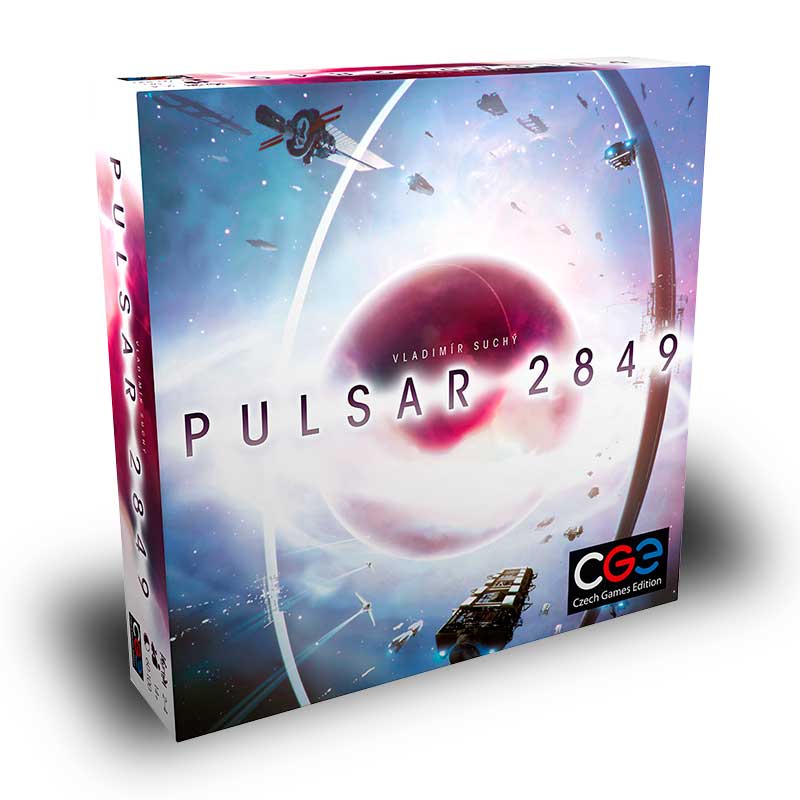
Pulsar 2849
2017Pulsar 2849 is a sophisticated space-faring strategy game that transports players to the year 2849, an era where humanity has finally unlocked the immense power of deep-space pulsars. Developed by renowned designer Vladimír Suchý, this title invites two to four players to participate in a high-stakes celestial gold rush across the galaxy. The primary objective is to develop the most efficient energy distribution network in a vast star cluster. Over the course of exactly eight rounds, participants navigate a modular star board, claiming pulsars, activating energy transmitters, and exploring distant planetary systems to secure their place as the galaxy's premier energy mogul. It is a quintessential Euro-style 'point salad' experience where every individual action contributes to a grander scoring engine.
The heartbeat of the game is its innovative dice drafting system, which revolves around a central 'median' mechanic. During each round, a pool of dice is rolled and sorted by value, with a marker placed on the middle die. When selecting a die, players must weigh the raw value of the die against its position relative to that median. Choosing a high-value die allows for more powerful actions but forces the player's marker down on the initiative and engineering tracks, potentially sacrificing turn order or vital resources for the future. Conversely, lower dice values offer weaker actions but grant beneficial movement on these tracks. Drafted dice are then used to survey the galaxy, harness pulsars by installing and spinning gyrodynes, patenting new technologies in a tiered tree, or completing complex HQ projects. This creates a tense balancing act where players must manage their trajectory on resource tracks while building a lucrative scoring engine.
What makes Pulsar 2849 particularly beloved among strategy enthusiasts is its brilliant mitigation of luck. While it is fundamentally a dice-driven game, the median mechanic ensures that every roll—no matter how high or low—presents a strategic opportunity rather than a frustration. The game is praised for its immense replayability, driven by variable technology boards and different HQ setups that shift priorities in every session. The interconnectedness of the systems—where a ship's movement might trigger a transmitter which in turn completes a project—provides a deeply satisfying sense of momentum. For fans of heavy strategy games, it offers a dense, rewarding puzzle that rewards forward-thinking and adaptability without the aggressive conflict found in traditional space operas, focusing instead on efficiency and clever optimization.
2-4 80m⚖️ 3.6
RANK #463
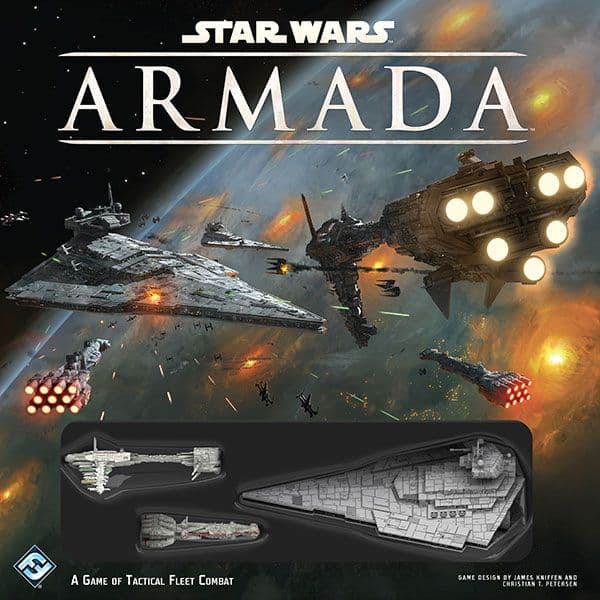
Star Wars: Armada is an epic-scale miniatures game where two players assume the roles of fleet admirals for either the Rebel Alliance or the Galactic Empire. The game simulates large-scale tactical space battles during the Galactic Civil War. The primary objective is straightforward yet challenging: either completely annihilate the opposing fleet or accumulate more victory points than your opponent by the end of the game's six-round limit. Players build their fleets beforehand, carefully selecting ships, commanders, and upgrades to create a synergistic force capable of outmaneuvering and outgunning their rival on a 3x6 foot play area.
The gameplay of *Armada* is defined by its deliberate, strategic pace, which captures the immense scale and inertia of its capital ships. A standout feature is the command dial system, which forces players to think several turns ahead. For each capital ship, players secretly select commands like navigation, repair, or concentrated fire, placing the chosen dial on a stack. Only the top dial is revealed and resolved each round, meaning a decision made now might not take effect for two or three turns. Movement is another critical element, handled with an articulated maneuver tool that dictates a ship's turn and speed, simulating momentum. Crucially, ships perform their attacks *before* moving, creating a tense game of prediction where you must anticipate your opponent’s final position to land a successful broadside.
What makes *Star Wars: Armada* a beloved classic among miniatures wargamers is its profound strategic depth and highly thematic experience. The game is often praised for feeling less like a fast-paced dogfight and more like a high-stakes game of chess in space. The pre-planning required by the command system and the unique movement rules reward foresight and tactical acumen. The stunning, pre-painted miniatures of iconic ships like Star Destroyers and Mon Calamari Cruisers bring the Star Wars universe to life on the tabletop, creating a spectacular visual presence. This focus on deliberate, large-scale naval-style combat provides a uniquely satisfying and immersive strategic challenge that keeps players returning to the battlefield.
2 120m⚖️ 3.2

RANK #508
Earthborne Rangers is a heavily narrative, cooperative card game that transports players to a distant, hopeful future where humanity thrives alongside nature. Distinct from the typically dark and doom-filled atmospheres of many 'living card games', this eco-conscious adventure allows players to embark on an open-world campaign set within a sprawling, vibrant valley. The primary goal is not strictly about defeating enemies in combat, but rather surviving and exploring an immersive ecosystem. Players take on the roles of unique Rangers, venturing out to discover secrets, interact with wildlife, and complete quests, all while navigating a living environment that acts independently of their direct actions.
Gameplay revolves around a sophisticated deck-construction framework where your character's background, personality, and specialty dictate their starting stats and abilities. During a session—referred to as a 'Day'—players leverage four key aspects (Awareness, Focus, Spirit, and Fitness) to generate energy, which is then spent to play cards, clear obstacles, or persuade non-player characters. A standout feature is the location-specific 'Path Deck'. This deck dynamically populates the area with flora, fauna, and dynamic hazards that interact with each other even without player intervention. Throughout the day, players earn rewards, suffer fatigue, and read from an extensive campaign guide, gradually unlocking new skills and memories to upgrade their custom decks between sessions.
Fans of deep, tactical card play are drawn to Earthborne Rangers for its lush world-building and the sheer freedom of its sandbox design. The game seamlessly blends challenging, combo-heavy puzzles with a genuinely uplifting 'hopepunk' narrative that encourages you to step off the beaten path and simply hike through the wilderness. Furthermore, the development team—composed of industry veterans—has been widely praised for prioritizing sustainable, eco-friendly manufacturing methods. Whether you are following the central storyline or simply exploring the rich, reactive valley, this heavy-weight puzzle offers a breathtakingly fresh and highly replayable cooperative experience.
1-4 120m⚖️ 3.5