Thematic Games
Browse all Thematic board games in the Meeple Pulse database.
Styles
AbstractAbstract StrategyAdventureAnimalsCard GameChildren's GameCivilizationCo-operativeCompetitiveDiceEconomicEducationalEuroExpansion for Base-gameFamilyFantasyFightingHistoricalHorrorMedium HeavyPartyParty GamePrint & PlayPuzzle-LikeRacingReal-timeSpace ExplorationSportsStrategyTerritory BuildingThematicWargame
Themes
AbstractAdventureAncientAnimalsArtBusinessCard GameCo-operativeComic BookCooperativeCrimeEconomicEnvironmentalismExplorationFantasyHistoricalHorrorHumorIntrigueLiteraryMagicMarvelMedievalModernMuseumMysteryMythologyNatureNauticalParty GamePoliticalPress Your LuckRacingSatireSci-FiSocial CommentarySocial InteractionSpaceSuperheroesThematicTravelWarWesternWord-Guessing
Mechanics
3D PlacementActingAction / DexterityAction DraftingAction Point AllowanceAction Point Allowance SystemAction Point SystemAction PointsAction ProgrammingAction QueueAction RetrievalAction SelectionAction/EventAlliancesAlternate ActivationApp-AssistedApp-DrivenArea ControlArea InfluenceArea MajorityArea Majority / InfluenceArea MovementArgumentationAsymmetricAsymmetric FactionsAsymmetric GameAsymmetric PowersAsymmetrical PowersAuction & BiddingAuction/BiddingAuctioningBag BuildingBettingBetting and BluffingBetting and WageringBetting and WagersBiddingBingoBlind BiddingBluffingCampaign / Battle Card DrivenCampaign / LegacyCampaign / Legacy GameCampaign / Mission-basedCampaign / ScenariosCampaign GameCampaign PlayCard DraftingCard DrawingCard DrivenCard Driven ActionCard Driven CombatCard Driven Dice AllocationCard Driven MovementCard ManagementCard PlayCard Play / Hand ManagementCard Play Conflict ResolutionCard SheddingCard-Driven MovementCharacter CreationCharacter ProgressionChit-Pull SystemCo-op PlayCo-operative GameCo-operative PlayCode-breakingCombat ResolutionCombo ChainCommand CardsCommodity SpeculationCommunication LimitsContract FulfillmentContractsCooperative GameCooperative GameplayCooperative PlayCooperative Trick-takingDebateDeck BuildingDeck ConstructionDeck, Bag, and Pool BuildingDeck-BuildingDeductionDexterityDice DraftingDice PlacementDice RollingDiplomatic InfluenceDraftingDynamic Battle SystemEnclosureEnd Game BonusesEngine BuildingEngine-BuildingEscape RoomEvent DrivenExplorationFarmingFlip and WriteFollowFollow ActionGrid CoverageGrid MovementHand ManagementHex-and-CounterHexagon GridHidden MovementHidden RolesI Cut You ChooseIncomeInfluence / Area MajorityLadder ClimbingLegacyLegacy ElementsLegacy GameLegacy SystemLimited CommunicationLine DrawingLine of SightMancalaMap AdditionMap MovementMarketMarket DraftingMarket ManipulationMarket MechanicMarket SpeculationMatchingMeasurement MovementMemoryMission ObjectivesModular BoardModular Board ConstructionMove Through DeckMovement PointsMovement TemplatesMulti-Use CardsMulti-use CardsMultiple ScenariosMust FollowNarrative ChoiceNarrative Choice / ParagraphNegotiationNegotiation MechanicsNetwork & Route BuildingNetwork BuildingNetwork and Route BuildingOne vs ManyOne vs. ManyOpen DraftingOwnershipPaper-and-PencilPartnershipsPattern BuildingPattern RecognitionPick-up and DeliverPlayer EliminationPlayer InteractionPlayer JudgePoint SaladPoint to Point MovementPolyominoesPush Your LuckPush-Your-LuckPuzzlePuzzle-LikePuzzle-SolvingRaceReal-TimeRecipe FulfillmentResource ManagementRole PlayingRole SelectionRoll / Spin and MoveRondelRoute BuildingRoute-BuildingRoute/Network BuildingSanity SystemScenario / Campaign PlayScenario / Mission / Campaign GameScenario / Mission FunctionSecret Unit DeploymentSemi-Cooperative GameSet CollectionSheddingSimulationSimultaneous ActionSimultaneous Action SelectionSimultaneous Hidden AllocationSocial DeductionSocial InteractionSolo / Solitaire GameSpace ExplorationStat Check / Skill CheckStock HoldingStorytellingStrategic PlanningTableau BuildingTactical Decision-MakingTake ThatTargeted CluesTeam PlayTeam-Based GameTeam-Based GuessingTeamworkTech TreesTech Trees / Tech TracksTechnology & Armament TracksTechnology TreeTension & Aggression TracksTile DraftingTile LayingTile PlacementTime TrackTime TravelTower DefenseTrack MovementTradingTrick-takingTug of WarTurn Order: PassTurn Order: Stat-BasedUnit PlacementVariable Phase OrderVariable Player PowersVariable Set-upVariable SetupVictory Point TracksVotingWord AssociationWord GameWord GuessingWord-GuessingWord-guessingWordplayWorker Placement
RANK #850
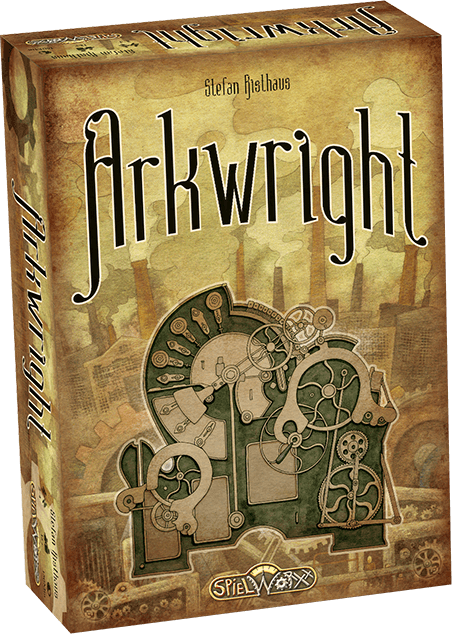
Arkwright
2014Arkwright thrusts players into the heart of the 18th-century Industrial Revolution, casting them as pioneering entrepreneurs in England. This is a deeply strategic and weighty economic simulation where the ultimate measure of success is not merely accumulating cash, but skillfully increasing the value of your company's shares. Players must navigate the birth of modern industry, building a commercial empire from the ground up. The goal is to become the most respected and valuable business magnate of the era, proving your acumen in a fiercely competitive environment. It’s a game about foresight, long-term planning, and understanding the intricate dance between production, labor, and the burgeoning stock market.
The gameplay unfolds over five 'decades', each representing a distinct phase of industrial growth. Each round, players select actions from an administration board, a core mechanic that blends worker placement with strategic resource allocation. These actions are the engine of your enterprise: you will build and modernize up to four factories dedicated to producing essential goods like cloth, cutlery, lamps, or bread. Managing these factories requires a delicate balance. You must hire workers, invest in new machinery to boost efficiency and quality, and, most crucially, set the price for your products. The game features a dynamic market where consumer demand fluctuates and an automated importer provides constant competition, forcing you to carefully consider your pricing strategy to outsell rivals and maximize profits.
What makes Arkwright a celebrated title among serious gamers is its uncompromised complexity and rewarding depth. It is a true 'brain-burner' that challenges players to manage multiple interconnected systems simultaneously. The genius lies in how every decision—from firing a worker to buying a single share of your own stock—has cascading effects on your entire operation and market position. Successfully selling goods directly translates into a higher share price, creating a satisfying feedback loop that rewards efficiency and shrewd market manipulation. The game also offers built-in scalability with its "Spinning Jenny" and "Waterframe" modules, allowing groups to choose between a slightly more streamlined experience or the full, intricate simulation. It’s this challenging but fair economic puzzle that gives Arkwright its immense replayability and enduring appeal.
2-4 180m⚖️ 4.7
RANK #1,031
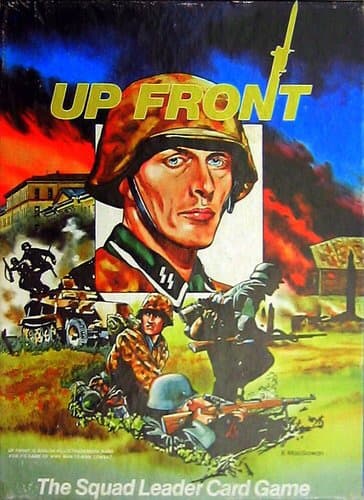
Up Front
1983Up Front, released in 1983 by Avalon Hill, is a revolutionary tactical card game that simulates small-unit infantry combat during World War II. Widely regarded as the card-game equivalent of the legendary 'Squad Leader' series, it abandons the traditional hex-and-counter map board in favor of a dynamic system of terrain and action cards. The game's primary goal is to lead your squad to victory by completing specific scenario objectives, which range from seizing strategic terrain to forcing an enemy retreat by breaking their morale. By focusing on the 'friction of war' and the immediate tactical decisions of a squad leader, the game provides a visceral experience where the chaos of the battlefield is constantly felt through the cards in your hand.
The gameplay is defined by its unique 'Relative Range' system and card-driven mechanics. Players manage several squads of soldiers, each represented by individual personality cards that track their weapons and status. Instead of moving miniatures across a map, players play terrain cards to represent their troops' current cover and distance from the enemy. The Action Deck is the heart of the game; it dictates everything from firing and movement to morale checks and smoke screens. This system creates a fog of war where players must adapt to the hand they are dealt, simulating the limited communications and unpredictable nature of actual combat. Because players cannot always find the 'perfect' terrain or have the right 'Fire' card at the right moment, the game rewards those who can manage risk and react quickly to a shifting tactical landscape.
Fans of the game praise Up Front for its depth, speed, and incredible replayability. Unlike heavy board wargames that can take hours to set up and play, a session of Up Front can often be completed in under an hour, making it an ideal choice for competitive tournament play or casual skirmishes. Its legacy in the hobby is significant, as it is often cited as a pioneer of the Card Driven Game (CDG) genre. The lack of a board is not a drawback but a feature that allows for infinite tactical permutations, as the 'battlefield' is constantly being built and destroyed by the players themselves. It remains a beloved classic for its ability to generate high-stakes narrative tension and realistic military challenges without the need for complex geometric calculations or massive tabletop footprints.
1-2 60m⚖️ 3.4

RANK #1,127
Conflict of Heroes: Awakening the Bear! – Russia 1941-42 plunges players into the brutal, tactical squad-level combat of the Eastern Front during the initial German invasion of the Soviet Union. As the inaugural title in the acclaimed Conflict of Heroes series, this game is celebrated for its historical fidelity and engaging system. Players take command of either German or Soviet forces, maneuvering individual infantry squads, machine gun teams, and tanks across modular, geomorphic map boards. The goal is not simply to eliminate the enemy but to achieve specific objectives outlined in one of the game's many scenarios, which range from desperate holding actions to bold armored assaults. Success hinges on careful planning, effective use of terrain for cover, and exploiting the unique strengths and weaknesses of your units in the face of a determined opponent.
The game's design revolutionized tactical wargaming by abandoning the rigid 'I Go, You Go' turn sequence for a far more dynamic and fluid system. Each unit begins a round with a full complement of Action Points (APs), typically seven. A player activates one unit at a time, spending its APs to perform actions like moving or firing. Once that unit's activation is complete, it is marked as 'spent' for the round, even if it has APs remaining. This forces difficult choices about which units to activate and when. Crucially, this system is highly interactive; an enemy unit that is fired upon may have the opportunity to spend its own APs to fire back immediately, creating a tense, reactive battlefield. This core engine is supplemented by Command Action Points (CAPs) and special action cards, which grant players powerful abilities and tactical flexibility to influence the tide of battle.
Awakening the Bear! is lauded for its remarkable ability to be both accessible to newcomers and deeply rewarding for veteran wargamers. Its programmed learning system, presented through a 'learn-as-you-play' rulebook, allows players to grasp the fundamentals and start their first scenario within minutes. Yet, beneath this simple entry point lies a game of profound tactical depth, where every decision about positioning, line of sight, and action economy is critical. The dynamic activation system creates a compelling narrative and a constant sense of engagement, eliminating downtime and keeping both players invested in every move. This elegant balance of accessibility, strategic depth, and historical flavor has cemented its status as a modern classic in the wargaming genre.
2-4 90m⚖️ 3.2

RANK #2,414
Pax Pamir
2015Set in the 19th-century 'Great Game,' Pax Pamir (2015) invites players into the high-stakes political landscape of Central Asia during the collapse of the Durrani Empire. As Afghan tribal leaders, players do not act as traditional conquerors seeking personal territory; instead, they navigate the competing interests of the British, Russian, and Afghan coalitions. The primary objective is to align oneself with the empire that eventually secures dominance over the region, while simultaneously ensuring you are the most influential figure within that specific coalition to claim ultimate victory.
The gameplay revolves around a volatile central market where players purchase cards representing agents, events, and historical figures to build a personal tableau. These cards allow players to exert influence over the map, deploying tribes to control routes and spies to infiltrate rival courts. A key mechanic involves area influence and shifting loyalties, as players can switch allegiances to a different empire if the current political tide turns. Dominance checks are triggered throughout the game, scoring players based on their coalition's standing or their personal influence if the board remains fragmented and no single empire prevails.
What makes Pax Pamir stand out is its deep historical flavor and intensely interactive nature. It is widely praised for its ability to simulate complex geopolitical struggles through a relatively tight card-driven system. Fans of the game appreciate the high level of player interaction, where every market purchase or board movement ripples across the table, forcing opponents to constantly pivot their strategies. The tension is palpable as players balance long-term engine building with the immediate need to sabotage a rival's rise. It remains a masterpiece of historical simulation, offering a unique and challenging perspective on power and diplomacy that rewards tactical flexibility and sharp social reading.
m⚖️ N/A

RANK #2,504
Ada's Dream
2025Ada's Dream is an intricate, heavyweight Euro-style board game that transports players to an alternate Victorian era. In this timeline, the brilliant mathematician Ada Lovelace survives her terminal illness and leads the ambitious project to complete Charles Babbage's Analytical Engine. As one of Ada's dedicated assistants, your primary objective is to contribute to the construction of the world's first computer. The game blends deeply thematic narrative elements with rigorous mathematical puzzles, challenging players to balance resource management with long-term strategic planning. By fulfilling Ada's vision, you aim to secure your legacy as a pioneer of the digital age.
The core gameplay revolves around a sophisticated dice rondel system. Players draft colored dice representing mechanical components from a central workshop and strategically place them on their personal Analytical Engine player boards. This engine-building process requires players to manipulate these dice alongside gear tokens to solve literal mathematical equations—using addition, subtraction, and multiplication—to generate power and victory points. Beyond the workshop, players must travel to prestigious universities across Great Britain, recruit historical partners like Michael Faraday or Charles Dickens, and publish research papers to unlock advanced abilities on their technology tracks.
What sets Ada's Dream apart is its high-fidelity production and its satisfying 'crunchy' decision space. Fans of heavyweight strategy games appreciate how the various subsystems—from traveling the map to deck-building with partner cards—intertwine seamlessly. The game features a robust solo mode against 'The Silver Lady' designed by David Digby, providing a challenging experience for solitaire enthusiasts. With its blend of historical accuracy and imaginative 'what if' scenarios, the game offers a rewarding puzzle for those who enjoy optimizing complex systems while immersed in a rich, scholarly atmosphere.
1-4 105m⚖️ 3.9
BoxNo Cover Art
RANK #2,863
Bringing the frenetic energy of the critically acclaimed real-time strategy video game to the tabletop, the 'Company of Heroes' board game offers a masterful blend of miniature skirmishes and resource-driven warfare. Officially licensed by SEGA and Relic Entertainment, this World War II simulation challenges commanders to secure victory through tactical brilliance. Players aim to either dominate the battlefield by accumulating enough Victory Points through holding strategic map locations or achieve an outright Annihilation victory by pushing their forces across the terrain to demolish the enemy headquarters. It captures the thrilling duality of macro-level economic management and micro-level squad tactics.
Gameplay revolves around an elegant, map-based economic system where territorial control is paramount. Rather than relying on traditional, complex Combat Results Tables, the game utilizes a streamlined Action Point system. Players take turns spending action cubes to maneuver units, seize control points, and harvest vital resources like Manpower, Munitions, and Fuel. These resources fund an escalating war effort, allowing commanders to construct base buildings, unlock advanced tech trees, and deploy specialized infantry alongside formidable light and heavy vehicles. Combat is resolved using a custom dice-driven engine that heavily rewards spatial positioning. Tactical depth emerges from utilizing three-dimensional building cover, managing line of sight, navigating the fog of war, and executing flanking maneuvers to strike the vulnerable rear armor of enemy tanks.
The widespread appeal of 'Company of Heroes' lies in its phenomenal ability to recreate the dynamic pacing of its digital counterpart without getting bogged down by excessive rules overhead. Fans praise the seamless integration of resource generation with visceral tactical combat, creating a deeply rewarding learning curve. The inclusion of unique Commander loadouts provides endless strategic variety, allowing players to customize their faction with specialized units and powerful, single-use operational abilities. Furthermore, the robust system is incredibly versatile, scaling gracefully from a tense solo or two-player duel up to massive, cinematic team battles accommodating up to eight players. It successfully bridges the gap between accessible, lighter wargames and deep, heavy simulations, delivering a captivating tabletop experience.
1-8 90m⚖️ 3.4
RANK #3,247
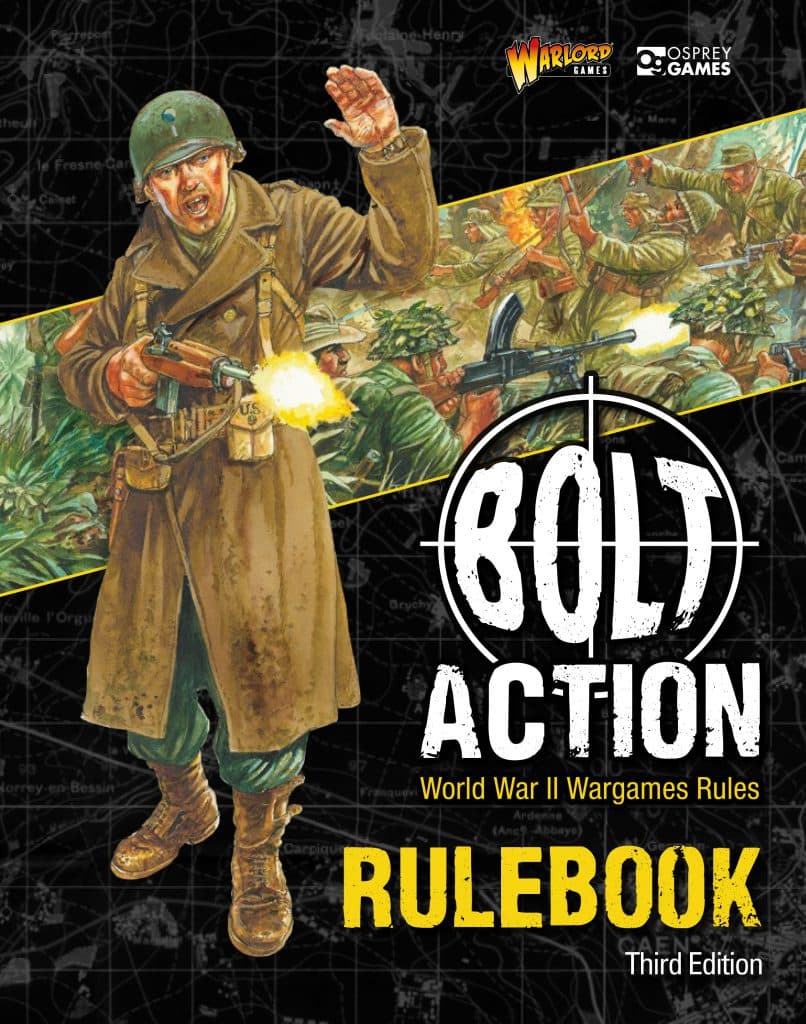
Bolt Action
2012Bolt Action plunges players directly into the heart of World War II, offering a comprehensive and engaging tabletop wargame experience. Played with 28mm scale miniatures, the game challenges commanders to assemble, deploy, and lead their forces to victory across the iconic battlefields of the 20th century's greatest conflict. Players construct their armies, whether they represent the Axis or Allied powers, using a flexible points-based system, typically building a force of around 1000 points consisting of infantry squads, support weapons, and armored vehicles. The ultimate goal is to outmaneuver and outfight your opponent, achieving scenario-specific objectives that range from capturing key positions to eliminating enemy units, all while managing the morale and effectiveness of your troops under the stress of combat.
The gameplay of Bolt Action is defined by its innovative and dynamic activation system. Instead of a traditional I-go-you-go turn structure, the game uses a set of "order dice." At the beginning of each turn, one die corresponding to every unit on the board is placed into a bag. Players then draw dice blindly one by one; the color of the die determines which player gets to activate a unit, creating an unpredictable and tense sequence of play that keeps both sides constantly involved. Once a unit is chosen, its commander can issue one of six orders—from a cautious 'Advance' to move and shoot, to a desperate 'Run' for cover, or a strategic 'Ambush' to lie in wait. Combat is resolved through straightforward D6 rolls, modified by factors like cover, range, and unit skill, while mechanics for pinning and morale add a crucial layer of psychological warfare, simulating the suppressive effects of enemy fire.
What sets Bolt Action apart and has earned it a dedicated global community is its masterful balance between historical authenticity and accessible, fast-paced gameplay. Designed by industry veterans Alessio Cavatore and Rick Priestley, the rules are intuitive enough for newcomers to grasp quickly, yet offer the tactical depth and nuance that seasoned wargamers demand. The unique order die mechanic is widely praised for eliminating player downtime and injecting a compelling 'fog of war' element into every turn, as commanders must constantly adapt their plans to a fluctuating battlefield initiative. The game is less a rigid simulation and more a cinematic wargame, focusing on fun and engaging decision-making over complex charts and minutiae. Supported by a vast and ever-expanding range of high-quality miniatures and supplements from Warlord Games, Bolt Action provides an incredible sandbox for hobbyists to recreate their favorite historical engagements and forge their own narratives of WWII heroism.
2-4 120m⚖️ 2.9

RANK #3,827
Step into the brutal, frozen expanse of the 19th-century Arctic in "Through Ice & Snow," a deeply thematic and punishing worker placement game. Players take on the roles of competing expedition leaders, each striving to earn the most prestige by navigating the treacherous search for the fabled Northwest Passage. Published by 2Tomatoes Games, this tense strategy game challenges you to manage your resources, your crew, and your rivals while battling the unforgiving elements. Your goal is not merely to survive the journey but to emerge as the most renowned explorer of the age, a feat that will require careful planning, ruthless efficiency, and a bit of luck to overcome the myriad dangers of the far north.
The gameplay revolves around a clever twist on the worker placement genre. While each of the 1 to 4 players manages their own crew and secret objectives, all are passengers on the same ship. Each round, one player assumes the role of expedition leader, deciding which perilous route the vessel will take, a choice that impacts everyone aboard. This creates a fascinating semi-cooperative dynamic, where a shared fate is constantly at odds with individual ambition. During the action phase, players strategically deploy their crew members—including unique specialists like a captain, scientist, and carpenter—to limited action spaces. These actions are vital for gathering essential resources like food and fuel, building crucial structures, upgrading equipment, and recruiting Inuit guides to aid in your survival. Competition for these spots is fierce, and being blocked from a necessary action can spell disaster for your expedition.
"Through Ice & Snow" is celebrated for being a challenging game of attrition where every resource is precious and every choice carries significant weight. The struggle for survival is palpable; failing to secure enough food can lead to scurvy, sidelining your crew, while a shortage of coal can leave you stranded and costing valuable victory points. This constant tension is heightened by direct player interaction and "take that" moments, as opponents vie for the same scarce resources and opportunities. Beyond its unforgiving mechanics, the game offers a stunningly immersive experience, thanks to high-quality production featuring painted wooden components and dual-layer player boards. Furthermore, the design was developed with input from cultural and historical advisors, including the Inuit Heritage Trust, lending an impressive layer of authenticity to its historical theme and elevating it from a simple game to a compelling narrative journey.
1-4 75m⚖️ 2.8

RANK #11,426
Prepare to forge an industrial empire in Brass: Pittsburgh, the highly anticipated economic strategy board game launching in 2026. This standalone iteration of the critically acclaimed Brass series immerses players in the steel city's historic industrial revolution, challenging them to build and manage a sophisticated network of canals, railroads, and factories. Strategically produce goods, capitalize on market demands, and outmaneuver rivals to dominate the resource management landscape and achieve ultimate economic prosperity. With deep strategic choices and intricate network building mechanics, Brass: Pittsburgh offers a compelling competitive experience for fans of complex eurogames and new players eager to dive into a richly themed industrial simulation.
m⚖️ N/A

RANK #12,006
Trench Crusade
2025Trench Crusade plunges players into a horrifying alternate history where the divine fervor of the First Crusade inadvertently tore open a gateway to Hell. Now, centuries later in the year 1914, the holy war has devolved into a perpetual, grinding conflict of attrition fought in muddy, blood-soaked trenches. In this 32mm skirmish-level wargame, you command a small, desperate warband of either holy crusaders or demonic heretics. The goal is not simply to annihilate the enemy but to achieve specific objectives in narrative-driven scenarios. Survival is paramount, as the game is designed around a robust campaign system where your fighters grow, suffer permanent injuries, and forge a unique story across a series of interconnected battles on claustrophobic battlefields.
The gameplay of Trench Crusade is designed to be both dynamic and tense. Played on a compact 3'x3' or 4'x4' board, the game utilizes an alternating activation system, where players take turns activating a single model. This ensures constant engagement and tactical back-and-forth, eliminating downtime. At the heart of the game is a straightforward 2d6 dice system; most actions require a roll of 7 or higher to succeed. This core mechanic is elegantly modified by 'Bonus Dice' and 'Penalty Dice', which have players roll extra dice and select the two highest or lowest results, respectively. A key feature is the risk-reward tension of 'Risky' actions—powerful maneuvers that, if failed, immediately end that model's activation. Furthermore, the game eschews traditional hit points for a more narrative 'Blood Marker' system, where wounds make a model more vulnerable to future attacks and tactical penalties.
The unique appeal of Trench Crusade lies in its masterful fusion of a rich, grimdark atmosphere with accessible yet deep gameplay. The project is a collaboration of industry veterans, including designer Tuomas Pirinen, celebrated for his work on the cult classic *Mordheim*, and visionary artist Mike Franchina, whose style defines the game's brutal aesthetic. While designed for one-off skirmishes, the game truly shines in its campaign mode. Here, players become deeply invested in their warbands, tracking experience, acquiring new wargear, and dealing with the lasting consequences of battle. This focus on narrative progression and emergent storytelling, combined with rules that are easy to grasp but offer significant strategic depth, creates a compelling experience for wargamers who crave a world they can truly inhabit and shape through their victories and defeats.
2-8 90m⚖️ 2.8
RANK #19,210
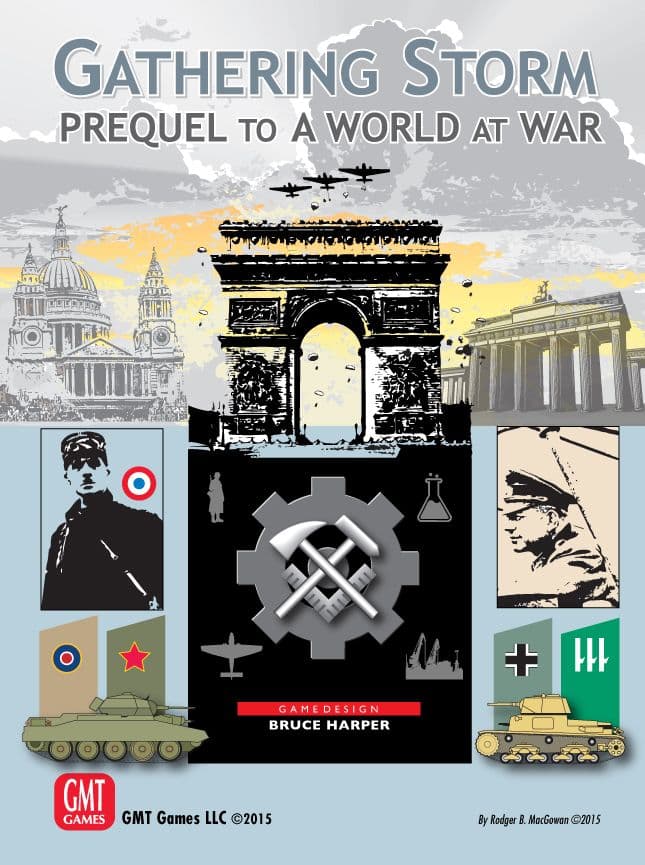
Gathering Storm
2015Gathering Storm is a sweeping, grand strategy wargame released in 2015 that serves as an ambitious prequel to the renowned heavy simulation A World at War. Instead of dropping players directly into the trenches of kinetic military combat, this historical tabletop experience focuses heavily on the tense diplomatic, political, and economic maneuvering across Europe between 1935 and 1939. The ultimate goal for players controlling the five major European powers—Germany, Italy, the Soviet Union, France, and Great Britain—is to secure the strongest possible strategic, territorial, and economic positioning before the inevitable outbreak of World War II. It can be played as a standalone competitive experience ending the exact moment global war triggers, or utilized as an incredibly detailed starting setup for a subsequent full game of A World at War.
The game unfolds over a series of seasonal turns simulating the precarious pre-war years. At the heart of the design is a simultaneous hidden allocation system where factions secretly distribute their precious, limited national budgets—known as Build Points—and political capital. This blind-bidding mechanism forces participants to anticipate their opponents' geopolitical priorities without perfect information. Players must balance investing heavily in long-term research and development tech trees to unlock advanced naval, aerial, and armored military armaments, against spending political influence to sway minor European nations like Spain, Poland, and Yugoslavia toward their faction. During the resolution and action phases, the Axis powers continuously test Allied appeasement by pushing for historical and ahistorical territorial expansions, thereby escalating the global tension tracks.
Enthusiasts of deep, heavy strategy wargames are drawn to Gathering Storm for its masterful execution of escalating dread and intricate diplomacy. It brilliantly captures the geopolitical chess match of the late 1930s, rewarding meticulous long-term planning, calculated bluffs, and shrewd negotiation. The constant tightrope walk between aggressive expansion and provoking a premature global conflict keeps player interaction extremely high and the atmosphere suitably tense. With its massive scope, demanding rule set, and the sheer narrative weight of altering the starting conditions of the Second World War, it stands out as an unparalleled sandbox for dedicated armchair generals and history buffs.
2-5 300m⚖️ 4.2
BoxNo Cover Art
Fronton Miami: 1973 is a game that transports players to the vibrant world of professional tennis in the 1970s. The game's goal is to become the ultimate champion by accumulating points and winning matches. Players take on the roles of famous tennis stars, each with their unique abilities and strengths. As they progress through the tournament, they must navigate the challenges of the court, including rivalries, injuries, and weather conditions.
The gameplay revolves around a combination of strategy and luck. Players roll dice to determine the outcome of their shots, while also managing their energy levels and making tactical decisions about when to take risks or play it safe. The game features a unique mechanic called 'Rally Points,' which allows players to build momentum and create opportunities for big wins.
One of the key aspects that sets Fronton Miami: 1973 apart is its thematic depth. The game is meticulously researched, with accurate depictions of famous tennis tournaments, players, and equipment from the era. Players can immerse themselves in the sights, sounds, and emotions of the 1970s tennis scene, complete with authentic commentary and music.
The game's unique appeal lies in its ability to balance competition and camaraderie. Players can engage in intense rivalries, but also work together to create a more enjoyable experience for everyone. The game is designed to be accessible to players of all ages and skill levels, making it an excellent choice for families or casual gamers looking for a fun and challenging experience.
m⚖️ 3.0