Thematic Games
Browse all Thematic board games in the Meeple Pulse database.
Styles
AbstractAbstract StrategyAdventureAnimalsCard GameChildren's GameCivilizationCo-operativeCompetitiveDiceEconomicEducationalEuroExpansion for Base-gameFamilyFantasyFightingHistoricalHorrorMedium HeavyPartyParty GamePrint & PlayPuzzle-LikeRacingReal-timeSpace ExplorationSportsStrategyTerritory BuildingThematicWargame
Themes
AbstractAdventureAncientAnimalsArtBusinessCard GameCo-operativeComic BookCooperativeCrimeEconomicEnvironmentalismExplorationFantasyHistoricalHorrorHumorIntrigueLiteraryMagicMarvelMedievalModernMuseumMysteryMythologyNatureNauticalPoliticalPress Your LuckSatireSci-FiSocial CommentarySocial InteractionSpaceSuperheroesThematicTravelWarWesternWord-Guessing
Mechanics
3D PlacementActingAction / DexterityAction DraftingAction Point AllowanceAction Point Allowance SystemAction Point SystemAction PointsAction ProgrammingAction QueueAction RetrievalAction SelectionAction/EventAlliancesAlternate ActivationApp-AssistedApp-DrivenArea ControlArea InfluenceArea MajorityArea Majority / InfluenceArea MovementArgumentationAsymmetricAsymmetric FactionsAsymmetric GameAsymmetric PowersAsymmetrical PowersAuction & BiddingAuction/BiddingAuctioningBag BuildingBettingBetting and BluffingBetting and WageringBetting and WagersBiddingBingoBlind BiddingBluffingCampaign / Battle Card DrivenCampaign / LegacyCampaign / Legacy GameCampaign / Mission-basedCampaign / ScenariosCampaign GameCampaign PlayCard DraftingCard DrawingCard DrivenCard Driven ActionCard Driven CombatCard Driven Dice AllocationCard Driven MovementCard ManagementCard PlayCard Play / Hand ManagementCard Play Conflict ResolutionCard SheddingCard-Driven MovementCharacter CreationCharacter ProgressionChit-Pull SystemCo-op PlayCo-operative GameCo-operative PlayCode-breakingCombat ResolutionCombo ChainCommand CardsCommodity SpeculationCommunication LimitsContract FulfillmentContractsCooperative GameCooperative GameplayCooperative PlayCooperative Trick-takingDebateDeck BuildingDeck ConstructionDeck, Bag, and Pool BuildingDeck-BuildingDeductionDexterityDice DraftingDice PlacementDice RollingDiplomatic InfluenceDraftingDynamic Battle SystemEnclosureEnd Game BonusesEngine BuildingEngine-BuildingEscape RoomEvent DrivenExplorationFarmingFlip and WriteFollowFollow ActionGrid CoverageGrid MovementHand ManagementHex-and-CounterHexagon GridHidden MovementHidden RolesI Cut You ChooseIncomeInfluence / Area MajorityLadder ClimbingLegacyLegacy ElementsLegacy GameLegacy SystemLimited CommunicationLine DrawingLine of SightMancalaMap AdditionMap MovementMarketMarket DraftingMarket ManipulationMarket MechanicMarket SpeculationMatchingMeasurement MovementMemoryMission ObjectivesModular BoardModular Board ConstructionMove Through DeckMovement PointsMovement TemplatesMulti-Use CardsMulti-use CardsMultiple ScenariosMust FollowNarrative ChoiceNarrative Choice / ParagraphNegotiationNegotiation MechanicsNetwork & Route BuildingNetwork BuildingNetwork and Route BuildingOne vs ManyOne vs. ManyOpen DraftingOwnershipPaper-and-PencilPartnershipsPattern BuildingPattern RecognitionPick-up and DeliverPlayer EliminationPlayer InteractionPlayer JudgePoint SaladPoint to Point MovementPolyominoesPush Your LuckPush-Your-LuckPuzzlePuzzle-LikePuzzle-SolvingRaceReal-TimeRecipe FulfillmentResource ManagementRole PlayingRole SelectionRoll / Spin and MoveRondelRoute BuildingRoute-BuildingRoute/Network BuildingSanity SystemScenario / Campaign PlayScenario / Mission / Campaign GameScenario / Mission FunctionSecret Unit DeploymentSemi-Cooperative GameSet CollectionSheddingSimulationSimultaneous ActionSimultaneous Action SelectionSimultaneous Hidden AllocationSocial DeductionSocial InteractionSolo / Solitaire GameSpace ExplorationStat Check / Skill CheckStock HoldingStorytellingStrategic PlanningTableau BuildingTactical Decision-MakingTake ThatTargeted CluesTeam PlayTeam-Based GameTeam-Based GuessingTeamworkTech TreesTech Trees / Tech TracksTechnology & Armament TracksTechnology TreeTension & Aggression TracksTile DraftingTile LayingTile PlacementTime TrackTime TravelTower DefenseTrack MovementTradingTrick-takingTug of WarTurn Order: PassTurn Order: Stat-BasedUnit PlacementVariable Phase OrderVariable Player PowersVariable Set-upVariable SetupVictory Point TracksVotingWord AssociationWord GameWord GuessingWord-GuessingWord-guessingWordplayWorker Placement
RANK #214
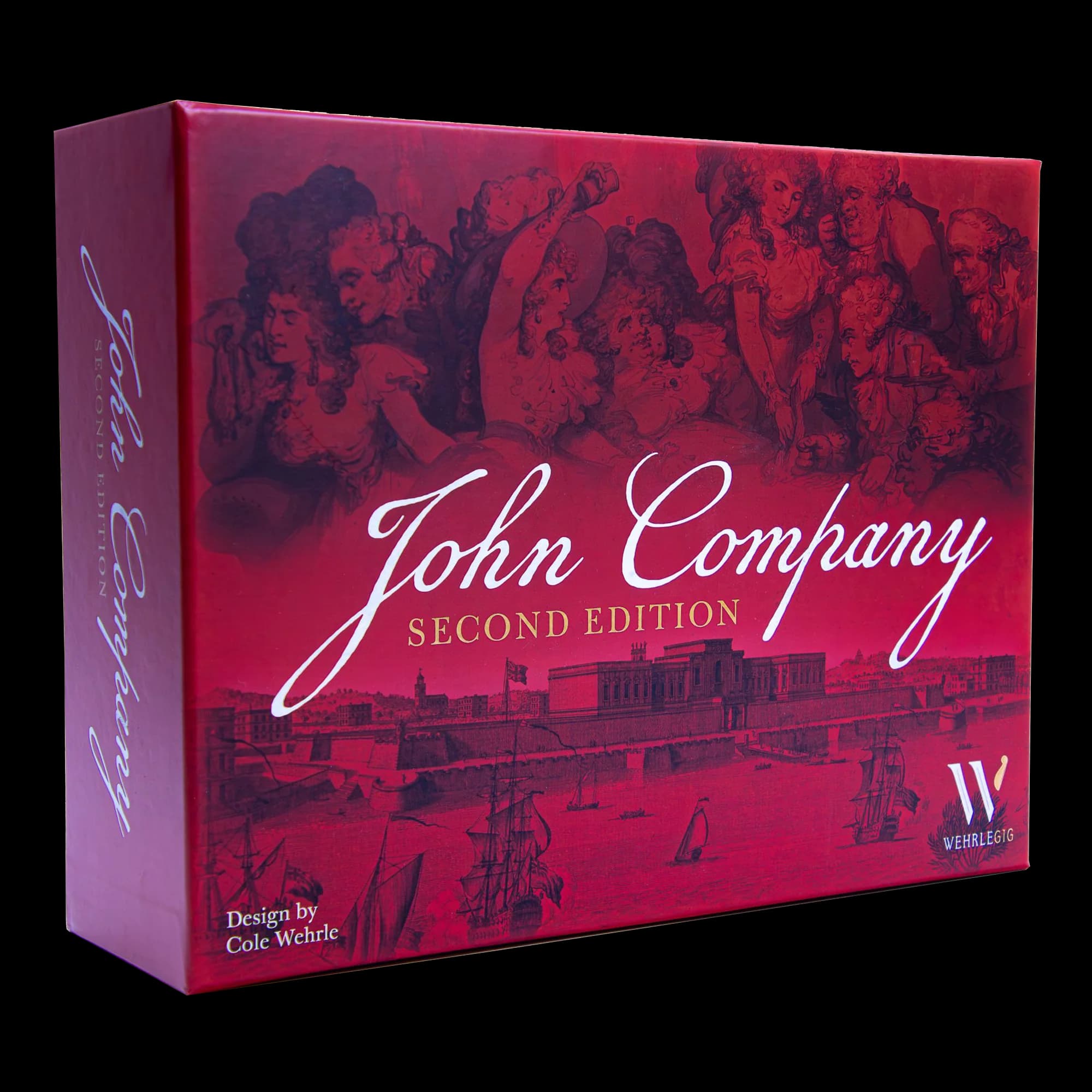
John Company: Second Edition is a deeply immersive and interactive simulation of the British East India Company, a historically powerful but notoriously dysfunctional trading corporation. Players represent ambitious British families seeking to exploit the Company for their own gain. The ultimate goal is not necessarily the Company's success, but rather amassing the greatest personal wealth and prestige for one's dynasty. This is achieved by securing lucrative positions, making shrewd investments, and ultimately retiring family members in a blaze of glory. This second edition is a significant redesign of the 2017 original, featuring a lavish production and refined rules that heighten the strategic depth and political maneuvering.
The gameplay is a masterful blend of semi-cooperative action and cutthroat individualism. On one hand, players must work together to keep the Company financially solvent, as its collapse brings ruin to all. On the other hand, victory is entirely individual. The game's structure revolves around players gaining control of key offices—from the prestigious Chairman to regional Presidents in India—often through tense auctions and brokered deals. In these roles, players execute Company actions like trade, shipping, and military campaigns, where success is often subject to the whims of dice rolls. The game progresses through distinct rounds that include managing private family affairs, voting on transformative laws in Parliament, and navigating the crucial London Season, where prestige is scored and legacies are made.
What truly distinguishes John Company is its unparalleled focus on negotiation and emergent narrative. Success is nearly impossible without engaging in constant deal-making, forming temporary alliances, and even resorting to bribery. The game is a political sandbox where the most memorable moments arise not from scripted events, but from the players' own schemes and betrayals. It brilliantly models a complex bureaucracy where individual ambition clashes with collective responsibility, creating a challenging and unforgettable experience. It appeals to players who relish high interaction, complex systems, and the thrill of turning a sprawling, failing institution into an engine for their own personal triumph.
1-6 180m⚖️ 4.4
RANK #231
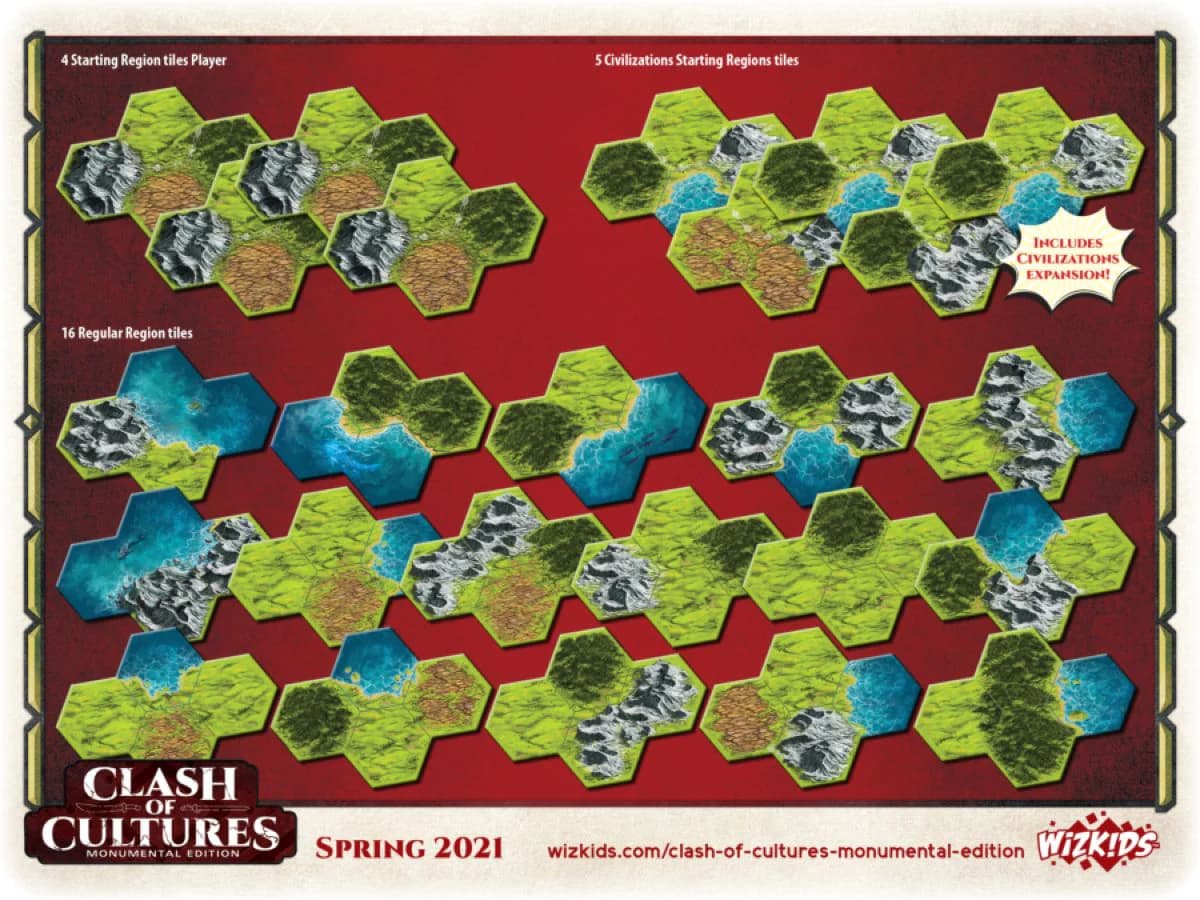
Clash of Cultures: Monumental Edition is a grand 4X civilization-building game where players guide a fledgling society from a single settlement into a sprawling, influential empire. This comprehensive 2021 edition revitalizes the beloved classic by integrating its core expansions, including "Civilizations" and "Aztecs," offering the definitive experience in a single box. The primary goal is to accumulate the most Victory Points by the end of the game's final age. These points are not earned through warfare alone; players are rewarded for developing a vibrant culture, constructing magnificent wonders, achieving specific objectives, and advancing their society's knowledge. Players must balance aggressive expansion and military might with economic stability and cultural growth to etch their civilization's name into the annals of history.
The game unfolds over six distinct "Ages," each comprising three rounds. On their turn, a player performs three actions, choosing from a wide array of options like exploring the modular, unknown world, founding new cities, researching technologies, or moving military units. A central pillar of the gameplay is the expansive and flexible technology tree, which features 48 unique Advances. This system allows players to customize their civilization's path, unlocking new buildings, units, and powerful abilities that can create unique strategic synergies. Combat is resolved through dice rolls, influenced by unit types and technological prowess, while resource management—balancing food, ore, wood, ideas, and gold—is crucial for funding your ambitions. Every few rounds, a Status Phase triggers scoring, provides a free technology, and introduces new objective cards, maintaining a dynamic pace throughout the game.
What makes Clash of Cultures: Monumental Edition a cherished classic is its remarkable strategic depth and high replayability. The freedom to pursue victory through multiple avenues—be it military conquest, technological supremacy, or cultural dominance—ensures that every game feels different. The modular board and variable objective cards create a unique landscape and set of goals for each session. This edition elevates the experience with stunning, newly sculpted miniatures and upgraded components that provide a commanding tabletop presence. It stands as a monumental achievement in the civilization genre, offering a deeply engaging and challenging experience for players who enjoy long-term strategy and the satisfaction of building a unique empire from the ground up.
2-4 210m⚖️ 4.1
RANK #240
Originally released as Railroad Tycoon, Railways of the World is a quintessential 'train game' that tasks players with building the most successful and profitable railway empire. A more approachable and streamlined version of Martin Wallace's heavier game, Age of Steam, it challenges players to become titans of the 19th-century railroad industry. The goal is to accumulate the most victory points by the end of the game, which are primarily earned by making lucrative deliveries of goods between burgeoning cities. Players must balance aggressive expansion and operational efficiency, managing their finances carefully to lay track, upgrade their locomotives, and fulfill valuable contracts before their rivals can claim them.
The gameplay is structured over a series of rounds, each containing three distinct phases. First, players participate in a crucial auction to determine the turn order for the round, a phase where bidding aggressively can grant a significant strategic advantage. Next is the action phase, the heart of the game, where players take turns performing actions like building track tiles to expand their network across the hex-grid map, upgrading their engines to haul goods over longer distances, and delivering goods cubes by picking them up from one city and moving them to another along their connected routes. A key interactive element is that players can use their opponents' tracks for a delivery, but the track owner earns the points for that portion of the journey. Players can also take on debt by issuing bonds to gain an immediate influx of cash, but this will cost them income and victory points later on.
Railways of the World is beloved for its grand scale and high level of player interaction, which keeps all participants engaged throughout the game. The auction mechanism ensures tense decisions from the very start of each round, while the shared network system creates indirect competition and strategic dilemmas. Do you build a critical link that an opponent might exploit, or do you focus on a more isolated, personal network? This blend of economic management, route optimization, and tactical bidding creates a deeply satisfying and highly replayable experience. With its impressive table presence and the tangible reward of watching your rail network snake across the board, it has cemented its status as a masterpiece in the economic strategy genre.
2-6 120m⚖️ 3.2
BoxNo Cover Art
RANK #250
Welcome to The Taverns of Tiefenthal, a strategic board game where you'll take on the role of a tavern owner in a small village. Your goal is to make your tavern the most successful by attracting the right customers and making the right improvements using dice placement and deck building mechanisms. Each player will begin with a slim deck of cards that includes 7 guests, a brewer, server, and a table. As you play, you'll upgrade your tavern board by flipping over pieces to reveal new areas for improvement. You'll also collect resources such as beer and Thaler (coins) to purchase new guests and nobles cards, or upgrade equipment in your tavern. The game consists of eight rounds, each with seven phases. Players will compete to have the most points at the end of round 8, gained from the cards in their deck and the upgrades in their tavern. The more special the cards in your deck, the more points you'll gain, especially from nobles. But don't forget the upgrades in your tavern, they'll also give you points and help you during the game with their special abilities. With its unique blend of dice placement and deck building, The Taverns of Tiefenthal offers a challenging and rewarding experience for players who enjoy strategic gameplay.
2-4 60m⚖️ 2.7
RANK #278
Dinosaur Island
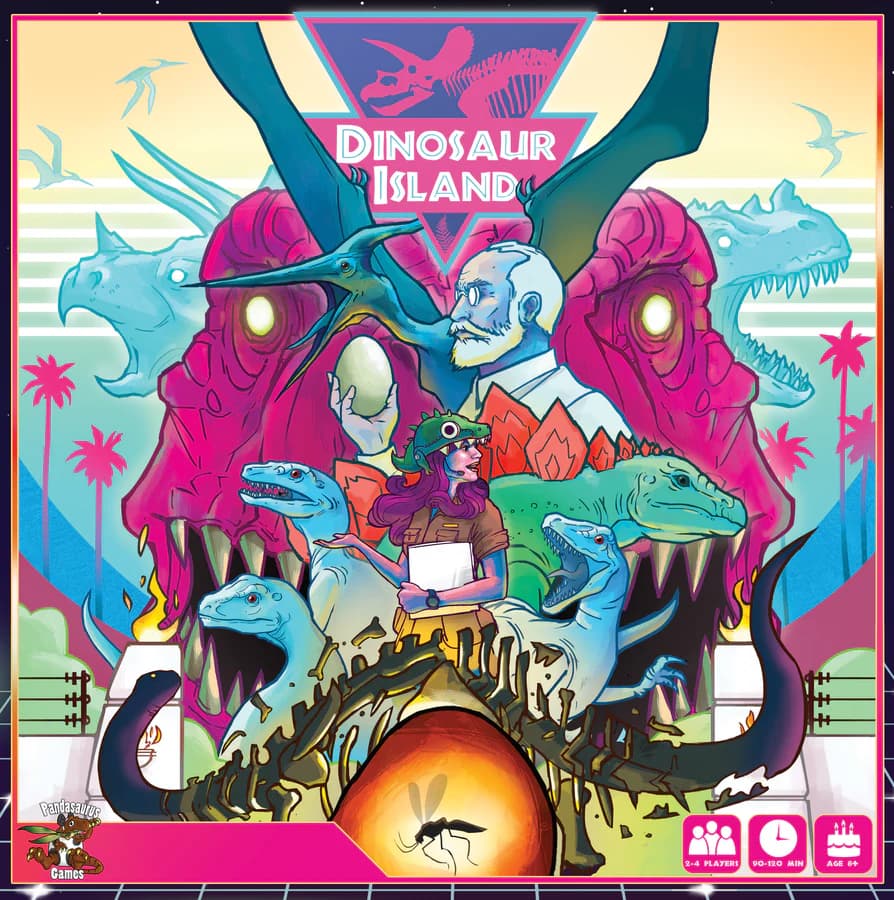
2017Dinosaur Island invites players to take the helm of a sprawling, neon-drenched biological amusement park where bringing prehistoric creatures back to life is just part of the daily grind. Channeling a vibrant, nostalgic aesthetic inspired by the pop culture of the 1980s and 90s, this thematic strategy game tasks you with synthesizing ancient DNA, erecting thrilling rides, and keeping your visitors entertained. Your ultimate objective is to run the most successful and profitable park possible, carefully balancing the awe-inspiring excitement of your newly minted dinosaurs against the ever-present danger of a catastrophic, guest-eating breakout.
The gameplay loop operates across several distinct phases and utilizes a clever blend of worker placement, set collection, and dice drafting. In the initial research phase, players deploy scientists to extract vital genetic sequences from custom amber dice, expand cold-storage capacities, and discover new dinosaur recipes. Next, managers hit the market to purchase essential upgrades, hire skilled specialists, and build amenities like food stands or rollercoasters. The core action then shifts to personal laboratory boards, where workers are simultaneously assigned to refine DNA, breed creatures into paddocks, and bolster park security. Finally, the park opens its gates to a blind draw of visitor meeples. While paying guests bring in much-needed revenue and victory points, sneaky hooligans take up valuable space for free, and any lapse in security will lead to rampaging carnivores devouring the clientele.
What truly sets Dinosaur Island apart is its masterful integration of a deeply engaging theme with satisfying Euro-style mechanics. Fans adore the striking visual presentation, largely driven by vivid pinks and retro graphic design that makes the table presence absolutely pop. Beyond its stunning looks, the game offers remarkable flexibility; players can tailor the experience's length by selecting different sets of objective cards to accommodate quick sessions or sprawling engagements. With a well-regarded solo mode and multiple strategic avenues to explore—from focusing on massive, high-risk carnivores to building a safe, amenity-rich resort—the game provides a robust, replayable puzzle that keeps managers coming back for more thrilling park management.
1-4 120m⚖️ 3.0
RANK #279
Distilled
2023Step into the shoes of an heir who has just inherited an abandoned family distillery in 'Distilled', a highly thematic, medium-weight Eurogame. Your ultimate goal is to restore your family's legacy by crafting the world's most renowned and profitable spirits. Through careful planning and strategic investments, you will upgrade your facilities, hire specialized staff, and gather premium ingredients from a dynamic market. Over the course of seven rounds, you must balance your finances and resources to outshine your rivals, aiming to earn the most Spirit Points and claim the prestigious title of Master Distiller.
The core gameplay loop of 'Distilled' revolves around four distinct phases: Market, Distill, Sell, and Age. During the Market phase, players draft essential ingredients, specialized equipment, and key upgrades from shared premium and basic displays. The magic truly happens in the Distill phase, which introduces a brilliant thematic push-your-luck mechanic known as the washback. After combining your purchased sugars, water, and yeast, you shuffle them with alcohol cards to form a unique deck. To simulate the real-world distillation process where the harsh head and tail of the batch are discarded, players must blindly remove the top and bottom cards of their deck. This thrilling element of chance means you might accidentally discard a crucial premium grain, downgrading your highly anticipated whiskey into a basic moonshine or vodka.
Fans of thematic board games are consistently captivated by how seamlessly 'Distilled' blends its real-world subject matter with engaging mechanics. Players love the deep satisfaction of the Aging phase, where prestigious spirits are safely tucked away in barrels and placed in a warehouse. As these high-tier liquors mature round after round, they accumulate face-down flavor cards that exponentially boost their final victory point value while adding delightful thematic notes like vanilla or leather. Combined with a robust solo mode, beautiful iconography, and a rewarding set-collection system for bottling your creations, the game offers immense replayability. The tension of the distillation deck draw and the satisfying progression of building a world-class production engine make it an unforgettable experience for modern strategy enthusiasts.
1-5 120m⚖️ 3.0
RANK #294
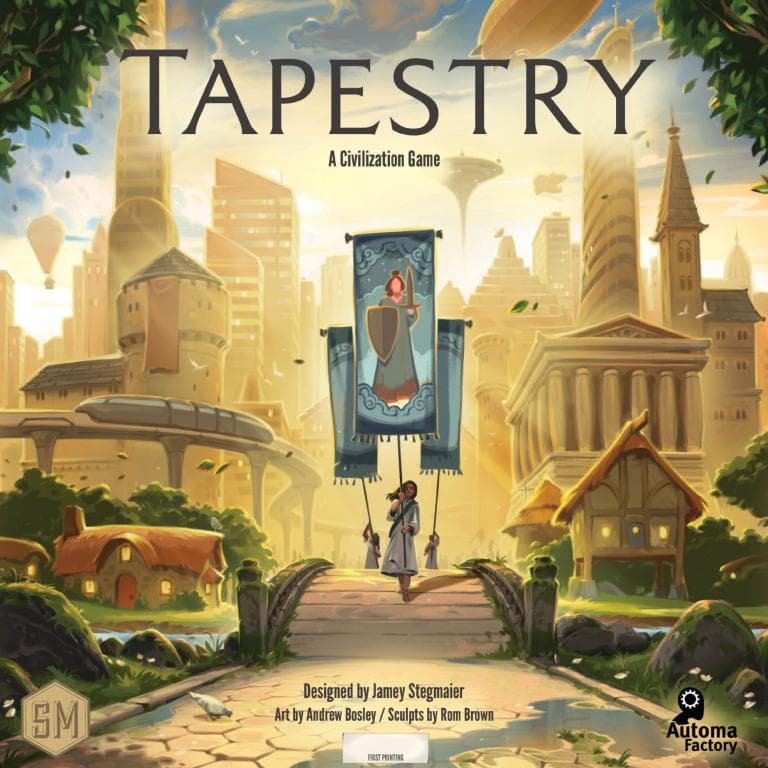
Tapestry
2019Tapestry is a civilization-building board game that breaks away from traditional historical simulations by offering a colorful, anachronistic approach to human development. Designed by Jamey Stegmaier, the game challenges players to guide a unique culture from the earliest days of discovery into the technological wonders of the near future. The primary goal is to accumulate the most victory points by advancing on four core tracks: Science, Technology, Exploration, and Military. Unlike typical '4X' games that focus heavily on combat, Tapestry emphasizes a strategic optimization puzzle where players craft their own narrative through cards and landmarks within their growing capital city.
The heart of the experience lies in a streamlined decision-making process. On every turn, a player chooses between an Advancement turn or an Income turn. Advancement involves spending resources to climb one of the four tracks, each providing immediate rewards, permanent upgrades, and powerful landmark miniatures. When resources run dry, players take an Income turn to transition into a new era. This phase allows them to collect income based on their current progress, play a Tapestry card that defines their civilization's special abilities for that era, and upgrade technology. This asymmetric structure is further enhanced by sixteen distinct civilization mats, each granting game-changing powers that require players to pivot their strategies constantly.
What truly sets Tapestry apart is its high production value and the 'simple rules, deep strategy' philosophy. The game features 18 prepainted landmark miniatures that players place on their Capital City grids to complete 3x3 districts, adding a tactile tile-laying element. Because players take exactly five income turns throughout the session, the pacing varies significantly between participants. One player might conclude their journey early while others are still in their fourth era, creating a unique tension in resource efficiency. It is a medium-weight engine-building experience that rewards long-term planning while remaining accessible to many due to its concise rulebook, offering high replayability through variable setups and asymmetric components.
1-5 105m⚖️ 2.9
BoxNo Cover Art
RANK #298
Anno 1800: The Board Game, a captivating Eurogame released in 2020, beautifully translates the intricate city-building experience of its video game namesake into a tabletop format. Designed by the esteemed Martin Wallace, this strategy title immerses players in the heart of the Industrial Revolution, tasking them with developing a thriving island economy. The overarching goal is a strategic "race" to satisfy the increasingly complex needs of your population, represented by a hand of Population Cards that players aim to empty. It’s a game of careful planning, resource optimization, and dynamic player interaction, where every decision shapes your burgeoning industrial empire.
The core gameplay loop revolves around selecting one of nine distinct actions on your turn, a mechanism that provides a flexible yet constrained strategic environment. Instead of traditional resource accumulation, players "produce" goods by exhausting population cubes from various building tiles, instantly generating the necessary resources for current actions. These resources are then used to either play the crucial Population Cards from your hand, unlocking points and bonuses, or to construct new, higher-tier industries that produce more advanced goods. Population management is key: increasing your workforce grants more actions per round, but also forces you to draw more Population Cards, extending the challenge of fulfilling your citizens' demands and escalating the strategic race.
What truly sets Anno 1800 apart is its innovative and dynamic trade system. If a player lacks a specific resource, they can trade with any opponent who possesses the corresponding industry. This trade is non-refusable; the active player spends a trade token, and the recipient gains one gold, without expending their own resources or actions. This ingenious system strongly encourages players to specialize their industries rather than attempting to produce every good, fostering a high degree of player interaction and negotiation throughout the game. Fans praise its ability to replicate the video game's recursive production chains and satisfying engine-building without becoming overly bogged down in calculations, offering a rewarding, "puzzle-like" experience for strategists and optimization enthusiasts.
2-4 120m⚖️ 3.8

RANK #346
Speakeasy
2025Speakeasy, designed by the legendary Vital Lacerda and illustrated by Ian O'Toole, transports players back to the roaring 1920s during the height of the Prohibition era in New York City. In this high-stakes economic strategy game, players step into the shoes of ambitious mobsters looking to capitalize on the illegal alcohol trade by establishing and managing a network of underground bars known as speakeasies. The primary objective is to accumulate the most wealth and influence by the end of the game, navigating a treacherous landscape of rival gangs, fluctuating supply lines, and the ever-present threat of federal intervention. As the city pulsates with jazz and clandestine activity, you must strategically expand your empire across various Manhattan neighborhoods, ensuring your operations remain profitable while outmaneuvering your opponents in a quest for dominance over the Big Apple's nightlife.
The gameplay of Speakeasy is characterized by Lacerda's signature mechanical depth and intricate interconnectedness. Central to the experience is a sophisticated worker placement and card-driven system that requires players to carefully manage their hand of action cards to deploy henchmen and specialists across the city. You will be tasked with acquiring permits, securing bootlegged liquor, and upgrading your modest gin joints into opulent, high-society establishments that attract more prestigious clientele. Notable mechanics include an area majority system where controlling specific districts provides unique bonuses and influence, as well as a dynamic police track that represents the rising 'heat' from the authorities. Players must balance their aggressive expansion with bribes and political maneuvering to avoid raids that could shutter their businesses. The game also features a rich economic engine where resources must be converted efficiently into victory points and cold hard cash, all while keeping a close eye on the shifting demands of the illicit market.
What sets Speakeasy apart and makes it a highly anticipated title for board game enthusiasts is its masterful blend of thematic immersion and heavy strategic challenge. The synergy between Lacerda's complex systems and Ian O'Toole's stunning, era-appropriate graphic design creates a tabletop experience that is both visually captivating and intellectually demanding. Fans of the genre love the puzzle-like nature of the game, where every decision has long-term consequences and the path to victory requires meticulous planning several turns in advance. The game offers a high degree of replayability through its various setup configurations and the tactical depth required to respond to opponents' moves. Furthermore, the way the game simulates the tension of the Prohibition era—balancing the glamour of the jazz age with the gritty reality of organized crime—provides a narrative richness that is rarely seen in such heavy Euro-style games. It is a definitive heavy strategy title that rewards deep thought and offers a rewarding experience for those who enjoy sinking their teeth into a truly substantial gaming project.
1-4 150m⚖️ 4.6

RANK #598
Men-Nefer
2024In "Men-Nefer," the acclaimed 2024 release from publisher Ludonova, players are transported to ancient Egypt to take part in the construction and cultural development of its magnificent capital city. Designed by Germán P. Millán, known for other intricate Eurogames, this title challenges 1 to 4 players to achieve the greatest prestige in the eyes of the Pharaoh. Over the course of three distinct historical eras, you will manage a small team of workers, strategically guiding their efforts across various facets of Egyptian society. The ultimate goal is to amass the most prestige points, proving your worth as the most influential figure in the city's history. "Men-Nefer" presents a compelling, medium-weight strategic puzzle that rewards careful planning and efficient action selection.
The gameplay unfolds over a structured sequence of three eras, with each player receiving exactly 27 turns for the entire game. This tight turn economy makes every decision critical. On your turn, you must choose one of three actions: place a worker onto a main board location, which may incur a food cost if others are already present; move a previously placed worker to an adjacent spot to amplify an action's effect; or draft a new action tile from a common pool to enhance your personal player board for a subsequent era. The heart of the game lies in interacting with five interconnected "mini-games." You can sail boats up the Nile to fulfill contracts, advance priestesses within the temple to make offerings, prepare mummies for the afterlife, contribute to the building of the iconic Pyramids, and erect majestic Sphinxes to gain unique advantages. These activities are driven by a clever blend of worker placement, tile drafting, and set collection.
What makes "Men-Nefer" stand out is the elegant way its five action areas are interwoven, creating a rich tapestry of strategic possibilities. Success requires players to balance their efforts across these different paths, as neglecting one area can leave you vulnerable or cut off from valuable scoring opportunities. The system of drafting action tiles for later eras introduces a fascinating layer of long-term planning, forcing players to think several turns ahead. Players who enjoy optimizing their actions within a constrained system will find the 27-turn limit to be a brilliant design choice that ensures a tense and engaging experience from start to finish. With its strong thematic integration, beautiful artwork by Laura Bevon, and multiple viable strategies to explore, "Men-Nefer" offers deep replayability for fans of thoughtful, mid-weight Euro-style games.
1-4 90m⚖️ 3.7
RANK #850
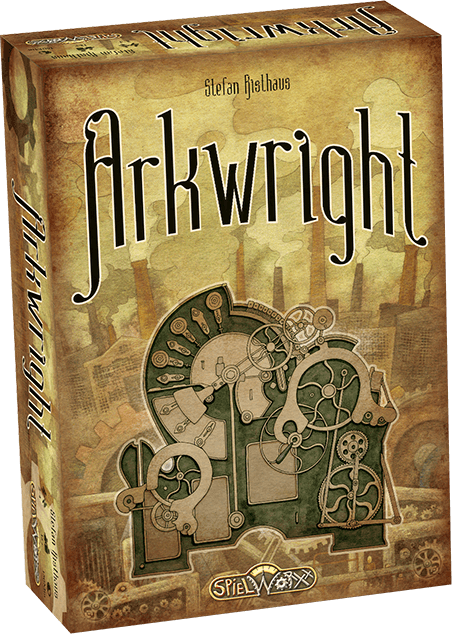
Arkwright
2014Arkwright thrusts players into the heart of the 18th-century Industrial Revolution, casting them as pioneering entrepreneurs in England. This is a deeply strategic and weighty economic simulation where the ultimate measure of success is not merely accumulating cash, but skillfully increasing the value of your company's shares. Players must navigate the birth of modern industry, building a commercial empire from the ground up. The goal is to become the most respected and valuable business magnate of the era, proving your acumen in a fiercely competitive environment. It’s a game about foresight, long-term planning, and understanding the intricate dance between production, labor, and the burgeoning stock market.
The gameplay unfolds over five 'decades', each representing a distinct phase of industrial growth. Each round, players select actions from an administration board, a core mechanic that blends worker placement with strategic resource allocation. These actions are the engine of your enterprise: you will build and modernize up to four factories dedicated to producing essential goods like cloth, cutlery, lamps, or bread. Managing these factories requires a delicate balance. You must hire workers, invest in new machinery to boost efficiency and quality, and, most crucially, set the price for your products. The game features a dynamic market where consumer demand fluctuates and an automated importer provides constant competition, forcing you to carefully consider your pricing strategy to outsell rivals and maximize profits.
What makes Arkwright a celebrated title among serious gamers is its uncompromised complexity and rewarding depth. It is a true 'brain-burner' that challenges players to manage multiple interconnected systems simultaneously. The genius lies in how every decision—from firing a worker to buying a single share of your own stock—has cascading effects on your entire operation and market position. Successfully selling goods directly translates into a higher share price, creating a satisfying feedback loop that rewards efficiency and shrewd market manipulation. The game also offers built-in scalability with its "Spinning Jenny" and "Waterframe" modules, allowing groups to choose between a slightly more streamlined experience or the full, intricate simulation. It’s this challenging but fair economic puzzle that gives Arkwright its immense replayability and enduring appeal.
2-4 180m⚖️ 4.7

RANK #2,414
Pax Pamir
2015Set in the 19th-century 'Great Game,' Pax Pamir (2015) invites players into the high-stakes political landscape of Central Asia during the collapse of the Durrani Empire. As Afghan tribal leaders, players do not act as traditional conquerors seeking personal territory; instead, they navigate the competing interests of the British, Russian, and Afghan coalitions. The primary objective is to align oneself with the empire that eventually secures dominance over the region, while simultaneously ensuring you are the most influential figure within that specific coalition to claim ultimate victory.
The gameplay revolves around a volatile central market where players purchase cards representing agents, events, and historical figures to build a personal tableau. These cards allow players to exert influence over the map, deploying tribes to control routes and spies to infiltrate rival courts. A key mechanic involves area influence and shifting loyalties, as players can switch allegiances to a different empire if the current political tide turns. Dominance checks are triggered throughout the game, scoring players based on their coalition's standing or their personal influence if the board remains fragmented and no single empire prevails.
What makes Pax Pamir stand out is its deep historical flavor and intensely interactive nature. It is widely praised for its ability to simulate complex geopolitical struggles through a relatively tight card-driven system. Fans of the game appreciate the high level of player interaction, where every market purchase or board movement ripples across the table, forcing opponents to constantly pivot their strategies. The tension is palpable as players balance long-term engine building with the immediate need to sabotage a rival's rise. It remains a masterpiece of historical simulation, offering a unique and challenging perspective on power and diplomacy that rewards tactical flexibility and sharp social reading.
m⚖️ N/A