Strategy Games
Browse all Strategy board games in the Meeple Pulse database.
Styles
Themes
AbstractAdventureAncientAnimalsArtBusinessCard GameCo-operativeComic BookCooperativeCrimeEconomicEnvironmentalismExplorationFantasyHistoricalHorrorHumorIntrigueLiteraryMagicMarvelMedievalModernMuseumMysteryMythologyNatureNauticalPoliticalPress Your LuckSatireSci-FiSocial CommentarySocial InteractionSpaceSuperheroesThematicTravelWarWesternWord-Guessing
Mechanics
3D PlacementActingAction / DexterityAction DraftingAction Point AllowanceAction Point Allowance SystemAction Point SystemAction PointsAction ProgrammingAction QueueAction RetrievalAction SelectionAction/EventAlliancesAlternate ActivationApp-AssistedApp-DrivenArea ControlArea InfluenceArea MajorityArea Majority / InfluenceArea MovementArgumentationAsymmetricAsymmetric FactionsAsymmetric GameAsymmetric PowersAsymmetrical PowersAuction & BiddingAuction/BiddingAuctioningBag BuildingBettingBetting and BluffingBetting and WageringBetting and WagersBiddingBingoBlind BiddingBluffingCampaign / Battle Card DrivenCampaign / LegacyCampaign / Legacy GameCampaign / Mission-basedCampaign / ScenariosCampaign GameCampaign PlayCard DraftingCard DrawingCard DrivenCard Driven ActionCard Driven CombatCard Driven Dice AllocationCard Driven MovementCard ManagementCard PlayCard Play / Hand ManagementCard Play Conflict ResolutionCard SheddingCard-Driven MovementCharacter CreationCharacter ProgressionChit-Pull SystemCo-op PlayCo-operative GameCo-operative PlayCode-breakingCombat ResolutionCombo ChainCommand CardsCommodity SpeculationCommunication LimitsContract FulfillmentContractsCooperative GameCooperative GameplayCooperative PlayCooperative Trick-takingDebateDeck BuildingDeck ConstructionDeck, Bag, and Pool BuildingDeck-BuildingDeductionDexterityDice DraftingDice PlacementDice RollingDiplomatic InfluenceDraftingDynamic Battle SystemEnclosureEnd Game BonusesEngine BuildingEngine-BuildingEscape RoomEvent DrivenExplorationFarmingFlip and WriteFollowFollow ActionGrid CoverageGrid MovementHand ManagementHex-and-CounterHexagon GridHidden MovementHidden RolesI Cut You ChooseIncomeInfluence / Area MajorityLadder ClimbingLegacyLegacy ElementsLegacy GameLegacy SystemLimited CommunicationLine DrawingLine of SightMancalaMap MovementMarketMarket DraftingMarket ManipulationMarket MechanicMarket SpeculationMatchingMeasurement MovementMemoryMission ObjectivesModular BoardModular Board ConstructionMove Through DeckMovement TemplatesMulti-Use CardsMulti-use CardsMultiple ScenariosMust FollowNarrative ChoiceNarrative Choice / ParagraphNegotiationNegotiation MechanicsNetwork & Route BuildingNetwork BuildingNetwork and Route BuildingOne vs ManyOne vs. ManyOpen DraftingPaper-and-PencilPartnershipsPattern BuildingPattern RecognitionPick-up and DeliverPlayer EliminationPlayer InteractionPlayer JudgePoint SaladPoint to Point MovementPolyominoesPush Your LuckPush-Your-LuckPuzzlePuzzle-LikePuzzle-SolvingRaceReal-TimeRecipe FulfillmentResource ManagementRole PlayingRole SelectionRoll / Spin and MoveRondelRoute BuildingRoute-BuildingRoute/Network BuildingSanity SystemScenario / Campaign PlayScenario / Mission / Campaign GameScenario / Mission FunctionSecret Unit DeploymentSemi-Cooperative GameSet CollectionSheddingSimulationSimultaneous ActionSimultaneous Action SelectionSimultaneous Hidden AllocationSocial DeductionSocial InteractionSolo / Solitaire GameSpace ExplorationStat Check / Skill CheckStock HoldingStorytellingStrategic PlanningTableau BuildingTactical Decision-MakingTake ThatTargeted CluesTeam PlayTeam-Based GameTeam-Based GuessingTeamworkTech TreesTech Trees / Tech TracksTechnology & Armament TracksTechnology TreeTension & Aggression TracksTile DraftingTile LayingTile PlacementTime TrackTime TravelTower DefenseTrack MovementTradingTrick-takingTug of WarTurn Order: PassTurn Order: Stat-BasedUnit PlacementVariable Phase OrderVariable Player PowersVariable Set-upVariable SetupVictory Point TracksVotingWord AssociationWord GameWord GuessingWord-GuessingWord-guessingWordplayWorker Placement
RANK #184
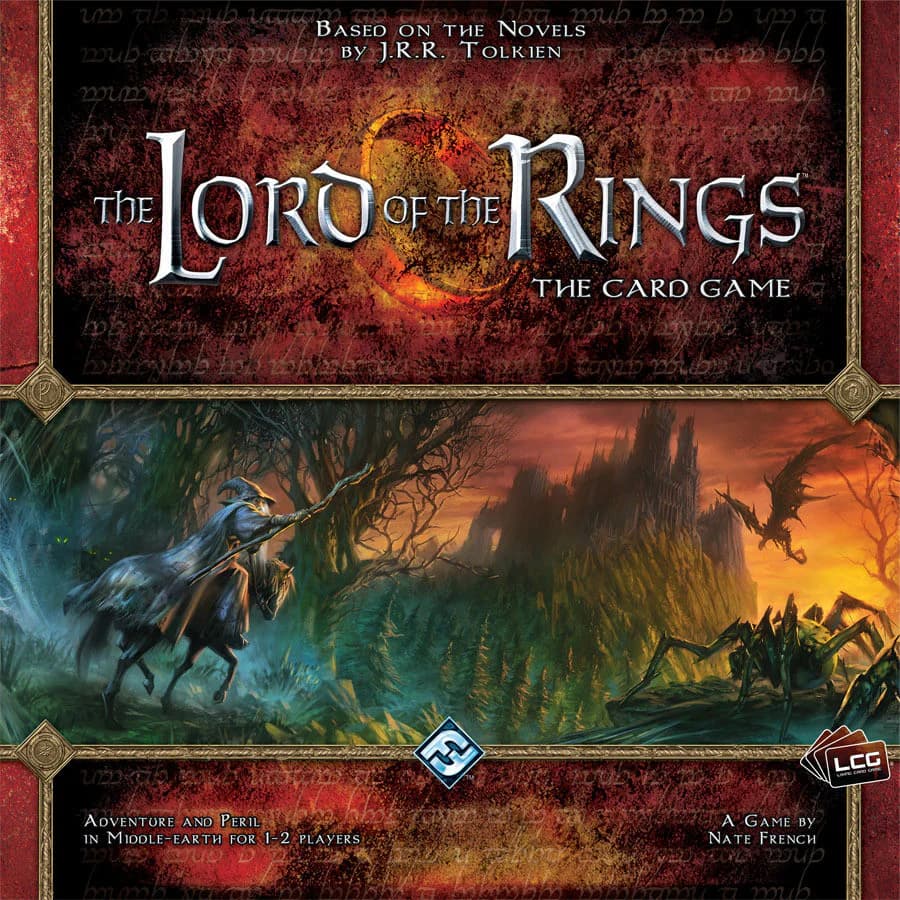
Embark on perilous quests in The Lord of the Rings: The Card Game, a cooperative Living Card Game (LCG) set within J.R.R. Tolkien's iconic Middle-earth. Unlike collectible games with randomized booster packs, this is an LCG where players can strategically grow their collection with fixed expansions. In this game, one to four players unite to form their own fellowship, working together against automated scenarios controlled by an 'encounter deck'. Your goal is to navigate treacherous lands, battle fearsome enemies, and complete a series of quest objectives to achieve victory against the encroaching shadow of Sauron. It's a narrative-driven adventure that brings the world of the books to your tabletop.
The core of the game revolves around strategic deck-building and a structured round sequence. Each player constructs a deck of at least fifty cards centered on one to three powerful heroes, chosen from four distinct spheres of influence: Leadership, Lore, Spirit, and Tactics. These spheres dictate which allies, attachments, and events a player can use. A typical round involves gaining resources to pay for cards, questing to make progress on the current objective, potentially traveling to new locations, engaging with enemies from the encounter deck, and finally resolving combat. Players must manage their characters carefully, deciding who will quest, defend, or attack. Victory is hard-won, as players lose if any member's threat level reaches 50 or if all of their heroes are defeated.
The enduring appeal of The Lord of the Rings: The Card Game lies in its deep, strategic challenge and rich thematic immersion. It is renowned for its difficulty, often requiring players to meticulously craft and refine their decks to overcome the unique obstacles presented by each scenario. The cooperative nature fosters a strong sense of camaraderie as players must coordinate their actions and build synergistic decks to succeed. The game's artwork is inspired directly by Tolkien's novels rather than the films, creating a distinct and authentic vision of Middle-earth. This combination of challenging cooperative gameplay, extensive customization, and a beloved fantasy setting makes it a highly replayable and rewarding experience for any fan of adventure.
1-4 60m⚖️ 3.4

RANK #196
Xia: Legends of a Drift System invites you to stake your claim in a sprawling, open-world space adventure. This is a true 'sandbox' experience where you take the helm of your own starship with a singular goal: to become a legend. Fame is the ultimate currency, and players compete to be the first to reach a predetermined number of Fame Points. How you achieve this status is entirely your decision. Will you become a shrewd interstellar merchant, a daring explorer charting the unknown, a feared pirate preying on others, or a dependable contractor completing vital missions? The galaxy is a vast canvas, and your actions will paint the story of your rise to legendary status.
The gameplay is dynamic and driven by player choice, set against the backdrop of a modular galaxy that is built as you play. The game board begins with just a few sectors, and as captains venture into the unknown, they draw and place new hexagonal tiles, revealing planets, asteroid fields, nebulae, and other celestial phenomena. This ensures that no two games ever feel the same. A player's turn is an active affair, involving actions like moving via a 'roll and move' mechanic determined by your ship's engine power, exploring new tiles, buying and selling goods between planets, mining resources, and engaging in dice-driven combat with NPCs or other players. Central to the experience is the deep ship customization, allowing you to purchase new ship models and outfit them with a tangible array of upgraded engines, shields, and weapons that slot directly onto your ship mat.
What makes Xia a beloved classic is the profound sense of freedom and the powerful emergent narratives it creates. The game doesn't funnel you down a specific path; it provides the tools and the universe, then steps back to let your story unfold. One moment you might be hauling cargo for a modest profit, and the next you could be ambushed by a rival, forcing a desperate escape or a thrilling dogfight. This blend of strategic planning, resource management, and press-your-luck risk creates a highly thematic and immersive journey. Players don't just play a game; they live out a unique sci-fi adventure, making Xia a pinnacle of the sandbox board game genre.
3-5 120m⚖️ 3.2

RANK #197
In Star Wars: Outer Rim, you step into the worn boots of a scoundrel, smuggler, or bounty hunter trying to make your name in the lawless fringes of the galaxy. This is a competitive sandbox adventure game where 1 to 4 players take on the roles of iconic characters like Han Solo, Boba Fett, and Doctor Aphra. The ultimate goal is to become a living legend, a status achieved by being the first to accumulate 10 Fame points. You'll earn this prestige by completing dangerous jobs, delivering illicit cargo, successfully hunting down bounties for powerful syndicates, upgrading your iconic starship, and achieving unique personal goals. It's a race to galactic notoriety where your reputation with the galaxy's major factions—the Galactic Empire, the Rebel Alliance, the Hutts, and the Syndicates—will either open doors or put a target on your back.
The gameplay loop is structured to give players significant freedom in how they approach their path to fame. Each turn consists of three key steps. In the Planning Step, you make a crucial decision: move your ship across the modular map of planetary systems, take a moment to repair your ship and heal your character, or take an odd job for a quick infusion of 2,000 credits. The Action Step is where you execute your grand plans, which can involve buying and selling goods at the dynamic market, trading with other players, and turning in completed jobs or bounties. Finally, the Encounter Step immerses you in the world, as you either investigate mysterious contacts on a planet, clash with patrolling faction ships, or draw a narrative card that presents a unique story-driven challenge or opportunity based on your location.
What makes Outer Rim a beloved experience is its profound sense of freedom and emergent storytelling. It's less a game about finding the single most 'optimal' move and more about crafting your own personal Star Wars saga. You can pivot your strategy at any moment: one turn you might be smuggling illegal goods for the Hutts, and the next you could be hunting a bounty issued by the Imperials. Success and failure in these endeavors are often determined by skill checks resolved with custom eight-sided dice, adding moments of thrilling uncertainty. The combination of a pick-up-and-deliver core, robust character progression, and a rich narrative deck ensures that no two games feel the same, offering a highly replayable and deeply thematic journey through the galaxy's most infamous spacelanes.
1-4 150m⚖️ 2.6

RANK #212
Embark on an epic science-fiction journey in "Welcome to the Moon," a narrative-driven campaign game that builds upon the celebrated 'flip-and-write' system. In this ambitious sequel, players are tasked with a monumental mission: saving humanity by establishing a thriving colony on the moon. The game is ingeniously structured as a series of eight distinct 'adventures,' each representing a critical phase of the colonization project. These adventures are linked by a branching, overarching story where your successes and failures in one chapter directly influence the challenges and opportunities you'll face in the next. The goal isn't just to score points on a single map, but to navigate a multi-stage campaign, making shrewd decisions that will guide your faction's progress and ultimately determine the fate of your lunar settlement across a generation-spanning saga.
The core gameplay loop is elegantly simple yet rich with strategic depth. Each round, three sets of cards are revealed, with each set containing a number card and an action card. All players simultaneously choose one pair to use on their personal, dry-erase adventure sheet for that mission. The number must be written into a space, adhering to the fundamental rule of placing values in ascending order within defined zones. The chosen action grants a powerful bonus, such as activating special abilities, collecting resources, or advancing mission objectives. What truly sets the experience apart is that each of the eight adventures features a completely unique player sheet with its own rules, spatial puzzles, and thematic scoring conditions, transforming the gameplay from launching your ship in Adventure 1 to developing a lunar city in a later mission.
"Welcome to the Moon" captivates players with its unique blend of accessible mechanics and deep, long-term strategy. Its most celebrated feature is the campaign system, which elevates the game far beyond a standard flip-and-write by creating a persistent, evolving world. The sense of discovery as you unlock new adventures and see the consequences of your choices unfold is a powerful hook that encourages repeated play. This versatility is a major strength; you can easily pull out any of the eight adventures for a quick, satisfying standalone game, or immerse yourself in the full campaign for a richer, more narrative experience. This flexibility, combined with its capacity for solo play, makes it a remarkable and highly replayable package for anyone who enjoys clever puzzles and grand, thematic stories.
1-6 30m⚖️ 2.4
RANK #217
War of the Ring
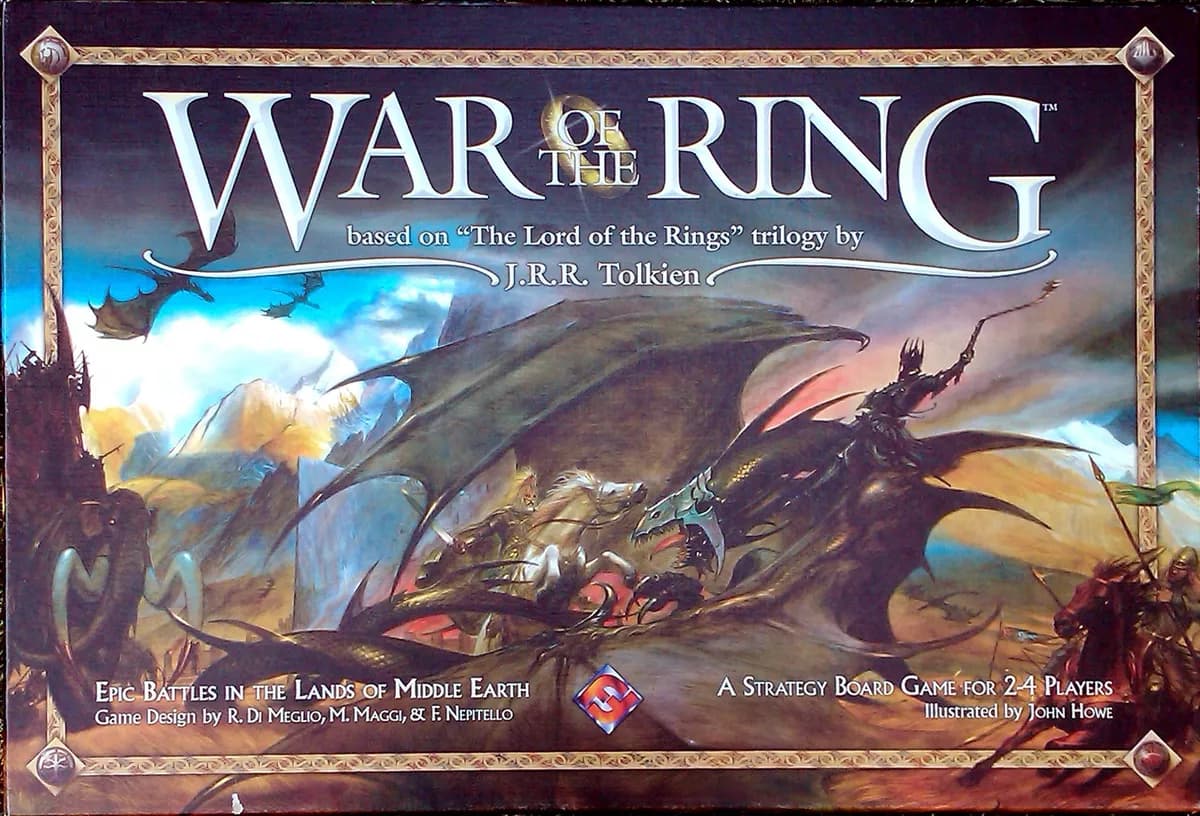
2004War of the Ring is a monumental, asymmetrical strategy game that masterfully translates the epic scope of J.R.R. Tolkien's 'The Lord of the Rings' trilogy into a captivating tabletop experience. In this grand conflict for Middle-earth, one player commands the heroic Free Peoples, while the other marshals the overwhelming forces of the Shadow. The game presents two distinct paths to victory for each side, creating a constant strategic tension. The Free Peoples player must desperately defend their last strongholds against a relentless onslaught, all while secretly guiding the Fellowship of the Ring on its perilous quest to destroy the One Ring in the fires of Mount Doom. Conversely, the Shadow player seeks to crush their enemies through sheer military might, conquering key cities and fortresses. However, they must also divert resources to hunt for the Ring-bearer, as corrupting Frodo before he reaches his destination offers an alternative, insidious path to triumph.
Gameplay is driven by a clever action dice system and a rich deck of event cards that evoke pivotal moments from the books. At the start of each round, players roll their unique set of dice, with the Shadow player receiving more to represent their vast power. The symbols rolled dictate the actions available, such as maneuvering armies, initiating sieges, recruiting reinforcements, advancing the Fellowship, or playing powerful character and strategy cards. A core element of the game is the hidden movement of the Fellowship. The Free Peoples player tracks its progress secretly, only revealing its location when the Shadow's hunt is successful or when they choose to do so strategically. This forces the Shadow player into a difficult balancing act: they must decide how many dice to commit to the military campaign versus the all-important Hunt for the Ring, which, if successful, can reveal the Fellowship and inflict corrupting damage upon the Ring-bearer.
The enduring appeal of War of the Ring lies in its profound thematic immersion and the compelling, narrative-driven experience it generates. Every roll of the dice and every card played feels consequential, echoing the high stakes of Tolkien's saga. The game brilliantly captures the asymmetry of the conflict; the Free Peoples player often feels outmatched and on the defensive, fighting a desperate war of attrition while pinning their hopes on a single Hobbit's stealth and resilience. Meanwhile, the Shadow player wields immense power but must remain vigilant, as a military victory can be snatched away at the last moment by the Fellowship's success. This blend of grand-scale wargaming with a tense, hidden quest creates a deeply strategic and emotionally resonant experience that is widely considered one of the greatest thematic board games ever made.
2-4 150m⚖️ 4.4
RANK #223
Vantage
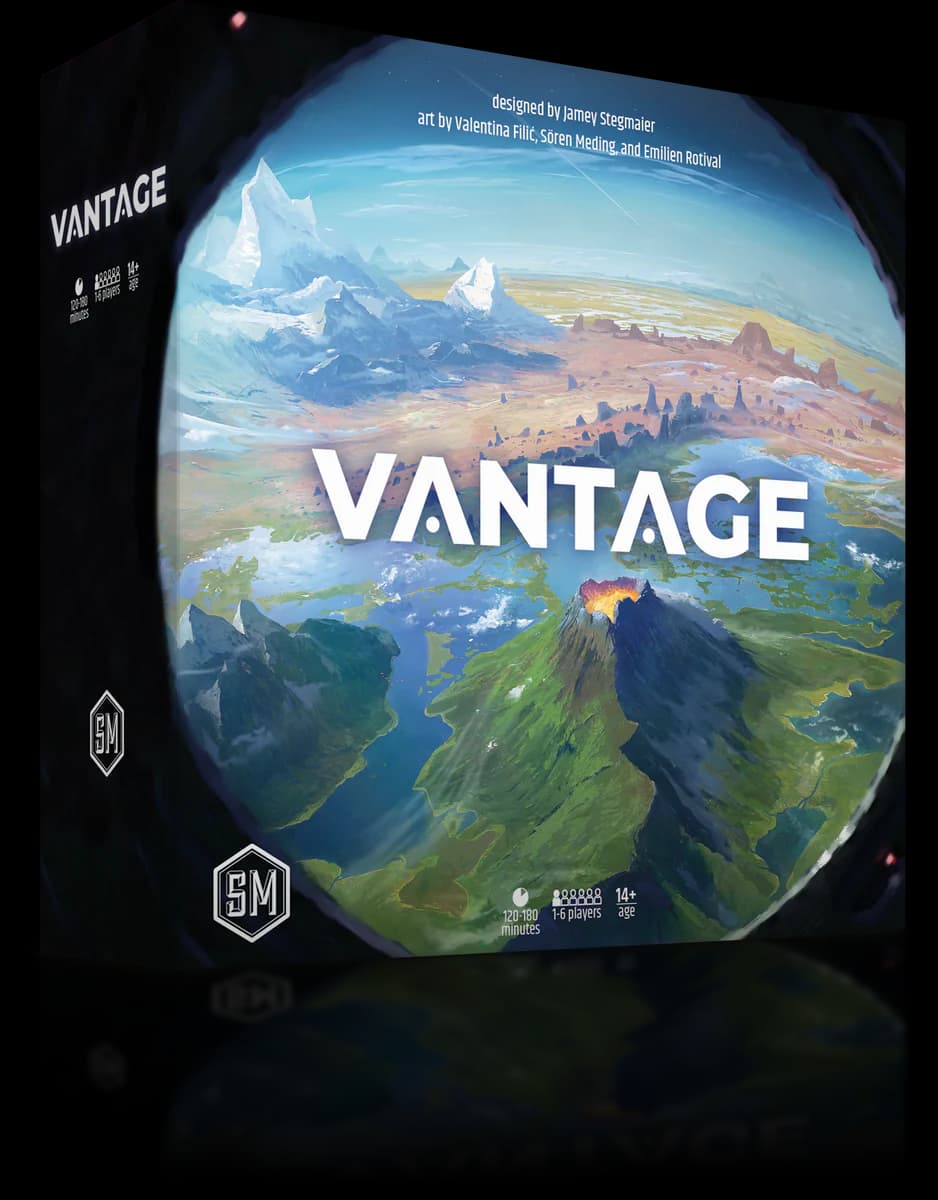
2025In Vantage, players take on the roles of explorers who have survived a crash landing on a mysterious, uncharted planet. This is a cooperative, narrative-driven game of adventure where survival depends on teamwork, intuition, and a willingness to face the unknown. The primary goal is to navigate and understand this new world together, but victory can be achieved in multiple ways. The group might succeed by completing a challenging shared mission, or an individual player could achieve a personal destiny hidden from the others. For the ultimate triumph, a team can strive for an epic victory by accomplishing both their collective and private objectives in a single, memorable session. Each game is a complete, standalone story; while players' knowledge of the world will grow with each playthrough, there are no persistent campaign elements, making every game a fresh expedition.
The gameplay of Vantage is built around a truly unique core mechanic that emphasizes a first-person perspective and shared storytelling. On their turn, a player can only see their current location card, forcing them to rely on the descriptions and guidance of their teammates to build a mental map of the world. The action system introduces a fascinating layer of risk and reward: players choose a basic action—such as move, look, engage, or help—without knowing the specific costs or challenges involved. Another player then reads the outcome from one of eight expansive storybooks, revealing the consequences of the chosen action. Success is determined through dice rolls, where players must strategically manage their challenge dice, mitigating negative results by placing them onto a 3x3 grid on their character and equipment cards. This creates a compelling loop of making intuitive choices, facing unexpected narrative twists, and collaboratively solving the problems that arise.
Vantage's appeal lies in its massive, open world and the genuine sense of discovery it fosters. With over 400 double-sided location cards creating more than 800 interconnected places to visit and over 900 other cards to uncover, the game promises immense replayability. No two journeys will ever be the same. The innovative first-person viewpoint and the blind action-selection mechanic create a tense and immersive experience that is different from typical exploration games. It's not just about moving a pawn on a map; it's about communicating effectively, trusting your teammates, and making gut decisions that have real, story-altering consequences. Designed by Jamey Stegmaier, the game skillfully balances accessible rules with deep strategic choices, offering a rich, thematic adventure that is both a compelling puzzle and an unforgettable story you create together.
1-6 150m⚖️ 3.3
RANK #225
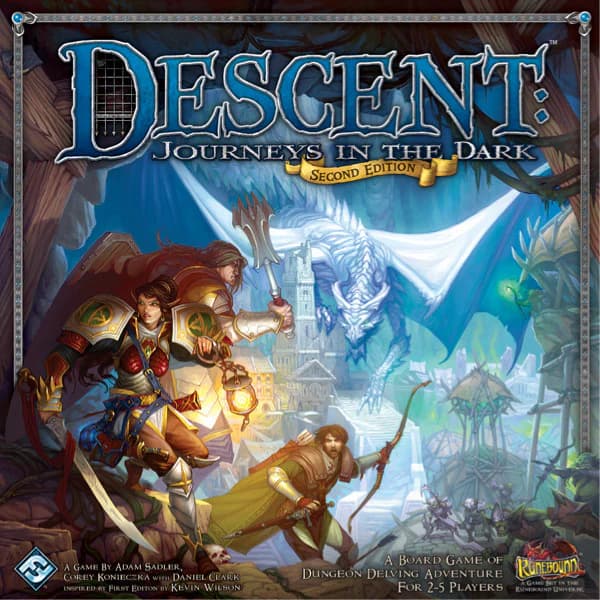
Descent: Journeys in the Dark (Second Edition) is a seminal board game that immerses players in the high-fantasy world of Terrinoth for an epic, one-versus-many dungeon-crawling adventure. In this asymmetrical contest, one player assumes the role of the treacherous Overlord, commanding an army of monsters and springing deadly traps from the shadows. The other players (up to four) form a courageous band of heroes, each with unique skills and abilities, who must work together to complete the objectives of a given quest. The game is scenario-driven, with each quest forming a chapter in a larger, branching campaign narrative. Success or failure in one encounter can have tangible consequences on the next, creating a dynamic and evolving story where the heroes strive for victory against the Overlord's nefarious plans.
The gameplay unfolds over a series of rounds, with heroes taking their turns first. Each hero can perform two actions, such as moving across the modular, tile-based map, attacking a monster, or using a special skill. Combat is a highlight of the experience, resolved through a custom dice-pool system. Players roll dice determined by their character's equipment and abilities, looking for symbols representing damage, range, and special 'surges.' These surges can be spent to trigger powerful effects, adding a layer of tactical decision-making to every attack. After the heroes have acted, the Overlord takes their turn, playing cards from a unique deck to activate monster groups, summon reinforcements, and unleash unexpected events to wear down the heroes and achieve their own secret objectives.
What makes Descent a beloved classic is its deep sense of progression and the escalating arms race that develops over a campaign. Between quests, both sides grow stronger. Heroes earn experience to learn new skills and spend gold on powerful new weapons and armor, customizing their characters to fit their playstyle. Simultaneously, the Overlord also gains experience, which is used to purchase more potent Overlord cards, unlocking deadlier plots and monsters. This persistent development ensures that the challenge constantly escalates, making each session feel meaningful. The combination of tactical combat, rich character customization, and an emergent, player-driven narrative provides a highly replayable and deeply engaging experience for any group that loves adventure and strategy.
2-5 120m⚖️ 3.2

RANK #226
Return to Dark Tower is a grand, cooperative fantasy adventure and a modern reimagining of the iconic 1981 electronic board game. In this app-driven epic, one to four players assume the roles of unique heroes who must unite to save the kingdoms from a great evil that has resurfaced. The central goal is to complete a major objective, which will lure the primary adversary out from the technologically advanced, malevolent tower for a final, decisive confrontation. Players are working against a strict timeline, needing to achieve victory before the end of the sixth in-game 'month'. The path to defeat is multifaceted; the heroes can lose if they run out of time, if the supply of skulls to feed the tower is exhausted, or if any single hero succumbs to overwhelming corruption, making every decision a tense and critical calculation.
The gameplay unfolds over a series of hero turns, each structured into distinct phases. A player's turn begins with an optional, character-specific 'Banner Action', followed by movement and a choice of one heroic action: battling monstrous foes, cleansing corrupting skulls from the land's buildings, or undertaking vital quests. Afterward, heroes can reinforce their strength by utilizing the special ability of the building they occupy to gain resources. The game's centerpiece is the towering electronic spire which, in conjunction with a companion app, dictates the flow of the adventure. At the conclusion of each turn, a player must drop a skull into the tower, which may then dispense them back onto the board, spreading corruption. The integrated app manages all quests, events, and combat encounters, ensuring a dynamic and unpredictable challenge every time you play.
Return to Dark Tower commands an impressive table presence, with its massive, interactive tower immediately drawing players into its world. It masterfully blends the nostalgia of the original classic with sophisticated modern mechanics, creating an experience that feels both familiar and refreshingly new. The game is celebrated for its highly immersive and cooperative gameplay, where teamwork and strategic planning are paramount to overcoming the app-controlled adversary. The constant pressure from the tower and the race against the clock generate a palpable tension that results in truly memorable gaming sessions. For those seeking a different challenge, the game also includes a competitive variant where heroes race to prove their individual worth.
1-4 110m⚖️ 2.6
RANK #232
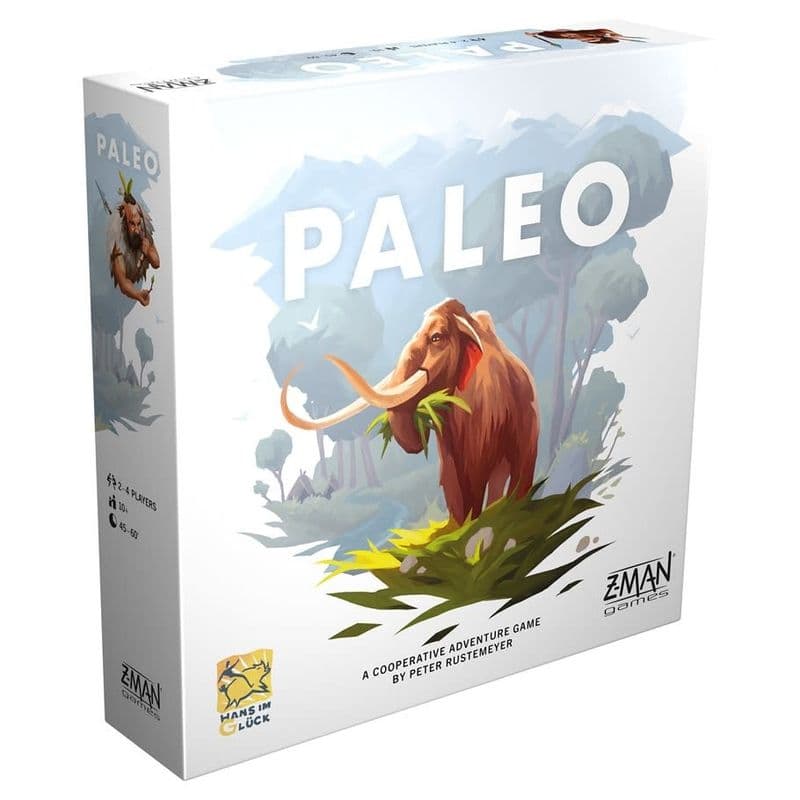
Paleo
2020In Paleo, players embark on a cooperative adventure set in the Stone Age. The game is designed for 2-4 players and takes approximately 45-60 minutes to play. Players work together to keep their tribe alive while completing missions and creating a cave painting. The game includes 10 unique modules that can be mixed and matched to vary the difficulty level or try different rules variants, including a solo mode. Each player begins with a couple of humans, each with a skill and life points. On their turn, players send out their humans to explore, gathering resources and completing tasks while avoiding dangers such as skull tokens. The game requires strategy and cooperation to succeed, making it an engaging experience for players who enjoy cooperative games. One of the unique features of Paleo is its use of card-driven mechanics, where players draw cards with different backgrounds that provide clues about what's on the other side. This mechanic adds a layer of uncertainty and excitement to the game, as players must work together to uncover the secrets of the cards. The game also includes a variety of modules that can be added or removed to change the gameplay experience, making it suitable for players who enjoy replayability and customization. Overall, Paleo is an engaging cooperative game that challenges players to work together while exploring the Stone Age world. Its unique mechanics and modular design make it an attractive option for fans of cooperative games.
2-4 45m⚖️ 3.0
RANK #236
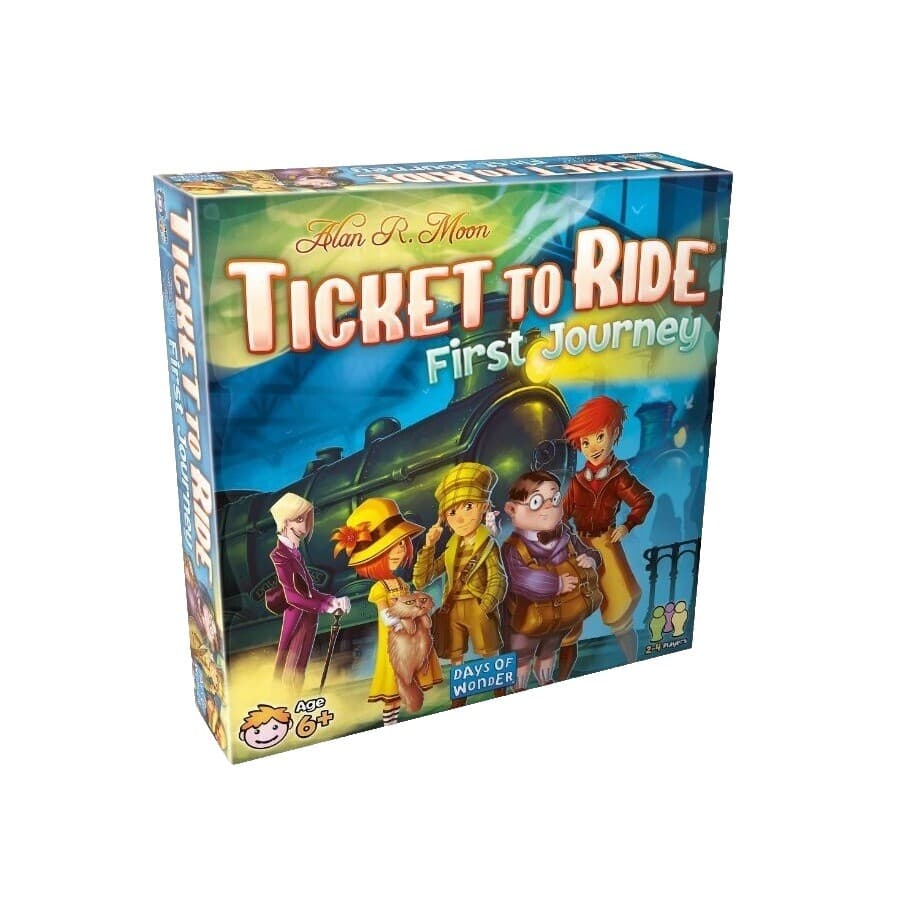
Embark on a frosty railway adventure with *Ticket to Ride: Nordic Countries*, a standalone installment in the award-winning series designed specifically for a more intimate and competitive experience. Set against the beautiful, snow-dusted backdrop of Denmark, Finland, Norway, and Sweden, this game challenges two or three players to become the region's greatest transportation magnate. The core objective remains familiar to fans of the series: collect colored train car cards to claim railway routes, strategically connecting cities across the map. Your primary source of points comes from fulfilling secret Destination Tickets, each one tasking you with linking two specific cities. Successfully completing these tickets adds to your score, but failure will cost you dearly. The player who has amassed the most points from their routes, completed tickets, and the coveted 'Globetrotter' bonus for the most tickets fulfilled, will be declared the winner.
The gameplay is elegantly simple yet rich with strategic choices. On your turn, you perform one of three actions: draw more train car cards, claim a route by discarding a matching set of cards, or draw new Destination Tickets to potentially increase your score. *Nordic Countries* introduces compelling twists on this classic formula with the inclusion of Ferries and Tunnels. Ferries are special sea routes that demand a specific number of powerful Locomotive wild cards to claim, making these cards exceptionally valuable. Tunnels add a thrilling element of risk; after committing your cards to a mountain route, you must reveal cards from the top of the deck, potentially forcing you to play extra cards to complete the connection. This version also uniquely alters the rules for Locomotives, restricting their use primarily to these special routes, which intensifies the strategic planning around their acquisition and use.
What makes *Ticket to Ride: Nordic Countries* a standout title is its brilliantly crafted map, which is significantly tighter and more constrained than its predecessors. This design choice inherently creates a high-stakes environment where player interaction is not just possible, but inevitable. Players must constantly watch their opponents, anticipate their moves, and decide whether to build their own network or defensively block a critical path. The scarcity of double-routes means competition for key connections is fierce from the very start. This heightened tension, combined with a brisk playtime of 30-60 minutes, makes it an exceptionally engaging and replayable game for couples, families, and anyone seeking a fast-paced, light-strategy experience with a healthy dose of direct competition.
2-3 45m⚖️ 1.9

RANK #255
Ticket to Ride
2004Ticket to Ride whisks players away on a grand cross-country train adventure, firmly establishing itself as one of the most beloved and accessible modern board games. In this competitive journey, players vie to become the most successful railroad magnate by the turn of the 20th century. The primary goal is to accumulate the highest number of points. Victory is achieved through a combination of strategically claiming railway routes between iconic cities, fulfilling the secret itineraries detailed on Destination Tickets, and constructing the longest continuous path of train cars on the map. It's a game of elegant design, where foresight and clever planning are rewarded, making every decision a crucial step toward dominating the rails and securing your legacy.
The gameplay is famously straightforward, with a set of rules that can be taught in mere minutes. Each turn, a player must choose one of three simple actions. They can draw two Train Car cards, which come in various colors needed to claim routes, either from a face-up display or blindly from the deck. Alternatively, a player can claim a route on the board by discarding a set of cards that match the route's color and length, immediately scoring points based on its size. The final option is to draw more Destination Tickets, which offer substantial bonus points for connecting distant cities but come with a risk—any uncompleted tickets at the game's end will count against your score. This simple action structure keeps the game moving at a brisk pace, while wild Locomotive cards add a layer of flexibility to players' plans. The end game is triggered when one player's stock of plastic trains dwindles to two or fewer, after which everyone gets one last turn to make their final moves.
The enduring appeal of Ticket to Ride lies in its perfect balance of simplicity and strategic depth. It serves as a quintessential 'gateway game', expertly bridging the gap for newcomers to the board gaming hobby without alienating veteran players. The tension quietly builds as the game progresses; the board becomes a crowded network of competing lines, and the routes you desperately need might be snatched up by an opponent just before your turn. This creates a subtle yet engaging form of player interaction that is more about opportunistic blocking than direct confrontation. The satisfaction of completing a long, coast-to-coast destination ticket is immense, and the combination of set collection, route building, and secret objectives provides a highly replayable experience. Its charming presentation and straightforward rules have made it a staple for family game nights and a celebrated classic worldwide.
2-5 60m⚖️ 1.8
RANK #258
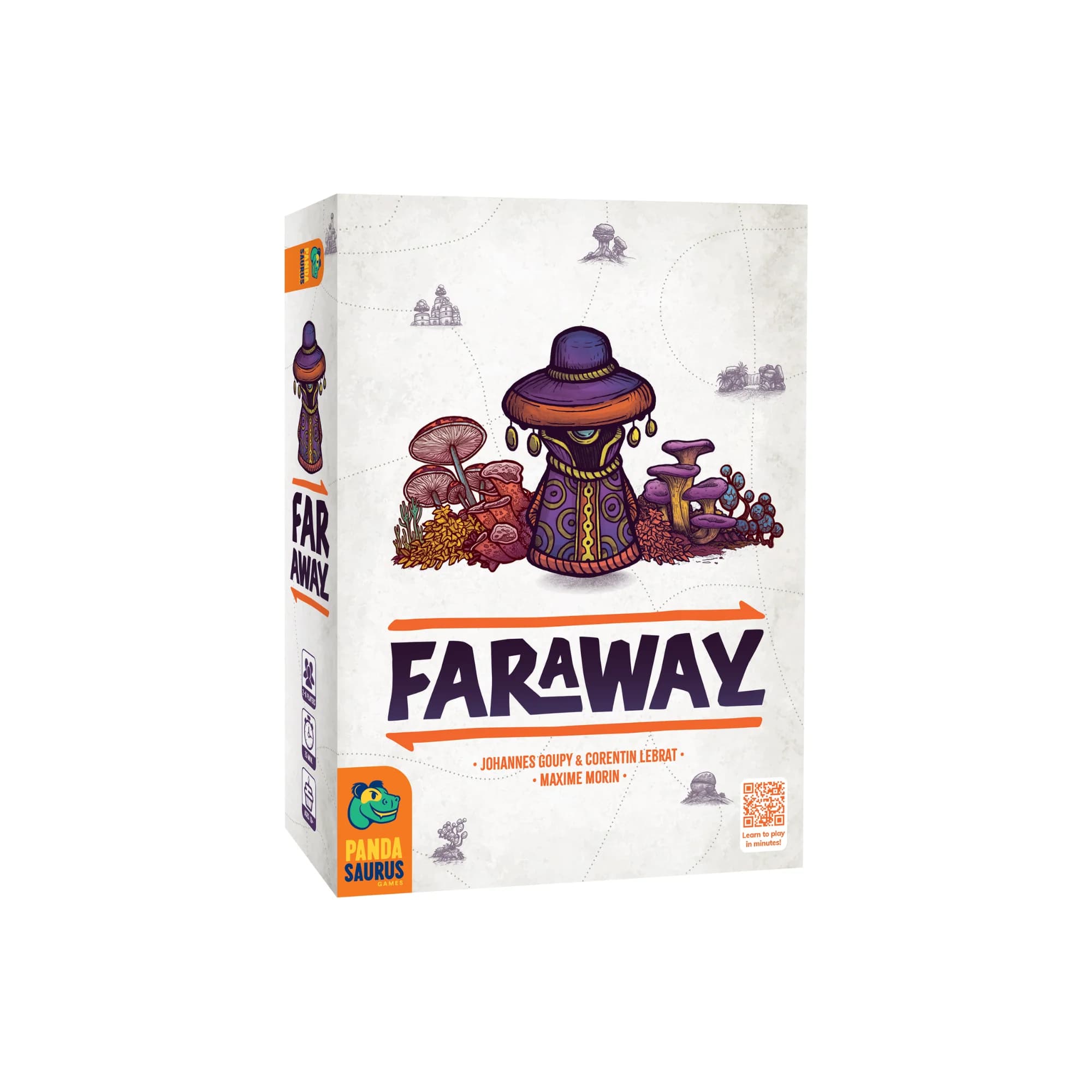
Faraway
2023Embark on an expedition to the enigmatic continent of Alula in Faraway. In this clever card game, players compete to become the most renowned explorer by charting a path across eight distinct regions. The objective is to amass the most fame (victory points) by strategically laying out a row of cards that tells the story of your journey. However, the game introduces a captivating twist: your expedition is scored not by the path you forged, but by the memories you recall as you look back on it. This innovative reverse-scoring mechanism is the heart of the experience, challenging players to think ahead by planning backwards, turning a simple card-laying game into a delightful and thoughtful puzzle.
The game unfolds over eight rounds, with players simultaneously choosing and revealing a region card from their hand to add to their personal tableau, extending it from left to right. These cards are numbered and feature various colors and symbols crucial for scoring. A key tactical decision arises when you play a card with a number higher than the one preceding it, which allows you to acquire a powerful Sanctuary card that grants bonus icons or unique scoring opportunities. Following the card placement, players draft new cards for their hand. In a neat balancing act, the player who played the lowest-numbered card in the round gets the first choice from the central display, creating a constant tension between playing high for Sanctuaries and playing low for a better draft pick.
What makes Faraway truly stand out is its brilliant endgame scoring. Once all eight region cards have been played, the entire journey is flipped face-down. Players then reveal their cards one by one, starting from the last card they played and moving leftward. As each card is turned face-up, its scoring conditions are resolved based only on the icons visible on the cards revealed so far (i.e., those to its right in the original tableau). This 'journey back' forces a complete shift in perspective. A card that seems weak when played might become invaluable for scoring later cards, while a powerful early card might offer no benefit for the final scoring tally. This forward-planning, backward-scoring puzzle provides a deeply satisfying and accessible challenge, making every game a fresh and engaging strategic exercise with minimal player conflict and a brisk playtime.
2-6 25m⚖️ 1.8