Strategy Games
Browse all Strategy board games in the Meeple Pulse database.
Styles
AbstractAbstract StrategyAdventureAnimalsCard GameChildren's GameCivilizationCo-operativeComic Book / StripCompetitiveDiceEconomicEducationalEuroExpansion for Base-gameFamilyFan ExpansionFantasyFightingHistoricalHorrorIndustry / ManufacturingMedievalMedium HeavyMiniaturesMovies / TV / Radio themePartyParty GamePrint & PlayPuzzle-LikeRacingReal-timeScience FictionSpace ExplorationSportsStrategyTerritory BuildingThematicTransportationWargameWorld War II
Themes
AbstractAdventureAncientAnimalsArtBusinessCard GameCo-operativeComic BookCooperativeCrimeEconomicEnvironmentalismExplorationFantasyFightingHistoricalHorrorHumorIntrigueLiteraryMagicMarvelMedievalModernMuseumMysteryMythologyNatureNauticalParty GamePoliticalPress Your LuckRacingSatireSci-FiSocial CommentarySocial InteractionSpaceSuperheroesThematicTravelWarWesternWord-Guessing
Mechanics
3D PlacementActingAction / DexterityAction DraftingAction Point AllowanceAction Point Allowance SystemAction Point SystemAction PointsAction ProgrammingAction QueueAction RetrievalAction SelectionAction/EventAlliancesAlternate ActivationApp-AssistedApp-DrivenArea ControlArea InfluenceArea MajorityArea Majority / InfluenceArea MovementArgumentationAsymmetricAsymmetric FactionsAsymmetric GameAsymmetric PowersAsymmetrical PowersAuction & BiddingAuction/BiddingAuctioningBag BuildingBettingBetting and BluffingBetting and WageringBetting and WagersBiddingBingoBlind BiddingBluffingCampaign / Battle Card DrivenCampaign / LegacyCampaign / Legacy GameCampaign / Mission-basedCampaign / ScenariosCampaign GameCampaign PlayCard DraftingCard DrawingCard DrivenCard Driven ActionCard Driven CombatCard Driven Dice AllocationCard Driven MovementCard ManagementCard PlayCard Play / Hand ManagementCard Play Conflict ResolutionCard SheddingCard-Driven MovementCharacter CreationCharacter ProgressionChit-Pull SystemCo-op PlayCo-operative GameCo-operative PlayCode-breakingCombat ResolutionCombo ChainCommand CardsCommodity SpeculationCommunication LimitsContract FulfillmentContractsCooperative GameCooperative GameplayCooperative PlayCooperative Trick-takingDebateDeck BuildingDeck ConstructionDeck, Bag, and Pool BuildingDeck-BuildingDeductionDexterityDice DraftingDice PlacementDice RollingDiplomatic InfluenceDraftingDynamic Battle SystemEnclosureEnd Game BonusesEngine BuildingEngine-BuildingEscape RoomEvent DrivenExplorationFarmingFlip and WriteFollowFollow ActionGrid CoverageGrid MovementHand ManagementHex-and-CounterHexagon GridHidden MovementHidden RolesI Cut You ChooseIncomeInfluence / Area MajorityLadder ClimbingLegacyLegacy ElementsLegacy GameLegacy SystemLimited CommunicationLine DrawingLine of SightMancalaMap AdditionMap MovementMarketMarket DraftingMarket ManipulationMarket MechanicMarket SpeculationMatchingMeasurement MovementMemoryMission ObjectivesModular BoardModular Board ConstructionMove Through DeckMovement PointsMovement TemplatesMulti-Use CardsMulti-use CardsMultiple ScenariosMust FollowNarrative ChoiceNarrative Choice / ParagraphNegotiationNegotiation MechanicsNetwork & Route BuildingNetwork BuildingNetwork and Route BuildingOne vs ManyOne vs. ManyOpen DraftingOwnershipPaper-and-PencilPartnershipsPattern BuildingPattern RecognitionPick-up and DeliverPlayer EliminationPlayer InteractionPlayer JudgePoint SaladPoint to Point MovementPolyominoesPush Your LuckPush-Your-LuckPuzzlePuzzle-LikePuzzle-SolvingRaceReal-TimeRecipe FulfillmentResource ManagementRole PlayingRole SelectionRoll / Spin and MoveRondelRoute BuildingRoute-BuildingRoute/Network BuildingSanity SystemScenario / Campaign PlayScenario / Mission / Campaign GameScenario / Mission FunctionSecret Unit DeploymentSemi-Cooperative GameSet CollectionSheddingSimulationSimultaneous ActionSimultaneous Action SelectionSimultaneous Hidden AllocationSocial DeductionSocial InteractionSolo / Solitaire GameSpace ExplorationStat Check / Skill CheckStat Check ResolutionStock HoldingStorytellingStrategic PlanningTableau BuildingTactical Decision-MakingTake ThatTargeted CluesTeam PlayTeam-Based GameTeam-Based GuessingTeamworkTech TreesTech Trees / Tech TracksTechnology & Armament TracksTechnology TreeTension & Aggression TracksTile DraftingTile LayingTile PlacementTime TrackTime TravelTower DefenseTrack MovementTradingTrick-takingTug of WarTurn Order: PassTurn Order: Stat-BasedUnit PlacementVariable Phase OrderVariable Player PowersVariable Set-upVariable SetupVictory Point TracksVotingWord AssociationWord GameWord GuessingWord-GuessingWord-guessingWordplayWorker Placement

Solarion: Foundation of Empires is a competitive science-fiction board game for one to four players that blends deep strategy with epic galactic conquest. Players assume control of one of four distinct, asymmetric factions—the Terran, Oceanus, XES, or Ursalian—each vying for supremacy over a newly discovered star system. The ultimate goal is to accumulate the most Victory Points by the end of the game's third 'Galactic Age'. Points are primarily earned by achieving dominance over a modular, hex-based galaxy, controlling valuable resource-producing planets, and seizing the highly coveted, energy-rich 'Solarion' worlds. Establishing control over entire sectors of space provides significant boosts, making territorial expansion a critical path to victory.
The core of the gameplay revolves around a clever integration of deck-building and area control. Each player manages a personal technology deck, which they use to generate resources, deploy their five unique unit types, and execute powerful actions on the board. A central, dynamic card market, which evolves over the three ages of the game, presents a constantly shifting array of technologies to acquire and add to your deck. A standout feature is the game's deterministic, diceless combat system. Instead of relying on chance, battles are resolved purely through strategic positioning, fleet composition, and tactical card play, rewarding foresight and careful planning. The game concludes without player elimination when the card market is exhausted or a player places their final colony, ensuring all participants remain engaged until the final scoring.
What makes Solarion: Foundation of Empires so compelling is its synthesis of proven mechanics into a fresh and challenging experience. It draws inspiration from the deck-building area-control of games like *Tyrants of the Underdark* and the grand-scale space exploration of *Eclipse*, creating a unique strategic puzzle. The complete absence of luck in combat is a major draw for players who crave a pure test of skill. Combined with the high replayability offered by the modular board, asymmetric faction abilities, and a vast technology deck, the game promises a different strategic landscape with every session. Its dedicated solo mode and streamlined setup options further broaden its appeal, making it an anticipated title for any fan of medium-to-heavy strategy games seeking a rich, thematic, and rewarding 4X experience.
1-4 140m⚖️ 3.9
7th Seal
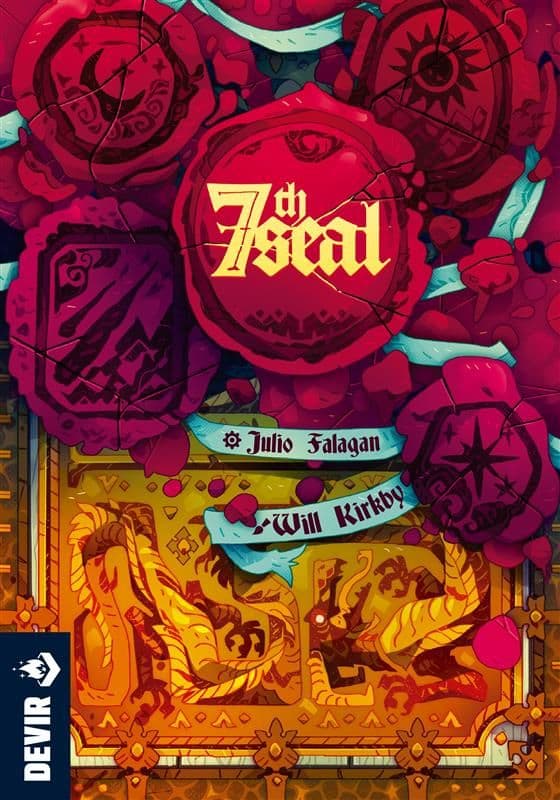
2026In 7th Seal, you stand as humanity's last hope against an impending apocalypse. This highly anticipated solo board game from Devir Games thrusts you into a desperate and thematic struggle for survival. The premise is as grand as it is grim: you must confront the end of days by systematically breaking the seven seals of a divine scroll. However, this is no simple task, as each shattered seal unleashes a new wave of furious beasts and powerful demons, each more terrifying than the last. Your ultimate goal is not merely to survive these encounters, but to prove humanity's worth to a supreme being who holds the world's fate in balance. It is a solitary journey into a demonic endgame, where your strategic prowess is all that stands between mankind and utter oblivion.
The gameplay of 7th Seal is structured as a challenging, dice-driven descent through seven distinct levels, culminating in a final, decisive confrontation. At its core, this is a game of strategic dice management and resource allocation. Each turn, you will be faced with demonic challenges that must be overcome by skillfully manipulating your available dice. The game is designed as a series of escalating 'boss battles', where the challenges grow in complexity and danger with each seal you break. Success hinges on your ability to plan ahead, mitigate poor rolls, and wisely commit your resources to counter the specific threats presented. While the exact combat resolution mechanics are tightly woven into the unfolding narrative, the experience emphasizes thoughtful puzzle-solving over pure luck, demanding that you make difficult choices under immense pressure.
What sets 7th Seal apart is its focused and intense gameplay loop, delivering a deeply strategic and narrative-rich experience within a compact 30 to 45-minute timeframe. Designed by Julio Falagan, the game is a masterclass in creating tension and high stakes for a single player. It appeals directly to gamers who appreciate a significant challenge and a strong thematic core without the need for a multi-hour commitment. The game's medium complexity makes it accessible to a wide range of players, yet it offers substantial strategic depth that promises high replayability. Every session is a test of wit and nerve, a puzzle-like battle against a demonic horde where your ability to adapt and manage your dice is paramount to securing a second chance for the world.
1 40m⚖️ 2.8
BoxNo Cover Art
Concordia: Venus (Expansion)" reinvigorates the acclaimed strategic depth of the original Concordia, offering players expansive new horizons and an innovative team-play experience. This expansion significantly boosts replayability by introducing two new double-sided game boards, each presenting unique strategic challenges and map layouts. The core goal remains to skillfully expand your Roman trading empire, producing and selling goods while wisely choosing your actions through a refined card-driven mechanism, ultimately scoring points based on your unique hand of personality cards.
Gameplay builds seamlessly on Concordia's elegant action-selection system, where players use a hand of seven different role cards to perform actions like moving colonists, establishing new outposts, producing resources, trading goods, and earning money. The "Venus" maps not only provide fresh geographical puzzles but also include a dedicated 2v2 or 3v3 team variant, allowing players to coordinate strategies and share victory points with a partner – a refreshing twist on the typically competitive eurogame formula. This team mode fosters collaborative planning and adds a new layer of player interaction not found in the base game.
Fans adore "Concordia: Venus" for its ability to inject new life into an already brilliant game without unnecessary complexity. It preserves the classic low-luck, high-strategy essence of Concordia while dramatically increasing variety and player count options. The team variant is a particular highlight, offering a cooperative competitive challenge that many find incredibly engaging, proving that even a refined classic can evolve to offer compelling new ways to play and conquer the ancient world.
2-6 90m⚖️ 3.0
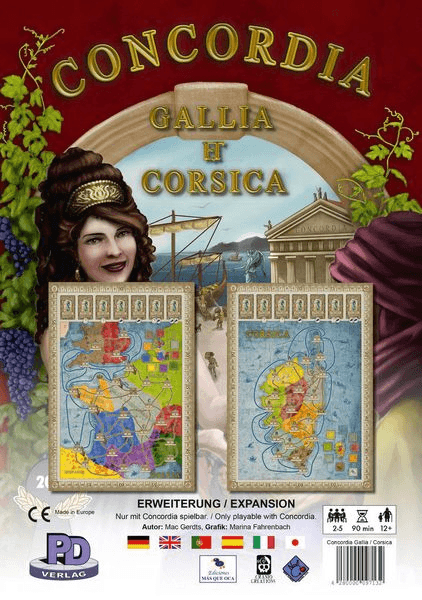
Concordia: Gallia / Corsica (2016) is a highly anticipated expansion for the acclaimed Roman-era strategy game, Concordia. This pack introduces two vibrant new maps, Gallia and Corsica, inviting players to expand their ancient Roman empire across distinct geographical challenges. The core goal remains to establish trade routes, settle provinces, and strategically collect diverse action cards to outmaneuver opponents and accumulate the most victory points, ultimately becoming the most influential merchant family in the Roman world.
Gameplay in "Concordia: Gallia / Corsica" masterfully retains the elegant, card-driven mechanics of the base game while injecting fresh strategic depth. Players manage their hand of personality cards, each granting a specific action such as moving colonists, producing goods, selling to the market, or acquiring new cards. The Gallia map offers a larger, more sprawling landscape perfect for 3-5 players, encouraging broader expansion and resource management. In contrast, the Corsica map provides a tighter, more confrontational experience designed for 2-3 players, demanding shrewd spatial planning and direct competition for limited resources.
Fans adore "Concordia: Gallia / Corsica" for its remarkable ability to breathe new life into an already brilliant game. The expansion excels by providing tailored experiences: Gallia offers a grander stage for larger groups, while Corsica is frequently celebrated as one of the best 2-player maps in the entire Concordia series, known for its intense player interaction and clever choke points. This dual offering significantly enhances the base game's replayability, ensuring that every session feels fresh and strategically engaging, making it an essential addition for any Concordia enthusiast seeking new challenges and optimized player counts.
2-5 105m⚖️ 3.0

Conflict of Heroes: Awakening the Bear – Firefight Generator is an expansion that fundamentally transforms its base game from a collection of historical scenarios into a dynamic battle-creation system. Instead of playing through a pre-designed mission, players become the architects of their own tactical engagements on the Eastern Front. The primary goal is to use a unique card-driven pre-game system to collaboratively but competitively establish the forces, objectives, and battlefield conditions for a unique firefight, ensuring that no two sessions are ever alike and adding boundless replay value to the core experience.
The gameplay loop begins before the first shot is fired, in a strategic 'meta-game' that takes less than ten minutes. Representing either the German or Soviet forces, players draw from their respective decks of Generator Cards. On their turn, a player chooses one card from their hand and decides to resolve one of its two distinct options. The top option typically introduces a special rule, a battlefield condition like fog or snow, or a unique event. The bottom option, conversely, allows the player to add specific military units—from infantry squads to powerful tanks—to their available forces. This turn-based card play continues until the scenario is fully built, defining everything from troop composition and victory point objectives to the very weather the battle will be fought in.
The unique appeal of the Firefight Generator lies in the deep layer of strategy and bluffing it introduces before the tactical combat even commences. This pre-game phase is a battle of wits, where players must anticipate their opponent's strategy and make difficult choices. Committing to a powerful armored unit might be tempting, but an opponent can immediately counter by playing a card that adds anti-tank guns to their force or introduces terrain that hinders vehicle movement. This creates a compelling and tense setup that tailors every battle to the players' choices. Its full integration with the Eastern Front Solo Expansion also allows a single player to generate an endless variety of custom missions, making it an essential addition for both competitive and solo wargamers.
1-4 120m⚖️ 3.7
Concordia: Salsa
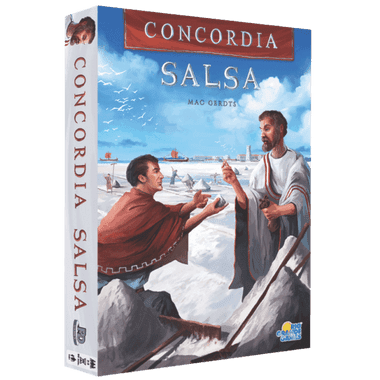
2015Concordia: Salsa (2015) is a highly anticipated expansion for the critically acclaimed strategy game Concordia, enriching the Roman Empire-era economic experience. This expansion introduces two new maps – Byzantium and Egypt – alongside two innovative modules: 'Salt' and the 'Forum'. Players continue their quest to establish the most prosperous trading empire by strategically expanding across the Mediterranean, managing their hand of personality cards, and collecting valuable resources. The ultimate goal remains to score the most victory points, primarily determined by the diverse types of colonists, goods, and provinces they've established and collected throughout the game.
Gameplay in Concordia: Salsa expands upon the elegant card-driven core of Concordia. Players use their hand of identical personality cards to perform various actions like moving colonists, producing goods, trading, or buying new cards. The 'Salt' module introduces a new, highly flexible resource that can substitute for any other good, adding a layer of strategic depth to resource management and trade. The 'Forum' module introduces a market of unique bonus tiles, granting players powerful one-time or ongoing abilities when claimed, further diversifying strategic choices and offering exciting new ways to specialize or adapt. These additions seamlessly integrate with the base game, providing more paths to victory and dynamic player interactions.
Fans adore Concordia: Salsa for its brilliant integration of new elements without sacrificing the base game's renowned elegance and strategic depth. The 'Salt' resource offers greater tactical flexibility, while the 'Forum' tiles introduce exciting variable player powers and a unique race component, enhancing replayability and creating fresh challenges in every play. It maintains Concordia's signature low-luck, high-strategy appeal, rewarding careful planning and efficient execution, making it a must-have for those seeking to deepen their mastery of this modern classic and explore new strategic horizons.
2-5 120m⚖️ 3.0
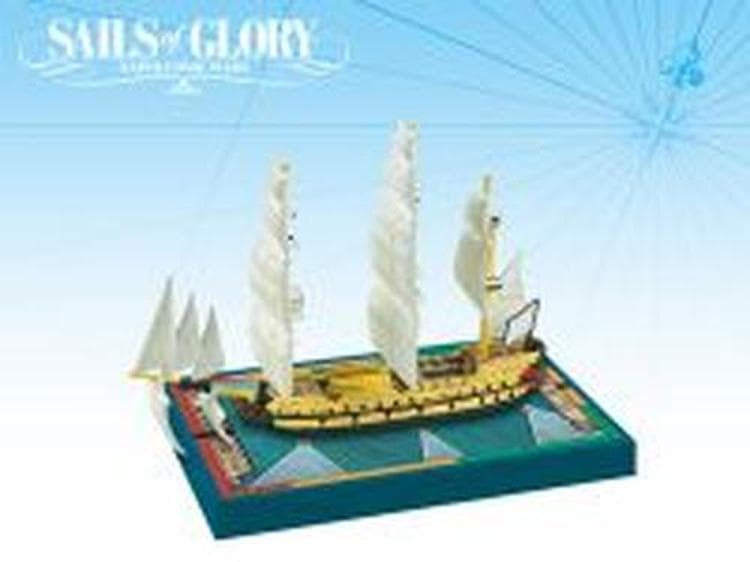
In Sails of Glory Ship Pack: Duc de Duras 1765 / Dauphin 1766, players take on the role of naval commanders during the Age of Sail, aiming to outmaneuver and outgun their opponents while navigating treacherous waters and unpredictable weather conditions. This game is a standalone expansion for the popular Sails of Glory series, offering a unique blend of strategic ship-to-ship combat and tactical fleet management.
Each player controls a fleet of ships, carefully selecting which vessels to deploy and how to allocate resources to maximize their chances of success. With a focus on naval warfare, players must balance firepower, maneuverability, and endurance to emerge victorious from the battles that unfold.
What sets Sails of Glory Ship Pack: Duc de Duras 1765 / Dauphin 1766 apart is its attention to historical detail, drawing inspiration from real-world naval vessels and battles to create an immersive and realistic gaming experience. This attention to authenticity enhances the game's replayability and encourages players to develop their own strategies and tactics.
As a result, Sails of Glory Ship Pack: Duc de Duras 1765 / Dauphin 1766 appeals to fans of naval warfare, history buffs, and those seeking a deeper level of strategic depth in their games. Its unique blend of gameplay mechanics and historical accuracy makes it an excellent addition to any board game collection.
2-4 60m⚖️ 3.0
BoxNo Cover Art
There Grew a Kingdom is a strategic board game designed for 2-4 players, where each player takes on the role of a monarch vying to build and manage their own kingdom. The game's objective is to accumulate points by constructing buildings, managing resources, and making strategic decisions that impact the growth and prosperity of your kingdom. Players must balance short-term needs with long-term goals, all while navigating the challenges and opportunities presented by the game's unique mechanics.
Gameplay involves a combination of area control, resource management, and engine-building elements. Each player starts with a small plot of land and a limited set of resources, which they must use to construct buildings, recruit units, and expand their kingdom. As players progress through the game, they will encounter various challenges and events that require strategic decision-making and adaptability.
One of the key features of There Grew a Kingdom is its modular board, which consists of interlocking tiles that represent different regions of the kingdom. Players can choose to focus on specific areas or spread their resources thin across multiple regions, adding a layer of complexity and replayability to the game. The game also includes a variety of building types, each with its own unique abilities and requirements, allowing players to tailor their strategy to suit their playstyle.
There Grew a Kingdom is a game that rewards strategic thinking, resource management, and adaptability. It's an engaging and challenging experience for fans of strategic board games, offering a high level of replayability due to the modular board and variable player powers.
m⚖️ 4.0

Sagrada
2007Sagrada is a visually stunning dice-drafting game where players take on the role of artisans competing to construct the most beautiful stained-glass window for the Sagrada Família. The objective is to achieve the highest score by strategically placing colorful translucent dice onto a personal player board, which represents a window frame. Each player works with a unique pattern card that dictates specific placement requirements, ensuring that every session offers a fresh set of challenges. By balancing personal secret goals, shared public objectives, and strict construction rules, players must meticulously plan their moves to create a masterpiece that captures the essence of light and color.
The core of the game revolves around a drafting mechanic where a pool of colored dice is rolled each round. Players take turns selecting a single die and positioning it on their 4x5 grid, following a "snake draft" order where the last player picks twice in a row. Placement is governed by strict adjacency rules: dice cannot be placed next to others of the same color or value (orthogonally). Furthermore, the pattern cards inserted into the player boards often feature specific restrictions, requiring certain spaces to be filled with exact colors or shades. To navigate these constraints, players can spend favor tokens to utilize special Tool cards, which provide powerful abilities like moving already-placed dice, re-rolling, or ignoring certain placement rules. This interplay between the luck of the roll and the tactical use of tools creates a satisfying, low-stress puzzle-solving experience.
Sagrada is widely beloved for its accessibility and its breathtaking table presence. The high-quality components, particularly the vibrant, jewel-like dice, mimic the look of real stained glass when they catch the light, making it a favorite for both casual and serious gamers. Beyond its aesthetics, the game offers a deep tactical experience that rewards foresight and adaptability. Because the available tools and scoring objectives change every game, the replayability is exceptionally high. It manages to feel like a relaxing, meditative activity while simultaneously challenging the brain with its spatial constraints and optimization puzzles, firmly establishing itself as a modern classic in the abstract strategy genre.
1-4 45m⚖️ 2.3

Garden Club
2026Step into the tranquil yet surprisingly competitive world of 'Garden Club', a beautifully designed two-player board game where participants take on the roles of enthusiastic cultivators vying for the esteemed title of Club President. Over the course of three distinct seasons—Spring, Summer, and Fall—players must carefully curate a shared community garden while simultaneously nurturing their own personal harvests. By expertly planting a vibrant array of fruits, vegetables, and flowers, contenders strive to complete secret club objectives and cultivate the most impressive arrangements. With its welcoming nature theme and approachable rule set, it offers a cozy aesthetic masking a deeply engaging tactical puzzle that unfolds over an efficient 30 to 45 minutes of playtime.
The core gameplay loop centers around a clever combination of open drafting, tile placement, and engine building mechanics. Each turn, a player selects two double-sided tiles from four available stacks. One side features various types of produce and blooming flowers, while the reverse side displays harvest multipliers. Decisions carry significant weight, as one drafted tile must be added to the central shared garden, while the other is placed on the player's individual harvest board. During the initial Spring round, players establish a foundational four-by-four grid in the community area. However, as Summer and Fall arrive, the available actions decrease, and players must begin stacking tiles directly on top of previously planted flora. This three-dimensional layering dynamic forces constant tactical shifts, as players cover up opponents' carefully arranged patterns to score points through secret project cards and matching sets.
What truly sets 'Garden Club' apart is the brilliant tension between the shared play space and personal progression. End-of-season scoring introduces a fascinating area majority mechanic, where points for vegetable sets in the communal garden are only awarded to the player who controls the most of that specific produce type on their private harvest board. This delicate balancing act—deciding whether to improve your own multipliers or sabotage your rival's carefully laid garden plots—makes every single decision impactful. Aided by specialized tool cards like the Spade or Garden Fork, players can cleverly manipulate the grid to their advantage. Praised as highly accessible yet sneakily strategic, this lightweight duel perfectly caters to casual gaming couples and seasoned enthusiasts alike who appreciate a cutthroat spatial puzzle wrapped in a charming, botanical package.
2 45m⚖️ 2.3
BoxNo Cover Art
Messiah the Card Game is a strategic card game where players take on the roles of different factions vying for control in a mystical realm. The goal is to be the first player to achieve three victories, which are earned by completing specific objectives and accumulating points through various means. Players must carefully manage their resources, make tactical decisions about which cards to play and when, and adapt to changing circumstances as they unfold.
m⚖️ 3.0
BoxNo Cover Art
Mosaic
2018Mosaic is a strategic board game designed for 2-4 players, where each player takes on the role of an artist tasked with creating a stunning mosaic artwork within a set timeframe. The game's objective is to be the first player to complete their mosaic by collecting and placing tiles in a way that showcases their artistic vision. Players must carefully plan and manage their tile collection, as well as navigate the challenges of working under time pressure and competing against other artists.
Gameplay involves a combination of strategic planning, tactical execution, and a dash of luck. Each player starts with a set of basic tiles and a limited number of special power tiles that can be used to gain an advantage. As players collect more tiles, they must carefully consider which ones to use and where to place them in order to create the most visually appealing mosaic.
One of the unique features of Mosaic is its modular board, which consists of interlocking tile pieces that are arranged differently for each game. This ensures that no two games are ever the same, providing a high level of replayability and keeping players on their toes.
Mosaic has gained a loyal following among gamers due to its engaging gameplay, beautiful artwork, and social interaction. Players must communicate with each other, negotiate tile trades, and even sabotage their opponents' efforts in order to emerge victorious.
m⚖️ 3.0