Animals Games
Browse all Animals board games in the Meeple Pulse database.
Styles
Themes
AbstractAdventureAncientAnimalsArtBusinessCard GameCo-operativeComic BookCooperativeCrimeEconomicEnvironmentalismExplorationFantasyHistoricalHorrorHumorIntrigueLiteraryMagicMarvelMedievalModernMuseumMysteryMythologyNatureNauticalPoliticalPress Your LuckSatireSci-FiSocial CommentarySocial InteractionSpaceSuperheroesThematicTravelWarWesternWord-Guessing
Mechanics
3D PlacementActingAction / DexterityAction DraftingAction Point AllowanceAction Point Allowance SystemAction Point SystemAction PointsAction ProgrammingAction QueueAction RetrievalAction SelectionAction/EventAlliancesAlternate ActivationApp-AssistedApp-DrivenArea ControlArea InfluenceArea MajorityArea Majority / InfluenceArea MovementArgumentationAsymmetricAsymmetric FactionsAsymmetric GameAsymmetric PowersAsymmetrical PowersAuction & BiddingAuction/BiddingAuctioningBag BuildingBettingBetting and BluffingBetting and WageringBetting and WagersBiddingBingoBlind BiddingBluffingCampaign / Battle Card DrivenCampaign / LegacyCampaign / Legacy GameCampaign / Mission-basedCampaign / ScenariosCampaign GameCampaign PlayCard DraftingCard DrawingCard DrivenCard Driven ActionCard Driven CombatCard Driven Dice AllocationCard Driven MovementCard ManagementCard PlayCard Play / Hand ManagementCard Play Conflict ResolutionCard SheddingCard-Driven MovementCharacter CreationCharacter ProgressionChit-Pull SystemCo-op PlayCo-operative GameCo-operative PlayCode-breakingCombat ResolutionCombo ChainCommand CardsCommodity SpeculationCommunication LimitsContract FulfillmentContractsCooperative GameCooperative GameplayCooperative PlayCooperative Trick-takingDebateDeck BuildingDeck ConstructionDeck, Bag, and Pool BuildingDeck-BuildingDeductionDexterityDice DraftingDice PlacementDice RollingDiplomatic InfluenceDraftingDynamic Battle SystemEnclosureEnd Game BonusesEngine BuildingEngine-BuildingEscape RoomEvent DrivenExplorationFarmingFlip and WriteFollowFollow ActionGrid CoverageGrid MovementHand ManagementHex-and-CounterHexagon GridHidden MovementHidden RolesI Cut You ChooseIncomeInfluence / Area MajorityLadder ClimbingLegacyLegacy ElementsLegacy GameLegacy SystemLimited CommunicationLine DrawingLine of SightMancalaMap MovementMarketMarket DraftingMarket ManipulationMarket MechanicMarket SpeculationMatchingMeasurement MovementMemoryMission ObjectivesModular BoardModular Board ConstructionMovement TemplatesMulti-Use CardsMulti-use CardsMultiple ScenariosMust FollowNarrative ChoiceNarrative Choice / ParagraphNegotiationNegotiation MechanicsNetwork & Route BuildingNetwork BuildingNetwork and Route BuildingOne vs ManyOne vs. ManyOpen DraftingPaper-and-PencilPartnershipsPattern BuildingPattern RecognitionPick-up and DeliverPlayer EliminationPlayer InteractionPlayer JudgePoint SaladPoint to Point MovementPolyominoesPush Your LuckPush-Your-LuckPuzzlePuzzle-LikePuzzle-SolvingRaceReal-TimeRecipe FulfillmentResource ManagementRole PlayingRole SelectionRoll / Spin and MoveRondelRoute BuildingRoute-BuildingRoute/Network BuildingSanity SystemScenario / Campaign PlayScenario / Mission / Campaign GameScenario / Mission FunctionSecret Unit DeploymentSemi-Cooperative GameSet CollectionSheddingSimulationSimultaneous ActionSimultaneous Action SelectionSimultaneous Hidden AllocationSocial DeductionSocial InteractionSolo / Solitaire GameSpace ExplorationStat Check / Skill CheckStock HoldingStorytellingStrategic PlanningTableau BuildingTactical Decision-MakingTake ThatTargeted CluesTeam PlayTeam-Based GameTeam-Based GuessingTeamworkTech TreesTech Trees / Tech TracksTechnology & Armament TracksTechnology TreeTension & Aggression TracksTile DraftingTile LayingTile PlacementTime TrackTime TravelTower DefenseTrack MovementTradingTrick-takingTug of WarTurn Order: PassTurn Order: Stat-BasedUnit PlacementVariable Phase OrderVariable Player PowersVariable Set-upVariable SetupVictory Point TracksVotingWord AssociationWord GameWord GuessingWord-GuessingWord-guessingWordplayWorker Placement
RANK #152
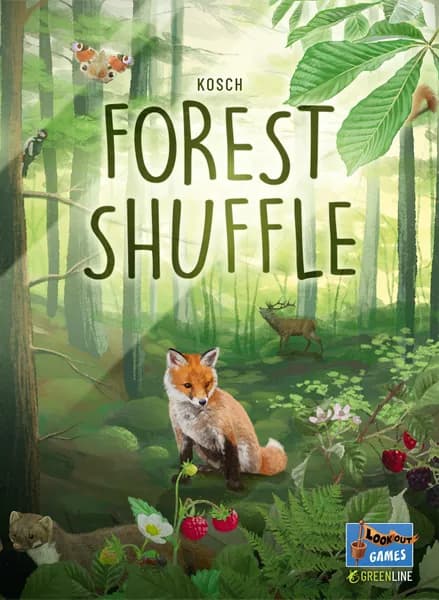
Forest Shuffle
2023In Forest Shuffle, players take on the role of naturalists competing to cultivate the most thriving and ecologically harmonious woodland. This strategic card game challenges you to build a personal forest tableau that scores the most points by the game's end. The core objective is to strategically play cards representing a diverse array of trees, animals, plants, and fungi. Each card contributes to your ecosystem's overall value, with different species scoring in unique ways based on their placement and proximity to others. Success requires careful planning and an understanding of the intricate relationships within your burgeoning forest, as the player with the most valuable collection of flora and fauna is declared the winner.
The gameplay is driven by a simple yet elegant set of actions. On your turn, you must choose between drawing two new cards—either from a central deck or a shared face-up market called the 'clearing'—or playing a single card into your forest. Playing a card requires paying a cost by discarding other cards from your hand into the clearing, creating a constant tension of hand management. The game's foundation is built upon tree cards. All other species are played by 'tucking' them under one of the four sides of an existing tree. A key mechanical twist is that most non-tree cards are split, depicting two different species. When you tuck a card, you must choose which half becomes active in your tableau, a decision that has cascading effects on your scoring potential and future plays. This multi-use card system is the strategic heart of the game, forcing difficult choices with every placement.
Forest Shuffle's appeal lies in its masterful blend of accessibility and strategic depth. While the turn structure is remarkably easy to grasp, the "complex web of considerations" that arises from the tucking and scoring mechanics provides a deeply engaging puzzle for experienced gamers. The interactions between cards create countless scoring combinations, ensuring high replayability as you discover new synergies with each game. The beautiful and detailed artwork brings the vibrant ecosystem to life, enhancing the thematic experience. Furthermore, the game's production is environmentally conscious as part of Lookout Games' "Greenline" series. The game ends when the third 'winter' card is revealed, adding a layer of suspense as the deck thins. It’s this combination of straightforward rules, rich decision-making, and a compelling natural theme that makes Forest Shuffle a standout title for a wide range of players.
2-5 60m⚖️ 2.4

RANK #203
Embark on a journey through the vast plains of 19th-century Argentina in Great Western Trail: Argentina, a standalone title in the acclaimed strategy game trilogy. Players assume the roles of estancia owners, wealthy ranchers tasked with herding their valuable cattle across the pampas to the bustling port of Buenos Aires. The ultimate goal is to amass the most victory points by creating the most profitable herd, strategically shipping cattle to European ports, constructing valuable buildings along the trail, and achieving various end-game objectives. This game challenges players to build a powerful economic engine and outmaneuver their rivals in a race to become the most successful cattle baron in the country.
The gameplay masterfully combines several mechanics into a cohesive and satisfying loop. At its core is a rondel-like system where players move their rancher along a winding path, stopping at different locations to perform actions. These actions include hiring specialized workers—gauchos, carpinteros, and maquinistas—to improve their abilities, constructing private buildings to create new action spaces, and acquiring more valuable cattle to enhance their personal deck. This deck-building element is crucial; players must carefully manage their hand of cattle cards to present a diverse and valuable set upon reaching Buenos Aires. A significant new feature in this installment is the introduction of farmers and grain, a resource essential for shipping your cattle overseas. Players must aid farmers along the path to produce grain, adding another layer of strategic consideration to their journey.
Great Western Trail: Argentina is celebrated for taking the brilliant foundation of its predecessor and adding new, compelling layers of complexity. The puzzle of optimizing your route, managing your cattle deck, and balancing the new grain resource offers a fresh and deeply engaging experience even for veterans of the original game. The interplay between moving your rancher, advancing your train, and planning your shipments to Europe creates a tense and rewarding strategic challenge. With a high degree of replayability stemming from variable setups and a well-implemented solo mode, it's a standout title for fans of medium-to-heavy Eurogames who relish long-term planning and the satisfaction of watching a well-oiled strategy come to fruition.
1-4 120m⚖️ 3.9
RANK #216
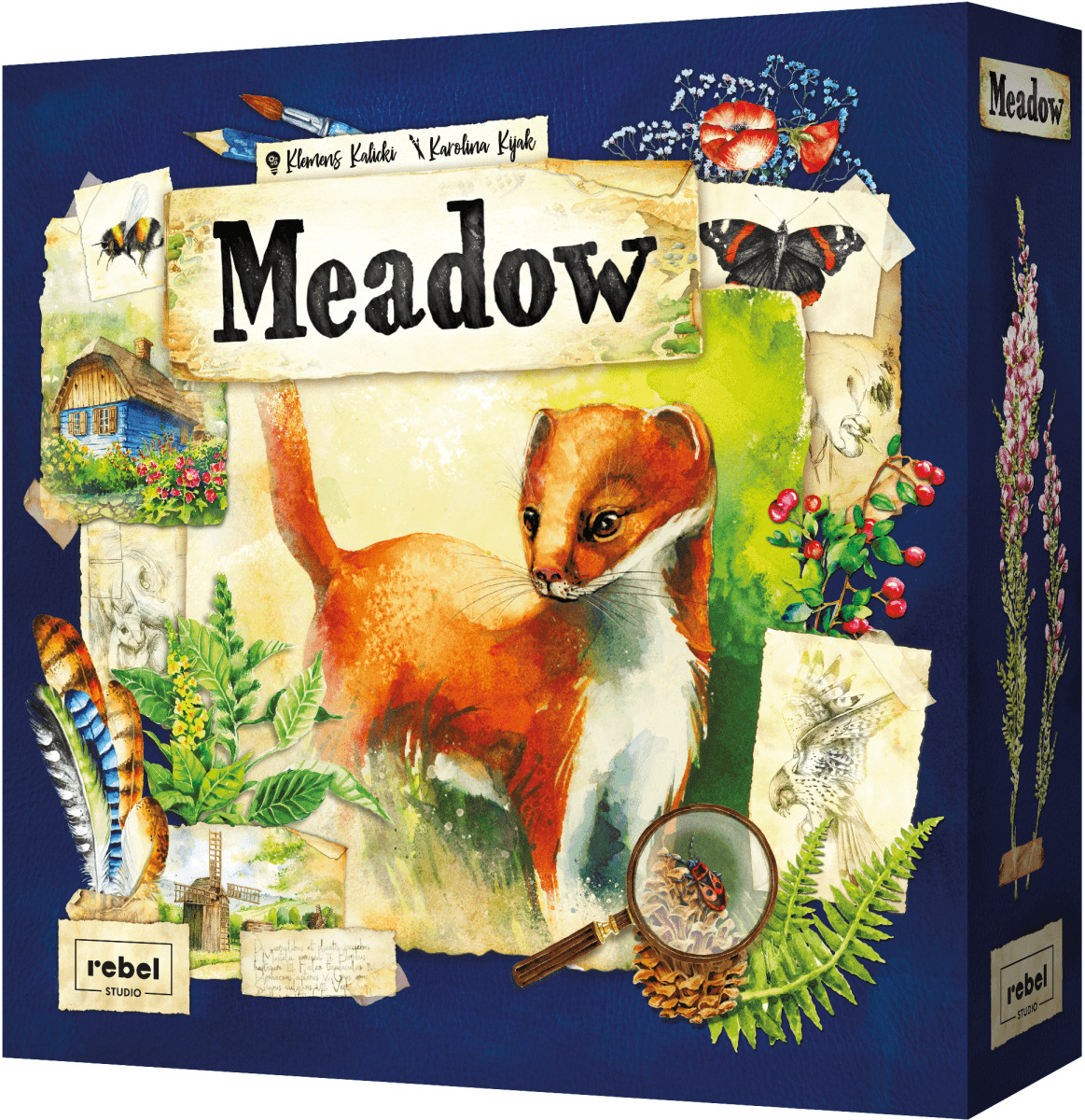
Meadow
2021In Meadow, players take on the tranquil role of nature observers wandering through picturesque landscapes. The ultimate goal is to become the most astute observer by compiling the most impressive collection of discovered species and sights. This is represented by creating a personal tableau of cards, each beautifully illustrated with watercolor art depicting various flora, fauna, and natural environments. Victory is achieved by accumulating points from these played cards, creating a visual and strategic journal of your journey through the wilderness. The game is as much an appreciation of nature's beauty as it is a competitive challenge, inviting players to immerse themselves in its serene world.
The core gameplay loop is driven by a unique action-selection mechanism. Each turn, players choose one of their path tokens to place on either the main board or a shared campfire board. Placing a token on the main board allows you to draft a card from a central market, with the number on your token dictating which card you are eligible to take. Afterward, you may play a card from your hand into your personal "meadow." This is where the central puzzle lies: to play a card, you must possess the required symbols on cards already in your tableau. As your meadow grows, new cards cover symbols on older ones, demanding careful forward planning and resource management. The campfire board offers an alternative, providing powerful special actions like drawing multiple cards or fulfilling scoring objectives based on the symbols you've collected.
Meadow is celebrated for its remarkable ability to merge a peaceful, accessible theme with satisfyingly deep gameplay. Its appeal extends to both families looking for a beautiful game and seasoned hobbyists seeking a thoughtful strategic puzzle. The experience is often described as meditative, thanks to the stunning artwork and the quiet focus required to build an efficient tableau engine. The tactical decisions of which card to draft and when to play it are consistently engaging, as each choice impacts your ability to play more valuable cards later. The game cleverly scales its challenge by introducing a new deck of more complex cards midway through, ensuring a steady sense of progression and discovery that keeps the experience fresh and highly replayable.
1-4 75m⚖️ 2.2

RANK #259
Sea Salt & Paper
2022Sea Salt & Paper is a captivating card game that has enchanted players with its distinct and beautiful aesthetic, featuring photographs of actual origami sea creatures. Beneath its serene surface lies a surprisingly tactical game of set collection and calculated risks. The primary objective is to outscore opponents over several rounds by carefully curating a hand of cards with point-scoring combinations. Players aim to reach a specific point threshold, which varies by player count, to secure victory. However, a thrilling alternate path to triumph exists: collecting all four unique mermaid cards instantly wins the game, adding a layer of suspense to every draw. This elegant design packs a wealth of strategic depth into a small, portable box, making it an ideal travel companion.
The gameplay loop is deceptively simple yet full of meaningful decisions. On your turn, you must acquire a card by either drawing two from the top of the deck, keeping one and discarding the other, or by picking up the top card from one of two face-up discard piles. After adding a card, you can play pairs of identical "duo" cards from your hand to trigger powerful one-time effects. For instance, a pair of crabs allows you to steal a card from a discard pile, while two boats grant you an immediate extra turn. The round's tension culminates when a player amasses at least seven points. They can then declare "Stop," prompting all players to score their hands immediately. Alternatively, if they are feeling confident, they can declare "Last Chance." This gives every other player one final turn to improve their hand before the reveal, introducing a high-stakes push-your-luck element where the declarer risks losing their own card points for the chance at a significant bonus.
The game's immense appeal stems from this brilliant blend of accessibility and strategic depth. The rules can be taught in minutes, making it a perfect 'gateway' game for new players or a fantastic choice for a family game night. Yet, experienced gamers will appreciate the subtle tactics involved in managing their hand, tracking discard piles, and timing the end of the round. The "Last Chance" mechanic is a masterstroke, creating memorable moments of bluffing and suspense. Above all, the visual presentation is a standout feature; the origami art is not just beautiful but integral to the game's charming identity. This combination of fast-paced play, clever card-combo possibilities, and stunning artwork makes Sea Salt & Paper a modern classic that offers high replayability and joy in every hand.
2-4 30m⚖️ 1.5

RANK #265
Calico
2020In Calico, players step into the cozy world of competitive quilting, tasked with creating the most beautiful and comfortable patchwork quilt to attract the cuddliest cats. This is a puzzly tile-laying game where players strategically place hexagonal fabric patches onto their personal game boards. The ultimate goal is to craft a quilt that is not only visually appealing but also meets a variety of scoring objectives. Success is measured by accumulating the most victory points from fulfilling specific design goals, sewing on buttons, and, most importantly, luring feline friends onto your finished creation. The game masterfully combines its charming, gentle theme with surprisingly deep abstract strategy, creating a challenge that is both relaxing and intellectually stimulating.
The gameplay loop is elegant and straightforward. On their turn, a player chooses one of two patch tiles from their hand, places it onto any empty space on their quilt board, and then drafts a replacement tile from a central, face-up market. This simple sequence of actions belies the game's strategic depth. Points are accrued through three distinct avenues. By stitching together groups of three or more tiles of the same color, players earn a matching button worth points. By arranging patches to form specific patterns dictated by the 'cat scoring' tiles for that game, players can attract a cat token, which provides a significant point bonus. Finally, each player's board features three pre-printed design goal tiles, which score points if the six surrounding hexagons are filled with tiles that meet certain criteria, such as having three pairs of different patterns or containing no repeating colors.
The remarkable appeal of Calico lies in its ability to be both a serene, meditative puzzle and a fiercely competitive brain-burner. The gorgeous, gentle artwork by Beth Sobel draws players in, but the tight decision-making keeps them engaged. Every tile placement is a meaningful choice with cascading consequences, forcing players to constantly evaluate trade-offs between short-term gains and long-term plans. Should you place a tile to complete a button group, work towards attracting a cat, or fulfill a difficult design goal? The limited tile market and the actions of your opponents add a layer of tension and indirect interaction, making every game a unique puzzle to solve. This perfect blend of accessibility and depth has cemented Calico's status as a modern classic, beloved by families and seasoned strategists alike.
1-4 45m⚖️ 2.2

RANK #266
Welcome to the wildest race in the desert! In Camel Up (Second Edition), players are not the jockeys but wealthy spectators hoping to strike it rich by betting on a frantic camel race. The goal is simple: end the game with the most money. To do this, you'll place bets on which camel will lead at the end of each round, or 'leg', as well as which camel will be the overall champion and which will be the ignominious loser. The game's vibrant, high-quality production, featuring a stunning 3D palm tree and an ingenious pyramid dice shaker, immediately draws players into the excitement of race day.
Gameplay is a delightful mix of calculated risk and hilarious chaos. On your turn, you choose one of four actions: grab a leg betting tile for a specific camel, place a spectator tile on the track to help or hinder the race, make a long-shot bet on the final winner or loser, or commit to moving a camel. This last action involves grabbing the pyramid, giving it a shake, and releasing a single colored die. The die's color dictates which camel moves, and the number (1, 2, or 3) shows how far. The game's signature mechanic is 'stacking'—if a camel lands on an occupied space, it climbs on top of the other camel(s). When the bottom camel in a stack is activated, it carries the entire pile with it, and only the camel on top is considered in the lead! This edition also introduces rogue camels, which start at the finish line and run backward, potentially dragging entire stacks away from victory.
The unique appeal of Camel Up lies in its sheer unpredictability and the social excitement it generates. It's a game where a long-shot bet can pay off spectacularly and the race leader can suddenly find itself at the back of the pack. This level playing field makes it an exceptional 'gateway' game for newcomers and a fantastic choice for family game nights, yet the subtle timing of when to bet versus when to move a camel offers enough depth to keep experienced players engaged. It truly shines with a larger group, creating a boisterous, party-like atmosphere filled with cheers and groans as the camels stack, stumble, and sprint toward the finish line.
3-8 45m⚖️ 1.5

RANK #273
La Granja
2014Set on the picturesque island of Mallorca, 'La Granja' invites players to take the reins of their very own small farm estates located near the tranquil Alpich pond, just outside the quaint village of Esporles. As ambitious agricultural entrepreneurs, your primary objective over the course of six calculated rounds is to expand your property, cultivate lucrative crops like olives, grain, and grapes, and successfully breed a thriving population of pigs. The ultimate goal is to process these raw materials and deliver your valuable commodities directly to the local village market. By completing these deliveries and managing your rural enterprise more efficiently than your rivals, you will amass Victory Points and claim the prestigious, titular rank of 'La Granja' for your sprawling estate.
Often described by enthusiasts as a brilliant 'Eurogame potpourri,' the design masterfully weaves together several beloved mechanics into a highly cohesive and challenging experience. The standout feature is its ingenious implementation of multi-use cards. Every card drawn can be tucked under one of the four edges of your personal player board, fundamentally changing its function. Slotted on the left, it expands your fields; on the right, it upgrades farm extensions for pig capacity and income; at the top, it becomes a market barrow contract; and at the bottom, it acts as a specialized helper providing powerful ongoing abilities. This card-driven engine building is perfectly complemented by a communal dice drafting system. Each round, a shared pool of dice is rolled, and players must tactically draft them to execute core actions like upgrading resources or gaining coins, adding a beautifully calculated layer of unpredictability to the core loop.
Beyond the personal farm boards, the central village market creates a fierce, competitive arena for area control and influence. During the critical Transportation Phase, players secretly choose donkey tiles to dictate their delivery capacity and advancement on the crucial Siesta Track, which dictates future turn order. Delivering goods fulfills barrow contracts and places your hexagonal markers onto the main board. Completing higher-value deliveries allows you to aggressively bump your opponents' markers out of the village spaces, turning a traditionally solitary farming theme into a highly interactive scramble for dominance and passive scoring. This brilliant friction, combined with the game's deep, crunchy resource management and rewarding learning curve, is exactly why 'La Granja' remains a critically acclaimed heavyweight strategy staple.
1-4 120m⚖️ 3.3
RANK #278
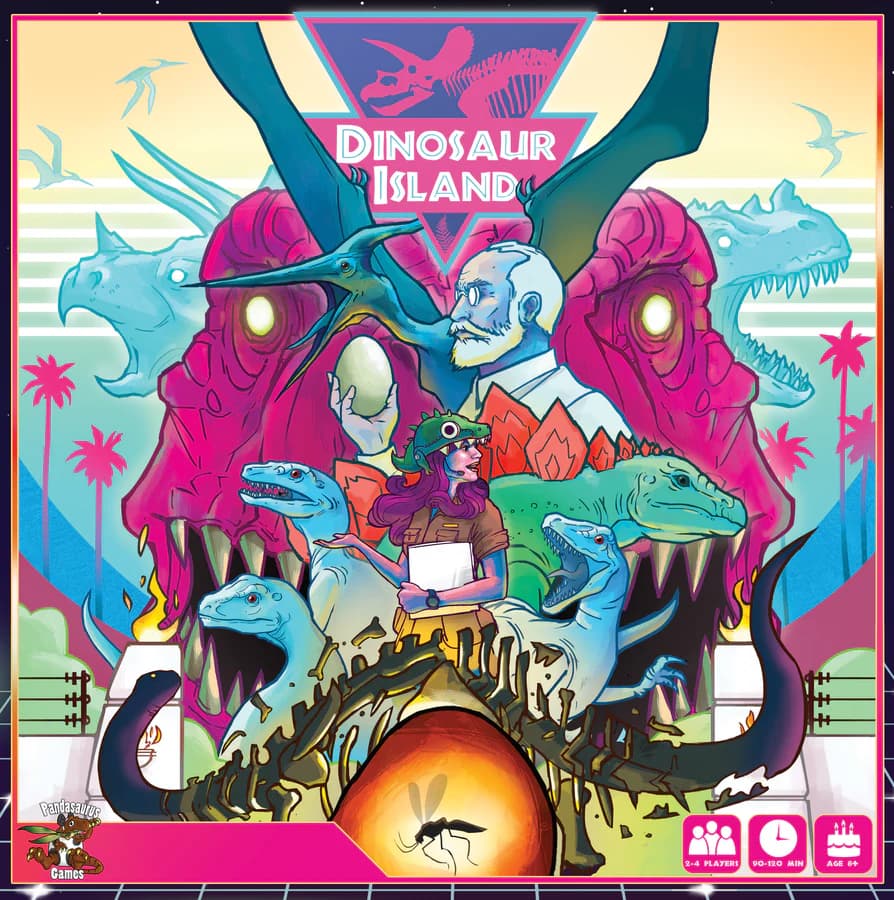
Dinosaur Island
2017Dinosaur Island invites players to take the helm of a sprawling, neon-drenched biological amusement park where bringing prehistoric creatures back to life is just part of the daily grind. Channeling a vibrant, nostalgic aesthetic inspired by the pop culture of the 1980s and 90s, this thematic strategy game tasks you with synthesizing ancient DNA, erecting thrilling rides, and keeping your visitors entertained. Your ultimate objective is to run the most successful and profitable park possible, carefully balancing the awe-inspiring excitement of your newly minted dinosaurs against the ever-present danger of a catastrophic, guest-eating breakout.
The gameplay loop operates across several distinct phases and utilizes a clever blend of worker placement, set collection, and dice drafting. In the initial research phase, players deploy scientists to extract vital genetic sequences from custom amber dice, expand cold-storage capacities, and discover new dinosaur recipes. Next, managers hit the market to purchase essential upgrades, hire skilled specialists, and build amenities like food stands or rollercoasters. The core action then shifts to personal laboratory boards, where workers are simultaneously assigned to refine DNA, breed creatures into paddocks, and bolster park security. Finally, the park opens its gates to a blind draw of visitor meeples. While paying guests bring in much-needed revenue and victory points, sneaky hooligans take up valuable space for free, and any lapse in security will lead to rampaging carnivores devouring the clientele.
What truly sets Dinosaur Island apart is its masterful integration of a deeply engaging theme with satisfying Euro-style mechanics. Fans adore the striking visual presentation, largely driven by vivid pinks and retro graphic design that makes the table presence absolutely pop. Beyond its stunning looks, the game offers remarkable flexibility; players can tailor the experience's length by selecting different sets of objective cards to accommodate quick sessions or sprawling engagements. With a well-regarded solo mode and multiple strategic avenues to explore—from focusing on massive, high-risk carnivores to building a safe, amenity-rich resort—the game provides a robust, replayable puzzle that keeps managers coming back for more thrilling park management.
1-4 120m⚖️ 3.0

RANK #290
Wondrous Creatures invites players to a hidden, mystical island teeming with extraordinary fauna. As creature enthusiasts, players embark on an expedition to scout the wilderness and establish the most prestigious wildlife reserve. The core objective is to collect species, manage rare resources, and satisfy specific achievement criteria before your rivals. By balancing the expansion of your reserve with the discovery of new life forms, you aim to build a lasting legacy as the island's premier naturalist. This title blends the charm of biological discovery with the rigors of tactical management, offering a rich and competitive tableau-building experience.
The heart of the gameplay lies in its innovative 'double-hex' worker placement system. Instead of occupying a single spot, your crew members cover two adjacent spaces on a hexagonal grid, allowing for varied resource combinations such as coral, fruit, and mushrooms. Players spend these resources to play from a massive deck of 126 unique creature cards, each offering distinct powers—instant effects, ongoing passive abilities, or powerful 'recharge' actions. The flow is punctuated by the Recharge phase, where players pull back their workers to trigger their engine and advance the global time track. This tempo-based movement toward trophies and public achievements creates a race-like tension, as early movers claim the highest-valued rewards and shape the available landscape for others.
What truly sets Wondrous Creatures apart is its high production value and deep strategic synergy. Fans of mid-to-heavy tableau builders will appreciate the intricate engine-building and the satisfaction of chaining card abilities. The inclusion of magnetic meeples—where 'Captains' mount 'Crew Members'—and the sheer variety of the 126 unique cards ensure that no two reserves feel identical. Its whimsical art style, reminiscent of a fantasy field journal, complements the mechanical depth, making it a compelling choice for strategy gamers. Whether navigating the solo mode or competing in a full four-player session, the game offers a tactile, rewarding journey through a world of imagination and discovery.
1-4 80m⚖️ 3.0
BoxNo Cover Art
RANK #299
Hallertau
2020Set in the mid-19th century within the lush Hallertau region of Bavaria, Germany, Hallertau invites players to step into the shoes of village mayors dedicated to agricultural expansion and civic improvement. The primary objective is to cultivate the local economy by efficiently managing crops and livestock to accumulate wealth and prestige. This historical setting isn't just window dressing; it reflects the region's status as the world's premier hop-producing area. Players strive to outmaneuver their rivals by modernizing their village, represented by the advancement of a massive Community Center tile across their personal boards. The player who most effectively balances the demands of the land with the industrial needs of their town will emerge as the most successful leader of this burgeoning rural hub.
The gameplay loop of Hallertau is a sophisticated blend of classic Uwe Rosenberg concepts and bold new innovations. It utilizes a progressive worker placement system where action spaces do not become blocked, but instead grow more expensive as more players utilize them. Each of the six rounds requires players to allocate their limited workforce to gather seeds, sow fields, and tend to sheep. A standout mechanic is the two-field crop rotation system, which simulates soil exhaustion and recovery. Planting a crop lowers a field’s future yield, while leaving it fallow allows it to recover and produce more in subsequent seasons. Simultaneously, players must solve the 'Community Center Puzzle,' spending resources to push five different craft buildings to the right. This movement allows the Community Center to slide forward, which simultaneously increases the player's available workers for future rounds and generates significant victory points.
What truly distinguishes Hallertau and drives its massive popularity is its incredible flexibility and replayability. With over 300 cards divided into several distinct decks—Gateway, Farmyard, Bonus, and Point cards—no two games ever unfold the same way. The ability to play these cards at almost any time during a turn allows for tactical pivots and high-scoring combos that feel immensely rewarding. Unlike the tighter, more restrictive resource management found in Rosenberg's earlier titles like Agricola, Hallertau offers a more forgiving, sandbox-style experience. It rewards clever planning and adaptation rather than penalizing minor inefficiencies. The combination of the sliding board puzzle, the strategic depth of field rotation, and the constant flow of diverse card effects creates a medium-heavy experience that is both intellectually stimulating and deeply satisfying for solo and multiplayer enthusiasts alike.
1-4 95m⚖️ 3.3
RANK #1,053
The Wolves
2022The Wolves is a strategic pack-building game where players compete to establish the most dominant presence in a wild landscape over the course of a single lunar cycle. As the leader of a burgeoning wolf pack, your primary objective is to expand your territory, recruit lone wolves into your fold, and hunt various prey to sustain your kin. The game's narrative revolves around the survival of the fittest, tasking you with navigating diverse terrains while outmaneuvering rival packs. Every action taken contributes to your overall influence, and victory is measured by your ability to control the most valuable regions of the board before the full moon marks the end of the hunt.
Gameplay is driven by a unique terrain-based action selection mechanism. Each player possesses a set of double-sided terrain tiles that dictate which regions they can interact with on their turn. By flipping these tiles, players can move their wolves across the modular board, establish shelters, and upgrade them into dens to solidify their hold on a region. The 'howling' mechanic allows you to lure lone wolves or even convert rival pack members, creating a high level of interaction and tactical depth. Because actions require specific terrain types, players must plan several turns ahead, carefully managing their tile flips to ensure they can reach crucial areas or contest dominance during scoring phases triggered by the moon's progression.
The appeal of The Wolves lies in its perfect blend of cutthroat competition and stunning visual presentation. The game features beautifully crafted wolf meeples and thick cardboard components that bring the wilderness to life. Strategic players will appreciate the lack of luck-based elements, as success is entirely dependent on positioning and efficient tile management. The modular nature of the board ensures that no two games feel identical, offering high replayability. It bridges the gap between accessible rules and deep, meaningful decision-making, making it a standout choice for those who enjoy area control games with a strong thematic core and a focus on direct player interaction.
m⚖️ N/A

RANK #3,418
Wispwood
2025Wispwood invites players into a luminous, enchanted woodland where the primary objective is to harness the ethereal glow of magical wisps to guide a wandering cat through the shadows. In this visually striking experience, players act as tenders of the forest, strategically placing light sources to illuminate the dense foliage and create paths that appeal to the feline's natural curiosity. The game strikes a delicate balance between a peaceful, thematic journey and a calculated spatial puzzle. As the forest floor becomes a canvas of color and light, every tile placed serves the dual purpose of expanding the illuminated reaches of the woods and securing the favor of the elusive forest inhabitant. The overarching goal is not just to build a beautiful landscape, but to optimize the placement of these glowing elements to maximize influence over the game's final scoring conditions.
The core gameplay revolves around a drafting board featuring eight distinct positions, each offering a combination of face-up wisp tiles and specific polyomino shapes that range from two to four blocks in size. Over the course of three distinct rounds, players must carefully select their pieces to build out their personal forest tableau. The mechanic of tile-laying is elevated by the presence of conditional scoring elements that change based on goal cards, ensuring that no two sessions feel the same. Between rounds, the forest undergoes a phase of transformation where it fades and expands, forcing players to adapt their long-term strategies to the shifting landscape while maintaining the wisps they have already established. This evolution adds a layer of depth to the drafting process, as players must consider not just the immediate utility of a shape, but how it will interact with future expansions and the ever-changing requirements of the forest's magic.
What truly distinguishes Wispwood from other polyomino-based games is its blend of accessible drafting and surprisingly intricate scoring logic. While the act of placing colorful shapes is intuitive, the high volume of conditional bonuses requires players to maintain a sharp focus on efficiency and spatial planning. The game's appeal lies in its puzzle-like nature, where every decision carries weight, yet the theme remains light and enchanting. Enthusiasts of the genre will appreciate the solo-friendly design and the tactical flexibility required to navigate the drafting board's eight spots. Whether you are navigating solo challenges or competing in a four-player group, the game offers a satisfying progression as your forest grows from a few scattered lights into a radiant, interconnected ecosystem. With its quick playtime and high replayability, it serves as an excellent mid-weight title that rewards both casual play and more intense, analytical approaches to tile optimization.
1-4 45m⚖️ 2.2