Strategy Games
Browse all Strategy board games in the Meeple Pulse database.
Styles
Themes
AbstractAdventureAncientAnimalsArtBusinessCard GameCo-operativeComic BookCooperativeCrimeEconomicEnvironmentalismExplorationFantasyHistoricalHorrorHumorIntrigueLiteraryMagicMarvelMedievalModernMuseumMysteryMythologyNatureNauticalPoliticalPress Your LuckSatireSci-FiSocial CommentarySocial InteractionSpaceSuperheroesThematicTravelWarWesternWord-Guessing
Mechanics
3D PlacementActingAction / DexterityAction DraftingAction Point AllowanceAction Point Allowance SystemAction Point SystemAction PointsAction ProgrammingAction QueueAction RetrievalAction SelectionAction/EventAlliancesAlternate ActivationApp-AssistedApp-DrivenArea ControlArea InfluenceArea MajorityArea Majority / InfluenceArea MovementArgumentationAsymmetricAsymmetric FactionsAsymmetric GameAsymmetric PowersAsymmetrical PowersAuction & BiddingAuction/BiddingAuctioningBag BuildingBettingBetting and BluffingBetting and WageringBetting and WagersBiddingBingoBlind BiddingBluffingCampaign / Battle Card DrivenCampaign / LegacyCampaign / Legacy GameCampaign / Mission-basedCampaign / ScenariosCampaign GameCampaign PlayCard DraftingCard DrawingCard DrivenCard Driven ActionCard Driven CombatCard Driven Dice AllocationCard Driven MovementCard ManagementCard PlayCard Play / Hand ManagementCard Play Conflict ResolutionCard SheddingCard-Driven MovementCharacter CreationCharacter ProgressionChit-Pull SystemCo-op PlayCo-operative GameCo-operative PlayCode-breakingCombat ResolutionCombo ChainCommand CardsCommodity SpeculationCommunication LimitsContract FulfillmentContractsCooperative GameCooperative GameplayCooperative PlayCooperative Trick-takingDebateDeck BuildingDeck ConstructionDeck, Bag, and Pool BuildingDeck-BuildingDeductionDexterityDice DraftingDice PlacementDice RollingDiplomatic InfluenceDraftingDynamic Battle SystemEnclosureEnd Game BonusesEngine BuildingEngine-BuildingEscape RoomEvent DrivenExplorationFarmingFlip and WriteFollowFollow ActionGrid CoverageGrid MovementHand ManagementHex-and-CounterHexagon GridHidden MovementHidden RolesI Cut You ChooseIncomeInfluence / Area MajorityLadder ClimbingLegacyLegacy ElementsLegacy GameLegacy SystemLimited CommunicationLine DrawingLine of SightMancalaMap MovementMarketMarket DraftingMarket ManipulationMarket MechanicMarket SpeculationMatchingMeasurement MovementMemoryMission ObjectivesModular BoardModular Board ConstructionMovement TemplatesMulti-Use CardsMulti-use CardsMultiple ScenariosMust FollowNarrative ChoiceNarrative Choice / ParagraphNegotiationNegotiation MechanicsNetwork & Route BuildingNetwork BuildingNetwork and Route BuildingOne vs ManyOne vs. ManyOpen DraftingPaper-and-PencilPartnershipsPattern BuildingPattern RecognitionPick-up and DeliverPlayer EliminationPlayer InteractionPlayer JudgePoint SaladPoint to Point MovementPolyominoesPush Your LuckPush-Your-LuckPuzzlePuzzle-LikePuzzle-SolvingRaceReal-TimeRecipe FulfillmentResource ManagementRole PlayingRole SelectionRoll / Spin and MoveRondelRoute BuildingRoute-BuildingRoute/Network BuildingSanity SystemScenario / Campaign PlayScenario / Mission / Campaign GameScenario / Mission FunctionSecret Unit DeploymentSemi-Cooperative GameSet CollectionSheddingSimulationSimultaneous ActionSimultaneous Action SelectionSimultaneous Hidden AllocationSocial DeductionSocial InteractionSolo / Solitaire GameSpace ExplorationStat Check / Skill CheckStock HoldingStorytellingStrategic PlanningTableau BuildingTactical Decision-MakingTake ThatTargeted CluesTeam PlayTeam-Based GameTeam-Based GuessingTeamworkTech TreesTech Trees / Tech TracksTechnology & Armament TracksTechnology TreeTension & Aggression TracksTile DraftingTile LayingTile PlacementTime TrackTime TravelTower DefenseTrack MovementTradingTrick-takingTug of WarTurn Order: PassTurn Order: Stat-BasedUnit PlacementVariable Phase OrderVariable Player PowersVariable Set-upVariable SetupVictory Point TracksVotingWord AssociationWord GameWord GuessingWord-GuessingWord-guessingWordplayWorker Placement

RANK #94
Race for the Galaxy stands as a landmark title in the world of card games, offering players the chance to construct a sprawling galactic civilization from the palm of their hand. The ultimate objective is to achieve the greatest prosperity, measured in victory points, by the time the game concludes. Players earn these points by strategically settling worlds, deploying powerful developments, and leveraging unique consumption abilities. The game is a race to build the most effective and synergistic tableau of cards, representing your empire's technological advancements and planetary holdings. It masterfully condenses the feel of a vast space-faring epic into a surprisingly swift and deeply engaging experience, where every decision can tip the scales of victory. The game ends either when one player builds their twelfth card or when the central pool of victory point tokens is exhausted, ensuring a consistently brisk pace.
The genius of Race for the Galaxy lies in its innovative simultaneous action selection mechanism. Each round, all players secretly choose one of several phase cards—such as Explore, Settle, or Produce—and reveal them at the same time. Only the selected phases are activated for that round, and every player gets to perform those actions. However, the player who originally chose a specific phase receives a significant bonus, creating a fascinating meta-game of anticipating your opponents' needs to maximize your own turn. Compounding this strategic layer is the brilliant multi-use card system. Every card in your hand is a potential world to settle, a technology to develop, or, crucially, the currency needed to pay for other cards. This forces constant, compelling trade-offs: is that high-value world better in your empire or better used as payment for two smaller, more synergistic cards right now? This core loop of managing your hand and building your tableau forms a satisfying and challenging puzzle.
What has given Race for the Galaxy its enduring appeal is the immense strategic depth packed into its short playtime. While notorious for its dense iconography, this visual language, once mastered, allows for remarkably fluid and fast-paced turns with minimal downtime. The vast deck of cards ensures that no two games are ever alike, providing near-infinite replayability as players discover new card combinations and powerful synergies. The tension of building your own engine while trying to benefit from your opponents' phase choices makes for a highly interactive, albeit indirect, experience. It’s a game that rewards clever planning, tactical flexibility, and a deep understanding of the card pool. For players who love building intricate engines and executing powerful combos, Race for the Galaxy offers a rich and rewarding journey to the stars that remains a benchmark for the genre.
2-4 45m⚖️ 3.0
RANK #101
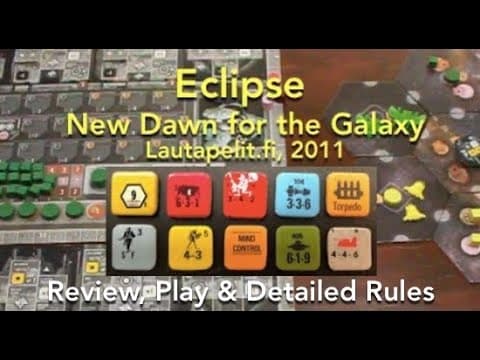
Eclipse: New Dawn for the Galaxy is a critically acclaimed 4X board game that places you at the head of a vast interstellar civilization. Over nine rounds, you must guide your people to dominance by exploring new star systems, researching powerful technologies, and engaging in both diplomacy and warfare. The ultimate goal is to accumulate the most Victory Points, which are earned through a variety of achievements, including controlling galactic sectors, winning decisive battles, forging alliances, and discovering ancient alien artifacts. The game masterfully blends the grand, thematic scope of an 'Ameritrash' space opera with the tight, resource-driven puzzles of a 'Euro-style' game, creating a rich and rewarding strategic experience.
The gameplay revolves around a clever action and upkeep system that forces difficult decisions. On your turn, you perform a single action, such as exploring the modular galaxy, building customized starships, or advancing on a shared technology tree. Each system you control or action you take requires placing an influence disc from your player board. As these discs are used, your civilization's end-of-round upkeep cost increases, creating a tense balance between rapid expansion and economic stability. Players must carefully manage three resources—Materials for building, Science for research, and Money to pay upkeep—generated by colonizing planets, forcing them to weigh every decision against its long-term cost.
What truly sets Eclipse apart is its deep and intuitive ship customization system. Players don't just build generic ships; they design them. Using the Upgrade action, you can add powerful components like improved engines, advanced computers, deadly weapons, and resilient shields directly onto your ship blueprints. This allows for incredible strategic flexibility, as you can tailor your fleets to counter specific opponents or pursue unique combat doctrines. Combat itself is resolved through dice rolls, but the odds are heavily influenced by your custom designs, rewarding clever engineering and tactical foresight. This combination of deep strategic planning, tense economic management, and thrilling, customizable combat makes Eclipse a modern classic in the space strategy genre.
2-6 150m⚖️ 3.7
RANK #104
Arcs
2024Arcs is a high-stakes science fiction strategy game that transports players to the edge of a collapsing galactic empire. In this crumbling universe, players assume the roles of ambitious leaders struggling to carve out their own legacies amidst the ruins of a former civilization. The primary objective is to gain the most power through a series of chapters, which is achieved by completing specific ambitions—such as controlling key star systems, hoarding precious resources, or defeating rival fleets. Unlike typical space operas that focus on slow expansion, Arcs is designed for rapid movement and sharp, decisive conflicts, forcing players to react to a volatile political landscape where the status quo is constantly shifting.
The gameplay is driven by a sophisticated trick-taking action system that dictates how players interact with the board. Each round, a lead player plays a card that sets the suit, and others must decide whether to follow suit to gain more actions, copy the action at a lower efficiency, or pivot to a different strategy entirely. This creates a tense tactical puzzle where hand management is just as critical as fleet positioning. Players move their wooden starships across a map of connected systems, engaging in combat using a unique dice system that allows for different levels of aggression and risk. Furthermore, the 'Ambition' mechanic allows players to declare what actually scores points in a given round, meaning the victory conditions are as dynamic as the players' shifting alliances.
What makes Arcs truly stand out is its commitment to high player interaction and its 'fail-forward' design philosophy. Created by the team behind Root and Oath, the game features the signature whimsical yet gritty art of Kyle Ferrin and the deep, systemic design of Cole Wehrle. People love Arcs because it condenses the drama and scope of a massive campaign into a manageable play session, while still offering an optional 'Blighted Reach' expansion that provides a multi-session legacy experience. Every action feels consequential, and the game rewards clever timing and bold maneuvers over passive engine building. It is a rare title that manages to be both a tight competitive skirmish game and a sprawling narrative generator, ensuring no two games ever feel the same.
2-4 90m⚖️ 3.7
BoxNo Cover Art
RANK #110
Beyond the Sun
2020Beyond the Sun is a game that challenges players to explore and settle new planets, managing resources and making strategic decisions to ensure their survival and success.
The game is set in a distant future where humanity has reached the stars, and players take on the role of space explorers tasked with establishing colonies on newly discovered planets. Each player starts with a small fleet of ships and a limited amount of resources, which they must use to build and maintain their colony.
As players explore new planets, they will encounter various challenges such as hostile alien species, toxic environments, and scarce resources. They must carefully manage their resources, including food, water, and energy, to keep their colonists alive and happy. Players can also discover new technologies and upgrade their ships to improve their chances of success.
The game is won by the player who establishes the most successful colony, with a balance between resource management, exploration, and technological advancement.
1-4 60m⚖️ 3.5
BoxNo Cover Art
RANK #113
In The Search for Planet X, players take on the roles of astronomers tasked with discovering a mysterious new planet in our solar system. This game is all about strategic planning and resource management as players navigate through various astronomical phenomena to uncover clues that will lead them to their target.
The gameplay involves a combination of worker placement and area control mechanics. Players must carefully allocate their resources, including time, money, and personnel, to conduct research and gather data from different celestial bodies. The game board features a modular design, with interlocking tiles representing the solar system's various regions. As players progress through the game, they will uncover new information about the planet's location, size, and composition.
One of the unique aspects of this game is its thematic depth. Players must consider the scientific principles underlying astronomical research, such as orbital mechanics and spectroscopy. The game also includes a variety of challenges and obstacles that players must overcome, including equipment failures, data corruption, and rival astronomers trying to steal their discoveries.
2-4 60m⚖️ 3.5
RANK #125
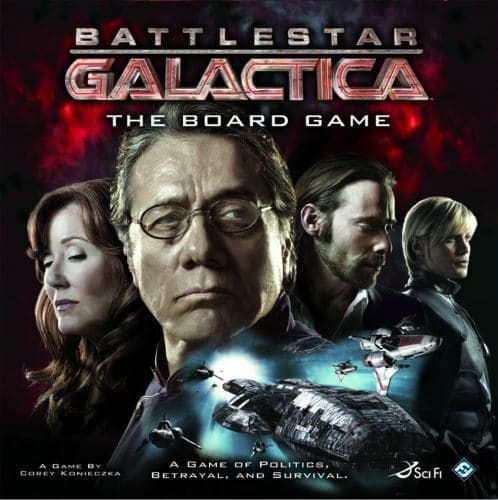
Battlestar Galactica: The Board Game plunges players into the desperate flight of the last vestiges of humanity. It is a deeply thematic, semi-cooperative experience where survival is paramount, but the greatest threat may be sitting right next to you. In this game of hidden allegiances, most players assume the roles of iconic human characters from the television series, working collectively to guide the fleet to its fabled destination, Kobol. To succeed, they must carefully manage four critical resources—fuel, food, morale, and population—and execute a series of faster-than-light jumps to outrun their pursuers. If any resource is fully depleted, or the Galactica itself is destroyed, humanity is lost forever. However, amongst the crew are Cylon traitors, secretly working to ensure this very outcome through subtle sabotage and outright betrayal.
The gameplay masterfully cultivates this atmosphere of paranoia. Each turn, a player draws skill cards representing their character's expertise, moves to a location on the fleet's ships, and performs an action. The turn culminates in drawing a Crisis card, which presents a new challenge the crew must overcome, often through a skill check. This is where the core tension lies. To pass a check, players secretly contribute skill cards to a shared pool. While human players try to contribute cards of the required type to meet a target number, Cylon players can covertly add unhelpful cards to cause a failure. The resulting blame-game and accusations are central to the experience. Further intensifying the suspense is the "Sleeper Agent" phase halfway through the game, where a second loyalty card is dealt, potentially turning a trusted ally into a new enemy.
What elevates Battlestar Galactica to legendary status is its unmatched ability to translate the show's core themes of paranoia and desperation into compelling gameplay. The mechanics are not just abstract puzzles; they are engines for storytelling and intense player interaction. The constant suspicion, the debates over who played which card during a failed skill check, and the dramatic moments when a player reveals themselves as a Cylon are what create unforgettable gaming sessions. It's more than a resource management game; it's a social deduction crucible where your ability to read people, build trust, and sow discord is just as important as your strategic card play. This blend of cooperative survival and hidden traitor mechanics makes every decision fraught with weight and every game a unique narrative of survival and betrayal.
3-6 180m⚖️ 3.3
RANK #128
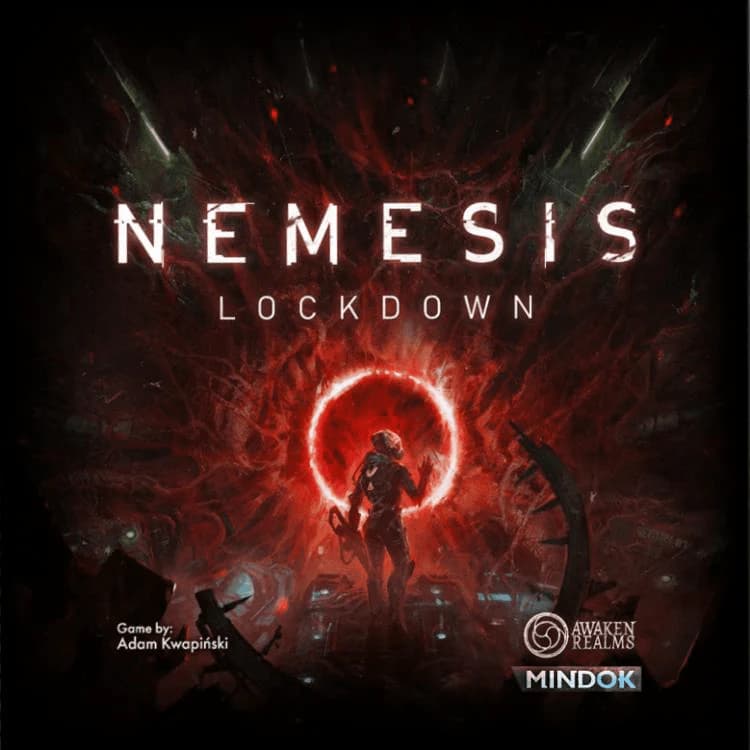
Nemesis: Lockdown is a cinematic, standalone survival-horror experience set on a secret multi-level base on Mars. It is a semi-cooperative game where players, as survivors of an unknown incident, must navigate a hostile facility infested with terrifying alien organisms known as Night Stalkers. While cooperation is essential to overcome the immediate dangers of the base and its predatory inhabitants, each player holds a secret objective that may conflict with the goals of the group. To achieve victory, a player must not only survive the ordeal but also successfully complete their private mission before escaping, creating a deeply tense atmosphere where trust is a scarce and valuable resource.
The gameplay unfolds through a series of rounds, each divided into a Player Phase and an Event Phase. During the Player Phase, individuals take turns performing two actions, the cost of which is paid by discarding action cards from their hand. Actions are varied and crucial, including moving through the labyrinthine base, exploring new rooms, searching for useful items, crafting equipment, and engaging in desperate combat with the aliens. A critical element is managing noise; actions can place noise markers in adjacent corridors, and a second marker in the same location triggers a deadly alien encounter. Lockdown introduces new challenges, most notably the management of the base's power, which can fail and plunge sectors into darkness, adding another layer of strategic depth and terror.
The immense appeal of Nemesis: Lockdown lies in its ability to generate powerful, emergent narratives. The combination of hidden agendas, a modular board, and unpredictable event cards ensures that no two sessions are ever alike, producing unique and memorable stories of heroism, desperation, and betrayal. The core semi-cooperative mechanic is the heart of the game, forcing a delicate balance between teamwork and self-preservation. You need your crewmates to fend off the relentless alien threat, yet you can never be certain of their true intentions. This constant psychological tension, coupled with the game's rich thematic immersion, makes it a premium, high-stakes adventure for players who crave a challenging and deeply engaging tabletop experience.
1-5 120m⚖️ 4.2

RANK #130
Galactic Cruise
2025Galactic Cruise invites players to the helm of a burgeoning interstellar tourism company in a competitive, heavyweight Eurogame experience. You take on the role of a supervisor, vying for the prestigious position of CEO within the galaxy's premier space travel corporation. Your objective is to prove your managerial prowess by accumulating the most victory points. This is achieved by building and operating a fleet of luxurious starships, designing incredible interstellar vacation packages, and attracting wealthy guests from across the cosmos. The game is a test of long-term strategy and economic acumen, where every decision contributes to your corporate legacy. Only the supervisor who can most effectively expand their operations and satisfy the discerning tastes of interstellar travelers will rise to the top of the corporate ladder.
The gameplay is driven by a sophisticated worker placement system set across three distinct 'eras'. Players assign their crew members to action spaces on a dynamic, modular main board to gather resources, acquire advanced blueprints, construct shuttle components, and build crucial developments that link locations and unlock new strategic pathways. A standout feature is the game's interactive 'bumping' mechanism; if you place a worker on an occupied space, the original worker is returned to its owner, who then receives a small income boost. This clever design choice ensures players are never truly locked out of actions, adding a tactical layer to placement decisions. The core loop revolves around assembling and launching your custom-built shuttles. Once launched, a crew member becomes a pilot, journeying to various destinations to reap valuable rewards while players manage a fluctuating resource market and invest in new technologies to gain a competitive edge.
What makes *Galactic Cruise* a compelling title for seasoned gamers is its deep, multi-layered strategic puzzle. The game rewards careful planning and efficient engine-building, offering immense satisfaction as you see your tourism empire grow from a small operation into a galactic powerhouse. The modular board ensures high replayability, as the available actions and connections will shift with every game. Renowned artist Ian O'Toole's distinctive visual style brings the futuristic setting to life, complementing the high-quality production. The clever worker-bumping mechanic fosters a healthy level of player interaction that feels engaging rather than punitive, keeping all players involved throughout the game's considerable playtime. It's a challenging and rewarding journey for those who relish complex economic simulations and the thrill of building a successful enterprise among the stars.
1-4 120m⚖️ 4.0
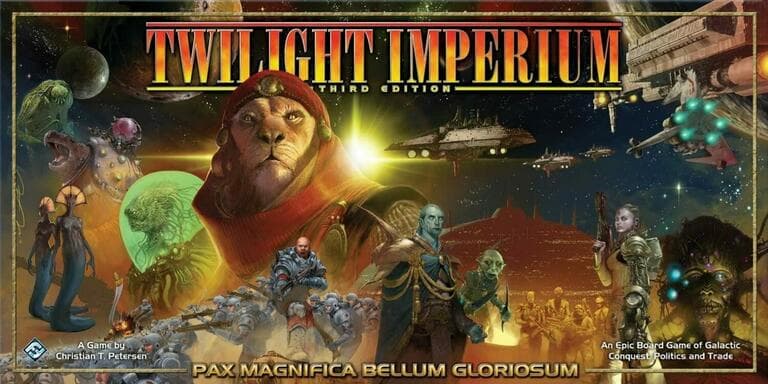
RANK #151
Twilight Imperium: Third Edition is a legendary title that defines the epic space opera genre in board gaming. It is a sprawling game of galactic conquest where players assume control of one of several unique alien civilizations, each with its own history and abilities, all vying for control of the imperial throne on Mecatol Rex. The ultimate goal is to become the new galactic emperor by being the first to accumulate 10 victory points. These points are not won through brute force alone; players must cleverly achieve a mix of public objectives revealed to all and secret objectives known only to them. This creates a tense strategic environment where players must carefully balance military expansion, technological research, economic development, and political cunning to navigate the path to victory, making every decision a critical step toward galactic domination.
The gameplay is structured into rounds, each containing three distinct phases that create a compelling rhythm of planning and execution. In the Strategy Phase, players select powerful Strategy Cards that grant unique, game-altering abilities and crucially determine the turn order for the round. This selection is a mini-game of its own, full of prediction and denial. The heart of the game is the Action Phase, where players use a finite pool of command counters to perform actions. These include moving fleets between star systems, engaging in dice-driven space and ground combat, and activating their strategy card's primary power. This resource management creates agonizing decisions about where to commit forces and focus efforts. Finally, the Status Phase sees players readying for the next round, collecting resources, and entering a political assembly to vote on laws and agendas that can permanently alter the rules of the game, ensuring a dynamic and ever-shifting political landscape.
What elevates Twilight Imperium to its iconic status is the sheer scale and the rich, player-driven narrative that emerges from its systems. It's more than a game; it's a sandbox for creating unforgettable sagas of ambition, betrayal, and glory. The deep interplay between military conflict, technological advancement via a detailed tech tree, and high-stakes diplomacy and negotiation ensures that no two sessions are ever alike. While its famously long playtime and complex rules present a steep learning curve, they are precisely what allows for such profound strategic depth and memorable moments. For players who crave an immersive, all-day gaming event that rewards long-term planning and clever social maneuvering, Twilight Imperium: Third Edition remains an unparalleled masterpiece of grand strategy.
3-6 420m⚖️ 4.7
BoxNo Cover Art
RANK #157
Forbidden Stars
2015Forbidden Stars is a strategic board game designed for 2-4 players, where each player takes on the role of an intergalactic empire vying for dominance in a distant star system. The game's objective is to be the first player to achieve three victory points by controlling key planets and resources. Players must carefully manage their resources, build and upgrade their spaceships, and strategically deploy them to outmaneuver their opponents.
2-4 60m⚖️ 3.0
BoxNo Cover Art
RANK #160
In Clank! In Space!, players take on the roles of thieves trying to steal valuable treasures from a spaceship while navigating its dangers and avoiding detection by the ship's security systems.
The game is played over several rounds, with each player starting with a hand of cards that represent their character's abilities and equipment. On each turn, players can choose to draw new cards, play cards from their hand to perform actions such as moving around the ship or attacking other players, or use special abilities to gain an advantage.
One of the key mechanics in Clank! In Space! is deck-building, where players can acquire new cards and upgrade their existing ones to improve their chances of success. However, this also means that players must carefully manage their resources and make strategic decisions about which cards to play and when.
Another important aspect of the game is its thematic elements, which are heavily focused on space exploration and adventure. The game's artwork and design are highly detailed and immersive, drawing players into the world of the spaceship and its inhabitants.
2-4 45m⚖️ 3.0
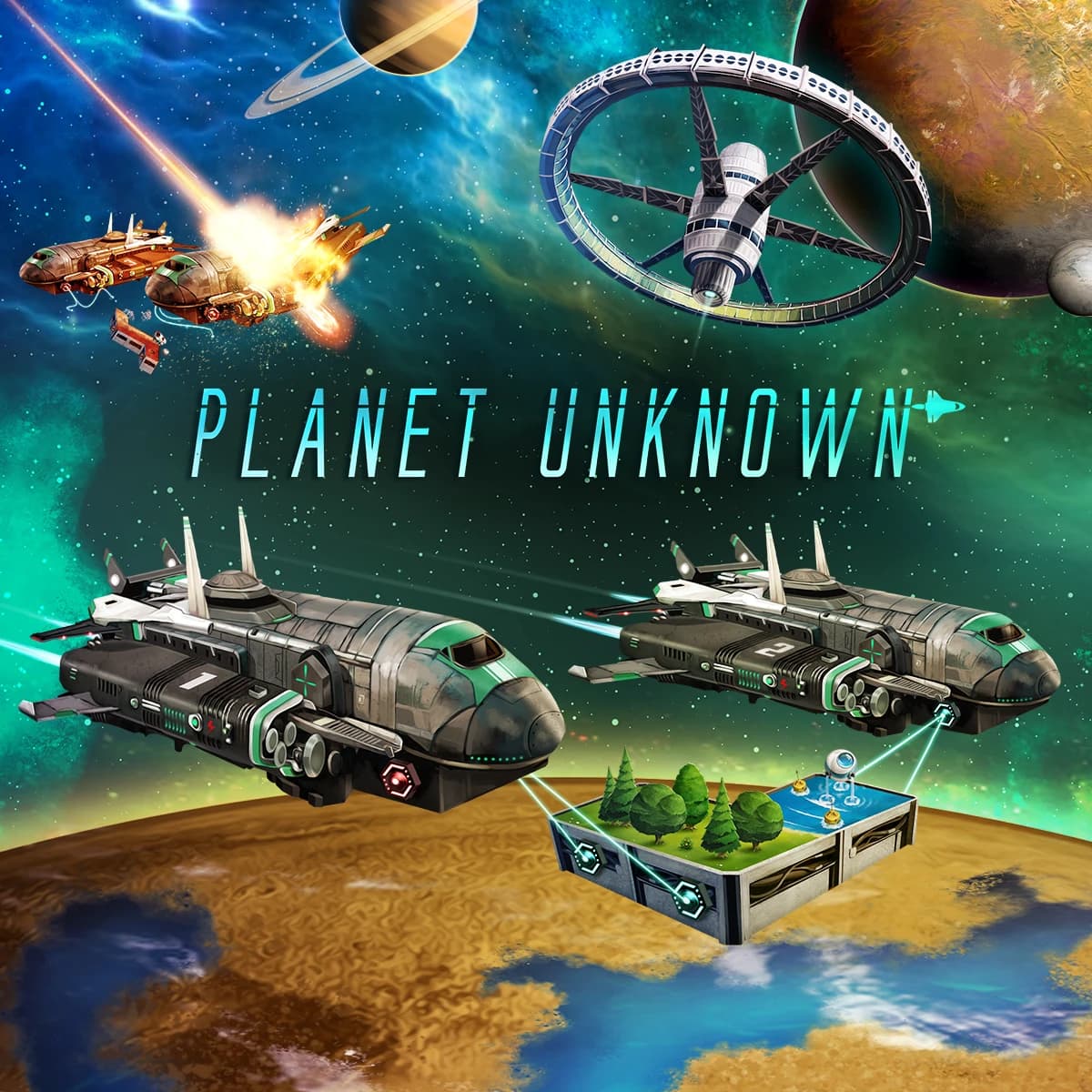
RANK #168
Planet Unknown
2022"Planet Unknown" is an acclaimed 2022 sci-fi board game that tasks one to six players with settling a newfound world to ensure the survival of humanity following Earth's resource collapse. Recognized with nominations like the prestigious 2023 Kennerspiel des Jahres, this engaging title revolves around transforming a barren planet into a thriving oasis. Players act as rival corporations racing to develop their respective planetary bodies. By carefully balancing spatial efficiency and resource management, competitors establish thriving infrastructures. The ultimate goal is to generate the most victory points before the land is entirely exhausted, proving your superiority in interplanetary colonization.
At the core of the experience lies a brilliant combination of polyomino tile placement and simultaneous action selection, centered around a rotating tray affectionately known as the Lazy S.U.S.A.N. During a round, the active commander rotates this space station to deliver specific dual-resourced tiles to each seat. Everybody drafts and places their assigned tile onto their grid-based board simultaneously, virtually eliminating downtime. As these puzzle pieces—bearing elements like Water, Biomass, Rovers, Tech, Energy, and Civ—are placed orthogonally adjacent to one another, players advance corresponding tracks on their corporation boards. This clever engine-building system triggers powerful cascading combos, yielding one-time bonuses, permanent abilities, and crucial victory points.
Development is rarely straightforward, as settlers must actively navigate hazardous meteor strikes that accompany certain terrain tiles. These meteorites crash onto the grid, acting as frustrating roadblocks that disable scoring in their respective rows and columns until they are successfully cleared. To handle these extraterrestrial threats, players must advance their Rover tracks, deploying vehicles across the terrain to collect the fallen debris. The session immediately triggers its endgame phase once any single participant can no longer legally fit a new piece onto their grid. Final scores are then meticulously calculated based on fully completed, meteor-free rows and columns, track progression, gathered life pods, and fulfilled objective cards.
Enthusiasts widely praise "Planet Unknown" for its remarkable ability to blend accessible, puzzle-like spatial planning with deeply satisfying strategic layers. The inclusion of the physical rotating tray not only provides a phenomenal tactile centerpiece but also ensures brisk pacing that scales perfectly up to six players. Furthermore, the game boasts immense replay value by offering both standardized and highly asymmetric setups for the planet maps and corporation dashboards. This variability empowers players to experiment with different strategies during every session. Whether tackling the challenge as a solo pioneer or competing against a full table, this masterpiece consistently delivers a compelling journey into the stars.
1-6 70m⚖️ 2.3