Strategy Games
Browse all Strategy board games in the Meeple Pulse database.
Styles
Themes
AbstractAdventureAncientAnimalsArtBusinessCard GameCo-operativeComic BookCooperativeCrimeEconomicEnvironmentalismExplorationFantasyHistoricalHorrorHumorIntrigueLiteraryMagicMarvelMedievalModernMuseumMysteryMythologyNatureNauticalPoliticalPress Your LuckSatireSci-FiSocial CommentarySocial InteractionSpaceSuperheroesThematicTravelWarWesternWord-Guessing
Mechanics
3D PlacementActingAction / DexterityAction DraftingAction Point AllowanceAction Point Allowance SystemAction Point SystemAction PointsAction ProgrammingAction QueueAction RetrievalAction SelectionAction/EventAlliancesAlternate ActivationApp-AssistedApp-DrivenArea ControlArea InfluenceArea MajorityArea Majority / InfluenceArea MovementArgumentationAsymmetricAsymmetric FactionsAsymmetric GameAsymmetric PowersAsymmetrical PowersAuction & BiddingAuction/BiddingAuctioningBag BuildingBettingBetting and BluffingBetting and WageringBetting and WagersBiddingBingoBlind BiddingBluffingCampaign / Battle Card DrivenCampaign / LegacyCampaign / Legacy GameCampaign / Mission-basedCampaign / ScenariosCampaign GameCampaign PlayCard DraftingCard DrawingCard DrivenCard Driven ActionCard Driven CombatCard Driven Dice AllocationCard Driven MovementCard ManagementCard PlayCard Play / Hand ManagementCard Play Conflict ResolutionCard SheddingCard-Driven MovementCharacter CreationCharacter ProgressionChit-Pull SystemCo-op PlayCo-operative GameCo-operative PlayCode-breakingCombat ResolutionCombo ChainCommand CardsCommodity SpeculationCommunication LimitsContract FulfillmentContractsCooperative GameCooperative GameplayCooperative PlayCooperative Trick-takingDebateDeck BuildingDeck ConstructionDeck, Bag, and Pool BuildingDeck-BuildingDeductionDexterityDice DraftingDice PlacementDice RollingDiplomatic InfluenceDraftingDynamic Battle SystemEnclosureEnd Game BonusesEngine BuildingEngine-BuildingEscape RoomEvent DrivenExplorationFarmingFlip and WriteFollowFollow ActionGrid CoverageGrid MovementHand ManagementHex-and-CounterHexagon GridHidden MovementHidden RolesI Cut You ChooseIncomeInfluence / Area MajorityLadder ClimbingLegacyLegacy ElementsLegacy GameLegacy SystemLimited CommunicationLine DrawingLine of SightMancalaMap MovementMarketMarket DraftingMarket ManipulationMarket MechanicMarket SpeculationMatchingMeasurement MovementMemoryMission ObjectivesModular BoardModular Board ConstructionMovement TemplatesMulti-Use CardsMulti-use CardsMultiple ScenariosMust FollowNarrative ChoiceNarrative Choice / ParagraphNegotiationNegotiation MechanicsNetwork & Route BuildingNetwork BuildingNetwork and Route BuildingOne vs ManyOne vs. ManyOpen DraftingPaper-and-PencilPartnershipsPattern BuildingPattern RecognitionPick-up and DeliverPlayer EliminationPlayer InteractionPlayer JudgePoint SaladPoint to Point MovementPolyominoesPush Your LuckPush-Your-LuckPuzzlePuzzle-LikePuzzle-SolvingRaceReal-TimeRecipe FulfillmentResource ManagementRole PlayingRole SelectionRoll / Spin and MoveRondelRoute BuildingRoute-BuildingRoute/Network BuildingSanity SystemScenario / Campaign PlayScenario / Mission / Campaign GameScenario / Mission FunctionSecret Unit DeploymentSemi-Cooperative GameSet CollectionSheddingSimulationSimultaneous ActionSimultaneous Action SelectionSimultaneous Hidden AllocationSocial DeductionSocial InteractionSolo / Solitaire GameSpace ExplorationStat Check / Skill CheckStock HoldingStorytellingStrategic PlanningTableau BuildingTactical Decision-MakingTake ThatTargeted CluesTeam PlayTeam-Based GameTeam-Based GuessingTeamworkTech TreesTech Trees / Tech TracksTechnology & Armament TracksTechnology TreeTension & Aggression TracksTile DraftingTile LayingTile PlacementTime TrackTime TravelTower DefenseTrack MovementTradingTrick-takingTug of WarTurn Order: PassTurn Order: Stat-BasedUnit PlacementVariable Phase OrderVariable Player PowersVariable Set-upVariable SetupVictory Point TracksVotingWord AssociationWord GameWord GuessingWord-GuessingWord-guessingWordplayWorker Placement
RANK #231
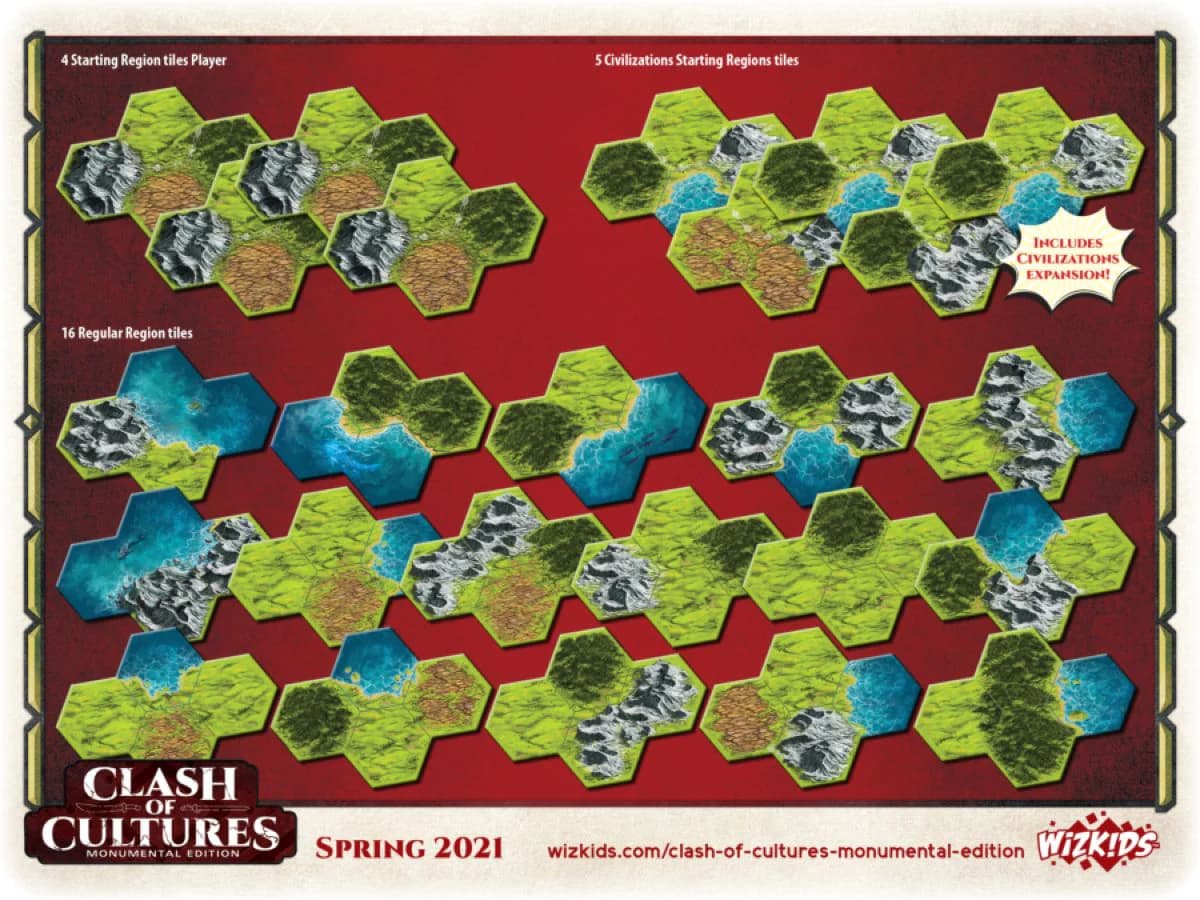
Clash of Cultures: Monumental Edition is a grand 4X civilization-building game where players guide a fledgling society from a single settlement into a sprawling, influential empire. This comprehensive 2021 edition revitalizes the beloved classic by integrating its core expansions, including "Civilizations" and "Aztecs," offering the definitive experience in a single box. The primary goal is to accumulate the most Victory Points by the end of the game's final age. These points are not earned through warfare alone; players are rewarded for developing a vibrant culture, constructing magnificent wonders, achieving specific objectives, and advancing their society's knowledge. Players must balance aggressive expansion and military might with economic stability and cultural growth to etch their civilization's name into the annals of history.
The game unfolds over six distinct "Ages," each comprising three rounds. On their turn, a player performs three actions, choosing from a wide array of options like exploring the modular, unknown world, founding new cities, researching technologies, or moving military units. A central pillar of the gameplay is the expansive and flexible technology tree, which features 48 unique Advances. This system allows players to customize their civilization's path, unlocking new buildings, units, and powerful abilities that can create unique strategic synergies. Combat is resolved through dice rolls, influenced by unit types and technological prowess, while resource management—balancing food, ore, wood, ideas, and gold—is crucial for funding your ambitions. Every few rounds, a Status Phase triggers scoring, provides a free technology, and introduces new objective cards, maintaining a dynamic pace throughout the game.
What makes Clash of Cultures: Monumental Edition a cherished classic is its remarkable strategic depth and high replayability. The freedom to pursue victory through multiple avenues—be it military conquest, technological supremacy, or cultural dominance—ensures that every game feels different. The modular board and variable objective cards create a unique landscape and set of goals for each session. This edition elevates the experience with stunning, newly sculpted miniatures and upgraded components that provide a commanding tabletop presence. It stands as a monumental achievement in the civilization genre, offering a deeply engaging and challenging experience for players who enjoy long-term strategy and the satisfaction of building a unique empire from the ground up.
2-4 210m⚖️ 4.1
RANK #248
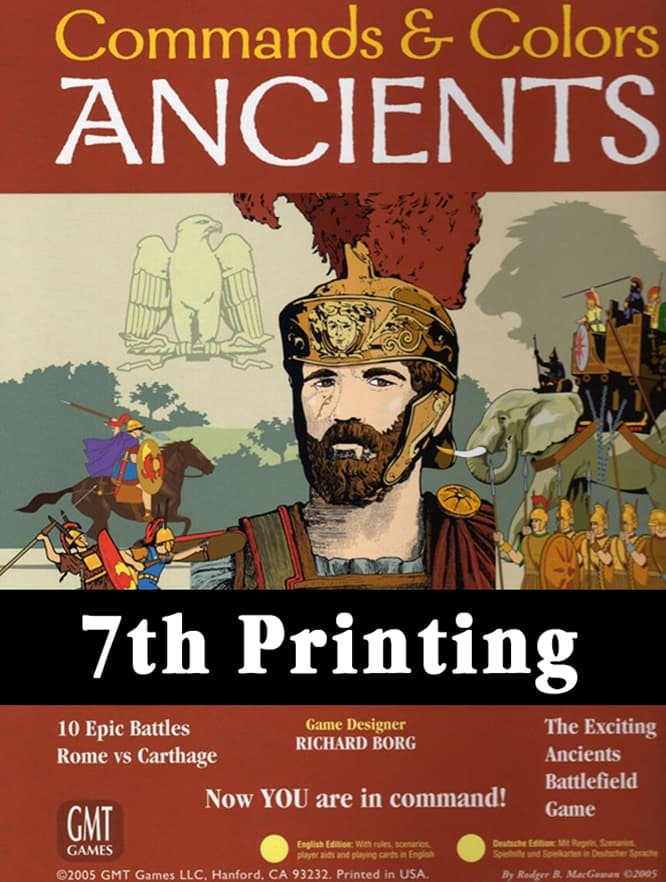
Commands & Colors: Ancients stands as a landmark title in historical wargaming, masterfully designed by the renowned Richard Borg. The game transports players back to the age of classical warfare, with the core set focusing on the titanic struggles between the Roman Republic and its rival, Carthage. It utilizes Borg's celebrated "Commands & Colors" system, which is lauded for its elegance and accessibility. The goal of the game is straightforward yet challenging: be the first player to accumulate a specific number of Victory Banners. These crucial banners are typically won by eliminating enemy units from the hexagonal battlefield or by achieving unique tactical objectives dictated by the chosen historical scenario, effectively capturing the key turning points and goals of ancient battles.
The gameplay is propelled by a unique card-driven mechanic that simulates the fog of war and the difficulties of command and control in large-scale battles. The board is divided into three distinct sections: a left flank, a center, and a right flank. On their turn, a player selects and plays a single Command Card from their hand. This card dictates which units can be ordered and in which of the three sectors they can operate, meaning a player may not always be able to activate the troops they most wish to. After issuing orders, units may move and then engage in combat. Battles are resolved quickly through the roll of custom dice, featuring symbols that determine hits, retreats, and other outcomes, ensuring a dynamic and fast-paced experience. Leaders are also a critical element, attaching to units to bolster their attacks and rally them from retreats.
What makes Commands & Colors: Ancients a beloved classic is its brilliant balance of strategic depth and streamlined play. It serves as a perfect entry point for newcomers to the wargaming hobby, offering intuitive rules that are easy to grasp. At the same time, it provides a deeply rewarding and nuanced strategic puzzle that continues to challenge veteran grognards. The Command Card system is the game's centerpiece, forcing players to adapt their strategies on the fly and make the most of the opportunities presented. This blend of luck and skill ensures that every game is a unique and memorable narrative of ancient conflict, cementing its reputation as a masterpiece of historical game design.
2 60m⚖️ 2.8
RANK #252
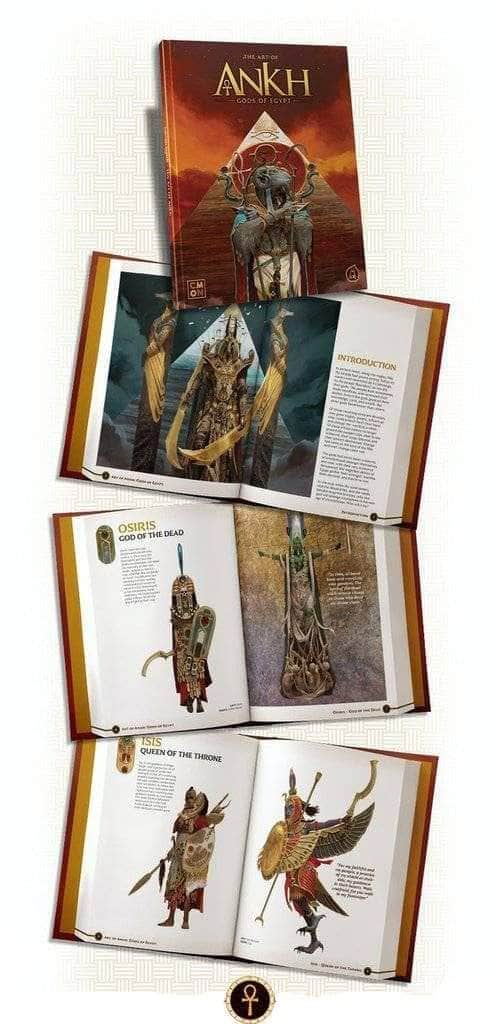
Ankh: Gods of Egypt transports players to a mythical past where the old ways are fading and the people of Egypt are beginning to favor a single, monotheistic religion. In this fiercely competitive game, 2 to 5 players take on the roles of legendary Egyptian deities like Ra, Anubis, and Isis, each struggling for dominance and survival. The ultimate goal is to become the last god standing, the sole object of worship for all of Egypt. This is achieved by accumulating Devotion, the game's victory points, which are earned through strategic control of monuments, demonstrations of power in battle, and the loyalty of your followers. As the game progresses, the stakes get higher, and gods who fall too far behind in Devotion face the ultimate threat: being forgotten by history forever.
The gameplay is driven by an elegant and highly tactical action selection system. On their turn, a player performs one or two of four possible actions—moving their figures, summoning units, gaining followers, or unlocking unique Ankh powers—and advances a corresponding marker on a shared event track. When a marker reaches the end of its path, a game-altering event is triggered for all players. These events include claiming control of powerful monuments, strategically dividing the board into new regions with camel caravans, and, most importantly, initiating Conflict. Combat is a deterministic affair, completely free of dice rolls. Players commit battle cards from their hand and sum the strength of their god and warriors in a region to determine the victor. A truly unique and dramatic feature for games with three or more players is the Merge event, where the two players with the lowest Devotion scores are forced to combine their powers, becoming a single, more powerful entity for the remainder of the game.
What makes Ankh: Gods of Egypt so compelling is its blend of pure strategy and intense player interaction. The absence of randomness in combat means every victory and defeat rests squarely on the players' shoulders, rewarding careful planning and clever card play. The shared action track creates a fascinating puzzle, as every action you take brings the game closer to an event that might benefit your opponents more than you. The game is a constant battle of wits, where you must anticipate your rivals' moves while advancing your own position. The god-merging mechanic is a brilliant twist, ensuring that no player feels completely out of the running and introducing a surprising cooperative dynamic into a cutthroat competitive game. It is a stunning conclusion to a celebrated trilogy of mythology-themed games, offering a deep, rewarding, and unforgettable strategic experience.
2-5 90m⚖️ 3.1
RANK #268
Cyclades
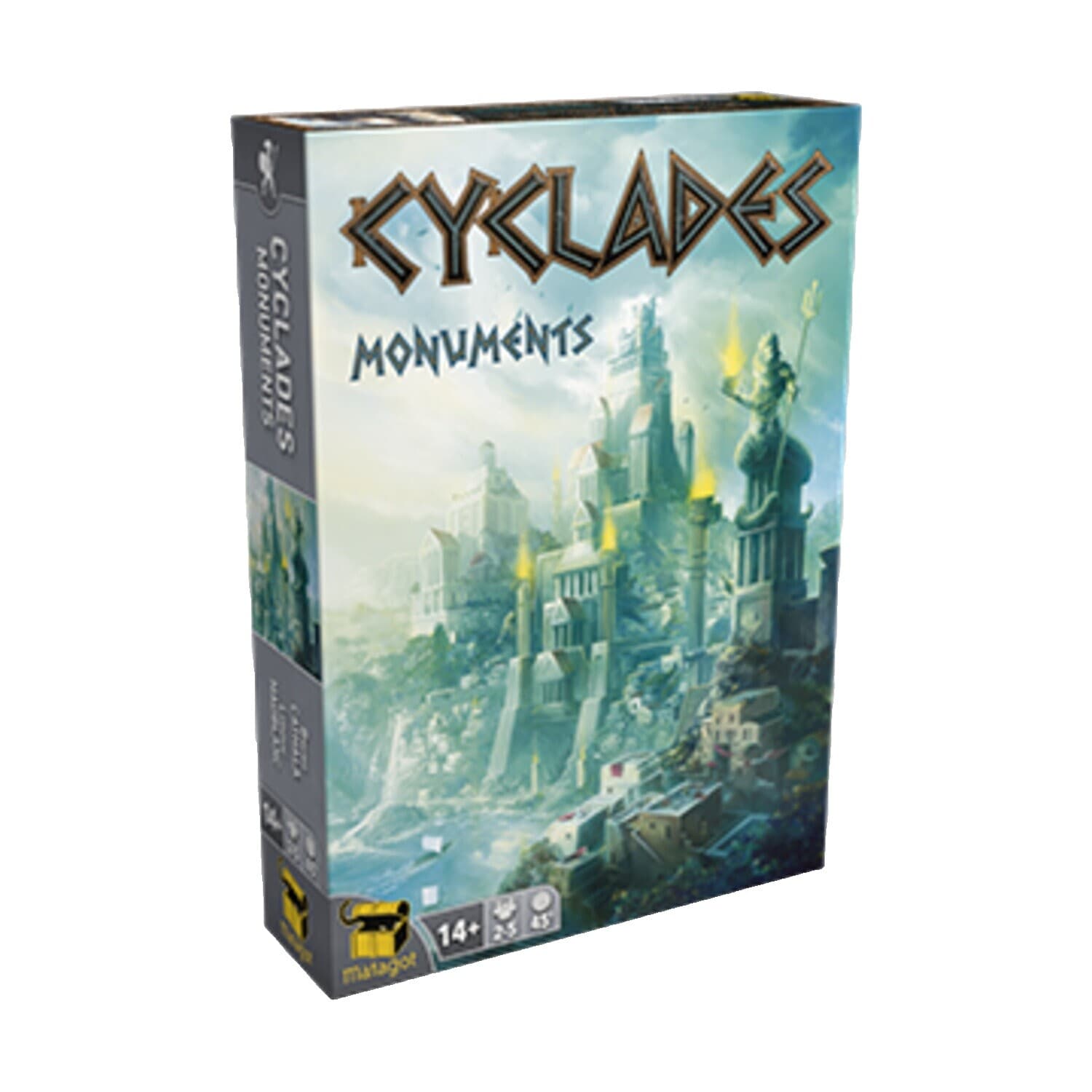
2009Immerse yourself in the golden age of Greek mythology with Cyclades, a masterful strategy game where players lead their people to glory in the Aegean Sea. Your ultimate goal is to achieve supremacy by being the first to erect two magnificent Metropolises. This grand feat can be accomplished through two distinct paths: demonstrating your civilization's prowess by constructing a full set of four specialized buildings—a Fortress, Port, Temple, and University—or by showcasing your cultural enlightenment through the acquisition of four Philosopher tokens. The race to this objective is a tense and dynamic struggle, forcing players to balance military conquest, economic development, and cultural influence to claim victory among the islands.
The game's engine is driven by a unique and compelling auction mechanic centered on earning the favor of the Olympian gods. Each round, players bid their precious gold to secure the patronage of Ares, Poseidon, Zeus, Athena, or Apollo. Winning a god's blessing grants a player the exclusive right to perform that deity's associated actions for the turn. Ares allows you to recruit and move armies, Poseidon commands the fleets, Zeus offers priests to cheapen future bids, and Athena provides the philosophers necessary for a cultural victory. This bidding phase is the strategic heart of Cyclades, creating a cauldron of intense player interaction where you must not only secure the actions you need but also deny critical opportunities to your rivals. Furthermore, players can summon legendary mythological creatures like the Kraken or Medusa, unleashing powerful, game-altering abilities that can dramatically shift the balance of power.
Cyclades is celebrated for its brilliant synthesis of a tight, money-driven auction with a direct and engaging area-control wargame. It cleverly avoids the pitfall of being solely about military might; a player focused entirely on combat can be outmaneuvered by an opponent who quietly builds an economic or cultural engine. The constant need to outbid and anticipate your opponents' desires ensures that there are no passive turns, making every decision meaningful. This elegant design, combined with the strong, evocative mythological theme and multiple paths to victory, provides a deeply strategic and highly replayable experience. It's a classic that challenges players to be cunning, adaptable, and ruthless in their quest to rule the Cyclades.
2-5 90m⚖️ 2.9
RANK #269
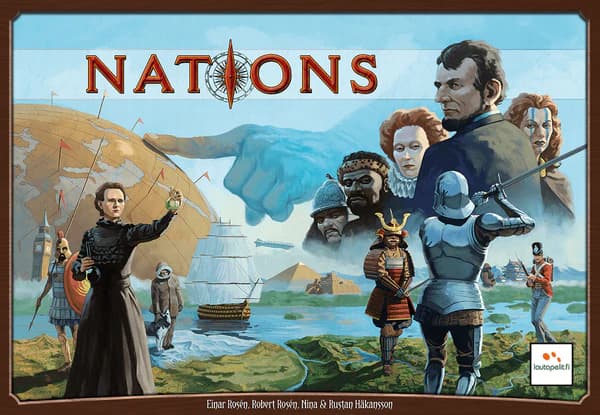
Nations
2013In Nations, you take the helm of a burgeoning civilization, guiding it from the annals of antiquity to the cusp of the First World War. Your ultimate objective is not conquest, but the creation of a lasting legacy, measured in victory points earned through cultural achievements, magnificent wonders, valuable colonies, and historical renown. Players must skillfully navigate the challenges of history to build the most prestigious and prosperous nation. The game is an epic race to accumulate the most 'books', which symbolize your civilization's accumulated knowledge and cultural impact, proving your dominance through wisdom and development rather than brute force.
The game unfolds over eight rounds, divided into four historical ages: Antiquity, Medieval, Renaissance, and Industrial. Each round is a meticulously structured sequence of phases. Players begin by preparing for the challenges ahead, revealing new progress cards and a pivotal event card. The heart of the game is the action phase, where players take turns performing one action at a time, with the player possessing the strongest military going first. Actions are varied and strategic: you might purchase a new technology or building from a shared card row, deploy your workers to activate structures for resources, or assign an architect to the monumental task of constructing a world wonder. Competition is indirect but fierce, as players vie for military superiority to set the turn order and manage the effects of historical events, all while managing resources and keeping their populace stable.
Nations is celebrated for offering a profound and satisfying civilization-building experience within a streamlined and manageable playtime. It captures the grand sweep of history without the complex combat systems or map-based conflicts common to the genre, instead focusing on a tense, indirect struggle for supremacy. Its unique appeal stems from the delicate balancing act required to succeed. You must constantly weigh the immediate needs of your people—food and stability—against long-term investments in military, culture, and economic infrastructure. The variable card market and unpredictable events ensure that each game presents a new strategic puzzle, making Nations a highly replayable and engaging journey through time for strategy enthusiasts.
1-5 120m⚖️ 3.4
RANK #293
Glory to Rome
2005Set in the aftermath of the Great Fire of Rome in 64 A.D., Glory to Rome is a masterpiece of card-driven design that tasks players with the monumental reconstruction of the empire's capital. As influential Roman patricians, players must compete to build structures, manage resources, and accumulate prestige points to emerge as the most powerful figure in the city. The game is celebrated for its dense, interconnected economy where every decision ripples through the state of the board. The ultimate objective is to earn the most Influence, which can be secured through building completion, stocking a private Vault with valuable materials, and strategic exploitation of special card abilities that can provide massive end-game scoring bonuses.
The engine of the game is its revolutionary multi-use card system. Each card in a player's hand can serve multiple functions: it can be played as a role to lead an action, used as a resource to fund construction, recruited as a client for permanent action bonuses, or placed as a building foundation. The core gameplay loop revolves around the 'Lead and Follow' mechanism. When the active player selects a role, such as the Architect to build or the Merchant to trade, opponents face a critical choice: they can follow the action by playing a matching card from their hand, or they can 'think' to replenish their hand or take a wildcard Jack. This ensures that every player remains engaged on every turn. Additionally, played cards flow into a central 'Pool,' creating a shared resource market that players must cleverly manipulate.
Glory to Rome is widely considered a 'grail game' within the hobby, largely due to its incredible depth and the high-octane synergy of its card effects. Fans admire how a single well-placed building can create powerful combos that fundamentally shift the game's momentum. The tension between using a card for its immediate action versus committing it as a long-term asset is constant and rewarding. Although it has faced distribution challenges and remains difficult to find in certain editions, its influence persists through successor games. It remains a definitive example of how complex strategy can be distilled into a single deck of cards, offering a medium-weight experience that rewards repeat plays and deep tactical familiarity.
2-5 60m⚖️ 2.9
RANK #294
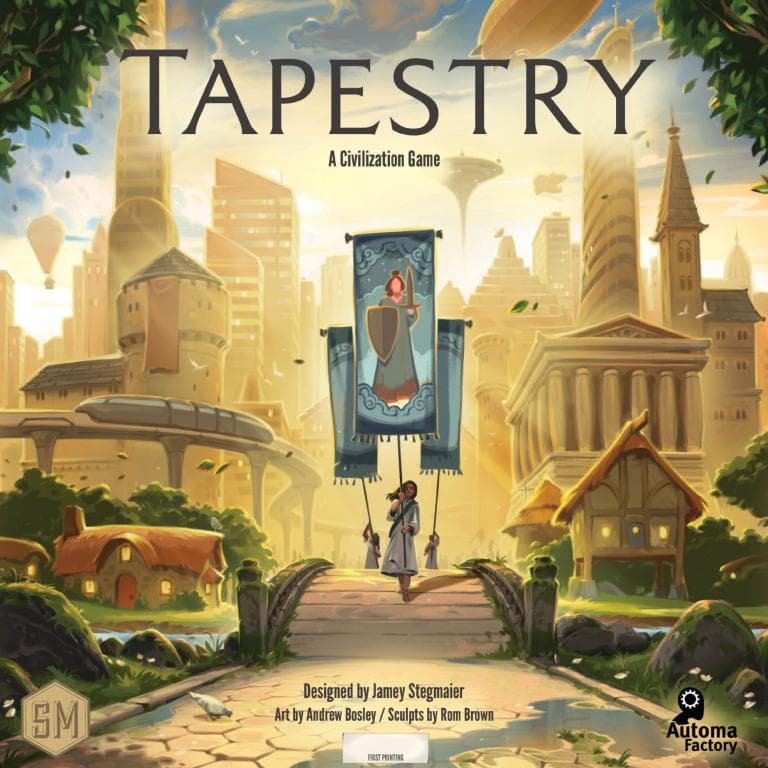
Tapestry
2019Tapestry is a civilization-building board game that breaks away from traditional historical simulations by offering a colorful, anachronistic approach to human development. Designed by Jamey Stegmaier, the game challenges players to guide a unique culture from the earliest days of discovery into the technological wonders of the near future. The primary goal is to accumulate the most victory points by advancing on four core tracks: Science, Technology, Exploration, and Military. Unlike typical '4X' games that focus heavily on combat, Tapestry emphasizes a strategic optimization puzzle where players craft their own narrative through cards and landmarks within their growing capital city.
The heart of the experience lies in a streamlined decision-making process. On every turn, a player chooses between an Advancement turn or an Income turn. Advancement involves spending resources to climb one of the four tracks, each providing immediate rewards, permanent upgrades, and powerful landmark miniatures. When resources run dry, players take an Income turn to transition into a new era. This phase allows them to collect income based on their current progress, play a Tapestry card that defines their civilization's special abilities for that era, and upgrade technology. This asymmetric structure is further enhanced by sixteen distinct civilization mats, each granting game-changing powers that require players to pivot their strategies constantly.
What truly sets Tapestry apart is its high production value and the 'simple rules, deep strategy' philosophy. The game features 18 prepainted landmark miniatures that players place on their Capital City grids to complete 3x3 districts, adding a tactile tile-laying element. Because players take exactly five income turns throughout the session, the pacing varies significantly between participants. One player might conclude their journey early while others are still in their fourth era, creating a unique tension in resource efficiency. It is a medium-weight engine-building experience that rewards long-term planning while remaining accessible to many due to its concise rulebook, offering high replayability through variable setups and asymmetric components.
1-5 105m⚖️ 2.9
BoxNo Cover Art
RANK #307
Kemet: Blood and Sand is a comprehensive modernization of the 2012 strategy masterpiece, immersing players in a mythic version of Ancient Egypt where powerful gods battle for total dominance. Unlike traditional area-control board games that often reward defensive posturing, this title is built for relentless aggression, explicitly rewarding players who initiate combat to earn permanent Fame Points. You take the role of an Egyptian deity—such as Anubis, Bastet, or Horus—leading a devoted army across a landscape dotted with sacred temples and massive pyramids. The ultimate objective is to secure nine Fame Points, which are earned through bloody victories, controlling vital territories, and purchasing game-changing powers.
The gameplay loop is centered on a refined action-selection system located on each player's pyramid board. During the Day Phase, players place five tokens on various action slots, governed by a rule of equilibrium that forces them to diversify their tactics across different levels of the pyramid. A core feature is the acquisition of Power Tiles from four distinct colors: Ruby for offensive might, Sapphire for defensive stability, Diamond for utility, and Onyx for advanced tactical maneuvers. By upgrading physical, 3D pyramids in their cities, players unlock the ability to purchase these tiles, which grant incredible permanent abilities or summon legendary mythological creatures to join their ranks. Combat is resolved using a deterministic card-based system, where players must secretly choose Battle Cards and potentially supplement them with Divine Intervention bluffs, removing the unpredictability of dice in favor of pure strategic calculation.
What makes Blood and Sand a modern classic is its incredible mobility and high player interaction. The map utilizes a unique obelisk teleportation system, allowing troops to move from their home city to distant points instantly, ensuring that no player is ever truly safe behind their borders. This 2021 edition significantly improves the original experience with refined components like recessed dual-layer player boards, stackable pyramids, and a redesigned map that scales to different player counts using storm overlays. It is a deep, highly replayable 'dudes on a map' experience that offers satisfying engine-building through its tech tree while maintaining the fast-paced tension of a wargame.
2-5 120m⚖️ 3.3

RANK #598
Men-Nefer
2024In "Men-Nefer," the acclaimed 2024 release from publisher Ludonova, players are transported to ancient Egypt to take part in the construction and cultural development of its magnificent capital city. Designed by Germán P. Millán, known for other intricate Eurogames, this title challenges 1 to 4 players to achieve the greatest prestige in the eyes of the Pharaoh. Over the course of three distinct historical eras, you will manage a small team of workers, strategically guiding their efforts across various facets of Egyptian society. The ultimate goal is to amass the most prestige points, proving your worth as the most influential figure in the city's history. "Men-Nefer" presents a compelling, medium-weight strategic puzzle that rewards careful planning and efficient action selection.
The gameplay unfolds over a structured sequence of three eras, with each player receiving exactly 27 turns for the entire game. This tight turn economy makes every decision critical. On your turn, you must choose one of three actions: place a worker onto a main board location, which may incur a food cost if others are already present; move a previously placed worker to an adjacent spot to amplify an action's effect; or draft a new action tile from a common pool to enhance your personal player board for a subsequent era. The heart of the game lies in interacting with five interconnected "mini-games." You can sail boats up the Nile to fulfill contracts, advance priestesses within the temple to make offerings, prepare mummies for the afterlife, contribute to the building of the iconic Pyramids, and erect majestic Sphinxes to gain unique advantages. These activities are driven by a clever blend of worker placement, tile drafting, and set collection.
What makes "Men-Nefer" stand out is the elegant way its five action areas are interwoven, creating a rich tapestry of strategic possibilities. Success requires players to balance their efforts across these different paths, as neglecting one area can leave you vulnerable or cut off from valuable scoring opportunities. The system of drafting action tiles for later eras introduces a fascinating layer of long-term planning, forcing players to think several turns ahead. Players who enjoy optimizing their actions within a constrained system will find the 27-turn limit to be a brilliant design choice that ensures a tense and engaging experience from start to finish. With its strong thematic integration, beautiful artwork by Laura Bevon, and multiple viable strategies to explore, "Men-Nefer" offers deep replayability for fans of thoughtful, mid-weight Euro-style games.
1-4 90m⚖️ 3.7
RANK #4,046
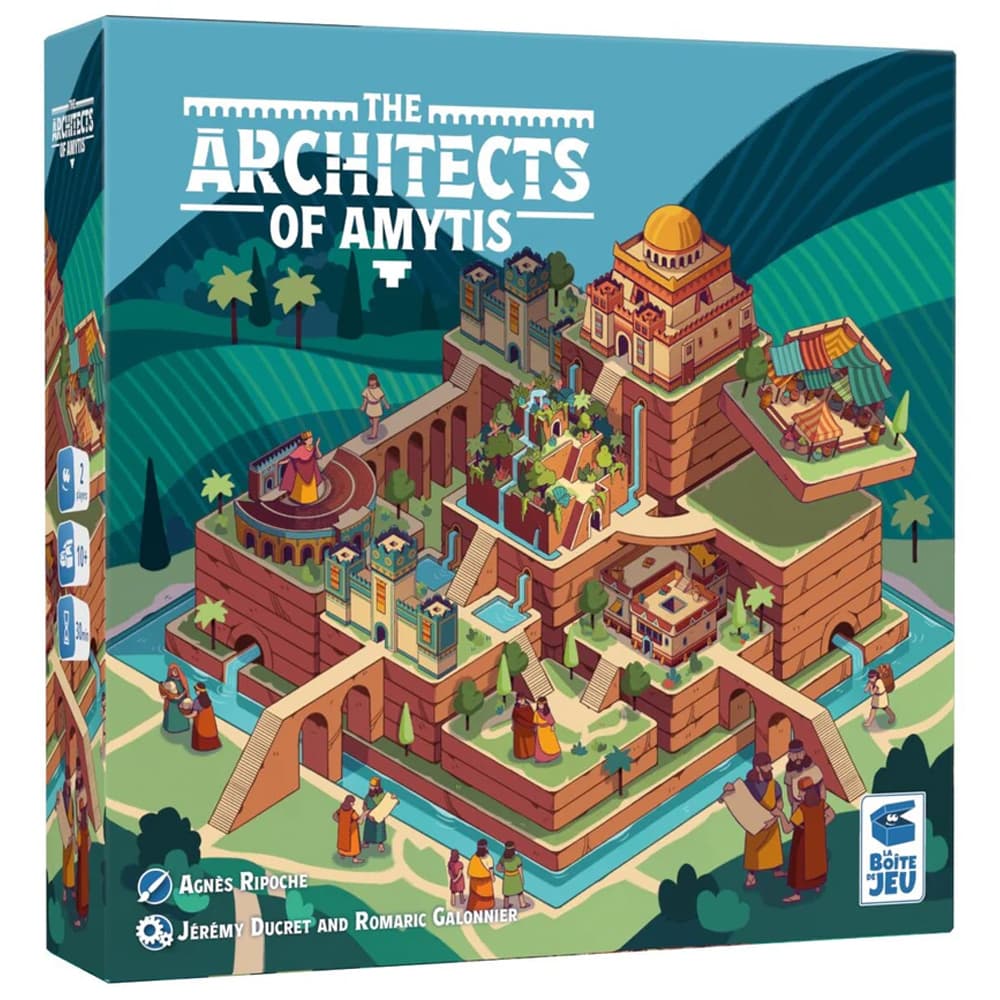
In The Architects of Amytis, two players are transported to ancient Babylon, where they assume the roles of rival architects competing for royal prestige. Commissioned by King Nebuchadnezzar II, your singular goal is to construct the most impressive and magnificent city district for his beloved wife, Queen Amytis. Victory is not achieved through a single grand gesture, but by meticulously accumulating points throughout the game. Players earn points by strategically placing building tiles, completing specific color patterns to satisfy royal 'Project Cards', and cleverly outmaneuvering their opponent to gain the 'King's Favor' for powerful endgame bonuses. The architect with the highest score when the final tile is laid will be celebrated as the greatest builder in all of Babylon.
The gameplay elegantly fuses several mechanics into a tight, interactive duel. The heart of the game is a shared 3x3 market grid, each space holding a stack of building tiles. On your turn, you select and draft one tile from any available stack. However, this choice comes with a crucial consequence: you must immediately place one of your architect pawns onto the now-vacant spot, blocking that stack from both players until your pawn is retrieved. The drafted tile is then placed onto your personal 3x3 city board, either on an empty space or atop an existing tile. Each placement triggers immediate scoring based on the building's type, with variable scoring cards ensuring no two games feel the same. This core loop is complicated by a brilliant spatial mini-game on the market board; if you successfully align three of your architect pawns in a row, column, or diagonal—much like tic-tac-toe—you earn a significant scoring bonus.
The Architects of Amytis is celebrated for its remarkable depth within a very accessible and fast-paced framework. While the rules can be taught in minutes, the strategic implications of each move are profound. The constant tension between improving your own city and blocking your opponent on the shared market creates a highly interactive and engaging experience. Players must constantly weigh their options: Do you take the perfect tile for your city, or do you draft a less optimal tile purely to block your rival or set up a tic-tac-toe victory on the market? This dual-layer puzzle, combined with high replayability from its modular scoring system, makes it a standout two-player game that offers a sharp, tactical challenge that respects players' time.
2 25m⚖️ 2.1
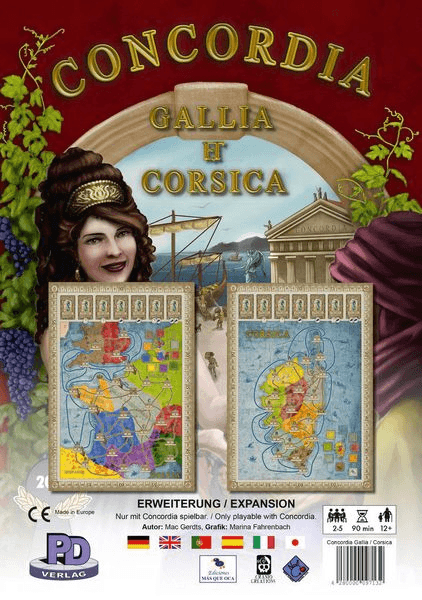
Concordia: Gallia / Corsica (2016) is a highly anticipated expansion for the acclaimed Roman-era strategy game, Concordia. This pack introduces two vibrant new maps, Gallia and Corsica, inviting players to expand their ancient Roman empire across distinct geographical challenges. The core goal remains to establish trade routes, settle provinces, and strategically collect diverse action cards to outmaneuver opponents and accumulate the most victory points, ultimately becoming the most influential merchant family in the Roman world.
Gameplay in "Concordia: Gallia / Corsica" masterfully retains the elegant, card-driven mechanics of the base game while injecting fresh strategic depth. Players manage their hand of personality cards, each granting a specific action such as moving colonists, producing goods, selling to the market, or acquiring new cards. The Gallia map offers a larger, more sprawling landscape perfect for 3-5 players, encouraging broader expansion and resource management. In contrast, the Corsica map provides a tighter, more confrontational experience designed for 2-3 players, demanding shrewd spatial planning and direct competition for limited resources.
Fans adore "Concordia: Gallia / Corsica" for its remarkable ability to breathe new life into an already brilliant game. The expansion excels by providing tailored experiences: Gallia offers a grander stage for larger groups, while Corsica is frequently celebrated as one of the best 2-player maps in the entire Concordia series, known for its intense player interaction and clever choke points. This dual offering significantly enhances the base game's replayability, ensuring that every session feels fresh and strategically engaging, making it an essential addition for any Concordia enthusiast seeking new challenges and optimized player counts.
2-5 105m⚖️ 3.0
BoxNo Cover Art
Concordia: Venus (Expansion)" reinvigorates the acclaimed strategic depth of the original Concordia, offering players expansive new horizons and an innovative team-play experience. This expansion significantly boosts replayability by introducing two new double-sided game boards, each presenting unique strategic challenges and map layouts. The core goal remains to skillfully expand your Roman trading empire, producing and selling goods while wisely choosing your actions through a refined card-driven mechanism, ultimately scoring points based on your unique hand of personality cards.
Gameplay builds seamlessly on Concordia's elegant action-selection system, where players use a hand of seven different role cards to perform actions like moving colonists, establishing new outposts, producing resources, trading goods, and earning money. The "Venus" maps not only provide fresh geographical puzzles but also include a dedicated 2v2 or 3v3 team variant, allowing players to coordinate strategies and share victory points with a partner – a refreshing twist on the typically competitive eurogame formula. This team mode fosters collaborative planning and adds a new layer of player interaction not found in the base game.
Fans adore "Concordia: Venus" for its ability to inject new life into an already brilliant game without unnecessary complexity. It preserves the classic low-luck, high-strategy essence of Concordia while dramatically increasing variety and player count options. The team variant is a particular highlight, offering a cooperative competitive challenge that many find incredibly engaging, proving that even a refined classic can evolve to offer compelling new ways to play and conquer the ancient world.
2-6 90m⚖️ 3.0