Strategy Games
Browse all Strategy board games in the Meeple Pulse database.
Styles
AbstractAbstract StrategyAdventureAnimalsCard GameChildren's GameCivilizationCo-operativeCompetitiveDiceEconomicEducationalEuroExpansion for Base-gameFamilyFan ExpansionFantasyFightingHistoricalHorrorIndustry / ManufacturingMedievalMedium HeavyMiniaturesPartyParty GamePrint & PlayPuzzle-LikeRacingReal-timeSpace ExplorationSportsStrategyTerritory BuildingThematicTransportationWargame
Themes
AbstractAdventureAncientAnimalsArtBusinessCard GameCo-operativeComic BookCooperativeCrimeEconomicEnvironmentalismExplorationFantasyFightingHistoricalHorrorHumorIntrigueLiteraryMagicMarvelMedievalModernMuseumMysteryMythologyNatureNauticalParty GamePoliticalPress Your LuckRacingSatireSci-FiSocial CommentarySocial InteractionSpaceSuperheroesThematicTravelWarWesternWord-Guessing
Mechanics
3D PlacementActingAction / DexterityAction DraftingAction Point AllowanceAction Point Allowance SystemAction Point SystemAction PointsAction ProgrammingAction QueueAction RetrievalAction SelectionAction/EventAlliancesAlternate ActivationApp-AssistedApp-DrivenArea ControlArea InfluenceArea MajorityArea Majority / InfluenceArea MovementArgumentationAsymmetricAsymmetric FactionsAsymmetric GameAsymmetric PowersAsymmetrical PowersAuction & BiddingAuction/BiddingAuctioningBag BuildingBettingBetting and BluffingBetting and WageringBetting and WagersBiddingBingoBlind BiddingBluffingCampaign / Battle Card DrivenCampaign / LegacyCampaign / Legacy GameCampaign / Mission-basedCampaign / ScenariosCampaign GameCampaign PlayCard DraftingCard DrawingCard DrivenCard Driven ActionCard Driven CombatCard Driven Dice AllocationCard Driven MovementCard ManagementCard PlayCard Play / Hand ManagementCard Play Conflict ResolutionCard SheddingCard-Driven MovementCharacter CreationCharacter ProgressionChit-Pull SystemCo-op PlayCo-operative GameCo-operative PlayCode-breakingCombat ResolutionCombo ChainCommand CardsCommodity SpeculationCommunication LimitsContract FulfillmentContractsCooperative GameCooperative GameplayCooperative PlayCooperative Trick-takingDebateDeck BuildingDeck ConstructionDeck, Bag, and Pool BuildingDeck-BuildingDeductionDexterityDice DraftingDice PlacementDice RollingDiplomatic InfluenceDraftingDynamic Battle SystemEnclosureEnd Game BonusesEngine BuildingEngine-BuildingEscape RoomEvent DrivenExplorationFarmingFlip and WriteFollowFollow ActionGrid CoverageGrid MovementHand ManagementHex-and-CounterHexagon GridHidden MovementHidden RolesI Cut You ChooseIncomeInfluence / Area MajorityLadder ClimbingLegacyLegacy ElementsLegacy GameLegacy SystemLimited CommunicationLine DrawingLine of SightMancalaMap AdditionMap MovementMarketMarket DraftingMarket ManipulationMarket MechanicMarket SpeculationMatchingMeasurement MovementMemoryMission ObjectivesModular BoardModular Board ConstructionMove Through DeckMovement PointsMovement TemplatesMulti-Use CardsMulti-use CardsMultiple ScenariosMust FollowNarrative ChoiceNarrative Choice / ParagraphNegotiationNegotiation MechanicsNetwork & Route BuildingNetwork BuildingNetwork and Route BuildingOne vs ManyOne vs. ManyOpen DraftingOwnershipPaper-and-PencilPartnershipsPattern BuildingPattern RecognitionPick-up and DeliverPlayer EliminationPlayer InteractionPlayer JudgePoint SaladPoint to Point MovementPolyominoesPush Your LuckPush-Your-LuckPuzzlePuzzle-LikePuzzle-SolvingRaceReal-TimeRecipe FulfillmentResource ManagementRole PlayingRole SelectionRoll / Spin and MoveRondelRoute BuildingRoute-BuildingRoute/Network BuildingSanity SystemScenario / Campaign PlayScenario / Mission / Campaign GameScenario / Mission FunctionSecret Unit DeploymentSemi-Cooperative GameSet CollectionSheddingSimulationSimultaneous ActionSimultaneous Action SelectionSimultaneous Hidden AllocationSocial DeductionSocial InteractionSolo / Solitaire GameSpace ExplorationStat Check / Skill CheckStat Check ResolutionStock HoldingStorytellingStrategic PlanningTableau BuildingTactical Decision-MakingTake ThatTargeted CluesTeam PlayTeam-Based GameTeam-Based GuessingTeamworkTech TreesTech Trees / Tech TracksTechnology & Armament TracksTechnology TreeTension & Aggression TracksTile DraftingTile LayingTile PlacementTime TrackTime TravelTower DefenseTrack MovementTradingTrick-takingTug of WarTurn Order: PassTurn Order: Stat-BasedUnit PlacementVariable Phase OrderVariable Player PowersVariable Set-upVariable SetupVictory Point TracksVotingWord AssociationWord GameWord GuessingWord-GuessingWord-guessingWordplayWorker Placement
RANK #168
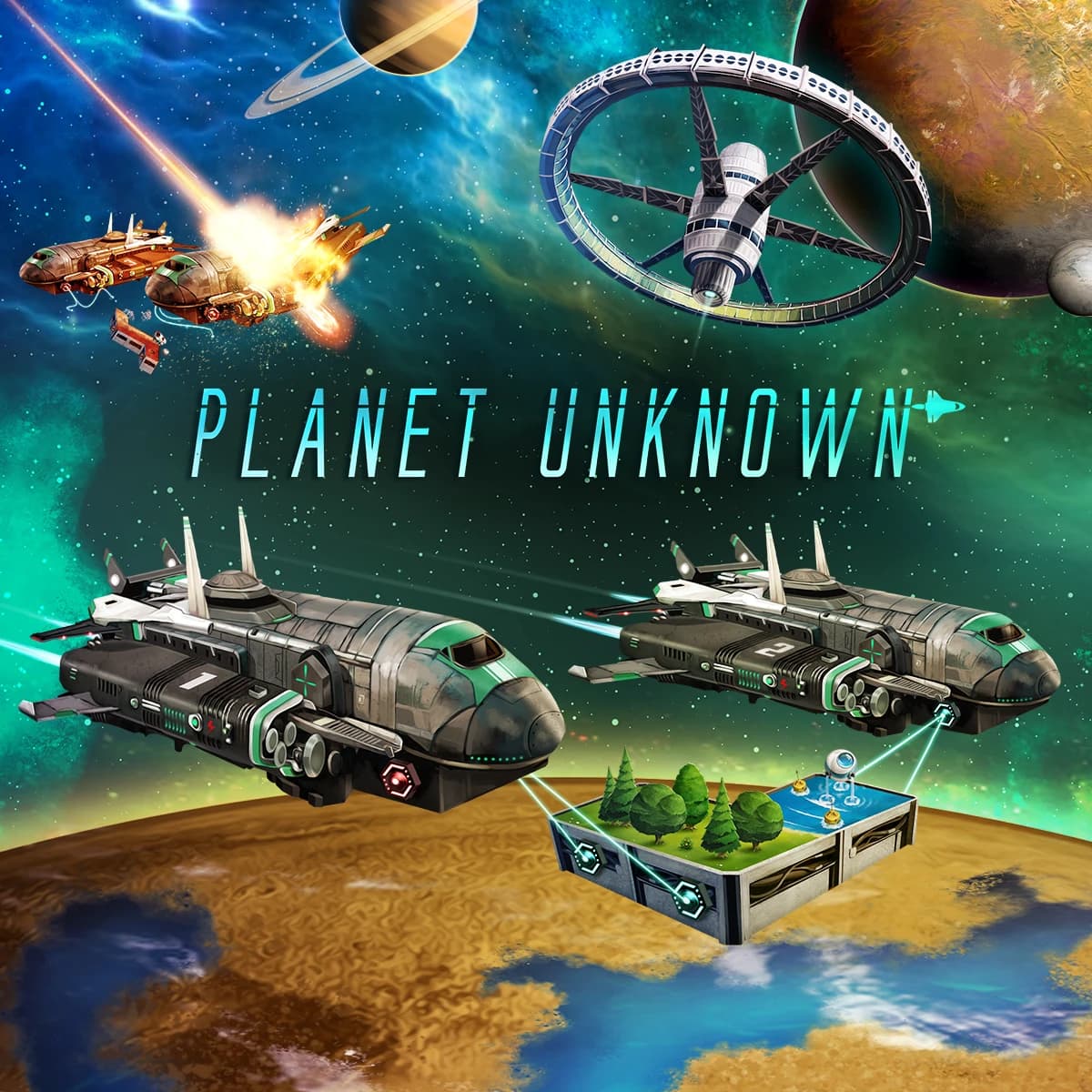
Planet Unknown
2022"Planet Unknown" is an acclaimed 2022 sci-fi board game that tasks one to six players with settling a newfound world to ensure the survival of humanity following Earth's resource collapse. Recognized with nominations like the prestigious 2023 Kennerspiel des Jahres, this engaging title revolves around transforming a barren planet into a thriving oasis. Players act as rival corporations racing to develop their respective planetary bodies. By carefully balancing spatial efficiency and resource management, competitors establish thriving infrastructures. The ultimate goal is to generate the most victory points before the land is entirely exhausted, proving your superiority in interplanetary colonization.
At the core of the experience lies a brilliant combination of polyomino tile placement and simultaneous action selection, centered around a rotating tray affectionately known as the Lazy S.U.S.A.N. During a round, the active commander rotates this space station to deliver specific dual-resourced tiles to each seat. Everybody drafts and places their assigned tile onto their grid-based board simultaneously, virtually eliminating downtime. As these puzzle pieces—bearing elements like Water, Biomass, Rovers, Tech, Energy, and Civ—are placed orthogonally adjacent to one another, players advance corresponding tracks on their corporation boards. This clever engine-building system triggers powerful cascading combos, yielding one-time bonuses, permanent abilities, and crucial victory points.
Development is rarely straightforward, as settlers must actively navigate hazardous meteor strikes that accompany certain terrain tiles. These meteorites crash onto the grid, acting as frustrating roadblocks that disable scoring in their respective rows and columns until they are successfully cleared. To handle these extraterrestrial threats, players must advance their Rover tracks, deploying vehicles across the terrain to collect the fallen debris. The session immediately triggers its endgame phase once any single participant can no longer legally fit a new piece onto their grid. Final scores are then meticulously calculated based on fully completed, meteor-free rows and columns, track progression, gathered life pods, and fulfilled objective cards.
Enthusiasts widely praise "Planet Unknown" for its remarkable ability to blend accessible, puzzle-like spatial planning with deeply satisfying strategic layers. The inclusion of the physical rotating tray not only provides a phenomenal tactile centerpiece but also ensures brisk pacing that scales perfectly up to six players. Furthermore, the game boasts immense replay value by offering both standardized and highly asymmetric setups for the planet maps and corporation dashboards. This variability empowers players to experiment with different strategies during every session. Whether tackling the challenge as a solo pioneer or competing against a full table, this masterpiece consistently delivers a compelling journey into the stars.
1-6 70m⚖️ 2.3
RANK #169
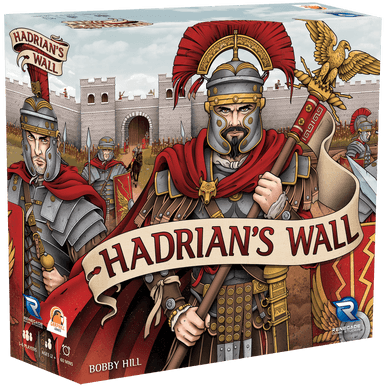
Hadrian's Wall
2021In Hadrian's Wall, you assume the demanding role of a Roman General charged with a monumental task: the construction and defense of a critical segment of the wall that separates Roman Britannia from the unconquered north. This is a deeply strategic 'flip-and-write' game where your ultimate objective is to prove your superior command by amassing the most victory points. Your final score is a reflection of your overall success, tallied across four distinct paths to glory: Renown for your grand constructions, Piety for honoring the gods, Valour for your military prowess, and Discipline earned by managing your domain efficiently. The player who best balances civic development with unwavering defense against the relentless Picts will be celebrated as the most distinguished general in the Empire.
The game unfolds over six years, each a tense round of planning, building, and fighting. Each year begins with a shared 'Fate' card that provides a foundation of resources and workers for all players. You then supplement these supplies by drawing from your personal deck, strategically choosing one card for its immediate resources and another for its potential end-game scoring objectives. The heart of each round is the simultaneous action phase, where you allocate your workers—Soldiers, Builders, Citizens, and Slaves—and spend resources to fill in spaces on your two intricate player sheets. One sheet tracks the progress of your wall, forts, and defenses, while the other maps out the growth of your civilian settlements. Marking off boxes often triggers powerful combos, unlocking additional resources or actions in a satisfying cascade, allowing for clever and explosive turns. The year culminates in a climactic attack by the Picts, where your carefully built defenses are put to the test.
Hadrian's Wall stands out for its remarkable depth and complexity, offering a 'crunchy', thinky experience that elevates the flip-and-write genre. While players act simultaneously, the gameplay is a focused 'multi-player solitaire' puzzle, where the primary challenge is optimizing your own engine of progress. The true magic lies in discovering the intricate synergies on your player sheets and engineering powerful chain reactions where a single action can fuel a dozen more. This engine-building element, combined with the constant pressure to erect sufficient defenses before the annual Pict assault, creates a compelling and highly rewarding strategic challenge. It’s a game that appeals to players who relish complex decision-making, meticulous planning, and the immense satisfaction of watching their personal section of the Roman frontier flourish under their command.
1-6 60m⚖️ 3.0
RANK #170
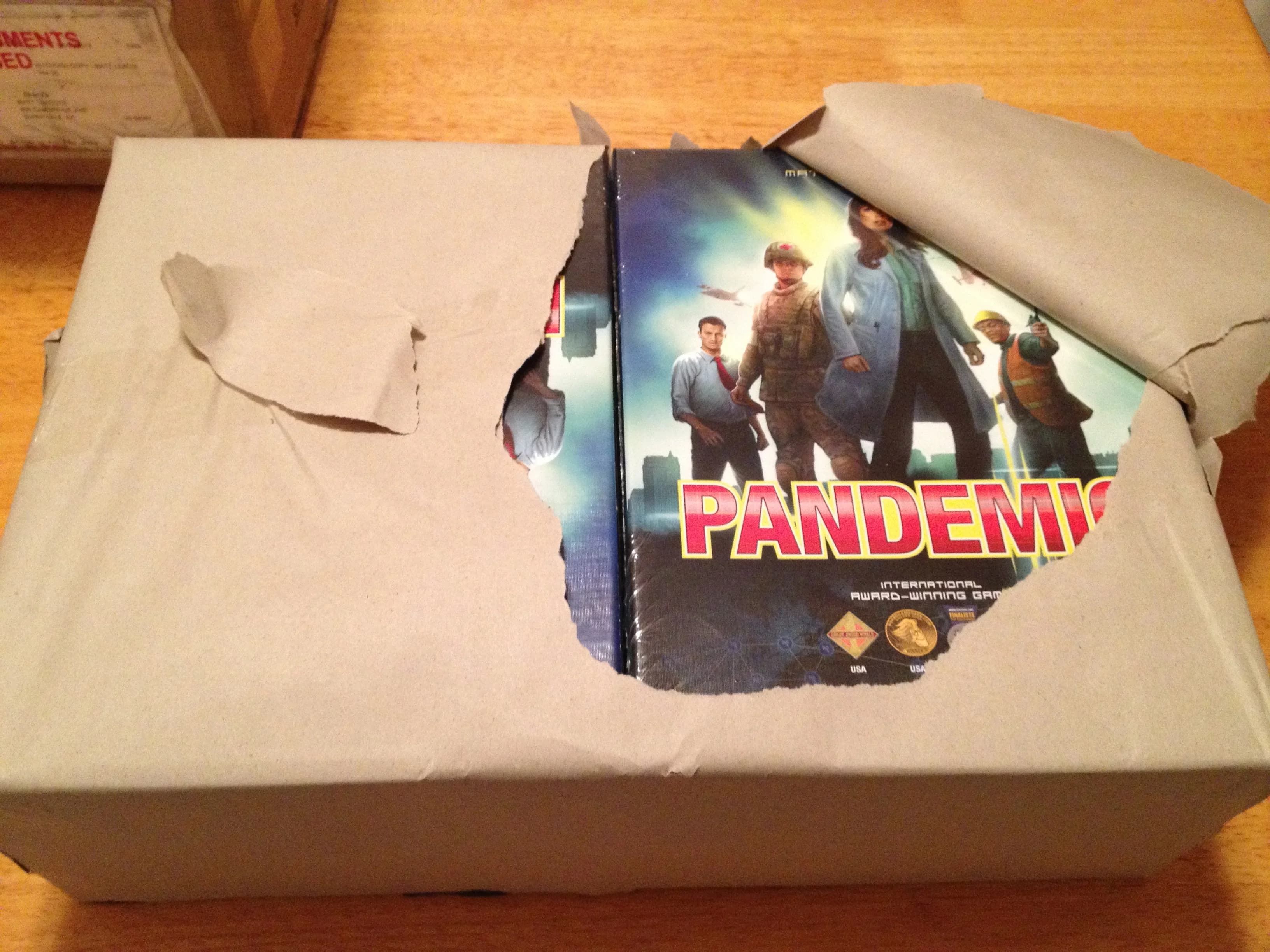
Pandemic
2008Pandemic presents a thrilling, high-stakes challenge where players must band together as a team of elite disease-control specialists. In this quintessential cooperative game, the world is on the brink of disaster, with four deadly diseases spreading rapidly across the globe. Players don't compete against each other; instead, they unite against the game's automated systems, which relentlessly propagate the infections. Each team member assumes a unique role, such as the resourceful Scientist or the indispensable Medic, bringing special abilities to the table that are critical for success. The ultimate objective is to discover the cures for all four plagues before time runs out, a pandemic spirals out of control, or the supply of medical resources is exhausted. It’s a race against the clock where teamwork and strategic foresight are the only tools standing between humanity and a global catastrophe.
The gameplay unfolds through a tense and structured sequence of turns. On their turn, a player can perform up to four actions, creating a wealth of strategic choices. These actions include moving between major world cities, treating localized infections by removing disease cubes, establishing vital research stations, sharing knowledge by trading city cards with teammates, or using a set of matching city cards to discover a cure. After taking actions, the player must draw two cards from the player deck, which contains the city cards needed for cures but also powerful one-time Event cards and the dreaded Epidemic cards. Drawing an Epidemic card is a pivotal moment that escalates the crisis: it accelerates the infection rate, triggers an immediate large-scale infection in a new city, and critically, reshuffles the previously infected cities back to the top of the infection deck. This 'intensify' mechanic ensures that hotspots are likely to be hit again, leading to potential chain-reaction outbreaks that spread disease to adjacent cities.
The enduring appeal of Pandemic lies in its brilliant fusion of accessible rules and profound strategic depth. It creates a palpable sense of mounting pressure, forcing players into constant communication and collaborative problem-solving. The game becomes a fascinating puzzle where the team must constantly weigh managing immediate threats—stamping out fires on the board to prevent outbreaks—against progressing toward the long-term victory condition of finding all four cures. This delicate balancing act is the heart of the game's tension. Because the difficulty can be scaled by altering the number of Epidemic cards in the deck, it offers a consistently engaging challenge for both newcomers and seasoned strategists. Its design has become a benchmark for cooperative games, celebrated for its ability to create a compelling narrative of global crisis and collective heroism with every session.
2-4 45m⚖️ 2.4
RANK #171
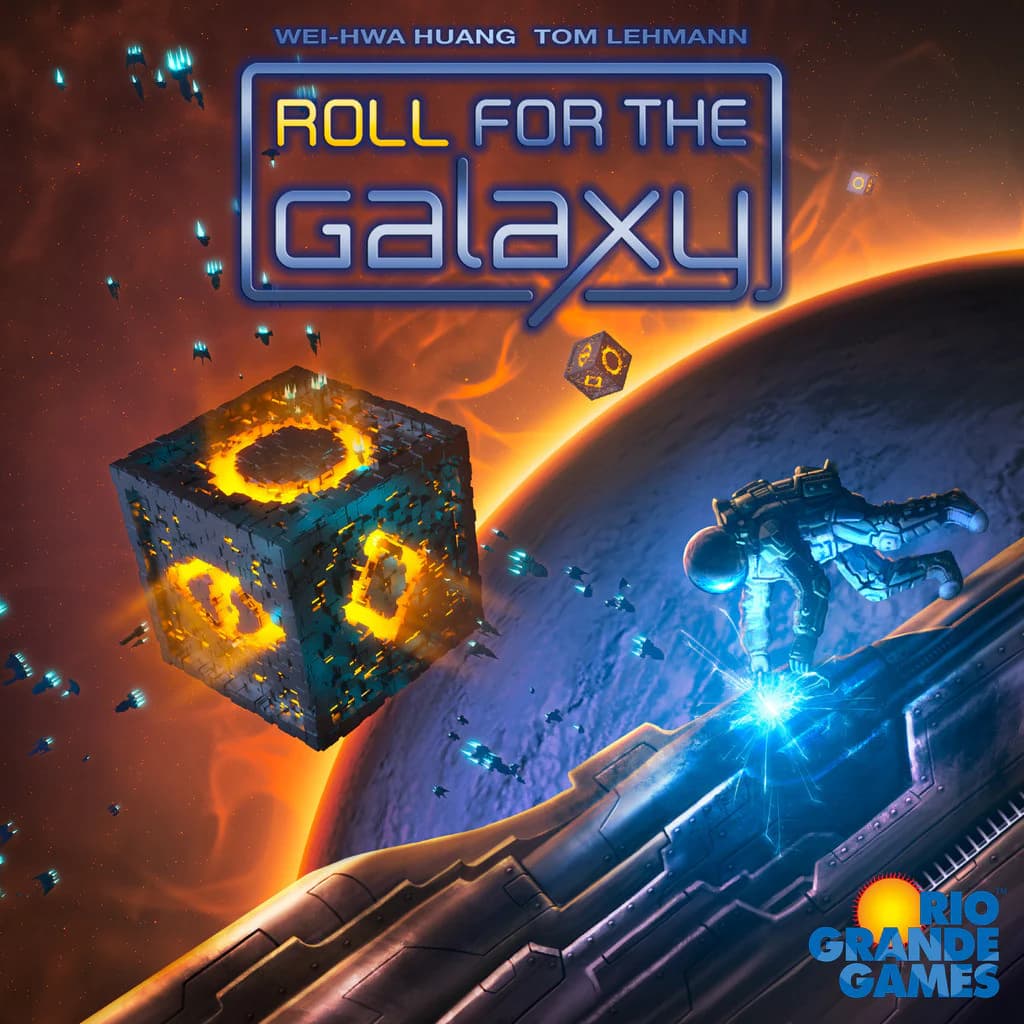
Roll for the Galaxy is a dice-based engine-building game where players compete to create the most prosperous and powerful space empire. As the leader of a fledgling galactic faction, your goal is to accumulate the most victory points by strategically developing new technologies and settling valuable worlds. The game is a spiritual successor to the acclaimed card game, Race for the Galaxy, translating its core concepts into a dynamic and tactile experience driven by custom dice. Each player manages their own domain, striving to build an efficient engine that generates credits, new tiles, and ultimately, victory points. The game concludes when one player constructs their twelfth tile or when the central pool of victory points is depleted, at which point the player with the highest score is declared the victor.
The gameplay revolves around a clever simultaneous action mechanic. Each round, all players roll their dice behind a screen. These dice, with faces representing different actions, are your workforce. Players secretly assign their dice to one of five possible phases: Explore, Develop, Settle, Produce, or Ship. Crucially, each player also selects one of their dice to lock in a specific phase for the round. Only the phases selected by at least one player will activate for everyone, creating a tense game of prediction and priority. Once revealed, players use their assigned dice as workers to perform actions in the active phases, such as drawing new world and development tiles, paying to build them into their tableau, producing goods on worlds, and shipping those goods for either credits or victory points. The tiles you build grant powerful abilities, special dice, and new scoring opportunities, creating a satisfying loop of escalating power.
What makes Roll for the Galaxy a fan favorite is its brilliant combination of tactical dice management and strategic planning, all wrapped in a package with virtually no downtime. The simultaneous play keeps every player constantly engaged, as you're always rolling, assigning, and acting. While the dice introduce an element of luck, the game provides numerous ways to mitigate it, from reassigning dice to leveraging special tile powers. This creates a compelling puzzle each round as you adapt your strategy to what you roll. It captures the strategic depth of its card game predecessor but in a more accessible and faster-playing format, offering immense replayability through its vast array of worlds, developments, and starting factions. It's a masterclass in design that feels both grand in scope and remarkably streamlined.
2-5 45m⚖️ 2.8
RANK #172
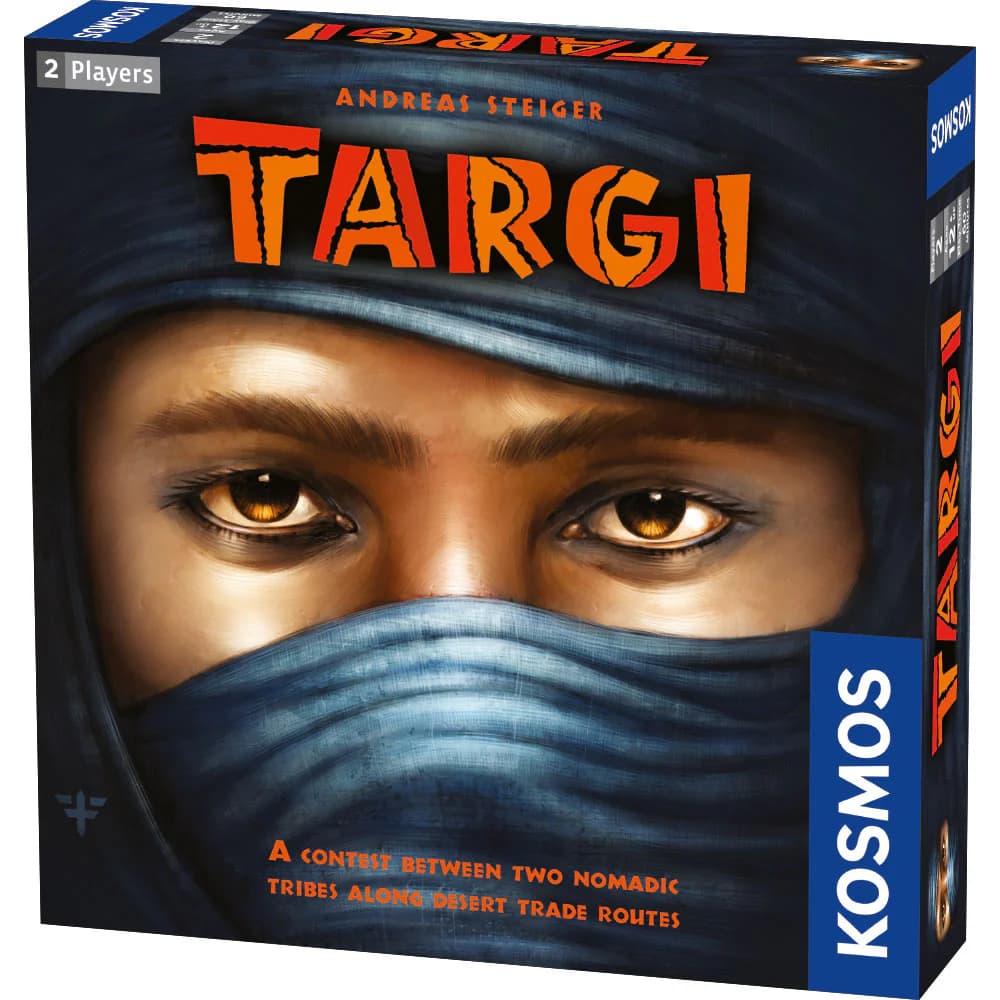
Targi
2012Targi is a critically acclaimed two-player board game that transports players to the Sahara desert, placing them as leaders of Tuareg tribes. The primary goal is to gain wealth and influence, measured in victory points, by strategically trading essential goods like dates, salt, and pepper. Players use these resources to acquire valuable gold and, more importantly, to expand their tribe by purchasing Tribe cards. These cards not only provide immediate or ongoing benefits but also form sets that are crucial for end-game scoring. The player who most effectively manages their resources and builds the most impressive tableau of tribe cards will be declared the winner.
The gameplay of Targi is centered around a clever and unique worker placement mechanism. The game board is a dynamic 5x5 grid of cards, with a border of fixed action cards surrounding a variable 3x3 interior of goods and tribe cards. On their turn, each player places one of their three Targi figures on an available border card. The twist is that after all Targi are placed, players also place tribe markers on the intersection points of the rows and columns their Targi occupy. This means each placement is a dual-purpose decision, granting access to actions on the border cards as well as the powerful resource or tribe cards in the center of the grid. This creates a tense puzzle of blocking, predicting, and optimizing every single turn.
Targi is beloved for packing an immense amount of strategic depth and tense player interaction into a relatively small and elegant package. The intersection mechanic is the star of the show, creating a direct but non-aggressive form of conflict where blocking your opponent's desired spot is as important as securing your own. This constant back-and-forth makes every decision feel meaningful. The game’s variable setup ensures that no two games are ever the same, offering high replayability. For players seeking a pure, brain-burning two-player experience that is easy to learn but difficult to master, Targi stands as a modern classic in the genre, renowned for its tight design and engaging gameplay.
2 60m⚖️ 2.4
BoxNo Cover Art
RANK #173
Too Many Bones: Undertow is a game that challenges players to navigate the underwater world of the Bone Kingdom. The goal is to collect and return as many bones as possible while avoiding the dangers of the deep. Players take on the role of bone hunters, using their skills and abilities to track down and retrieve bones from the ocean floor. The game features a unique mechanic where players can use 'bone tokens' to represent the bones they've collected, allowing them to keep track of their progress and strategize for future turns. As players delve deeper into the game, they'll encounter new challenges and obstacles that will test their skills and push them to think creatively. With its engaging gameplay and immersive theme, Too Many Bones: Undertow is a must-play for fans of strategy and adventure games.
1-4 60m⚖️ 3.5
RANK #174
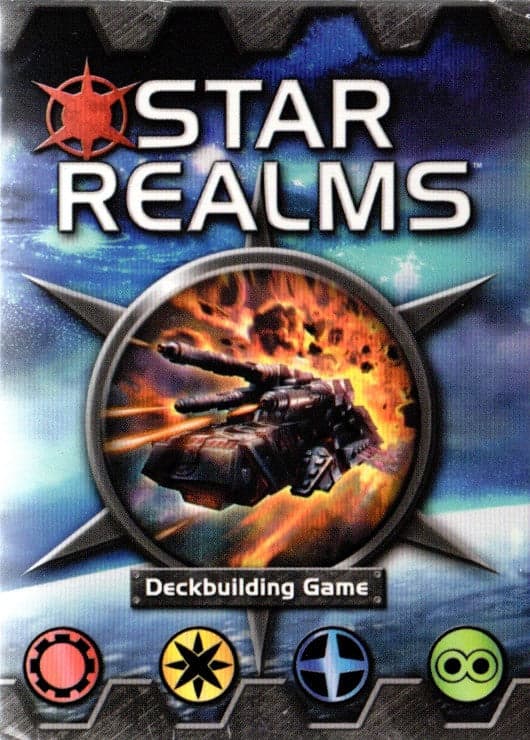
Star Realms
2014Star Realms is a fast-paced, two-player deck-building game set in a dynamic sci-fi universe where players command a growing fleet of starships and powerful bases. The objective is simple and direct: engage in tactical combat to annihilate your opponent by reducing their starting 'Authority' score from 50 down to zero. The game has been lauded for its brilliant fusion of straightforward rules and profound strategic possibilities. This makes it an exceptionally accessible entry point for newcomers to the deck-building genre, while still providing a high skill ceiling and a rewarding challenge for seasoned veterans looking for a quick but engaging duel.
The core of the game is its elegant deck-building engine. Each combatant begins with an identical, weak 10-card deck containing 'Scouts' for generating trade and 'Vipers' for inflicting damage. On each turn, a player draws a hand of five cards and plays them to generate two primary resources: 'Trade' and 'Combat'. Trade is the currency used to acquire powerful new ships and bases from a shared, constantly shifting central 'Trade Row', while Combat is used to attack the opponent's Authority or their defensive bases. Newly purchased cards are placed in the discard pile, which is later shuffled to form a new draw deck, progressively enhancing the player's capabilities. A crucial strategic layer is the faction system—the Trade Federation, Blobs, Star Empire, and Machine Cult. Playing multiple cards of the same faction in a single turn can trigger potent "ally" abilities, unlocking devastating synergies and encouraging players to specialize their fleets for maximum effect.
What makes Star Realms a beloved staple in the gaming community is its ability to pack a remarkable amount of strategic depth and thrilling moments into a very short playtime. A typical game concludes in about 20 minutes, fostering a highly addictive "just one more game" experience. The randomness of the central card market ensures that no two games play out identically, demanding tactical flexibility and quick thinking from players. The excitement of executing a massive combo by chaining together faction abilities is a consistent highlight that provides immense satisfaction. Its small box, affordability, and extensive line of expansions have cemented its status as a go-to choice for anyone seeking a quick, highly interactive, and endlessly replayable competitive card game.
2-6 20m⚖️ 2.0
BoxNo Cover Art
RANK #175
PARKS
2019PARKS is a game where players take on the role of park planners, tasked with creating and managing beautiful public spaces. The goal is to earn the most victory points by designing and building parks that meet the needs of their community. Players collect and trade resources, such as trees, flowers, and benches, to create unique park designs. As they build, players must balance aesthetics with functionality, ensuring that their parks are both visually appealing and accessible to visitors.
2-4 60m⚖️ 3.0
RANK #176
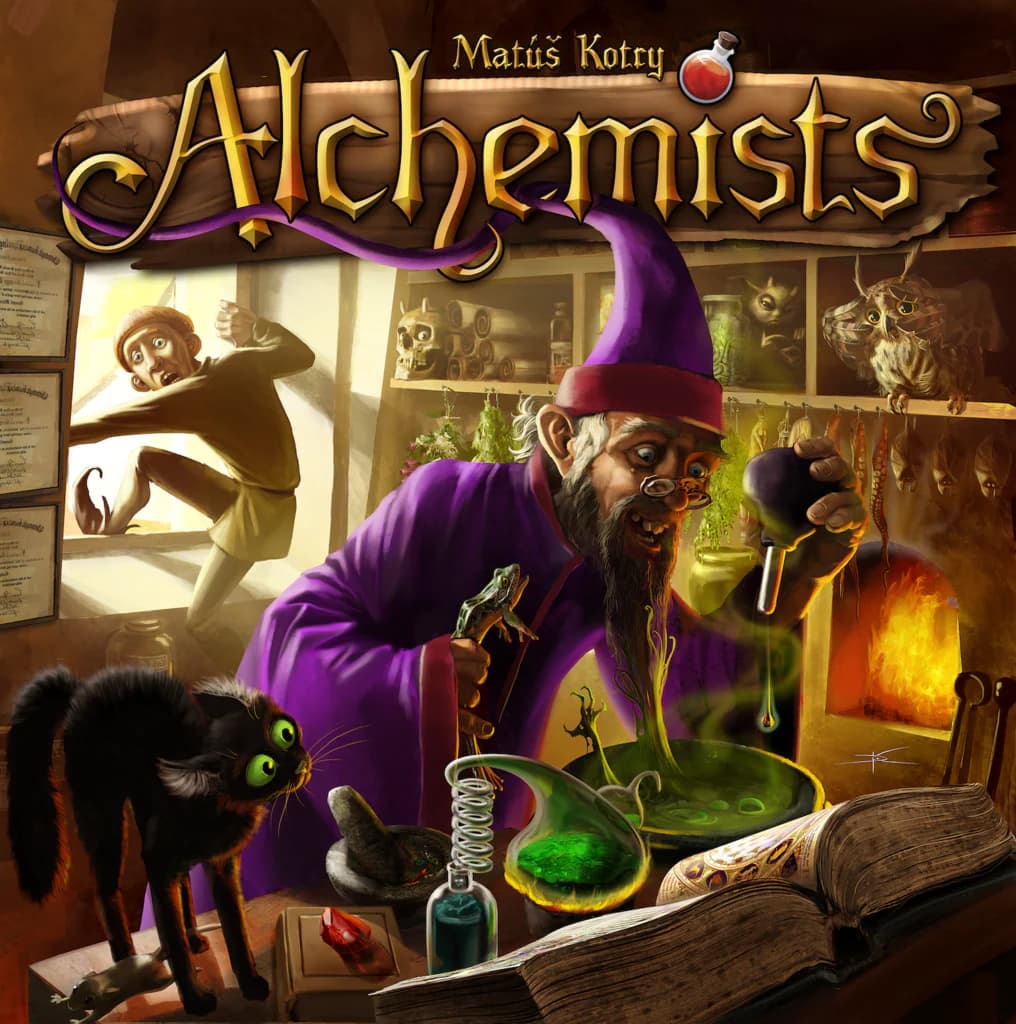
Alchemists
2014In Alchemists, players compete to become the most esteemed scientist in a magical land by unraveling the secrets of their craft. The primary goal is to earn reputation by correctly identifying the alchemical composition of eight mystical ingredients. Each ingredient is composed of a unique combination of three aspects—red, green, and blue—with either a positive or negative charge. A companion smartphone app randomizes these properties at the start of each game, ensuring that every session presents a fresh logical puzzle. By mixing ingredients and scanning the combination with the app, players discover the resulting potion, providing crucial clues to deduce the true nature of their components. This blend of scientific method and magical theme creates a unique challenge of pure deduction.
The gameplay unfolds over six rounds, structured around a clever worker placement system. Players first commit to a turn order, where choosing to act later grants better resources but gives rivals first pick of action spaces. Actions include foraging for new ingredients, transmuting them directly into gold, selling potions to visiting adventurers, and purchasing powerful artifacts that provide unique advantages. The core of the game, however, revolves around experimentation and publication. Players can test potions on students or on themselves, risking negative side effects for valuable knowledge. Using a deduction grid, they track results to eliminate possibilities. The ultimate goal is to publish theories on specific ingredients, a risky move that grants significant reputation if correct, but incurs penalties if proven false by a competitor.
Alchemists is beloved for being a true 'brain-burner' that brilliantly integrates a digital app to facilitate a deep and complex deduction puzzle. The challenge isn't about luck, but about pure logic and strategic risk assessment. There's immense satisfaction in successfully piecing together disparate results to solve the alchemical puzzle before anyone else. The tension of publishing a theory you believe to be correct, and the interactive thrill of debunking a rival's flawed research, creates a highly competitive and engaging experience. Its high replayability, thanks to the randomized app setup, and its demanding strategic depth make it a standout title for players who relish a heavy and rewarding intellectual challenge.
2-4 120m⚖️ 4.0
RANK #177
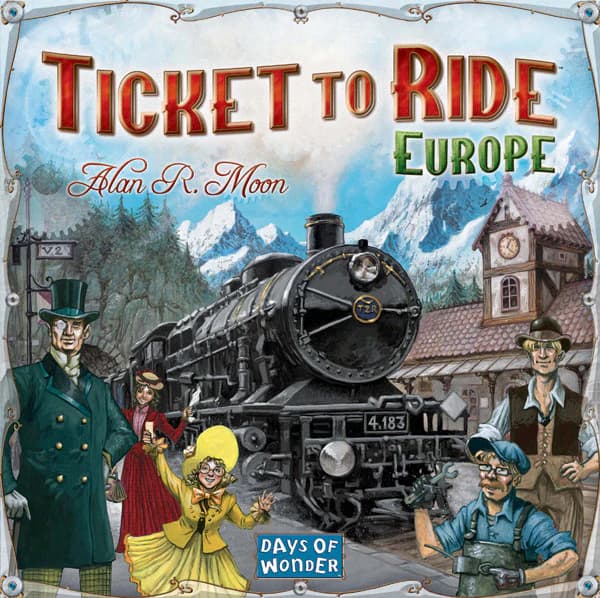
Ticket to Ride: Europe transports players to the golden age of steam travel at the turn of the 20th century. In this standalone installment of the beloved train adventure series, you are not just a passenger but a budding railway tycoon, competing to build the most impressive rail network across the continent. The ultimate goal is to amass the most points by the end of the game. This is achieved through a combination of strategically claiming routes between iconic European cities, successfully connecting distant destinations specified on secret ticket cards, and constructing the longest continuous path of trains for a substantial end-game bonus. Each decision matters as you race against your rivals to dominate the railways, from the misty hills of Edinburgh to the sun-drenched shores of Constantinople.
The game is celebrated for its elegant and accessible ruleset. On your turn, you choose one of four simple actions: draw more train car cards, claim a route on the board, draw new destination tickets, or build a train station. Claiming a route involves collecting and playing a set of train car cards that match the color and length of the desired path, earning you immediate points. This Europe-centric version introduces several clever mechanics that add new layers of strategy. Ferries are special sea routes that require powerful locomotive (wild) cards to claim. Tunnels introduce a thrilling push-your-luck element; when you try to build through a mountain, you must draw extra cards from the deck, potentially increasing the cost of the route unexpectedly. Finally, the introduction of Train Stations provides a strategic safety net, allowing you to use a single route segment owned by an opponent to help complete one of your own destination tickets, though at the cost of end-game points for unused stations.
Ticket to Ride: Europe has earned its place as a cornerstone of modern board gaming, largely due to its status as a premier 'gateway' game. It's incredibly easy to teach to newcomers and families, with games often concluding in under an hour, yet it offers enough strategic depth to keep veteran gamers engaged. The core tension between building your own network and inadvertently blocking opponents creates a compelling and interactive experience without direct confrontation. The additions of tunnels, ferries, and stations subtly enhance the original's formula, providing more varied decisions and reducing the frustration of being completely cut off from a critical city. This perfect balance of simplicity, strategy, and high replayability makes it a timeless classic that continues to bring people to the table for another journey across Europe.
2-5 60m⚖️ 1.9
BoxNo Cover Art
RANK #178
Dominion: Second Edition is a card game designed for 2-4 players. The goal of the game is to accumulate the most victory points by acquiring and playing cards that provide various benefits, such as gold, actions, and abilities. Players start with a small deck of basic cards and then draw additional cards from the kingdom, which consists of eight different types of cards: treasure, victory point, action, attack, reaction, curse, event, and upgrade.
The game is played over several rounds, with each round consisting of three phases: buy phase, discard phase, and clean-up phase. During the buy phase, players can purchase one card from the kingdom for a cost in gold. The player with the most gold at the end of the buy phase gets to buy first.
In the discard phase, players discard any cards they have played during the previous round. Finally, in the clean-up phase, players draw seven new cards and add them to their deck.
Players can also acquire additional victory points by playing certain cards or completing specific objectives. The game ends after a set number of rounds, and the player with the most victory points wins.
2-4 30m⚖️ 3.0
BoxNo Cover Art
RANK #179
Cartographers
2019Embark on a thrilling adventure of exploration and discovery in Cartographers, a strategic board game designed for 2-4 players. In this immersive experience, each player takes on the role of a cartographer tasked with mapping an uncharted island. The goal is to create the most accurate and comprehensive map possible, while also ensuring that your own territory is well-represented. As you navigate the island's diverse landscapes, you'll need to balance exploration with strategic planning, carefully managing your resources and making informed decisions about which areas to prioritize. With each new discovery, the stakes grow higher, and the competition becomes fiercer. Will you emerge victorious as the ultimate cartographer, or will your rivals outmaneuver you? The journey is full of twists and turns, but one thing is certain: only the most skilled and cunning cartographers will succeed in this challenging and rewarding game. Cartographers requires a combination of strategic thinking, spatial reasoning, and tactical planning to emerge victorious. Players must carefully balance their own goals with the need to create an accurate map, all while navigating the complex web of relationships between different territories and resources. As the game unfolds, players will encounter a range of challenges and obstacles that demand quick thinking and clever problem-solving. With its unique blend of exploration, strategy, and competition, Cartographers is an unforgettable experience that will keep you on the edge of your seat from start to finish.
m⚖️ N/A