Strategy Games
Browse all Strategy board games in the Meeple Pulse database.
Styles
AbstractAbstract StrategyAdventureAnimalsCard GameChildren's GameCivilizationCo-operativeCompetitiveDiceEconomicEducationalEuroExpansion for Base-gameFamilyFan ExpansionFantasyFightingHistoricalHorrorIndustry / ManufacturingMedievalMedium HeavyMiniaturesPartyParty GamePrint & PlayPuzzle-LikeRacingReal-timeSpace ExplorationSportsStrategyTerritory BuildingThematicTransportationWargame
Themes
AbstractAdventureAncientAnimalsArtBusinessCard GameCo-operativeComic BookCooperativeCrimeEconomicEnvironmentalismExplorationFantasyFightingHistoricalHorrorHumorIntrigueLiteraryMagicMarvelMedievalModernMuseumMysteryMythologyNatureNauticalParty GamePoliticalPress Your LuckRacingSatireSci-FiSocial CommentarySocial InteractionSpaceSuperheroesThematicTravelWarWesternWord-Guessing
Mechanics
3D PlacementActingAction / DexterityAction DraftingAction Point AllowanceAction Point Allowance SystemAction Point SystemAction PointsAction ProgrammingAction QueueAction RetrievalAction SelectionAction/EventAlliancesAlternate ActivationApp-AssistedApp-DrivenArea ControlArea InfluenceArea MajorityArea Majority / InfluenceArea MovementArgumentationAsymmetricAsymmetric FactionsAsymmetric GameAsymmetric PowersAsymmetrical PowersAuction & BiddingAuction/BiddingAuctioningBag BuildingBettingBetting and BluffingBetting and WageringBetting and WagersBiddingBingoBlind BiddingBluffingCampaign / Battle Card DrivenCampaign / LegacyCampaign / Legacy GameCampaign / Mission-basedCampaign / ScenariosCampaign GameCampaign PlayCard DraftingCard DrawingCard DrivenCard Driven ActionCard Driven CombatCard Driven Dice AllocationCard Driven MovementCard ManagementCard PlayCard Play / Hand ManagementCard Play Conflict ResolutionCard SheddingCard-Driven MovementCharacter CreationCharacter ProgressionChit-Pull SystemCo-op PlayCo-operative GameCo-operative PlayCode-breakingCombat ResolutionCombo ChainCommand CardsCommodity SpeculationCommunication LimitsContract FulfillmentContractsCooperative GameCooperative GameplayCooperative PlayCooperative Trick-takingDebateDeck BuildingDeck ConstructionDeck, Bag, and Pool BuildingDeck-BuildingDeductionDexterityDice DraftingDice PlacementDice RollingDiplomatic InfluenceDraftingDynamic Battle SystemEnclosureEnd Game BonusesEngine BuildingEngine-BuildingEscape RoomEvent DrivenExplorationFarmingFlip and WriteFollowFollow ActionGrid CoverageGrid MovementHand ManagementHex-and-CounterHexagon GridHidden MovementHidden RolesI Cut You ChooseIncomeInfluence / Area MajorityLadder ClimbingLegacyLegacy ElementsLegacy GameLegacy SystemLimited CommunicationLine DrawingLine of SightMancalaMap AdditionMap MovementMarketMarket DraftingMarket ManipulationMarket MechanicMarket SpeculationMatchingMeasurement MovementMemoryMission ObjectivesModular BoardModular Board ConstructionMove Through DeckMovement PointsMovement TemplatesMulti-Use CardsMulti-use CardsMultiple ScenariosMust FollowNarrative ChoiceNarrative Choice / ParagraphNegotiationNegotiation MechanicsNetwork & Route BuildingNetwork BuildingNetwork and Route BuildingOne vs ManyOne vs. ManyOpen DraftingOwnershipPaper-and-PencilPartnershipsPattern BuildingPattern RecognitionPick-up and DeliverPlayer EliminationPlayer InteractionPlayer JudgePoint SaladPoint to Point MovementPolyominoesPush Your LuckPush-Your-LuckPuzzlePuzzle-LikePuzzle-SolvingRaceReal-TimeRecipe FulfillmentResource ManagementRole PlayingRole SelectionRoll / Spin and MoveRondelRoute BuildingRoute-BuildingRoute/Network BuildingSanity SystemScenario / Campaign PlayScenario / Mission / Campaign GameScenario / Mission FunctionSecret Unit DeploymentSemi-Cooperative GameSet CollectionSheddingSimulationSimultaneous ActionSimultaneous Action SelectionSimultaneous Hidden AllocationSocial DeductionSocial InteractionSolo / Solitaire GameSpace ExplorationStat Check / Skill CheckStat Check ResolutionStock HoldingStorytellingStrategic PlanningTableau BuildingTactical Decision-MakingTake ThatTargeted CluesTeam PlayTeam-Based GameTeam-Based GuessingTeamworkTech TreesTech Trees / Tech TracksTechnology & Armament TracksTechnology TreeTension & Aggression TracksTile DraftingTile LayingTile PlacementTime TrackTime TravelTower DefenseTrack MovementTradingTrick-takingTug of WarTurn Order: PassTurn Order: Stat-BasedUnit PlacementVariable Phase OrderVariable Player PowersVariable Set-upVariable SetupVictory Point TracksVotingWord AssociationWord GameWord GuessingWord-GuessingWord-guessingWordplayWorker Placement
RANK #151
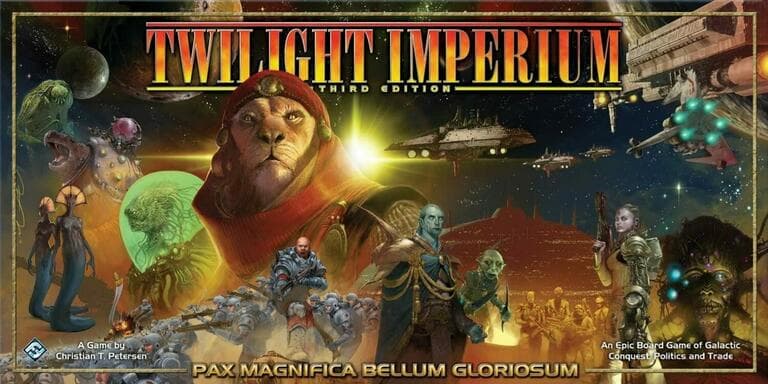
Twilight Imperium: Third Edition is a legendary title that defines the epic space opera genre in board gaming. It is a sprawling game of galactic conquest where players assume control of one of several unique alien civilizations, each with its own history and abilities, all vying for control of the imperial throne on Mecatol Rex. The ultimate goal is to become the new galactic emperor by being the first to accumulate 10 victory points. These points are not won through brute force alone; players must cleverly achieve a mix of public objectives revealed to all and secret objectives known only to them. This creates a tense strategic environment where players must carefully balance military expansion, technological research, economic development, and political cunning to navigate the path to victory, making every decision a critical step toward galactic domination.
The gameplay is structured into rounds, each containing three distinct phases that create a compelling rhythm of planning and execution. In the Strategy Phase, players select powerful Strategy Cards that grant unique, game-altering abilities and crucially determine the turn order for the round. This selection is a mini-game of its own, full of prediction and denial. The heart of the game is the Action Phase, where players use a finite pool of command counters to perform actions. These include moving fleets between star systems, engaging in dice-driven space and ground combat, and activating their strategy card's primary power. This resource management creates agonizing decisions about where to commit forces and focus efforts. Finally, the Status Phase sees players readying for the next round, collecting resources, and entering a political assembly to vote on laws and agendas that can permanently alter the rules of the game, ensuring a dynamic and ever-shifting political landscape.
What elevates Twilight Imperium to its iconic status is the sheer scale and the rich, player-driven narrative that emerges from its systems. It's more than a game; it's a sandbox for creating unforgettable sagas of ambition, betrayal, and glory. The deep interplay between military conflict, technological advancement via a detailed tech tree, and high-stakes diplomacy and negotiation ensures that no two sessions are ever alike. While its famously long playtime and complex rules present a steep learning curve, they are precisely what allows for such profound strategic depth and memorable moments. For players who crave an immersive, all-day gaming event that rewards long-term planning and clever social maneuvering, Twilight Imperium: Third Edition remains an unparalleled masterpiece of grand strategy.
3-6 420m⚖️ 4.7

RANK #152
Forest Shuffle
2023In Forest Shuffle, players take on the role of naturalists competing to cultivate the most thriving and ecologically harmonious woodland. This strategic card game challenges you to build a personal forest tableau that scores the most points by the game's end. The core objective is to strategically play cards representing a diverse array of trees, animals, plants, and fungi. Each card contributes to your ecosystem's overall value, with different species scoring in unique ways based on their placement and proximity to others. Success requires careful planning and an understanding of the intricate relationships within your burgeoning forest, as the player with the most valuable collection of flora and fauna is declared the winner.
The gameplay is driven by a simple yet elegant set of actions. On your turn, you must choose between drawing two new cards—either from a central deck or a shared face-up market called the 'clearing'—or playing a single card into your forest. Playing a card requires paying a cost by discarding other cards from your hand into the clearing, creating a constant tension of hand management. The game's foundation is built upon tree cards. All other species are played by 'tucking' them under one of the four sides of an existing tree. A key mechanical twist is that most non-tree cards are split, depicting two different species. When you tuck a card, you must choose which half becomes active in your tableau, a decision that has cascading effects on your scoring potential and future plays. This multi-use card system is the strategic heart of the game, forcing difficult choices with every placement.
Forest Shuffle's appeal lies in its masterful blend of accessibility and strategic depth. While the turn structure is remarkably easy to grasp, the "complex web of considerations" that arises from the tucking and scoring mechanics provides a deeply engaging puzzle for experienced gamers. The interactions between cards create countless scoring combinations, ensuring high replayability as you discover new synergies with each game. The beautiful and detailed artwork brings the vibrant ecosystem to life, enhancing the thematic experience. Furthermore, the game's production is environmentally conscious as part of Lookout Games' "Greenline" series. The game ends when the third 'winter' card is revealed, adding a layer of suspense as the deck thins. It’s this combination of straightforward rules, rich decision-making, and a compelling natural theme that makes Forest Shuffle a standout title for a wide range of players.
2-5 60m⚖️ 2.4
BoxNo Cover Art
RANK #153
Rising Sun
2018Rising Sun is a strategic board game designed for 2-4 players, set in feudal Japan during the Sengoku period. Players take on the roles of daimyos, vying for control and dominance over the island of Honshu. The game's objective is to accumulate victory points by controlling provinces, eliminating opponents, and completing objectives.
2-4 120m⚖️ 3.5
BoxNo Cover Art
RANK #154
Vinhos: Deluxe Edition is a wine-themed strategy game designed for 2-4 players, where each player takes on the role of a wine merchant aiming to accumulate wealth and prestige by collecting and trading rare wines.
The game's objective is multifaceted. On one hand, players must navigate the complexities of wine production, harvesting grapes, fermenting, aging, and bottling. This process involves resource management, as players need to allocate their resources efficiently to produce high-quality wines. The game also incorporates a trading mechanism, where players can exchange wines with each other, either directly or through auctions.
Another crucial aspect of the game is the auction mechanism, which adds an element of unpredictability and strategy. Players must carefully evaluate the value of their wines and bid strategically to acquire rare and valuable bottles. The game also features a reputation system, where players' actions affect their standing among other merchants, influencing the trading dynamics.
The game's components include high-quality wooden tokens, wine cards, and a beautifully designed board that simulates the vineyard landscape. The deluxe edition includes upgraded components, such as wooden barrels and improved card quality.
2-4 60m⚖️ 3.5
BoxNo Cover Art
RANK #155
Yokohama
2016Yokohama is a strategic game for 2-4 players that takes approximately 45-60 minutes to play. The goal of the game is to build a thriving city by collecting and trading resources, managing your workforce, and constructing buildings. Players take on the role of mayors tasked with developing their respective cities in Japan's second-largest metropolitan area.
The gameplay revolves around resource management, where players collect and trade cards featuring various goods such as food, textiles, and ceramics. These resources are used to construct buildings, which provide bonuses and benefits. The game also features a unique mechanic called 'workforce management,' where players must manage their workforce's skills and abilities to optimize their building construction.
One of the key aspects of Yokohama is its thematic appeal. Players become immersed in the world of 19th-century Japan, with beautifully illustrated cards and components that evoke a sense of nostalgia and wonder. The game also features a high level of replayability, thanks to the random distribution of resources and building cards.
Overall, Yokohama offers a unique blend of strategic resource management, workforce optimization, and thematic immersion, making it an engaging experience for players who enjoy strategic games with depth.
2-4 45m⚖️ 3.0
BoxNo Cover Art
RANK #157
Forbidden Stars
2015Forbidden Stars is a strategic board game designed for 2-4 players, where each player takes on the role of an intergalactic empire vying for dominance in a distant star system. The game's objective is to be the first player to achieve three victory points by controlling key planets and resources. Players must carefully manage their resources, build and upgrade their spaceships, and strategically deploy them to outmaneuver their opponents.
2-4 60m⚖️ 3.0
BoxNo Cover Art
RANK #159
Iberia
2016Iberia is a game that challenges players to navigate the complex history and culture of the Iberian Peninsula, which includes modern-day Spain and Portugal. The game's goal is to be the first player to earn 10 victory points by completing various tasks and missions set in different time periods, from ancient times to the present day. Players will need to manage their resources carefully, as they will have to travel between different locations on the board, interact with other players, and make strategic decisions about which actions to take. The game's mechanics include a unique system for tracking player progress and a modular board that changes with each playthrough, adding a layer of replayability to the game.
2-4 90m⚖️ 3.5
BoxNo Cover Art
RANK #160
In Clank! In Space!, players take on the roles of thieves trying to steal valuable treasures from a spaceship while navigating its dangers and avoiding detection by the ship's security systems.
The game is played over several rounds, with each player starting with a hand of cards that represent their character's abilities and equipment. On each turn, players can choose to draw new cards, play cards from their hand to perform actions such as moving around the ship or attacking other players, or use special abilities to gain an advantage.
One of the key mechanics in Clank! In Space! is deck-building, where players can acquire new cards and upgrade their existing ones to improve their chances of success. However, this also means that players must carefully manage their resources and make strategic decisions about which cards to play and when.
Another important aspect of the game is its thematic elements, which are heavily focused on space exploration and adventure. The game's artwork and design are highly detailed and immersive, drawing players into the world of the spaceship and its inhabitants.
2-4 45m⚖️ 3.0
BoxNo Cover Art
RANK #163
Tyrants of the Underdark is a strategic game set in the world of Dungeons & Dragons. Players take on the roles of powerful tyrants vying for control of the underdark, a vast network of underground tunnels and caverns. The goal is to accumulate influence and power by collecting and trading resources, building structures, and recruiting minions.
Gameplay involves a combination of resource management, area control, and strategic planning. Players must navigate the complex web of alliances and rivalries between different factions, all while managing their own resources and advancing their goals. The game features a unique mechanic called 'influence tokens,' which allow players to exert control over specific areas of the underdark.
One of the key aspects of Tyrants of the Underdark is its thematic depth. Players must consider the motivations and strengths of each faction, as well as the consequences of their actions on the game world. This adds a layer of complexity and replayability to the game, making it appealing to fans of strategic gameplay.
Overall, Tyrants of the Underdark offers a rich and immersive gaming experience that challenges players to think strategically and make tough decisions in a dynamic and unpredictable environment.
2-4 60m⚖️ 3.5
BoxNo Cover Art
RANK #164
Champions of Midgard is a strategic board game designed for 2-4 players. The game's objective is to collect the most victory points by completing quests, defeating monsters, and managing resources. Players take on the roles of Viking warriors, each with unique abilities and strengths. The game features a modular board, composed of interlocking tiles, which represents the world of Midgard. Each player starts at the edge of the board, and their goal is to reach the center, where the most valuable quests await.
Gameplay involves resource management, as players must balance their efforts between completing quests, battling monsters, and gathering resources. The game also features a unique mechanic called 'Favor,' which allows players to gain bonuses and advantages by completing specific tasks or achieving certain goals. Favor can be used strategically to gain an edge over other players or to overcome challenges.
One of the key aspects of Champions of Midgard is its thematic appeal. Players are immersed in the world of Norse mythology, with each quest and monster inspired by the gods and goddesses of Asgard. The game's artwork and components are also designed to evoke a sense of Viking culture and adventure.
Overall, Champions of Midgard offers a challenging and engaging experience for players who enjoy strategic games with deep mechanics and thematic depth.
2-4 60m⚖️ 3.5
BoxNo Cover Art
RANK #165
Rajas of the Ganges is a game set in ancient India, where players take on the roles of rulers vying for power and influence. The game's goal is to accumulate the most prestige points by building temples, managing resources, and making strategic decisions.
The game plays out over several rounds, with each round representing a year in the game's timeline. Players start by placing their temple tiles, which serve as a focal point for their actions throughout the game. Each player has a set of resource cards, which they use to build temples, collect offerings, and make other strategic decisions.
One of the key mechanics in Rajas of the Ganges is the use of 'actions,' which allow players to perform specific tasks such as building temples, collecting resources, or making trades with other players. Players can also use their temple tiles to gain bonuses and advantages over their opponents.
As the game progresses, players must balance their short-term goals with long-term strategies. They need to manage their resources carefully, make smart decisions about which actions to take, and adapt to changing circumstances on the board.
2-4 60m⚖️ 3.5
RANK #167
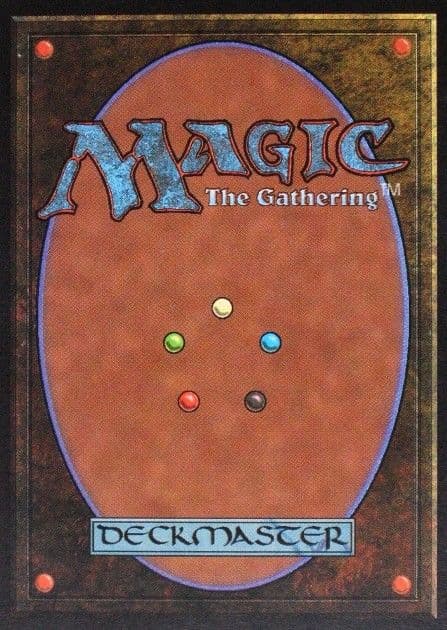
Magic: The Gathering stands as the foundational pillar of the modern collectible card game genre. In this immersive experience, players assume the mantle of 'Planeswalkers,' powerful mages capable of traveling across diverse dimensions. The primary objective is to drain an opponent's life total from twenty to zero, though victory can also be secured by exhausting an opponent's deck. It is a tactical battle of wits where the deck you build serves as your primary weapon, requiring foresight, resource management, and precise timing to outmaneuver your rival.
Gameplay unfolds through a sophisticated turn structure revolving around the 'mana' system. Players strategically deploy land cards to generate colored energy, which is then utilized to summon a myriad of creatures, cast powerful sorceries, and deploy artifacts. The game is defined by the 'Color Wheel,' which categorizes every card into one of five distinct colors—White, Blue, Black, Red, or Green—each possessing unique philosophies and mechanical advantages. Combat involves careful calculation of creature power and toughness, alongside the strategic decision of when to attack or hold back defenses. The 'Golden Rule' of the game states that individual card text always overrides the standard rulebook, ensuring that every interaction remains fluid and unpredictable.
The enduring popularity of the game lies in its near-infinite strategic depth and the thrill of deck construction. Because no two games ever unfold exactly the same way, participants are constantly pushed to refine their strategies and adapt to evolving competitive environments. The marriage of stunning fantasy art with highly intricate mechanics creates a sense of discovery that has lasted for decades. Whether playing in a constructed format where you bring your custom-built deck or in a limited format where you must build on the fly from booster packs, the game rewards skill, creativity, and knowledge. Its massive appeal is anchored by the community aspect and the constant introduction of new sets, keeping the game fresh, challenging, and mentally stimulating for both casual players and high-level professionals alike. It is truly the definitive experience for those who appreciate high-stakes card games that demand critical thinking and careful planning.
2 30m⚖️ 4.1