Game Library
Discover and explore our entire collection of tabletop games.
Styles
AbstractAbstract StrategyAdventureAnimalsCard GameChildren's GameCivilizationCo-operativeCompetitiveDiceEconomicEducationalEuroExpansion for Base-gameFamilyFan ExpansionFantasyFightingHistoricalHorrorIndustry / ManufacturingMedievalMedium HeavyMiniaturesPartyParty GamePrint & PlayPuzzle-LikeRacingReal-timeSpace ExplorationSportsStrategyTerritory BuildingThematicTransportationWargame
Themes
AbstractAdventureAncientAnimalsArtBusinessCard GameCo-operativeComic BookCooperativeCrimeEconomicEnvironmentalismExplorationFantasyFightingHistoricalHorrorHumorIntrigueLiteraryMagicMarvelMedievalModernMuseumMysteryMythologyNatureNauticalParty GamePoliticalPress Your LuckRacingSatireSci-FiSocial CommentarySocial InteractionSpaceSuperheroesThematicTravelWarWesternWord-Guessing
Mechanics
3D PlacementActingAction / DexterityAction DraftingAction Point AllowanceAction Point Allowance SystemAction Point SystemAction PointsAction ProgrammingAction QueueAction RetrievalAction SelectionAction/EventAlliancesAlternate ActivationApp-AssistedApp-DrivenArea ControlArea InfluenceArea MajorityArea Majority / InfluenceArea MovementArgumentationAsymmetricAsymmetric FactionsAsymmetric GameAsymmetric PowersAsymmetrical PowersAuction & BiddingAuction/BiddingAuctioningBag BuildingBettingBetting and BluffingBetting and WageringBetting and WagersBiddingBingoBlind BiddingBluffingCampaign / Battle Card DrivenCampaign / LegacyCampaign / Legacy GameCampaign / Mission-basedCampaign / ScenariosCampaign GameCampaign PlayCard DraftingCard DrawingCard DrivenCard Driven ActionCard Driven CombatCard Driven Dice AllocationCard Driven MovementCard ManagementCard PlayCard Play / Hand ManagementCard Play Conflict ResolutionCard SheddingCard-Driven MovementCharacter CreationCharacter ProgressionChit-Pull SystemCo-op PlayCo-operative GameCo-operative PlayCode-breakingCombat ResolutionCombo ChainCommand CardsCommodity SpeculationCommunication LimitsContract FulfillmentContractsCooperative GameCooperative GameplayCooperative PlayCooperative Trick-takingDebateDeck BuildingDeck ConstructionDeck, Bag, and Pool BuildingDeck-BuildingDeductionDexterityDice DraftingDice PlacementDice RollingDiplomatic InfluenceDraftingDynamic Battle SystemEnclosureEnd Game BonusesEngine BuildingEngine-BuildingEscape RoomEvent DrivenExplorationFarmingFlip and WriteFollowFollow ActionGrid CoverageGrid MovementHand ManagementHex-and-CounterHexagon GridHidden MovementHidden RolesI Cut You ChooseIncomeInfluence / Area MajorityLadder ClimbingLegacyLegacy ElementsLegacy GameLegacy SystemLimited CommunicationLine DrawingLine of SightMancalaMap AdditionMap MovementMarketMarket DraftingMarket ManipulationMarket MechanicMarket SpeculationMatchingMeasurement MovementMemoryMission ObjectivesModular BoardModular Board ConstructionMove Through DeckMovement PointsMovement TemplatesMulti-Use CardsMulti-use CardsMultiple ScenariosMust FollowNarrative ChoiceNarrative Choice / ParagraphNegotiationNegotiation MechanicsNetwork & Route BuildingNetwork BuildingNetwork and Route BuildingOne vs ManyOne vs. ManyOpen DraftingOwnershipPaper-and-PencilPartnershipsPattern BuildingPattern RecognitionPick-up and DeliverPlayer EliminationPlayer InteractionPlayer JudgePoint SaladPoint to Point MovementPolyominoesPush Your LuckPush-Your-LuckPuzzlePuzzle-LikePuzzle-SolvingRaceReal-TimeRecipe FulfillmentResource ManagementRole PlayingRole SelectionRoll / Spin and MoveRondelRoute BuildingRoute-BuildingRoute/Network BuildingSanity SystemScenario / Campaign PlayScenario / Mission / Campaign GameScenario / Mission FunctionSecret Unit DeploymentSemi-Cooperative GameSet CollectionSheddingSimulationSimultaneous ActionSimultaneous Action SelectionSimultaneous Hidden AllocationSocial DeductionSocial InteractionSolo / Solitaire GameSpace ExplorationStat Check / Skill CheckStat Check ResolutionStock HoldingStorytellingStrategic PlanningTableau BuildingTactical Decision-MakingTake ThatTargeted CluesTeam PlayTeam-Based GameTeam-Based GuessingTeamworkTech TreesTech Trees / Tech TracksTechnology & Armament TracksTechnology TreeTension & Aggression TracksTile DraftingTile LayingTile PlacementTime TrackTime TravelTower DefenseTrack MovementTradingTrick-takingTug of WarTurn Order: PassTurn Order: Stat-BasedUnit PlacementVariable Phase OrderVariable Player PowersVariable Set-upVariable SetupVictory Point TracksVotingWord AssociationWord GameWord GuessingWord-GuessingWord-guessingWordplayWorker Placement
RANK #121
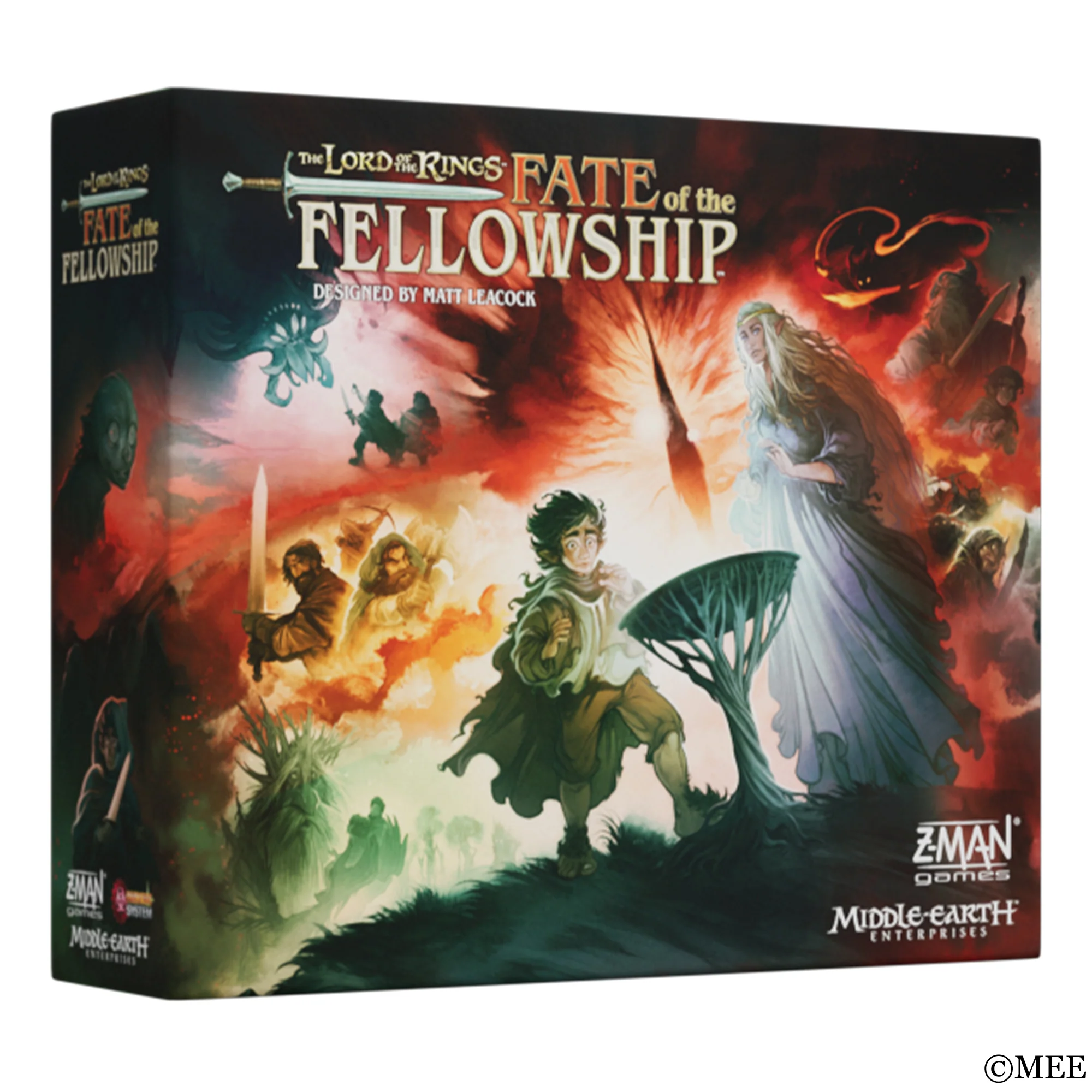
The Lord of the Rings: Fate of the Fellowship immerses one to five players in a desperate, cooperative journey across Middle-earth. In this new narrative-driven adventure from acclaimed designer Matt Leacock, players embody the heroes of Tolkien's epic saga, working together to ensure the One Ring reaches the fires of Mount Doom. The ultimate objective is the Ring's destruction, but this final confrontation can only be attempted after the fellowship successfully navigates three randomly assigned objectives. Players take on the roles of the Fellowship's members and their trusted allies, with each player uniquely controlling a pair of characters from a roster of thirteen, each boasting distinct abilities. The path to victory is fraught with peril, as failure looms if the collective 'Hope' of the fellowship is extinguished. This crucial resource dwindles when safe havens are overrun by darkness, if the Ringbearer is discovered by Sauron's minions, or if the heroes exhaust their resources. It is a race against the encroaching shadow to fulfill their destiny before all hope is lost.
The game's engine is a sophisticated adaptation of the celebrated "Pandemic" system, promising a familiar yet richer mechanical experience. The core gameplay loop involves players strategically spending action points to maneuver friendly forces and their heroes across a detailed map of Middle-earth. These actions are vital for completing the prerequisite missions and pushing back the ever-advancing armies of the Dark Lord. A central element of tension is the constant need to protect Frodo, keeping him concealed from the relentless pursuit of the Nazgûl and the piercing gaze of the Eye of Sauron. This threat is manifested through the 'Shadow Card' deck, a mechanism that functions much like its counterpart in "Pandemic," dictating where Sauron's influence will spread and escalating the danger with each draw. Players must carefully manage their character abilities and card resources to overcome these challenges and clear a path for the Ringbearer.
"Fate of the Fellowship" offers a compelling synthesis of a proven cooperative game system with one of fantasy's most beloved narratives. Its appeal lies in this seamless integration, creating an experience that feels both innovative and deeply thematic. The design has been hailed as Matt Leacock's most mechanically intricate take on the Pandemic framework to date, offering a significant and rewarding challenge for veteran strategy gamers. The unique system of each player managing two distinct heroes introduces a fascinating layer of tactical decision-making and enhances replayability. This constant balancing act—completing grand objectives while simultaneously managing the stealthy, perilous journey of the Ringbearer—generates a persistent sense of urgency and suspense, making it an essential title for fans of cooperative board games and Tolkien's timeless world.
1-5 m⚖️ 3.1
BoxNo Cover Art
RANK #122
In The Quest for El Dorado, players take on the roles of treasure hunters seeking to find the legendary city of gold. This game is a thrilling adventure that combines exploration, strategy, and luck. Players must navigate through the dense jungle, avoiding deadly traps and rival expeditions while searching for the hidden treasures. As they progress, they'll need to manage their resources carefully, making tough decisions about which paths to take and when to risk it all.
The game is won by the player who finds the most valuable treasure, but be warned: the journey is just as important as the destination. Will you emerge victorious, or will the jungle claim your expedition as its next victim?
With its unique blend of exploration and strategy, The Quest for El Dorado offers a thrilling experience that's perfect for fans of adventure games.
2-4 60m⚖️ 3.0
BoxNo Cover Art
RANK #123
Inis
2016Inis is a strategic board game designed for 2-4 players, where each player takes on the role of a leader vying for control over the island of Inis Mor. The game's objective is to collect and manage resources, build structures, and strategically place your followers to gain dominance over the island. Players must carefully balance their actions, as the game features a dynamic weather system that can either hinder or help their progress.
The gameplay in Inis revolves around resource management, area control, and strategic planning. Each player starts with a set of basic resources and structures, which they can use to build more complex structures and recruit followers. The game's mechanics include worker placement, resource management, and area control, making it a challenging and engaging experience for players.
One of the unique aspects of Inis is its modular board, which consists of interlocking tiles that create a different island layout each time the game is played. This adds a layer of replayability to the game, as players must adapt their strategies to the changing landscape. Additionally, the game's theme and artwork are highly praised for their beauty and immersion, making Inis a visually appealing experience.
Overall, Inis is a strategic board game that requires careful planning, resource management, and strategic thinking. Its unique mechanics, modular board, and beautiful artwork make it an engaging and challenging experience for players.
m⚖️ 4.0

RANK #124
Wyrmspan
2024In Wyrmspan, you step into the role of an amateur dracologist, tasked with creating a magnificent sanctuary for dragons of all shapes and sizes. As a standalone game inspired by the mechanics of the critically acclaimed Wingspan, your goal is to build the most welcoming haven by excavating a labyrinthine network of caves and enticing a wide variety of dragons to make it their home. Over four rounds, you will compete to earn the most victory points by populating your caves, hatching new dragons, fulfilling public objectives, and climbing the ranks of the esteemed Dragon Guild. The player who proves to be the most adept dragon enthusiast by accumulating the most points will be declared the winner.
The gameplay revolves around a card-driven, engine-building system where players manage resources to take one of three primary actions. Using coins received at the start of each round, you can 'Excavate' to play a cave card, preparing a new space in your Crimson Cavern, Golden Grotto, or Amethyst Abyss and often gaining an immediate bonus. The 'Entice' action allows you to play one of the 183 unique dragon cards from your hand into an excavated space, adding its power to your growing engine. Finally, you can 'Explore' a cave, sending your adventurer meeple to activate a chain of abilities from the dragons residing within. Unlike its predecessor, Wyrmspan provides a consistent number of actions each round, challenging players to maximize their efficiency from start to finish.
Wyrmspan's appeal lies in its satisfying strategic depth and stunning presentation. Fans of engine-building will delight in discovering powerful synergies between dragon abilities and cave bonuses, creating a cascade of benefits with a single action. The game offers a slightly more complex and involved experience than Wingspan, introducing new elements like the Dragon Guild tracks and the need to manage cave space, which provides a fresh challenge for veteran players. With a huge variety of dragons illustrated by Clémentine Campardou, multiple paths to victory, and a robust solo mode, Wyrmspan delivers immense replayability and a captivating thematic experience for anyone who has ever dreamed of befriending dragons.
1-5 90m⚖️ 2.9
RANK #125
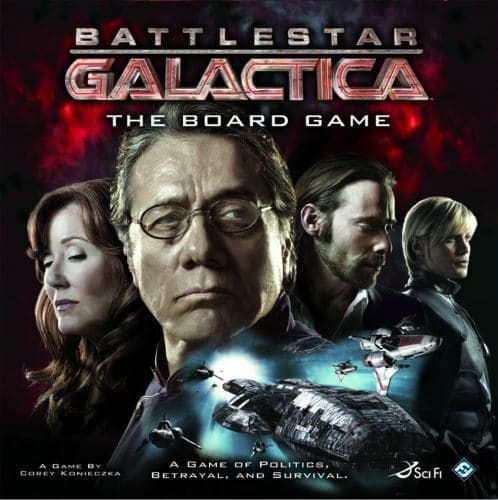
Battlestar Galactica: The Board Game plunges players into the desperate flight of the last vestiges of humanity. It is a deeply thematic, semi-cooperative experience where survival is paramount, but the greatest threat may be sitting right next to you. In this game of hidden allegiances, most players assume the roles of iconic human characters from the television series, working collectively to guide the fleet to its fabled destination, Kobol. To succeed, they must carefully manage four critical resources—fuel, food, morale, and population—and execute a series of faster-than-light jumps to outrun their pursuers. If any resource is fully depleted, or the Galactica itself is destroyed, humanity is lost forever. However, amongst the crew are Cylon traitors, secretly working to ensure this very outcome through subtle sabotage and outright betrayal.
The gameplay masterfully cultivates this atmosphere of paranoia. Each turn, a player draws skill cards representing their character's expertise, moves to a location on the fleet's ships, and performs an action. The turn culminates in drawing a Crisis card, which presents a new challenge the crew must overcome, often through a skill check. This is where the core tension lies. To pass a check, players secretly contribute skill cards to a shared pool. While human players try to contribute cards of the required type to meet a target number, Cylon players can covertly add unhelpful cards to cause a failure. The resulting blame-game and accusations are central to the experience. Further intensifying the suspense is the "Sleeper Agent" phase halfway through the game, where a second loyalty card is dealt, potentially turning a trusted ally into a new enemy.
What elevates Battlestar Galactica to legendary status is its unmatched ability to translate the show's core themes of paranoia and desperation into compelling gameplay. The mechanics are not just abstract puzzles; they are engines for storytelling and intense player interaction. The constant suspicion, the debates over who played which card during a failed skill check, and the dramatic moments when a player reveals themselves as a Cylon are what create unforgettable gaming sessions. It's more than a resource management game; it's a social deduction crucible where your ability to read people, build trust, and sow discord is just as important as your strategic card play. This blend of cooperative survival and hidden traitor mechanics makes every decision fraught with weight and every game a unique narrative of survival and betrayal.
3-6 180m⚖️ 3.3

RANK #126
Carnegie
2022Step into the shoes of an aspiring magnate during America's Gilded Age in *Carnegie*, a board game inspired by the legendary industrialist and philanthropist Andrew Carnegie. In this medium-heavy economic Eurogame, you are tasked with building a business empire from the ground up. Over the course of 20 rounds, you will manage employees, develop new technologies, invest in real estate across the nation, and expand your transport network. The ultimate goal is not just to be the wealthiest, but to build the most prestigious enterprise. Victory is determined by points earned through savvy business growth, strategic construction, and, crucially, generous contributions to society, proving that true success lies in both industry and philanthropy.
The gameplay is driven by a clever and highly interactive action-selection mechanism. Each round, the active player chooses one of four actions corresponding to a department in their company, and critically, all other players must also perform that same action. The 'Human Resources' department allows you to move your employees on your personal player board to activate different areas for future turns. 'Management' is used to acquire essential goods and money. 'Construction' lets you build new projects and expand your company's network on the main game board, while 'Research & Development' advances your company's technology, unlocking powerful new abilities and scoring paths. This system forces constant engagement and requires you to strategically anticipate your rivals' needs and intentions while optimizing your own.
What truly sets *Carnegie* apart is its brilliant integration of business acumen with philanthropic duty. Throughout the game, players are presented with opportunities to donate their wealth to charitable causes. This isn't merely a thematic element; these donations are a core mechanism for unlocking significant end-game scoring objectives. This creates a compelling strategic tension: do you reinvest your profits for immediate expansion and engine-building, or do you sacrifice short-term gains for long-term prestige and victory points? This dual focus, combined with the shared action system that ensures no downtime, makes for a deeply rewarding and thinky experience where every decision matters, not just for you, but for everyone at the table.
1-4 120m⚖️ 4.1
BoxNo Cover Art
RANK #127
In Dwellings of Eldervale, players take on the roles of architects tasked with designing and building a thriving community in the mystical realm of Eldervale. The game's goal is to create a harmonious balance between the natural world and the needs of the inhabitants, while also competing to earn the most prestige points.
The gameplay involves a combination of area control, resource management, and engine-building mechanics. Players start with a small plot of land and must carefully plan their development, balancing the need for resources such as food, water, and materials with the desire to build structures that will attract inhabitants and generate revenue. As players progress, they can expand their territory, recruit new residents, and construct buildings that provide bonuses and benefits.
One of the unique aspects of Dwellings of Eldervale is its thematic depth. The game's world is richly detailed, with a focus on environmentalism and sustainability. Players must navigate the challenges of climate change, resource depletion, and social inequality, all while striving to create a thriving community that benefits both the inhabitants and the environment.
The game's mechanics are carefully designed to promote strategic thinking and planning, as players must balance short-term needs with long-term goals. The game also features a dynamic weather system and a variety of events and challenges that add an extra layer of complexity and replayability.
1-4 60m⚖️ 3.5
RANK #128
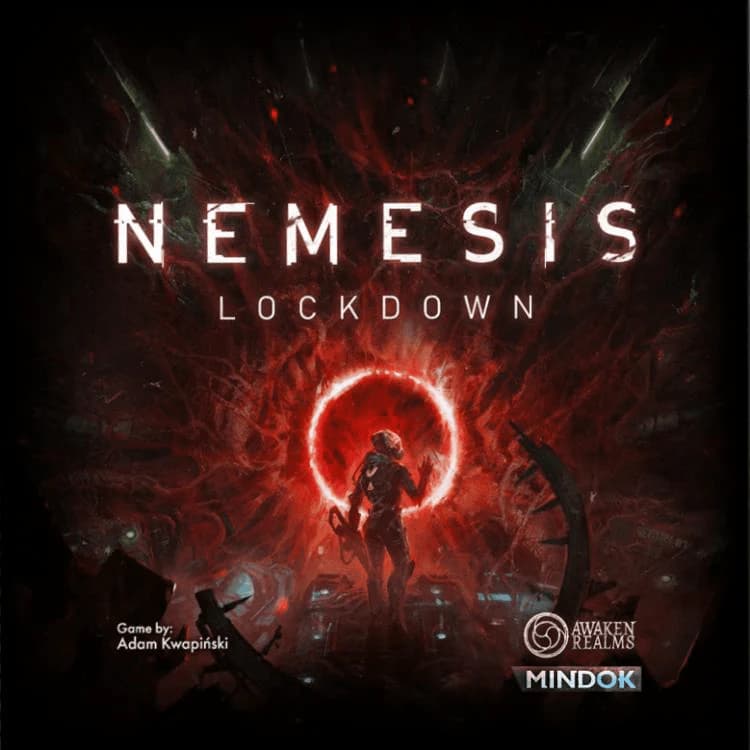
Nemesis: Lockdown is a cinematic, standalone survival-horror experience set on a secret multi-level base on Mars. It is a semi-cooperative game where players, as survivors of an unknown incident, must navigate a hostile facility infested with terrifying alien organisms known as Night Stalkers. While cooperation is essential to overcome the immediate dangers of the base and its predatory inhabitants, each player holds a secret objective that may conflict with the goals of the group. To achieve victory, a player must not only survive the ordeal but also successfully complete their private mission before escaping, creating a deeply tense atmosphere where trust is a scarce and valuable resource.
The gameplay unfolds through a series of rounds, each divided into a Player Phase and an Event Phase. During the Player Phase, individuals take turns performing two actions, the cost of which is paid by discarding action cards from their hand. Actions are varied and crucial, including moving through the labyrinthine base, exploring new rooms, searching for useful items, crafting equipment, and engaging in desperate combat with the aliens. A critical element is managing noise; actions can place noise markers in adjacent corridors, and a second marker in the same location triggers a deadly alien encounter. Lockdown introduces new challenges, most notably the management of the base's power, which can fail and plunge sectors into darkness, adding another layer of strategic depth and terror.
The immense appeal of Nemesis: Lockdown lies in its ability to generate powerful, emergent narratives. The combination of hidden agendas, a modular board, and unpredictable event cards ensures that no two sessions are ever alike, producing unique and memorable stories of heroism, desperation, and betrayal. The core semi-cooperative mechanic is the heart of the game, forcing a delicate balance between teamwork and self-preservation. You need your crewmates to fend off the relentless alien threat, yet you can never be certain of their true intentions. This constant psychological tension, coupled with the game's rich thematic immersion, makes it a premium, high-stakes adventure for players who crave a challenging and deeply engaging tabletop experience.
1-5 120m⚖️ 4.2
BoxNo Cover Art
RANK #129
Architects of the West Kingdom is a strategic board game where players take on the roles of master builders, tasked with constructing and managing their own medieval villages. The game's goal is to earn the most victory points by building structures, collecting resources, and completing tasks. Players must carefully manage their workers, as they are limited in number and can only be used for specific tasks.
1-4 60m⚖️ 3.0

RANK #130
Galactic Cruise
2025Galactic Cruise invites players to the helm of a burgeoning interstellar tourism company in a competitive, heavyweight Eurogame experience. You take on the role of a supervisor, vying for the prestigious position of CEO within the galaxy's premier space travel corporation. Your objective is to prove your managerial prowess by accumulating the most victory points. This is achieved by building and operating a fleet of luxurious starships, designing incredible interstellar vacation packages, and attracting wealthy guests from across the cosmos. The game is a test of long-term strategy and economic acumen, where every decision contributes to your corporate legacy. Only the supervisor who can most effectively expand their operations and satisfy the discerning tastes of interstellar travelers will rise to the top of the corporate ladder.
The gameplay is driven by a sophisticated worker placement system set across three distinct 'eras'. Players assign their crew members to action spaces on a dynamic, modular main board to gather resources, acquire advanced blueprints, construct shuttle components, and build crucial developments that link locations and unlock new strategic pathways. A standout feature is the game's interactive 'bumping' mechanism; if you place a worker on an occupied space, the original worker is returned to its owner, who then receives a small income boost. This clever design choice ensures players are never truly locked out of actions, adding a tactical layer to placement decisions. The core loop revolves around assembling and launching your custom-built shuttles. Once launched, a crew member becomes a pilot, journeying to various destinations to reap valuable rewards while players manage a fluctuating resource market and invest in new technologies to gain a competitive edge.
What makes *Galactic Cruise* a compelling title for seasoned gamers is its deep, multi-layered strategic puzzle. The game rewards careful planning and efficient engine-building, offering immense satisfaction as you see your tourism empire grow from a small operation into a galactic powerhouse. The modular board ensures high replayability, as the available actions and connections will shift with every game. Renowned artist Ian O'Toole's distinctive visual style brings the futuristic setting to life, complementing the high-quality production. The clever worker-bumping mechanic fosters a healthy level of player interaction that feels engaging rather than punitive, keeping all players involved throughout the game's considerable playtime. It's a challenging and rewarding journey for those who relish complex economic simulations and the thrill of building a successful enterprise among the stars.
1-4 120m⚖️ 4.0

RANK #132
Keyflower
2012Keyflower is a celebrated strategic eurogame where players guide their fledgling settlements through four distinct seasons, from the promise of spring to the final scoring in winter. The ultimate goal is to amass the most victory points by building a prosperous and efficient village. This is achieved by strategically bidding on and acquiring new hexagonal village tiles, generating valuable resources like wood, stone, and iron, and expanding your workforce of colorful 'keyples'. Each player begins with a home tile and a small group of workers, but through clever play, they will expand their domain, upgrade buildings, and fulfill the scoring conditions presented by the lucrative winter tiles, which are only revealed at the game's outset, forcing players to plan their long-term strategy from the very first turn.
The game's brilliance lies in its seamless integration of several core mechanics, most notably worker placement and auctioning. The keyples are a dual-use component: they serve as both the currency for bidding on new tiles and the workers needed to activate the special abilities of those tiles. This creates a wonderfully tense decision space each turn. Do you commit your workers to a high-stakes bid for a powerful tile your opponent wants, or do you use them to activate buildings in your village—or even an opponent's village—to gather crucial resources? Actions are color-dependent; placing a worker on a tile requires matching its color if it's the first one there, after which any player can add more workers of that same color to take the same action, creating a dynamic and highly interactive system where timing and worker management are paramount.
Keyflower is beloved by strategy gamers for its depth, high player interaction, and immense replayability. The tension of the auction system, where bids are made publicly behind a player's screen, is a constant source of excitement and bluffing. The ability to use tiles in your opponents' villages (by sending one of your keyples to them, which they then get to keep) ensures that players are always engaged with what others are doing. No two games feel the same, as the selection and order of tiles that appear each season are randomized. This variability demands flexible thinking and rewards players who can build a synergistic engine to capitalize on the opportunities presented, making each journey from spring to winter a unique and deeply satisfying puzzle to solve.
2-6 105m⚖️ 3.4