Thematic Games
Browse all Thematic board games in the Meeple Pulse database.
Styles
Themes
AbstractAdventureAncientAnimalsArtBusinessCard GameCo-operativeComic BookCooperativeCrimeEconomicEnvironmentalismExplorationFantasyHistoricalHorrorHumorIntrigueLiteraryMagicMarvelMedievalModernMuseumMysteryMythologyNatureNauticalPoliticalPress Your LuckSatireSci-FiSocial CommentarySocial InteractionSpaceSuperheroesThematicTravelWarWesternWord-Guessing
Mechanics
3D PlacementActingAction / DexterityAction DraftingAction Point AllowanceAction Point Allowance SystemAction Point SystemAction PointsAction ProgrammingAction QueueAction RetrievalAction SelectionAction/EventAlliancesAlternate ActivationApp-AssistedApp-DrivenArea ControlArea InfluenceArea MajorityArea Majority / InfluenceArea MovementArgumentationAsymmetricAsymmetric FactionsAsymmetric GameAsymmetric PowersAsymmetrical PowersAuction & BiddingAuction/BiddingAuctioningBag BuildingBettingBetting and BluffingBetting and WageringBetting and WagersBiddingBingoBlind BiddingBluffingCampaign / Battle Card DrivenCampaign / LegacyCampaign / Legacy GameCampaign / Mission-basedCampaign / ScenariosCampaign GameCampaign PlayCard DraftingCard DrawingCard DrivenCard Driven ActionCard Driven CombatCard Driven Dice AllocationCard Driven MovementCard ManagementCard PlayCard Play / Hand ManagementCard Play Conflict ResolutionCard SheddingCard-Driven MovementCharacter CreationCharacter ProgressionChit-Pull SystemCo-op PlayCo-operative GameCo-operative PlayCode-breakingCombat ResolutionCombo ChainCommand CardsCommodity SpeculationCommunication LimitsContract FulfillmentContractsCooperative GameCooperative GameplayCooperative PlayCooperative Trick-takingDebateDeck BuildingDeck ConstructionDeck, Bag, and Pool BuildingDeck-BuildingDeductionDexterityDice DraftingDice PlacementDice RollingDiplomatic InfluenceDraftingDynamic Battle SystemEnclosureEnd Game BonusesEngine BuildingEngine-BuildingEscape RoomEvent DrivenExplorationFarmingFlip and WriteFollowFollow ActionGrid CoverageGrid MovementHand ManagementHex-and-CounterHexagon GridHidden MovementHidden RolesI Cut You ChooseIncomeInfluence / Area MajorityLadder ClimbingLegacyLegacy ElementsLegacy GameLegacy SystemLimited CommunicationLine DrawingLine of SightMancalaMap MovementMarketMarket DraftingMarket ManipulationMarket MechanicMarket SpeculationMatchingMeasurement MovementMemoryMission ObjectivesModular BoardModular Board ConstructionMovement TemplatesMulti-Use CardsMulti-use CardsMultiple ScenariosMust FollowNarrative ChoiceNarrative Choice / ParagraphNegotiationNegotiation MechanicsNetwork & Route BuildingNetwork BuildingNetwork and Route BuildingOne vs ManyOne vs. ManyOpen DraftingPaper-and-PencilPartnershipsPattern BuildingPattern RecognitionPick-up and DeliverPlayer EliminationPlayer InteractionPlayer JudgePoint SaladPoint to Point MovementPolyominoesPush Your LuckPush-Your-LuckPuzzlePuzzle-LikePuzzle-SolvingRaceReal-TimeRecipe FulfillmentResource ManagementRole PlayingRole SelectionRoll / Spin and MoveRondelRoute BuildingRoute-BuildingRoute/Network BuildingSanity SystemScenario / Campaign PlayScenario / Mission / Campaign GameScenario / Mission FunctionSecret Unit DeploymentSemi-Cooperative GameSet CollectionSheddingSimulationSimultaneous ActionSimultaneous Action SelectionSimultaneous Hidden AllocationSocial DeductionSocial InteractionSolo / Solitaire GameSpace ExplorationStat Check / Skill CheckStock HoldingStorytellingStrategic PlanningTableau BuildingTactical Decision-MakingTake ThatTargeted CluesTeam PlayTeam-Based GameTeam-Based GuessingTeamworkTech TreesTech Trees / Tech TracksTechnology & Armament TracksTechnology TreeTension & Aggression TracksTile DraftingTile LayingTile PlacementTime TrackTime TravelTower DefenseTrack MovementTradingTrick-takingTug of WarTurn Order: PassTurn Order: Stat-BasedUnit PlacementVariable Phase OrderVariable Player PowersVariable Set-upVariable SetupVictory Point TracksVotingWord AssociationWord GameWord GuessingWord-GuessingWord-guessingWordplayWorker Placement
RANK #35
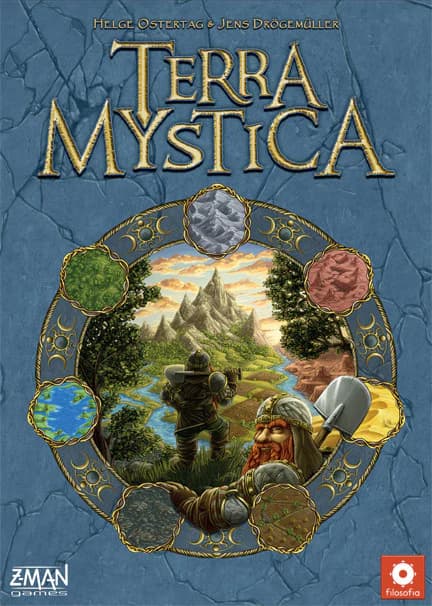
Terra Mystica
2012In Terra Mystica, 2-3 players take on the roles of magical clans seeking to expand their mystical influence across a mystical board. Each player builds and manages their own territory, placing tiles to create a unique landscape while utilizing various magical abilities to outmaneuver their opponents. The game's objective is to be the first to achieve a set amount of mystical power, earned through strategic tile placement, resource management, and clever use of magical abilities.
As players navigate the mystical realm, they'll encounter ancient ruins, mysterious artifacts, and rival clans vying for dominance. With each turn, players must balance their own needs with the changing landscape, adapting to new opportunities and challenges as they arise.
Terra Mystica is a game of strategic planning, clever resource management, and magical might, appealing to fans of area control, engine-building, and strategic gameplay.
2-3 60m⚖️ 3.5
RANK #54
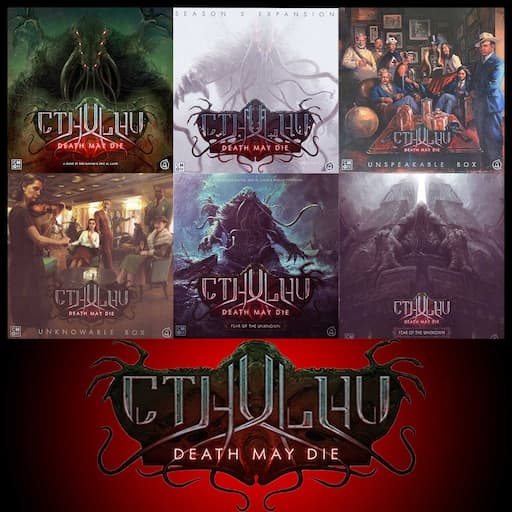
In Cthulhu: Death May Die, players take on the roles of investigators trying to uncover the mysteries of the ancient deity Cthulhu. The game is set in a Lovecraftian world where players must navigate through a series of challenges and puzzles to ultimately defeat the Great Old One. However, as they delve deeper into the mystery, they will realize that their own sanity may be at risk.
The gameplay involves a combination of exploration, puzzle-solving, and strategic decision-making. Players can choose from various characters with unique abilities and strengths, each contributing to the overall success or failure of the mission. The game features a modular board, which is composed of interlocking tiles that represent different locations and environments. As players explore these areas, they will encounter various obstacles, creatures, and other challenges that must be overcome.
One of the key mechanics in Cthulhu: Death May Die is the sanity system. Players can collect Sanity tokens, which allow them to perform certain actions or access specific abilities. However, if a player's sanity drops too low, they will become unhinged and start making irrational decisions that may harm their own chances of success.
The game also features a unique mechanic called 'Sanity Shocks,' which occur when players encounter particularly traumatic events or make poor choices. These shocks can have significant consequences for the player's character, including loss of sanity, temporary incapacitation, or even death.
1-4 60m⚖️ 3.5
RANK #120
In Trickerion: Legends of Illusion, players take on the roles of illusionists vying for fame and fortune in a mystical world. The game is set in a fantasy realm where magic and deception reign supreme. Players must master various magical disciplines, including illusions, enchantments, and deceptions, to outwit their opponents and gain the most prestige points.
Gameplay involves a combination of strategic planning, resource management, and tactical execution. Each player starts with a unique set of abilities and resources, which they must use to create complex illusions and deceptions. The game features a modular board, composed of interlocking tiles that represent different locations in the mystical world. Players can move their characters through these locations, interacting with other players and resolving challenges.
One of the key mechanics in Trickerion is the 'illusion' system, which allows players to create complex deceptions using various magical disciplines. Players must carefully manage their resources and abilities to create illusions that are convincing enough to deceive their opponents. The game also features a 'reputation' system, where players earn prestige points based on their performance and the quality of their illusions.
Trickerion is a highly strategic game that requires careful planning and execution. Players must balance their short-term goals with long-term strategies, taking into account the ever-changing landscape of the mystical world. The game's unique blend of magic, deception, and strategy makes it an engaging and challenging experience for players.
2-4 60m⚖️ 3.5
BoxNo Cover Art
RANK #135
In Tainted Grail: The Fall of Avalon, players take on the roles of heroes from Arthurian legend as they navigate a treacherous world filled with mythical creatures and ancient magic. The game's goal is to be the first player to reach the legendary island of Avalon, but this will not be an easy task. Players must manage their characters' abilities and resources carefully, making strategic decisions about which quests to undertake and how to allocate their time and energy. As they journey through the land, players will encounter a variety of challenges and obstacles, including fierce battles with monsters and rival heroes who seek to thwart their progress.
The game's mechanics are designed to create a sense of immersion and engagement, drawing players into the world of Arthurian legend and challenging them to think strategically about how to achieve their goals. With its richly detailed setting and complex gameplay, Tainted Grail: The Fall of Avalon is an experience that will appeal to fans of fantasy and adventure games alike.
One of the key features of Tainted Grail: The Fall of Avalon is its modular board, which allows players to create a unique game world for each playthrough. This adds a high level of replayability to the game, as players can experiment with different combinations of quests and challenges to see how they affect the gameplay experience.
Overall, Tainted Grail: The Fall of Avalon is a challenging and rewarding game that offers something new and exciting for fans of fantasy and adventure games. Its richly detailed setting and complex gameplay make it an excellent choice for players who enjoy strategic decision-making and immersive storytelling.
1-4 60m⚖️ 3.5
BoxNo Cover Art
RANK #142
The Lord of the Rings: Journeys in Middle-earth is a cooperative board game for 1-4 players that immerses players in the world of J.R.R. Tolkien's classic novel. Players take on the roles of brave adventurers tasked with navigating treacherous landscapes, battling fearsome enemies, and solving puzzles to reach their ultimate goal: destroying the One Ring.
The game is set in a modular board system, where each player's journey is unique and shaped by their individual choices and actions. The game features a variety of mechanics, including exploration, puzzle-solving, and combat, which are all woven together to create an immersive and engaging experience.
One of the standout features of Journeys in Middle-earth is its thematic depth. Players must navigate the complexities of Middle-earth's geography, politics, and mythology, making it feel like a truly authentic experience for fans of the book or movie.
1-4 60m⚖️ 3.5
RANK #167
Magic: The Gathering stands as the foundational pillar of the modern collectible card game genre. In this immersive experience, players assume the mantle of 'Planeswalkers,' powerful mages capable of traveling across diverse dimensions. The primary objective is to drain an opponent's life total from twenty to zero, though victory can also be secured by exhausting an opponent's deck. It is a tactical battle of wits where the deck you build serves as your primary weapon, requiring foresight, resource management, and precise timing to outmaneuver your rival.
Gameplay unfolds through a sophisticated turn structure revolving around the 'mana' system. Players strategically deploy land cards to generate colored energy, which is then utilized to summon a myriad of creatures, cast powerful sorceries, and deploy artifacts. The game is defined by the 'Color Wheel,' which categorizes every card into one of five distinct colors—White, Blue, Black, Red, or Green—each possessing unique philosophies and mechanical advantages. Combat involves careful calculation of creature power and toughness, alongside the strategic decision of when to attack or hold back defenses. The 'Golden Rule' of the game states that individual card text always overrides the standard rulebook, ensuring that every interaction remains fluid and unpredictable.
The enduring popularity of the game lies in its near-infinite strategic depth and the thrill of deck construction. Because no two games ever unfold exactly the same way, participants are constantly pushed to refine their strategies and adapt to evolving competitive environments. The marriage of stunning fantasy art with highly intricate mechanics creates a sense of discovery that has lasted for decades. Whether playing in a constructed format where you bring your custom-built deck or in a limited format where you must build on the fly from booster packs, the game rewards skill, creativity, and knowledge. Its massive appeal is anchored by the community aspect and the constant introduction of new sets, keeping the game fresh, challenging, and mentally stimulating for both casual players and high-level professionals alike. It is truly the definitive experience for those who appreciate high-stakes card games that demand critical thinking and careful planning.
2 30m⚖️ 4.1
RANK #198
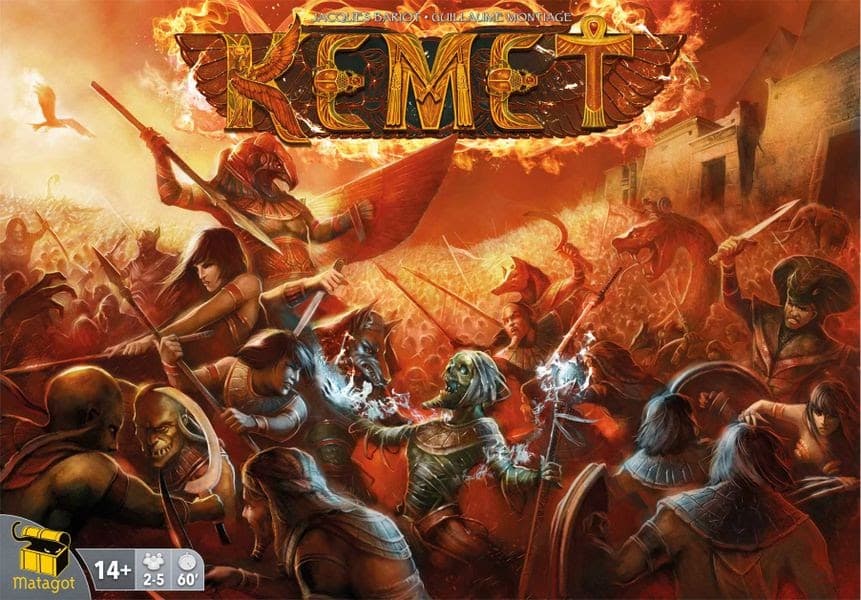
Kemet
2012In the mythological landscape of ancient Egypt, Kemet casts players as powerful gods vying for dominance. This is a game of aggressive territorial control where you command divine armies, clashing in the desert sands to prove your supremacy. The ultimate objective is to be the first to achieve a set number of Victory Points, which are earned through a combination of successful conquests, controlling sacred temples, and constructing magnificent pyramids. Victory is a dynamic affair; points gained from territory can be lost just as quickly, ensuring a relentless struggle until the very end, where only the most cunning and powerful deity will prevail.
Gameplay unfolds over a series of rounds, each divided into Day and Night phases. The Day is where the primary action occurs, as players take turns performing single actions from their personal player boards. This fast-paced, turn-by-turn structure forces critical decisions: will you recruit more soldiers, move your forces to initiate an attack, pray to the gods for more Prayer Points (the game's currency), or invest in upgrading your pyramids? These pyramids are key, as their color and level dictate which powerful Power Tiles you can purchase. These tiles grant unique abilities, creatures, and advantages, forming the core of the game's engine-building and strategic customization, allowing you to tailor your faction's strengths as the game progresses.
Kemet's unique appeal lies in its relentless focus on player interaction and its elegant combat system. The map is designed to push players into conflict from the start, making combat not just an option, but an inevitability. Battles are resolved not by the luck of dice rolls, but through a deterministic card-based system. Each player uses an identical deck of combat cards, secretly choosing one to play alongside a disposable Divine Intervention card. This transforms each battle into a tense sub-game of bluffing, hand management, and anticipating your opponent's moves. The vast array of Power Tiles ensures immense replayability, as each game offers new combinations and strategies to explore, making every session a unique struggle for divine ascendancy.
2-5 120m⚖️ 3.2

RANK #215
Chaos in the Old World plunges players into the dark and gritty Warhammer Fantasy universe, casting them not as heroes, but as one of four malevolent Chaos Gods. Each player embodies either Khorne, the god of war; Nurgle, the lord of decay; Tzeentch, the master of magic; or Slaanesh, the prince of pleasure. The objective is to spread your ruinous influence across the land and be the first to corrupt it entirely. Victory is a two-pronged path: either be the first to accumulate 50 victory points by dominating regions and fulfilling objectives, or achieve a unique, thematic victory by advancing your god's threat dial to its final space. This dual-condition system creates a constant tension, as players must pursue their own goals while simultaneously thwarting the different, and often conflicting, ambitions of their rivals.
Gameplay unfolds in a series of structured rounds, each beginning with an Old World event card that introduces new variables, such as meddling heroes or political shifts. Players then draw from their god-specific Chaos decks, gaining access to powerful, unique abilities. The core of the game lies in the Summoning Phase, where players expend power points to place their forces—from lowly cultists to formidable Greater Daemons—onto the map and play their cards to manipulate the board state. Combat erupts wherever opposing forces meet, resolved through brutal dice rolls. Following the battles, players with a presence in a region can place corruption tokens. Once a region is fully corrupted, it is despoiled, rewarding the most influential god and permanently scarring the world. This cycle of summoning, fighting, and corrupting drives the engine of this highly interactive conflict.
The game's enduring appeal stems directly from its profound and masterfully implemented asymmetry. No two gods play alike; Khorne revels in bloodshed and advances by killing enemy units, while the insidious Nurgle corrupts populous regions and spreads his plagues. Tzeentch manipulates the game state with magic from the shadows, and Slaanesh tempts heroes and nobles to their downfall. This deep strategic diversity means that players must not only master the intricacies of their chosen deity but also deeply understand the capabilities and victory paths of their opponents. This creates a highly dynamic and replayable experience, widely considered to be at its peak with a full complement of four players, where the delicate, brutal dance of the Chaos Gods is on full display, making it a celebrated classic in the area control genre.
3-4 90m⚖️ 3.6
RANK #252
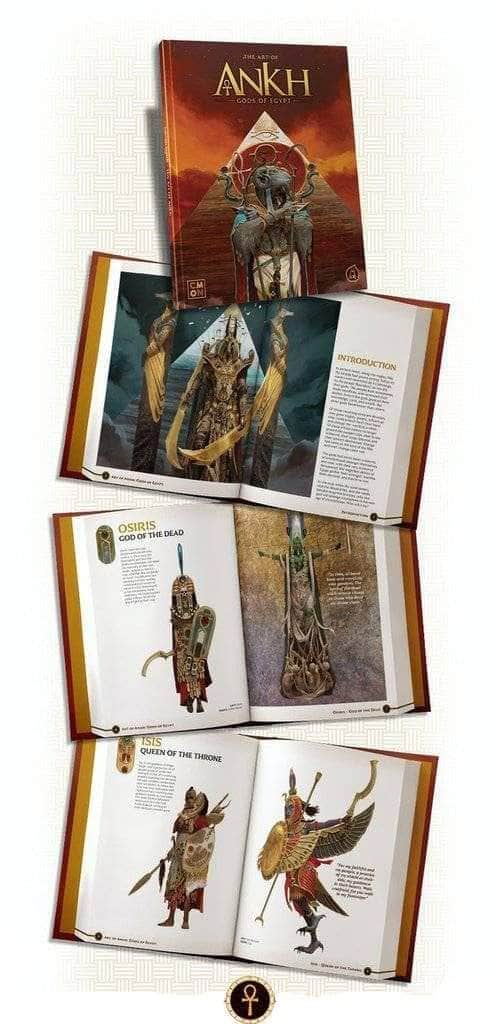
Ankh: Gods of Egypt transports players to a mythical past where the old ways are fading and the people of Egypt are beginning to favor a single, monotheistic religion. In this fiercely competitive game, 2 to 5 players take on the roles of legendary Egyptian deities like Ra, Anubis, and Isis, each struggling for dominance and survival. The ultimate goal is to become the last god standing, the sole object of worship for all of Egypt. This is achieved by accumulating Devotion, the game's victory points, which are earned through strategic control of monuments, demonstrations of power in battle, and the loyalty of your followers. As the game progresses, the stakes get higher, and gods who fall too far behind in Devotion face the ultimate threat: being forgotten by history forever.
The gameplay is driven by an elegant and highly tactical action selection system. On their turn, a player performs one or two of four possible actions—moving their figures, summoning units, gaining followers, or unlocking unique Ankh powers—and advances a corresponding marker on a shared event track. When a marker reaches the end of its path, a game-altering event is triggered for all players. These events include claiming control of powerful monuments, strategically dividing the board into new regions with camel caravans, and, most importantly, initiating Conflict. Combat is a deterministic affair, completely free of dice rolls. Players commit battle cards from their hand and sum the strength of their god and warriors in a region to determine the victor. A truly unique and dramatic feature for games with three or more players is the Merge event, where the two players with the lowest Devotion scores are forced to combine their powers, becoming a single, more powerful entity for the remainder of the game.
What makes Ankh: Gods of Egypt so compelling is its blend of pure strategy and intense player interaction. The absence of randomness in combat means every victory and defeat rests squarely on the players' shoulders, rewarding careful planning and clever card play. The shared action track creates a fascinating puzzle, as every action you take brings the game closer to an event that might benefit your opponents more than you. The game is a constant battle of wits, where you must anticipate your rivals' moves while advancing your own position. The god-merging mechanic is a brilliant twist, ensuring that no player feels completely out of the running and introducing a surprising cooperative dynamic into a cutthroat competitive game. It is a stunning conclusion to a celebrated trilogy of mythology-themed games, offering a deep, rewarding, and unforgettable strategic experience.
2-5 90m⚖️ 3.1
RANK #268
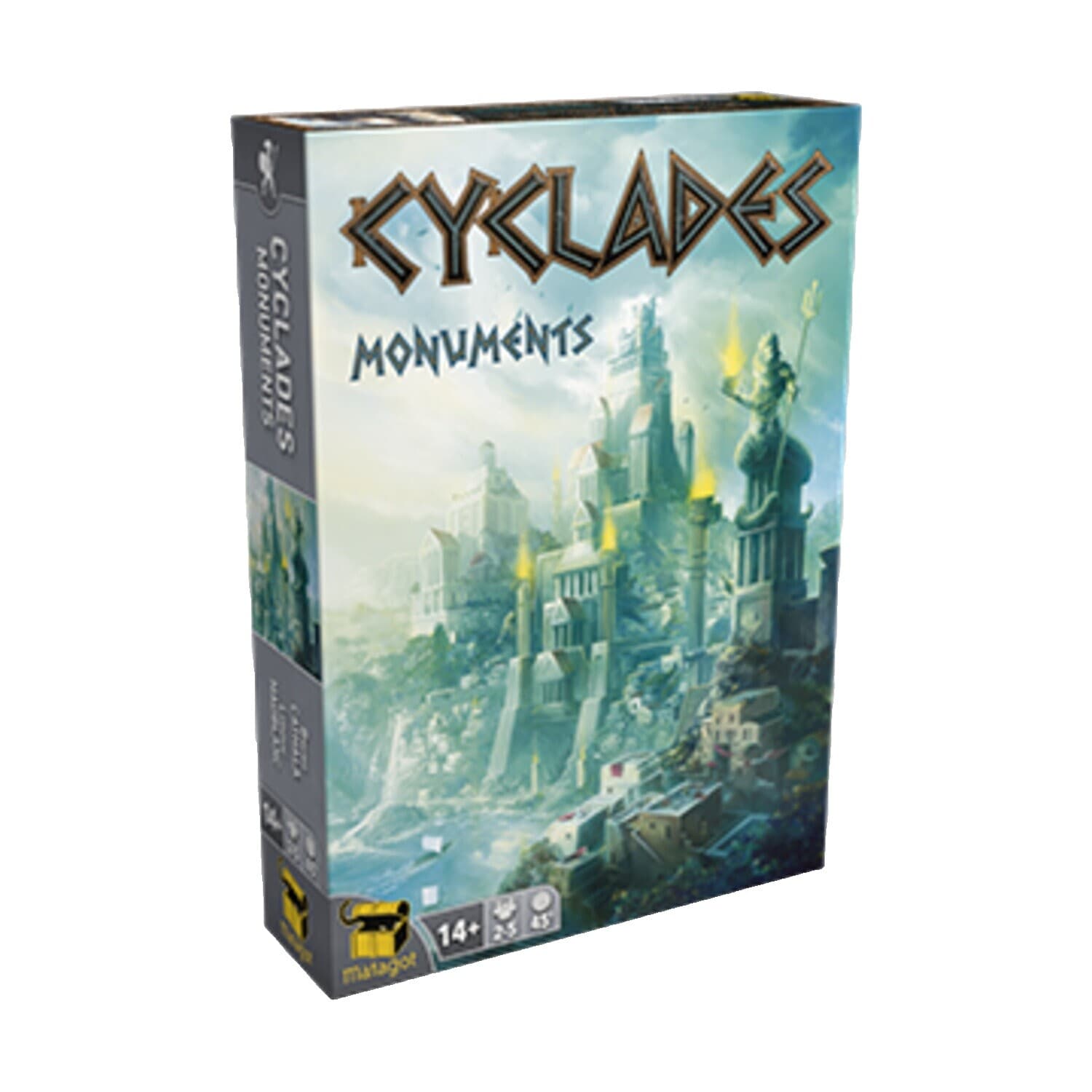
Cyclades
2009Immerse yourself in the golden age of Greek mythology with Cyclades, a masterful strategy game where players lead their people to glory in the Aegean Sea. Your ultimate goal is to achieve supremacy by being the first to erect two magnificent Metropolises. This grand feat can be accomplished through two distinct paths: demonstrating your civilization's prowess by constructing a full set of four specialized buildings—a Fortress, Port, Temple, and University—or by showcasing your cultural enlightenment through the acquisition of four Philosopher tokens. The race to this objective is a tense and dynamic struggle, forcing players to balance military conquest, economic development, and cultural influence to claim victory among the islands.
The game's engine is driven by a unique and compelling auction mechanic centered on earning the favor of the Olympian gods. Each round, players bid their precious gold to secure the patronage of Ares, Poseidon, Zeus, Athena, or Apollo. Winning a god's blessing grants a player the exclusive right to perform that deity's associated actions for the turn. Ares allows you to recruit and move armies, Poseidon commands the fleets, Zeus offers priests to cheapen future bids, and Athena provides the philosophers necessary for a cultural victory. This bidding phase is the strategic heart of Cyclades, creating a cauldron of intense player interaction where you must not only secure the actions you need but also deny critical opportunities to your rivals. Furthermore, players can summon legendary mythological creatures like the Kraken or Medusa, unleashing powerful, game-altering abilities that can dramatically shift the balance of power.
Cyclades is celebrated for its brilliant synthesis of a tight, money-driven auction with a direct and engaging area-control wargame. It cleverly avoids the pitfall of being solely about military might; a player focused entirely on combat can be outmaneuvered by an opponent who quietly builds an economic or cultural engine. The constant need to outbid and anticipate your opponents' desires ensures that there are no passive turns, making every decision meaningful. This elegant design, combined with the strong, evocative mythological theme and multiple paths to victory, provides a deeply strategic and highly replayable experience. It's a classic that challenges players to be cunning, adaptable, and ruthless in their quest to rule the Cyclades.
2-5 90m⚖️ 2.9
RANK #292
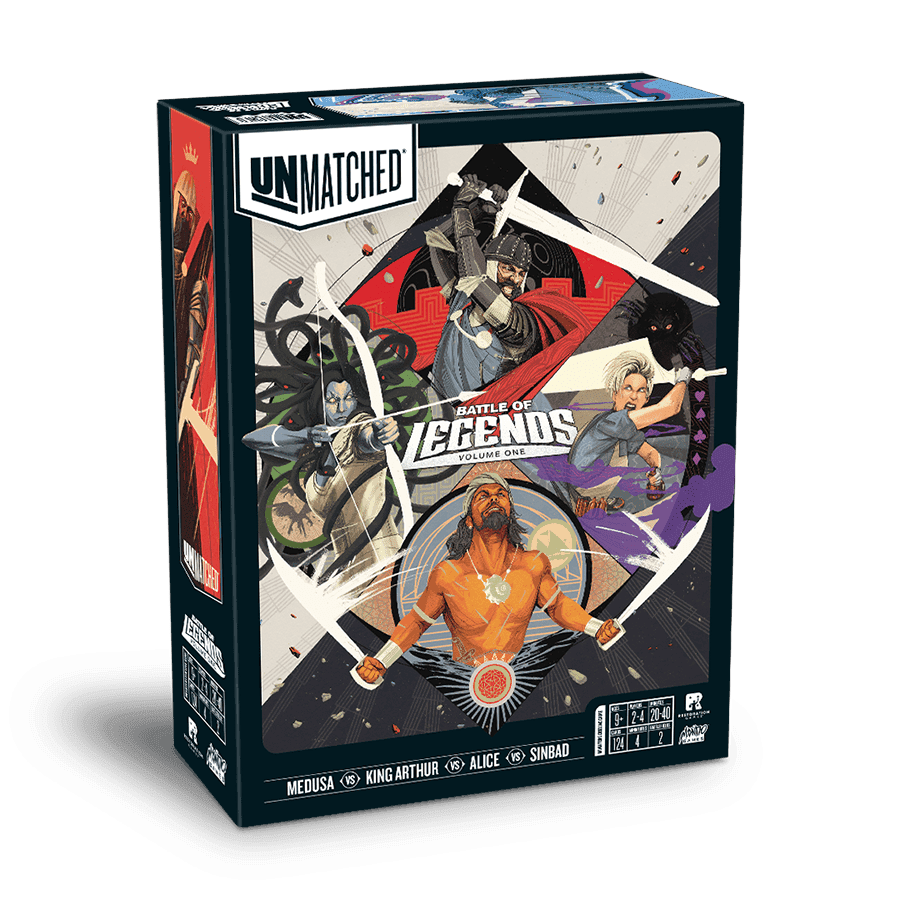
Unmatched: Battle of Legends, Volume One serves as the cornerstone of a widely acclaimed skirmish series, reinventing the tactical combat mechanics originally popularized by the Star Wars: Epic Duels system. This asymmetrical miniature game invites players to pit legendary figures from across folklore, literature, and history against one another in fast-paced duels. Whether it is the mythical Medusa staring down the Victorian Alice or King Arthur clashing with the seafaring Sinbad, the game thrives on the 'what if' scenarios of impossible combat. Each hero is accompanied by unique sidekicks and a specialized deck of cards, ensuring that no two fighters approach the battlefield with the same strategy or strengths.
The gameplay is defined by a 'no-luck' tactical system that replaces traditional dice rolling with strategic card management and precise positioning. On a turn, players must execute exactly two actions, choosing between maneuvering for better positioning, playing powerful utility schemes, or launching aggressive attacks. Movement is governed by a vibrant 'colored zone' system on the board, which simplifies line-of-sight calculations and encourages dynamic kiting or flanking maneuvers. Combat itself is a tense mind game where both the attacker and defender reveal cards simultaneously. Success depends on anticipating an opponent's defense and mastering the complex timing of effects that trigger 'Immediately', 'During Combat', or 'After Combat'. This layered timing system adds significant depth to the seemingly straightforward mechanics.
Part of the game's enduring appeal lies in its accessibility paired with high replayability. While the rules are simple enough to teach in minutes, the nuances of each character's 30-card deck provide a rich competitive environment. Players must learn to manage their hand carefully, as running out of cards leads to exhaustion and inevitable defeat. The visual presentation is equally striking, featuring the bold, graphic art style of Oliver Barrett, which gives the game a modern and sophisticated aesthetic. With its quick play sessions and the ability to mix and match heroes from other sets in the Unmatched line, this volume offers a perfect entry point for those seeking a 'bridge' title that balances light strategy with intense, thematic confrontation.
2-4 30m⚖️ 1.9
BoxNo Cover Art
RANK #304
Bitoku
2021Bitoku invites players into the ethereal world of a mythical Japanese forest where the Great Spirit is nearing the end of its life. As a Bitoku—a benevolent spirit of the woods—your objective is to prove your worthiness to succeed this ancient entity. The game is a 'heavy Euro' that presents a breathtaking, maximalist aesthetic, challenging players to manage their spiritual growth and influence across a multi-faceted board. By navigating the intricate balance between the physical and spiritual realms, participants strive to accumulate the most virtue, ultimately ascending to become the next Great Spirit of the Forest.
The heart of the experience lies in its interlocking systems, primarily driven by a unique blend of hand management and dice worker placement. Players start with a deck of Yo-kai cards, which serve a dual purpose: they provide immediate card abilities and 'unlock' Guardian dice for placement on the main board. These dice act as workers, where their numerical value dictates the strength of the action taken. A standout mechanic is 'Crossing the River,' where a die moved to the far side of the forest grants a secondary, potent action at the cost of its value and utility for the remainder of the round. This requires careful tempo management and forward-thinking.
Furthermore, elements of deck building and engine construction through Soul Crystals allow players to refine their strategies over the game's four-round structure, which tracks the passage of years and seasons. Bitoku is widely celebrated for its stunning table presence, featuring vibrant, dense artwork by Edu Valls that creates a truly immersive atmosphere. While the visual complexity and heavy iconography may seem daunting at first, enthusiasts love the game for its logical flow and deep rewarding gameplay. It offers a 'point salad' experience where multiple paths to victory coexist, from moving pilgrims along the Spirit Path to gathering powerful cards. The inclusion of a robust solo mode designed by Dávid Turczi adds significant value, making it a favorite for those who enjoy heavy strategy and high replayability.
1-4 120m⚖️ 3.7
Showing 1 to 12 of 20 games