Family Games
Browse all Family board games in the Meeple Pulse database.
Styles
Themes
AbstractAdventureAncientAnimalsArtBusinessCard GameCo-operativeComic BookCooperativeCrimeEconomicEnvironmentalismExplorationFantasyHistoricalHorrorHumorIntrigueLiteraryMagicMarvelMedievalModernMuseumMysteryMythologyNatureNauticalPoliticalPress Your LuckSatireSci-FiSocial CommentarySocial InteractionSpaceSuperheroesThematicTravelWarWesternWord-Guessing
Mechanics
3D PlacementActingAction / DexterityAction DraftingAction Point AllowanceAction Point Allowance SystemAction Point SystemAction PointsAction ProgrammingAction QueueAction RetrievalAction SelectionAction/EventAlliancesAlternate ActivationApp-AssistedApp-DrivenArea ControlArea InfluenceArea MajorityArea Majority / InfluenceArea MovementArgumentationAsymmetricAsymmetric FactionsAsymmetric GameAsymmetric PowersAsymmetrical PowersAuction & BiddingAuction/BiddingAuctioningBag BuildingBettingBetting and BluffingBetting and WageringBetting and WagersBiddingBingoBlind BiddingBluffingCampaign / Battle Card DrivenCampaign / LegacyCampaign / Legacy GameCampaign / Mission-basedCampaign / ScenariosCampaign GameCampaign PlayCard DraftingCard DrawingCard DrivenCard Driven ActionCard Driven CombatCard Driven Dice AllocationCard Driven MovementCard ManagementCard PlayCard Play / Hand ManagementCard Play Conflict ResolutionCard SheddingCard-Driven MovementCharacter CreationCharacter ProgressionChit-Pull SystemCo-op PlayCo-operative GameCo-operative PlayCode-breakingCombat ResolutionCombo ChainCommand CardsCommodity SpeculationCommunication LimitsContract FulfillmentContractsCooperative GameCooperative GameplayCooperative PlayCooperative Trick-takingDebateDeck BuildingDeck ConstructionDeck, Bag, and Pool BuildingDeck-BuildingDeductionDexterityDice DraftingDice PlacementDice RollingDiplomatic InfluenceDraftingDynamic Battle SystemEnclosureEnd Game BonusesEngine BuildingEngine-BuildingEscape RoomEvent DrivenExplorationFarmingFlip and WriteFollowFollow ActionGrid CoverageGrid MovementHand ManagementHex-and-CounterHexagon GridHidden MovementHidden RolesI Cut You ChooseIncomeInfluence / Area MajorityLadder ClimbingLegacyLegacy ElementsLegacy GameLegacy SystemLimited CommunicationLine DrawingLine of SightMancalaMap MovementMarketMarket DraftingMarket ManipulationMarket MechanicMarket SpeculationMatchingMeasurement MovementMemoryMission ObjectivesModular BoardModular Board ConstructionMovement TemplatesMulti-Use CardsMulti-use CardsMultiple ScenariosMust FollowNarrative ChoiceNarrative Choice / ParagraphNegotiationNegotiation MechanicsNetwork & Route BuildingNetwork BuildingNetwork and Route BuildingOne vs ManyOne vs. ManyOpen DraftingPaper-and-PencilPartnershipsPattern BuildingPattern RecognitionPick-up and DeliverPlayer EliminationPlayer InteractionPlayer JudgePoint SaladPoint to Point MovementPolyominoesPush Your LuckPush-Your-LuckPuzzlePuzzle-LikePuzzle-SolvingRaceReal-TimeRecipe FulfillmentResource ManagementRole PlayingRole SelectionRoll / Spin and MoveRondelRoute BuildingRoute-BuildingRoute/Network BuildingSanity SystemScenario / Campaign PlayScenario / Mission / Campaign GameScenario / Mission FunctionSecret Unit DeploymentSemi-Cooperative GameSet CollectionSheddingSimulationSimultaneous ActionSimultaneous Action SelectionSimultaneous Hidden AllocationSocial DeductionSocial InteractionSolo / Solitaire GameSpace ExplorationStat Check / Skill CheckStock HoldingStorytellingStrategic PlanningTableau BuildingTactical Decision-MakingTake ThatTargeted CluesTeam PlayTeam-Based GameTeam-Based GuessingTeamworkTech TreesTech Trees / Tech TracksTechnology & Armament TracksTechnology TreeTension & Aggression TracksTile DraftingTile LayingTile PlacementTime TrackTime TravelTower DefenseTrack MovementTradingTrick-takingTug of WarTurn Order: PassTurn Order: Stat-BasedUnit PlacementVariable Phase OrderVariable Player PowersVariable Set-upVariable SetupVictory Point TracksVotingWord AssociationWord GameWord GuessingWord-GuessingWord-guessingWordplayWorker Placement

RANK #259
Sea Salt & Paper
2022Sea Salt & Paper is a captivating card game that has enchanted players with its distinct and beautiful aesthetic, featuring photographs of actual origami sea creatures. Beneath its serene surface lies a surprisingly tactical game of set collection and calculated risks. The primary objective is to outscore opponents over several rounds by carefully curating a hand of cards with point-scoring combinations. Players aim to reach a specific point threshold, which varies by player count, to secure victory. However, a thrilling alternate path to triumph exists: collecting all four unique mermaid cards instantly wins the game, adding a layer of suspense to every draw. This elegant design packs a wealth of strategic depth into a small, portable box, making it an ideal travel companion.
The gameplay loop is deceptively simple yet full of meaningful decisions. On your turn, you must acquire a card by either drawing two from the top of the deck, keeping one and discarding the other, or by picking up the top card from one of two face-up discard piles. After adding a card, you can play pairs of identical "duo" cards from your hand to trigger powerful one-time effects. For instance, a pair of crabs allows you to steal a card from a discard pile, while two boats grant you an immediate extra turn. The round's tension culminates when a player amasses at least seven points. They can then declare "Stop," prompting all players to score their hands immediately. Alternatively, if they are feeling confident, they can declare "Last Chance." This gives every other player one final turn to improve their hand before the reveal, introducing a high-stakes push-your-luck element where the declarer risks losing their own card points for the chance at a significant bonus.
The game's immense appeal stems from this brilliant blend of accessibility and strategic depth. The rules can be taught in minutes, making it a perfect 'gateway' game for new players or a fantastic choice for a family game night. Yet, experienced gamers will appreciate the subtle tactics involved in managing their hand, tracking discard piles, and timing the end of the round. The "Last Chance" mechanic is a masterstroke, creating memorable moments of bluffing and suspense. Above all, the visual presentation is a standout feature; the origami art is not just beautiful but integral to the game's charming identity. This combination of fast-paced play, clever card-combo possibilities, and stunning artwork makes Sea Salt & Paper a modern classic that offers high replayability and joy in every hand.
2-4 30m⚖️ 1.5
RANK #297
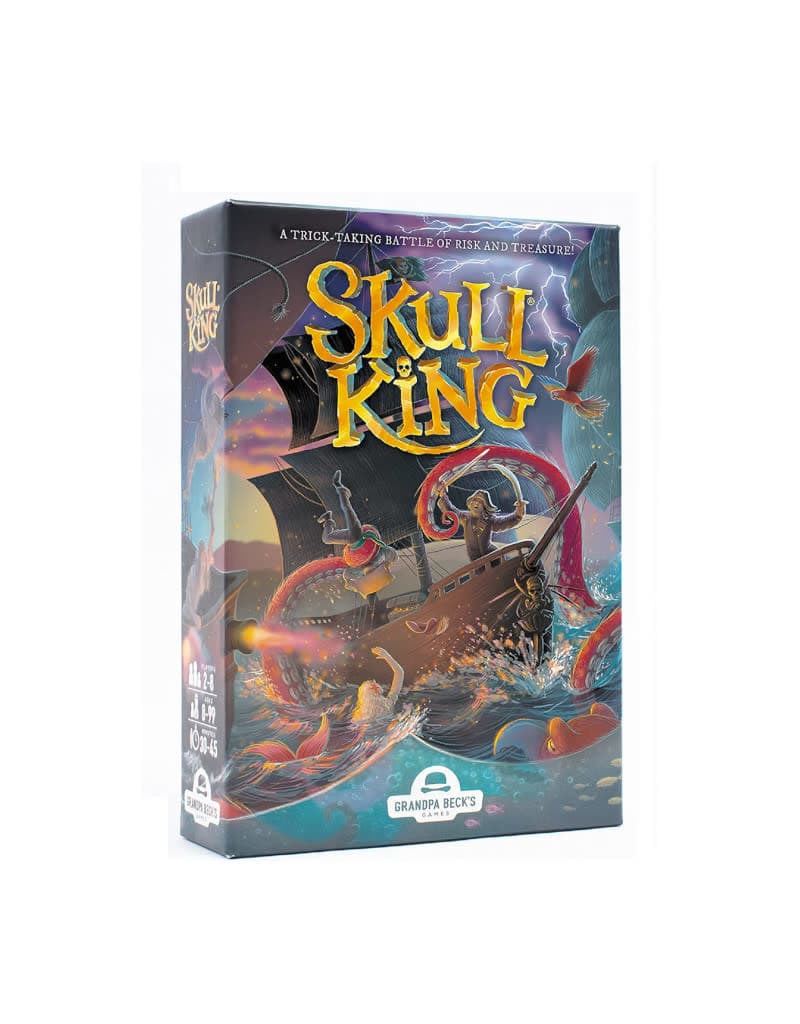
Skull King
2013Skull King is a high-stakes, pirate-themed trick-taking game that invites players to set sail on the high seas in search of loot and glory. Originally released in 2013, it has established itself as a modern classic in the predictive bidding genre, often compared to legendary games like 'Wizard' or 'Oh Hell!'. The ultimate goal is to accumulate the most points over ten rounds by accurately predicting exactly how many tricks you will capture in each hand. Unlike traditional card games where the strongest hand always wins, Skull King rewards precision and psychological maneuvering, forcing players to balance aggression with calculated retreats.
The game progresses through ten rounds, with the hand size increasing by one card each round. After examining their cards, all players simultaneously declare their bids using the iconic 'Yo-Ho-Ho!' chant, revealing their intended trick count with their fists. The core of the game lies in its intricate power hierarchy. While players must follow the lead suit of Parrots, Maps, or Chests, they can pivot to the black Jolly Roger trump suit or deploy powerful special cards. Pirates can dominate numbered cards, but they are vulnerable to the dreaded Skull King. However, even the King can be lured to his doom by the alluring Mermaid. This rock-paper-scissors dynamic ensures that no lead is ever truly safe, and the tide of battle can turn with a single card.
What makes Skull King truly beloved by gaming groups is its blend of high-energy social interaction and deep strategic depth. The scoring system is brutal yet rewarding; players earn 20 points per trick for a correct bid but lose 10 points for every trick they are off. The legendary 'bid zero' strategy offers a high-risk, high-reward path to victory, potentially granting massive points or leading to a devastating shipwreck. The game's charm lies in these moments of triumph and betrayal, where a well-timed Escape card or a surprise Pirate can ruin an opponent's perfect round. It remains a staple for families and hobbyists alike due to its accessibility and the endless variety provided by its special character cards.
2-6 45m⚖️ 1.8
BoxNo Cover Art
All Aboard!
1976All Aboard!, released in 1976, is a nostalgic maritime race game that transports players to a world of piers, harbors, and high-seas competition. Designed for two to four players, this title was specifically crafted to be accessible for children as young as five, making it a staple in family game cupboards during the late 1970s. The game encapsulates the excitement of a boat race, where the primary objective is to navigate your vessel across a series of docks to reach the finish line before your rivals. It focuses on a 'race to the finish' structure that is easy to understand but provides enough variation to keep young minds engaged throughout the entire session.
The mechanical heart of All Aboard! is its movement system, which involves moving a boat token from one pier to another across a colorful, illustrated board. Unlike purely linear races, the board layout and the 'surprises' mentioned in the rules suggest a pathing system where players must make choices about their route and react to the shifting tides of fortune. The game is famously noted for its high-interaction mechanics, allowing players to leave their opponents 'high and dry' through tactical positioning. This means that progress is never guaranteed, and a player in the lead can quickly find themselves stalled by a clever move from a competitor. This interaction creates a dynamic environment where the leaderboard shifts constantly, teaching children about the highs and lows of competitive play in a fun, nautical setting.
Visually and thematically, All Aboard! is a product of its time, featuring the bright, bold colors and whimsical illustrations associated with the 1970s Whitman board game line. Its unique appeal lies in the combination of simple rules and the emotional high of successfully blocking an opponent or finding a shortcut to the final pier. For many, it serves as a nostalgic touchstone for the 'golden age' of mass-market family games, representing a period where tabletop entertainment was focused on tactile movement and shared social experiences. The game’s fast-paced nature ensures that it does not overstay its welcome, typically wrapping up in under twenty minutes, making it a charming example of how early board games used simple nautical themes to create lasting memories.
2-4 20m⚖️ 1.1