Family Games
Browse all Family board games in the Meeple Pulse database.
Styles
Themes
AbstractAdventureAncientAnimalsArtBusinessCard GameCo-operativeComic BookCooperativeCrimeEconomicEnvironmentalismExplorationFantasyHistoricalHorrorHumorIntrigueLiteraryMagicMarvelMedievalModernMuseumMysteryMythologyNatureNauticalPoliticalPress Your LuckSatireSci-FiSocial CommentarySocial InteractionSpaceSuperheroesThematicTravelWarWesternWord-Guessing
Mechanics
3D PlacementActingAction / DexterityAction DraftingAction Point AllowanceAction Point Allowance SystemAction Point SystemAction PointsAction ProgrammingAction QueueAction RetrievalAction SelectionAction/EventAlliancesAlternate ActivationApp-AssistedApp-DrivenArea ControlArea InfluenceArea MajorityArea Majority / InfluenceArea MovementArgumentationAsymmetricAsymmetric FactionsAsymmetric GameAsymmetric PowersAsymmetrical PowersAuction & BiddingAuction/BiddingAuctioningBag BuildingBettingBetting and BluffingBetting and WageringBetting and WagersBiddingBingoBlind BiddingBluffingCampaign / Battle Card DrivenCampaign / LegacyCampaign / Legacy GameCampaign / Mission-basedCampaign / ScenariosCampaign GameCampaign PlayCard DraftingCard DrawingCard DrivenCard Driven ActionCard Driven CombatCard Driven Dice AllocationCard Driven MovementCard ManagementCard PlayCard Play / Hand ManagementCard Play Conflict ResolutionCard SheddingCard-Driven MovementCharacter CreationCharacter ProgressionChit-Pull SystemCo-op PlayCo-operative GameCo-operative PlayCode-breakingCombat ResolutionCombo ChainCommand CardsCommodity SpeculationCommunication LimitsContract FulfillmentContractsCooperative GameCooperative GameplayCooperative PlayCooperative Trick-takingDebateDeck BuildingDeck ConstructionDeck, Bag, and Pool BuildingDeck-BuildingDeductionDexterityDice DraftingDice PlacementDice RollingDiplomatic InfluenceDraftingDynamic Battle SystemEnclosureEnd Game BonusesEngine BuildingEngine-BuildingEscape RoomEvent DrivenExplorationFarmingFlip and WriteFollowFollow ActionGrid CoverageGrid MovementHand ManagementHex-and-CounterHexagon GridHidden MovementHidden RolesI Cut You ChooseIncomeInfluence / Area MajorityLadder ClimbingLegacyLegacy ElementsLegacy GameLegacy SystemLimited CommunicationLine DrawingLine of SightMancalaMap MovementMarketMarket DraftingMarket ManipulationMarket MechanicMarket SpeculationMatchingMeasurement MovementMemoryMission ObjectivesModular BoardModular Board ConstructionMovement TemplatesMulti-Use CardsMulti-use CardsMultiple ScenariosMust FollowNarrative ChoiceNarrative Choice / ParagraphNegotiationNegotiation MechanicsNetwork & Route BuildingNetwork BuildingNetwork and Route BuildingOne vs ManyOne vs. ManyOpen DraftingPaper-and-PencilPartnershipsPattern BuildingPattern RecognitionPick-up and DeliverPlayer EliminationPlayer InteractionPlayer JudgePoint SaladPoint to Point MovementPolyominoesPush Your LuckPush-Your-LuckPuzzlePuzzle-LikePuzzle-SolvingRaceReal-TimeRecipe FulfillmentResource ManagementRole PlayingRole SelectionRoll / Spin and MoveRondelRoute BuildingRoute-BuildingRoute/Network BuildingSanity SystemScenario / Campaign PlayScenario / Mission / Campaign GameScenario / Mission FunctionSecret Unit DeploymentSemi-Cooperative GameSet CollectionSheddingSimulationSimultaneous ActionSimultaneous Action SelectionSimultaneous Hidden AllocationSocial DeductionSocial InteractionSolo / Solitaire GameSpace ExplorationStat Check / Skill CheckStock HoldingStorytellingStrategic PlanningTableau BuildingTactical Decision-MakingTake ThatTargeted CluesTeam PlayTeam-Based GameTeam-Based GuessingTeamworkTech TreesTech Trees / Tech TracksTechnology & Armament TracksTechnology TreeTension & Aggression TracksTile DraftingTile LayingTile PlacementTime TrackTime TravelTower DefenseTrack MovementTradingTrick-takingTug of WarTurn Order: PassTurn Order: Stat-BasedUnit PlacementVariable Phase OrderVariable Player PowersVariable Set-upVariable SetupVictory Point TracksVotingWord AssociationWord GameWord GuessingWord-GuessingWord-guessingWordplayWorker Placement
RANK #145
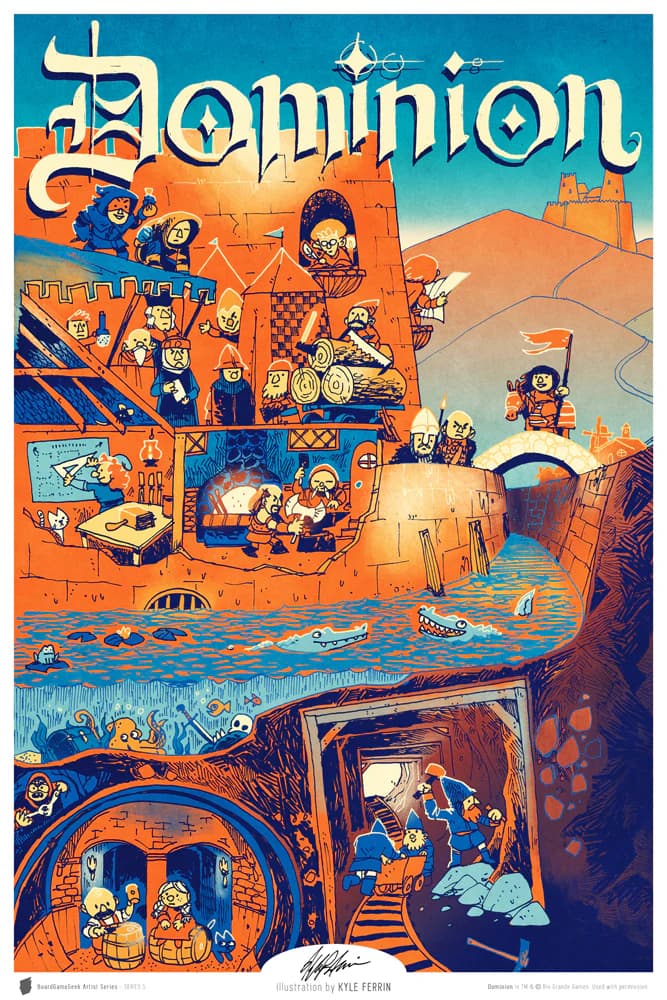
Dominion
2008Step into the role of a monarch in Dominion, the revolutionary 2008 title that single-handedly created the deck-building genre. In this game, you are a ruler, like your parents before you, of a quaint and peaceful kingdom filled with rivers and evergreens. However, unlike them, you have aspirations of grandeur! You seek to expand your influence and forge the largest and most prosperous dominion of all. Players compete to accumulate the most victory points by the end of the game, which are primarily acquired by purchasing Estate, Duchy, and Province cards. Each player begins with an identical, humble deck of ten cards containing a few low-value Treasures and Estates. Your objective is to skillfully build upon this foundation, creating a well-oiled machine of a deck that can generate wealth and secure victory.
The gameplay is famously elegant, following a simple turn structure often called the 'A-B-C' loop: Action, Buy, and Cleanup. During your Action phase, you can play one Action card from your hand to perform special abilities, such as drawing more cards, gaining extra buys, or even attacking your opponents. In the Buy phase, you use the Treasure cards you've drawn to purchase new cards from a shared central supply. This supply, known as the Kingdom, consists of ten unique stacks of Action cards that are randomized each game, ensuring no two sessions are ever alike. Finally, in the Cleanup phase, you discard your entire hand and all cards played, then draw a fresh hand of five. When your draw pile is empty, your discard pile is shuffled to form a new one, now enriched with the powerful cards you recently acquired.
Dominion's enduring appeal lies in its brilliant fusion of simplicity and strategic depth. The game is celebrated for its immense replayability; the vast number of possible Kingdom card combinations creates an endless puzzle to solve. Players relish the challenge of discovering powerful synergies and building efficient 'engines' within their decks. A core tension drives every decision: do you acquire more powerful Action cards to improve your deck's function, or do you start buying Victory cards to secure your win? These victory cards are crucial for scoring but provide no abilities, effectively clogging your hand and slowing your engine down. This constant strategic trade-off, combined with its accessible rules and quick playtime, has cemented Dominion's status as a timeless classic and an essential gateway into the world of modern board games.
2-4 30m⚖️ 2.4
RANK #166
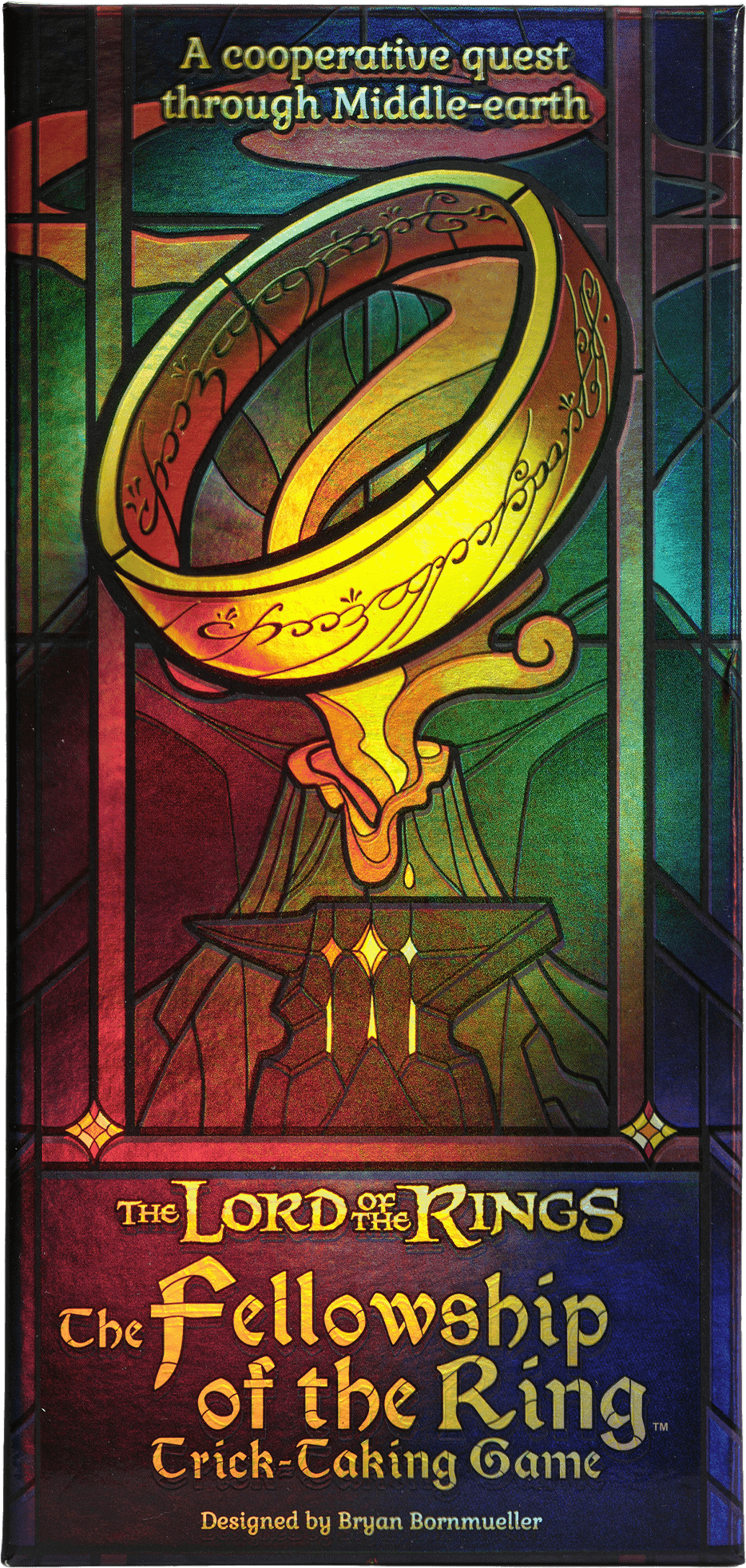
Immerse yourself in J.R.R. Tolkien's iconic world with The Lord of the Rings: The Fellowship of the Ring – Trick-Taking Game, a cooperative and narrative-driven card game. This title translates the epic journey from the first book into a compelling campaign experience. Players work together, not against each other, to navigate an 18-chapter story that unfolds over multiple sessions. Each game, representing one chapter, is a quick but challenging puzzle. The ultimate goal is not simply to win tricks, but to collaboratively guide the Fellowship through the perils of Middle-earth by fulfilling specific, story-driven objectives. The campaign structure provides a rich, evolving experience, but a standalone mode also ensures the adventure can be revisited time and again after the main story concludes.
The gameplay is built on a familiar trick-taking foundation, where players must follow the lead suit if possible. The game introduces five distinct suits: Hills, Mountains, Forests, Shadows, and the pivotal Ring suit. The core innovation lies in its cooperative nature, where success hinges on the entire group achieving their individual goals simultaneously. For example, the player taking on the role of Frodo—determined by who is dealt the '1 of Rings' card—might need to secure a certain number of Ring cards. Meanwhile, another character like Pippin might be tasked with winning the fewest tricks possible. This creates a fascinating dynamic of shared purpose, complicated by rules that limit communication. Players must deduce each other's intentions and play their cards wisely to ensure everyone succeeds, making every decision impactful.
What makes this game particularly appealing is its elegant fusion of a beloved narrative with the satisfying puzzle of a cooperative trick-taking game, a genre popularized by titles like *The Crew*. The thematic integration is deep, with character objectives reflecting their personalities and roles in the story. The '1 of Rings' card serves as the game's only trump, a powerful tool that must be used judiciously, echoing the Ring's own significance. The game is highly accessible, offering variants for 1-4 players, including a dedicated solo mode where one player manages four hands. Complemented by distinctive stained-glass style artwork, this game offers a fresh and engaging way for both board game enthusiasts and Tolkien fans to experience the fellowship's legendary quest.
1-4 20m⚖️ 2.1
RANK #230
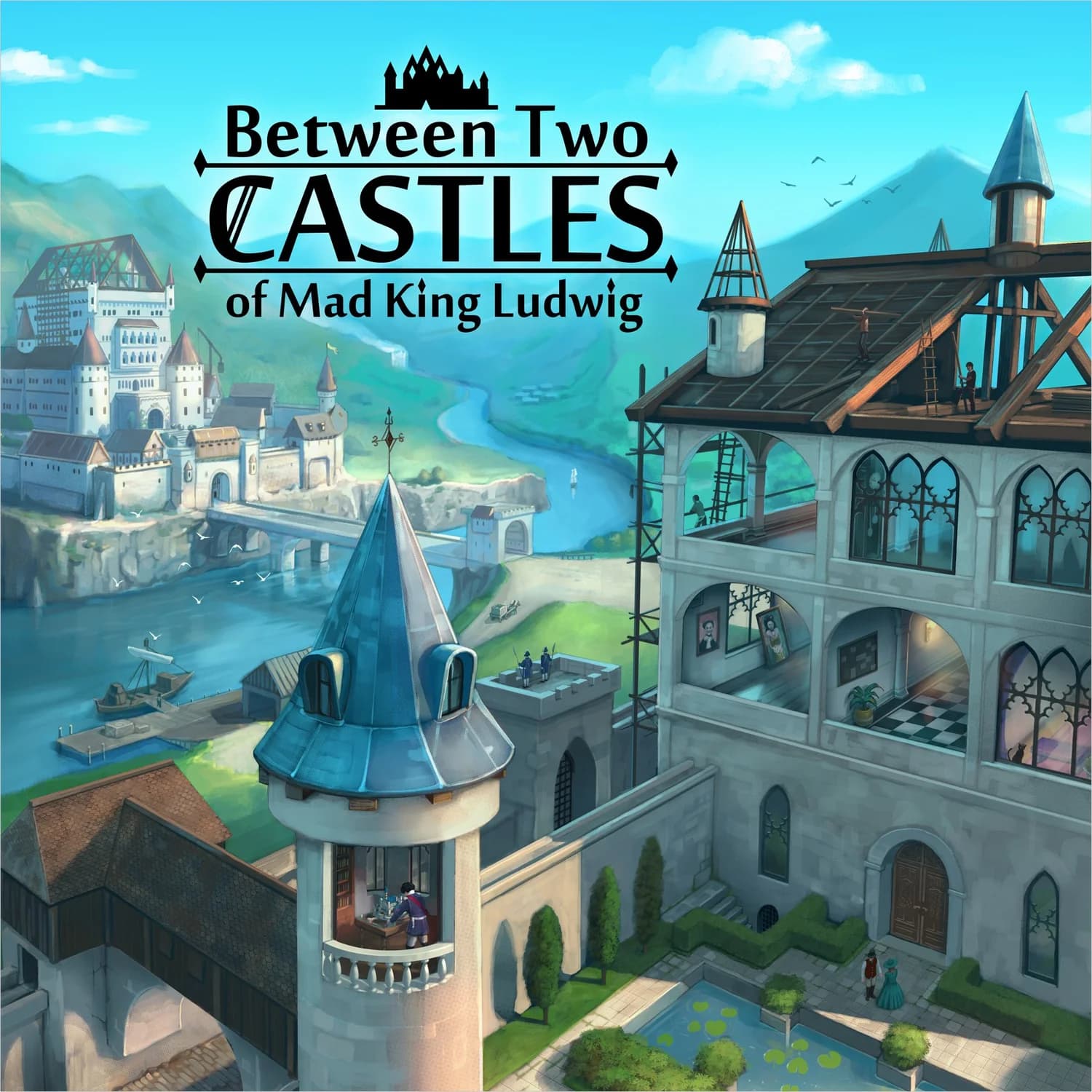
In "Castles of Mad King Ludwig," players enter the whimsical world of 19th-century Bavaria, tasked with building a magnificent castle for the eccentric King Ludwig II. As master architects, you compete to design the most impressive and valuable structure. This tile-laying game is a clever blend of spatial reasoning and economic management, where the ultimate goal is to earn the most victory points. Points are awarded for constructing specific room types, fulfilling the king's public demands, known as 'King's Favors', and achieving personal, secret objectives. Each player will finish the game with a completely unique, sprawling castle, a physical representation of their strategic decisions and architectural vision, all in the service of pleasing a very particular monarch.
The game's central pillar is its innovative 'Master Builder' mechanic. Each round, one player takes on this role, drawing a selection of room tiles and individually pricing them for the other players. In turn, opponents may purchase one room tile, paying the cost directly to the Master Builder. This creates a tense and engaging pricing dilemma: ask too much, and you'll earn nothing; ask too little, and your rivals will get a steal. The Master Builder takes the last available room but must pay their own listed price to the bank. Once a room is acquired, it's immediately added to the player's personal castle layout, connecting to other rooms via doorways. Judicious placement is key, as rooms can grant or cost points based on what they're adjacent to. Furthermore, completing a room by connecting all its entrances triggers a valuable bonus based on its type, which could be anything from extra cash to an immediate second turn.
The enduring appeal of "Castles of Mad King Ludwig" lies in this constant, engaging player interaction driven by the market and the deeply satisfying spatial puzzle of castle construction. The Master Builder system ensures every player is invested in every turn, evaluating prices and anticipating others' needs. The challenge of optimizing your layout—placing a Dining Room near a Kitchen for bonus points while avoiding placing an Activity Room near a Sleeping Room—is a delightful puzzle. With variable public goals, a huge stack of unique room tiles, and secret bonus cards, no two games are ever the same, offering immense replayability. Watching your nonsensical yet functional castle take shape is a wonderfully thematic and rewarding experience that has cemented the game's status as a modern classic in the genre.
1-4 90m⚖️ 2.7
RANK #237
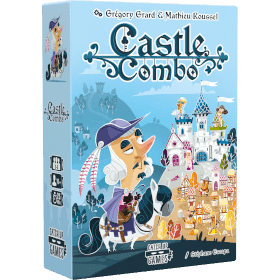
Castle Combo
2024In Castle Combo, players compete to assemble the most prosperous medieval domain by strategically recruiting a cast of unique characters. This fast-paced card game challenges you to build a personal 3x3 grid that represents your growing realm. Your goal is to skillfully place character cards to create powerful scoring synergies and maximize your victory points. By the game's end, the player whose tableau demonstrates the most clever combinations and generates the highest score will be declared the ruler of the most prestigious castle in the land, earning victory through careful planning and tactical recruitment.
At its core, the gameplay revolves around tableau building and card drafting from two distinct markets: the 'Village' and the 'Castle'. A 'Messenger' pawn dictates which of these two card rows is active for you to purchase from on your turn, adding a simple yet engaging tactical layer. Players must spend 'Gold' to acquire a new character, which is then placed orthogonally adjacent to an existing card in their personal grid. Each card not only provides an immediate effect, such as granting more Gold or special 'Keys', but also contributes to end-game scoring based on its final position relative to others. Keys can be spent to manipulate the Messenger or refresh the card market, offering crucial flexibility. The game concludes swiftly once all players have completed their nine-card grid, at which point final scores are tallied.
The unique appeal of Castle Combo lies in its elegant blend of accessibility and strategic depth. Its rules are straightforward enough to teach in minutes, making it an ideal gateway game for new players or a perfect 'filler' for game night. However, the puzzle of optimizing your 3x3 grid presents a compelling challenge for even seasoned gamers. The dual-market mechanic forces players to constantly adapt their plans, while the race to find the most effective card combinations ensures high replayability. Coupled with vibrant and playful art, the game provides a satisfying and engaging experience that packs a surprising amount of decision-making into a very short playtime.
2-5 20m⚖️ 1.9
RANK #239
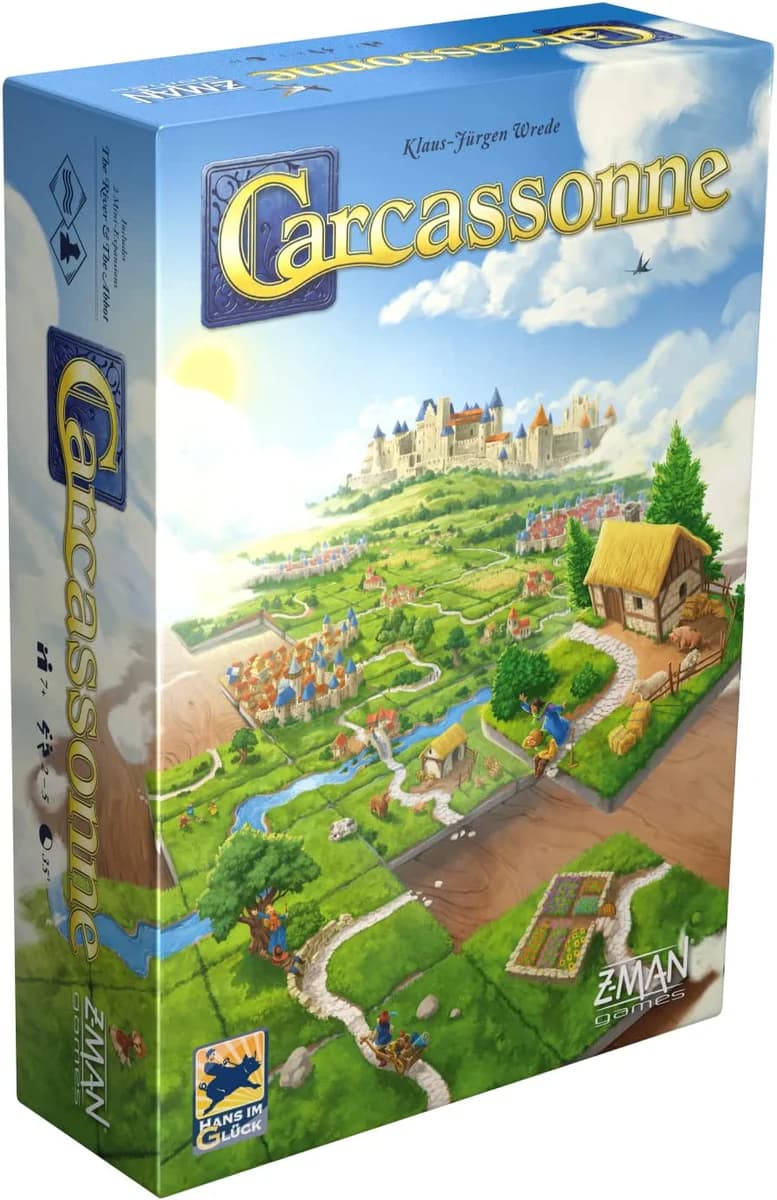
Carcassonne
2000Step into the role of a medieval lord in Carcassonne, the award-winning classic that has introduced millions to the modern world of tabletop gaming. In this celebrated title, players collectively construct the landscape of southern France, one tile at a time. The goal is to be the most successful ruler by strategically deploying your loyal followers—now famously known as 'meeples'—to claim and complete valuable features. By scoring points from magnificent walled cities, winding roads, pious monasteries, and sprawling fields, you will vie for dominance. Winner of the prestigious Spiel des Jahres in 2001, Carcassonne is a quintessential 'gateway' game, renowned for its elegant design and enduring appeal that has captivated players for decades.
The gameplay is deceptively simple yet offers compelling tactical decisions on every turn. The sequence of play is straightforward: draw a landscape tile, place it adjacent to an existing tile ensuring all features like roads and city walls match, and then decide whether to place one of your limited meeples on a feature of that newly placed tile. Placing a meeple as a knight in a city, a thief on a road, or a monk in a monastery commits that follower until the feature is completed. A completed city is fully enclosed, a road connects two distinct endpoints, and a monastery is surrounded by eight tiles. Upon completion, the feature scores points and the meeple is returned to your supply, making the management of your small band of followers a critical strategic challenge.
Carcassonne's brilliance lies in its seamless blend of accessibility and surprising strategic depth. While the rules can be taught in under five minutes, the game reveals layers of cunning tactics and cutthroat player interaction. Players can cleverly place tiles to merge their own fledgling features with an opponent's nearly-completed metropolis, either sharing the points or outright stealing control by having the majority of meeples. A unique long-term strategic element involves placing meeples as farmers in the fields, who remain on the board until the very end to score points for every completed city their pasture touches. This constant tension between short-term gains and long-term investment ensures that no two games are ever the same, making Carcassonne an infinitely replayable puzzle of spatial awareness and clever influence.
2-5 45m⚖️ 1.9

RANK #270
Fantasy Realms
2017In Fantasy Realms, players are powerful rulers competing to forge the most legendary kingdom in the land. Your entire realm, with all its might and magic, is represented by a hand of just seven cards. The goal is to accumulate the highest score by the game's end by assembling a hand of cards that synergize in powerful and clever ways. You might build a mighty military force with Kings, Knights, and Armies, or perhaps you'll wield elemental magic with a Wildfire and a Wizard. The challenge is to find the most potent combination from the hundreds of possibilities, turning a simple hand of cards into a high-scoring epic.
The gameplay is deceptively simple and incredibly fast. On your turn, you perform just two steps: draw one card, then discard one card. The strategic tension comes from the draw; you can either take the unknown top card from the central deck or select any face-up card from the discard area. This shared discard pile creates a dynamic pool of options that all players are watching. Each unique card in the deck has a base strength and a crucial bonus or penalty text that dictates how it interacts with other cards in your hand. A single card can unlock a massive scoring chain, while another might blank the powers of several others. The game ends quickly and suddenly once the tenth card is placed in the discard area, at which point all players calculate their final scores.
Fantasy Realms is celebrated for its elegant design, perfectly balancing accessibility with profound strategic depth. It can be taught in a minute, making it an excellent gateway game, yet the puzzle it presents offers endless variety and challenge for veteran gamers. The true mastery of the game comes not from understanding complex rules, but from recognizing card synergies and adapting your strategy on the fly. You are constantly evaluating your hand, the tempting cards in the discard pile, and what your opponents might be collecting. This 'combo-licious' puzzle, combined with its brisk 20-minute playtime, makes it a highly replayable and addictive experience, perfect as a game night opener or a main event played over multiple rounds.
3-6 20m⚖️ 1.8
RANK #291
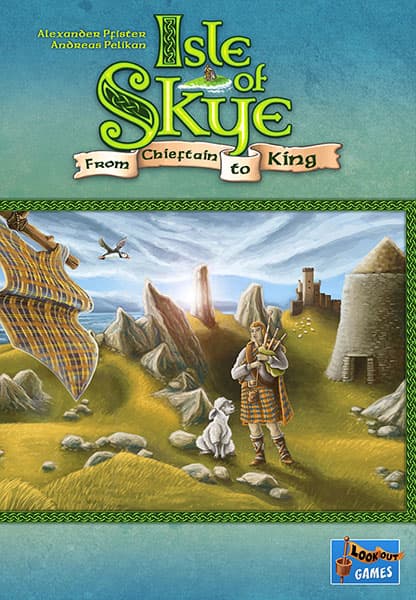
Isle of Skye: From Chieftain to King is a celebrated tile-placement and economic strategy game where players step into the shoes of ambitious clan leaders. Set against the rugged and beautiful backdrop of the Scottish Highlands, the ultimate objective is to expand your territory and accumulate the most victory points to become the rightful King of the Isle. Unlike many traditional tile-laying games, this title introduces a dynamic player-driven economy that ensures no two sessions feel the same. By strategically managing gold and territory, players must navigate a competitive landscape where every decision impacts both their own kingdom and the wealth of their opponents.
The heart of the game lies in its unique auction and pricing system. Each round, players draw three landscape tiles and secretly decide their fate behind a screen. One tile must be discarded using an 'Axe' token, while the remaining two are assigned a gold price from the player's personal reserve. This creates a fascinating risk-reward tension: pricing a tile too low makes it an easy target for rivals to purchase, while pricing it too high forces you to pay that exact amount to the bank if no one else buys it. Once prices are revealed, players take turns purchasing tiles from one another, with the remaining tiles being added to their own expanding kingdoms. Connectivity is crucial, as mountain, grass, and water edges must match perfectly. Whiskey barrels connected to the central castle via roads generate essential income, fueling future bids.
One of the most praised aspects of Isle of Skye is its variable scoring system. From a pool of sixteen different scoring tiles, only four are used in any given game, and their activation rotates through different rounds. This means players must constantly pivot their strategies—one game might reward large bodies of water, while the next focuses on the number of sheep or ships in your territory. The blend of a spatial puzzle with the cutthroat economic interaction of a price-setting auction makes it a standout 'connoisseur' level game that remains accessible to families. It offers deep strategic layers without overstaying its welcome, earning its place as a modern classic in the board gaming world.
2-5 45m⚖️ 2.3

Sagrada
2007Sagrada is a visually stunning dice-drafting game where players take on the role of artisans competing to construct the most beautiful stained-glass window for the Sagrada Família. The objective is to achieve the highest score by strategically placing colorful translucent dice onto a personal player board, which represents a window frame. Each player works with a unique pattern card that dictates specific placement requirements, ensuring that every session offers a fresh set of challenges. By balancing personal secret goals, shared public objectives, and strict construction rules, players must meticulously plan their moves to create a masterpiece that captures the essence of light and color.
The core of the game revolves around a drafting mechanic where a pool of colored dice is rolled each round. Players take turns selecting a single die and positioning it on their 4x5 grid, following a "snake draft" order where the last player picks twice in a row. Placement is governed by strict adjacency rules: dice cannot be placed next to others of the same color or value (orthogonally). Furthermore, the pattern cards inserted into the player boards often feature specific restrictions, requiring certain spaces to be filled with exact colors or shades. To navigate these constraints, players can spend favor tokens to utilize special Tool cards, which provide powerful abilities like moving already-placed dice, re-rolling, or ignoring certain placement rules. This interplay between the luck of the roll and the tactical use of tools creates a satisfying, low-stress puzzle-solving experience.
Sagrada is widely beloved for its accessibility and its breathtaking table presence. The high-quality components, particularly the vibrant, jewel-like dice, mimic the look of real stained glass when they catch the light, making it a favorite for both casual and serious gamers. Beyond its aesthetics, the game offers a deep tactical experience that rewards foresight and adaptability. Because the available tools and scoring objectives change every game, the replayability is exceptionally high. It manages to feel like a relaxing, meditative activity while simultaneously challenging the brain with its spatial constraints and optimization puzzles, firmly establishing itself as a modern classic in the abstract strategy genre.
1-4 45m⚖️ 2.3