Family Games
Browse all Family board games in the Meeple Pulse database.
Styles
Themes
AbstractAdventureAncientAnimalsArtBusinessCard GameCo-operativeComic BookCooperativeCrimeEconomicEnvironmentalismExplorationFantasyHistoricalHorrorHumorIntrigueLiteraryMagicMarvelMedievalModernMuseumMysteryMythologyNatureNauticalPoliticalPress Your LuckSatireSci-FiSocial CommentarySocial InteractionSpaceSuperheroesThematicTravelWarWesternWord-Guessing
Mechanics
3D PlacementActingAction / DexterityAction DraftingAction Point AllowanceAction Point Allowance SystemAction Point SystemAction PointsAction ProgrammingAction QueueAction RetrievalAction SelectionAction/EventAlliancesAlternate ActivationApp-AssistedApp-DrivenArea ControlArea InfluenceArea MajorityArea Majority / InfluenceArea MovementArgumentationAsymmetricAsymmetric FactionsAsymmetric GameAsymmetric PowersAsymmetrical PowersAuction & BiddingAuction/BiddingAuctioningBag BuildingBettingBetting and BluffingBetting and WageringBetting and WagersBiddingBingoBlind BiddingBluffingCampaign / Battle Card DrivenCampaign / LegacyCampaign / Legacy GameCampaign / Mission-basedCampaign / ScenariosCampaign GameCampaign PlayCard DraftingCard DrawingCard DrivenCard Driven ActionCard Driven CombatCard Driven Dice AllocationCard Driven MovementCard ManagementCard PlayCard Play / Hand ManagementCard Play Conflict ResolutionCard SheddingCard-Driven MovementCharacter CreationCharacter ProgressionChit-Pull SystemCo-op PlayCo-operative GameCo-operative PlayCode-breakingCombat ResolutionCombo ChainCommand CardsCommodity SpeculationCommunication LimitsContract FulfillmentContractsCooperative GameCooperative GameplayCooperative PlayCooperative Trick-takingDebateDeck BuildingDeck ConstructionDeck, Bag, and Pool BuildingDeck-BuildingDeductionDexterityDice DraftingDice PlacementDice RollingDiplomatic InfluenceDraftingDynamic Battle SystemEnclosureEnd Game BonusesEngine BuildingEngine-BuildingEscape RoomEvent DrivenExplorationFarmingFlip and WriteFollowFollow ActionGrid CoverageGrid MovementHand ManagementHex-and-CounterHexagon GridHidden MovementHidden RolesI Cut You ChooseIncomeInfluence / Area MajorityLadder ClimbingLegacyLegacy ElementsLegacy GameLegacy SystemLimited CommunicationLine DrawingLine of SightMancalaMap MovementMarketMarket DraftingMarket ManipulationMarket MechanicMarket SpeculationMatchingMeasurement MovementMemoryMission ObjectivesModular BoardModular Board ConstructionMovement TemplatesMulti-Use CardsMulti-use CardsMultiple ScenariosMust FollowNarrative ChoiceNarrative Choice / ParagraphNegotiationNegotiation MechanicsNetwork & Route BuildingNetwork BuildingNetwork and Route BuildingOne vs ManyOne vs. ManyOpen DraftingPaper-and-PencilPartnershipsPattern BuildingPattern RecognitionPick-up and DeliverPlayer EliminationPlayer InteractionPlayer JudgePoint SaladPoint to Point MovementPolyominoesPush Your LuckPush-Your-LuckPuzzlePuzzle-LikePuzzle-SolvingRaceReal-TimeRecipe FulfillmentResource ManagementRole PlayingRole SelectionRoll / Spin and MoveRondelRoute BuildingRoute-BuildingRoute/Network BuildingSanity SystemScenario / Campaign PlayScenario / Mission / Campaign GameScenario / Mission FunctionSecret Unit DeploymentSemi-Cooperative GameSet CollectionSheddingSimulationSimultaneous ActionSimultaneous Action SelectionSimultaneous Hidden AllocationSocial DeductionSocial InteractionSolo / Solitaire GameSpace ExplorationStat Check / Skill CheckStock HoldingStorytellingStrategic PlanningTableau BuildingTactical Decision-MakingTake ThatTargeted CluesTeam PlayTeam-Based GameTeam-Based GuessingTeamworkTech TreesTech Trees / Tech TracksTechnology & Armament TracksTechnology TreeTension & Aggression TracksTile DraftingTile LayingTile PlacementTime TrackTime TravelTower DefenseTrack MovementTradingTrick-takingTug of WarTurn Order: PassTurn Order: Stat-BasedUnit PlacementVariable Phase OrderVariable Player PowersVariable Set-upVariable SetupVictory Point TracksVotingWord AssociationWord GameWord GuessingWord-GuessingWord-guessingWordplayWorker Placement
RANK #92
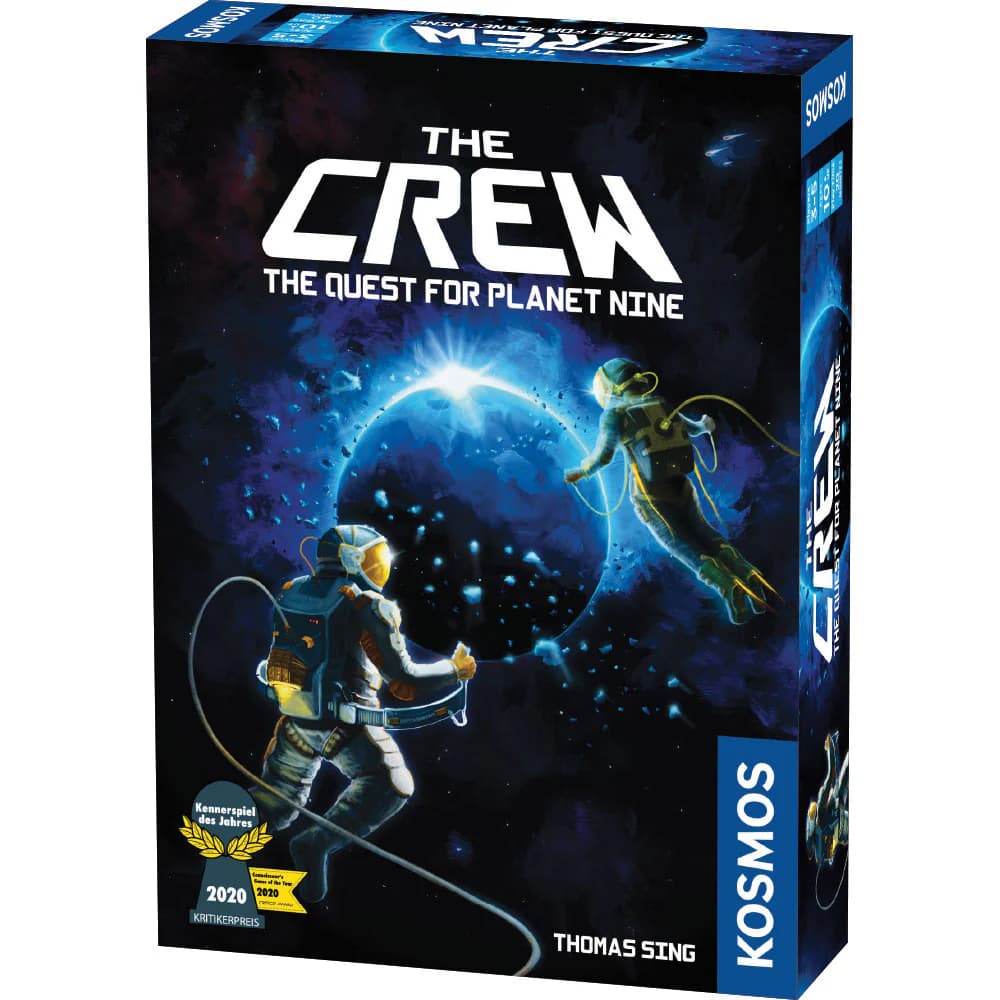
The Crew: The Quest for Planet Nine is a highly acclaimed, scenario-driven cooperative card game that takes players on a thrilling journey through the cosmos. Rather than competing against one another, participants must unite their intellect and strategy to complete a series of fifty progressive missions outlined in a captivating narrative logbook. The primary objective is to embark on a deep-space expedition to uncover the mysteries of an elusive ninth planet at the edge of our solar system. By working together as a unified team of astronauts, players navigate through increasingly difficult challenges, striving to achieve shared victories in a vacuum where every single decision matters.
At its core, the gameplay revolves around a brilliant twist on the classic trick-taking genre. In a traditional trick-taking game like Spades or Hearts, individuals vie to claim the most tricks. However, in this collaborative environment, the crew must meticulously orchestrate the gameplay so that specific team members win the exact tricks containing designated target cards. The deck consists of four colored suits alongside a special trump suit composed of powerful Rocket cards. At the start of a mission, a Captain is chosen by revealing the highest Rocket card, and players draft miniature Task Cards that dictate their personal objectives for that round. Because the game thematically represents the harsh, silent vacuum of space, strict communication limits are enforced. Players are entirely forbidden from openly discussing their hands. Instead, they must rely on a restricted token-based communication system, allowing them to reveal just one card per mission and signal whether it is their highest, lowest, or only card in a particular suit.
The unique appeal of this interstellar adventure lies in its extraordinary ability to blend accessible, easy-to-learn rules with profound strategic depth. Earning the prestigious 2020 Kennerspiel des Jahres award, it masterfully bridges the gap between casual family entertainment and intense, expert-level puzzle solving. Enthusiasts are endlessly captivated by the profound satisfaction that arises from executing a perfectly timed sequence of plays without ever uttering a single word. As the fifty-chapter campaign unfolds, the difficulty ramps up organically, ensuring that groups are continually tested and engaged. The modular, mission-based structure means that sessions can be as brief as twenty minutes or span several hours across multiple evenings. Ultimately, it transforms a familiar, age-old card mechanism into a masterclass of deductive reasoning, silent synergy, and cooperative triumph that keeps gaming groups returning to the table time and time again.
2-4 60m⚖️ 2.0
RANK #166
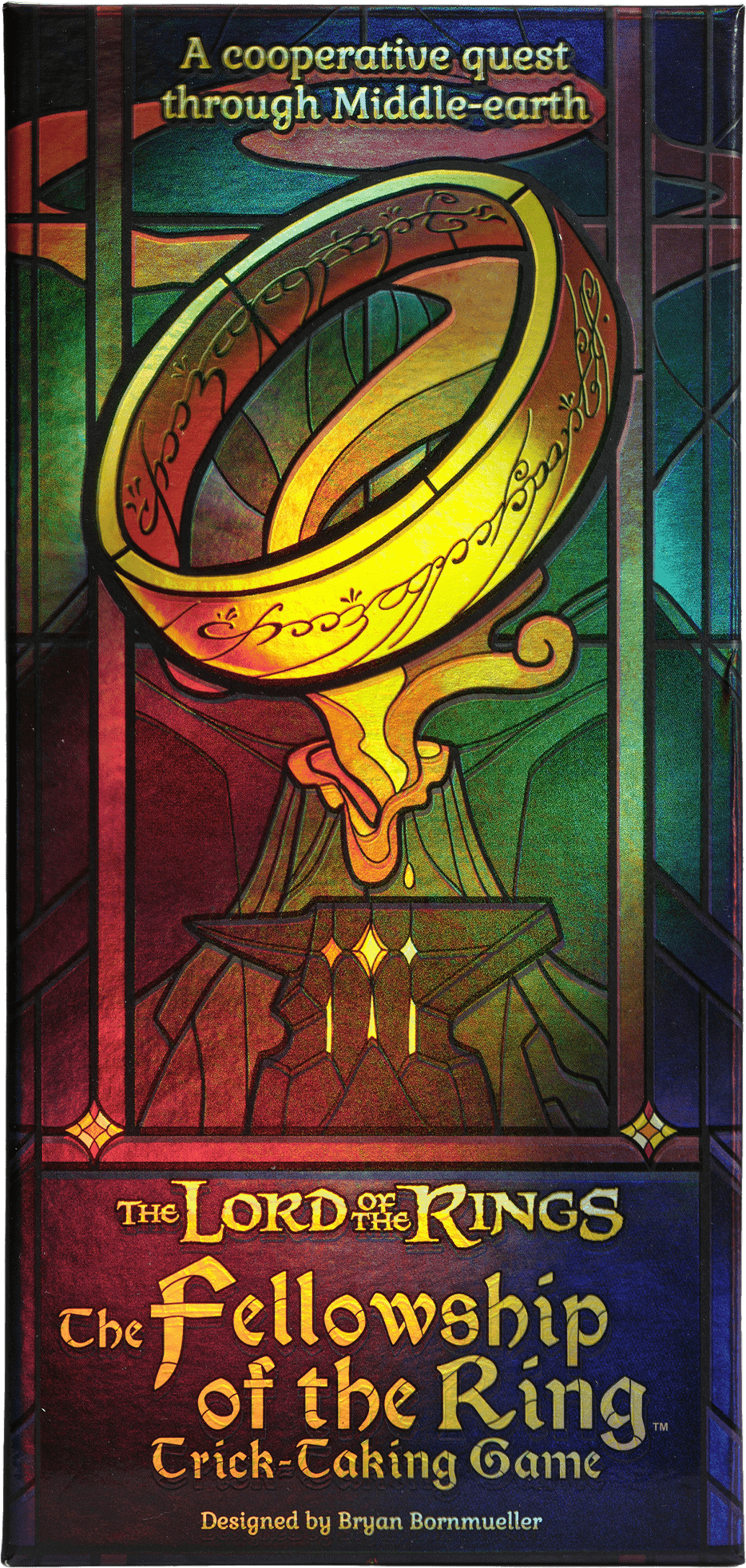
Immerse yourself in J.R.R. Tolkien's iconic world with The Lord of the Rings: The Fellowship of the Ring – Trick-Taking Game, a cooperative and narrative-driven card game. This title translates the epic journey from the first book into a compelling campaign experience. Players work together, not against each other, to navigate an 18-chapter story that unfolds over multiple sessions. Each game, representing one chapter, is a quick but challenging puzzle. The ultimate goal is not simply to win tricks, but to collaboratively guide the Fellowship through the perils of Middle-earth by fulfilling specific, story-driven objectives. The campaign structure provides a rich, evolving experience, but a standalone mode also ensures the adventure can be revisited time and again after the main story concludes.
The gameplay is built on a familiar trick-taking foundation, where players must follow the lead suit if possible. The game introduces five distinct suits: Hills, Mountains, Forests, Shadows, and the pivotal Ring suit. The core innovation lies in its cooperative nature, where success hinges on the entire group achieving their individual goals simultaneously. For example, the player taking on the role of Frodo—determined by who is dealt the '1 of Rings' card—might need to secure a certain number of Ring cards. Meanwhile, another character like Pippin might be tasked with winning the fewest tricks possible. This creates a fascinating dynamic of shared purpose, complicated by rules that limit communication. Players must deduce each other's intentions and play their cards wisely to ensure everyone succeeds, making every decision impactful.
What makes this game particularly appealing is its elegant fusion of a beloved narrative with the satisfying puzzle of a cooperative trick-taking game, a genre popularized by titles like *The Crew*. The thematic integration is deep, with character objectives reflecting their personalities and roles in the story. The '1 of Rings' card serves as the game's only trump, a powerful tool that must be used judiciously, echoing the Ring's own significance. The game is highly accessible, offering variants for 1-4 players, including a dedicated solo mode where one player manages four hands. Complemented by distinctive stained-glass style artwork, this game offers a fresh and engaging way for both board game enthusiasts and Tolkien fans to experience the fellowship's legendary quest.
1-4 20m⚖️ 2.1
RANK #177
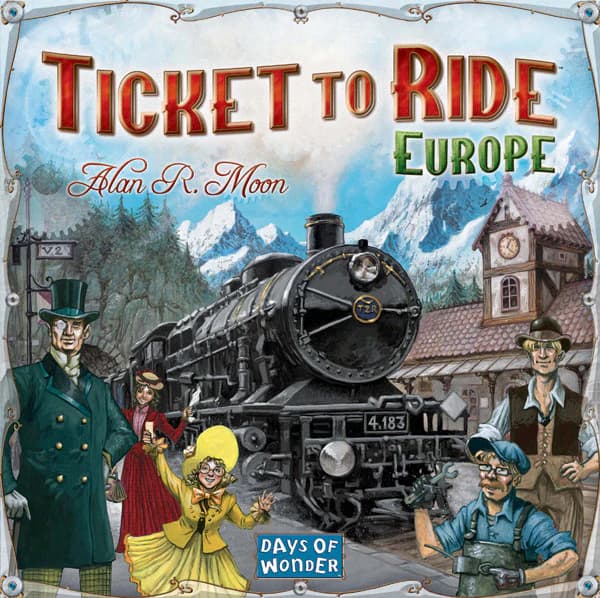
Ticket to Ride: Europe transports players to the golden age of steam travel at the turn of the 20th century. In this standalone installment of the beloved train adventure series, you are not just a passenger but a budding railway tycoon, competing to build the most impressive rail network across the continent. The ultimate goal is to amass the most points by the end of the game. This is achieved through a combination of strategically claiming routes between iconic European cities, successfully connecting distant destinations specified on secret ticket cards, and constructing the longest continuous path of trains for a substantial end-game bonus. Each decision matters as you race against your rivals to dominate the railways, from the misty hills of Edinburgh to the sun-drenched shores of Constantinople.
The game is celebrated for its elegant and accessible ruleset. On your turn, you choose one of four simple actions: draw more train car cards, claim a route on the board, draw new destination tickets, or build a train station. Claiming a route involves collecting and playing a set of train car cards that match the color and length of the desired path, earning you immediate points. This Europe-centric version introduces several clever mechanics that add new layers of strategy. Ferries are special sea routes that require powerful locomotive (wild) cards to claim. Tunnels introduce a thrilling push-your-luck element; when you try to build through a mountain, you must draw extra cards from the deck, potentially increasing the cost of the route unexpectedly. Finally, the introduction of Train Stations provides a strategic safety net, allowing you to use a single route segment owned by an opponent to help complete one of your own destination tickets, though at the cost of end-game points for unused stations.
Ticket to Ride: Europe has earned its place as a cornerstone of modern board gaming, largely due to its status as a premier 'gateway' game. It's incredibly easy to teach to newcomers and families, with games often concluding in under an hour, yet it offers enough strategic depth to keep veteran gamers engaged. The core tension between building your own network and inadvertently blocking opponents creates a compelling and interactive experience without direct confrontation. The additions of tunnels, ferries, and stations subtly enhance the original's formula, providing more varied decisions and reducing the frustration of being completely cut off from a critical city. This perfect balance of simplicity, strategy, and high replayability makes it a timeless classic that continues to bring people to the table for another journey across Europe.
2-5 60m⚖️ 1.9

RANK #212
Embark on an epic science-fiction journey in "Welcome to the Moon," a narrative-driven campaign game that builds upon the celebrated 'flip-and-write' system. In this ambitious sequel, players are tasked with a monumental mission: saving humanity by establishing a thriving colony on the moon. The game is ingeniously structured as a series of eight distinct 'adventures,' each representing a critical phase of the colonization project. These adventures are linked by a branching, overarching story where your successes and failures in one chapter directly influence the challenges and opportunities you'll face in the next. The goal isn't just to score points on a single map, but to navigate a multi-stage campaign, making shrewd decisions that will guide your faction's progress and ultimately determine the fate of your lunar settlement across a generation-spanning saga.
The core gameplay loop is elegantly simple yet rich with strategic depth. Each round, three sets of cards are revealed, with each set containing a number card and an action card. All players simultaneously choose one pair to use on their personal, dry-erase adventure sheet for that mission. The number must be written into a space, adhering to the fundamental rule of placing values in ascending order within defined zones. The chosen action grants a powerful bonus, such as activating special abilities, collecting resources, or advancing mission objectives. What truly sets the experience apart is that each of the eight adventures features a completely unique player sheet with its own rules, spatial puzzles, and thematic scoring conditions, transforming the gameplay from launching your ship in Adventure 1 to developing a lunar city in a later mission.
"Welcome to the Moon" captivates players with its unique blend of accessible mechanics and deep, long-term strategy. Its most celebrated feature is the campaign system, which elevates the game far beyond a standard flip-and-write by creating a persistent, evolving world. The sense of discovery as you unlock new adventures and see the consequences of your choices unfold is a powerful hook that encourages repeated play. This versatility is a major strength; you can easily pull out any of the eight adventures for a quick, satisfying standalone game, or immerse yourself in the full campaign for a richer, more narrative experience. This flexibility, combined with its capacity for solo play, makes it a remarkable and highly replayable package for anyone who enjoys clever puzzles and grand, thematic stories.
1-6 30m⚖️ 2.4
RANK #236
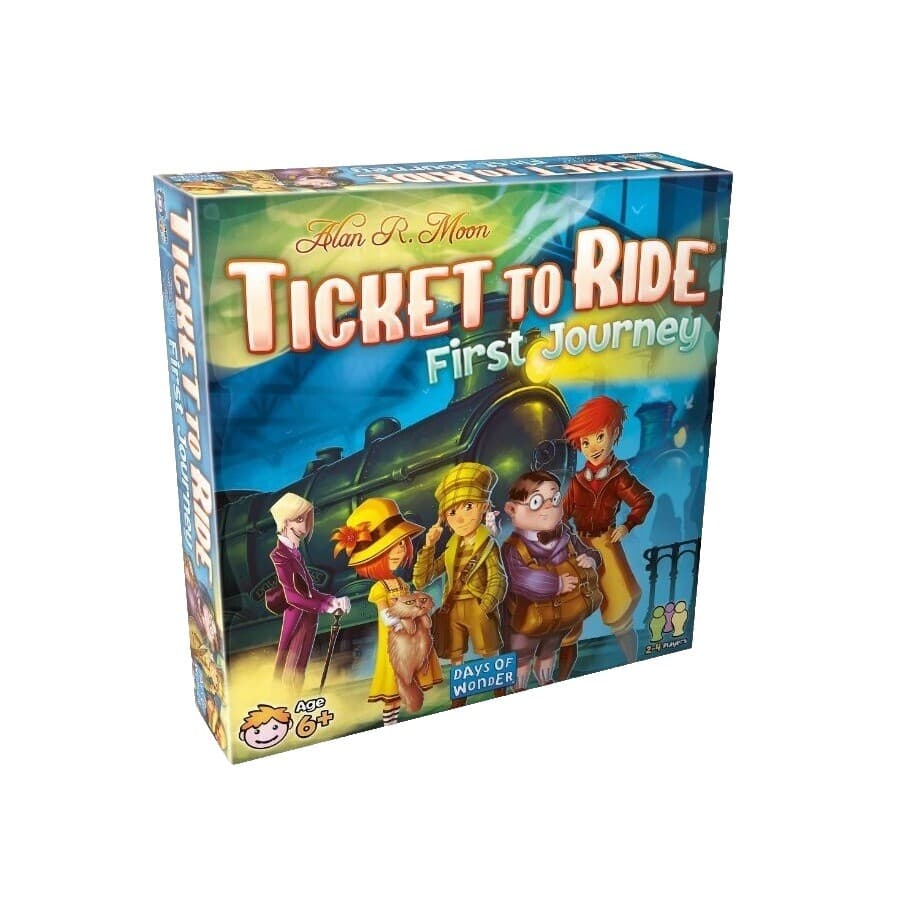
Embark on a frosty railway adventure with *Ticket to Ride: Nordic Countries*, a standalone installment in the award-winning series designed specifically for a more intimate and competitive experience. Set against the beautiful, snow-dusted backdrop of Denmark, Finland, Norway, and Sweden, this game challenges two or three players to become the region's greatest transportation magnate. The core objective remains familiar to fans of the series: collect colored train car cards to claim railway routes, strategically connecting cities across the map. Your primary source of points comes from fulfilling secret Destination Tickets, each one tasking you with linking two specific cities. Successfully completing these tickets adds to your score, but failure will cost you dearly. The player who has amassed the most points from their routes, completed tickets, and the coveted 'Globetrotter' bonus for the most tickets fulfilled, will be declared the winner.
The gameplay is elegantly simple yet rich with strategic choices. On your turn, you perform one of three actions: draw more train car cards, claim a route by discarding a matching set of cards, or draw new Destination Tickets to potentially increase your score. *Nordic Countries* introduces compelling twists on this classic formula with the inclusion of Ferries and Tunnels. Ferries are special sea routes that demand a specific number of powerful Locomotive wild cards to claim, making these cards exceptionally valuable. Tunnels add a thrilling element of risk; after committing your cards to a mountain route, you must reveal cards from the top of the deck, potentially forcing you to play extra cards to complete the connection. This version also uniquely alters the rules for Locomotives, restricting their use primarily to these special routes, which intensifies the strategic planning around their acquisition and use.
What makes *Ticket to Ride: Nordic Countries* a standout title is its brilliantly crafted map, which is significantly tighter and more constrained than its predecessors. This design choice inherently creates a high-stakes environment where player interaction is not just possible, but inevitable. Players must constantly watch their opponents, anticipate their moves, and decide whether to build their own network or defensively block a critical path. The scarcity of double-routes means competition for key connections is fierce from the very start. This heightened tension, combined with a brisk playtime of 30-60 minutes, makes it an exceptionally engaging and replayable game for couples, families, and anyone seeking a fast-paced, light-strategy experience with a healthy dose of direct competition.
2-3 45m⚖️ 1.9

RANK #255
Ticket to Ride
2004Ticket to Ride whisks players away on a grand cross-country train adventure, firmly establishing itself as one of the most beloved and accessible modern board games. In this competitive journey, players vie to become the most successful railroad magnate by the turn of the 20th century. The primary goal is to accumulate the highest number of points. Victory is achieved through a combination of strategically claiming railway routes between iconic cities, fulfilling the secret itineraries detailed on Destination Tickets, and constructing the longest continuous path of train cars on the map. It's a game of elegant design, where foresight and clever planning are rewarded, making every decision a crucial step toward dominating the rails and securing your legacy.
The gameplay is famously straightforward, with a set of rules that can be taught in mere minutes. Each turn, a player must choose one of three simple actions. They can draw two Train Car cards, which come in various colors needed to claim routes, either from a face-up display or blindly from the deck. Alternatively, a player can claim a route on the board by discarding a set of cards that match the route's color and length, immediately scoring points based on its size. The final option is to draw more Destination Tickets, which offer substantial bonus points for connecting distant cities but come with a risk—any uncompleted tickets at the game's end will count against your score. This simple action structure keeps the game moving at a brisk pace, while wild Locomotive cards add a layer of flexibility to players' plans. The end game is triggered when one player's stock of plastic trains dwindles to two or fewer, after which everyone gets one last turn to make their final moves.
The enduring appeal of Ticket to Ride lies in its perfect balance of simplicity and strategic depth. It serves as a quintessential 'gateway game', expertly bridging the gap for newcomers to the board gaming hobby without alienating veteran players. The tension quietly builds as the game progresses; the board becomes a crowded network of competing lines, and the routes you desperately need might be snatched up by an opponent just before your turn. This creates a subtle yet engaging form of player interaction that is more about opportunistic blocking than direct confrontation. The satisfaction of completing a long, coast-to-coast destination ticket is immense, and the combination of set collection, route building, and secret objectives provides a highly replayable experience. Its charming presentation and straightforward rules have made it a staple for family game nights and a celebrated classic worldwide.
2-5 60m⚖️ 1.8
RANK #258
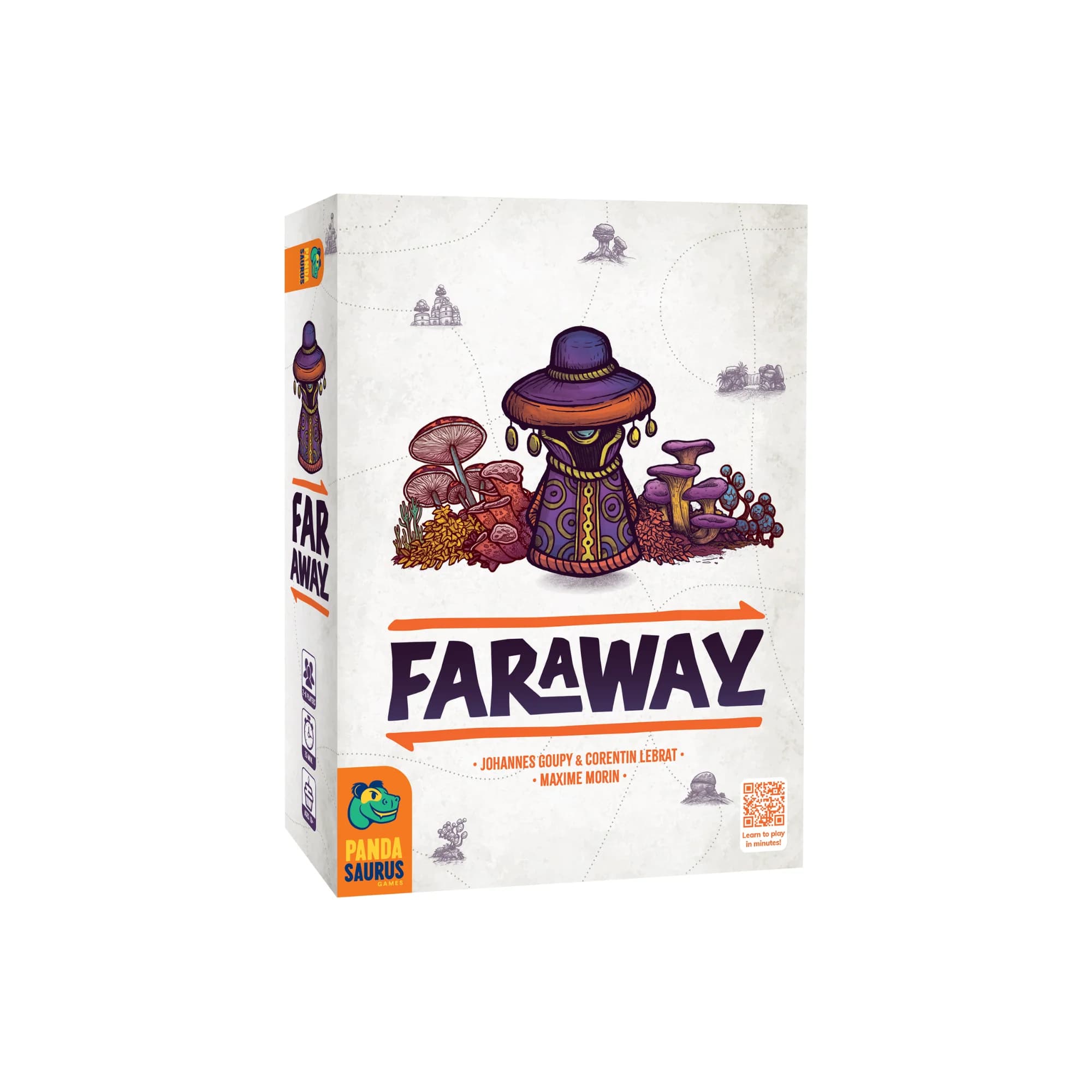
Faraway
2023Embark on an expedition to the enigmatic continent of Alula in Faraway. In this clever card game, players compete to become the most renowned explorer by charting a path across eight distinct regions. The objective is to amass the most fame (victory points) by strategically laying out a row of cards that tells the story of your journey. However, the game introduces a captivating twist: your expedition is scored not by the path you forged, but by the memories you recall as you look back on it. This innovative reverse-scoring mechanism is the heart of the experience, challenging players to think ahead by planning backwards, turning a simple card-laying game into a delightful and thoughtful puzzle.
The game unfolds over eight rounds, with players simultaneously choosing and revealing a region card from their hand to add to their personal tableau, extending it from left to right. These cards are numbered and feature various colors and symbols crucial for scoring. A key tactical decision arises when you play a card with a number higher than the one preceding it, which allows you to acquire a powerful Sanctuary card that grants bonus icons or unique scoring opportunities. Following the card placement, players draft new cards for their hand. In a neat balancing act, the player who played the lowest-numbered card in the round gets the first choice from the central display, creating a constant tension between playing high for Sanctuaries and playing low for a better draft pick.
What makes Faraway truly stand out is its brilliant endgame scoring. Once all eight region cards have been played, the entire journey is flipped face-down. Players then reveal their cards one by one, starting from the last card they played and moving leftward. As each card is turned face-up, its scoring conditions are resolved based only on the icons visible on the cards revealed so far (i.e., those to its right in the original tableau). This 'journey back' forces a complete shift in perspective. A card that seems weak when played might become invaluable for scoring later cards, while a powerful early card might offer no benefit for the final scoring tally. This forward-planning, backward-scoring puzzle provides a deeply satisfying and accessible challenge, making every game a fresh and engaging strategic exercise with minimal player conflict and a brisk playtime.
2-6 25m⚖️ 1.8
RANK #297
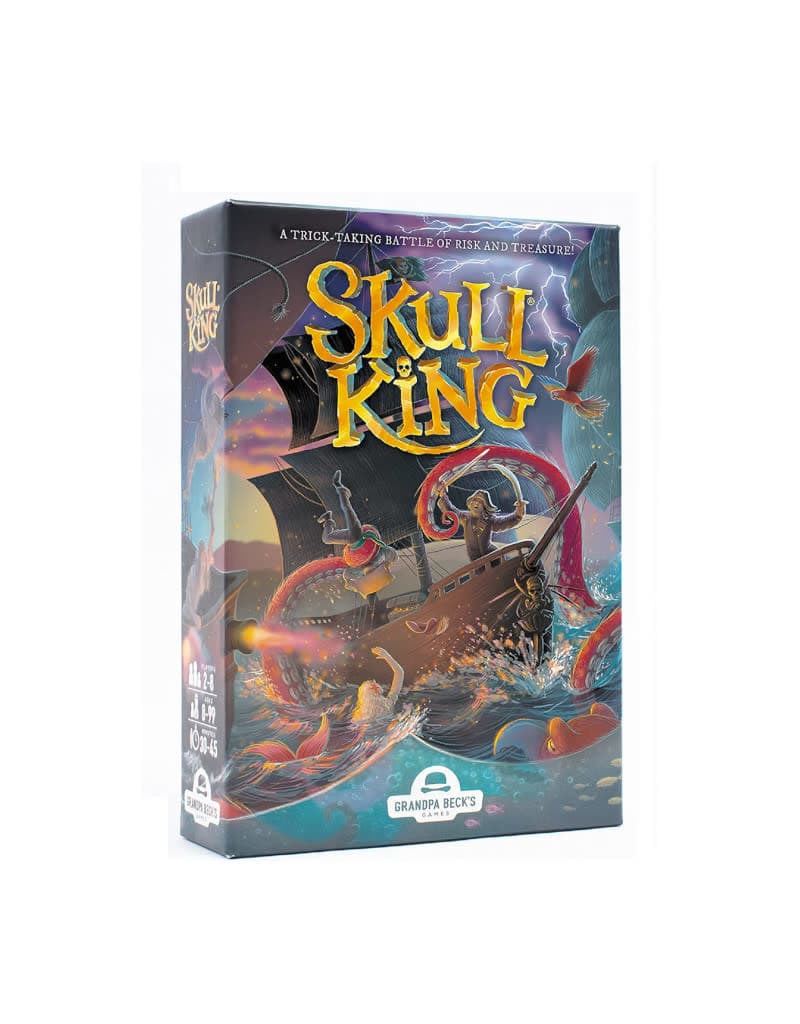
Skull King
2013Skull King is a high-stakes, pirate-themed trick-taking game that invites players to set sail on the high seas in search of loot and glory. Originally released in 2013, it has established itself as a modern classic in the predictive bidding genre, often compared to legendary games like 'Wizard' or 'Oh Hell!'. The ultimate goal is to accumulate the most points over ten rounds by accurately predicting exactly how many tricks you will capture in each hand. Unlike traditional card games where the strongest hand always wins, Skull King rewards precision and psychological maneuvering, forcing players to balance aggression with calculated retreats.
The game progresses through ten rounds, with the hand size increasing by one card each round. After examining their cards, all players simultaneously declare their bids using the iconic 'Yo-Ho-Ho!' chant, revealing their intended trick count with their fists. The core of the game lies in its intricate power hierarchy. While players must follow the lead suit of Parrots, Maps, or Chests, they can pivot to the black Jolly Roger trump suit or deploy powerful special cards. Pirates can dominate numbered cards, but they are vulnerable to the dreaded Skull King. However, even the King can be lured to his doom by the alluring Mermaid. This rock-paper-scissors dynamic ensures that no lead is ever truly safe, and the tide of battle can turn with a single card.
What makes Skull King truly beloved by gaming groups is its blend of high-energy social interaction and deep strategic depth. The scoring system is brutal yet rewarding; players earn 20 points per trick for a correct bid but lose 10 points for every trick they are off. The legendary 'bid zero' strategy offers a high-risk, high-reward path to victory, potentially granting massive points or leading to a devastating shipwreck. The game's charm lies in these moments of triumph and betrayal, where a well-timed Escape card or a surprise Pirate can ruin an opponent's perfect round. It remains a staple for families and hobbyists alike due to its accessibility and the endless variety provided by its special character cards.
2-6 45m⚖️ 1.8

RANK #7,159
The Lord of the Rings: Journey to Mordor is a fast-paced dice-rolling adventure where players step into the hairy feet of the iconic Hobbits from the Shire. Set against the backdrop of J.R.R. Tolkien's legendary Middle-earth, this title tasks players with a desperate race to reach Mount Doom. Unlike the cooperative nature of the original story, this version pits the Ringbearers against one another in a competitive sprint to see who can cast the One Ring into the fires first. However, the path is fraught with danger, as the shadowy Nazgûl are relentlessly pursuing the fellowship. Players must balance their desire for speed with the constant threat of being overtaken by Sauron’s most terrifying servants, making every roll a high-stakes decision.
Gameplay revolves around a set of five custom dice and a pad of paper maps representing the journey from Bag End to Mordor. On their turn, a player rolls all the dice and must set aside at least one, continuing until all five are locked in. The 'push your luck' mechanic is central here; players want to roll Ring symbols to advance their Hobbit along the track, but they must also deal with less favorable results. Rolling Nazgûl symbols forces the player to advance the enemy on their personal track, potentially leading to elimination if they reach the end. Gandalf symbols provide a buffer by blocking enemy progress, while Orcs can be neutralized by Fellowship symbols. The game also features an 'Advanced' side of the map, adding unique effects to specific locations like Rivendell or Shelob’s Lair, which introduces more tactical depth to the dice management.
Fans of the franchise and casual gamers alike are drawn to Journey to Mordor because of its accessibility and portable nature. It distills the epic scale of the trilogy into a 20-minute experience that fits easily on a small table. The tension is palpable as players watch their opponents inch closer to the goal while their own Nazgûl track fills up. It captures the 'race against time' feeling of the books perfectly through its dice-driven mechanics. Whether you are using the basic rules for a quick family session or the advanced rules for a more strategic challenge, the game offers a satisfying blend of luck management and thematic immersion. The inclusion of classic Middle-earth artwork further enhances the experience, making it a must-have for Tolkien enthusiasts looking for a light yet engaging filler game.
2-4 20m⚖️ 1.5
RANK #7,304
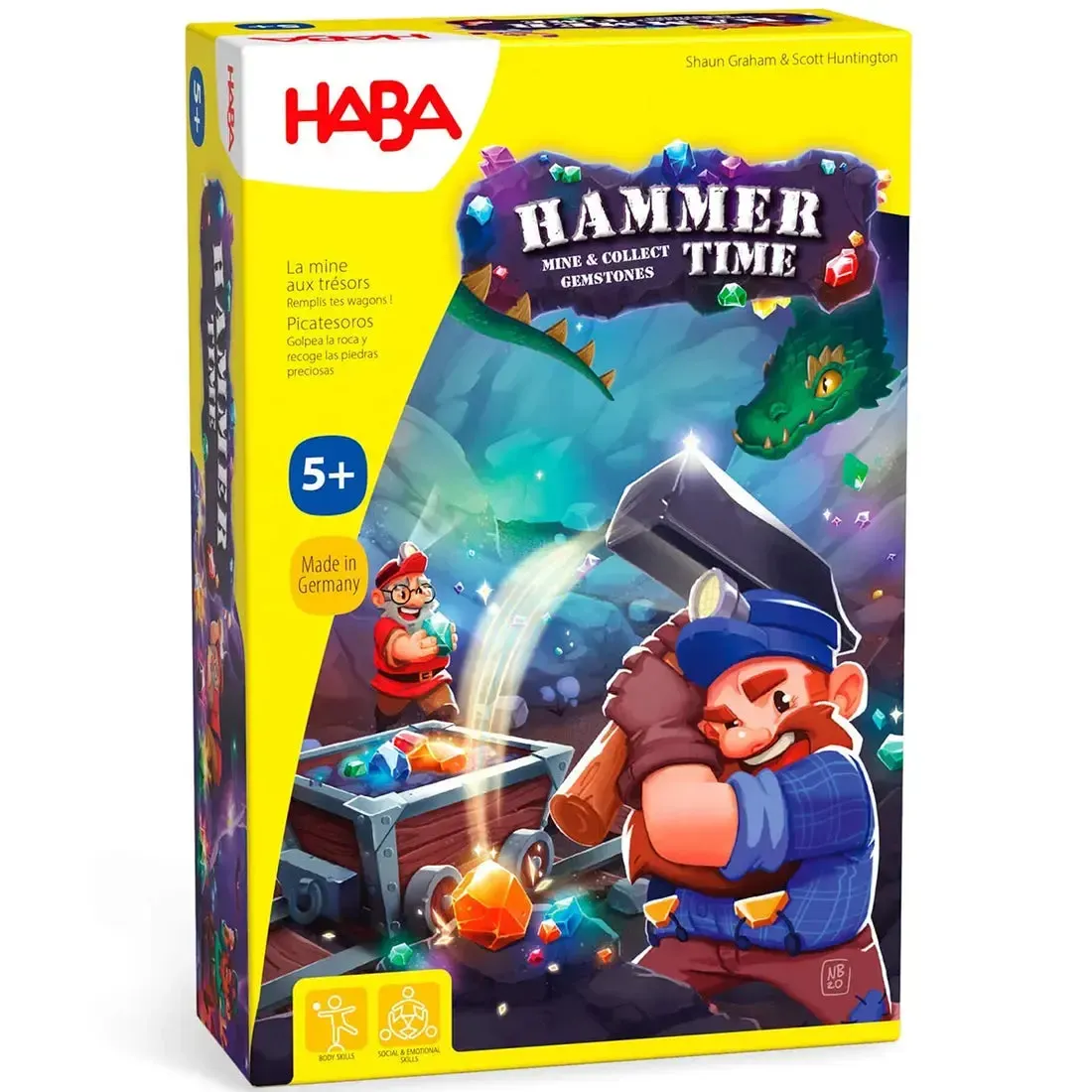
Hammer Time
2020In Hammer Time, players are transformed into industrious gnome miners on a quest for riches deep within Sparkle Mountain. This delightful children's game stands out with its incredibly tactile and clever setup: the game box itself is inverted to become the mountain, a raised platform topped with a neoprene mat where a trove of colorful plastic gemstones is scattered. The objective is a straightforward race. Each player must be the first to complete their four personal "wagon" cards, each of which depicts a specific recipe of gems that must be collected from the mountain. It’s a game of physical skill, gentle persuasion, and a little bit of luck, perfect for engaging the whole family in a treasure-hunting adventure.
The core gameplay loop is centered around a unique dexterity challenge. On your turn, you take the chunky wooden hammer and carefully tap the side of the box. The goal is to create just enough vibration to cause a few precious gems to tumble off the edge. As soon as at least one gem falls, your tapping phase must end. You collect all the fallen gems and assign them to your wagon cards, with clear gems acting as valuable wilds. However, brute force is punished! If a player gets overzealous and knocks nine or more gems off in a single turn, they've made too much noise, woken the fearsome dragon Dragomir, and forfeit their turn, gaining no gems. This creates a wonderful tension between ambition and caution. Players can also work on secondary Task Cards, which reward them with special bonuses for completing smaller objectives.
Hammer Time is beloved for its immediate, hands-on fun that appeals to both children and the adults playing with them. The simple act of tapping the box is satisfying, and the risk-reward calculation of how hard to hit keeps every turn exciting. The game brilliantly teaches fine motor control and strategic restraint in a playful context. For those seeking an extra layer of zany fun, the 'Master Variant' introduces a die that imposes hilarious restrictions on players, such as having to hammer with their eyes closed or using a fist instead of the hammer. This combination of clever component use, accessible rules, and laugh-out-loud moments makes Hammer Time a standout title for any family game night.
2-4 20m⚖️ 1.0

RANK #13,724
"Tembo: Survival on the Savanna" invites players to embark on a cooperative journey of immense challenge and strategic depth. In this game, you don't compete against each other but work together as a unified team, guiding a majestic herd of elephants across the perilous African savanna. The ultimate goal is to navigate this vulnerable group through a series of key landmarks, ensuring they find adequate food and water, before reaching a final, safe destination. Success is a collective triumph, but failure is an ever-present threat. The herd's journey can be cut short if they are caught by the relentless lions that stalk the plains, if they run out of time as indicated by the dwindling draw deck, or if they succumb to starvation. This shared objective fosters a rich environment of communication and collaborative problem-solving, making every decision a critical one for the entire group.
The gameplay is driven by a clever and restrictive card-playing system that forms the core of its puzzle. On your turn, you will draw a card and face a simple but profound choice: use the card to expand the savanna, laying down a new piece of terrain for the herd to cross, or use it to add more elephants to your path, extending the line of your migrating herd. This seemingly straightforward decision is complicated by a significant constraint: cards often have a fixed orientation determined by each player's seating position around the table. You cannot simply rotate a piece to fit the perfect spot. This rule transforms the game from a simple tile-laying exercise into a complex spatial puzzle that demands constant discussion, foresight, and adaptive planning among all players to overcome the environmental challenges presented on the board.
The unique appeal of "Tembo" lies in this compelling fusion of accessible, family-friendly rules with a genuinely challenging cooperative puzzle. The restriction on card orientation is a masterstroke of design, forcing players to think from different perspectives and communicate their intentions clearly to forge a viable path forward. This core mechanic ensures that no two games feel exactly alike. Further enhancing its longevity, the game includes options for scaling difficulty to match the players' experience level, a thoughtfully designed solo mode for individual play, and an engaging campaign mode that weaves a longer narrative across multiple sessions. Combined with the evocative and beautiful artwork from celebrated artist Vincent Dutrait, "Tembo" promises a deeply thematic and highly replayable experience for gamers seeking a strategic and heartfelt cooperative adventure.
1-4 45m⚖️ 2.3

RANK #15,813
Keystone: North America – Second Edition invites players to step into the professional boots of a dedicated wildlife biologist, tasking them with the restoration and preservation of vibrant, interconnected ecosystems across the North American continent. The primary objective is to strategically arrange diverse species cards within a personal player grid to simulate a flourishing and stable natural habitat. Players must carefully balance the specific requirements of various flora and fauna, ensuring that their biological selections provide the necessary synergies to create a resilient environment. Whether you are competing head-to-head against a rival researcher or tackling the unique challenges of the wilderness in a solo capacity, the ultimate goal remains to generate the highest conservation score by fostering high levels of biodiversity and protecting essential keystone species.
The gameplay experience centers on a refined and engaging blend of open drafting and tile-placement mechanics. During each turn, players must select species cards from a common central market, weighing the specific habitat requirements and biological classifications of the animals they wish to introduce to their board. These cards are then placed onto a square grid, where their spatial relationship to neighboring cards becomes critical for scoring. Points are predominantly awarded based on color-coded habitat chains and numerical sequences, rewarding players who can visualize complex ecological patterns several turns in advance. The inclusion of special 'Keystone' animals provides powerful scoring bonuses but requires sophisticated planning to integrate effectively, making every placement a meaningful puzzle of tactical ecological balance.
What truly distinguishes this second edition is its impressive versatility and the depth of its thematic immersion. The game features a robust solo and cooperative narrative campaign through the 'Field Journal,' a fully illustrated adventure book that leads players through twenty unique scenarios across diverse North American climates. This edition has been specifically streamlined to provide a premium experience for one to two players while maintaining the 'brain-burning' strategic depth that enthusiasts of the original version celebrated. Featuring stunning, scientifically-inspired artwork from a talented team of illustrators, the game serves as both a challenging tactical exercise and a poignant tribute to the importance of conservation biology. Its elegant combination of beginner-friendly rules and rewarding strategic complexity makes it a definitive title for nature lovers and board game veterans alike.
1-2 45m⚖️ 2.0
Showing 1 to 12 of 17 games