Co-operative Games
Browse all Co-operative board games in the Meeple Pulse database.
Styles
Themes
AbstractAdventureAncientAnimalsArtBusinessCard GameCo-operativeComic BookCooperativeCrimeEconomicEnvironmentalismExplorationFantasyHistoricalHorrorHumorIntrigueLiteraryMagicMarvelMedievalModernMuseumMysteryMythologyNatureNauticalPoliticalPress Your LuckSatireSci-FiSocial CommentarySocial InteractionSpaceSuperheroesThematicTravelWarWesternWord-Guessing
Mechanics
3D PlacementActingAction / DexterityAction DraftingAction Point AllowanceAction Point Allowance SystemAction Point SystemAction PointsAction ProgrammingAction QueueAction RetrievalAction SelectionAction/EventAlliancesAlternate ActivationApp-AssistedApp-DrivenArea ControlArea InfluenceArea MajorityArea Majority / InfluenceArea MovementArgumentationAsymmetricAsymmetric FactionsAsymmetric GameAsymmetric PowersAsymmetrical PowersAuction & BiddingAuction/BiddingAuctioningBag BuildingBettingBetting and BluffingBetting and WageringBetting and WagersBiddingBingoBlind BiddingBluffingCampaign / Battle Card DrivenCampaign / LegacyCampaign / Legacy GameCampaign / Mission-basedCampaign / ScenariosCampaign GameCampaign PlayCard DraftingCard DrawingCard DrivenCard Driven ActionCard Driven CombatCard Driven Dice AllocationCard Driven MovementCard ManagementCard PlayCard Play / Hand ManagementCard Play Conflict ResolutionCard SheddingCard-Driven MovementCharacter CreationCharacter ProgressionChit-Pull SystemCo-op PlayCo-operative GameCo-operative PlayCode-breakingCombat ResolutionCombo ChainCommand CardsCommodity SpeculationCommunication LimitsContract FulfillmentContractsCooperative GameCooperative GameplayCooperative PlayCooperative Trick-takingDebateDeck BuildingDeck ConstructionDeck, Bag, and Pool BuildingDeck-BuildingDeductionDexterityDice DraftingDice PlacementDice RollingDiplomatic InfluenceDraftingDynamic Battle SystemEnclosureEnd Game BonusesEngine BuildingEngine-BuildingEscape RoomEvent DrivenExplorationFarmingFlip and WriteFollowFollow ActionGrid CoverageGrid MovementHand ManagementHex-and-CounterHexagon GridHidden MovementHidden RolesI Cut You ChooseIncomeInfluence / Area MajorityLadder ClimbingLegacyLegacy ElementsLegacy GameLegacy SystemLimited CommunicationLine DrawingLine of SightMancalaMap MovementMarketMarket DraftingMarket ManipulationMarket MechanicMarket SpeculationMatchingMeasurement MovementMemoryMission ObjectivesModular BoardModular Board ConstructionMovement TemplatesMulti-Use CardsMulti-use CardsMultiple ScenariosMust FollowNarrative ChoiceNarrative Choice / ParagraphNegotiationNegotiation MechanicsNetwork & Route BuildingNetwork BuildingNetwork and Route BuildingOne vs ManyOne vs. ManyOpen DraftingPaper-and-PencilPartnershipsPattern BuildingPattern RecognitionPick-up and DeliverPlayer EliminationPlayer InteractionPlayer JudgePoint SaladPoint to Point MovementPolyominoesPush Your LuckPush-Your-LuckPuzzlePuzzle-LikePuzzle-SolvingRaceReal-TimeRecipe FulfillmentResource ManagementRole PlayingRole SelectionRoll / Spin and MoveRondelRoute BuildingRoute-BuildingRoute/Network BuildingSanity SystemScenario / Campaign PlayScenario / Mission / Campaign GameScenario / Mission FunctionSecret Unit DeploymentSemi-Cooperative GameSet CollectionSheddingSimulationSimultaneous ActionSimultaneous Action SelectionSimultaneous Hidden AllocationSocial DeductionSocial InteractionSolo / Solitaire GameSpace ExplorationStat Check / Skill CheckStock HoldingStorytellingStrategic PlanningTableau BuildingTactical Decision-MakingTake ThatTargeted CluesTeam PlayTeam-Based GameTeam-Based GuessingTeamworkTech TreesTech Trees / Tech TracksTechnology & Armament TracksTechnology TreeTension & Aggression TracksTile DraftingTile LayingTile PlacementTime TrackTime TravelTower DefenseTrack MovementTradingTrick-takingTug of WarTurn Order: PassTurn Order: Stat-BasedUnit PlacementVariable Phase OrderVariable Player PowersVariable Set-upVariable SetupVictory Point TracksVotingWord AssociationWord GameWord GuessingWord-GuessingWord-guessingWordplayWorker Placement
RANK #32
In Arkham Horror: The Card Game, you take on the role of investigators trying to uncover the mysteries and horrors lurking in the shadows of Arkham. As you delve deeper into the mysteries, you'll encounter terrifying creatures and try to survive long enough to save the world from an impending doom. This cooperative card game challenges you to make tough decisions and manage your resources carefully as you navigate the dangers of the Cthulhu Mythos.
1-4 30m⚖️ 3.5
RANK #54
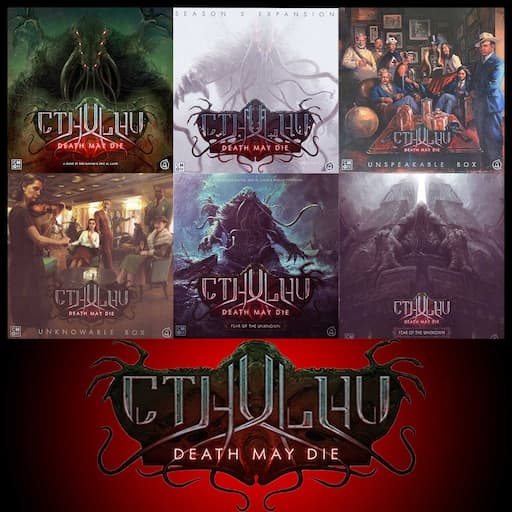
In Cthulhu: Death May Die, players take on the roles of investigators trying to uncover the mysteries of the ancient deity Cthulhu. The game is set in a Lovecraftian world where players must navigate through a series of challenges and puzzles to ultimately defeat the Great Old One. However, as they delve deeper into the mystery, they will realize that their own sanity may be at risk.
The gameplay involves a combination of exploration, puzzle-solving, and strategic decision-making. Players can choose from various characters with unique abilities and strengths, each contributing to the overall success or failure of the mission. The game features a modular board, which is composed of interlocking tiles that represent different locations and environments. As players explore these areas, they will encounter various obstacles, creatures, and other challenges that must be overcome.
One of the key mechanics in Cthulhu: Death May Die is the sanity system. Players can collect Sanity tokens, which allow them to perform certain actions or access specific abilities. However, if a player's sanity drops too low, they will become unhinged and start making irrational decisions that may harm their own chances of success.
The game also features a unique mechanic called 'Sanity Shocks,' which occur when players encounter particularly traumatic events or make poor choices. These shocks can have significant consequences for the player's character, including loss of sanity, temporary incapacitation, or even death.
1-4 60m⚖️ 3.5
BoxNo Cover Art
RANK #74
Mansions of Madness: Second Edition is a cooperative board game designed for 1-5 players, where each player takes on the role of an investigator tasked with uncovering mysteries and battling against the forces of darkness in the 1920s. The game is set in the Arkham Horror universe, which is known for its Lovecraftian themes and eerie atmosphere. Players work together to explore locations, gather clues, and solve puzzles while navigating the challenges posed by the game's complex rules and mechanics.
The gameplay experience is divided into two main phases: exploration and combat. During the exploration phase, players move their investigators around the board, visiting various locations such as mansions, cemeteries, and libraries. Each location has its own set of challenges and rewards, which are determined by a deck of cards that represents the game's narrative. Players can also draw event cards, which may provide benefits or penalties to their progress.
The combat phase is where the game's tension builds up. When an investigator encounters a monster or other hostile entity, they must engage in combat using a combination of dice rolls and card play. The outcome of these battles depends on the player's skills, equipment, and luck. If an investigator falls in battle, they are removed from the game, which adds to the sense of urgency and danger.
One of the unique features of Mansions of Madness: Second Edition is its modular board design. The game comes with a set of interlocking tiles that can be arranged differently each time it's played, creating a new map for the investigators to explore. This feature allows for high replayability and adds to the game's overall sense of mystery and discovery.
The game also includes a range of miniatures and tokens that represent the investigators' equipment and abilities. These components add a tactile element to the gameplay experience and help players visualize their progress and challenges.
1-5 60m⚖️ 4.0
BoxNo Cover Art
RANK #93
Kingdom Death: Monster is a tabletop role-playing game that combines elements of miniatures wargaming and storytelling to create an immersive experience for players. The game is set in a dark, gothic world where players take on the roles of survivors in a post-apocalyptic landscape. Their goal is to explore the ruins of civilization, scavenge for resources, and ultimately defeat the monstrous creatures that threaten their existence.
Gameplay involves a combination of strategic planning, tactical execution, and narrative development. Players must manage their characters' abilities, skills, and equipment while navigating the challenges of the game world. The game's mechanics include character creation, combat resolution, exploration, and resource management. These elements are woven together to create a rich and engaging experience that rewards strategy, creativity, and teamwork.
One of the unique features of Kingdom Death: Monster is its use of miniatures and 3D terrain to bring the game world to life. The game's components include intricately detailed miniatures, modular terrain pieces, and a comprehensive rulebook. These elements work together to create an immersive experience that draws players into the game world.
Kingdom Death: Monster has gained a dedicated following among tabletop gamers due to its depth, complexity, and thematic appeal. Players appreciate the game's ability to balance strategic planning with narrative development, creating a unique experience each time it is played.
1-4 120m⚖️ 5.0
RANK #109
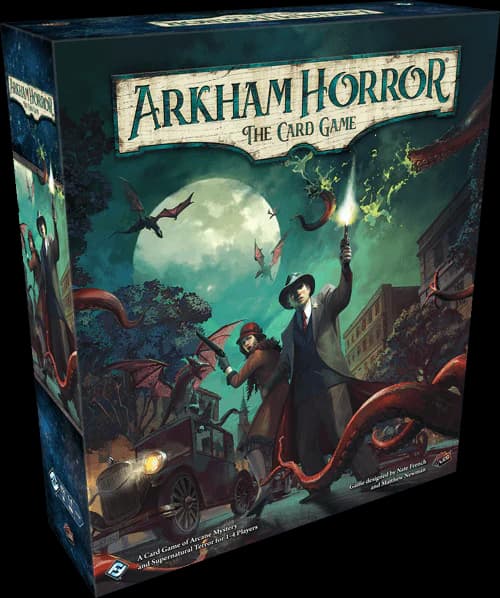
Arkham Horror: The Card Game is a cooperative Living Card Game that plunges one to four players into the eerie, Lovecraftian world of the 1920s. Assuming the roles of unique investigators in Arkham, Massachusetts, players work together to unravel sinister conspiracies, confront otherworldly beings, and prevent ancient evils from devouring the world. Each investigator comes with their own strengths, weaknesses, and customizable deck of cards representing their assets, skills, and resources. The goal is to successfully navigate a series of interconnected narrative scenarios, forming a larger campaign where choices and outcomes in one chapter have lasting consequences on the next. This Revised Core Set provides the definitive entry point, containing everything needed for a full group of four to begin their harrowing adventures right out of the box.
The gameplay unfolds over a series of rounds, each composed of four distinct phases that create a tense and challenging rhythm. In the Mythos Phase, the forces of darkness advance as doom accumulates and each player draws a random card from the encounter deck, introducing new enemies, treacherous obstacles, or reality-bending effects. During the Investigation Phase, players take turns performing up to three actions, which can include playing cards, moving between locations, battling monsters, or most importantly, investigating to find clues. These clues are essential for advancing the 'act' deck, which propels the story forward. The Enemy Phase sees any engaged monsters attack the investigators, while others hunt across the board. Finally, the Upkeep Phase allows players to refresh their assets, draw a new card, and gain a resource, preparing them for the horrors of the next round.
What makes Arkham Horror: The Card Game so compelling is its profound fusion of rich narrative storytelling with strategic card play and deck customization. The game is celebrated for its deep thematic immersion, where the unfolding story feels personal and impactful. Failure doesn't necessarily end the game, but it can scar an investigator or alter the campaign's trajectory, creating a truly dynamic and replayable experience. The challenge is significant, demanding careful cooperation and clever resource management to overcome the relentless odds. For players who crave a deep, story-driven hobby game they can expand over time, its campaign structure and character progression provide an unparalleled cooperative adventure into the heart of cosmic dread.
1-4 120m⚖️ 3.5
RANK #128
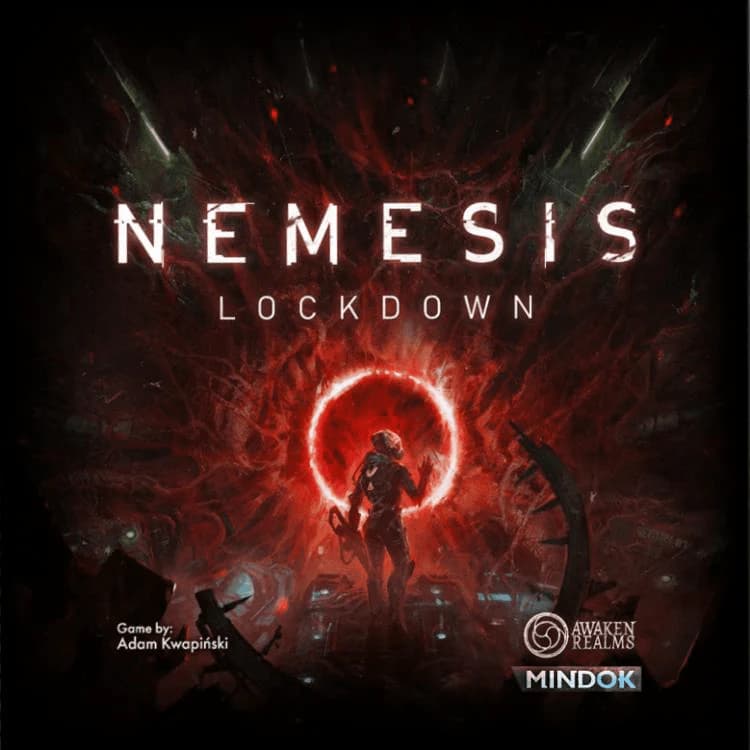
Nemesis: Lockdown is a cinematic, standalone survival-horror experience set on a secret multi-level base on Mars. It is a semi-cooperative game where players, as survivors of an unknown incident, must navigate a hostile facility infested with terrifying alien organisms known as Night Stalkers. While cooperation is essential to overcome the immediate dangers of the base and its predatory inhabitants, each player holds a secret objective that may conflict with the goals of the group. To achieve victory, a player must not only survive the ordeal but also successfully complete their private mission before escaping, creating a deeply tense atmosphere where trust is a scarce and valuable resource.
The gameplay unfolds through a series of rounds, each divided into a Player Phase and an Event Phase. During the Player Phase, individuals take turns performing two actions, the cost of which is paid by discarding action cards from their hand. Actions are varied and crucial, including moving through the labyrinthine base, exploring new rooms, searching for useful items, crafting equipment, and engaging in desperate combat with the aliens. A critical element is managing noise; actions can place noise markers in adjacent corridors, and a second marker in the same location triggers a deadly alien encounter. Lockdown introduces new challenges, most notably the management of the base's power, which can fail and plunge sectors into darkness, adding another layer of strategic depth and terror.
The immense appeal of Nemesis: Lockdown lies in its ability to generate powerful, emergent narratives. The combination of hidden agendas, a modular board, and unpredictable event cards ensures that no two sessions are ever alike, producing unique and memorable stories of heroism, desperation, and betrayal. The core semi-cooperative mechanic is the heart of the game, forcing a delicate balance between teamwork and self-preservation. You need your crewmates to fend off the relentless alien threat, yet you can never be certain of their true intentions. This constant psychological tension, coupled with the game's rich thematic immersion, makes it a premium, high-stakes adventure for players who crave a challenging and deeply engaging tabletop experience.
1-5 120m⚖️ 4.2
RANK #138
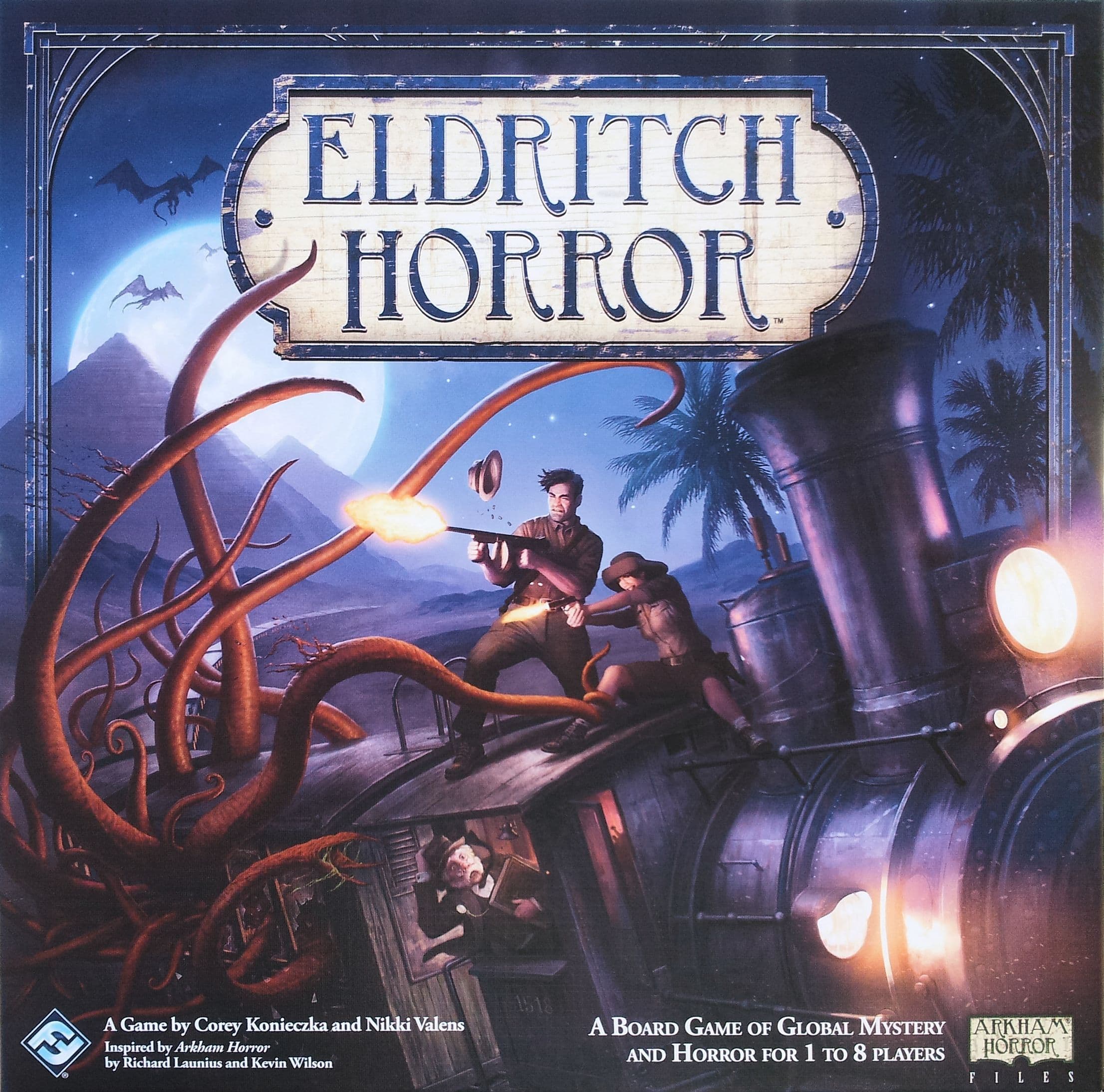
Eldritch Horror
2013Eldritch Horror is a cooperative board game that immerses players in a world of cosmic dread inspired by the writings of H.P. Lovecraft. Taking on the roles of intrepid investigators, participants band together to confront a malevolent entity poised to awaken and consume the world. This is a desperate race against a doomsday clock, not a battle of simple force. The team's primary objective is to traverse the globe, from bustling cities to remote wilderness, in order to solve three distinct mysteries unique to the chosen Ancient One. These mysteries represent the only known way to prevent the creature's arrival. Should the investigators succeed before the ever-advancing doom track reaches zero, they will have saved humanity. Failure, however, means the Ancient One awakens, triggering a final, brutal confrontation.
Gameplay unfolds in rounds composed of three critical phases. First, in the Action Phase, each investigator performs two actions, such as traveling the world map, gathering vital assets like weapons and spells, recuperating health and sanity, or trading with allies. Following this, the Encounter Phase plunges each player into a unique narrative event based on their location. Drawing a card presents a story, a choice, and often a skill test resolved by rolling six-sided dice, where a five or six is a success. Investigators can spend clue tokens to reroll dice, adding a layer of resource management. Finally, the Mythos Phase represents the Ancient One's sinister influence; a new card can introduce devastating effects, spawn monsters, open otherworldly gates, and relentlessly advance the doom track, pushing the world ever closer to oblivion.
What makes "Eldritch Horror" a beloved classic is its epic, globe-spanning scale and the rich, emergent stories it generates. The game turns the entire world into a playground of impending doom, creating a grand sense of adventure. The challenge is significant, fostering true teamwork as players strategize how to best use their unique character abilities and manage limited resources. Every session creates a memorable tale of near-misses, heroic triumphs, and tragic sacrifices. The game's appeal lies in its masterful blend of strategic planning and the unpredictable chaos of the Mythos deck, ensuring high tension from start to finish. It's a daunting adventure that rewards players not just with a win, but with a compelling story they have created together, making it a pinnacle experience for those who love deep narrative and cooperative challenges.
1-8 180m⚖️ 3.8

RANK #194
Immerse yourself in the harrowing universe of the Alien franchise with Legendary Encounters, a purely cooperative deck-building game that challenges you and your fellow players to survive against overwhelming odds. Players assume the roles of iconic protagonists from the first four films, such as Ripley, Dallas, or Bishop, each with their own unique abilities. The objective is to work in concert to successfully navigate three perilous objectives specific to the chosen movie scenario. Whether you're trying to survive the Nostromo or escape the Fiorina 'Fury' 161, the game masterfully captures the escalating tension and desperate struggle that defines the cinematic experience, demanding teamwork and strategic planning to overcome the relentless Xenomorph threat.
The gameplay is driven by a tense, multi-phase turn structure that constantly builds suspense. During the Hive Phase, a new card is drawn from the Hive Deck and placed face-down into a conveyor-like row called the Complex, pushing unseen horrors ever closer to the Combat Zone where they will be revealed. In the Action Phase, players use cards from their hand to generate Recruit points and Attack points. Recruit points are spent to acquire more powerful characters and equipment from a central card market, strengthening your deck for the trials ahead. Attack points are used to either 'scan' face-down cards in the Complex to reveal them or to fight the terrifying Xenomorphs that have been revealed. Any enemies left in the Combat Zone will then strike the active player, inflicting damage and thinning the team's chances of survival.
What sets Legendary Encounters apart is its deep and often brutal thematic integration. The game is famous for its visceral mechanics that mirror the films' most terrifying moments. For instance, a player can be attacked by a Facehugger, which forces a deadly card into their deck. If not dealt with, this can lead to the infamous Chestburster erupting from the player's character, killing them instantly. In a brilliant and shocking twist, that player can then re-enter the game as a Xenomorph, turning against their former allies. This potential for a player to become the enemy adds a layer of paranoia and narrative depth that makes each session a uniquely thrilling and memorable story of survival horror.
1-5 60m⚖️ 2.7
RANK #251
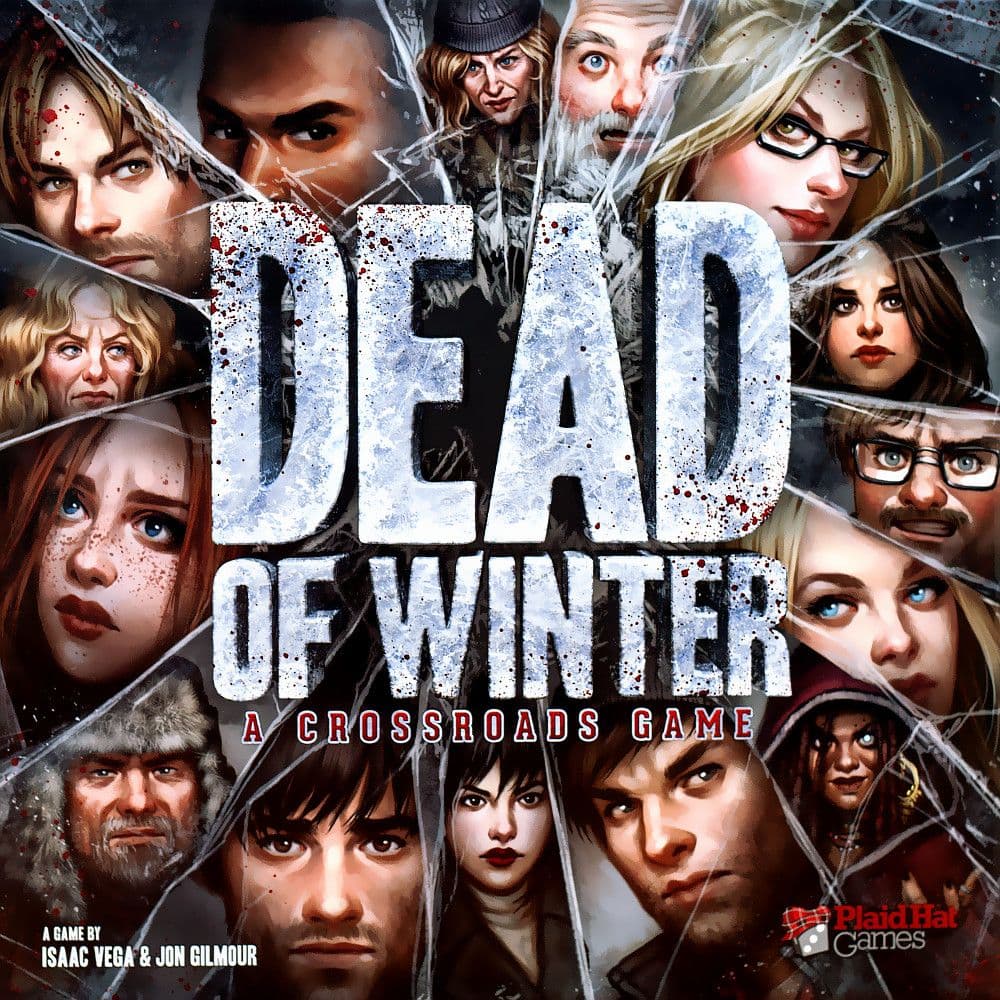
Dead of Winter: A Crossroads Game is a deeply thematic and psychological survival experience set in the harsh, unforgiving world of a zombie apocalypse. Players take on the roles of survivors in a struggling colony, forced to work together to fend off the undead, gather resources, and achieve a common objective to win the game. However, this is a 'meta-cooperative' game, meaning the group's success is only half the battle. Each player also harbors a secret personal objective they must fulfill to claim an individual victory. This dynamic masterfully creates an atmosphere of paranoia and suspense, as you can never be entirely sure of your fellow survivors' true intentions. The core conflict is a constant, tense negotiation between advancing the colony's welfare and pursuing your own self-interest, all while morale threatens to collapse.
The gameplay is structured into rounds, each containing a player turn phase followed by a colony phase. On your turn, you'll roll a set of action dice that dictate the tasks you can perform, such as scavenging for vital supplies like food and medicine, attacking zombies at various locations, constructing barricades for defense, or contributing to the ever-present crisis that threatens the colony each round. One of the game's most celebrated innovations is the Crossroads card system. At the start of each turn, another player draws a card that presents a narrative fork in the road, often forcing the active player to make a difficult, thematic choice with branching consequences. After all players have acted, the colony phase commences, during which survivors consume food, zombies press their attack, and the main objective's status is updated.
What makes Dead of Winter a modern classic is the powerful blend of strategic gameplay and emergent storytelling. The ever-present threat of a hidden traitor, a player whose secret objective is to sabotage the colony, fuels intense player interaction, accusation, and bluffing. Every decision is fraught with weight, not just for its mechanical impact but for how it is perceived by the other players. The Crossroads cards ensure no two games are ever alike, generating memorable, player-driven narratives of desperation, sacrifice, and betrayal. It is this focus on the human element and moral dilemmas, rather than just the zombies themselves, that provides a uniquely compelling and highly replayable experience, making it a perfect 'bridge' for players seeking deeper, more thematic board games.
2-5 90m⚖️ 3.4
RANK #285
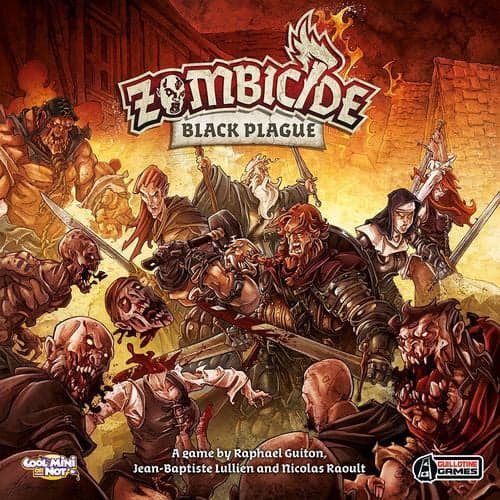
Zombicide: Black Plague reboots the high-octane zombie survival genre by plunging players into a dark, medieval fantasy world. In this cooperative experience, one to six survivors must unite to fend off hordes of the undead summoned by malevolent Necromancers. Unlike its modern-day predecessors, Black Plague introduces a magical twist where steel, sorcery, and shields are the primary tools of survival. The primary objective is to complete specific mission scenarios, which range from retrieving lost artifacts to cleansing infested vaults, all while managing the ever-growing threat of the zombie apocalypse. Each player controls a unique hero, navigating through modular map tiles that represent plagued villages and sinister dungeons.
The gameplay revolves around an intuitive action-point system where survivors spend points to move, attack, or scavenge for gear. As players slay zombies, they gain Adrenaline Points, which allow them to level up and unlock powerful new abilities. However, this progress comes with a catch: the game tracks the party's highest experience level, and as survivors grow stronger, the zombie spawn rates intensify through color-coded danger zones. This creates a tense balancing act where players must scale their power without overwhelming themselves with too many enemies. Unique to this edition are the Necromancers, specialized foes who attempt to escape the board while leaving permanent spawn points in their wake, and the introduction of armor saves, giving players a fighting chance against incoming damage.
Fans of the series praise Black Plague for its streamlined rules and significantly improved component quality, notably the recessed plastic dashboards that keep character cards and pegs securely in place. The shift to a fantasy setting allows for creative weapon combinations, such as magic staves and heavy plate mail, providing a distinct mechanical flavor compared to modern versions. With its high-quality miniatures, tactical depth, and 'beer and pretzels' accessibility, it remains a favorite for groups seeking an epic, narrative-driven challenge. The inclusion of solo rules and a variety of challenging scenarios ensures high replayability, making it a definitive entry in the dungeon-crawl and survival-horror board game genres.
1-6 120m⚖️ 2.5
RANK #9,793
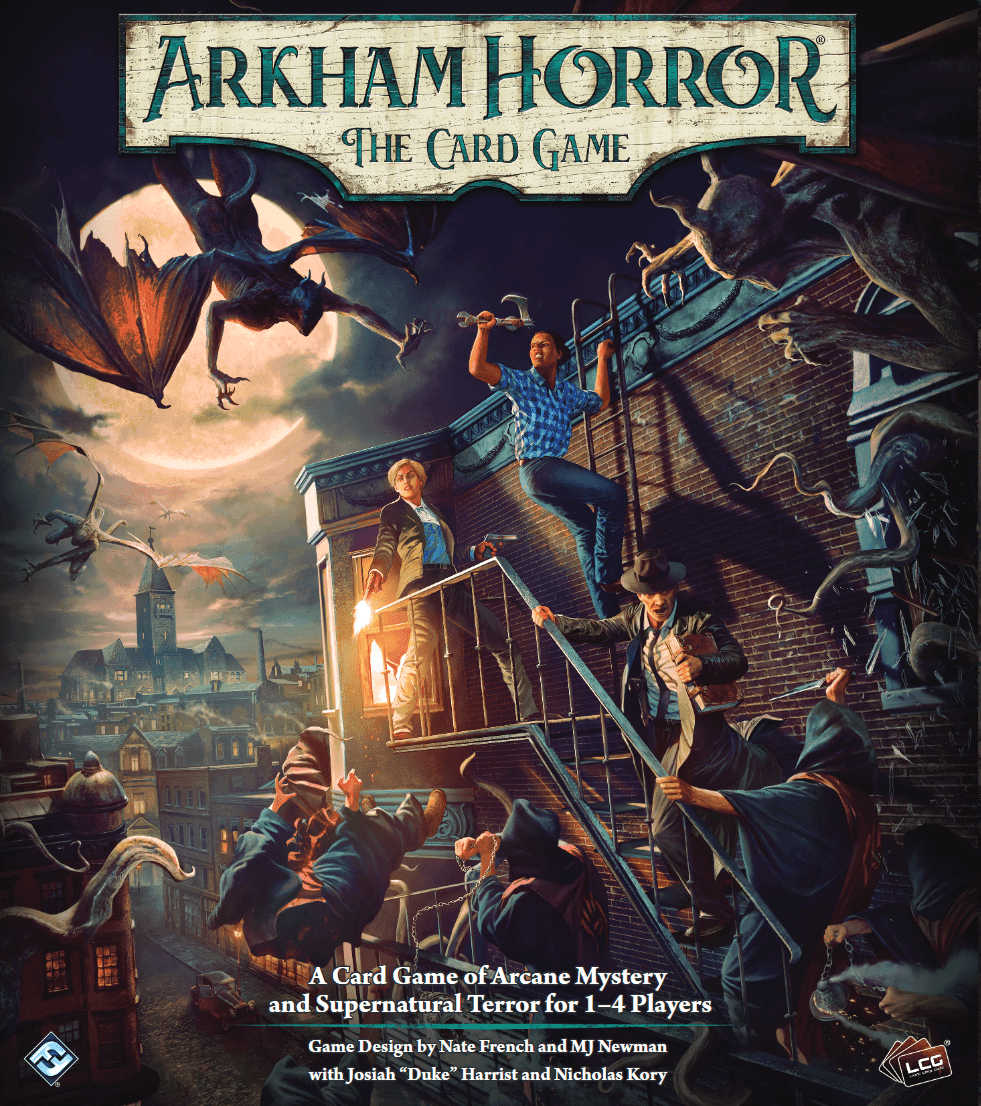
Arkham Horror: The Card Game has firmly established itself as a cornerstone of modern tabletop gaming, and the monumental 2026 release of the Chapter Two Core Set acts as the definitive entry point for newcomers and veterans alike. Completely replacing the 2021 Revised Core Set while maintaining strict backward compatibility with all previously released expansions, this edition serves as a sprawling, scenario-driven Living Card Game (LCG) steeped in the deeply unsettling Lovecraftian Cthulhu mythos. Players are thrust into the roles of varied investigators—such as Guardians, Seekers, and Mystics—tasked with unraveling occult mysteries and confronting otherworldly monstrosities before the world descends into madness. Rather than a simple standalone experience, the game is designed as an overarching narrative journey where survival is never guaranteed.
The core mechanical philosophy of this heavy, cooperative experience is the brilliant concept that 'your deck is your character.' Before diving into the dark unknown, players construct a customized deck of cards that wholly represents their investigator's unique abilities, specialized equipment, and innate strengths. However, true to the punishing nature of cosmic horror, each deck is also forcefully injected with specific character flaws and basic weakness cards that will inevitably hinder your progress at the worst possible moments. During the action phase, players carefully spend action points to travel between ominous locations, scour for vital clues, play crucial assets, or desperately fight off the creatures drawn from the relentless Encounter Deck. Progress is measured by the Act and Agenda decks; players race to gather clues to advance the Act and secure victory, while accumulating doom tokens push the Agenda forward, signaling the encroaching schemes of the Ancient Ones. Furthermore, traditional dice rolling is entirely abandoned in favor of a thematic 'Chaos Bag.' This bag is filled with modifier tokens that players blindly pull during stat tests, brilliantly mimicking the unpredictable and punishing atmosphere of the game's setting.
The true appeal of this 2026 edition lies in its deeply immersive campaign structure and the profound sense of progression. The central gameplay loop heavily emphasizes continuous play across interconnected scenarios. Surviving these harrowing encounters grants players precious Experience Points (XP), which are spent between sessions to purchase upgraded, vastly more powerful cards to refine their decks. The Chapter Two box introduces an exciting three-scenario introductory campaign titled 'Brethren of Ash,' featuring five freshly constructed investigator decks out of the box—allowing up to four players to join forces immediately. As investigators navigate through scenarios like 'Spreading Flames' and 'Queen of Ash,' their choices trigger branching narrative paths, unlocking new permanent reward cards that brilliantly expand deckbuilding possibilities. Between its visceral artwork, heavy strategic depth aided by the new Arkham Grimoire rules reference, and endless expandability, this 2026 iteration solidifies the game as a masterful blend of gripping storytelling and meticulous cardplay.
1-4 90m⚖️ 3.6

RANK #15,861
"The Ghost in the Attic" offers an award-winning, immersive experience that masterfully blends the thrill of an escape room with the tactile satisfaction of a high-quality board game. Presented as a mysterious, haunted board game from the 1950s, this intricate puzzle box invites players to step into the role of investigators. The primary objective is not simply to win a game, but to unravel a compelling central mystery. To even begin this journey, players are confronted with a physically chained and padlocked box, the first of many challenges. Success is measured by the ability to piece together clues, solve a series of interconnected puzzles, and ultimately unlock the secrets that have been sealed away for decades, bringing the haunting narrative to its conclusion.
Gameplay is a dynamic fusion of physical object manipulation and digital sleuthing. The experience begins before the box is even open, as players must first deduce the combination to the padlock shackling it shut. Once inside, they discover over two dozen beautifully crafted pieces of evidence that demand careful examination. These components are not mere props; they are integral to the puzzles themselves, and include a fully playable 'haunted' board game that forms a core part of the investigation. The journey requires more than just what's in the box, however. Players must use their wits to discover hidden websites and online resources, which hold crucial information needed to progress. For those who find themselves stumped by a particularly devious puzzle, a tiered online hint system is available to provide a gentle nudge or a clear solution, ensuring the story always moves forward.
What sets "The Ghost in the Attic" apart is its exceptional production quality and the strength of its narrative, crafted by Olivier award-winner Henry Lewis. The tangible, high-quality components create a profound sense of immersion, making players feel like genuine detectives handling real evidence. The puzzles are designed to be genuinely challenging, with one reviewer describing the initial lock as 'frustratingly fiendish,' which provides a deep sense of accomplishment upon solving. This game is perfect for dedicated puzzle enthusiasts and those who appreciate a well-told story. One of its most celebrated features is its reset-and-replay design; once the mystery is solved, the entire experience can be perfectly repacked, allowing it to be shared with friends and family, extending its life and value far beyond a single playthrough.
1-6 90m⚖️ 2.6
Showing 1 to 12 of 16 games