Worker Placement Games
Browse all Worker Placement board games in the Meeple Pulse database.
Styles
Themes
AbstractAdventureAncientAnimalsArtBusinessCard GameCo-operativeComic BookCooperativeCrimeEconomicEnvironmentalismExplorationFantasyHistoricalHorrorHumorIntrigueLiteraryMagicMarvelMedievalModernMuseumMysteryMythologyNatureNauticalPoliticalPress Your LuckSatireSci-FiSocial CommentarySocial InteractionSpaceSuperheroesThematicTravelWarWesternWord-Guessing
Mechanics
3D PlacementActingAction / DexterityAction DraftingAction Point AllowanceAction Point Allowance SystemAction Point SystemAction PointsAction ProgrammingAction QueueAction RetrievalAction SelectionAction/EventAlliancesAlternate ActivationApp-AssistedApp-DrivenArea ControlArea InfluenceArea MajorityArea Majority / InfluenceArea MovementArgumentationAsymmetricAsymmetric FactionsAsymmetric GameAsymmetric PowersAsymmetrical PowersAuction & BiddingAuction/BiddingAuctioningBag BuildingBettingBetting and BluffingBetting and WageringBetting and WagersBiddingBingoBlind BiddingBluffingCampaign / Battle Card DrivenCampaign / LegacyCampaign / Legacy GameCampaign / Mission-basedCampaign / ScenariosCampaign GameCampaign PlayCard DraftingCard DrawingCard DrivenCard Driven ActionCard Driven CombatCard Driven Dice AllocationCard Driven MovementCard ManagementCard PlayCard Play / Hand ManagementCard Play Conflict ResolutionCard SheddingCard-Driven MovementCharacter CreationCharacter ProgressionChit-Pull SystemCo-op PlayCo-operative GameCo-operative PlayCode-breakingCombat ResolutionCombo ChainCommand CardsCommodity SpeculationCommunication LimitsContract FulfillmentContractsCooperative GameCooperative GameplayCooperative PlayCooperative Trick-takingDebateDeck BuildingDeck ConstructionDeck, Bag, and Pool BuildingDeck-BuildingDeductionDexterityDice DraftingDice PlacementDice RollingDiplomatic InfluenceDraftingDynamic Battle SystemEnclosureEnd Game BonusesEngine BuildingEngine-BuildingEscape RoomEvent DrivenExplorationFarmingFlip and WriteFollowFollow ActionGrid CoverageGrid MovementHand ManagementHex-and-CounterHexagon GridHidden MovementHidden RolesI Cut You ChooseIncomeInfluence / Area MajorityLadder ClimbingLegacyLegacy ElementsLegacy GameLegacy SystemLimited CommunicationLine DrawingLine of SightMancalaMap MovementMarketMarket DraftingMarket ManipulationMarket MechanicMarket SpeculationMatchingMeasurement MovementMemoryMission ObjectivesModular BoardModular Board ConstructionMovement TemplatesMulti-Use CardsMulti-use CardsMultiple ScenariosMust FollowNarrative ChoiceNarrative Choice / ParagraphNegotiationNegotiation MechanicsNetwork & Route BuildingNetwork BuildingNetwork and Route BuildingOne vs ManyOne vs. ManyOpen DraftingPaper-and-PencilPartnershipsPattern BuildingPattern RecognitionPick-up and DeliverPlayer EliminationPlayer InteractionPlayer JudgePoint SaladPoint to Point MovementPolyominoesPush Your LuckPush-Your-LuckPuzzlePuzzle-LikePuzzle-SolvingRaceReal-TimeRecipe FulfillmentResource ManagementRole PlayingRole SelectionRoll / Spin and MoveRondelRoute BuildingRoute-BuildingRoute/Network BuildingSanity SystemScenario / Campaign PlayScenario / Mission / Campaign GameScenario / Mission FunctionSecret Unit DeploymentSemi-Cooperative GameSet CollectionSheddingSimulationSimultaneous ActionSimultaneous Action SelectionSimultaneous Hidden AllocationSocial DeductionSocial InteractionSolo / Solitaire GameSpace ExplorationStat Check / Skill CheckStock HoldingStorytellingStrategic PlanningTableau BuildingTactical Decision-MakingTake ThatTargeted CluesTeam PlayTeam-Based GameTeam-Based GuessingTeamworkTech TreesTech Trees / Tech TracksTechnology & Armament TracksTechnology TreeTension & Aggression TracksTile DraftingTile LayingTile PlacementTime TrackTime TravelTower DefenseTrack MovementTradingTrick-takingTug of WarTurn Order: PassTurn Order: Stat-BasedUnit PlacementVariable Phase OrderVariable Player PowersVariable Set-upVariable SetupVictory Point TracksVotingWord AssociationWord GameWord GuessingWord-GuessingWord-guessingWordplayWorker Placement
RANK #51
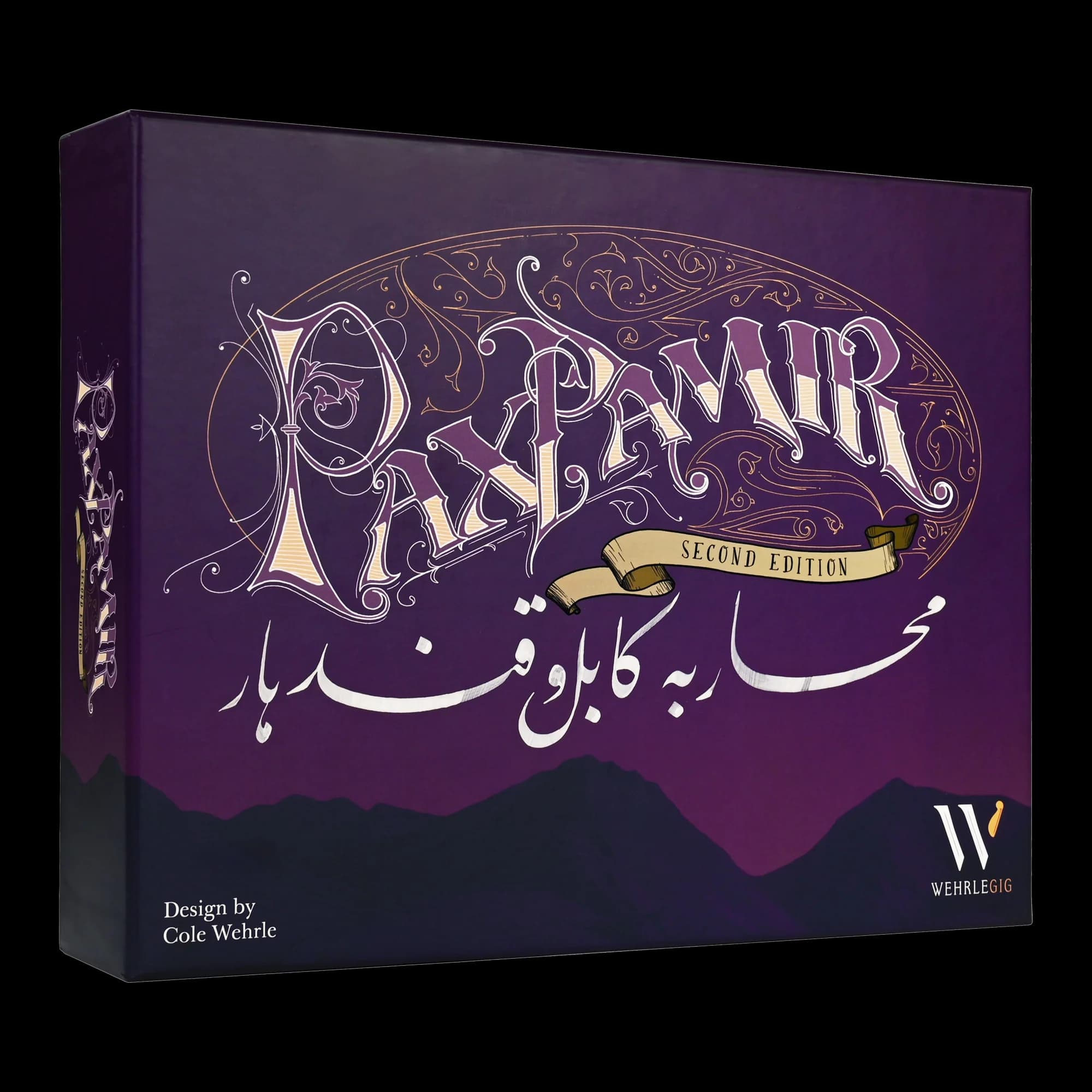
Pax Pamir: Second Edition is a strategic board game set in the mid-19th century, specifically during the First Anglo-Afghan War. Players take on the roles of British and Afghan leaders, navigating the complexities of diplomacy, politics, and warfare to achieve their objectives. The game's goal is to accumulate victory points by completing missions, influencing key events, and controlling territories.
Gameplay involves a combination of area control, resource management, and strategic planning. Players must balance their efforts between military conquests, diplomatic negotiations, and economic development. The game board features a modular design, with interlocking tiles representing the various regions of Afghanistan. Each player has a unique set of abilities and strengths, reflecting the historical figures they represent.
One of the key mechanics in Pax Pamir is the use of 'influence tokens,' which allow players to shape the course of events and sway the loyalty of Afghan tribes. Players must carefully manage their resources and make strategic decisions about when to engage in combat, negotiate with tribal leaders, or focus on economic development.
The game's theme and historical context are meticulously researched, providing a rich and immersive experience for players. The game's designers have clearly put significant effort into recreating the complexities of 19th-century politics and warfare, making Pax Pamir: Second Edition an engaging and challenging experience for fans of strategic board games.
2-4 90m⚖️ 3.0
RANK #54
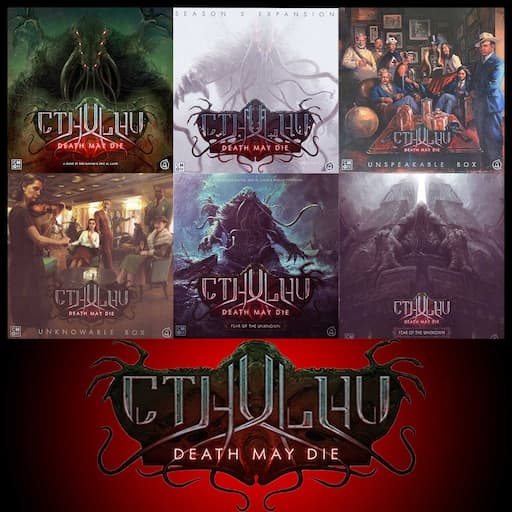
In Cthulhu: Death May Die, players take on the roles of investigators trying to uncover the mysteries of the ancient deity Cthulhu. The game is set in a Lovecraftian world where players must navigate through a series of challenges and puzzles to ultimately defeat the Great Old One. However, as they delve deeper into the mystery, they will realize that their own sanity may be at risk.
The gameplay involves a combination of exploration, puzzle-solving, and strategic decision-making. Players can choose from various characters with unique abilities and strengths, each contributing to the overall success or failure of the mission. The game features a modular board, which is composed of interlocking tiles that represent different locations and environments. As players explore these areas, they will encounter various obstacles, creatures, and other challenges that must be overcome.
One of the key mechanics in Cthulhu: Death May Die is the sanity system. Players can collect Sanity tokens, which allow them to perform certain actions or access specific abilities. However, if a player's sanity drops too low, they will become unhinged and start making irrational decisions that may harm their own chances of success.
The game also features a unique mechanic called 'Sanity Shocks,' which occur when players encounter particularly traumatic events or make poor choices. These shocks can have significant consequences for the player's character, including loss of sanity, temporary incapacitation, or even death.
1-4 60m⚖️ 3.5
BoxNo Cover Art
RANK #58
On Mars
2020On Mars is a strategic board game designed for 2-4 players, where each player takes on the role of an astronaut tasked with establishing a human settlement on the planet Mars. The game's primary objective is to be the first player to successfully establish their colony and earn the most points by completing various missions and tasks. Players must carefully manage their resources, including oxygen, food, and water, while also navigating the challenges of Martian terrain and unpredictable weather conditions.
2-4 m⚖️ 3.0
RANK #60
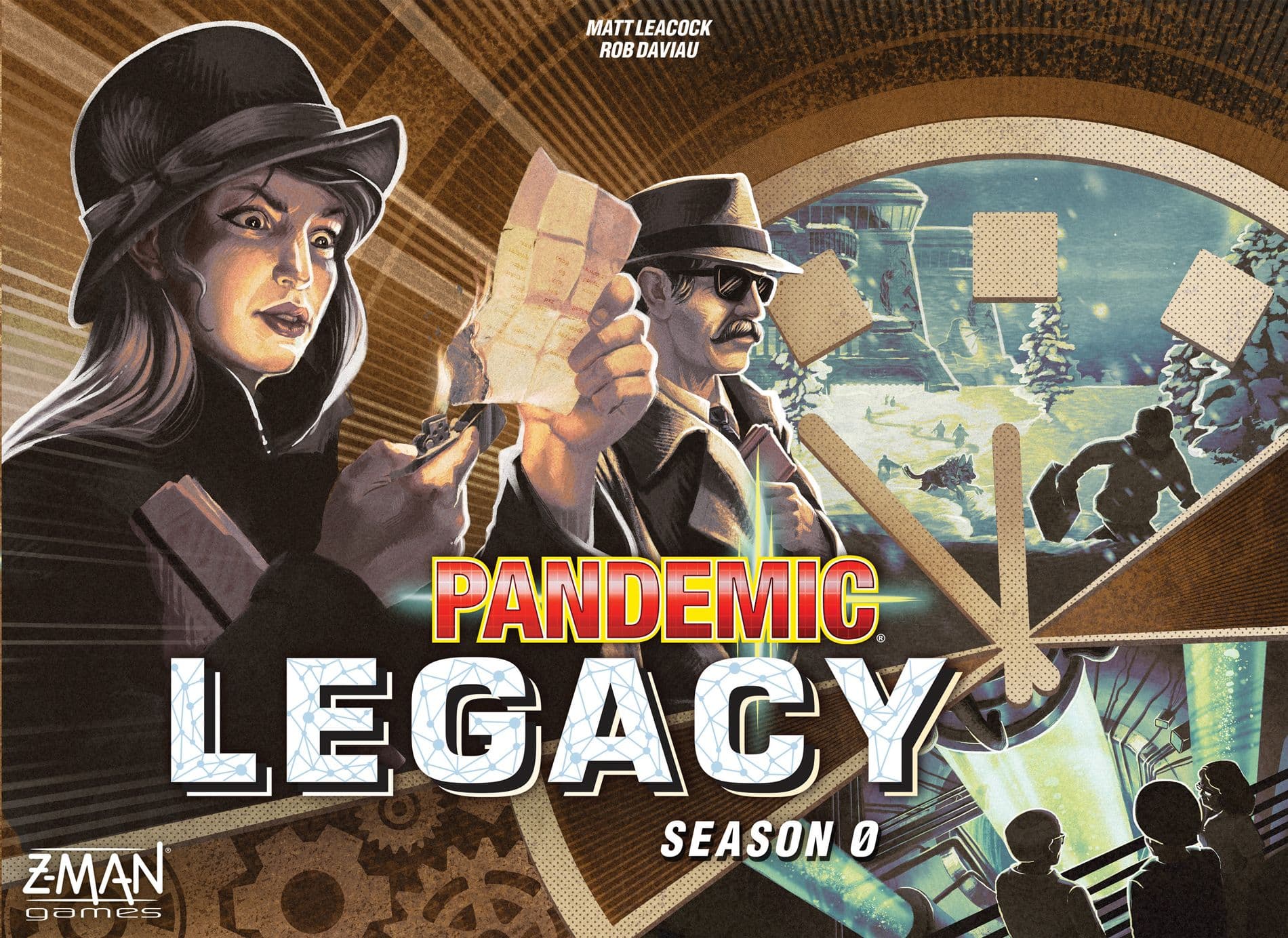
Pandemic Legacy: Season 0 is a cooperative board game designed for 2-4 players. It's the first installment in the Pandemic Legacy series, which introduces a new narrative-driven gameplay experience. Players take on the roles of disease-fighting specialists working together to save the world from deadly outbreaks. The game features a unique legacy system, where players' decisions and actions have lasting consequences that impact future games.
2-4 60m⚖️ 3.0
BoxNo Cover Art
RANK #61
Anachrony
2017Anachrony is a strategic board game designed for 3-4 players, where each player takes on the role of a leader in a futuristic city. The goal of the game is to build and manage this city, while also exploring the mysteries of time travel. Players must balance their resources and make decisions about which buildings to construct, how to allocate their workforce, and when to use their time-traveling abilities.
The game is played over several rounds, with each round representing a year in the life of the city. At the start of each round, players receive new resources and must decide how to use them. They can build new structures, upgrade existing ones, or use their time-traveling abilities to alter the course of events.
One of the unique features of Anachrony is its use of a modular board, which changes with each playthrough. This adds a high level of replayability to the game, as players must adapt to new challenges and opportunities each time they play. The game also includes a variety of time-traveling mechanics, such as the ability to send agents back in time to gather resources or alter historical events.
Overall, Anachrony is a challenging and engaging game that requires strategic thinking and planning. It's perfect for fans of resource management and area control games, and offers a unique twist on traditional board game mechanics.
3-4 60m⚖️ 4.0
RANK #62
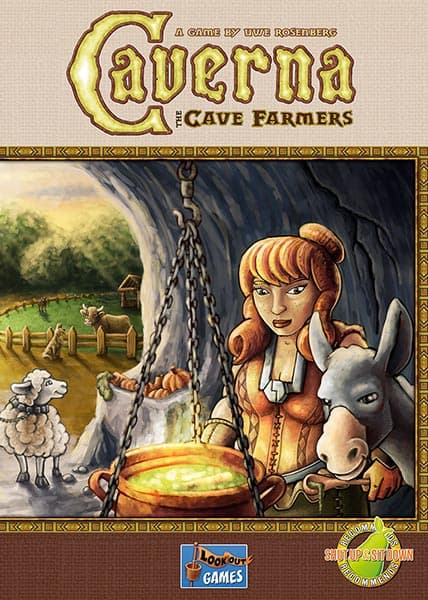
In "Caverna: The Cave Farmers," players step into the sturdy boots of a small dwarf family carving out a living within a mountain. As a spiritual successor to the designer's acclaimed game *Agricola*, Caverna expands upon the core worker-placement formula with a greater sense of freedom and discovery. Your goal is to develop the most prosperous homestead over twelve rounds of play. This is measured in victory points, awarded for the size of your family, the livestock you've raised, the crops you've harvested, precious gems you've mined, and the unique furnishings you've installed in your ever-expanding cave network. Success requires a delicate balance between cultivating the forest on one side of your player board and excavating the mountain on the other, transforming a humble hovel into a thriving underground domain.
The game's engine is driven by a classic worker-placement mechanism. Each round, players take turns placing their dwarf tokens on a central board of action spaces. These actions allow you to gather essential resources like wood and stone, dig new tunnels and caverns in your mountain, or clear forests to create fields and pastures. As the game progresses, new and more powerful action spaces become available, escalating the strategic possibilities. Notable mechanics include raising a variety of animals—sheep, donkeys, boars, and cattle—which breed during harvest phases, and forging ore into weapons. These weapons equip your dwarves for expeditions, a key feature where they venture forth to gain a diverse range of resources and even new board components, offering an alternative path to prosperity away from the competitive main action spaces. Throughout this, you must also manage your food supply to feed your growing family at the end of key rounds, a central puzzle that demands foresight and efficient planning.
"Caverna: The Cave Farmers" is beloved for its 'sandbox' nature, offering a vast and less restrictive strategic landscape compared to its predecessors. While the pressure to feed your family remains, the options for generating food and victory points are abundant, empowering players to pursue many different viable strategies. This freedom makes each game feel like a unique puzzle. Players can become master farmers, expert miners who outfit their caves with dozens of unique furnishing tiles for powerful bonuses, or intrepid adventurers who rely on expeditions for their wealth. The sheer variety of room tiles and strategic paths ensures immense replayability, inviting players back to explore new ways to build their perfect dwarven home. It is a deeply rewarding, medium-to-heavyweight experience for gamers who relish complex engine-building and optimizing their own personal tableau.
1-7 120m⚖️ 3.8
RANK #63
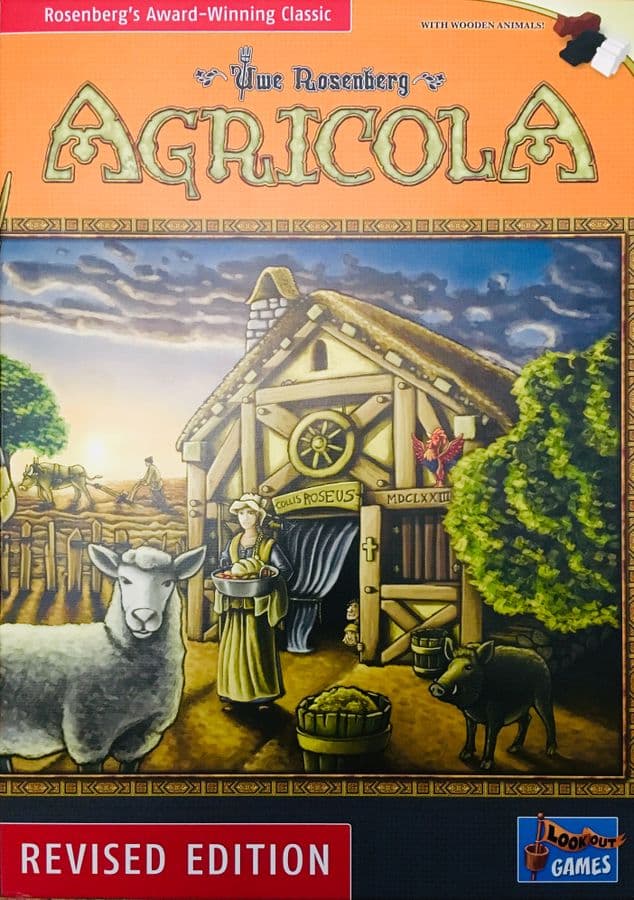
Agricola
2007In Agricola, players step into the well-worn boots of a 17th-century farming family, starting with little more than a spouse and a two-room wooden hut. The singular goal is to cultivate the most prosperous and well-rounded homestead over 14 rounds of play. This isn't just about accumulating wealth; it's about survival and balanced development. Victory points are awarded for a diverse farm that includes plowed fields, various crops, fenced pastures, different types of livestock, and an expanded family living in an upgraded home. The game masterfully punishes over-specialization, penalizing players for neglected areas of their farm, ensuring that true prosperity comes from being a jack-of-all-trades.
The game's engine is driven by a tense worker placement mechanism. Each round, players take turns placing their limited family members on action spaces to gather resources, build improvements, or grow their family. Since each action space can only be used once per round, players are in constant, indirect competition for critical actions like collecting wood or plowing a field. As the game progresses, new, more powerful actions become available, broadening strategic possibilities. This steady development is punctuated by six harvest phases, where the true pressure of Agricola is felt. During a harvest, you reap what you've sown, your animals may breed, but most importantly, you must feed your family. Failing to produce enough food forces a player to take a "Begging" card, which carries a steep point penalty, creating a persistent, challenging tension between expanding your farm and simply providing for your household.
Agricola's enduring appeal lies in this brilliant balance of long-term strategic planning and short-term tactical necessity. The struggle to feed your family is a constant, pressing puzzle that forces difficult decisions every single round. Its depth and replayability are legendary, largely due to the massive decks of Occupation and Minor Improvement cards dealt to each player. These cards provide unique abilities and scoring opportunities, ensuring no two games ever feel the same and allowing for countless strategic pathways. It is this combination of a deeply thematic, relatable struggle and a highly rewarding, complex strategic framework that has cemented Agricola's status as a masterpiece of the Eurogame genre and a benchmark for worker placement games.
1-5 90m⚖️ 3.6
BoxNo Cover Art
RANK #64
Blood Rage
2015Blood Rage is a game of strategy and combat set in the world of Norse mythology. Players take on the roles of Viking clans, seeking to prove their worth through battle and conquest. The game's goal is to earn the most victory points by completing quests, defeating enemies, and expanding your clan's territory.
2-4 90m⚖️ 3.5
BoxNo Cover Art
RANK #66
Obsession
2018Obsession is a game where players take on the roles of wealthy collectors, each vying to amass the most valuable collection of rare and exotic items. The game's goal is simple: be the first player to collect three 'Obsessions' - highly prized artifacts that are worth a fortune. However, the journey to achieving this goal is far from straightforward.
Each player starts with a set amount of money and a small collection of items. On their turn, they can choose to either buy new items at auction or sell existing ones for profit. The twist in Obsession lies in its unique 'Obsession' mechanism, where players can focus on collecting specific types of items, such as art, antiques, or even rare books.
As players collect more items, the game's tension builds up. Players must carefully manage their finances and make strategic decisions about which items to buy and sell. The game also features a 'Reputation' system, where players earn reputation points for collecting rare and valuable items. This adds an extra layer of strategy, as players must balance their desire to collect Obsessions with the need to maintain a good reputation.
One of the unique aspects of Obsession is its high replayability. The game comes with a variety of item cards, each with its own value and rarity. Players can also create their own custom item cards, adding an extra layer of depth to the game. This means that no two games are ever the same, making Obsession a great choice for players who enjoy strategic gameplay and variety.
Overall, Obsession is a game that will appeal to fans of strategy and collection-building games. Its unique mechanics and high replayability make it an excellent addition to any board game collection.
2-4 60m⚖️ 3.5
BoxNo Cover Art
RANK #67
Grand Austria Hotel is a strategic board game designed for 2-4 players, where each player takes on the role of an entrepreneur trying to manage and expand their own hotel in early 20th-century Vienna.
The game's objective is to earn the most prestige points by constructing rooms, managing staff, and providing excellent service to guests. Players must balance their resources carefully, as they need to allocate funds for room construction, staff salaries, and other expenses while also trying to maximize their revenue from guest bookings.
Gameplay involves a combination of resource management, area control, and strategic planning. Each player has a set of rooms that can be constructed and upgraded, and they must manage the flow of guests through these rooms to earn prestige points. The game also features a unique 'guest' mechanism, where players take on the roles of different types of guests with varying preferences and requirements.
One of the key aspects of Grand Austria Hotel is its thematic depth. Players are immersed in the world of early 20th-century Vienna, complete with authentic artwork and historical references. The game's mechanics are designed to evoke the spirit of entrepreneurship and hotel management during this era, making it a unique and engaging experience for players.
Overall, Grand Austria Hotel offers a challenging and rewarding gameplay experience that requires strategic planning, resource management, and adaptability.
2-4 60m⚖️ 3.5
BoxNo Cover Art
RANK #68
Lisboa
2017Lisboa is a game that challenges players to navigate the city's complex infrastructure and manage its growth while balancing competing interests. The goal is to be the first player to achieve three 'glory points' by completing various tasks and projects. Players take on the roles of different factions, each with their own strengths and weaknesses, and must work together to build and maintain the city's infrastructure. However, they also have individual goals that may conflict with those of other players, adding a layer of complexity and strategy to the game.
2-4 90m⚖️ 3.5
BoxNo Cover Art
RANK #70
Pandemic Legacy: Season 2 is a cooperative board game designed for 1-4 players, where each player takes on the role of a disease-fighting specialist working together to save the world from deadly outbreaks. The game builds upon the original Pandemic game, introducing new mechanics and challenges that require strategic planning and teamwork to overcome. Players must work together to stop the spread of diseases, while also managing their own character's abilities and resources. As players progress through the game, they will encounter new challenges and obstacles that will test their skills and force them to adapt their strategies.
m⚖️ 4.0