Historical Games
Browse all Historical board games in the Meeple Pulse database.
Styles
Themes
AbstractAdventureAncientAnimalsArtBusinessCard GameCo-operativeComic BookCooperativeCrimeEconomicEnvironmentalismExplorationFantasyHistoricalHorrorHumorIntrigueLiteraryMagicMarvelMedievalModernMuseumMysteryMythologyNatureNauticalPoliticalPress Your LuckSatireSci-FiSocial CommentarySocial InteractionSpaceSuperheroesThematicTravelWarWesternWord-Guessing
Mechanics
3D PlacementActingAction / DexterityAction DraftingAction Point AllowanceAction Point Allowance SystemAction Point SystemAction PointsAction ProgrammingAction QueueAction RetrievalAction SelectionAction/EventAlliancesAlternate ActivationApp-AssistedApp-DrivenArea ControlArea InfluenceArea MajorityArea Majority / InfluenceArea MovementArgumentationAsymmetricAsymmetric FactionsAsymmetric GameAsymmetric PowersAsymmetrical PowersAuction & BiddingAuction/BiddingAuctioningBag BuildingBettingBetting and BluffingBetting and WageringBetting and WagersBiddingBingoBlind BiddingBluffingCampaign / Battle Card DrivenCampaign / LegacyCampaign / Legacy GameCampaign / Mission-basedCampaign / ScenariosCampaign GameCampaign PlayCard DraftingCard DrawingCard DrivenCard Driven ActionCard Driven CombatCard Driven Dice AllocationCard Driven MovementCard ManagementCard PlayCard Play / Hand ManagementCard Play Conflict ResolutionCard SheddingCard-Driven MovementCharacter CreationCharacter ProgressionChit-Pull SystemCo-op PlayCo-operative GameCo-operative PlayCode-breakingCombat ResolutionCombo ChainCommand CardsCommodity SpeculationCommunication LimitsContract FulfillmentContractsCooperative GameCooperative GameplayCooperative PlayCooperative Trick-takingDebateDeck BuildingDeck ConstructionDeck, Bag, and Pool BuildingDeck-BuildingDeductionDexterityDice DraftingDice PlacementDice RollingDiplomatic InfluenceDraftingDynamic Battle SystemEnclosureEnd Game BonusesEngine BuildingEngine-BuildingEscape RoomEvent DrivenExplorationFarmingFlip and WriteFollowFollow ActionGrid CoverageGrid MovementHand ManagementHex-and-CounterHexagon GridHidden MovementHidden RolesI Cut You ChooseIncomeInfluence / Area MajorityLadder ClimbingLegacyLegacy ElementsLegacy GameLegacy SystemLimited CommunicationLine DrawingLine of SightMancalaMap MovementMarketMarket DraftingMarket ManipulationMarket MechanicMarket SpeculationMatchingMeasurement MovementMemoryMission ObjectivesModular BoardModular Board ConstructionMovement TemplatesMulti-Use CardsMulti-use CardsMultiple ScenariosMust FollowNarrative ChoiceNarrative Choice / ParagraphNegotiationNegotiation MechanicsNetwork & Route BuildingNetwork BuildingNetwork and Route BuildingOne vs ManyOne vs. ManyOpen DraftingPaper-and-PencilPartnershipsPattern BuildingPattern RecognitionPick-up and DeliverPlayer EliminationPlayer InteractionPlayer JudgePoint SaladPoint to Point MovementPolyominoesPush Your LuckPush-Your-LuckPuzzlePuzzle-LikePuzzle-SolvingRaceReal-TimeRecipe FulfillmentResource ManagementRole PlayingRole SelectionRoll / Spin and MoveRondelRoute BuildingRoute-BuildingRoute/Network BuildingSanity SystemScenario / Campaign PlayScenario / Mission / Campaign GameScenario / Mission FunctionSecret Unit DeploymentSemi-Cooperative GameSet CollectionSheddingSimulationSimultaneous ActionSimultaneous Action SelectionSimultaneous Hidden AllocationSocial DeductionSocial InteractionSolo / Solitaire GameSpace ExplorationStat Check / Skill CheckStock HoldingStorytellingStrategic PlanningTableau BuildingTactical Decision-MakingTake ThatTargeted CluesTeam PlayTeam-Based GameTeam-Based GuessingTeamworkTech TreesTech Trees / Tech TracksTechnology & Armament TracksTechnology TreeTension & Aggression TracksTile DraftingTile LayingTile PlacementTime TrackTime TravelTower DefenseTrack MovementTradingTrick-takingTug of WarTurn Order: PassTurn Order: Stat-BasedUnit PlacementVariable Phase OrderVariable Player PowersVariable Set-upVariable SetupVictory Point TracksVotingWord AssociationWord GameWord GuessingWord-GuessingWord-guessingWordplayWorker Placement
BoxNo Cover Art
RANK #99
Fields of Arle
2014Fields of Arle immerses you in the challenging yet rewarding life of a farming family in 18th-century East Frisia. In this masterwork by acclaimed designer Uwe Rosenberg, players are tasked with developing a modest plot of land into a thriving and prosperous homestead. Over the course of four and a half years, you will shape the very landscape, manage livestock, and craft valuable goods. The game is a deeply thematic and strategic experience where the ultimate goal is to accumulate the most victory points by building a diverse and efficient agricultural engine, demonstrating your family's success through the tangible growth of your farmstead and the wealth of goods you've produced.
The gameplay is centered around a robust worker placement system that unfolds over nine rounds, each representing a half-season of either summer or winter. Each season offers a distinct set of actions, from plowing fields and shearing sheep in the summer to breeding animals and weaving cloth in the winter. Players strategically place their family members on action spaces to manage every aspect of their farm. This includes draining moors to create new pastures, building dikes to protect land from floods, raising cattle and horses, and constructing an array of buildings that provide crucial new abilities. A clever mechanic allows a player to perform an off-season action once per round, but this flexibility comes at the cost of giving up the first-player advantage, adding another layer of tactical decision-making.
What makes Fields of Arle a beloved classic among strategy gamers is its incredible depth and the sandbox-style freedom it offers. It is a quintessential heavy Eurogame, specifically tailored for a one or two-player experience, complete with a rich and engaging solo mode. There is no single prescribed path to victory; players can focus on animal husbandry, crop cultivation, trade, or building construction, leading to immense replayability as you explore different strategies with each playthrough. The satisfaction of watching your personal player board transform from barren land into a complex, bustling farm is a core part of its appeal, offering a deeply rewarding journey for those who enjoy intricate, low-interaction engine-building puzzles.
1-2 90m⚖️ 3.9

RANK #126
Carnegie
2022Step into the shoes of an aspiring magnate during America's Gilded Age in *Carnegie*, a board game inspired by the legendary industrialist and philanthropist Andrew Carnegie. In this medium-heavy economic Eurogame, you are tasked with building a business empire from the ground up. Over the course of 20 rounds, you will manage employees, develop new technologies, invest in real estate across the nation, and expand your transport network. The ultimate goal is not just to be the wealthiest, but to build the most prestigious enterprise. Victory is determined by points earned through savvy business growth, strategic construction, and, crucially, generous contributions to society, proving that true success lies in both industry and philanthropy.
The gameplay is driven by a clever and highly interactive action-selection mechanism. Each round, the active player chooses one of four actions corresponding to a department in their company, and critically, all other players must also perform that same action. The 'Human Resources' department allows you to move your employees on your personal player board to activate different areas for future turns. 'Management' is used to acquire essential goods and money. 'Construction' lets you build new projects and expand your company's network on the main game board, while 'Research & Development' advances your company's technology, unlocking powerful new abilities and scoring paths. This system forces constant engagement and requires you to strategically anticipate your rivals' needs and intentions while optimizing your own.
What truly sets *Carnegie* apart is its brilliant integration of business acumen with philanthropic duty. Throughout the game, players are presented with opportunities to donate their wealth to charitable causes. This isn't merely a thematic element; these donations are a core mechanism for unlocking significant end-game scoring objectives. This creates a compelling strategic tension: do you reinvest your profits for immediate expansion and engine-building, or do you sacrifice short-term gains for long-term prestige and victory points? This dual focus, combined with the shared action system that ensures no downtime, makes for a deeply rewarding and thinky experience where every decision matters, not just for you, but for everyone at the table.
1-4 120m⚖️ 4.1

RANK #137
Caylus
2005Caylus is a quintessential strategy game that casts players as master builders in 13th-century France. Tasked by King Philip the Fair, you must contribute your resources and labor to the grand construction of a new castle, while simultaneously developing the road and village that lead to it. The ultimate goal is to accumulate the most prestige points by the time the castle is complete, thereby earning the king's favor. Widely regarded as a foundational title in the worker placement genre, Caylus is celebrated for its strategic depth and minimal reliance on luck. Beyond the initial random setup of a few buildings, every decision rests squarely on the players' shoulders, making each victory a testament to superior planning and foresight.
The gameplay revolves around a central road where players, in turn order, place their workers on various buildings. This is the core 'worker placement' mechanic, where each placement costs money and grants access to specific actions—from gathering essential resources like wood, stone, and food, to constructing new commercial or residential buildings that expand the game board itself. A truly distinctive element is the movement of the Provost marker. Players can spend money to move this pawn along the road, and at the end of the round, any worker placed on a building beyond the Provost is not activated. This introduces a tense and highly interactive layer of blocking and manipulation, as players vie to ensure their own actions resolve while thwarting their opponents'. The game's pace is dictated by another marker, the Bailiff, whose movement can be accelerated or slowed by the Provost's final position, directly impacting the game's length.
What makes Caylus an enduring classic is its elegant fusion of simple rules with profound strategic possibilities. The Provost mechanism, in particular, elevates the game from a simple optimization puzzle to a dynamic and interactive struggle. It forces players to be constantly aware of their opponents' intentions and to balance the cost of moving the Provost against the potential benefits of activating their workers. This low-luck, high-interaction design ensures that every game is a unique challenge, full of difficult decisions and rewarding long-term planning. For enthusiasts of heavyweight Eurogames, Caylus offers a masterclass in design, providing a deeply satisfying and highly replayable experience that has rightfully earned its place as a cornerstone of modern board gaming.
2-5 120m⚖️ 3.8
BoxNo Cover Art
RANK #141
Lorenzo il Magnifico is a strategic board game designed for 2-4 players, set in the Renaissance era of Florence, Italy. Players take on the roles of powerful families vying for influence and wealth during this pivotal time in history. The game's objective is to accumulate the most victory points by completing various tasks, such as building structures, collecting art, and influencing politics.
Gameplay involves a combination of resource management, area control, and strategic planning. Players must navigate the complex web of alliances and rivalries between families, all while managing their resources and making tactical decisions to outmaneuver their opponents. The game's mechanics include worker placement, area control, and engine-building, which add depth and replayability to each playthrough.
One of the unique aspects of Lorenzo il Magnifico is its thematic immersion. Players are fully immersed in the world of Renaissance Florence, with beautifully illustrated components and a richly detailed game board that brings the city to life. The game's mechanics and theme work together seamlessly to create an engaging and challenging experience for players.
2-4 120m⚖️ 3.5
BoxNo Cover Art
RANK #144
Mombasa
2015Mombasa is a strategic game of trading and exploration set in the vibrant city of Mombasa, Kenya. Players take on the roles of merchants seeking to accumulate wealth by trading goods and resources. The game's goal is to be the first player to reach a predetermined amount of wealth, which requires careful planning and management of resources throughout the game.
2-4 45m⚖️ 3.0
RANK #150
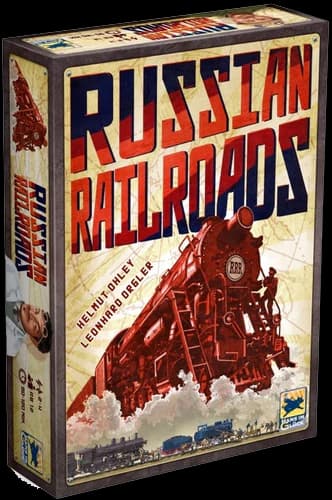
In Russian Railroads, players step into the roles of ambitious railway magnates competing to build the most advanced and expansive rail network across the vast expanse of 19th-century Russia. The primary goal is to accumulate the most victory points by developing three key railway lines on your personal player board: the legendary Trans-Siberian Railroad, and two smaller but crucial lines to St. Petersburg and Kiev. This is a quintessential 'Euro-style' game, where strategic planning, resource management, and efficient action selection are paramount. Victory isn't just about reaching the end of the track first; it's about creating a powerful, point-scoring engine that will leave your rivals in the dust, with final scores often soaring into the hundreds.
The game's engine is driven by a classic worker placement mechanism. Each round, players take turns deploying their workers to a shared central board to claim actions. These actions are the lifeblood of your enterprise, allowing you to lay progressively more valuable tracks, from basic black rails to superior white ones. To capitalize on your expanding network, you must also upgrade your locomotives, as they determine how far along a track you can actually score points. Beyond the rails, players can advance on an industrialization track to unlock powerful bonuses and hire specialized engineers who grant unique, game-long advantages. Every decision is critical, as action spaces are limited, creating a tense and interactive environment where you must constantly adapt to your opponents' strategies.
Russian Railroads is celebrated for its remarkable strategic depth and high replayability. While several paths to victory exist—focusing on a single super-powered rail line, balancing all three, or pushing industrialization—the game's tight, often described as 'vicious,' worker placement system ensures no single strategy is always dominant. Players love the puzzle-like challenge of optimizing their turns and the immense satisfaction of seeing their carefully constructed engine pay off with massive point gains in the later rounds. Its reputation as a challenging, 'thinky' game makes it a beloved staple for gamers who crave a deep, competitive experience with a rewarding and climactic finish.
2-4 120m⚖️ 3.6
BoxNo Cover Art
RANK #153
Rising Sun
2018Rising Sun is a strategic board game designed for 2-4 players, set in feudal Japan during the Sengoku period. Players take on the roles of daimyos, vying for control and dominance over the island of Honshu. The game's objective is to accumulate victory points by controlling provinces, eliminating opponents, and completing objectives.
2-4 120m⚖️ 3.5
BoxNo Cover Art
RANK #155
Yokohama
2016Yokohama is a strategic game for 2-4 players that takes approximately 45-60 minutes to play. The goal of the game is to build a thriving city by collecting and trading resources, managing your workforce, and constructing buildings. Players take on the role of mayors tasked with developing their respective cities in Japan's second-largest metropolitan area.
The gameplay revolves around resource management, where players collect and trade cards featuring various goods such as food, textiles, and ceramics. These resources are used to construct buildings, which provide bonuses and benefits. The game also features a unique mechanic called 'workforce management,' where players must manage their workforce's skills and abilities to optimize their building construction.
One of the key aspects of Yokohama is its thematic appeal. Players become immersed in the world of 19th-century Japan, with beautifully illustrated cards and components that evoke a sense of nostalgia and wonder. The game also features a high level of replayability, thanks to the random distribution of resources and building cards.
Overall, Yokohama offers a unique blend of strategic resource management, workforce optimization, and thematic immersion, making it an engaging experience for players who enjoy strategic games with depth.
2-4 45m⚖️ 3.0
BoxNo Cover Art
RANK #159
Iberia
2016Iberia is a game that challenges players to navigate the complex history and culture of the Iberian Peninsula, which includes modern-day Spain and Portugal. The game's goal is to be the first player to earn 10 victory points by completing various tasks and missions set in different time periods, from ancient times to the present day. Players will need to manage their resources carefully, as they will have to travel between different locations on the board, interact with other players, and make strategic decisions about which actions to take. The game's mechanics include a unique system for tracking player progress and a modular board that changes with each playthrough, adding a layer of replayability to the game.
2-4 90m⚖️ 3.5
BoxNo Cover Art
RANK #182
War Chest
2018War Chest is a game of strategic resource management and tactical deployment, where players take on the roles of medieval warlords vying for dominance. The objective is to accumulate wealth, influence, and military might by collecting and trading resources, constructing buildings, and recruiting troops. Players must balance their short-term needs with long-term goals, as the game's dynamic economy and shifting alliances keep them on their toes.
Gameplay revolves around a modular board, composed of interlocking tiles that represent different regions of a medieval kingdom. Each tile offers unique opportunities for resource collection, trade, or combat. Players must navigate this ever-changing landscape, adapting to new challenges and opportunities as they arise. The game's mechanics are designed to promote strategic thinking, planning, and execution, making it an engaging experience for players who enjoy complex strategy games.
One of the key features that sets War Chest apart is its focus on player interaction and negotiation. Players must form alliances, trade resources, and make deals with each other in order to achieve their goals. This social aspect adds a layer of depth and replayability to the game, as players must navigate the complex web of relationships between them.
War Chest is a game that rewards strategic thinking, planning, and execution. It's a challenging experience that will keep players engaged for hours, with a high level of replayability due to its modular board and dynamic economy.
m⚖️ N/A
BoxNo Cover Art
RANK #219
In The Red Cathedral, players take on the roles of construction teams building Saint Basil's Cathedral in Moscow. Each player has a unique goal: to gain the favor of the Tsar by building and ornamenting sections of the church. Gameplay involves gathering resources, satisfying requirements to build or ornament a section, and other point-scoring opportunities. The game features a central rondel where players choose one of five dice to move based on what die face is showing, allowing for strategic planning and potential for plans to be thwarted by opponents.
1-4 30m⚖️ 2.5
RANK #232
Paleo
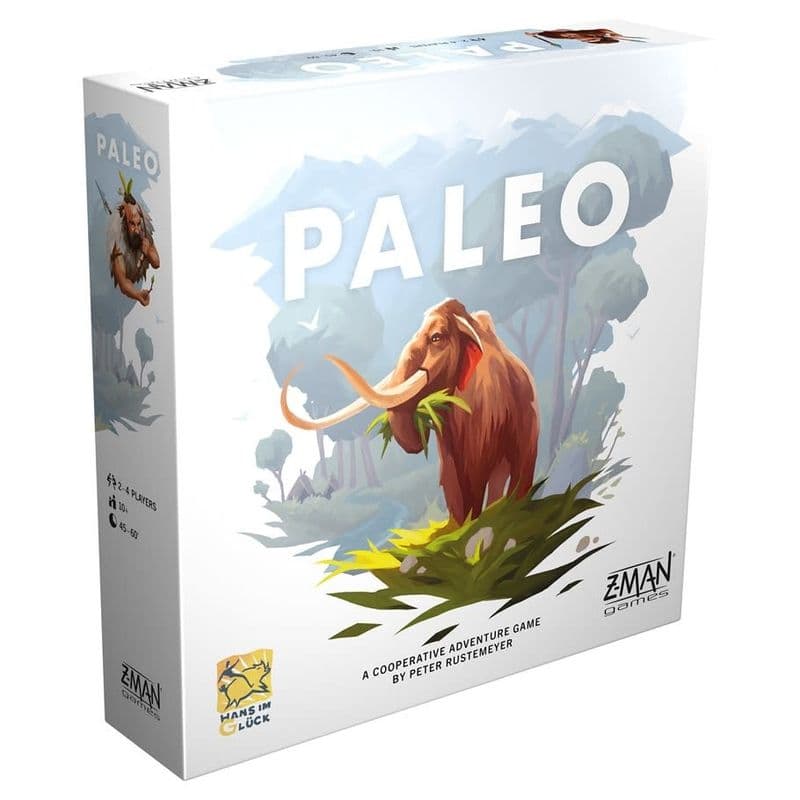
2020In Paleo, players embark on a cooperative adventure set in the Stone Age. The game is designed for 2-4 players and takes approximately 45-60 minutes to play. Players work together to keep their tribe alive while completing missions and creating a cave painting. The game includes 10 unique modules that can be mixed and matched to vary the difficulty level or try different rules variants, including a solo mode. Each player begins with a couple of humans, each with a skill and life points. On their turn, players send out their humans to explore, gathering resources and completing tasks while avoiding dangers such as skull tokens. The game requires strategy and cooperation to succeed, making it an engaging experience for players who enjoy cooperative games. One of the unique features of Paleo is its use of card-driven mechanics, where players draw cards with different backgrounds that provide clues about what's on the other side. This mechanic adds a layer of uncertainty and excitement to the game, as players must work together to uncover the secrets of the cards. The game also includes a variety of modules that can be added or removed to change the gameplay experience, making it suitable for players who enjoy replayability and customization. Overall, Paleo is an engaging cooperative game that challenges players to work together while exploring the Stone Age world. Its unique mechanics and modular design make it an attractive option for fans of cooperative games.
2-4 45m⚖️ 3.0