Strategy Games
Browse all Strategy board games in the Meeple Pulse database.
Styles
Themes
AbstractAdventureAncientAnimalsArtBusinessCard GameCo-operativeComic BookCooperativeCrimeEconomicEnvironmentalismExplorationFantasyHistoricalHorrorHumorIntrigueLiteraryMagicMarvelMedievalModernMuseumMysteryMythologyNatureNauticalPoliticalPress Your LuckSatireSci-FiSocial CommentarySocial InteractionSpaceSuperheroesThematicTravelWarWesternWord-Guessing
Mechanics
3D PlacementActingAction / DexterityAction DraftingAction Point AllowanceAction Point Allowance SystemAction Point SystemAction PointsAction ProgrammingAction QueueAction RetrievalAction SelectionAction/EventAlliancesAlternate ActivationApp-AssistedApp-DrivenArea ControlArea InfluenceArea MajorityArea Majority / InfluenceArea MovementArgumentationAsymmetricAsymmetric FactionsAsymmetric GameAsymmetric PowersAsymmetrical PowersAuction & BiddingAuction/BiddingAuctioningBag BuildingBettingBetting and BluffingBetting and WageringBetting and WagersBiddingBingoBlind BiddingBluffingCampaign / Battle Card DrivenCampaign / LegacyCampaign / Legacy GameCampaign / Mission-basedCampaign / ScenariosCampaign GameCampaign PlayCard DraftingCard DrawingCard DrivenCard Driven ActionCard Driven CombatCard Driven Dice AllocationCard Driven MovementCard ManagementCard PlayCard Play / Hand ManagementCard Play Conflict ResolutionCard SheddingCard-Driven MovementCharacter CreationCharacter ProgressionChit-Pull SystemCo-op PlayCo-operative GameCo-operative PlayCode-breakingCombat ResolutionCombo ChainCommand CardsCommodity SpeculationCommunication LimitsContract FulfillmentContractsCooperative GameCooperative GameplayCooperative PlayCooperative Trick-takingDebateDeck BuildingDeck ConstructionDeck, Bag, and Pool BuildingDeck-BuildingDeductionDexterityDice DraftingDice PlacementDice RollingDiplomatic InfluenceDraftingDynamic Battle SystemEnclosureEnd Game BonusesEngine BuildingEngine-BuildingEscape RoomEvent DrivenExplorationFarmingFlip and WriteFollowFollow ActionGrid CoverageGrid MovementHand ManagementHex-and-CounterHexagon GridHidden MovementHidden RolesI Cut You ChooseIncomeInfluence / Area MajorityLadder ClimbingLegacyLegacy ElementsLegacy GameLegacy SystemLimited CommunicationLine DrawingLine of SightMancalaMap MovementMarketMarket DraftingMarket ManipulationMarket MechanicMarket SpeculationMatchingMeasurement MovementMemoryMission ObjectivesModular BoardModular Board ConstructionMovement TemplatesMulti-Use CardsMulti-use CardsMultiple ScenariosMust FollowNarrative ChoiceNarrative Choice / ParagraphNegotiationNegotiation MechanicsNetwork & Route BuildingNetwork BuildingNetwork and Route BuildingOne vs ManyOne vs. ManyOpen DraftingPaper-and-PencilPartnershipsPattern BuildingPattern RecognitionPick-up and DeliverPlayer EliminationPlayer InteractionPlayer JudgePoint SaladPoint to Point MovementPolyominoesPush Your LuckPush-Your-LuckPuzzlePuzzle-LikePuzzle-SolvingRaceReal-TimeRecipe FulfillmentResource ManagementRole PlayingRole SelectionRoll / Spin and MoveRondelRoute BuildingRoute-BuildingRoute/Network BuildingSanity SystemScenario / Campaign PlayScenario / Mission / Campaign GameScenario / Mission FunctionSecret Unit DeploymentSemi-Cooperative GameSet CollectionSheddingSimulationSimultaneous ActionSimultaneous Action SelectionSimultaneous Hidden AllocationSocial DeductionSocial InteractionSolo / Solitaire GameSpace ExplorationStat Check / Skill CheckStock HoldingStorytellingStrategic PlanningTableau BuildingTactical Decision-MakingTake ThatTargeted CluesTeam PlayTeam-Based GameTeam-Based GuessingTeamworkTech TreesTech Trees / Tech TracksTechnology & Armament TracksTechnology TreeTension & Aggression TracksTile DraftingTile LayingTile PlacementTime TrackTime TravelTower DefenseTrack MovementTradingTrick-takingTug of WarTurn Order: PassTurn Order: Stat-BasedUnit PlacementVariable Phase OrderVariable Player PowersVariable Set-upVariable SetupVictory Point TracksVotingWord AssociationWord GameWord GuessingWord-GuessingWord-guessingWordplayWorker Placement
RANK #291
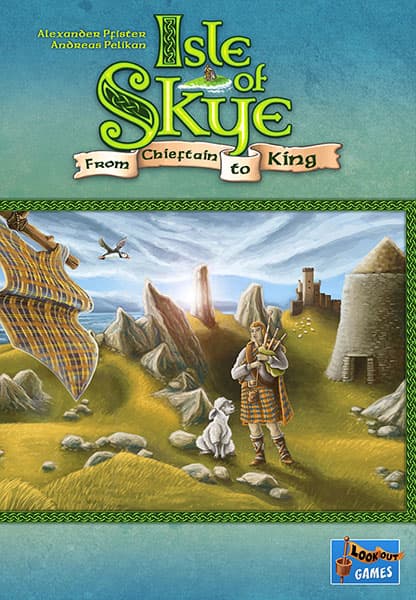
Isle of Skye: From Chieftain to King is a celebrated tile-placement and economic strategy game where players step into the shoes of ambitious clan leaders. Set against the rugged and beautiful backdrop of the Scottish Highlands, the ultimate objective is to expand your territory and accumulate the most victory points to become the rightful King of the Isle. Unlike many traditional tile-laying games, this title introduces a dynamic player-driven economy that ensures no two sessions feel the same. By strategically managing gold and territory, players must navigate a competitive landscape where every decision impacts both their own kingdom and the wealth of their opponents.
The heart of the game lies in its unique auction and pricing system. Each round, players draw three landscape tiles and secretly decide their fate behind a screen. One tile must be discarded using an 'Axe' token, while the remaining two are assigned a gold price from the player's personal reserve. This creates a fascinating risk-reward tension: pricing a tile too low makes it an easy target for rivals to purchase, while pricing it too high forces you to pay that exact amount to the bank if no one else buys it. Once prices are revealed, players take turns purchasing tiles from one another, with the remaining tiles being added to their own expanding kingdoms. Connectivity is crucial, as mountain, grass, and water edges must match perfectly. Whiskey barrels connected to the central castle via roads generate essential income, fueling future bids.
One of the most praised aspects of Isle of Skye is its variable scoring system. From a pool of sixteen different scoring tiles, only four are used in any given game, and their activation rotates through different rounds. This means players must constantly pivot their strategies—one game might reward large bodies of water, while the next focuses on the number of sheep or ships in your territory. The blend of a spatial puzzle with the cutthroat economic interaction of a price-setting auction makes it a standout 'connoisseur' level game that remains accessible to families. It offers deep strategic layers without overstaying its welcome, earning its place as a modern classic in the board gaming world.
2-5 45m⚖️ 2.3
BoxNo Cover Art
RANK #299
Hallertau
2020Set in the mid-19th century within the lush Hallertau region of Bavaria, Germany, Hallertau invites players to step into the shoes of village mayors dedicated to agricultural expansion and civic improvement. The primary objective is to cultivate the local economy by efficiently managing crops and livestock to accumulate wealth and prestige. This historical setting isn't just window dressing; it reflects the region's status as the world's premier hop-producing area. Players strive to outmaneuver their rivals by modernizing their village, represented by the advancement of a massive Community Center tile across their personal boards. The player who most effectively balances the demands of the land with the industrial needs of their town will emerge as the most successful leader of this burgeoning rural hub.
The gameplay loop of Hallertau is a sophisticated blend of classic Uwe Rosenberg concepts and bold new innovations. It utilizes a progressive worker placement system where action spaces do not become blocked, but instead grow more expensive as more players utilize them. Each of the six rounds requires players to allocate their limited workforce to gather seeds, sow fields, and tend to sheep. A standout mechanic is the two-field crop rotation system, which simulates soil exhaustion and recovery. Planting a crop lowers a field’s future yield, while leaving it fallow allows it to recover and produce more in subsequent seasons. Simultaneously, players must solve the 'Community Center Puzzle,' spending resources to push five different craft buildings to the right. This movement allows the Community Center to slide forward, which simultaneously increases the player's available workers for future rounds and generates significant victory points.
What truly distinguishes Hallertau and drives its massive popularity is its incredible flexibility and replayability. With over 300 cards divided into several distinct decks—Gateway, Farmyard, Bonus, and Point cards—no two games ever unfold the same way. The ability to play these cards at almost any time during a turn allows for tactical pivots and high-scoring combos that feel immensely rewarding. Unlike the tighter, more restrictive resource management found in Rosenberg's earlier titles like Agricola, Hallertau offers a more forgiving, sandbox-style experience. It rewards clever planning and adaptation rather than penalizing minor inefficiencies. The combination of the sliding board puzzle, the strategic depth of field rotation, and the constant flow of diverse card effects creates a medium-heavy experience that is both intellectually stimulating and deeply satisfying for solo and multiplayer enthusiasts alike.
1-4 95m⚖️ 3.3

Conflict of Heroes: Awakening the Bear – Firefight Generator is an expansion that fundamentally transforms its base game from a collection of historical scenarios into a dynamic battle-creation system. Instead of playing through a pre-designed mission, players become the architects of their own tactical engagements on the Eastern Front. The primary goal is to use a unique card-driven pre-game system to collaboratively but competitively establish the forces, objectives, and battlefield conditions for a unique firefight, ensuring that no two sessions are ever alike and adding boundless replay value to the core experience.
The gameplay loop begins before the first shot is fired, in a strategic 'meta-game' that takes less than ten minutes. Representing either the German or Soviet forces, players draw from their respective decks of Generator Cards. On their turn, a player chooses one card from their hand and decides to resolve one of its two distinct options. The top option typically introduces a special rule, a battlefield condition like fog or snow, or a unique event. The bottom option, conversely, allows the player to add specific military units—from infantry squads to powerful tanks—to their available forces. This turn-based card play continues until the scenario is fully built, defining everything from troop composition and victory point objectives to the very weather the battle will be fought in.
The unique appeal of the Firefight Generator lies in the deep layer of strategy and bluffing it introduces before the tactical combat even commences. This pre-game phase is a battle of wits, where players must anticipate their opponent's strategy and make difficult choices. Committing to a powerful armored unit might be tempting, but an opponent can immediately counter by playing a card that adds anti-tank guns to their force or introduces terrain that hinders vehicle movement. This creates a compelling and tense setup that tailors every battle to the players' choices. Its full integration with the Eastern Front Solo Expansion also allows a single player to generate an endless variety of custom missions, making it an essential addition for both competitive and solo wargamers.
1-4 120m⚖️ 3.7
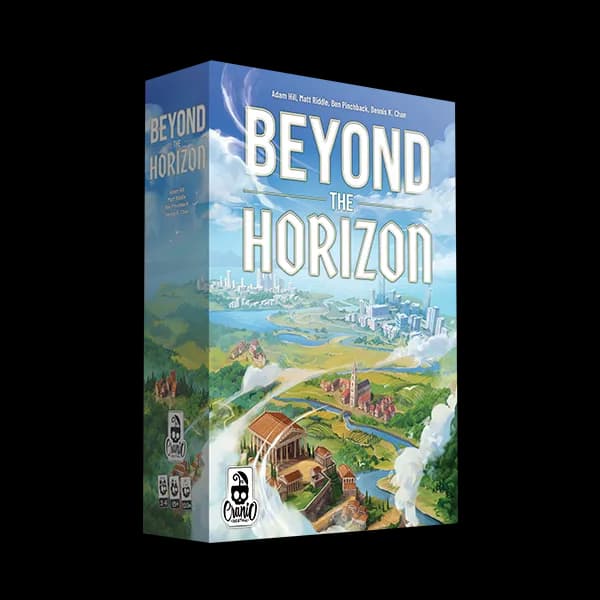
Beyond the Horizon is a sophisticated, medium-to-heavyweight civilization-building game that stands as a spiritual successor to the acclaimed "Beyond the Sun." In this strategic experience, two to four players assume leadership of nascent societies, tasked with guiding their people from humble beginnings to a glorious future. The ultimate objective is to achieve dominance not through brute force alone, but through a masterful balance of technological innovation, territorial expansion, and strategic exploration. Players compete to earn the most victory points by advancing their civilization's knowledge, controlling valuable regions of the map, and fulfilling a series of shared public objectives, proving their society's preeminence in this new era of discovery.
The core of the gameplay is a compelling fusion of worker placement, tile-based exploration, and a deep, branching technology tree. Each player's turn is structured into distinct phases, beginning with the crucial action phase. Here, a player moves their action pawn to a space on the main board or a newly researched technology card to execute a specific task, such as recruiting population, initiating research, or deploying units. A significant evolution from its predecessor is the introduction of a dynamic, modular map composed of hexagonal tiles. Players must send settlers to the frontiers of the known world to reveal new territories, which they can then claim and fortify. This exploration mechanic is interwoven with the game's central tech tree, where investing in new fields of study unlocks powerful new actions, immediate bonuses, and the very means to expand and produce resources, creating a satisfying and synergistic gameplay loop.
The enduring appeal of "Beyond the Horizon" lies in its rewarding strategic depth and the critical decisions it presents at every turn. Players are constantly faced with the compelling dilemma of whether to invest heavily in the long-term benefits of the tech tree or to pursue immediate gains through aggressive territorial expansion on the map. This tension creates a highly interactive and replayable environment, as the path to victory is never the same twice. The game's end is dynamically triggered by the collective achievement of several public goals, forcing players to adapt their strategies in response to their opponents' progress. This creates a thrilling race to claim objectives while simultaneously constructing a robust and efficient victory point engine, making it a celebrated title for strategists who relish complex choices and long-term planning.
2-4 75m⚖️ 3.4