Fantasy Games
Browse all Fantasy board games in the Meeple Pulse database.
Styles
Themes
AbstractAdventureAncientAnimalsArtBusinessCard GameCo-operativeComic BookCooperativeCrimeEconomicEnvironmentalismExplorationFantasyHistoricalHorrorHumorIntrigueLiteraryMagicMarvelMedievalModernMuseumMysteryMythologyNatureNauticalPoliticalPress Your LuckSatireSci-FiSocial CommentarySocial InteractionSpaceSuperheroesThematicTravelWarWesternWord-Guessing
Mechanics
3D PlacementActingAction / DexterityAction DraftingAction Point AllowanceAction Point Allowance SystemAction Point SystemAction PointsAction ProgrammingAction QueueAction RetrievalAction SelectionAction/EventAlliancesAlternate ActivationApp-AssistedApp-DrivenArea ControlArea InfluenceArea MajorityArea Majority / InfluenceArea MovementArgumentationAsymmetricAsymmetric FactionsAsymmetric GameAsymmetric PowersAsymmetrical PowersAuction & BiddingAuction/BiddingAuctioningBag BuildingBettingBetting and BluffingBetting and WageringBetting and WagersBiddingBingoBlind BiddingBluffingCampaign / Battle Card DrivenCampaign / LegacyCampaign / Legacy GameCampaign / Mission-basedCampaign / ScenariosCampaign GameCampaign PlayCard DraftingCard DrawingCard DrivenCard Driven ActionCard Driven CombatCard Driven Dice AllocationCard Driven MovementCard ManagementCard PlayCard Play / Hand ManagementCard Play Conflict ResolutionCard SheddingCard-Driven MovementCharacter CreationCharacter ProgressionChit-Pull SystemCo-op PlayCo-operative GameCo-operative PlayCode-breakingCombat ResolutionCombo ChainCommand CardsCommodity SpeculationCommunication LimitsContract FulfillmentContractsCooperative GameCooperative GameplayCooperative PlayCooperative Trick-takingDebateDeck BuildingDeck ConstructionDeck, Bag, and Pool BuildingDeck-BuildingDeductionDexterityDice DraftingDice PlacementDice RollingDiplomatic InfluenceDraftingDynamic Battle SystemEnclosureEnd Game BonusesEngine BuildingEngine-BuildingEscape RoomEvent DrivenExplorationFarmingFlip and WriteFollowFollow ActionGrid CoverageGrid MovementHand ManagementHex-and-CounterHexagon GridHidden MovementHidden RolesI Cut You ChooseIncomeInfluence / Area MajorityLadder ClimbingLegacyLegacy ElementsLegacy GameLegacy SystemLimited CommunicationLine DrawingLine of SightMancalaMap MovementMarketMarket DraftingMarket ManipulationMarket MechanicMarket SpeculationMatchingMeasurement MovementMemoryMission ObjectivesModular BoardModular Board ConstructionMovement TemplatesMulti-Use CardsMulti-use CardsMultiple ScenariosMust FollowNarrative ChoiceNarrative Choice / ParagraphNegotiationNegotiation MechanicsNetwork & Route BuildingNetwork BuildingNetwork and Route BuildingOne vs ManyOne vs. ManyOpen DraftingPaper-and-PencilPartnershipsPattern BuildingPattern RecognitionPick-up and DeliverPlayer EliminationPlayer InteractionPlayer JudgePoint SaladPoint to Point MovementPolyominoesPush Your LuckPush-Your-LuckPuzzlePuzzle-LikePuzzle-SolvingRaceReal-TimeRecipe FulfillmentResource ManagementRole PlayingRole SelectionRoll / Spin and MoveRondelRoute BuildingRoute-BuildingRoute/Network BuildingSanity SystemScenario / Campaign PlayScenario / Mission / Campaign GameScenario / Mission FunctionSecret Unit DeploymentSemi-Cooperative GameSet CollectionSheddingSimulationSimultaneous ActionSimultaneous Action SelectionSimultaneous Hidden AllocationSocial DeductionSocial InteractionSolo / Solitaire GameSpace ExplorationStat Check / Skill CheckStock HoldingStorytellingStrategic PlanningTableau BuildingTactical Decision-MakingTake ThatTargeted CluesTeam PlayTeam-Based GameTeam-Based GuessingTeamworkTech TreesTech Trees / Tech TracksTechnology & Armament TracksTechnology TreeTension & Aggression TracksTile DraftingTile LayingTile PlacementTime TrackTime TravelTower DefenseTrack MovementTradingTrick-takingTug of WarTurn Order: PassTurn Order: Stat-BasedUnit PlacementVariable Phase OrderVariable Player PowersVariable Set-upVariable SetupVictory Point TracksVotingWord AssociationWord GameWord GuessingWord-GuessingWord-guessingWordplayWorker Placement
RANK #167
Magic: The Gathering stands as the foundational pillar of the modern collectible card game genre. In this immersive experience, players assume the mantle of 'Planeswalkers,' powerful mages capable of traveling across diverse dimensions. The primary objective is to drain an opponent's life total from twenty to zero, though victory can also be secured by exhausting an opponent's deck. It is a tactical battle of wits where the deck you build serves as your primary weapon, requiring foresight, resource management, and precise timing to outmaneuver your rival.
Gameplay unfolds through a sophisticated turn structure revolving around the 'mana' system. Players strategically deploy land cards to generate colored energy, which is then utilized to summon a myriad of creatures, cast powerful sorceries, and deploy artifacts. The game is defined by the 'Color Wheel,' which categorizes every card into one of five distinct colors—White, Blue, Black, Red, or Green—each possessing unique philosophies and mechanical advantages. Combat involves careful calculation of creature power and toughness, alongside the strategic decision of when to attack or hold back defenses. The 'Golden Rule' of the game states that individual card text always overrides the standard rulebook, ensuring that every interaction remains fluid and unpredictable.
The enduring popularity of the game lies in its near-infinite strategic depth and the thrill of deck construction. Because no two games ever unfold exactly the same way, participants are constantly pushed to refine their strategies and adapt to evolving competitive environments. The marriage of stunning fantasy art with highly intricate mechanics creates a sense of discovery that has lasted for decades. Whether playing in a constructed format where you bring your custom-built deck or in a limited format where you must build on the fly from booster packs, the game rewards skill, creativity, and knowledge. Its massive appeal is anchored by the community aspect and the constant introduction of new sets, keeping the game fresh, challenging, and mentally stimulating for both casual players and high-level professionals alike. It is truly the definitive experience for those who appreciate high-stakes card games that demand critical thinking and careful planning.
2 30m⚖️ 4.1
RANK #180
Res Arcana
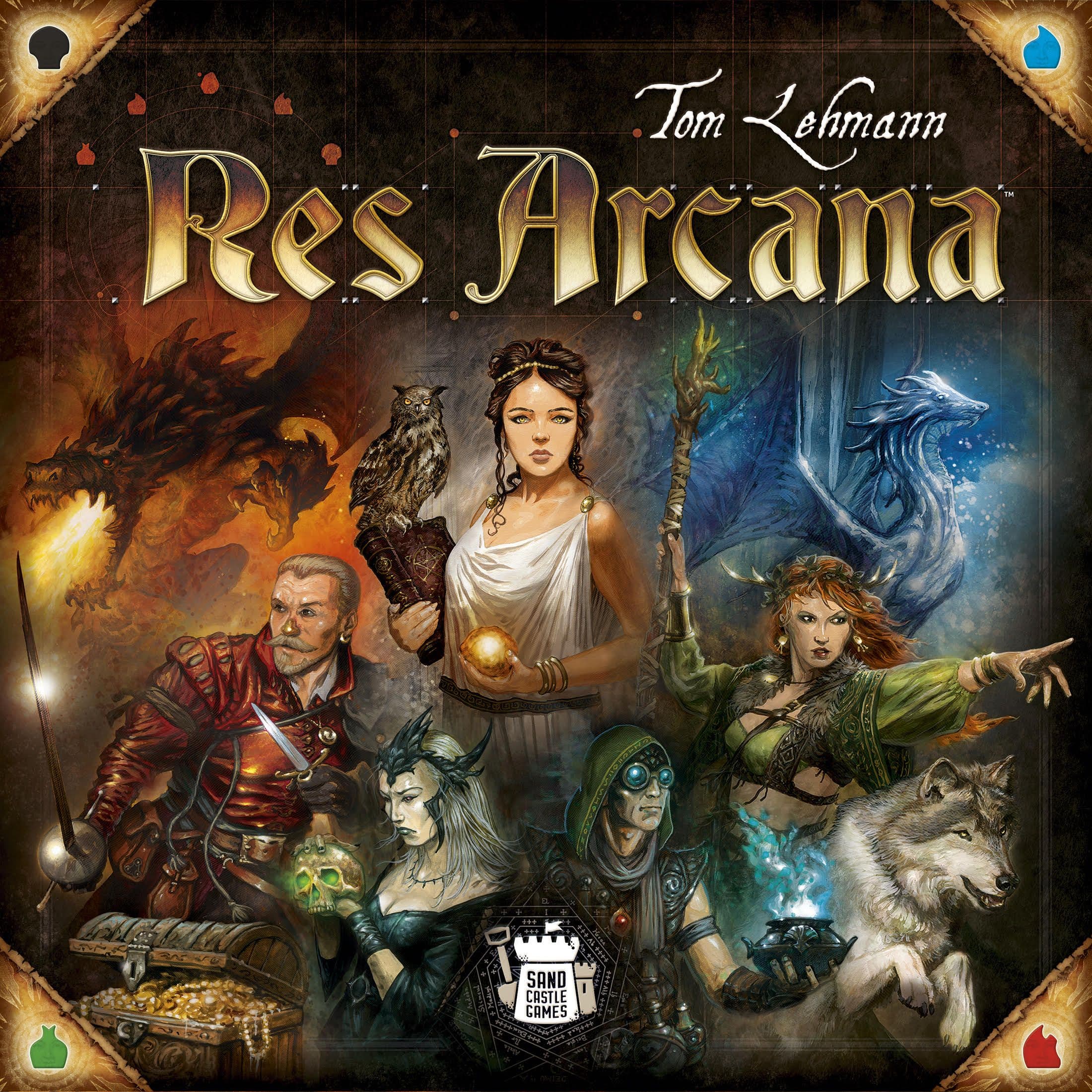
2019Res Arcana is a brilliantly tight, fast-paced engine-building board game that plunges players into an arcane fantasy world. Designed by the renowned Tom Lehmann and originally published by Sand Castle Games in 2019, the game casts each participant as a powerful, uniquely skilled Mage. Ranging from ambitious Alchemists to dark Necromancers, players must harness their specialized abilities to dominate the magical realm. The ultimate objective is a frantic sprint: players race to be the very first to accumulate ten victory points. Achieving this requires masterful resource management and an unparalleled grasp of efficiency, as every single action and gathered element brings you one step closer to ultimate victory.
At the heart of the experience is an incredibly innovative micro-deck system that completely turns traditional card mechanics on their head. Unlike standard deck-builders where your arsenal grows over time, you are locked into a fixed, highly constrained deck of exactly eight artifact cards for the entirety of the game. After an initial drafting phase—highly recommended by the community to ensure balanced strategic planning—players must figure out how to synergize these eight specific cards. During the core gameplay loop, participants gather five distinct mystical essences: Elan, Life, Calm, Death, and Gold. Turns are agonizingly tense, consisting of a single action at a time. Players will spend their hard-earned essences to play artifacts into their tableau, activate powerful abilities, or claim lucrative public monuments and places of power from the center of the table. Because you can only perform one action before your opponent gets a chance to respond, the timing of every single maneuver is absolutely critical.
What truly sets Res Arcana apart from its peers is its complete elimination of deck bloat and luck-driven card drawing. By forcing you to craft a functional, high-yielding engine out of a minuscule pool of resources, the game evolves into a fiercely competitive puzzle of optimization. Every essence gathered must be calculated, and sacrificing a card from your tiny hand for temporary resources often becomes a painful but necessary tactical decision. The inclusion of variable player powers and the swapping of magic items each round ensure a highly replayable experience. It delivers the deep, satisfying strategic arc of a heavy civilization or tableau-building game, but distills that massive complexity into a remarkably sharp, thirty to sixty-minute package that leaves players eager for just one more match.
2-4 45m⚖️ 2.6
RANK #184
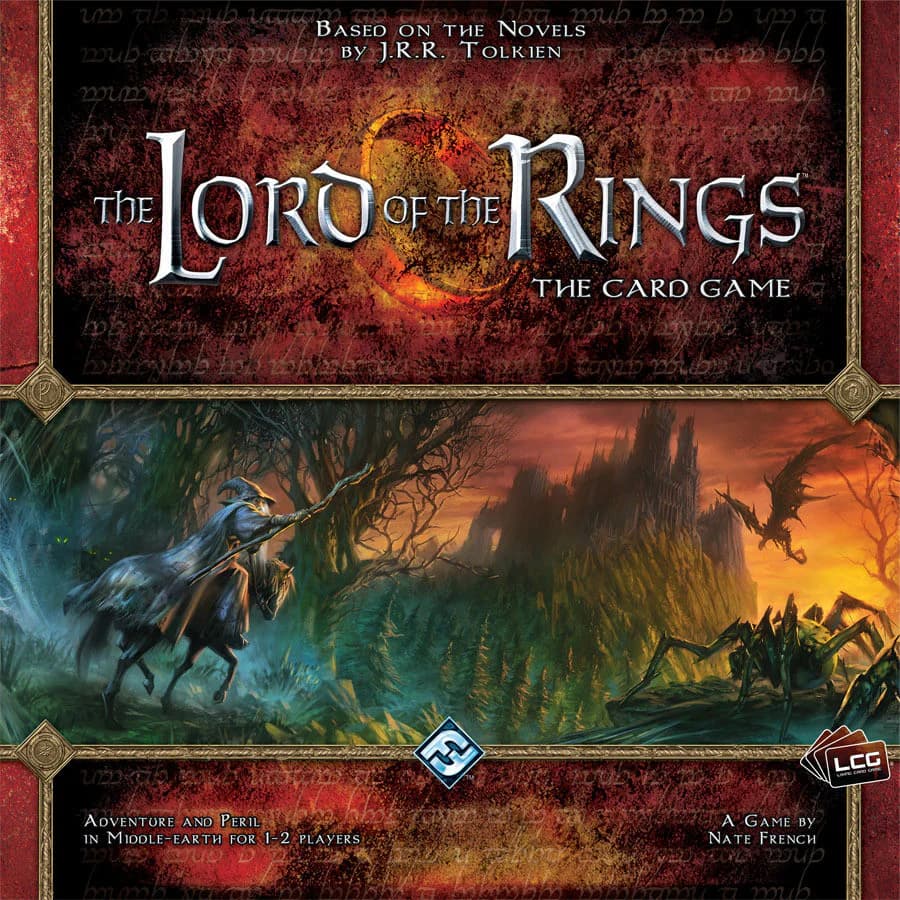
Embark on perilous quests in The Lord of the Rings: The Card Game, a cooperative Living Card Game (LCG) set within J.R.R. Tolkien's iconic Middle-earth. Unlike collectible games with randomized booster packs, this is an LCG where players can strategically grow their collection with fixed expansions. In this game, one to four players unite to form their own fellowship, working together against automated scenarios controlled by an 'encounter deck'. Your goal is to navigate treacherous lands, battle fearsome enemies, and complete a series of quest objectives to achieve victory against the encroaching shadow of Sauron. It's a narrative-driven adventure that brings the world of the books to your tabletop.
The core of the game revolves around strategic deck-building and a structured round sequence. Each player constructs a deck of at least fifty cards centered on one to three powerful heroes, chosen from four distinct spheres of influence: Leadership, Lore, Spirit, and Tactics. These spheres dictate which allies, attachments, and events a player can use. A typical round involves gaining resources to pay for cards, questing to make progress on the current objective, potentially traveling to new locations, engaging with enemies from the encounter deck, and finally resolving combat. Players must manage their characters carefully, deciding who will quest, defend, or attack. Victory is hard-won, as players lose if any member's threat level reaches 50 or if all of their heroes are defeated.
The enduring appeal of The Lord of the Rings: The Card Game lies in its deep, strategic challenge and rich thematic immersion. It is renowned for its difficulty, often requiring players to meticulously craft and refine their decks to overcome the unique obstacles presented by each scenario. The cooperative nature fosters a strong sense of camaraderie as players must coordinate their actions and build synergistic decks to succeed. The game's artwork is inspired directly by Tolkien's novels rather than the films, creating a distinct and authentic vision of Middle-earth. This combination of challenging cooperative gameplay, extensive customization, and a beloved fantasy setting makes it a highly replayable and rewarding experience for any fan of adventure.
1-4 60m⚖️ 3.4

RANK #215
Chaos in the Old World plunges players into the dark and gritty Warhammer Fantasy universe, casting them not as heroes, but as one of four malevolent Chaos Gods. Each player embodies either Khorne, the god of war; Nurgle, the lord of decay; Tzeentch, the master of magic; or Slaanesh, the prince of pleasure. The objective is to spread your ruinous influence across the land and be the first to corrupt it entirely. Victory is a two-pronged path: either be the first to accumulate 50 victory points by dominating regions and fulfilling objectives, or achieve a unique, thematic victory by advancing your god's threat dial to its final space. This dual-condition system creates a constant tension, as players must pursue their own goals while simultaneously thwarting the different, and often conflicting, ambitions of their rivals.
Gameplay unfolds in a series of structured rounds, each beginning with an Old World event card that introduces new variables, such as meddling heroes or political shifts. Players then draw from their god-specific Chaos decks, gaining access to powerful, unique abilities. The core of the game lies in the Summoning Phase, where players expend power points to place their forces—from lowly cultists to formidable Greater Daemons—onto the map and play their cards to manipulate the board state. Combat erupts wherever opposing forces meet, resolved through brutal dice rolls. Following the battles, players with a presence in a region can place corruption tokens. Once a region is fully corrupted, it is despoiled, rewarding the most influential god and permanently scarring the world. This cycle of summoning, fighting, and corrupting drives the engine of this highly interactive conflict.
The game's enduring appeal stems directly from its profound and masterfully implemented asymmetry. No two gods play alike; Khorne revels in bloodshed and advances by killing enemy units, while the insidious Nurgle corrupts populous regions and spreads his plagues. Tzeentch manipulates the game state with magic from the shadows, and Slaanesh tempts heroes and nobles to their downfall. This deep strategic diversity means that players must not only master the intricacies of their chosen deity but also deeply understand the capabilities and victory paths of their opponents. This creates a highly dynamic and replayable experience, widely considered to be at its peak with a full complement of four players, where the delicate, brutal dance of the Chaos Gods is on full display, making it a celebrated classic in the area control genre.
3-4 90m⚖️ 3.6
RANK #225
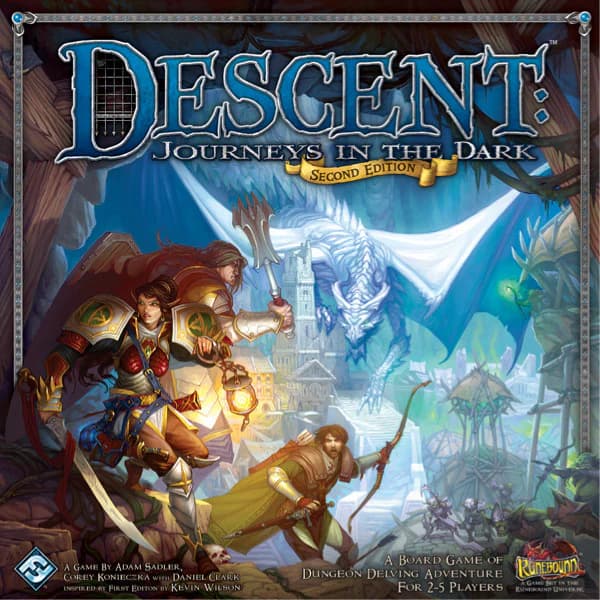
Descent: Journeys in the Dark (Second Edition) is a seminal board game that immerses players in the high-fantasy world of Terrinoth for an epic, one-versus-many dungeon-crawling adventure. In this asymmetrical contest, one player assumes the role of the treacherous Overlord, commanding an army of monsters and springing deadly traps from the shadows. The other players (up to four) form a courageous band of heroes, each with unique skills and abilities, who must work together to complete the objectives of a given quest. The game is scenario-driven, with each quest forming a chapter in a larger, branching campaign narrative. Success or failure in one encounter can have tangible consequences on the next, creating a dynamic and evolving story where the heroes strive for victory against the Overlord's nefarious plans.
The gameplay unfolds over a series of rounds, with heroes taking their turns first. Each hero can perform two actions, such as moving across the modular, tile-based map, attacking a monster, or using a special skill. Combat is a highlight of the experience, resolved through a custom dice-pool system. Players roll dice determined by their character's equipment and abilities, looking for symbols representing damage, range, and special 'surges.' These surges can be spent to trigger powerful effects, adding a layer of tactical decision-making to every attack. After the heroes have acted, the Overlord takes their turn, playing cards from a unique deck to activate monster groups, summon reinforcements, and unleash unexpected events to wear down the heroes and achieve their own secret objectives.
What makes Descent a beloved classic is its deep sense of progression and the escalating arms race that develops over a campaign. Between quests, both sides grow stronger. Heroes earn experience to learn new skills and spend gold on powerful new weapons and armor, customizing their characters to fit their playstyle. Simultaneously, the Overlord also gains experience, which is used to purchase more potent Overlord cards, unlocking deadlier plots and monsters. This persistent development ensures that the challenge constantly escalates, making each session feel meaningful. The combination of tactical combat, rich character customization, and an emergent, player-driven narrative provides a highly replayable and deeply engaging experience for any group that loves adventure and strategy.
2-5 120m⚖️ 3.2

RANK #226
Return to Dark Tower is a grand, cooperative fantasy adventure and a modern reimagining of the iconic 1981 electronic board game. In this app-driven epic, one to four players assume the roles of unique heroes who must unite to save the kingdoms from a great evil that has resurfaced. The central goal is to complete a major objective, which will lure the primary adversary out from the technologically advanced, malevolent tower for a final, decisive confrontation. Players are working against a strict timeline, needing to achieve victory before the end of the sixth in-game 'month'. The path to defeat is multifaceted; the heroes can lose if they run out of time, if the supply of skulls to feed the tower is exhausted, or if any single hero succumbs to overwhelming corruption, making every decision a tense and critical calculation.
The gameplay unfolds over a series of hero turns, each structured into distinct phases. A player's turn begins with an optional, character-specific 'Banner Action', followed by movement and a choice of one heroic action: battling monstrous foes, cleansing corrupting skulls from the land's buildings, or undertaking vital quests. Afterward, heroes can reinforce their strength by utilizing the special ability of the building they occupy to gain resources. The game's centerpiece is the towering electronic spire which, in conjunction with a companion app, dictates the flow of the adventure. At the conclusion of each turn, a player must drop a skull into the tower, which may then dispense them back onto the board, spreading corruption. The integrated app manages all quests, events, and combat encounters, ensuring a dynamic and unpredictable challenge every time you play.
Return to Dark Tower commands an impressive table presence, with its massive, interactive tower immediately drawing players into its world. It masterfully blends the nostalgia of the original classic with sophisticated modern mechanics, creating an experience that feels both familiar and refreshingly new. The game is celebrated for its highly immersive and cooperative gameplay, where teamwork and strategic planning are paramount to overcoming the app-controlled adversary. The constant pressure from the tower and the race against the clock generate a palpable tension that results in truly memorable gaming sessions. For those seeking a different challenge, the game also includes a competitive variant where heroes race to prove their individual worth.
1-4 110m⚖️ 2.6
RANK #285
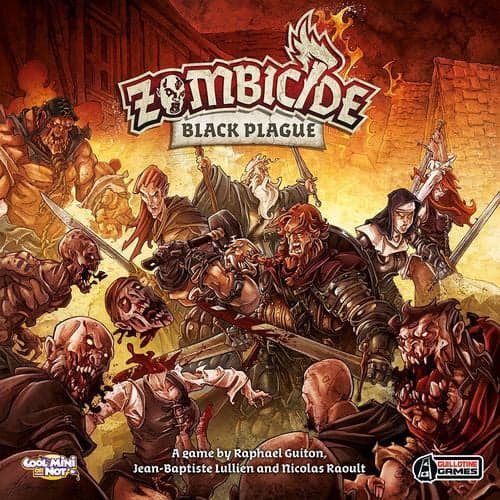
Zombicide: Black Plague reboots the high-octane zombie survival genre by plunging players into a dark, medieval fantasy world. In this cooperative experience, one to six survivors must unite to fend off hordes of the undead summoned by malevolent Necromancers. Unlike its modern-day predecessors, Black Plague introduces a magical twist where steel, sorcery, and shields are the primary tools of survival. The primary objective is to complete specific mission scenarios, which range from retrieving lost artifacts to cleansing infested vaults, all while managing the ever-growing threat of the zombie apocalypse. Each player controls a unique hero, navigating through modular map tiles that represent plagued villages and sinister dungeons.
The gameplay revolves around an intuitive action-point system where survivors spend points to move, attack, or scavenge for gear. As players slay zombies, they gain Adrenaline Points, which allow them to level up and unlock powerful new abilities. However, this progress comes with a catch: the game tracks the party's highest experience level, and as survivors grow stronger, the zombie spawn rates intensify through color-coded danger zones. This creates a tense balancing act where players must scale their power without overwhelming themselves with too many enemies. Unique to this edition are the Necromancers, specialized foes who attempt to escape the board while leaving permanent spawn points in their wake, and the introduction of armor saves, giving players a fighting chance against incoming damage.
Fans of the series praise Black Plague for its streamlined rules and significantly improved component quality, notably the recessed plastic dashboards that keep character cards and pegs securely in place. The shift to a fantasy setting allows for creative weapon combinations, such as magic staves and heavy plate mail, providing a distinct mechanical flavor compared to modern versions. With its high-quality miniatures, tactical depth, and 'beer and pretzels' accessibility, it remains a favorite for groups seeking an epic, narrative-driven challenge. The inclusion of solo rules and a variety of challenging scenarios ensures high replayability, making it a definitive entry in the dungeon-crawl and survival-horror board game genres.
1-6 120m⚖️ 2.5
RANK #292
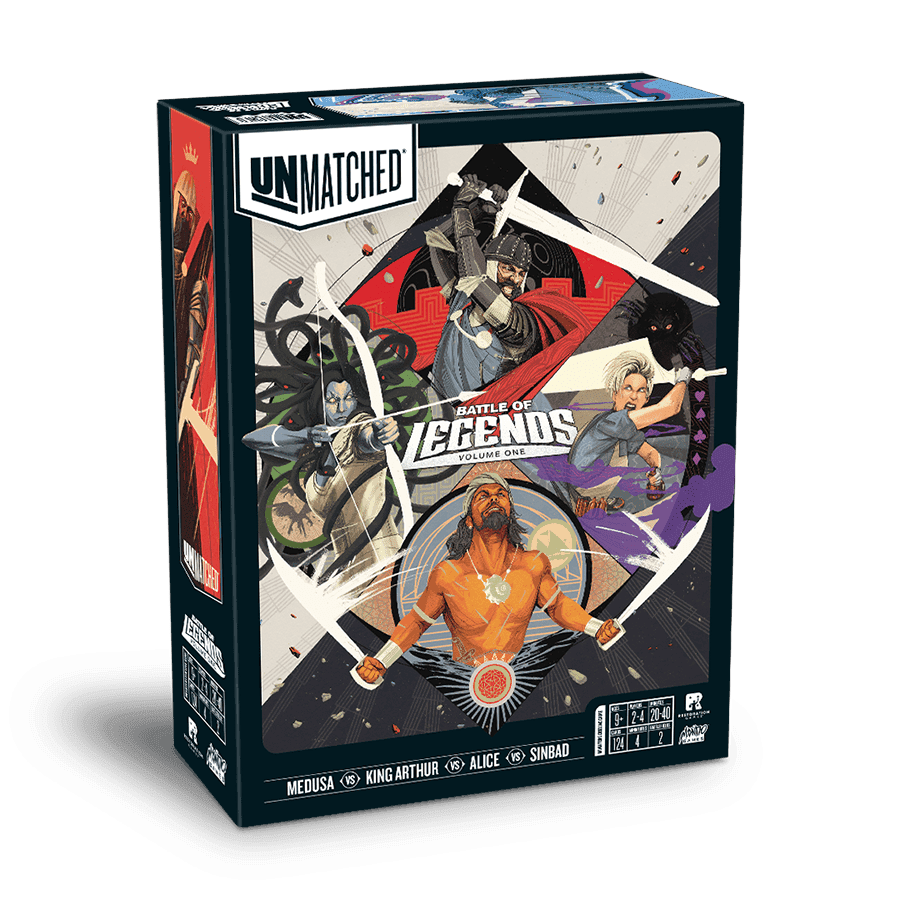
Unmatched: Battle of Legends, Volume One serves as the cornerstone of a widely acclaimed skirmish series, reinventing the tactical combat mechanics originally popularized by the Star Wars: Epic Duels system. This asymmetrical miniature game invites players to pit legendary figures from across folklore, literature, and history against one another in fast-paced duels. Whether it is the mythical Medusa staring down the Victorian Alice or King Arthur clashing with the seafaring Sinbad, the game thrives on the 'what if' scenarios of impossible combat. Each hero is accompanied by unique sidekicks and a specialized deck of cards, ensuring that no two fighters approach the battlefield with the same strategy or strengths.
The gameplay is defined by a 'no-luck' tactical system that replaces traditional dice rolling with strategic card management and precise positioning. On a turn, players must execute exactly two actions, choosing between maneuvering for better positioning, playing powerful utility schemes, or launching aggressive attacks. Movement is governed by a vibrant 'colored zone' system on the board, which simplifies line-of-sight calculations and encourages dynamic kiting or flanking maneuvers. Combat itself is a tense mind game where both the attacker and defender reveal cards simultaneously. Success depends on anticipating an opponent's defense and mastering the complex timing of effects that trigger 'Immediately', 'During Combat', or 'After Combat'. This layered timing system adds significant depth to the seemingly straightforward mechanics.
Part of the game's enduring appeal lies in its accessibility paired with high replayability. While the rules are simple enough to teach in minutes, the nuances of each character's 30-card deck provide a rich competitive environment. Players must learn to manage their hand carefully, as running out of cards leads to exhaustion and inevitable defeat. The visual presentation is equally striking, featuring the bold, graphic art style of Oliver Barrett, which gives the game a modern and sophisticated aesthetic. With its quick play sessions and the ability to mix and match heroes from other sets in the Unmatched line, this volume offers a perfect entry point for those seeking a 'bridge' title that balances light strategy with intense, thematic confrontation.
2-4 30m⚖️ 1.9
RANK #296
Roll Player
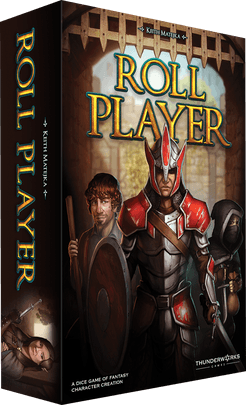
2016Roll Player is a creative board game that turns the classic tabletop RPG character creation process into a full competitive experience. Instead of embarking on a dungeon crawl, players are focused entirely on the preparation stage—building the most powerful and well-rounded fantasy hero possible. Set in the world of Ulos, each player takes on the role of a character with a specific race, class, and backstory. The primary objective is to earn the most Reputation Stars by the end of the game, which are awarded for meeting attribute requirements, fulfilling backstory goals, aligning your character's morality, and gathering powerful gear from the local market.
The gameplay revolves around a central dice-drafting mechanic spanning several rounds. Each round, dice are rolled and placed on initiative cards. Players take turns selecting a die to place on their character sheet in specific attribute rows like Strength, Intelligence, or Charisma. Each placement triggers a unique attribute action, allowing players to manipulate their dice by flipping them to opposite sides, re-rolling them, or swapping positions. This creates a deep, puzzle-like environment where players must carefully manage their resources and dice values. After the drafting phase, players visit the market to spend gold on skills, traits, and armor sets, all of which provide additional ways to score points or gain tactical advantages during future rounds.
What makes Roll Player so beloved is its ingenious 'gamification' of a meta-concept. It captures the nostalgic joy of rolling stats for a Dungeons & Dragons character while providing a rigorous strategic framework. The tension between picking the 'perfect' die for your stats versus picking an earlier initiative card to get the best equipment in the market makes for a compelling decision space. It is a highly satisfying optimization puzzle that feels thematic and rewarding, especially as you see your hero come together from a blank slate to a fully equipped champion. With a moderate complexity level, it is accessible enough for casual gamers while offering enough depth for strategy enthusiasts.
1-4 75m⚖️ 2.4
RANK #305
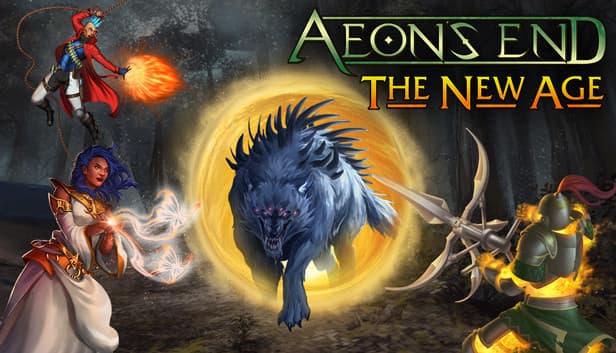
Aeon's End: The New Age is a standalone cooperative deck-building experience that invites players into the final bastion of humanity, Gravehold. As Breach Mages, participants must defend their home against the relentless assault of the Nameless—monstrous entities from another dimension. This entry in the series serves as a perfect jumping-off point for newcomers while offering a wealth of content for long-time fans. The primary objective is to deplete the health of the Nemesis before they overrun the city or exhaust the mages' collective life force. Unlike traditional deck-builders, this title introduces a narrative campaign that evolves with every victory and defeat.
The gameplay's core revolves around the ingenious 'no-shuffling' mechanic. When your deck is empty, you simply flip the discard pile over, meaning the order in which you play and discard your cards determines your future draw sequences. This adds a deep layer of tactical planning, allowing mages to set up devastating combos by timing their card acquisitions and plays. The New Age introduces the 'Expedition System', a semi-legacy format where players progress through four connected battles. Between matches, you unlock 'Treasures'—powerful artifacts that enhance your mage's unique abilities—and manage the 'Barracks' to customize your market. New keywords like 'Echo', which permits spells to be cast twice, and 'Attach', which upgrades breaches with permanent perks, further deepen the strategic complexity.
What truly sets this expansion apart is its modularity and tension. The 'Variable Turn Order' deck ensures that players never know exactly when the Nemesis will strike, preventing the 'alpha gamer' problem often found in co-ops. The Expedition system isn't just a story; it's a hub that allows players to integrate content from any other Aeon's End box, creating a custom, high-stakes campaign using a massive library of mages and enemies. This creates near-infinite replayability. Fans adore the game for its punishing but fair difficulty, the high-quality narrative envelopes that reveal new content organically, and the satisfying feeling of building a perfectly tuned engine that can take down a god-like foe.
1-4 75m⚖️ 3.0
RANK #343
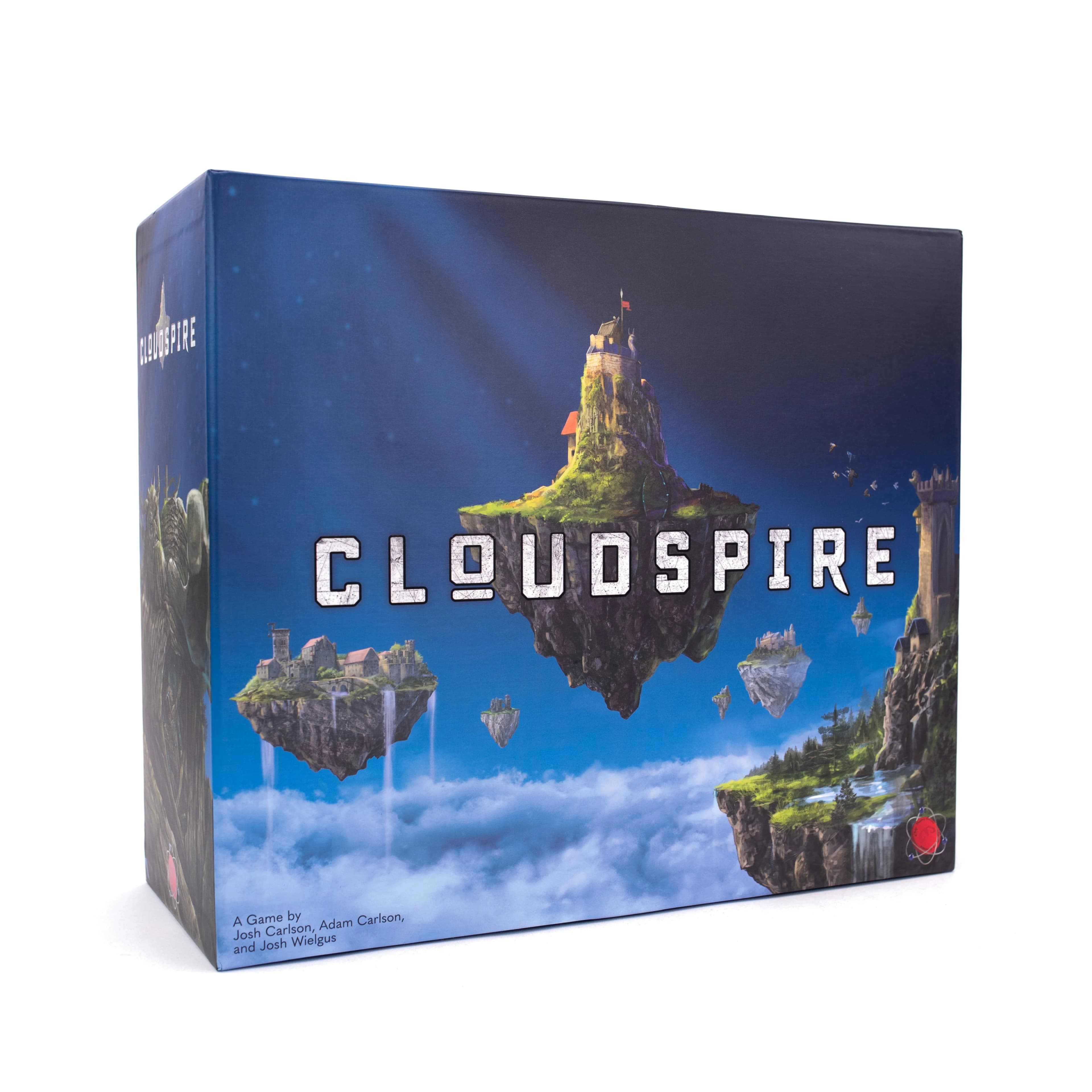
Cloudspire
2019Cloudspire delivers a groundbreaking tabletop experience by expertly translating the high-stakes action of a Multiplayer Online Battle Arena (MOBA) and the strategic foresight of a tower defense game into a physical format. Set in the fantastical floating realm of Ankar, players assume command of one of four highly unique and asymmetrical factions, each with its own distinct units, heroes, and strategies. The primary objective is a direct and uncompromising assault on your opponents' fortresses. Victory is a matter of tactical supremacy, achieved by methodically dismantling enemy defenses and ultimately razing their stronghold to the ground while ensuring your own fortress withstands the relentless onslaught. It’s a game of calculated aggression and stalwart defense where only the most cunning leader will prevail.
The game unfolds over four intense rounds, known as waves, each governed by a structured sequence of phases that guides the flow of battle. The action begins with an Event phase, which can introduce unexpected twists to the current wave. Following this, players gain their primary resource, 'Source', during the Income phase. This resource is then spent in the Market and Build phases to purchase new units and spires, upgrade existing defenses, and enhance their fortress's capabilities. In the Prep phase, players commit their forces, spending Command Points to deploy minions and powerful heroes onto the modular hex-grid game board. The climax of each wave is the Onslaught phase, where units automatically advance along the map, engaging any foes they encounter. Heroes, however, offer a layer of direct control, allowing players to make critical tactical decisions in the heat of battle.
Cloudspire is celebrated for its immense strategic depth and exceptional production quality, a hallmark of its publisher, Chip Theory Games. The game's appeal lies in its successful fusion of genres, creating a puzzle that is both tactically demanding and immensely rewarding. The asymmetry of the factions guarantees a high degree of replayability, as mastering one faction feels entirely different from commanding another. This is further enhanced by the game's robust support for multiple play styles, offering meticulously designed rulesets for solo, cooperative, and fiercely competitive player-versus-player engagements. For players who crave a complex, component-rich wargame with high player interaction and a fresh take on established video game concepts, Cloudspire stands as a monumental achievement in modern board game design.
1-4 120m⚖️ 4.4

RANK #409
Arydia: The Paths We Dare Tread invites players into a sprawling, open-world fantasy experience designed for cooperative play. In this epic role-playing board game, you and your companions embody exiles, individuals cast out from society and striving to find their way back. Your journey will be a grand campaign across the vast and mysterious lands of Arydia, a world brimming with quests to undertake, secrets to uncover, and a rich narrative to shape. The game is built upon four foundational pillars—Exploration, Progression, Combat, and Role-playing—promising a deeply immersive adventure where your choices have a tangible impact on the evolving story and the world around you.
The core gameplay loop is a dynamic blend of discovery and conflict. Players begin by creating a unique hero, choosing a distinct path (class) and race, each with special abilities and represented by a beautifully pre-painted miniature. The world of Arydia is revealed through a modular map of hexagonal tiles, which are flipped as you travel to unveil everything from bustling cities to perilous wilds. During "Adventure mode," you'll interact with non-player characters, investigate points of interest, and accept quests that propel the story forward. When danger arises, the game seamlessly transitions to "Combat mode," a tactical, turn-based affair on a gridded map where teamwork is paramount to overcoming AI-controlled adversaries.
What truly sets Arydia apart is its innovative "green legacy" system. This design choice offers the persistent, evolving world and unlockable content of a traditional legacy game but with a crucial difference: it's entirely resettable and replayable. Nothing is permanently destroyed, allowing you to experience the 40+ hour campaign multiple times or share the adventure with a new group. The character progression is robust, allowing you to acquire powerful new weapons, items, and skills. Combat is also noteworthy for its unique pattern-based attack system, where you must strategically target specific zones on an enemy's card, carefully navigating their armor to land effective blows. With a convenient index system for saving progress, Arydia delivers an accessible yet deeply strategic campaign for those who dare to tread its paths.
1-4 150m⚖️ 4.0