Strategy Games
Browse all Strategy board games in the Meeple Pulse database.
Styles
Themes
AbstractAdventureAncientAnimalsArtBusinessCard GameCo-operativeComic BookCooperativeCrimeEconomicEnvironmentalismExplorationFantasyHistoricalHorrorHumorIntrigueLiteraryMagicMarvelMedievalModernMuseumMysteryMythologyNatureNauticalPoliticalPress Your LuckSatireSci-FiSocial CommentarySocial InteractionSpaceSuperheroesThematicTravelWarWesternWord-Guessing
Mechanics
3D PlacementActingAction / DexterityAction DraftingAction Point AllowanceAction Point Allowance SystemAction Point SystemAction PointsAction ProgrammingAction QueueAction RetrievalAction SelectionAction/EventAlliancesAlternate ActivationApp-AssistedApp-DrivenArea ControlArea InfluenceArea MajorityArea Majority / InfluenceArea MovementArgumentationAsymmetricAsymmetric FactionsAsymmetric GameAsymmetric PowersAsymmetrical PowersAuction & BiddingAuction/BiddingAuctioningBag BuildingBettingBetting and BluffingBetting and WageringBetting and WagersBiddingBingoBlind BiddingBluffingCampaign / Battle Card DrivenCampaign / LegacyCampaign / Legacy GameCampaign / Mission-basedCampaign / ScenariosCampaign GameCampaign PlayCard DraftingCard DrawingCard DrivenCard Driven ActionCard Driven CombatCard Driven Dice AllocationCard Driven MovementCard ManagementCard PlayCard Play / Hand ManagementCard Play Conflict ResolutionCard SheddingCard-Driven MovementCharacter CreationCharacter ProgressionChit-Pull SystemCo-op PlayCo-operative GameCo-operative PlayCode-breakingCombat ResolutionCombo ChainCommand CardsCommodity SpeculationCommunication LimitsContract FulfillmentContractsCooperative GameCooperative GameplayCooperative PlayCooperative Trick-takingDebateDeck BuildingDeck ConstructionDeck, Bag, and Pool BuildingDeck-BuildingDeductionDexterityDice DraftingDice PlacementDice RollingDiplomatic InfluenceDraftingDynamic Battle SystemEnclosureEnd Game BonusesEngine BuildingEngine-BuildingEscape RoomEvent DrivenExplorationFarmingFlip and WriteFollowFollow ActionGrid CoverageGrid MovementHand ManagementHex-and-CounterHexagon GridHidden MovementHidden RolesI Cut You ChooseIncomeInfluence / Area MajorityLadder ClimbingLegacyLegacy ElementsLegacy GameLegacy SystemLimited CommunicationLine DrawingLine of SightMancalaMap MovementMarketMarket DraftingMarket ManipulationMarket MechanicMarket SpeculationMatchingMeasurement MovementMemoryMission ObjectivesModular BoardModular Board ConstructionMovement TemplatesMulti-Use CardsMulti-use CardsMultiple ScenariosMust FollowNarrative ChoiceNarrative Choice / ParagraphNegotiationNegotiation MechanicsNetwork & Route BuildingNetwork BuildingNetwork and Route BuildingOne vs ManyOne vs. ManyOpen DraftingPaper-and-PencilPartnershipsPattern BuildingPattern RecognitionPick-up and DeliverPlayer EliminationPlayer InteractionPlayer JudgePoint SaladPoint to Point MovementPolyominoesPush Your LuckPush-Your-LuckPuzzlePuzzle-LikePuzzle-SolvingRaceReal-TimeRecipe FulfillmentResource ManagementRole PlayingRole SelectionRoll / Spin and MoveRondelRoute BuildingRoute-BuildingRoute/Network BuildingSanity SystemScenario / Campaign PlayScenario / Mission / Campaign GameScenario / Mission FunctionSecret Unit DeploymentSemi-Cooperative GameSet CollectionSheddingSimulationSimultaneous ActionSimultaneous Action SelectionSimultaneous Hidden AllocationSocial DeductionSocial InteractionSolo / Solitaire GameSpace ExplorationStat Check / Skill CheckStock HoldingStorytellingStrategic PlanningTableau BuildingTactical Decision-MakingTake ThatTargeted CluesTeam PlayTeam-Based GameTeam-Based GuessingTeamworkTech TreesTech Trees / Tech TracksTechnology & Armament TracksTechnology TreeTension & Aggression TracksTile DraftingTile LayingTile PlacementTime TrackTime TravelTower DefenseTrack MovementTradingTrick-takingTug of WarTurn Order: PassTurn Order: Stat-BasedUnit PlacementVariable Phase OrderVariable Player PowersVariable Set-upVariable SetupVictory Point TracksVotingWord AssociationWord GameWord GuessingWord-GuessingWord-guessingWordplayWorker Placement
RANK #169
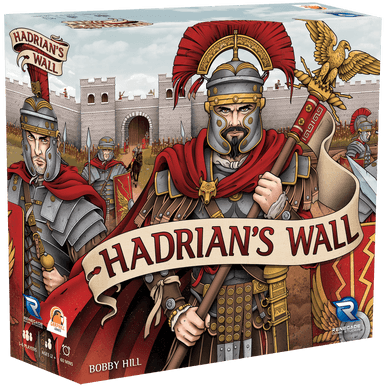
Hadrian's Wall
2021In Hadrian's Wall, you assume the demanding role of a Roman General charged with a monumental task: the construction and defense of a critical segment of the wall that separates Roman Britannia from the unconquered north. This is a deeply strategic 'flip-and-write' game where your ultimate objective is to prove your superior command by amassing the most victory points. Your final score is a reflection of your overall success, tallied across four distinct paths to glory: Renown for your grand constructions, Piety for honoring the gods, Valour for your military prowess, and Discipline earned by managing your domain efficiently. The player who best balances civic development with unwavering defense against the relentless Picts will be celebrated as the most distinguished general in the Empire.
The game unfolds over six years, each a tense round of planning, building, and fighting. Each year begins with a shared 'Fate' card that provides a foundation of resources and workers for all players. You then supplement these supplies by drawing from your personal deck, strategically choosing one card for its immediate resources and another for its potential end-game scoring objectives. The heart of each round is the simultaneous action phase, where you allocate your workers—Soldiers, Builders, Citizens, and Slaves—and spend resources to fill in spaces on your two intricate player sheets. One sheet tracks the progress of your wall, forts, and defenses, while the other maps out the growth of your civilian settlements. Marking off boxes often triggers powerful combos, unlocking additional resources or actions in a satisfying cascade, allowing for clever and explosive turns. The year culminates in a climactic attack by the Picts, where your carefully built defenses are put to the test.
Hadrian's Wall stands out for its remarkable depth and complexity, offering a 'crunchy', thinky experience that elevates the flip-and-write genre. While players act simultaneously, the gameplay is a focused 'multi-player solitaire' puzzle, where the primary challenge is optimizing your own engine of progress. The true magic lies in discovering the intricate synergies on your player sheets and engineering powerful chain reactions where a single action can fuel a dozen more. This engine-building element, combined with the constant pressure to erect sufficient defenses before the annual Pict assault, creates a compelling and highly rewarding strategic challenge. It’s a game that appeals to players who relish complex decision-making, meticulous planning, and the immense satisfaction of watching their personal section of the Roman frontier flourish under their command.
1-6 60m⚖️ 3.0
RANK #264
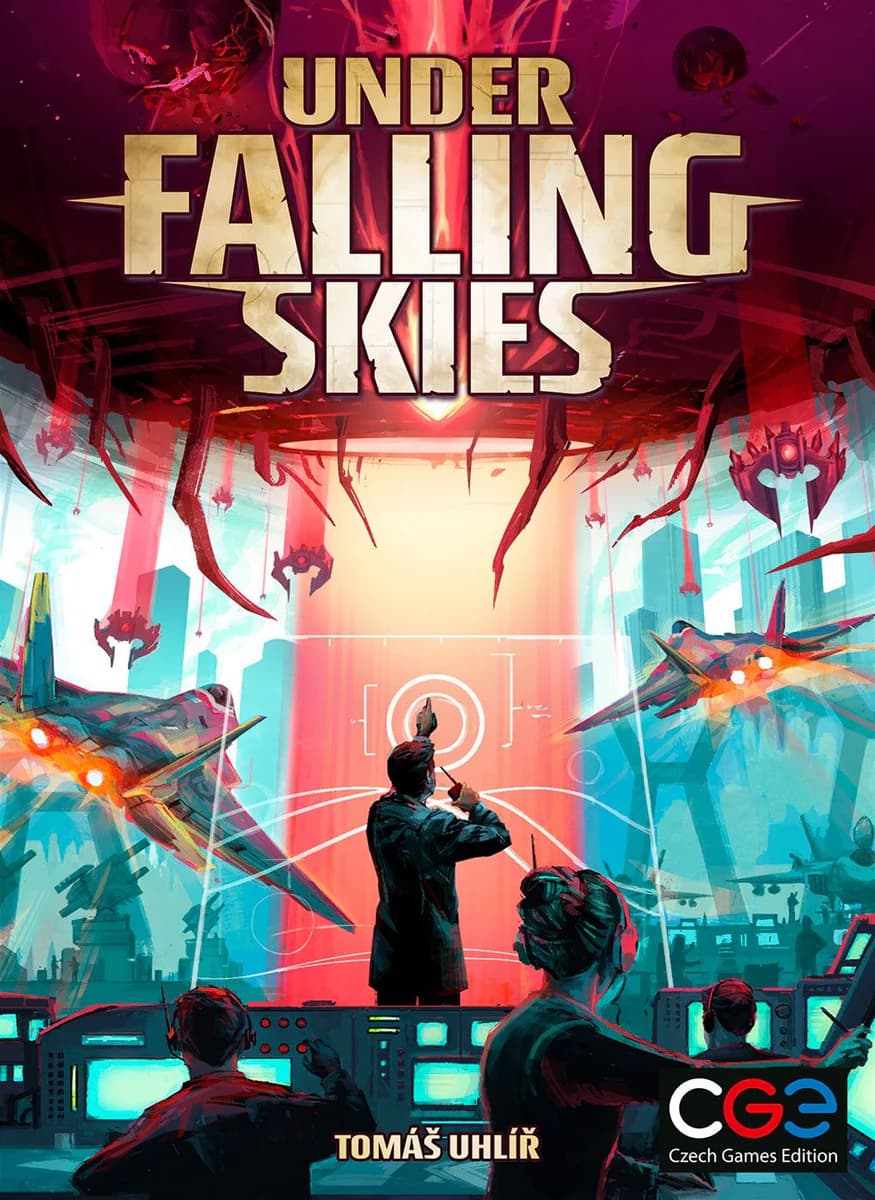
In Under Falling Skies, you are thrust into the role of humanity's last hope, leading the defense of a besieged city against a relentless alien invasion. This is a dedicated solo experience where you must manage an underground base, balancing immediate threats with your long-term objective. The ultimate goal is to complete a critical research project before the colossal alien mothership descends far enough to annihilate you or before enemy fighters breach your defenses and destroy your city. The game can be enjoyed as a tense, standalone scenario or as an evolving, multi-mission campaign that adds new rules, characters, and challenges over a series of interconnected games.
The gameplay is centered around a truly innovative dice placement mechanism that creates a palpable sense of tension. Each round, you roll five dice and must place them into different columns of your underground base. This is where the crucial dilemma lies: the value of the die you place dictates the power of the room's action, but it also determines how quickly the enemy ships in that column descend toward your city. Using a high-value die for a powerful effect, like generating energy or excavating new rooms, comes at the cost of accelerating the very threat you're trying to stop. This constant risk-reward calculation makes every single placement a weighty, strategic decision. The system is further enhanced by special dice that force re-rolls, injecting a dose of calculated uncertainty into your plans.
What makes Under Falling Skies so compelling is its ability to blend a tight, strategic puzzle with a strong thematic narrative of desperate defense. The pressure is constant as the mothership inches closer each round, limiting your options and applying new negative effects. Players love the 'analysis paralysis' it can induce, as you ponder the perfect placement to thread the needle between advancing your research and holding back the alien fleet. With its modular city boards and an expansive, replayable campaign system, the game offers tremendous variety and longevity. It’s a challenging and deeply rewarding brain-burner that forces you to squeeze every ounce of efficiency from your base to achieve a hard-won victory.
1 30m⚖️ 2.4
RANK #280
Legendary: A Marvel Deck Building Game is a prominent entry in the deck-building genre that brings the Marvel Universe to life on the tabletop. In this experience, players take on the role of SHIELD commanders tasked with assembling a powerful team of iconic heroes to thwart the nefarious plans of a Mastermind. The central goal is collective survival; players must work together to defeat the primary villain four times before they can complete a specific, game-altering Scheme. Unlike traditional deck builders where you simply compete for the highest score, Legendary introduces a looming threat that can cause everyone to lose if the city falls into chaos or the villain's plot reaches its conclusion.
The game utilizes a modular setup, meaning no two sessions are exactly alike. Players select a specific Mastermind like Magneto or Dr. Doom, a Scheme that sets the rules for the villain's victory, and a curated pool of hero decks. The core loop involves a Villain Phase, where enemies advance through a five-space city track, followed by a Hero Phase. Players start with basic SHIELD agents and must strategically recruit more powerful cards using Recruit Points or strike down foes using Attack Points. Managing these two distinct resources is vital, as players navigate the Headquarters (HQ) to draft synergies between characters like the Avengers and the X-Men. Successfully defeating villains and saving bystanders adds to a player's personal victory pile, which serves a dual purpose: it measures individual contribution while the team strives for a shared victory.
What makes Legendary stand out is its semi-cooperative nature. While the primary objective is to stop the Mastermind, the game crowns a single 'most legendary hero' based on the victory points accumulated during play. This creates a fascinating tension between helping the group and optimizing one's own deck for maximum point gain. The highly thematic integration of the Marvel license, featuring comic-accurate artwork and mechanics that reflect hero powers, ensures a high level of immersion. With its vast array of modular combinations and the threat of a board that evolves every turn, the game offers immense replayability. It strikes a balance between being accessible enough for casual fans while offering the strategic depth required to keep seasoned gamers engaged.
1-5 45m⚖️ 2.4
RANK #294
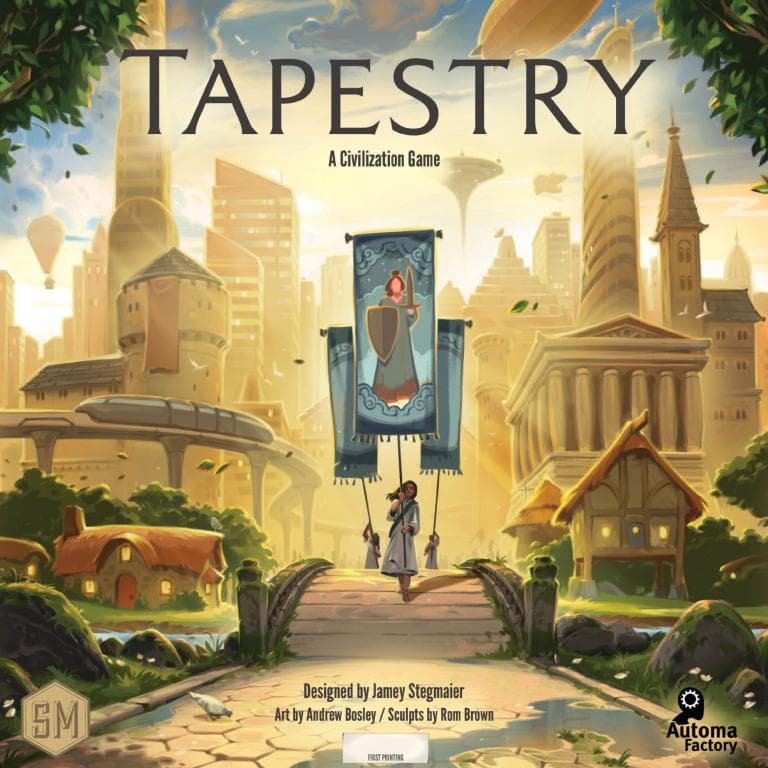
Tapestry
2019Tapestry is a civilization-building board game that breaks away from traditional historical simulations by offering a colorful, anachronistic approach to human development. Designed by Jamey Stegmaier, the game challenges players to guide a unique culture from the earliest days of discovery into the technological wonders of the near future. The primary goal is to accumulate the most victory points by advancing on four core tracks: Science, Technology, Exploration, and Military. Unlike typical '4X' games that focus heavily on combat, Tapestry emphasizes a strategic optimization puzzle where players craft their own narrative through cards and landmarks within their growing capital city.
The heart of the experience lies in a streamlined decision-making process. On every turn, a player chooses between an Advancement turn or an Income turn. Advancement involves spending resources to climb one of the four tracks, each providing immediate rewards, permanent upgrades, and powerful landmark miniatures. When resources run dry, players take an Income turn to transition into a new era. This phase allows them to collect income based on their current progress, play a Tapestry card that defines their civilization's special abilities for that era, and upgrade technology. This asymmetric structure is further enhanced by sixteen distinct civilization mats, each granting game-changing powers that require players to pivot their strategies constantly.
What truly sets Tapestry apart is its high production value and the 'simple rules, deep strategy' philosophy. The game features 18 prepainted landmark miniatures that players place on their Capital City grids to complete 3x3 districts, adding a tactile tile-laying element. Because players take exactly five income turns throughout the session, the pacing varies significantly between participants. One player might conclude their journey early while others are still in their fourth era, creating a unique tension in resource efficiency. It is a medium-weight engine-building experience that rewards long-term planning while remaining accessible to many due to its concise rulebook, offering high replayability through variable setups and asymmetric components.
1-5 105m⚖️ 2.9
RANK #4,414
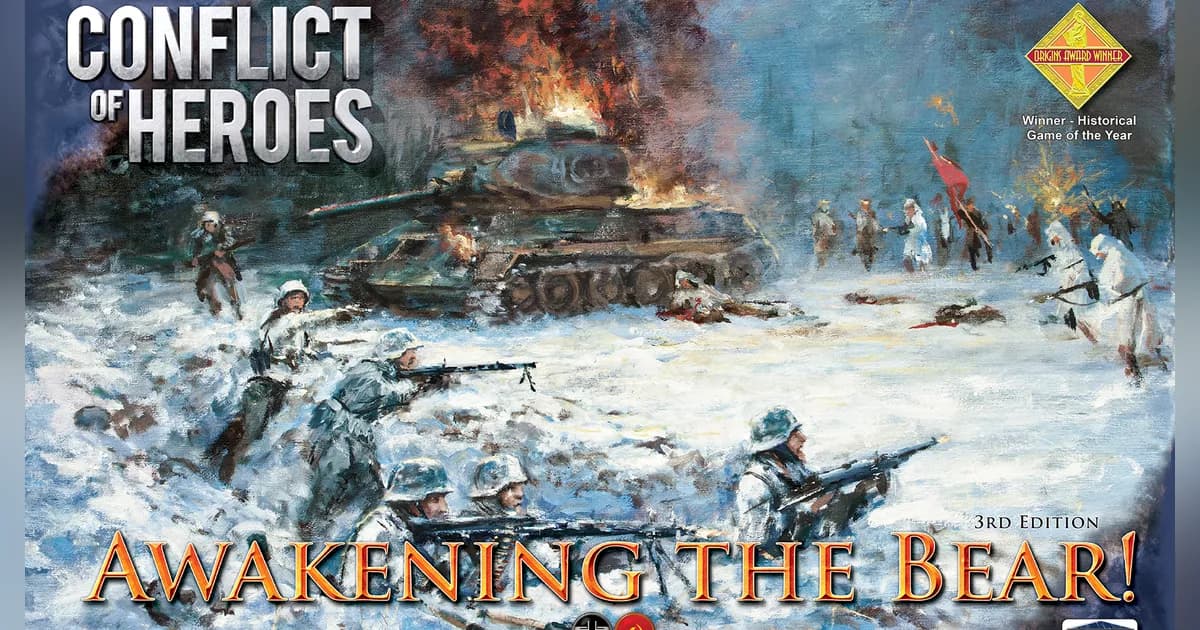
The third edition of 'Conflict of Heroes: Awakening the Bear – Operation Barbarossa 1941', released in 2019, is a highly acclaimed squad-level tactical wargame that transports players to the brutal and historic Eastern Front of World War II. Specifically focusing on the 1941 German invasion of the Soviet Union, the game pits opposing forces against each other in various scenario-based engagements. The primary objective typically revolves around outmaneuvering the enemy to capture and control vital geographic locations or methodically eliminating opposing units. Whether commanding German or Soviet troops, commanders must strategically utilize their infantry squads and armored tanks to dominate the battlefield and secure victory in these pivotal historical clashes.
At its core, the game utilizes a classic hex-and-counter framework but modernizes the experience with a highly dynamic and tense activation system. The third edition completely revamps the traditional action point allocation system in favor of an innovative 'spent check' mechanic. Whenever a player activates a unit to perform an action, they must roll a die to determine if that unit becomes exhausted or remains ready for subsequent orders. Simple movements yield a high probability of acting again, whereas aggressive actions like attacking drastically increase the chance of the unit becoming spent. To mitigate bad luck and execute critical maneuvers, players draw upon a limited pool of Command Action Points (CAPs) to modify rolls or force extra activations. Commanders take alternating turns until both sides eventually pass, forcing a continuous stream of risky, tactical decisions regarding cover, line of sight, and flanking maneuvers.
Enthusiasts and newcomers alike praise this iteration for achieving an elusive balance between deep tactical simulation and remarkable accessibility. The intuitive ruleset can be taught in mere minutes, making it an ideal entry-level title for gamers looking to explore the wargaming genre without feeling overwhelmed by convoluted rulebooks. Furthermore, the tense push-your-luck nature of the new activation system generates incredible cinematic moments and high-stakes drama on the tabletop. For those who prefer independent play, an optional expansion introduces a sophisticated, card-driven AI opponent that smartly utilizes cover and flanking strategies, delivering a robust and highly replayable challenge for solo commanders.
1-4 120m⚖️ 2.8

RANK #6,230
The Great Evening Banquet is a sophisticated board game that invites players into the high-stakes world of diplomatic event planning. Set within the prestigious walls of a brand-new state guest house, the game challenges you to act as a master of ceremonies tasked with organizing the ultimate social event. Your primary goal is to create harmonious seating arrangements for a diverse array of international dignitaries and VIPs. Each guest brings their own set of preferences and social requirements, turning the banquet hall into a complex grid of potential points and political pitfalls. The thematic essence of the game captures the tension and elegance of a formal gala, where the simple act of placing one person next to another can either foster international goodwill or result in a social faux pas.
The gameplay experience is built around a clever mix of token drafting and spatial puzzles. During each round, players draw guest tokens from a bag, introducing an element of controlled randomness that requires constant adaptation. These tokens are then selected through an open drafting mechanic, meaning you must stay vigilant about what your rivals are planning while securing the most beneficial guests for your own tables. The core challenge lies in the seating preferences of the VIPs; some may wish to be surrounded by their own entourage, while others provide bonuses based on the diversity of the table. The game progresses steadily until the grand chamber is filled, ensuring a tight, focused experience that rewards players who can think several moves ahead while managing the immediate tactical opportunities presented by the draft.
What truly distinguishes The Great Evening Banquet is its blend of approachable rules and deep, emergent strategy, a hallmark of the acclaimed publisher Saashi & Saashi. It offers a refined experience that appeals to fans of 'smart' family games, where the mechanics are easy to grasp but difficult to master. The inclusion of expert variants allows seasoned gamers to add layers of complexity, while the robust solo rules ensure that the seating puzzle is just as engaging when played alone. With its charming art style and the satisfying tactile feel of drawing tokens from a bag, the game provides a meditative yet competitive atmosphere. It perfectly captures the puzzle-like satisfaction of seeing a chaotic room transform into a perfectly ordered celebration, making it a standout title for anyone who enjoys abstract strategy with a strong thematic heartbeat.
1-4 45m⚖️ 2.2
RANK #16,467
The Brass Age
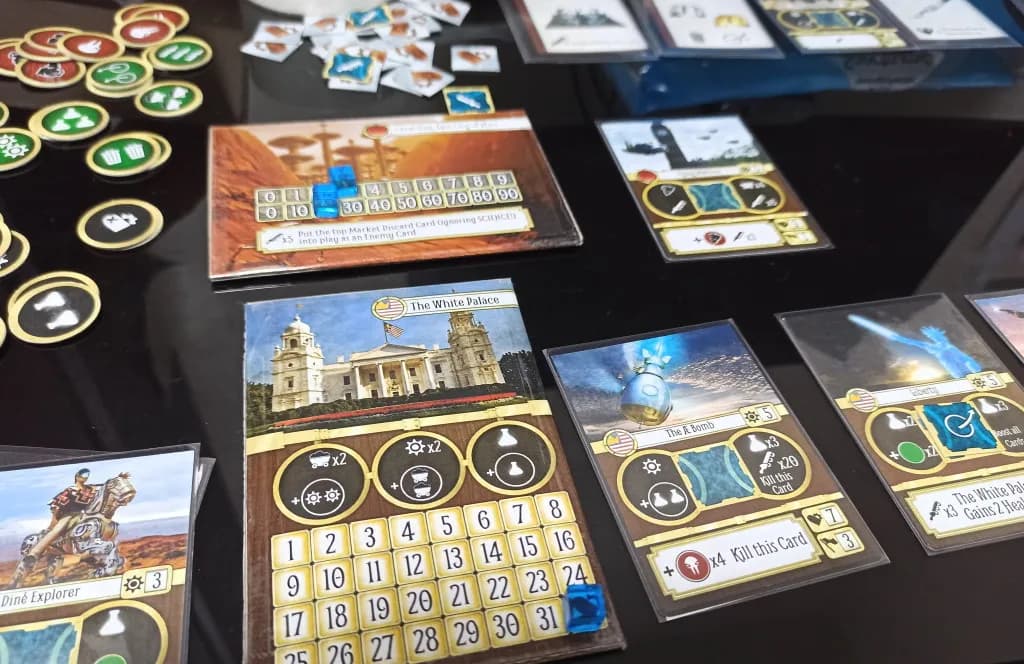
2021The Brass Age plunges you into a solo, steampunk-themed conflict where industrial might and aetheric power decide the fate of nations. This celebrated print-and-play wargame challenges you to lead one of three distinct factions—the British Imperium, the Kingdom of America, or the enigmatic Last City of Mars—in a decisive battle for supremacy. Your ultimate objective is straightforward but demanding: you must dismantle your opponent's war machine and reduce their nation's life force to zero before they do the same to you. The enemy is not a passive target but a dynamic, AI-controlled power that will relentlessly deploy its own forces and trigger unexpected events, ensuring that every game is a tense and unpredictable struggle for survival and dominance in a world of brass, steam, and circuits.
At the heart of the game lies an elegant fusion of bag-building and tableau-building mechanics. Each turn, you will draw a handful of resource tokens—representing vital materials like metal, coal, and aether—from a personal bag. These resources are the currency you'll use to acquire powerful new unit cards from a central market and to activate the unique abilities of the forces you have already deployed to your frontline. As the game progresses, you will strategically add more potent tokens to your bag, refining your economic engine and unlocking more powerful actions. Concurrently, you construct a tableau of units that represents your military presence. Managing the synergies between these units is key to launching effective attacks against the enemy nation and its deployed forces, which are governed by a clever AI card deck that keeps the pressure on.
What makes "The Brass Age" so compelling is its ability to deliver a deep, strategic solo experience in a compact and accessible package. Its victory in the 2021 BoardGameGeek Solitaire Print-and-Play Contest is a testament to its polished design and engaging gameplay. The game's gorgeous, unified steampunk aesthetic, with both art and design credited to Barny Skinner, creates a cohesive and immersive world. While the rules are smooth and straightforward once learned, the decisions they present are consistently meaningful. Players love the challenge of managing probability through bag-building while simultaneously crafting a synergistic combat tableau. It strikes a perfect balance, offering a rewarding puzzle that feels neither overly complex nor too simplistic, making it a standout title in the print-and-play community.
1 40m⚖️ 2.4

7th Seal
2026In 7th Seal, you stand as humanity's last hope against an impending apocalypse. This highly anticipated solo board game from Devir Games thrusts you into a desperate and thematic struggle for survival. The premise is as grand as it is grim: you must confront the end of days by systematically breaking the seven seals of a divine scroll. However, this is no simple task, as each shattered seal unleashes a new wave of furious beasts and powerful demons, each more terrifying than the last. Your ultimate goal is not merely to survive these encounters, but to prove humanity's worth to a supreme being who holds the world's fate in balance. It is a solitary journey into a demonic endgame, where your strategic prowess is all that stands between mankind and utter oblivion.
The gameplay of 7th Seal is structured as a challenging, dice-driven descent through seven distinct levels, culminating in a final, decisive confrontation. At its core, this is a game of strategic dice management and resource allocation. Each turn, you will be faced with demonic challenges that must be overcome by skillfully manipulating your available dice. The game is designed as a series of escalating 'boss battles', where the challenges grow in complexity and danger with each seal you break. Success hinges on your ability to plan ahead, mitigate poor rolls, and wisely commit your resources to counter the specific threats presented. While the exact combat resolution mechanics are tightly woven into the unfolding narrative, the experience emphasizes thoughtful puzzle-solving over pure luck, demanding that you make difficult choices under immense pressure.
What sets 7th Seal apart is its focused and intense gameplay loop, delivering a deeply strategic and narrative-rich experience within a compact 30 to 45-minute timeframe. Designed by Julio Falagan, the game is a masterclass in creating tension and high stakes for a single player. It appeals directly to gamers who appreciate a significant challenge and a strong thematic core without the need for a multi-hour commitment. The game's medium complexity makes it accessible to a wide range of players, yet it offers substantial strategic depth that promises high replayability. Every session is a test of wit and nerve, a puzzle-like battle against a demonic horde where your ability to adapt and manage your dice is paramount to securing a second chance for the world.
1 40m⚖️ 2.8