Space Games
Browse all Space board games in the Meeple Pulse database.
Styles
Themes
AbstractAdventureAncientAnimalsArtBusinessCard GameCo-operativeComic BookCooperativeCrimeEconomicEnvironmentalismExplorationFantasyHistoricalHorrorHumorIntrigueLiteraryMagicMarvelMedievalModernMuseumMysteryMythologyNatureNauticalPoliticalPress Your LuckSatireSci-FiSocial CommentarySocial InteractionSpaceSuperheroesThematicTravelWarWesternWord-Guessing
Mechanics
3D PlacementActingAction / DexterityAction DraftingAction Point AllowanceAction Point Allowance SystemAction Point SystemAction PointsAction ProgrammingAction QueueAction RetrievalAction SelectionAction/EventAlliancesAlternate ActivationApp-AssistedApp-DrivenArea ControlArea InfluenceArea MajorityArea Majority / InfluenceArea MovementArgumentationAsymmetricAsymmetric FactionsAsymmetric GameAsymmetric PowersAsymmetrical PowersAuction & BiddingAuction/BiddingAuctioningBag BuildingBettingBetting and BluffingBetting and WageringBetting and WagersBiddingBingoBlind BiddingBluffingCampaign / Battle Card DrivenCampaign / LegacyCampaign / Legacy GameCampaign / Mission-basedCampaign / ScenariosCampaign GameCampaign PlayCard DraftingCard DrawingCard DrivenCard Driven ActionCard Driven CombatCard Driven Dice AllocationCard Driven MovementCard ManagementCard PlayCard Play / Hand ManagementCard Play Conflict ResolutionCard SheddingCard-Driven MovementCharacter CreationCharacter ProgressionChit-Pull SystemCo-op PlayCo-operative GameCo-operative PlayCode-breakingCombat ResolutionCombo ChainCommand CardsCommodity SpeculationCommunication LimitsContract FulfillmentContractsCooperative GameCooperative GameplayCooperative PlayCooperative Trick-takingDebateDeck BuildingDeck ConstructionDeck, Bag, and Pool BuildingDeck-BuildingDeductionDexterityDice DraftingDice PlacementDice RollingDiplomatic InfluenceDraftingDynamic Battle SystemEnclosureEnd Game BonusesEngine BuildingEngine-BuildingEscape RoomEvent DrivenExplorationFarmingFlip and WriteFollowFollow ActionGrid CoverageGrid MovementHand ManagementHex-and-CounterHexagon GridHidden MovementHidden RolesI Cut You ChooseIncomeInfluence / Area MajorityLadder ClimbingLegacyLegacy ElementsLegacy GameLegacy SystemLimited CommunicationLine DrawingLine of SightMancalaMap MovementMarketMarket DraftingMarket ManipulationMarket MechanicMarket SpeculationMatchingMeasurement MovementMemoryMission ObjectivesModular BoardModular Board ConstructionMovement TemplatesMulti-Use CardsMulti-use CardsMultiple ScenariosMust FollowNarrative ChoiceNarrative Choice / ParagraphNegotiationNegotiation MechanicsNetwork & Route BuildingNetwork BuildingNetwork and Route BuildingOne vs ManyOne vs. ManyOpen DraftingPaper-and-PencilPartnershipsPattern BuildingPattern RecognitionPick-up and DeliverPlayer EliminationPlayer InteractionPlayer JudgePoint SaladPoint to Point MovementPolyominoesPush Your LuckPush-Your-LuckPuzzlePuzzle-LikePuzzle-SolvingRaceReal-TimeRecipe FulfillmentResource ManagementRole PlayingRole SelectionRoll / Spin and MoveRondelRoute BuildingRoute-BuildingRoute/Network BuildingSanity SystemScenario / Campaign PlayScenario / Mission / Campaign GameScenario / Mission FunctionSecret Unit DeploymentSemi-Cooperative GameSet CollectionSheddingSimulationSimultaneous ActionSimultaneous Action SelectionSimultaneous Hidden AllocationSocial DeductionSocial InteractionSolo / Solitaire GameSpace ExplorationStat Check / Skill CheckStock HoldingStorytellingStrategic PlanningTableau BuildingTactical Decision-MakingTake ThatTargeted CluesTeam PlayTeam-Based GameTeam-Based GuessingTeamworkTech TreesTech Trees / Tech TracksTechnology & Armament TracksTechnology TreeTension & Aggression TracksTile DraftingTile LayingTile PlacementTime TrackTime TravelTower DefenseTrack MovementTradingTrick-takingTug of WarTurn Order: PassTurn Order: Stat-BasedUnit PlacementVariable Phase OrderVariable Player PowersVariable Set-upVariable SetupVictory Point TracksVotingWord AssociationWord GameWord GuessingWord-GuessingWord-guessingWordplayWorker Placement
RANK #94
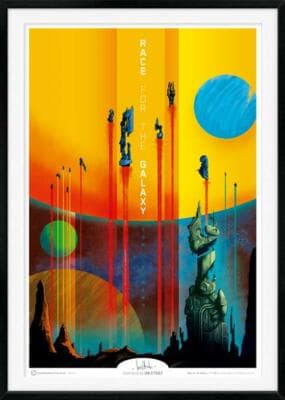
Race for the Galaxy stands as a landmark title in the world of card games, offering players the chance to construct a sprawling galactic civilization from the palm of their hand. The ultimate objective is to achieve the greatest prosperity, measured in victory points, by the time the game concludes. Players earn these points by strategically settling worlds, deploying powerful developments, and leveraging unique consumption abilities. The game is a race to build the most effective and synergistic tableau of cards, representing your empire's technological advancements and planetary holdings. It masterfully condenses the feel of a vast space-faring epic into a surprisingly swift and deeply engaging experience, where every decision can tip the scales of victory. The game ends either when one player builds their twelfth card or when the central pool of victory point tokens is exhausted, ensuring a consistently brisk pace.
The genius of Race for the Galaxy lies in its innovative simultaneous action selection mechanism. Each round, all players secretly choose one of several phase cards—such as Explore, Settle, or Produce—and reveal them at the same time. Only the selected phases are activated for that round, and every player gets to perform those actions. However, the player who originally chose a specific phase receives a significant bonus, creating a fascinating meta-game of anticipating your opponents' needs to maximize your own turn. Compounding this strategic layer is the brilliant multi-use card system. Every card in your hand is a potential world to settle, a technology to develop, or, crucially, the currency needed to pay for other cards. This forces constant, compelling trade-offs: is that high-value world better in your empire or better used as payment for two smaller, more synergistic cards right now? This core loop of managing your hand and building your tableau forms a satisfying and challenging puzzle.
What has given Race for the Galaxy its enduring appeal is the immense strategic depth packed into its short playtime. While notorious for its dense iconography, this visual language, once mastered, allows for remarkably fluid and fast-paced turns with minimal downtime. The vast deck of cards ensures that no two games are ever alike, providing near-infinite replayability as players discover new card combinations and powerful synergies. The tension of building your own engine while trying to benefit from your opponents' phase choices makes for a highly interactive, albeit indirect, experience. It’s a game that rewards clever planning, tactical flexibility, and a deep understanding of the card pool. For players who love building intricate engines and executing powerful combos, Race for the Galaxy offers a rich and rewarding journey to the stars that remains a benchmark for the genre.
2-4 45m⚖️ 3.0
RANK #168
Planet Unknown
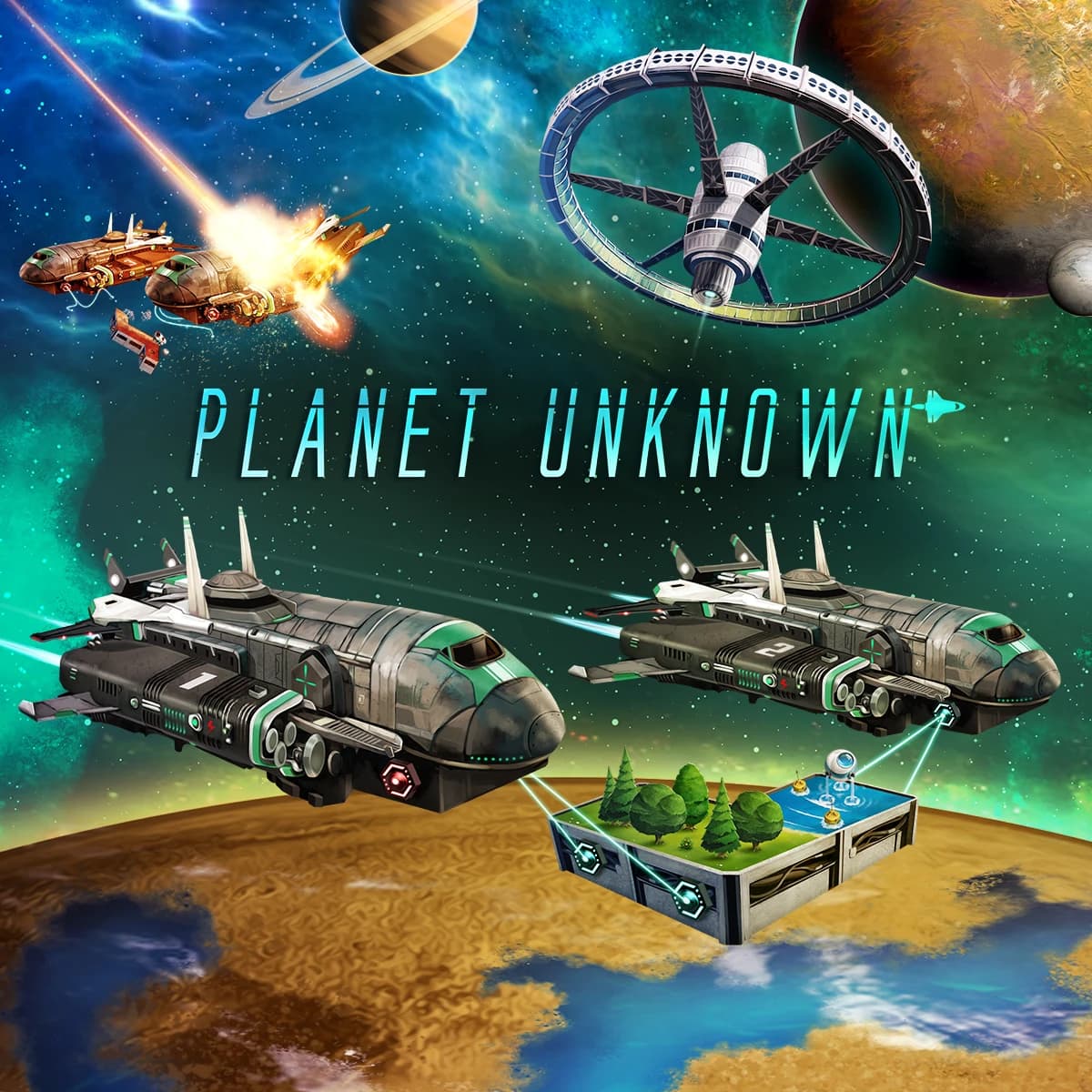
2022"Planet Unknown" is an acclaimed 2022 sci-fi board game that tasks one to six players with settling a newfound world to ensure the survival of humanity following Earth's resource collapse. Recognized with nominations like the prestigious 2023 Kennerspiel des Jahres, this engaging title revolves around transforming a barren planet into a thriving oasis. Players act as rival corporations racing to develop their respective planetary bodies. By carefully balancing spatial efficiency and resource management, competitors establish thriving infrastructures. The ultimate goal is to generate the most victory points before the land is entirely exhausted, proving your superiority in interplanetary colonization.
At the core of the experience lies a brilliant combination of polyomino tile placement and simultaneous action selection, centered around a rotating tray affectionately known as the Lazy S.U.S.A.N. During a round, the active commander rotates this space station to deliver specific dual-resourced tiles to each seat. Everybody drafts and places their assigned tile onto their grid-based board simultaneously, virtually eliminating downtime. As these puzzle pieces—bearing elements like Water, Biomass, Rovers, Tech, Energy, and Civ—are placed orthogonally adjacent to one another, players advance corresponding tracks on their corporation boards. This clever engine-building system triggers powerful cascading combos, yielding one-time bonuses, permanent abilities, and crucial victory points.
Development is rarely straightforward, as settlers must actively navigate hazardous meteor strikes that accompany certain terrain tiles. These meteorites crash onto the grid, acting as frustrating roadblocks that disable scoring in their respective rows and columns until they are successfully cleared. To handle these extraterrestrial threats, players must advance their Rover tracks, deploying vehicles across the terrain to collect the fallen debris. The session immediately triggers its endgame phase once any single participant can no longer legally fit a new piece onto their grid. Final scores are then meticulously calculated based on fully completed, meteor-free rows and columns, track progression, gathered life pods, and fulfilled objective cards.
Enthusiasts widely praise "Planet Unknown" for its remarkable ability to blend accessible, puzzle-like spatial planning with deeply satisfying strategic layers. The inclusion of the physical rotating tray not only provides a phenomenal tactile centerpiece but also ensures brisk pacing that scales perfectly up to six players. Furthermore, the game boasts immense replay value by offering both standardized and highly asymmetric setups for the planet maps and corporation dashboards. This variability empowers players to experiment with different strategies during every session. Whether tackling the challenge as a solo pioneer or competing against a full table, this masterpiece consistently delivers a compelling journey into the stars.
1-6 70m⚖️ 2.3
RANK #171
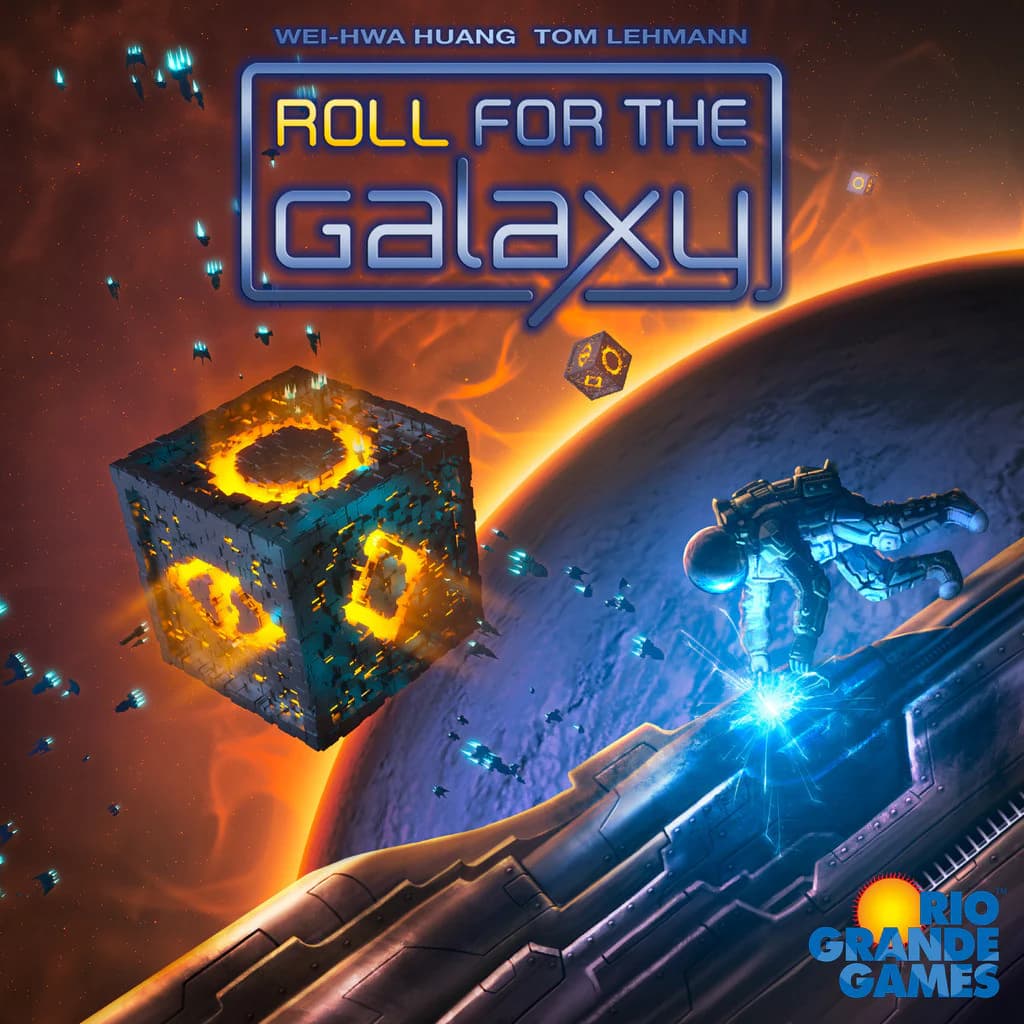
Roll for the Galaxy is a dice-based engine-building game where players compete to create the most prosperous and powerful space empire. As the leader of a fledgling galactic faction, your goal is to accumulate the most victory points by strategically developing new technologies and settling valuable worlds. The game is a spiritual successor to the acclaimed card game, Race for the Galaxy, translating its core concepts into a dynamic and tactile experience driven by custom dice. Each player manages their own domain, striving to build an efficient engine that generates credits, new tiles, and ultimately, victory points. The game concludes when one player constructs their twelfth tile or when the central pool of victory points is depleted, at which point the player with the highest score is declared the victor.
The gameplay revolves around a clever simultaneous action mechanic. Each round, all players roll their dice behind a screen. These dice, with faces representing different actions, are your workforce. Players secretly assign their dice to one of five possible phases: Explore, Develop, Settle, Produce, or Ship. Crucially, each player also selects one of their dice to lock in a specific phase for the round. Only the phases selected by at least one player will activate for everyone, creating a tense game of prediction and priority. Once revealed, players use their assigned dice as workers to perform actions in the active phases, such as drawing new world and development tiles, paying to build them into their tableau, producing goods on worlds, and shipping those goods for either credits or victory points. The tiles you build grant powerful abilities, special dice, and new scoring opportunities, creating a satisfying loop of escalating power.
What makes Roll for the Galaxy a fan favorite is its brilliant combination of tactical dice management and strategic planning, all wrapped in a package with virtually no downtime. The simultaneous play keeps every player constantly engaged, as you're always rolling, assigning, and acting. While the dice introduce an element of luck, the game provides numerous ways to mitigate it, from reassigning dice to leveraging special tile powers. This creates a compelling puzzle each round as you adapt your strategy to what you roll. It captures the strategic depth of its card game predecessor but in a more accessible and faster-playing format, offering immense replayability through its vast array of worlds, developments, and starting factions. It's a masterclass in design that feels both grand in scope and remarkably streamlined.
2-5 45m⚖️ 2.8
RANK #188
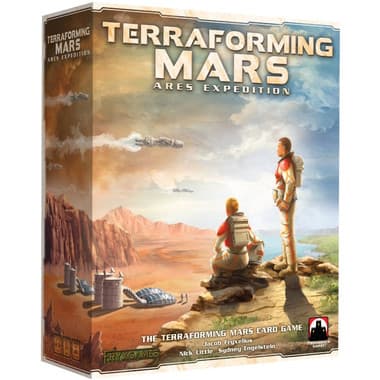
Terraforming Mars: Ares Expedition offers a compelling, self-contained experience that captures the essence of its celebrated predecessor in a more streamlined package. In this engine-building card game, players assume the leadership of powerful interplanetary corporations with the monumental task of making the Red Planet habitable for humanity. The ultimate objective is to earn the most Victory Points by contributing to the three global terraforming parameters: raising the planet's temperature, increasing the atmospheric oxygen to breathable levels, and creating vast liquid water oceans. As these goals are collectively met, players simultaneously build their corporate infrastructure, leveraging unique advantages to become the most influential force in Mars's new era. Victory is not just about helping humanity; it's about proving your corporation's superior efficiency and vision in this new frontier.
The gameplay of Ares Expedition revolves around a clever and fast-paced phase selection system that dramatically reduces downtime. Each round, all players secretly and simultaneously choose one of five possible phases to activate: Development (for playing green project cards), Construction (for blue and red cards), Action (for using card abilities), Production (for gaining resources), or Research (for drawing new cards). All players then get to perform the actions of every phase selected that round, but those who chose a specific phase receive a valuable bonus, creating a tense dynamic of predicting opponents' needs while advancing your own strategy. This core loop drives the tableau-building aspect of the game, where players manage resources like MegaCredits, heat, and plants to play a diverse array of project cards into their personal play area. These cards form the engine that will generate resources, provide powerful actions, and ultimately score the points needed to win.
Ares Expedition has earned acclaim for successfully condensing the epic scope of the original *Terraforming Mars* into a focused, 45-to-60-minute playtime without sacrificing strategic depth. The simultaneous phase selection is the star of the show, ensuring players are constantly engaged and making meaningful decisions. This design choice elegantly solves the long wait times that could occur in the original, making it far more accessible for weeknight gaming or for groups who prefer a quicker tempo. While the rules are more direct, the challenge of finding powerful card synergies and building an efficient, multi-faceted engine remains deeply rewarding. It's the perfect choice for fans of the original seeking a faster game, as well as for newcomers looking for a rich, thematic, and highly replayable journey into the challenges of planetary engineering.
1-4 60m⚖️ 3.0

RANK #212
Embark on an epic science-fiction journey in "Welcome to the Moon," a narrative-driven campaign game that builds upon the celebrated 'flip-and-write' system. In this ambitious sequel, players are tasked with a monumental mission: saving humanity by establishing a thriving colony on the moon. The game is ingeniously structured as a series of eight distinct 'adventures,' each representing a critical phase of the colonization project. These adventures are linked by a branching, overarching story where your successes and failures in one chapter directly influence the challenges and opportunities you'll face in the next. The goal isn't just to score points on a single map, but to navigate a multi-stage campaign, making shrewd decisions that will guide your faction's progress and ultimately determine the fate of your lunar settlement across a generation-spanning saga.
The core gameplay loop is elegantly simple yet rich with strategic depth. Each round, three sets of cards are revealed, with each set containing a number card and an action card. All players simultaneously choose one pair to use on their personal, dry-erase adventure sheet for that mission. The number must be written into a space, adhering to the fundamental rule of placing values in ascending order within defined zones. The chosen action grants a powerful bonus, such as activating special abilities, collecting resources, or advancing mission objectives. What truly sets the experience apart is that each of the eight adventures features a completely unique player sheet with its own rules, spatial puzzles, and thematic scoring conditions, transforming the gameplay from launching your ship in Adventure 1 to developing a lunar city in a later mission.
"Welcome to the Moon" captivates players with its unique blend of accessible mechanics and deep, long-term strategy. Its most celebrated feature is the campaign system, which elevates the game far beyond a standard flip-and-write by creating a persistent, evolving world. The sense of discovery as you unlock new adventures and see the consequences of your choices unfold is a powerful hook that encourages repeated play. This versatility is a major strength; you can easily pull out any of the eight adventures for a quick, satisfying standalone game, or immerse yourself in the full campaign for a richer, more narrative experience. This flexibility, combined with its capacity for solo play, makes it a remarkable and highly replayable package for anyone who enjoys clever puzzles and grand, thematic stories.
1-6 30m⚖️ 2.4
RANK #463
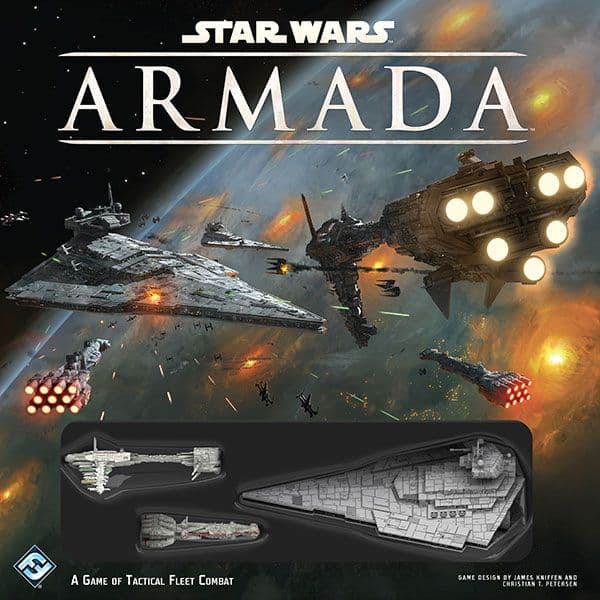
Star Wars: Armada is an epic-scale miniatures game where two players assume the roles of fleet admirals for either the Rebel Alliance or the Galactic Empire. The game simulates large-scale tactical space battles during the Galactic Civil War. The primary objective is straightforward yet challenging: either completely annihilate the opposing fleet or accumulate more victory points than your opponent by the end of the game's six-round limit. Players build their fleets beforehand, carefully selecting ships, commanders, and upgrades to create a synergistic force capable of outmaneuvering and outgunning their rival on a 3x6 foot play area.
The gameplay of *Armada* is defined by its deliberate, strategic pace, which captures the immense scale and inertia of its capital ships. A standout feature is the command dial system, which forces players to think several turns ahead. For each capital ship, players secretly select commands like navigation, repair, or concentrated fire, placing the chosen dial on a stack. Only the top dial is revealed and resolved each round, meaning a decision made now might not take effect for two or three turns. Movement is another critical element, handled with an articulated maneuver tool that dictates a ship's turn and speed, simulating momentum. Crucially, ships perform their attacks *before* moving, creating a tense game of prediction where you must anticipate your opponent’s final position to land a successful broadside.
What makes *Star Wars: Armada* a beloved classic among miniatures wargamers is its profound strategic depth and highly thematic experience. The game is often praised for feeling less like a fast-paced dogfight and more like a high-stakes game of chess in space. The pre-planning required by the command system and the unique movement rules reward foresight and tactical acumen. The stunning, pre-painted miniatures of iconic ships like Star Destroyers and Mon Calamari Cruisers bring the Star Wars universe to life on the tabletop, creating a spectacular visual presence. This focus on deliberate, large-scale naval-style combat provides a uniquely satisfying and immersive strategic challenge that keeps players returning to the battlefield.
2 120m⚖️ 3.2