Set Collection Games
Browse all Set Collection board games in the Meeple Pulse database.
Styles
Themes
AbstractAdventureAncientAnimalsArtBusinessCard GameCo-operativeComic BookCooperativeCrimeEconomicEnvironmentalismExplorationFantasyHistoricalHorrorHumorIntrigueLiteraryMagicMarvelMedievalModernMuseumMysteryMythologyNatureNauticalPoliticalPress Your LuckSatireSci-FiSocial CommentarySocial InteractionSpaceSuperheroesThematicTravelWarWesternWord-Guessing
Mechanics
3D PlacementActingAction / DexterityAction DraftingAction Point AllowanceAction Point Allowance SystemAction Point SystemAction PointsAction ProgrammingAction QueueAction RetrievalAction SelectionAction/EventAlliancesAlternate ActivationApp-AssistedApp-DrivenArea ControlArea InfluenceArea MajorityArea Majority / InfluenceArea MovementArgumentationAsymmetricAsymmetric FactionsAsymmetric GameAsymmetric PowersAsymmetrical PowersAuction & BiddingAuction/BiddingAuctioningBag BuildingBettingBetting and BluffingBetting and WageringBetting and WagersBiddingBingoBlind BiddingBluffingCampaign / Battle Card DrivenCampaign / LegacyCampaign / Legacy GameCampaign / Mission-basedCampaign / ScenariosCampaign GameCampaign PlayCard DraftingCard DrawingCard DrivenCard Driven ActionCard Driven CombatCard Driven Dice AllocationCard Driven MovementCard ManagementCard PlayCard Play / Hand ManagementCard Play Conflict ResolutionCard SheddingCard-Driven MovementCharacter CreationCharacter ProgressionChit-Pull SystemCo-op PlayCo-operative GameCo-operative PlayCode-breakingCombat ResolutionCombo ChainCommand CardsCommodity SpeculationCommunication LimitsContract FulfillmentContractsCooperative GameCooperative GameplayCooperative PlayCooperative Trick-takingDebateDeck BuildingDeck ConstructionDeck, Bag, and Pool BuildingDeck-BuildingDeductionDexterityDice DraftingDice PlacementDice RollingDiplomatic InfluenceDraftingDynamic Battle SystemEnclosureEnd Game BonusesEngine BuildingEngine-BuildingEscape RoomEvent DrivenExplorationFarmingFlip and WriteFollowFollow ActionGrid CoverageGrid MovementHand ManagementHex-and-CounterHexagon GridHidden MovementHidden RolesI Cut You ChooseIncomeInfluence / Area MajorityLadder ClimbingLegacyLegacy ElementsLegacy GameLegacy SystemLimited CommunicationLine DrawingLine of SightMancalaMap MovementMarketMarket DraftingMarket ManipulationMarket MechanicMarket SpeculationMatchingMeasurement MovementMemoryMission ObjectivesModular BoardModular Board ConstructionMovement TemplatesMulti-Use CardsMulti-use CardsMultiple ScenariosMust FollowNarrative ChoiceNarrative Choice / ParagraphNegotiationNegotiation MechanicsNetwork & Route BuildingNetwork BuildingNetwork and Route BuildingOne vs ManyOne vs. ManyOpen DraftingPaper-and-PencilPartnershipsPattern BuildingPattern RecognitionPick-up and DeliverPlayer EliminationPlayer InteractionPlayer JudgePoint SaladPoint to Point MovementPolyominoesPush Your LuckPush-Your-LuckPuzzlePuzzle-LikePuzzle-SolvingRaceReal-TimeRecipe FulfillmentResource ManagementRole PlayingRole SelectionRoll / Spin and MoveRondelRoute BuildingRoute-BuildingRoute/Network BuildingSanity SystemScenario / Campaign PlayScenario / Mission / Campaign GameScenario / Mission FunctionSecret Unit DeploymentSemi-Cooperative GameSet CollectionSheddingSimulationSimultaneous ActionSimultaneous Action SelectionSimultaneous Hidden AllocationSocial DeductionSocial InteractionSolo / Solitaire GameSpace ExplorationStat Check / Skill CheckStock HoldingStorytellingStrategic PlanningTableau BuildingTactical Decision-MakingTake ThatTargeted CluesTeam PlayTeam-Based GameTeam-Based GuessingTeamworkTech TreesTech Trees / Tech TracksTechnology & Armament TracksTechnology TreeTension & Aggression TracksTile DraftingTile LayingTile PlacementTime TrackTime TravelTower DefenseTrack MovementTradingTrick-takingTug of WarTurn Order: PassTurn Order: Stat-BasedUnit PlacementVariable Phase OrderVariable Player PowersVariable Set-upVariable SetupVictory Point TracksVotingWord AssociationWord GameWord GuessingWord-GuessingWord-guessingWordplayWorker Placement

RANK #90
Darwin's Journey
2023Darwin's Journey transports players to the 19th century, retracing the steps of Charles Darwin on his seminal voyage aboard the HMS Beagle. In this immersive Eurogame, you take on the role of a scientist eager to contribute to the burgeoning theory of evolution. Your primary objective is to earn the most victory points by the end of five rounds, which you accomplish by furthering scientific understanding. This involves meticulous exploration of the Galápagos Islands, careful study of its unique fauna, and the collection of valuable specimens. Success is measured by your contributions to museums, your correspondence with fellow academics, and your progress in understanding the very mechanisms of life. It’s a competitive race to establish the most significant scientific legacy, blending historical theme with deep strategic gameplay.
At its core, "Darwin's Journey" is a sophisticated worker-placement game. Players begin with a small team of workers they will place on the board to perform actions. What sets the game apart is its innovative worker progression system. Each worker can be trained and equipped with special wax seals of different colors, which act as prerequisites for accessing more powerful and specialized action spaces. This system forces players to thoughtfully develop their workforce to align with their long-term strategy. The main actions revolve around navigating your ship to new islands, exploring island tracks for immediate bonuses, gathering sets of specimens, and dispatching them to museums for money and advancement on the crucial 'Theory of Evolution' track. Players must also manage correspondence to gain useful perks and end-of-round benefits, all while navigating a tight economy where every coin and resource matters.
The appeal of "Darwin's Journey" lies in its rewarding complexity and strategic depth, making it a celebrated title for veteran gamers. It’s a 'crunchy' experience where every decision feels consequential. The unique worker specialization mechanic is a standout feature, providing a rich puzzle as players decide how to upgrade their workers to unlock synergistic action combos. This creates diverse strategic paths to victory and enhances the game's replayability. Players who enjoy long-term planning and optimizing their every move will find the interlocking systems deeply satisfying. The game masterfully integrates its scientific theme into the mechanics, making the quest for knowledge feel both tangible and compelling. It’s a brain-burning yet thematic journey that challenges players to think critically and adapt their plans throughout the game's five demanding rounds.
1-4 120m⚖️ 3.5
BoxNo Cover Art
RANK #95
In the fabled Sultanate of Naqala, the old Sultan has died, leaving the throne vacant. The future of the city is in your hands as you compete to gain the favor of the legendary Five Tribes. In a clever twist on the worker placement genre, Five Tribes begins with the game board already populated with meeples. Your objective is not to place workers, but to skillfully maneuver the existing tribes across the grid of tiles, claiming valuable territories and invoking the power of ancient Djinns to secure your path to victory. To win, you must accumulate the most Victory Points by the end of the game, proving you have the wisdom and influence to become the next Sultan.
The game's signature mechanic is its elegant, Mancala-style movement system. On your turn, you will choose a tile, pick up all the meeples on it, and distribute them one-by-one onto adjacent tiles. Your final meeple must land on a tile containing another meeple of the same color. This triggers your main action: you collect all meeples of that color from the final tile and perform their tribe's special ability. Yellow Viziers provide points, White Elders can summon Djinns, Green Merchants gather valuable goods, Blue Builders generate gold, and Red Assassins can remove other meeples from play. If your move completely clears a tile of its occupants, you gain control of it by placing one of your camels, locking in its point value for the end of the game.
Five Tribes is beloved for its remarkable strategic depth packed into a relatively straightforward ruleset. The sheer number of possible moves on any given turn creates a rich, puzzle-like experience that rewards careful planning and foresight. A tense bidding phase kicks off each round, forcing players to spend their hard-earned currency to secure a favorable turn order, creating a constant trade-off between acting early and preserving points. The ability to recruit powerful Djinns, each offering a unique and often game-breaking rule modification, adds immense variety and replayability. With multiple scoring avenues—from controlling land to collecting merchandise sets and assembling powerful entourages—the game remains a dynamic and engaging modern classic.
2-4 60m⚖️ 2.9
BoxNo Cover Art
RANK #102
Concordia Venus
2018Concordia Venus invites players to a strategic journey across the ancient Roman world, where they will build an economic empire and expand their influence. The ultimate goal is to achieve prosperity and earn the most victory points by carefully establishing colonies, producing valuable goods, trading efficiently, and satisfying the favor of various Roman deities. This standalone expansion or module elevates the critically acclaimed Concordia experience with new challenges and opportunities for both competitive and cooperative play.
At its heart, Concordia Venus is an elegantly designed economic strategy game driven by clever hand management and an action point allowance system. Players use a limited hand of persona cards, each granting a specific action such as moving colonists across the point-to-point map, producing resources in their cities, or constructing new outposts. Mastering the timing of card play and the strategic use of the Tribune card to retrieve all spent actions is crucial for efficiency. The game beautifully blends set collection for resources and a subtle form of contract fulfillment through its diverse scoring criteria, rewarding thoughtful long-term planning over immediate gains.
Fans adore Concordia Venus for its profound strategic depth encased in remarkably straightforward rules, making it easy to learn yet challenging to master. Its unique appeal lies in the low-aggression yet highly interactive gameplay, where indirect competition for optimal city locations and resources keeps players engaged. With high replayability across different maps and a dynamic scoring system that rewards balanced development, Concordia Venus offers an intellectually stimulating and deeply satisfying experience for strategists seeking an economic engine-building game without excessive luck or complexity, now with added flexibility for team play.
2-6 120m⚖️ 2.8

RANK #103
SCOUT
2019SCOUT is a brilliantly distilled card game where players take on the role of circus ringmasters competing to create the most impressive show. Underneath its charming and minimalist circus theme lies a deeply strategic experience centered around a single, game-changing constraint: you cannot rearrange the cards in your hand. Each card features two different numbers, one on the top and one on the bottom. At the very start of a round, you must make a critical decision to orient your entire hand one way or the other, locking in the sequence of values you'll have to work with. The goal is to skillfully play sets of cards to earn victory points and be the first to empty your hand, avoiding the penalty for leftover cards. This simple premise forces players to think several turns ahead, evaluating the potential of their current card order and planning how to turn a seemingly chaotic hand into a winning performance.
The gameplay elegantly alternates between two core actions: 'Show' and 'Scout'. To 'Show', a player plays a set of one or more cards from their hand to the table. The catch is that these cards must be physically adjacent in their hand. These sets can either be a run of consecutive numbers (like 4-5-6) or a group of matching numbers (like 7-7-7). A newly played show must be more powerful than the set currently on the table, following a clear hierarchy—more cards are better, and sets of a kind beat runs of the same length. If you can't, or strategically choose not to, play a better show, you must 'Scout'. This involves taking one of the end cards from the active show on the table and adding it anywhere into your own hand, in whichever orientation you prefer. This clever mechanism allows you to break up your rigid hand order, bridging gaps to form more powerful sets for future turns. The player whose show was scouted from receives a point token as compensation, creating a fascinating push-and-pull dynamic.
The genius of SCOUT lies in the constant, delightful tension between these two simple actions. Do you play a weak set now just to get cards out of your hand, or do you patiently 'Scout' to build towards an unbeatable combo that could win you the round? This decision-making process makes every turn engaging and consequential. Its fast-paced rounds, which end when a player empties their hand or a show makes it all the way around the table unchallenged, ensure the game never overstays its welcome. Its blend of easy-to-learn rules and surprising strategic depth has earned it widespread acclaim, including a prestigious Spiel des Jahres nomination. SCOUT is the quintessential 'filler' game that packs the punch of a much heavier experience, offering immense replayability and proving that the most compelling designs are often the most elegantly constrained.
1-4 60m⚖️ 1.4
RANK #111
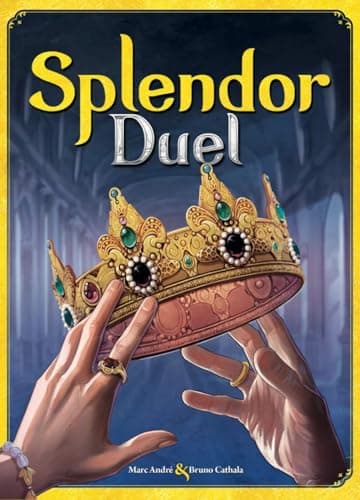
Splendor Duel
2022Splendor Duel is a standalone, two-player board game that brilliantly reimagines the classic Splendor experience, transforming it into a tense and direct confrontation. Designed by the original's creator, Marc André, in collaboration with two-player specialist Bruno Cathala, this version is tailored specifically for head-to-head competition. The objective is to outmaneuver your opponent by being the first to achieve one of three distinct victory conditions: accumulating a total of 20 or more prestige points, collecting 10 or more crowns on your jewel cards, or achieving dominance in a single gem color by earning 10 or more prestige points from those cards alone. This multi-faceted goal creates a dynamic game state where players must constantly adapt their strategies and react to their rival's progress.
The gameplay retains the satisfying engine-building core of its predecessor but introduces several key mechanics that foster intense interaction. The most significant change is a shared game board where gem, pearl, and gold tokens are arranged in a pattern. On their turn, players must draft up to three adjacent tokens in a single straight line, creating a tight, tactical puzzle where every selection can either set up your own plans or thwart your opponent's. The game also introduces valuable Pearl tokens, required for some of the most powerful cards, and three Privilege scrolls, which offer a crucial dose of flexibility by allowing a player to snatch any single non-gold token from the board. Purchasing cards still provides permanent gem bonuses, but now many also come with powerful, one-time abilities that can swing the tempo, such as taking an extra turn or stealing a token directly from your opponent.
Splendor Duel is widely acclaimed for being an exemplary two-player adaptation that enhances what made the original great. It successfully injects a much higher degree of player interaction and strategic depth without sacrificing the accessibility and quick playtime that fans love. The token-drafting board forces a constant awareness of the opponent's strategy, making every decision meaningful. The multiple paths to victory ensure high replayability, as players can pivot their approach from game to game or even mid-game. It’s a perfect, compact game for couples or any pair of players seeking a competitive, engaging, and polished contest of wits and forward planning, solidifying its reputation as a standout title in the two-player genre.
2 30m⚖️ 2.1
RANK #115
7 Wonders
2010Step into the role of a leader of one of the seven great cities of the Ancient World in "7 Wonders," a celebrated civilization-building game. Your primary objective is to guide your city to glory by accumulating the most victory points over the course of three distinct historical Ages. Victory is not achieved through a single path, but through a masterful balance of developing your city's military might, advancing its scientific knowledge, constructing grand civic monuments, and fostering a robust commercial infrastructure. Each decision contributes to your final legacy, as you erect a wonder that will stand the test of time and create a civilization renowned throughout history.
The gameplay of "7 Wonders" is centered around an elegant and engaging card drafting mechanic. At the beginning of each of the three Ages, players receive a hand of cards representing various structures and advancements. Simultaneously, each player selects one card to play and then passes their remaining hand to an adjacent player, a direction that reverses each Age. This process continues until each player has played six cards per Age. With a chosen card, a player has three options: pay the resource cost to build the structure in their city's tableau, tuck the card under their Wonder board to build the next stage of their architectural marvel, or discard it to gain valuable coins. This simultaneous action selection brilliantly eliminates player downtime, keeping the game moving at a brisk pace regardless of the player count.
The game's enduring appeal lies in its remarkable blend of accessibility and strategic depth. New players can quickly grasp the core rules, while seasoned gamers will discover nuanced strategies and scoring synergies with every play. At the end of each Age, military conflicts are resolved with immediate neighbors, adding a layer of direct interaction. Final scoring is a satisfying culmination of your efforts, where points are tallied from military victories, scientific sets, completed wonder stages, civic buildings, commercial enterprises, powerful guilds, and your remaining treasury. This variety of scoring avenues ensures high replayability, as players can explore different strategies in every game, making "7 Wonders" a timeless classic that has earned its place as a cornerstone of modern board gaming.
3-7 30m⚖️ 2.3
RANK #121
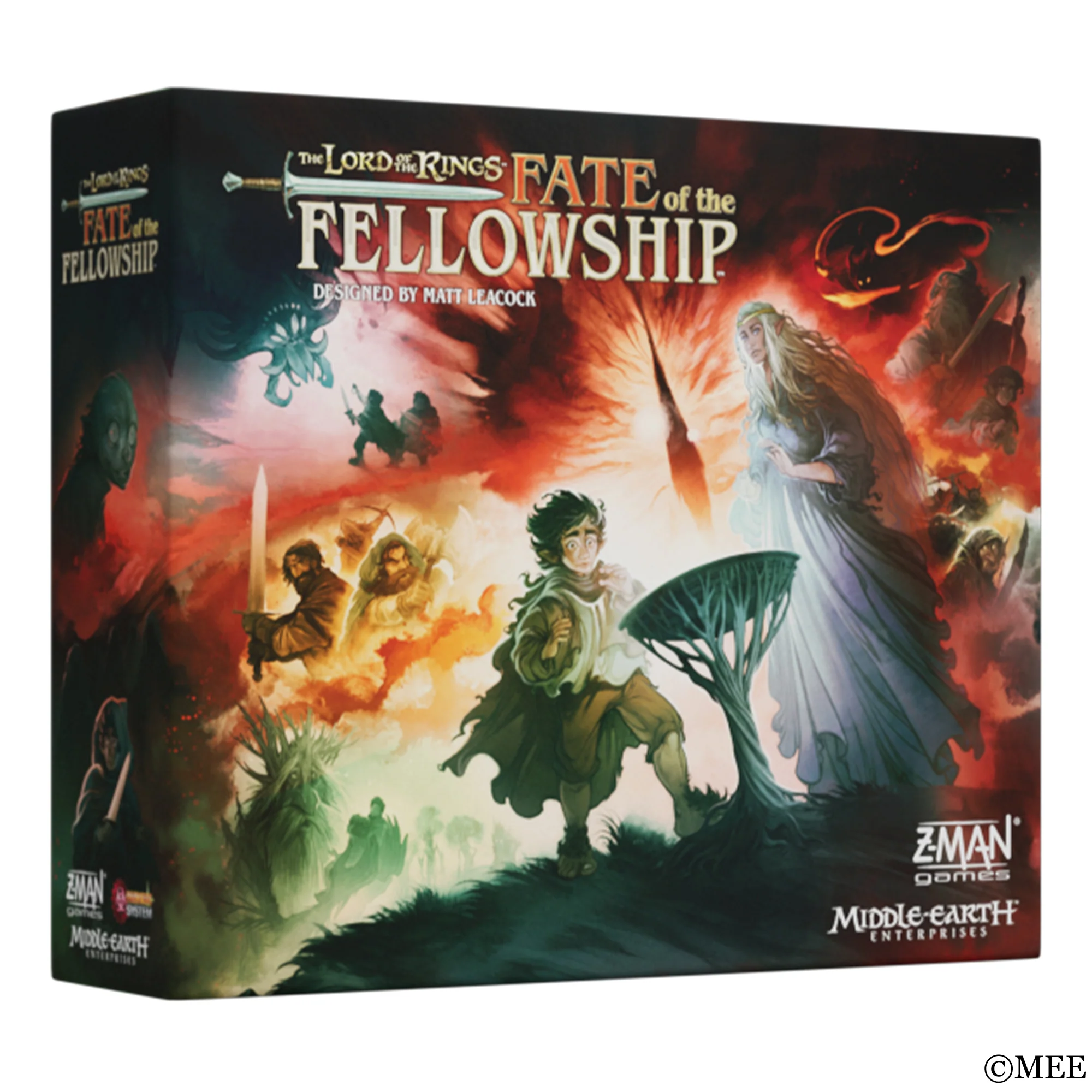
The Lord of the Rings: Fate of the Fellowship immerses one to five players in a desperate, cooperative journey across Middle-earth. In this new narrative-driven adventure from acclaimed designer Matt Leacock, players embody the heroes of Tolkien's epic saga, working together to ensure the One Ring reaches the fires of Mount Doom. The ultimate objective is the Ring's destruction, but this final confrontation can only be attempted after the fellowship successfully navigates three randomly assigned objectives. Players take on the roles of the Fellowship's members and their trusted allies, with each player uniquely controlling a pair of characters from a roster of thirteen, each boasting distinct abilities. The path to victory is fraught with peril, as failure looms if the collective 'Hope' of the fellowship is extinguished. This crucial resource dwindles when safe havens are overrun by darkness, if the Ringbearer is discovered by Sauron's minions, or if the heroes exhaust their resources. It is a race against the encroaching shadow to fulfill their destiny before all hope is lost.
The game's engine is a sophisticated adaptation of the celebrated "Pandemic" system, promising a familiar yet richer mechanical experience. The core gameplay loop involves players strategically spending action points to maneuver friendly forces and their heroes across a detailed map of Middle-earth. These actions are vital for completing the prerequisite missions and pushing back the ever-advancing armies of the Dark Lord. A central element of tension is the constant need to protect Frodo, keeping him concealed from the relentless pursuit of the Nazgûl and the piercing gaze of the Eye of Sauron. This threat is manifested through the 'Shadow Card' deck, a mechanism that functions much like its counterpart in "Pandemic," dictating where Sauron's influence will spread and escalating the danger with each draw. Players must carefully manage their character abilities and card resources to overcome these challenges and clear a path for the Ringbearer.
"Fate of the Fellowship" offers a compelling synthesis of a proven cooperative game system with one of fantasy's most beloved narratives. Its appeal lies in this seamless integration, creating an experience that feels both innovative and deeply thematic. The design has been hailed as Matt Leacock's most mechanically intricate take on the Pandemic framework to date, offering a significant and rewarding challenge for veteran strategy gamers. The unique system of each player managing two distinct heroes introduces a fascinating layer of tactical decision-making and enhances replayability. This constant balancing act—completing grand objectives while simultaneously managing the stealthy, perilous journey of the Ringbearer—generates a persistent sense of urgency and suspense, making it an essential title for fans of cooperative board games and Tolkien's timeless world.
1-5 m⚖️ 3.1

RANK #124
Wyrmspan
2024In Wyrmspan, you step into the role of an amateur dracologist, tasked with creating a magnificent sanctuary for dragons of all shapes and sizes. As a standalone game inspired by the mechanics of the critically acclaimed Wingspan, your goal is to build the most welcoming haven by excavating a labyrinthine network of caves and enticing a wide variety of dragons to make it their home. Over four rounds, you will compete to earn the most victory points by populating your caves, hatching new dragons, fulfilling public objectives, and climbing the ranks of the esteemed Dragon Guild. The player who proves to be the most adept dragon enthusiast by accumulating the most points will be declared the winner.
The gameplay revolves around a card-driven, engine-building system where players manage resources to take one of three primary actions. Using coins received at the start of each round, you can 'Excavate' to play a cave card, preparing a new space in your Crimson Cavern, Golden Grotto, or Amethyst Abyss and often gaining an immediate bonus. The 'Entice' action allows you to play one of the 183 unique dragon cards from your hand into an excavated space, adding its power to your growing engine. Finally, you can 'Explore' a cave, sending your adventurer meeple to activate a chain of abilities from the dragons residing within. Unlike its predecessor, Wyrmspan provides a consistent number of actions each round, challenging players to maximize their efficiency from start to finish.
Wyrmspan's appeal lies in its satisfying strategic depth and stunning presentation. Fans of engine-building will delight in discovering powerful synergies between dragon abilities and cave bonuses, creating a cascade of benefits with a single action. The game offers a slightly more complex and involved experience than Wingspan, introducing new elements like the Dragon Guild tracks and the need to manage cave space, which provides a fresh challenge for veteran players. With a huge variety of dragons illustrated by Clémentine Campardou, multiple paths to victory, and a robust solo mode, Wyrmspan delivers immense replayability and a captivating thematic experience for anyone who has ever dreamed of befriending dragons.
1-5 90m⚖️ 2.9

RANK #132
Keyflower
2012Keyflower is a celebrated strategic eurogame where players guide their fledgling settlements through four distinct seasons, from the promise of spring to the final scoring in winter. The ultimate goal is to amass the most victory points by building a prosperous and efficient village. This is achieved by strategically bidding on and acquiring new hexagonal village tiles, generating valuable resources like wood, stone, and iron, and expanding your workforce of colorful 'keyples'. Each player begins with a home tile and a small group of workers, but through clever play, they will expand their domain, upgrade buildings, and fulfill the scoring conditions presented by the lucrative winter tiles, which are only revealed at the game's outset, forcing players to plan their long-term strategy from the very first turn.
The game's brilliance lies in its seamless integration of several core mechanics, most notably worker placement and auctioning. The keyples are a dual-use component: they serve as both the currency for bidding on new tiles and the workers needed to activate the special abilities of those tiles. This creates a wonderfully tense decision space each turn. Do you commit your workers to a high-stakes bid for a powerful tile your opponent wants, or do you use them to activate buildings in your village—or even an opponent's village—to gather crucial resources? Actions are color-dependent; placing a worker on a tile requires matching its color if it's the first one there, after which any player can add more workers of that same color to take the same action, creating a dynamic and highly interactive system where timing and worker management are paramount.
Keyflower is beloved by strategy gamers for its depth, high player interaction, and immense replayability. The tension of the auction system, where bids are made publicly behind a player's screen, is a constant source of excitement and bluffing. The ability to use tiles in your opponents' villages (by sending one of your keyples to them, which they then get to keep) ensures that players are always engaged with what others are doing. No two games feel the same, as the selection and order of tiles that appear each season are randomized. This variability demands flexible thinking and rewards players who can build a synergistic engine to capitalize on the opportunities presented, making each journey from spring to winter a unique and deeply satisfying puzzle to solve.
2-6 105m⚖️ 3.4
RANK #148
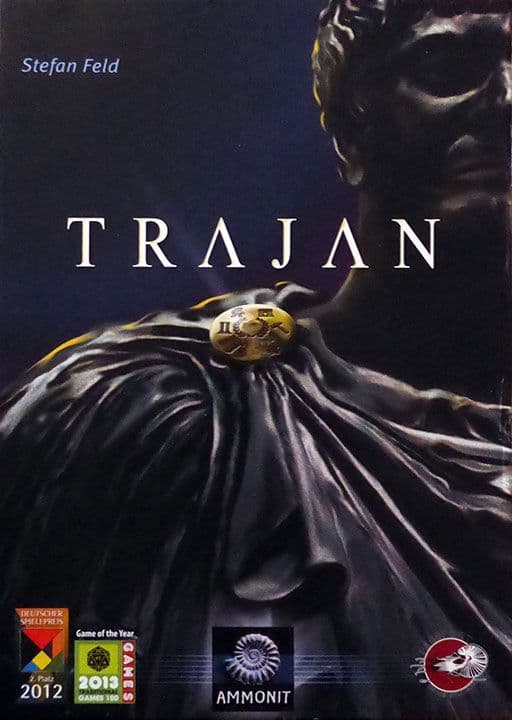
Trajan
2011Step into the bustling world of ancient Rome during the prosperous reign of Emperor Trajan. In this highly acclaimed strategy game, players assume the roles of influential Roman patricians, vying for power and prestige across the empire. Your goal is to amass the most victory points by excelling in various spheres of Roman life, from expanding the military's reach and constructing vital infrastructure to influencing the Senate and satisfying the demands of the populace. Every decision contributes to your legacy, and only the player who most effectively navigates the intricate political and economic landscape will earn the emperor's favor and emerge victorious.
The genius of Trajan lies in its celebrated and unique action selection mechanism, which is cleverly based on the ancient game of Mancala. Each player has a personal board with six pits, each containing colored action markers. On your turn, you select a pit, gather all the markers within it, and sow them one by one into the subsequent pits. The pit where you place your final marker dictates the action you perform for the turn. This system forces players into a deep and engaging puzzle, requiring them to think several steps ahead to not only execute their desired action but also to strategically position markers for future turns and to align colors to activate powerful bonus tiles.
Designed by the renowned Stefan Feld, Trajan is often lauded as a quintessential 'point salad' experience, where a multitude of paths lead to victory points. Players love the freedom to pursue different strategies each game, whether focusing on military conquest, becoming a dominant trader, or wielding political influence in the Senate. The core Mancala puzzle provides a constant and rewarding challenge, ensuring high replayability and a fresh experience with every session. This intricate blend of tactical maneuvering and long-term strategic planning makes Trajan a classic and beloved title for enthusiasts of heavy Eurogames who appreciate complex, interconnected systems and meaningful choices.
2-4 90m⚖️ 3.8

RANK #152
Forest Shuffle
2023In Forest Shuffle, players take on the role of naturalists competing to cultivate the most thriving and ecologically harmonious woodland. This strategic card game challenges you to build a personal forest tableau that scores the most points by the game's end. The core objective is to strategically play cards representing a diverse array of trees, animals, plants, and fungi. Each card contributes to your ecosystem's overall value, with different species scoring in unique ways based on their placement and proximity to others. Success requires careful planning and an understanding of the intricate relationships within your burgeoning forest, as the player with the most valuable collection of flora and fauna is declared the winner.
The gameplay is driven by a simple yet elegant set of actions. On your turn, you must choose between drawing two new cards—either from a central deck or a shared face-up market called the 'clearing'—or playing a single card into your forest. Playing a card requires paying a cost by discarding other cards from your hand into the clearing, creating a constant tension of hand management. The game's foundation is built upon tree cards. All other species are played by 'tucking' them under one of the four sides of an existing tree. A key mechanical twist is that most non-tree cards are split, depicting two different species. When you tuck a card, you must choose which half becomes active in your tableau, a decision that has cascading effects on your scoring potential and future plays. This multi-use card system is the strategic heart of the game, forcing difficult choices with every placement.
Forest Shuffle's appeal lies in its masterful blend of accessibility and strategic depth. While the turn structure is remarkably easy to grasp, the "complex web of considerations" that arises from the tucking and scoring mechanics provides a deeply engaging puzzle for experienced gamers. The interactions between cards create countless scoring combinations, ensuring high replayability as you discover new synergies with each game. The beautiful and detailed artwork brings the vibrant ecosystem to life, enhancing the thematic experience. Furthermore, the game's production is environmentally conscious as part of Lookout Games' "Greenline" series. The game ends when the third 'winter' card is revealed, adding a layer of suspense as the deck thins. It’s this combination of straightforward rules, rich decision-making, and a compelling natural theme that makes Forest Shuffle a standout title for a wide range of players.
2-5 60m⚖️ 2.4
RANK #170
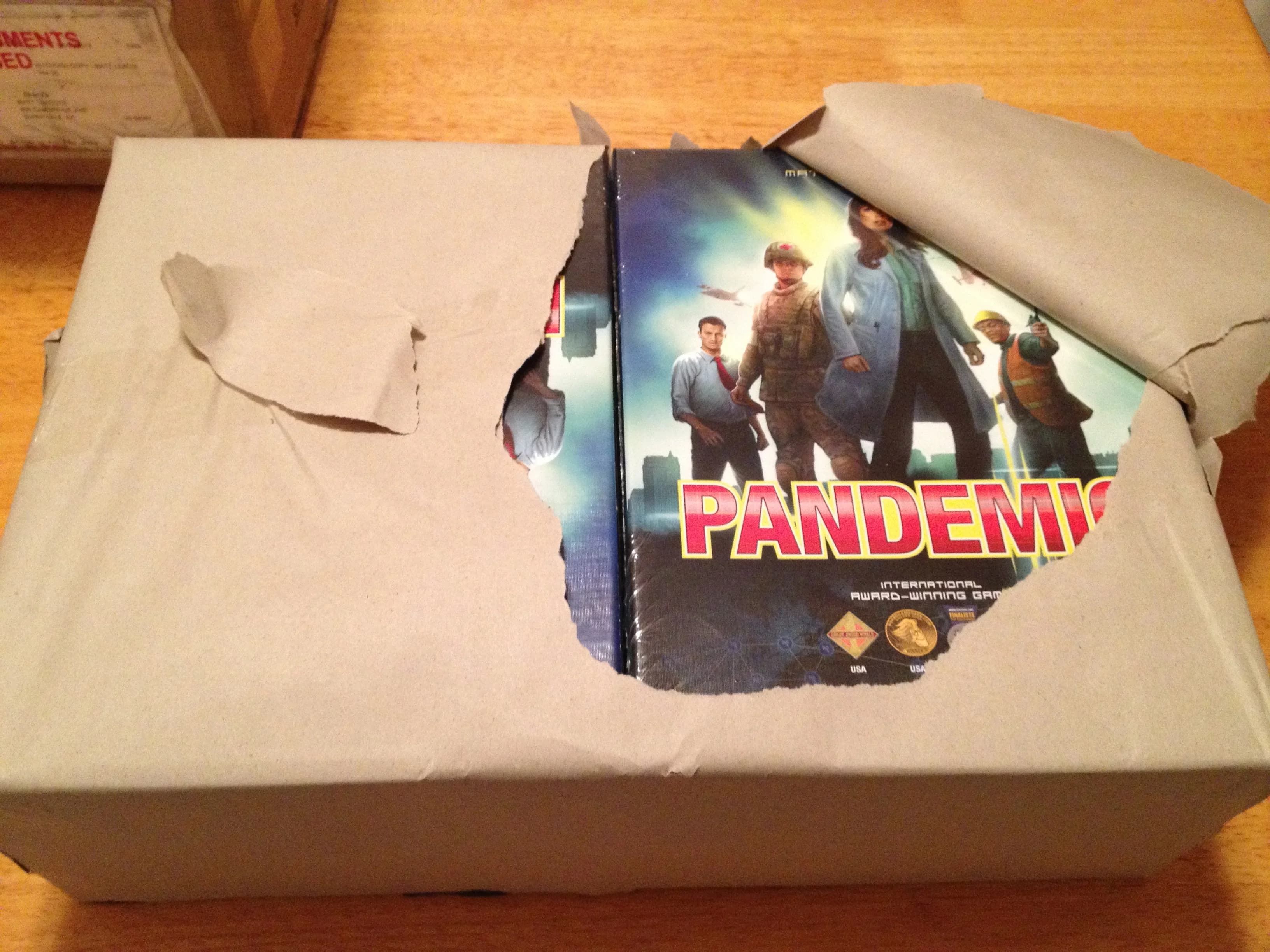
Pandemic
2008Pandemic presents a thrilling, high-stakes challenge where players must band together as a team of elite disease-control specialists. In this quintessential cooperative game, the world is on the brink of disaster, with four deadly diseases spreading rapidly across the globe. Players don't compete against each other; instead, they unite against the game's automated systems, which relentlessly propagate the infections. Each team member assumes a unique role, such as the resourceful Scientist or the indispensable Medic, bringing special abilities to the table that are critical for success. The ultimate objective is to discover the cures for all four plagues before time runs out, a pandemic spirals out of control, or the supply of medical resources is exhausted. It’s a race against the clock where teamwork and strategic foresight are the only tools standing between humanity and a global catastrophe.
The gameplay unfolds through a tense and structured sequence of turns. On their turn, a player can perform up to four actions, creating a wealth of strategic choices. These actions include moving between major world cities, treating localized infections by removing disease cubes, establishing vital research stations, sharing knowledge by trading city cards with teammates, or using a set of matching city cards to discover a cure. After taking actions, the player must draw two cards from the player deck, which contains the city cards needed for cures but also powerful one-time Event cards and the dreaded Epidemic cards. Drawing an Epidemic card is a pivotal moment that escalates the crisis: it accelerates the infection rate, triggers an immediate large-scale infection in a new city, and critically, reshuffles the previously infected cities back to the top of the infection deck. This 'intensify' mechanic ensures that hotspots are likely to be hit again, leading to potential chain-reaction outbreaks that spread disease to adjacent cities.
The enduring appeal of Pandemic lies in its brilliant fusion of accessible rules and profound strategic depth. It creates a palpable sense of mounting pressure, forcing players into constant communication and collaborative problem-solving. The game becomes a fascinating puzzle where the team must constantly weigh managing immediate threats—stamping out fires on the board to prevent outbreaks—against progressing toward the long-term victory condition of finding all four cures. This delicate balancing act is the heart of the game's tension. Because the difficulty can be scaled by altering the number of Epidemic cards in the deck, it offers a consistently engaging challenge for both newcomers and seasoned strategists. Its design has become a benchmark for cooperative games, celebrated for its ability to create a compelling narrative of global crisis and collective heroism with every session.
2-4 45m⚖️ 2.4