Thematic Games
Browse all Thematic board games in the Meeple Pulse database.
Styles
Themes
AbstractAdventureAncientAnimalsArtBusinessCard GameCo-operativeComic BookCooperativeCrimeEconomicEnvironmentalismExplorationFantasyHistoricalHorrorHumorIntrigueLiteraryMagicMarvelMedievalModernMuseumMysteryMythologyNatureNauticalPoliticalPress Your LuckSatireSci-FiSocial CommentarySocial InteractionSpaceSuperheroesThematicTravelWarWesternWord-Guessing
Mechanics
3D PlacementActingAction / DexterityAction DraftingAction Point AllowanceAction Point Allowance SystemAction Point SystemAction PointsAction ProgrammingAction QueueAction RetrievalAction SelectionAction/EventAlliancesAlternate ActivationApp-AssistedApp-DrivenArea ControlArea InfluenceArea MajorityArea Majority / InfluenceArea MovementArgumentationAsymmetricAsymmetric FactionsAsymmetric GameAsymmetric PowersAsymmetrical PowersAuction & BiddingAuction/BiddingAuctioningBag BuildingBettingBetting and BluffingBetting and WageringBetting and WagersBiddingBingoBlind BiddingBluffingCampaign / Battle Card DrivenCampaign / LegacyCampaign / Legacy GameCampaign / Mission-basedCampaign / ScenariosCampaign GameCampaign PlayCard DraftingCard DrawingCard DrivenCard Driven ActionCard Driven CombatCard Driven Dice AllocationCard Driven MovementCard ManagementCard PlayCard Play / Hand ManagementCard Play Conflict ResolutionCard SheddingCard-Driven MovementCharacter CreationCharacter ProgressionChit-Pull SystemCo-op PlayCo-operative GameCo-operative PlayCode-breakingCombat ResolutionCombo ChainCommand CardsCommodity SpeculationCommunication LimitsContract FulfillmentContractsCooperative GameCooperative GameplayCooperative PlayCooperative Trick-takingDebateDeck BuildingDeck ConstructionDeck, Bag, and Pool BuildingDeck-BuildingDeductionDexterityDice DraftingDice PlacementDice RollingDiplomatic InfluenceDraftingDynamic Battle SystemEnclosureEnd Game BonusesEngine BuildingEngine-BuildingEscape RoomEvent DrivenExplorationFarmingFlip and WriteFollowFollow ActionGrid CoverageGrid MovementHand ManagementHex-and-CounterHexagon GridHidden MovementHidden RolesI Cut You ChooseIncomeInfluence / Area MajorityLadder ClimbingLegacyLegacy ElementsLegacy GameLegacy SystemLimited CommunicationLine DrawingLine of SightMancalaMap MovementMarketMarket DraftingMarket ManipulationMarket MechanicMarket SpeculationMatchingMeasurement MovementMemoryMission ObjectivesModular BoardModular Board ConstructionMovement TemplatesMulti-Use CardsMulti-use CardsMultiple ScenariosMust FollowNarrative ChoiceNarrative Choice / ParagraphNegotiationNegotiation MechanicsNetwork & Route BuildingNetwork BuildingNetwork and Route BuildingOne vs ManyOne vs. ManyOpen DraftingPaper-and-PencilPartnershipsPattern BuildingPattern RecognitionPick-up and DeliverPlayer EliminationPlayer InteractionPlayer JudgePoint SaladPoint to Point MovementPolyominoesPush Your LuckPush-Your-LuckPuzzlePuzzle-LikePuzzle-SolvingRaceReal-TimeRecipe FulfillmentResource ManagementRole PlayingRole SelectionRoll / Spin and MoveRondelRoute BuildingRoute-BuildingRoute/Network BuildingSanity SystemScenario / Campaign PlayScenario / Mission / Campaign GameScenario / Mission FunctionSecret Unit DeploymentSemi-Cooperative GameSet CollectionSheddingSimulationSimultaneous ActionSimultaneous Action SelectionSimultaneous Hidden AllocationSocial DeductionSocial InteractionSolo / Solitaire GameSpace ExplorationStat Check / Skill CheckStock HoldingStorytellingStrategic PlanningTableau BuildingTactical Decision-MakingTake ThatTargeted CluesTeam PlayTeam-Based GameTeam-Based GuessingTeamworkTech TreesTech Trees / Tech TracksTechnology & Armament TracksTechnology TreeTension & Aggression TracksTile DraftingTile LayingTile PlacementTime TrackTime TravelTower DefenseTrack MovementTradingTrick-takingTug of WarTurn Order: PassTurn Order: Stat-BasedUnit PlacementVariable Phase OrderVariable Player PowersVariable Set-upVariable SetupVictory Point TracksVotingWord AssociationWord GameWord GuessingWord-GuessingWord-guessingWordplayWorker Placement
RANK #109
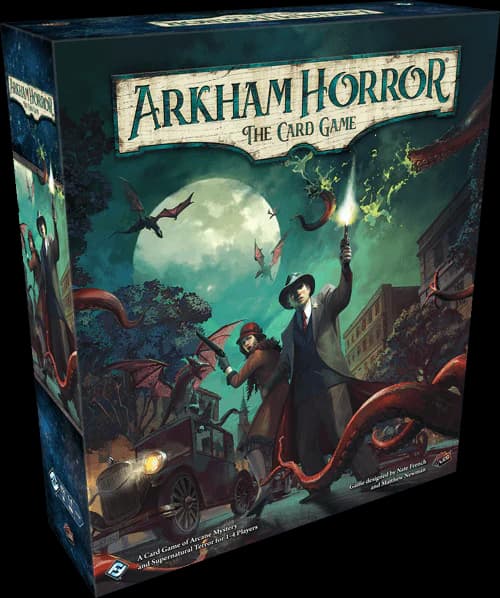
Arkham Horror: The Card Game is a cooperative Living Card Game that plunges one to four players into the eerie, Lovecraftian world of the 1920s. Assuming the roles of unique investigators in Arkham, Massachusetts, players work together to unravel sinister conspiracies, confront otherworldly beings, and prevent ancient evils from devouring the world. Each investigator comes with their own strengths, weaknesses, and customizable deck of cards representing their assets, skills, and resources. The goal is to successfully navigate a series of interconnected narrative scenarios, forming a larger campaign where choices and outcomes in one chapter have lasting consequences on the next. This Revised Core Set provides the definitive entry point, containing everything needed for a full group of four to begin their harrowing adventures right out of the box.
The gameplay unfolds over a series of rounds, each composed of four distinct phases that create a tense and challenging rhythm. In the Mythos Phase, the forces of darkness advance as doom accumulates and each player draws a random card from the encounter deck, introducing new enemies, treacherous obstacles, or reality-bending effects. During the Investigation Phase, players take turns performing up to three actions, which can include playing cards, moving between locations, battling monsters, or most importantly, investigating to find clues. These clues are essential for advancing the 'act' deck, which propels the story forward. The Enemy Phase sees any engaged monsters attack the investigators, while others hunt across the board. Finally, the Upkeep Phase allows players to refresh their assets, draw a new card, and gain a resource, preparing them for the horrors of the next round.
What makes Arkham Horror: The Card Game so compelling is its profound fusion of rich narrative storytelling with strategic card play and deck customization. The game is celebrated for its deep thematic immersion, where the unfolding story feels personal and impactful. Failure doesn't necessarily end the game, but it can scar an investigator or alter the campaign's trajectory, creating a truly dynamic and replayable experience. The challenge is significant, demanding careful cooperation and clever resource management to overcome the relentless odds. For players who crave a deep, story-driven hobby game they can expand over time, its campaign structure and character progression provide an unparalleled cooperative adventure into the heart of cosmic dread.
1-4 120m⚖️ 3.5

RANK #117
Robinson Crusoe: Adventures on a Cursed Island is a deeply thematic and challenging cooperative board game that casts one to four players as survivors of a shipwreck on a remote, hostile island. The primary objective is not simply to endure, but to achieve the specific goal laid out by one of the game's many distinct scenarios. These missions vary widely, from building a signal fire to escape, to lifting a terrible curse that haunts the land, or even raising a family in this new, wild home. Players must work together with precision and foresight to complete their task before the harsh environment, unforgiving events, or the relentless passage of time overwhelms them. A loss for one is a loss for all; if any character succumbs to the island's dangers, the entire team has failed. This shared fate creates a tense, high-stakes atmosphere where every decision carries significant weight for the group's survival.
At its core, the game is a sophisticated worker placement experience where players must carefully allocate their limited actions each round to manage the island's threats. The game progresses through a series of structured phases, starting with an Event card that introduces unforeseen challenges or story elements. After managing morale, players gather resources from their campsite before delving into the crucial Action phase. Here, players assign their action pawns to various tasks: exploring the island to reveal new terrain, gathering vital food and wood, hunting dangerous beasts, inventing new tools and items, or improving their camp with a shelter and palisade. A standout mechanic is the risk-reward system for actions; assigning two pawns guarantees success, but assigning only one requires a dice roll that can result in success, a minor consolation, a painful injury, or an unexpected adventure that further complicates their situation. The round concludes with a Weather phase determined by dice, followed by a Night phase where survivors must eat and rest, potentially suffering wounds if their camp is inadequate.
The enduring appeal of *Robinson Crusoe* lies in its masterful fusion of mechanics and narrative, creating one of the most immersive survival simulations in the board game world. Players don't just move pawns; they feel the desperation of a dwindling food supply, the triumph of a successful hunt, and the anxiety of an approaching storm. The game is celebrated for its difficulty and unforgiving nature, demanding sharp strategic planning, efficient resource management, and constant communication among players. The vast number of event cards, inventions, and scenarios ensures that no two games are ever the same, offering immense replayability. Furthermore, its robust design makes it an exceptional solo experience, allowing a single player to tackle the island's challenges alone. This combination of rich, emergent storytelling, brutal but fair challenges, and tight cooperative gameplay has cemented its status as a classic in the thematic game genre.
1-4 90m⚖️ N/A
RANK #218
Memoir '44
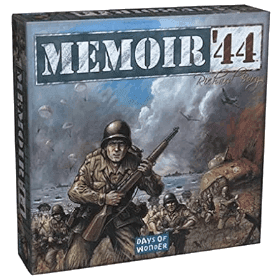
2004Memoir '44 invites players to step into the role of commanders during the pivotal moments of World War II. Created by esteemed designer Richard Borg, this historically-themed board game, published by Days of Wonder, offers a streamlined and accessible entry into the wargaming genre. Players recreate iconic battles from the D-Day landings and other significant engagements of the war. The primary goal is to be the first to achieve a predetermined number of Victory Medals. These medals are typically awarded for eliminating enemy units from the hexagonal battlefield, but specific scenarios often introduce unique objectives, such as capturing and holding key terrain features or breaking through enemy lines, which also grant these crucial tokens of success. The game successfully abstracts the complexities of war into a fast-paced and engaging system, making historical conflict both approachable and exciting.
At the heart of Memoir '44 lies the innovative "Commands & Colors" game system, which elegantly blends strategy with an element of chance. A player's turn is driven by the playing of a single Command Card from their hand. These cards dictate which units can be activated and, crucially, in which of the three distinct sections of the board—left flank, center, or right flank—those orders can be given. Once a card is played, the player orders their chosen units, which can be infantry, armor, or artillery, to move and/or engage in combat. Combat is resolved through a quick and intuitive dice roll, using custom dice whose symbols determine hits, force retreats, or result in misses. The terrain itself is a critical tactical element, with hills, forests, and towns providing defensive cover, impeding movement, and blocking line of sight, forcing commanders to carefully consider their positioning and approach. After all actions are completed, the player draws a new Command Card, concluding their turn and setting the stage for their opponent's response.
The enduring appeal of Memoir '44 stems from its masterful balance of tactical depth and straightforward gameplay. It serves as a perfect 'gateway' wargame, welcoming players who might be intimidated by more complex simulations while still offering satisfying strategic decisions for veteran gamers. The scenario-driven design provides immense replayability; with over a dozen historical scenarios in the base game alone, each with a unique map layout, force composition, and victory conditions, no two games feel quite the same. The combination of strategic card management—knowing when to play a powerful card or when to hold back—and the luck inherent in dice rolls and card draws creates a constant and engaging tension. It brilliantly captures the narrative and drama of a WWII skirmish, delivering a complete and compelling experience in about an hour, securing its place as a classic in the world of historical board gaming.
2-8 45m⚖️ 2.0
RANK #248
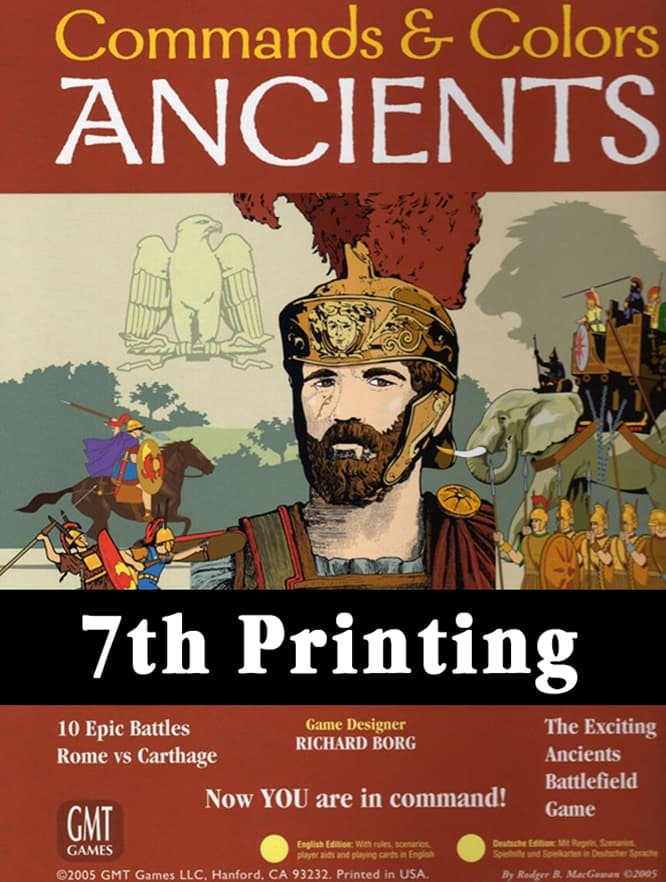
Commands & Colors: Ancients stands as a landmark title in historical wargaming, masterfully designed by the renowned Richard Borg. The game transports players back to the age of classical warfare, with the core set focusing on the titanic struggles between the Roman Republic and its rival, Carthage. It utilizes Borg's celebrated "Commands & Colors" system, which is lauded for its elegance and accessibility. The goal of the game is straightforward yet challenging: be the first player to accumulate a specific number of Victory Banners. These crucial banners are typically won by eliminating enemy units from the hexagonal battlefield or by achieving unique tactical objectives dictated by the chosen historical scenario, effectively capturing the key turning points and goals of ancient battles.
The gameplay is propelled by a unique card-driven mechanic that simulates the fog of war and the difficulties of command and control in large-scale battles. The board is divided into three distinct sections: a left flank, a center, and a right flank. On their turn, a player selects and plays a single Command Card from their hand. This card dictates which units can be ordered and in which of the three sectors they can operate, meaning a player may not always be able to activate the troops they most wish to. After issuing orders, units may move and then engage in combat. Battles are resolved quickly through the roll of custom dice, featuring symbols that determine hits, retreats, and other outcomes, ensuring a dynamic and fast-paced experience. Leaders are also a critical element, attaching to units to bolster their attacks and rally them from retreats.
What makes Commands & Colors: Ancients a beloved classic is its brilliant balance of strategic depth and streamlined play. It serves as a perfect entry point for newcomers to the wargaming hobby, offering intuitive rules that are easy to grasp. At the same time, it provides a deeply rewarding and nuanced strategic puzzle that continues to challenge veteran grognards. The Command Card system is the game's centerpiece, forcing players to adapt their strategies on the fly and make the most of the opportunities presented. This blend of luck and skill ensures that every game is a unique and memorable narrative of ancient conflict, cementing its reputation as a masterpiece of historical game design.
2 60m⚖️ 2.8
RANK #702
HeroQuest
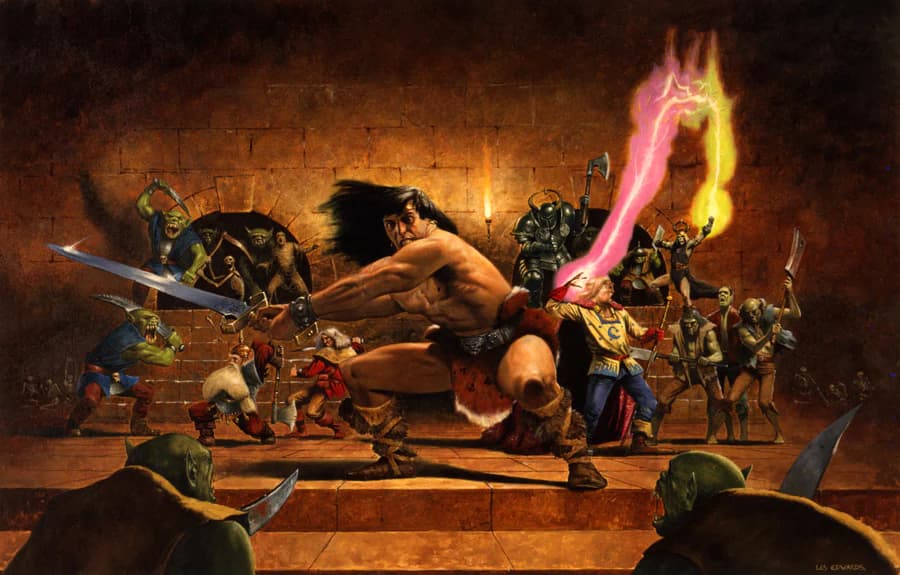
1989HeroQuest is the quintessential fantasy dungeon-crawling experience, famously designed to act as a bridge between traditional board games and the complex world of tabletop role-playing games. Originally released in 1989 through a collaboration between Milton Bradley and Games Workshop, the game places one player in the role of the malevolent gamemaster—known as Zargon in North America or Morcar in Europe—while the remaining players take on the roles of four legendary heroes: the Barbarian, the Dwarf, the Elf, and the Wizard. The primary goal is to successfully navigate a series of perilous underground labyrinths, completing specific mission objectives such as rescuing a captive, recovering a magical relic, or defeating a powerful boss, all while surviving the monsters and hazards lurking in the shadows.
The gameplay is driven by a scenario book that outlines distinct quests. Each hero's turn involves moving and performing an action. Movement is determined by rolling two standard six-sided dice, adding a layer of unpredictability to every trek through the dark corridors. Actions include attacking enemies, casting powerful spells from a limited deck, or searching the immediate area for treasure, secret passages, and deadly traps. A standout mechanic is the use of specialized combat dice, which feature skulls for hits and shields for defense, making combat resolution intuitive and visually immediate. The gamemaster controls the 'fog of war,' populating the board with detailed 3D furniture and plastic miniatures only when the heroes enter a room or line of sight, which maintains a constant atmosphere of mystery and tension.
The appeal of HeroQuest lies in its evocative presentation and its ability to deliver a rich, narrative-driven experience without overwhelming players with dense rulebooks. It popularized the 'dungeon crawl' genre for a mainstream audience, thanks in large part to its iconic components—including stone tombs, weapon racks, and treasure chests—that brought the game world to life on the tabletop. It strikes a perfect balance between simplicity and depth, offering enough tactical variety to keep seasoned players engaged while remaining accessible enough for younger audiences or newcomers. This enduring charm has cemented its status as a 'grail game' for collectors and a beloved classic that defined the fantasy board gaming landscape for a generation.
2-5 90m⚖️ 2.1

RANK #1,127
Conflict of Heroes: Awakening the Bear! – Russia 1941-42 plunges players into the brutal, tactical squad-level combat of the Eastern Front during the initial German invasion of the Soviet Union. As the inaugural title in the acclaimed Conflict of Heroes series, this game is celebrated for its historical fidelity and engaging system. Players take command of either German or Soviet forces, maneuvering individual infantry squads, machine gun teams, and tanks across modular, geomorphic map boards. The goal is not simply to eliminate the enemy but to achieve specific objectives outlined in one of the game's many scenarios, which range from desperate holding actions to bold armored assaults. Success hinges on careful planning, effective use of terrain for cover, and exploiting the unique strengths and weaknesses of your units in the face of a determined opponent.
The game's design revolutionized tactical wargaming by abandoning the rigid 'I Go, You Go' turn sequence for a far more dynamic and fluid system. Each unit begins a round with a full complement of Action Points (APs), typically seven. A player activates one unit at a time, spending its APs to perform actions like moving or firing. Once that unit's activation is complete, it is marked as 'spent' for the round, even if it has APs remaining. This forces difficult choices about which units to activate and when. Crucially, this system is highly interactive; an enemy unit that is fired upon may have the opportunity to spend its own APs to fire back immediately, creating a tense, reactive battlefield. This core engine is supplemented by Command Action Points (CAPs) and special action cards, which grant players powerful abilities and tactical flexibility to influence the tide of battle.
Awakening the Bear! is lauded for its remarkable ability to be both accessible to newcomers and deeply rewarding for veteran wargamers. Its programmed learning system, presented through a 'learn-as-you-play' rulebook, allows players to grasp the fundamentals and start their first scenario within minutes. Yet, beneath this simple entry point lies a game of profound tactical depth, where every decision about positioning, line of sight, and action economy is critical. The dynamic activation system creates a compelling narrative and a constant sense of engagement, eliminating downtime and keeping both players invested in every move. This elegant balance of accessibility, strategic depth, and historical flavor has cemented its status as a modern classic in the wargaming genre.
2-4 90m⚖️ 3.2
RANK #2,015
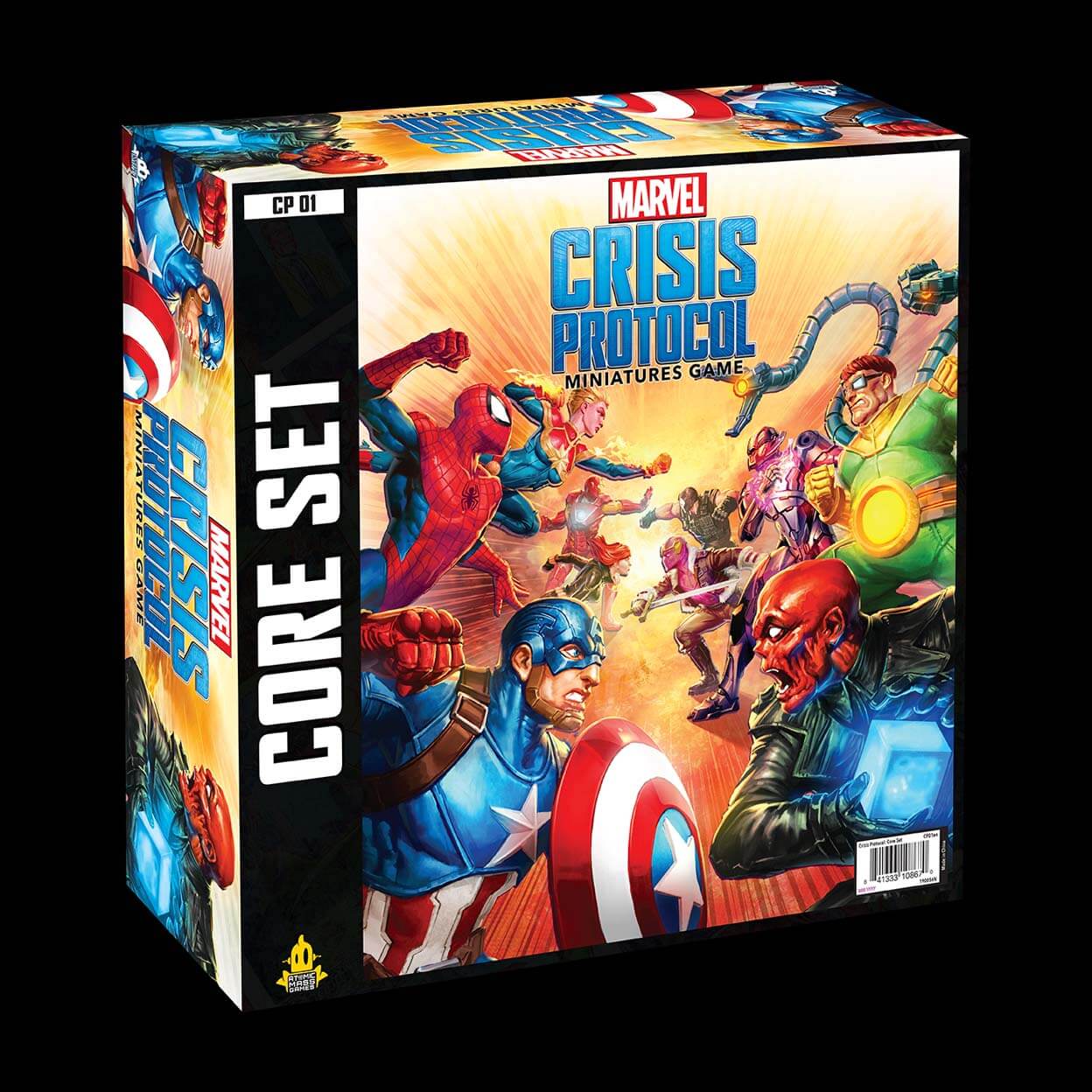
Marvel: Crisis Protocol is a dynamic tabletop miniatures game where two players assemble, paint, and battle with teams of iconic characters from the Marvel Universe. More than just a fight to the finish, the game is an objective-based contest where strategy and positioning are paramount. Players take on the role of leaders, guiding their hand-picked squad of heroes and villains through a unique crisis scenario. The ultimate goal is to be the first to accumulate 16 Victory Points by controlling key locations on the battlefield and securing valuable assets, all while unleashing spectacular superpowers. Each game presents a new tactical puzzle, demanding players to adapt their strategy to the ever-changing state of the conflict and the unique combination of objectives in play.
Gameplay is defined by its innovative roster-building and scenario-generation systems. Before the game, each player creates a roster of ten characters, from which they will select their squad for the specific mission. The mission itself is determined by combining a "Secure" Crisis card, which dictates objective zones to control, with an "Extraction" Crisis card, which involves characters grabbing and holding objective tokens. This combination sets a "Threat Level" that limits which characters a player can field, ensuring balanced and varied matchups. During a round, players alternate activating one character, who can perform two actions like moving, attacking, or using a special ability. A core mechanic is the "Power" resource. Characters gain Power when they take damage, creating a thrilling ebb and flow where a hero on the ropes can power up for a devastating counter-attack, spending that energy to unleash their most famous and powerful abilities.
The game's immense appeal lies in its fusion of accessible rules with deep tactical gameplay, making it an excellent gateway into the miniatures hobby. While the core mechanics are straightforward, mastering character synergies, managing the Power economy, and utilizing the highly interactive terrain provides a rich strategic experience. The environment itself is a weapon; characters with superhuman strength can hurl cars, dumpsters, and newsstands at their opponents, creating cinematic moments straight from the comics. The high-quality miniatures are a hobbyist's delight, offering fantastic canvases for painting. Above all, Crisis Protocol excels at capturing the feel of a superhero battle, delivering a thematic, action-packed experience that is visually stunning and endlessly replayable thanks to its modular scenario system and ever-expanding roster of characters.
2 90m⚖️ 2.9
RANK #5,532
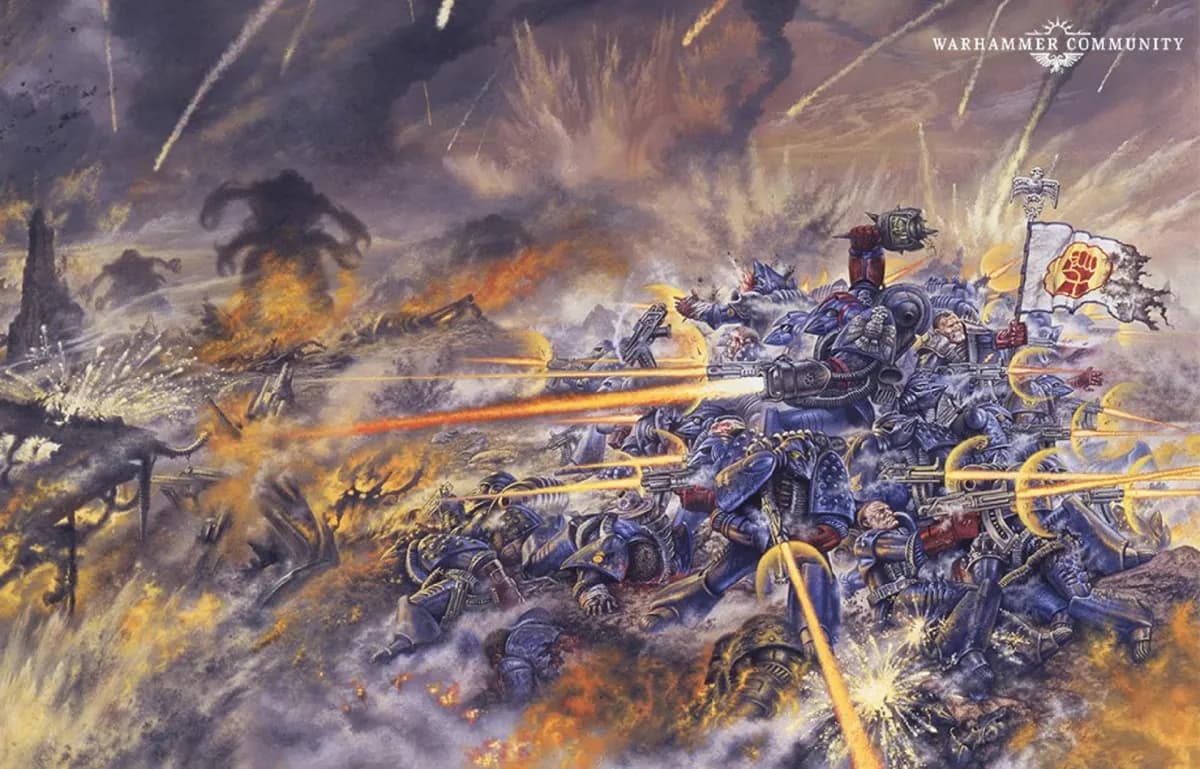
Warhammer 40,000: Rogue Trader is the foundational text that birthed the grim dark future, launching a tabletop phenomenon in 1987. Unlike the grand-scale army battles of its successors, this first edition is a unique hybrid, blending the tactical depth of a miniatures wargame with the narrative freedom of a role-playing game. The game is designed for skirmish-level encounters, with each player controlling a small handful of detailed miniatures. A key aspect of its design is the inclusion of a Game Master (GM), who orchestrates the scenarios, controls non-player forces, and serves as the ultimate arbiter of the complex rules. Consequently, the goal of the game is fluid and scenario-dependent. Victory is not always about simple annihilation; it can involve completing specific objectives like recovering a lost artifact, assassinating a high-value target, or surviving against overwhelming odds, all within a narrative framework crafted by the GM.
Gameplay in Rogue Trader is a detailed and crunchy affair, unfolding over a structured sequence of turns. Players alternate activating their forces, moving through distinct phases for movement, ranged combat, psychic powers, and brutal hand-to-hand combat. A character's effectiveness is determined by a suite of core statistics—such as Weapon Skill, Ballistic Skill, Strength, and Toughness—that influence dice rolls for nearly every action. The system employs a full range of polyhedral dice (from D4s to D20s) to resolve the outcomes of shooting and melee, adding a layer of granular detail to the conflict. A standout mechanic is the 'Reserve Move', which allows units a second, shorter movement if they forgo other actions, adding a tactical wrinkle to positioning. The GM's role is central, as the core rulebook encourages them to create bespoke missions using random generation tables, rather than providing a set list of pre-defined scenarios.
The enduring legacy of Rogue Trader lies in its ambitious fusion of two distinct gaming genres. It provided wargamers with a system where individual models could gain experience, improve their stats, and develop unique skills over the course of a campaign, effectively blurring the line between a soldier and a character. This emphasis on narrative progression and character development was revolutionary for a miniatures game of its time. The freedom granted to the Game Master to build worlds, create compelling stories, and challenge players with unique situations fosters an incredibly rich and personalized gaming experience. While its dense, detailed ruleset presents a steep learning curve and is considered highly complex, it is this very depth that allows for nuanced tactical decisions and memorable, story-driven moments on the battlefield. It's a game that prioritizes immersive, thematic storytelling over streamlined, competitive play.
2 180m⚖️ 4.3
BoxNo Cover Art
RANK #9,392
Immerse yourself in the high-stakes, neon-soaked street warfare of Night City with Cyberpunk Red: Combat Zone. This tactical skirmish miniatures game puts you in command of a hardened gang fighting for survival, reputation, and control. Whether you're playing a standalone scenario or embarking on a gritty linked campaign, your goal is to outmaneuver and outgun your rivals to achieve specific objectives. Players assemble their crews using a points-based system, customizing each member with a deadly arsenal of weapons, gear, and cyberware. In the campaign mode, success brings not just victory but 'street cred,' allowing your characters to evolve with enhanced abilities and more powerful equipment, creating a persistent and developing narrative for your gang's rise to power on the mean streets.
The gameplay is driven by the innovative and dynamic "[RE]action" system, which ensures players are constantly engaged. Each character is assigned a set of color-coded action tokens—green, yellow, and red—which dictate both their movement capabilities and the potency of their actions. Green tokens allow for the use of a powerful d12, yellow a d10, and red a meager d6. During a turn, a player activates one unit, spending these tokens to move, shoot, or engage in brutal melee. All conflicts are resolved through opposed dice rolls, creating a tense, unpredictable back-and-forth. The damage system is uniquely integrated into this core mechanic; when a character is wounded, one of their action tokens is downgraded to red, diminishing their combat effectiveness and pushing them closer to being taken out of the fight entirely.
Cyberpunk Red: Combat Zone stands out by completely eliminating player downtime and capturing the chaotic, reactive nature of a firefight. The centerpiece of this design is the ability to perform a "[RE]action." Immediately after taking a wound, a character with remaining action tokens can retaliate with a counter-attack or scramble for cover. This ensures that the battlefield is constantly shifting and that no plan is ever truly safe, as a single shot can trigger a cascade of reactive moves. This constant threat and opportunity keep both players on the edge of their seats, making every decision critical. The game's appeal lies in its perfect fusion of deep tactical gameplay, strong thematic integration with the Cyberpunk universe, and a core mechanic that is as brutal and unforgiving as Night City itself.
2-4 60m⚖️ 3.0

RANK #12,006
Trench Crusade
2025Trench Crusade plunges players into a horrifying alternate history where the divine fervor of the First Crusade inadvertently tore open a gateway to Hell. Now, centuries later in the year 1914, the holy war has devolved into a perpetual, grinding conflict of attrition fought in muddy, blood-soaked trenches. In this 32mm skirmish-level wargame, you command a small, desperate warband of either holy crusaders or demonic heretics. The goal is not simply to annihilate the enemy but to achieve specific objectives in narrative-driven scenarios. Survival is paramount, as the game is designed around a robust campaign system where your fighters grow, suffer permanent injuries, and forge a unique story across a series of interconnected battles on claustrophobic battlefields.
The gameplay of Trench Crusade is designed to be both dynamic and tense. Played on a compact 3'x3' or 4'x4' board, the game utilizes an alternating activation system, where players take turns activating a single model. This ensures constant engagement and tactical back-and-forth, eliminating downtime. At the heart of the game is a straightforward 2d6 dice system; most actions require a roll of 7 or higher to succeed. This core mechanic is elegantly modified by 'Bonus Dice' and 'Penalty Dice', which have players roll extra dice and select the two highest or lowest results, respectively. A key feature is the risk-reward tension of 'Risky' actions—powerful maneuvers that, if failed, immediately end that model's activation. Furthermore, the game eschews traditional hit points for a more narrative 'Blood Marker' system, where wounds make a model more vulnerable to future attacks and tactical penalties.
The unique appeal of Trench Crusade lies in its masterful fusion of a rich, grimdark atmosphere with accessible yet deep gameplay. The project is a collaboration of industry veterans, including designer Tuomas Pirinen, celebrated for his work on the cult classic *Mordheim*, and visionary artist Mike Franchina, whose style defines the game's brutal aesthetic. While designed for one-off skirmishes, the game truly shines in its campaign mode. Here, players become deeply invested in their warbands, tracking experience, acquiring new wargear, and dealing with the lasting consequences of battle. This focus on narrative progression and emergent storytelling, combined with rules that are easy to grasp but offer significant strategic depth, creates a compelling experience for wargamers who crave a world they can truly inhabit and shape through their victories and defeats.
2-8 90m⚖️ 2.8
BoxNo Cover Art
RANK #21,063
Relic Knights: Darkspace Calamity brings the explosive, over-the-top energy of Japanese mecha anime to the tabletop in a tactical miniatures skirmish game. Players are thrust into a vibrant, dying galaxy, where they assume command of a powerful and heroic Relic Knight, their loyal and symbiotic Cypher companion, and a unique cadre of supporting units. Each force belongs to one of several distinct factions, all battling for control and survival. The goal extends beyond simple annihilation of the enemy; victory is achieved by completing dynamic, scenario-specific objectives that shape the narrative of the conflict. The game fully embraces its aesthetic inspirations, creating an immersive experience where every battle feels like a climactic episode of an epic space opera.
The game's most defining feature is its innovative, diceless combat system which emphasizes player skill and strategic planning over random chance. Instead of dice, players draw from a customized "Esper Deck." These cards serve as the central resource, used to power every action from basic movement and attacks to reality-bending special abilities and crucial defensive countermeasures. This creates a deep and engaging loop of hand management and resource allocation. A player's turn involves activating units one by one, carefully spending Esper to execute actions, and maneuvering forces across the battlefield to outwit their opponent. This system gives players a profound sense of control, as success hinges on cleverly managing the cards they are dealt.
What makes Relic Knights a beloved and unique experience is this seamless blend of fast-paced, cinematic action with deep strategic gameplay. The Esper card system is a significant draw for players who prefer tactical decision-making to the whims of fate, rewarding foresight and clever combinations. The game is also a delight for hobbyists, featuring a stunning line of highly-detailed, dynamic miniatures that are a joy to assemble, paint, and bring to the battlefield. This powerful combination of a unique, low-randomness ruleset, a compelling sci-fi anime setting, and beautiful components ensures that Relic Knights: Darkspace Calamity provides a memorable and deeply engaging tactical challenge.
3-7 240m⚖️ 3.8