Resource Management Games
Browse all Resource Management board games in the Meeple Pulse database.
Styles
AbstractAbstract StrategyAdventureAnimalsCard GameChildren's GameCivilizationCo-operativeComic Book / StripCompetitiveDiceEconomicEducationalEuroExpansion for Base-gameFamilyFan ExpansionFantasyFightingHistoricalHorrorIndustry / ManufacturingMedievalMedium HeavyMiniaturesPartyParty GamePrint & PlayPuzzle-LikeRacingReal-timeSpace ExplorationSportsStrategyTerritory BuildingThematicTransportationWargame
Themes
AbstractAdventureAncientAnimalsArtBusinessCard GameCo-operativeComic BookCooperativeCrimeEconomicEnvironmentalismExplorationFantasyFightingHistoricalHorrorHumorIntrigueLiteraryMagicMarvelMedievalModernMuseumMysteryMythologyNatureNauticalParty GamePoliticalPress Your LuckRacingSatireSci-FiSocial CommentarySocial InteractionSpaceSuperheroesThematicTravelWarWesternWord-Guessing
Mechanics
3D PlacementActingAction / DexterityAction DraftingAction Point AllowanceAction Point Allowance SystemAction Point SystemAction PointsAction ProgrammingAction QueueAction RetrievalAction SelectionAction/EventAlliancesAlternate ActivationApp-AssistedApp-DrivenArea ControlArea InfluenceArea MajorityArea Majority / InfluenceArea MovementArgumentationAsymmetricAsymmetric FactionsAsymmetric GameAsymmetric PowersAsymmetrical PowersAuction & BiddingAuction/BiddingAuctioningBag BuildingBettingBetting and BluffingBetting and WageringBetting and WagersBiddingBingoBlind BiddingBluffingCampaign / Battle Card DrivenCampaign / LegacyCampaign / Legacy GameCampaign / Mission-basedCampaign / ScenariosCampaign GameCampaign PlayCard DraftingCard DrawingCard DrivenCard Driven ActionCard Driven CombatCard Driven Dice AllocationCard Driven MovementCard ManagementCard PlayCard Play / Hand ManagementCard Play Conflict ResolutionCard SheddingCard-Driven MovementCharacter CreationCharacter ProgressionChit-Pull SystemCo-op PlayCo-operative GameCo-operative PlayCode-breakingCombat ResolutionCombo ChainCommand CardsCommodity SpeculationCommunication LimitsContract FulfillmentContractsCooperative GameCooperative GameplayCooperative PlayCooperative Trick-takingDebateDeck BuildingDeck ConstructionDeck, Bag, and Pool BuildingDeck-BuildingDeductionDexterityDice DraftingDice PlacementDice RollingDiplomatic InfluenceDraftingDynamic Battle SystemEnclosureEnd Game BonusesEngine BuildingEngine-BuildingEscape RoomEvent DrivenExplorationFarmingFlip and WriteFollowFollow ActionGrid CoverageGrid MovementHand ManagementHex-and-CounterHexagon GridHidden MovementHidden RolesI Cut You ChooseIncomeInfluence / Area MajorityLadder ClimbingLegacyLegacy ElementsLegacy GameLegacy SystemLimited CommunicationLine DrawingLine of SightMancalaMap AdditionMap MovementMarketMarket DraftingMarket ManipulationMarket MechanicMarket SpeculationMatchingMeasurement MovementMemoryMission ObjectivesModular BoardModular Board ConstructionMove Through DeckMovement PointsMovement TemplatesMulti-Use CardsMulti-use CardsMultiple ScenariosMust FollowNarrative ChoiceNarrative Choice / ParagraphNegotiationNegotiation MechanicsNetwork & Route BuildingNetwork BuildingNetwork and Route BuildingOne vs ManyOne vs. ManyOpen DraftingOwnershipPaper-and-PencilPartnershipsPattern BuildingPattern RecognitionPick-up and DeliverPlayer EliminationPlayer InteractionPlayer JudgePoint SaladPoint to Point MovementPolyominoesPush Your LuckPush-Your-LuckPuzzlePuzzle-LikePuzzle-SolvingRaceReal-TimeRecipe FulfillmentResource ManagementRole PlayingRole SelectionRoll / Spin and MoveRondelRoute BuildingRoute-BuildingRoute/Network BuildingSanity SystemScenario / Campaign PlayScenario / Mission / Campaign GameScenario / Mission FunctionSecret Unit DeploymentSemi-Cooperative GameSet CollectionSheddingSimulationSimultaneous ActionSimultaneous Action SelectionSimultaneous Hidden AllocationSocial DeductionSocial InteractionSolo / Solitaire GameSpace ExplorationStat Check / Skill CheckStat Check ResolutionStock HoldingStorytellingStrategic PlanningTableau BuildingTactical Decision-MakingTake ThatTargeted CluesTeam PlayTeam-Based GameTeam-Based GuessingTeamworkTech TreesTech Trees / Tech TracksTechnology & Armament TracksTechnology TreeTension & Aggression TracksTile DraftingTile LayingTile PlacementTime TrackTime TravelTower DefenseTrack MovementTradingTrick-takingTug of WarTurn Order: PassTurn Order: Stat-BasedUnit PlacementVariable Phase OrderVariable Player PowersVariable Set-upVariable SetupVictory Point TracksVotingWord AssociationWord GameWord GuessingWord-GuessingWord-guessingWordplayWorker Placement
RANK #187
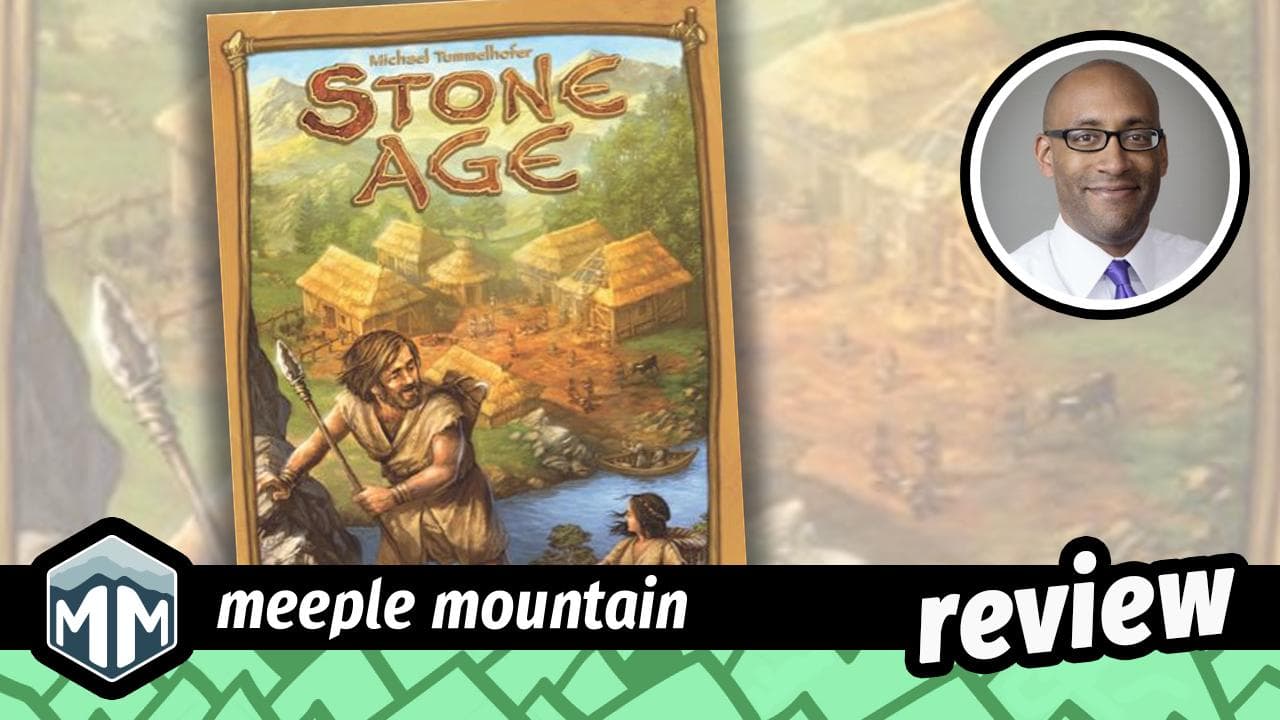
Stone Age
2008Stone Age invites players to the dawn of civilization, casting them as leaders of a burgeoning tribe. This quintessential "gateway" game, first released in 2008, serves as a perfect introduction to the worker placement genre. Your goal is to guide your people to prosperity by strategically gathering resources, developing new technologies, and expanding your village. The ultimate path to victory lies in accumulating the most victory points, which are earned primarily by constructing useful buildings and acquiring valuable civilization cards. These cards reward players for achieving specific long-term goals, such as building a diverse village or growing a large tribe. The player who best balances the immediate needs of their people with the foresight required for a thriving society will be crowned the winner.
The core gameplay is structured around a simple, repeating cycle: placing workers, taking actions, and feeding your tribe. In turn order, players assign their tribe members to various action spaces on the board. These locations allow for hunting, gathering resources (wood, clay, stone, gold), expanding your family, improving agriculture, or crafting helpful tools. Competition for limited spots creates engaging player interaction. Once all workers are placed, their actions are resolved. Resource gathering introduces a clever dice-rolling mechanism: the number of workers sent determines the number of dice you roll. The total is then divided by a specific value for each resource type to determine your yield, creating a fun risk-reward system. Finally, each round concludes with the critical feeding phase, where every tribe member requires food, pushing players to maintain a sustainable food supply or risk penalties.
The enduring appeal of Stone Age lies in its masterful blend of accessibility and satisfying strategic depth. Its rules are easy to grasp, making it an excellent choice for families and those new to the hobby. Yet, the game offers a wealth of meaningful choices that keep experienced players engaged. Do you prioritize increasing your population for more actions, or focus on agriculture to ease the constant demand for food? Do you pursue immediate points from buildings or invest in civilization cards for a big payoff at the end? The element of luck from the dice rolls adds just enough unpredictability to keep the game exciting and prevent it from becoming a purely deterministic puzzle. This elegant design, combined with Michael Menzel's charming and thematic artwork, creates a warm, inviting, and highly replayable experience that remains a staple in the board gaming world.
2-4 75m⚖️ 2.4
BoxNo Cover Art
RANK #219
In The Red Cathedral, players take on the roles of construction teams building Saint Basil's Cathedral in Moscow. Each player has a unique goal: to gain the favor of the Tsar by building and ornamenting sections of the church. Gameplay involves gathering resources, satisfying requirements to build or ornament a section, and other point-scoring opportunities. The game features a central rondel where players choose one of five dice to move based on what die face is showing, allowing for strategic planning and potential for plans to be thwarted by opponents.
1-4 30m⚖️ 2.5

RANK #224
Space Base
2018Space Base is a game where players roll two dice and can either assign the total to one number or assign each die to a number individually. The best part of the game is that once you buy better ships for each number, the current ship flips to the top side of your board and you get bonuses for that number when other people are rolling. This keeps players engaged throughout the game, whether it's their turn or someone else's. The game also has a unique expansion that allows up to 7 players to play together. Space Base is a fantastic game that is easy to teach and accessible to new players.
2-7 45m⚖️ 3.0
RANK #242
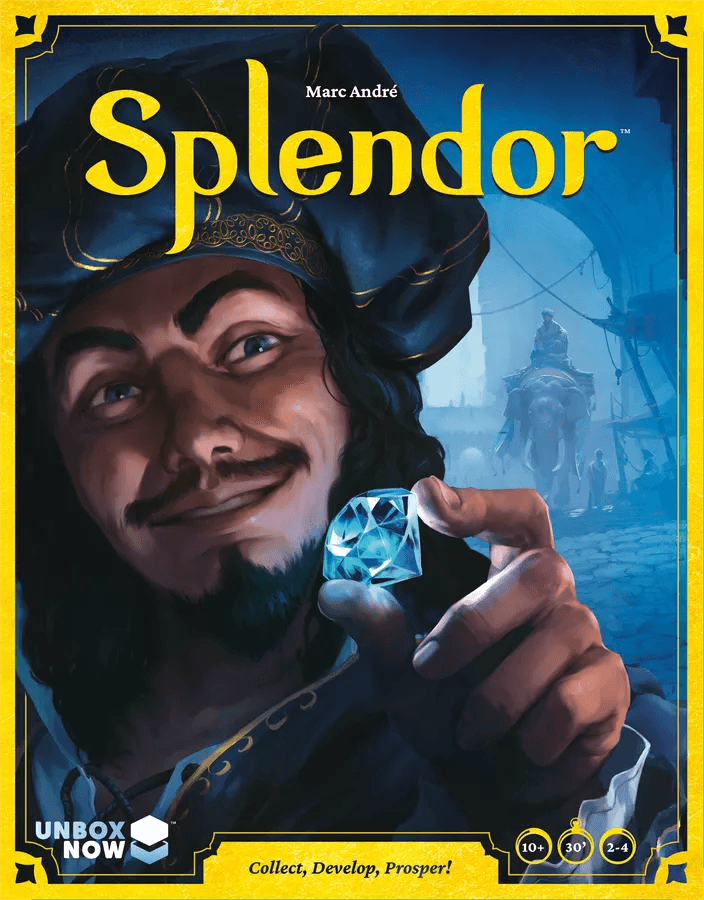
Splendor
2014In Splendor, players assume the roles of ambitious gem merchants during the Renaissance, all vying to become the most influential and prestigious trader in the land. The ultimate goal is to be the first to accumulate 15 prestige points. You will strategically invest your resources to acquire gem mines, develop better methods of transportation, and commission artisans to transform raw jewels into magnificent works of art. These investments not only build your wealth but also attract the attention of powerful nobles, whose patronage is crucial for securing victory and establishing your legacy as a master merchant.
The gameplay is celebrated for its streamlined and intuitive turn structure. Each turn, a player chooses just one of a few simple actions: take gem tokens that act as currency, reserve a valuable development card for future acquisition, or purchase a development card from the central display. These cards are the core of the game's compelling engine-building mechanic. Every card you purchase grants a permanent gem bonus, making subsequent purchases cheaper and creating a satisfying sense of escalating power. As you collect specific combinations of card bonuses, you automatically earn the favor of noble patrons, who grant substantial prestige points. The game ends once a player reaches 15 points, and at the end of that round, the merchant with the highest score wins.
Splendor's enduring popularity lies in its perfect balance of accessibility and strategic depth, making it an ideal 'gateway' game for those new to the hobby. The high-quality, weighty gem tokens provide a wonderfully tactile experience that elevates the gameplay. While the rules are easy to learn, the game presents meaningful choices on every turn. Players must constantly weigh the benefits of expanding their economic engine against the immediate need to score points. This elegant tension, combined with a brisk playing time and significant replay value, has solidified Splendor's reputation as a modern classic for families and strategy enthusiasts alike.
2-4 30m⚖️ 1.8
RANK #243
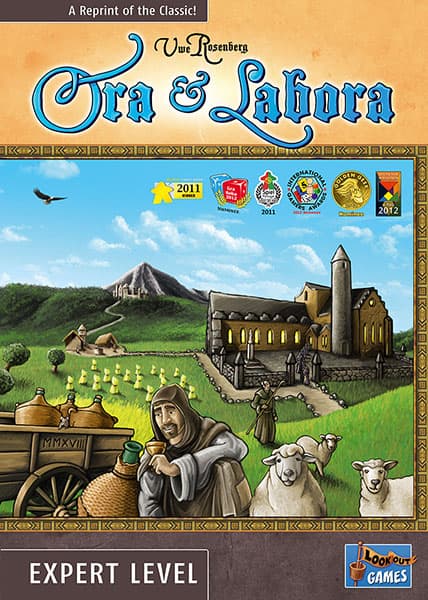
Ora et Labora
2011In *Ora et Labora*, Latin for 'Pray and Work', players step into the shoes of a monastic leader during the medieval era, tasked with expanding a small priory into a thriving and prosperous domain. Designed by the acclaimed Uwe Rosenberg, this game challenges players to skillfully manage resources, land, and labor to construct a powerful economic engine. The ultimate goal is to accumulate the most wealth and victory points by building an impressive landscape of buildings and settlements, proving your monastery to be the most industrious and prestigious. The game is a heavyweight strategic experience, demanding careful planning and foresight from its very first turn.
The gameplay revolves around a sophisticated blend of worker placement and resource management, elevated by several unique mechanical twists. Each player commands three clergymen who are placed on building cards to activate production or conversion actions. A key strategic consideration is that once a worker is placed, they cannot be used again until all three have been deployed. Players can also pay opponents to use their buildings, creating a layer of player interaction. A central feature is the innovative production wheel, which dictates the availability of basic resources each round. Instead of simply accumulating tokens, players must time their actions to gather goods when the wheel shows a high supply. These raw materials are then funneled through an intricate network of buildings to create refined goods like books, relics, and spirits, showcasing a deeply satisfying engine-building core.
*Ora et Labora* is celebrated by strategy gamers for its immense depth and high replayability. The spatial puzzle of arranging buildings on your personal landscape is a critical and engaging challenge; placement matters not only for optimizing your production chains but also for maximizing the scoring of settlements. The game further enhances its longevity by including two distinct scenarios, France and Ireland, which feature different buildings and resources, demanding new strategies with each playthrough. This combination of deep engine-building, a clever resource system, and a demanding spatial element makes *Ora et Labora* a classic and rewarding experience for those who relish complex, 'big box' eurogames.
1-4 120m⚖️ 4.3

RANK #246
Village
2011In Village, you are entrusted with the fate of a multi-generational family living in a medieval hamlet. Your primary objective is to guide your family members through their lives, helping them achieve greatness and earn the most prestige points. This is not just a game of prosperity but also of legacy. As your family members work in various professions—from farming and crafting to politics and religion—they contribute to your growing reputation. The game cleverly weaves the narrative of life and death into its core, where the ultimate goal is to have your most accomplished family members immortalized in the village chronicle, ensuring their story, and your victory, is remembered for ages.
The gameplay combines worker placement with a unique action selection mechanism. Each round begins with various action spaces on the board being populated with influence cubes of different colors. On your turn, you'll select a cube from a space, which then allows you to perform the associated action. These actions are diverse, allowing you to harvest grain, produce goods at a workshop, sell wares at the market, travel to distant lands, or gain influence in the church or village council. A standout mechanic is the treatment of time as a finite resource. Many actions cost time, which is tracked on your personal farm board. When your time marker completes a full circle, one of your oldest family members passes away. How and where they die is crucial; a life well-lived could mean a prestigious entry in the chronicle, while an uncelebrated death leads to an unmarked grave. The game concludes when either the chronicle or the graveyard fills, triggering the final scoring.
Village has earned critical acclaim, including the prestigious 2012 Kennerspiel des Jahres award, for its brilliant synthesis of theme and mechanics. Players love the poignant and surprisingly personal experience of managing a family lineage. The ever-present ticking clock and the inevitability of death add a layer of thematic depth rarely seen in Euro-style games. It forces players to make tough, long-term decisions about which family members to specialize and when to let them go for the sake of the family's legacy. This creates a compelling narrative arc within a strategically robust framework, offering a deeply engaging and memorable experience that goes beyond simple point optimization. It’s a game where every choice matters, not just for the score, but for the story you create for your family.
2-4 90m⚖️ 3.1
RANK #269
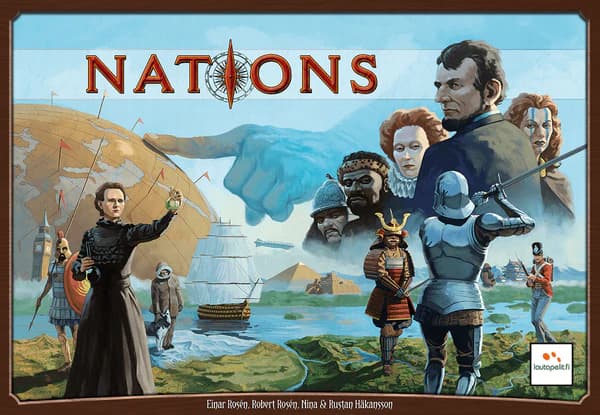
Nations
2013In Nations, you take the helm of a burgeoning civilization, guiding it from the annals of antiquity to the cusp of the First World War. Your ultimate objective is not conquest, but the creation of a lasting legacy, measured in victory points earned through cultural achievements, magnificent wonders, valuable colonies, and historical renown. Players must skillfully navigate the challenges of history to build the most prestigious and prosperous nation. The game is an epic race to accumulate the most 'books', which symbolize your civilization's accumulated knowledge and cultural impact, proving your dominance through wisdom and development rather than brute force.
The game unfolds over eight rounds, divided into four historical ages: Antiquity, Medieval, Renaissance, and Industrial. Each round is a meticulously structured sequence of phases. Players begin by preparing for the challenges ahead, revealing new progress cards and a pivotal event card. The heart of the game is the action phase, where players take turns performing one action at a time, with the player possessing the strongest military going first. Actions are varied and strategic: you might purchase a new technology or building from a shared card row, deploy your workers to activate structures for resources, or assign an architect to the monumental task of constructing a world wonder. Competition is indirect but fierce, as players vie for military superiority to set the turn order and manage the effects of historical events, all while managing resources and keeping their populace stable.
Nations is celebrated for offering a profound and satisfying civilization-building experience within a streamlined and manageable playtime. It captures the grand sweep of history without the complex combat systems or map-based conflicts common to the genre, instead focusing on a tense, indirect struggle for supremacy. Its unique appeal stems from the delicate balancing act required to succeed. You must constantly weigh the immediate needs of your people—food and stability—against long-term investments in military, culture, and economic infrastructure. The variable card market and unpredictable events ensure that each game presents a new strategic puzzle, making Nations a highly replayable and engaging journey through time for strategy enthusiasts.
1-5 120m⚖️ 3.4

RANK #273
La Granja
2014Set on the picturesque island of Mallorca, 'La Granja' invites players to take the reins of their very own small farm estates located near the tranquil Alpich pond, just outside the quaint village of Esporles. As ambitious agricultural entrepreneurs, your primary objective over the course of six calculated rounds is to expand your property, cultivate lucrative crops like olives, grain, and grapes, and successfully breed a thriving population of pigs. The ultimate goal is to process these raw materials and deliver your valuable commodities directly to the local village market. By completing these deliveries and managing your rural enterprise more efficiently than your rivals, you will amass Victory Points and claim the prestigious, titular rank of 'La Granja' for your sprawling estate.
Often described by enthusiasts as a brilliant 'Eurogame potpourri,' the design masterfully weaves together several beloved mechanics into a highly cohesive and challenging experience. The standout feature is its ingenious implementation of multi-use cards. Every card drawn can be tucked under one of the four edges of your personal player board, fundamentally changing its function. Slotted on the left, it expands your fields; on the right, it upgrades farm extensions for pig capacity and income; at the top, it becomes a market barrow contract; and at the bottom, it acts as a specialized helper providing powerful ongoing abilities. This card-driven engine building is perfectly complemented by a communal dice drafting system. Each round, a shared pool of dice is rolled, and players must tactically draft them to execute core actions like upgrading resources or gaining coins, adding a beautifully calculated layer of unpredictability to the core loop.
Beyond the personal farm boards, the central village market creates a fierce, competitive arena for area control and influence. During the critical Transportation Phase, players secretly choose donkey tiles to dictate their delivery capacity and advancement on the crucial Siesta Track, which dictates future turn order. Delivering goods fulfills barrow contracts and places your hexagonal markers onto the main board. Completing higher-value deliveries allows you to aggressively bump your opponents' markers out of the village spaces, turning a traditionally solitary farming theme into a highly interactive scramble for dominance and passive scoring. This brilliant friction, combined with the game's deep, crunchy resource management and rewarding learning curve, is exactly why 'La Granja' remains a critically acclaimed heavyweight strategy staple.
1-4 120m⚖️ 3.3

RANK #276
Century: Golem Edition is a beautifully crafted, fantasy-themed reimagining of the critically acclaimed board game Century: Spice Road. Transporting players from the historical Silk Road to the vibrant and magical realm of Caravania, the game tasks participants with becoming ambitious caravan leaders. Your ultimate objective is to carefully gather and trade mystical soul crystals to construct and awaken magnificent, towering golems. The game is celebrated as the definitive aesthetic version of the series, enchanting players with its stunning artwork, manga-inspired illustrations, and deeply satisfying tactile components, most notably the chunky, brightly colored plastic crystals that replace standard wooden cubes.
At its core, the game revolves around a highly streamlined and lightning-fast engine-building and hand-management system. Participants manage an economy based on four distinct tiers of soul crystals, ranging from the easily acquired yellow crystals to the incredibly rare and valuable pink ones. Turns are remarkably quick, allowing players to execute just one of four precise actions. You can play a merchant card from your hand to gain, upgrade, or trade specific combinations of crystals, or acquire a new merchant card from a central public market to expand your trading engine. Alternatively, if you have accumulated the exact crystals required, you can claim an awoken golem for valuable victory points and bonus coins. Finally, players can choose to rest, retrieving all previously played merchant cards back into their hand to restart their carefully constructed engine.
The endgame is swiftly triggered the moment a player secures their fifth golem card, creating a tense, thrilling race to the finish line where every single crystal and copper coin counts. Fans absolutely adore Century: Golem Edition because it perfectly balances accessibility with genuine tactical depth. It serves as an exceptional gateway game for newcomers, expertly teaching the fundamentals of resource conversion without overwhelming rules. Often compared favorably to modern classics like Splendor, it still provides enough strategic meat to keep veteran hobbyists fully engaged. The charming combination of Studio Ghibli-esque character designs, incredibly fluid gameplay, and a highly rewarding economic loop makes it a beloved staple for both casual family game nights and dedicated tabletop gatherings.
2-5 40m⚖️ 1.6
RANK #278
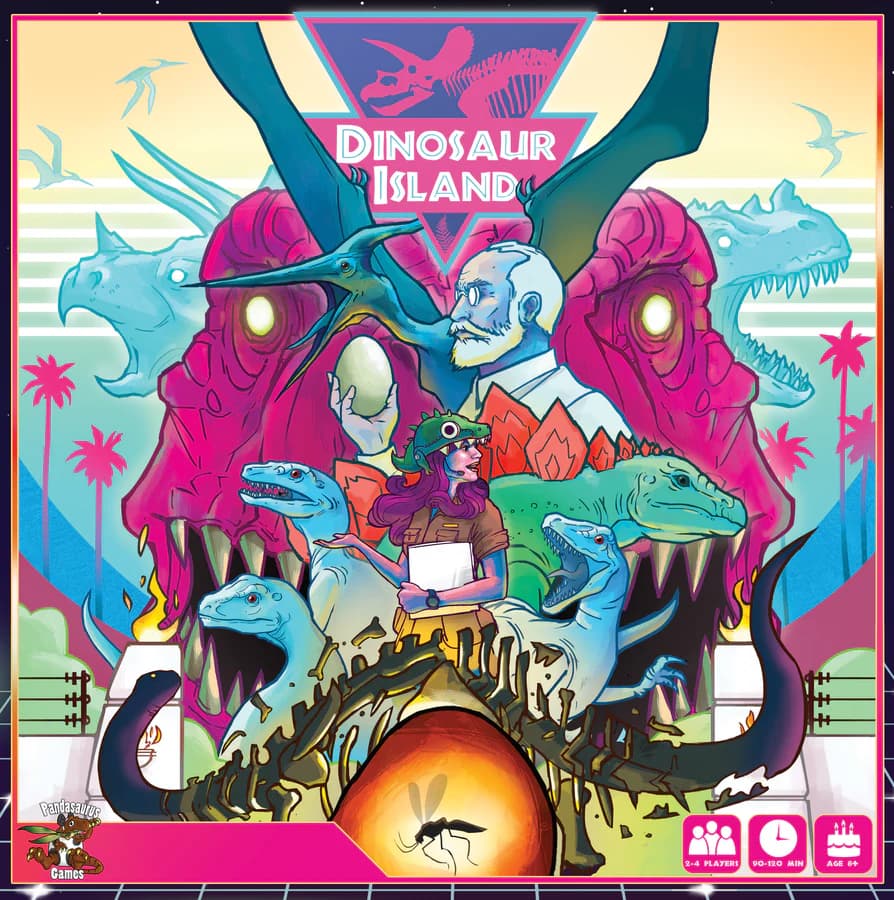
Dinosaur Island
2017Dinosaur Island invites players to take the helm of a sprawling, neon-drenched biological amusement park where bringing prehistoric creatures back to life is just part of the daily grind. Channeling a vibrant, nostalgic aesthetic inspired by the pop culture of the 1980s and 90s, this thematic strategy game tasks you with synthesizing ancient DNA, erecting thrilling rides, and keeping your visitors entertained. Your ultimate objective is to run the most successful and profitable park possible, carefully balancing the awe-inspiring excitement of your newly minted dinosaurs against the ever-present danger of a catastrophic, guest-eating breakout.
The gameplay loop operates across several distinct phases and utilizes a clever blend of worker placement, set collection, and dice drafting. In the initial research phase, players deploy scientists to extract vital genetic sequences from custom amber dice, expand cold-storage capacities, and discover new dinosaur recipes. Next, managers hit the market to purchase essential upgrades, hire skilled specialists, and build amenities like food stands or rollercoasters. The core action then shifts to personal laboratory boards, where workers are simultaneously assigned to refine DNA, breed creatures into paddocks, and bolster park security. Finally, the park opens its gates to a blind draw of visitor meeples. While paying guests bring in much-needed revenue and victory points, sneaky hooligans take up valuable space for free, and any lapse in security will lead to rampaging carnivores devouring the clientele.
What truly sets Dinosaur Island apart is its masterful integration of a deeply engaging theme with satisfying Euro-style mechanics. Fans adore the striking visual presentation, largely driven by vivid pinks and retro graphic design that makes the table presence absolutely pop. Beyond its stunning looks, the game offers remarkable flexibility; players can tailor the experience's length by selecting different sets of objective cards to accommodate quick sessions or sprawling engagements. With a well-regarded solo mode and multiple strategic avenues to explore—from focusing on massive, high-risk carnivores to building a safe, amenity-rich resort—the game provides a robust, replayable puzzle that keeps managers coming back for more thrilling park management.
1-4 120m⚖️ 3.0
RANK #279
Distilled
2023Step into the shoes of an heir who has just inherited an abandoned family distillery in 'Distilled', a highly thematic, medium-weight Eurogame. Your ultimate goal is to restore your family's legacy by crafting the world's most renowned and profitable spirits. Through careful planning and strategic investments, you will upgrade your facilities, hire specialized staff, and gather premium ingredients from a dynamic market. Over the course of seven rounds, you must balance your finances and resources to outshine your rivals, aiming to earn the most Spirit Points and claim the prestigious title of Master Distiller.
The core gameplay loop of 'Distilled' revolves around four distinct phases: Market, Distill, Sell, and Age. During the Market phase, players draft essential ingredients, specialized equipment, and key upgrades from shared premium and basic displays. The magic truly happens in the Distill phase, which introduces a brilliant thematic push-your-luck mechanic known as the washback. After combining your purchased sugars, water, and yeast, you shuffle them with alcohol cards to form a unique deck. To simulate the real-world distillation process where the harsh head and tail of the batch are discarded, players must blindly remove the top and bottom cards of their deck. This thrilling element of chance means you might accidentally discard a crucial premium grain, downgrading your highly anticipated whiskey into a basic moonshine or vodka.
Fans of thematic board games are consistently captivated by how seamlessly 'Distilled' blends its real-world subject matter with engaging mechanics. Players love the deep satisfaction of the Aging phase, where prestigious spirits are safely tucked away in barrels and placed in a warehouse. As these high-tier liquors mature round after round, they accumulate face-down flavor cards that exponentially boost their final victory point value while adding delightful thematic notes like vanilla or leather. Combined with a robust solo mode, beautiful iconography, and a rewarding set-collection system for bottling your creations, the game offers immense replayability. The tension of the distillation deck draw and the satisfying progression of building a world-class production engine make it an unforgettable experience for modern strategy enthusiasts.
1-5 120m⚖️ 3.0
RANK #294
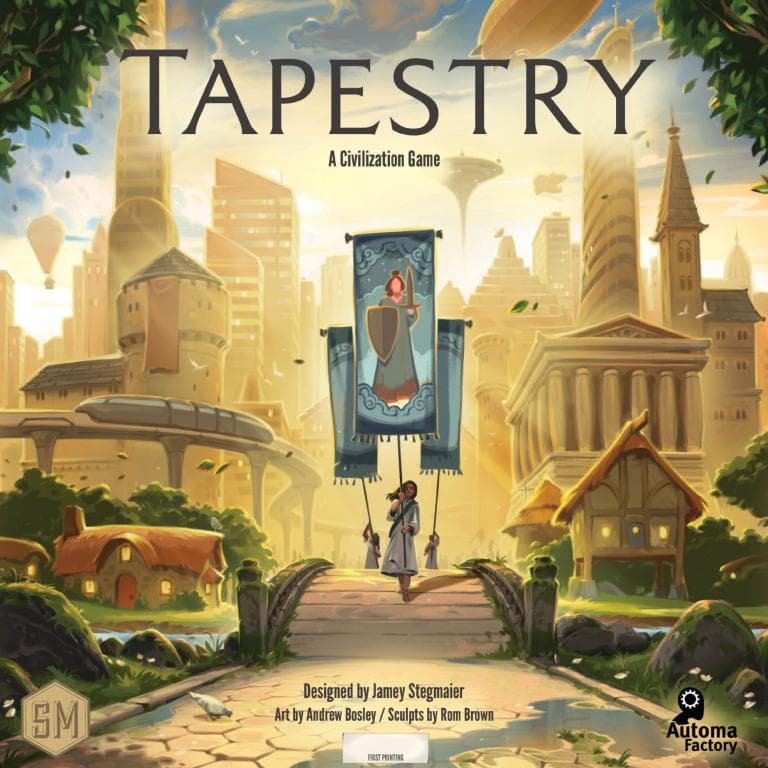
Tapestry
2019Tapestry is a civilization-building board game that breaks away from traditional historical simulations by offering a colorful, anachronistic approach to human development. Designed by Jamey Stegmaier, the game challenges players to guide a unique culture from the earliest days of discovery into the technological wonders of the near future. The primary goal is to accumulate the most victory points by advancing on four core tracks: Science, Technology, Exploration, and Military. Unlike typical '4X' games that focus heavily on combat, Tapestry emphasizes a strategic optimization puzzle where players craft their own narrative through cards and landmarks within their growing capital city.
The heart of the experience lies in a streamlined decision-making process. On every turn, a player chooses between an Advancement turn or an Income turn. Advancement involves spending resources to climb one of the four tracks, each providing immediate rewards, permanent upgrades, and powerful landmark miniatures. When resources run dry, players take an Income turn to transition into a new era. This phase allows them to collect income based on their current progress, play a Tapestry card that defines their civilization's special abilities for that era, and upgrade technology. This asymmetric structure is further enhanced by sixteen distinct civilization mats, each granting game-changing powers that require players to pivot their strategies constantly.
What truly sets Tapestry apart is its high production value and the 'simple rules, deep strategy' philosophy. The game features 18 prepainted landmark miniatures that players place on their Capital City grids to complete 3x3 districts, adding a tactile tile-laying element. Because players take exactly five income turns throughout the session, the pacing varies significantly between participants. One player might conclude their journey early while others are still in their fourth era, creating a unique tension in resource efficiency. It is a medium-weight engine-building experience that rewards long-term planning while remaining accessible to many due to its concise rulebook, offering high replayability through variable setups and asymmetric components.
1-5 105m⚖️ 2.9