Medieval Games
Browse all Medieval board games in the Meeple Pulse database.
Styles
Themes
AbstractAdventureAncientAnimalsArtBusinessCard GameCo-operativeComic BookCooperativeCrimeEconomicEnvironmentalismExplorationFantasyHistoricalHorrorHumorIntrigueLiteraryMagicMarvelMedievalModernMuseumMysteryMythologyNatureNauticalPoliticalPress Your LuckSatireSci-FiSocial CommentarySocial InteractionSpaceSuperheroesThematicTravelWarWesternWord-Guessing
Mechanics
3D PlacementActingAction / DexterityAction DraftingAction Point AllowanceAction Point Allowance SystemAction Point SystemAction PointsAction ProgrammingAction QueueAction RetrievalAction SelectionAction/EventAlliancesAlternate ActivationApp-AssistedApp-DrivenArea ControlArea InfluenceArea MajorityArea Majority / InfluenceArea MovementArgumentationAsymmetricAsymmetric FactionsAsymmetric GameAsymmetric PowersAsymmetrical PowersAuction & BiddingAuction/BiddingAuctioningBag BuildingBettingBetting and BluffingBetting and WageringBetting and WagersBiddingBingoBlind BiddingBluffingCampaign / Battle Card DrivenCampaign / LegacyCampaign / Legacy GameCampaign / Mission-basedCampaign / ScenariosCampaign GameCampaign PlayCard DraftingCard DrawingCard DrivenCard Driven ActionCard Driven CombatCard Driven Dice AllocationCard Driven MovementCard ManagementCard PlayCard Play / Hand ManagementCard Play Conflict ResolutionCard SheddingCard-Driven MovementCharacter CreationCharacter ProgressionChit-Pull SystemCo-op PlayCo-operative GameCo-operative PlayCode-breakingCombat ResolutionCombo ChainCommand CardsCommodity SpeculationCommunication LimitsContract FulfillmentContractsCooperative GameCooperative GameplayCooperative PlayCooperative Trick-takingDebateDeck BuildingDeck ConstructionDeck, Bag, and Pool BuildingDeck-BuildingDeductionDexterityDice DraftingDice PlacementDice RollingDiplomatic InfluenceDraftingDynamic Battle SystemEnclosureEnd Game BonusesEngine BuildingEngine-BuildingEscape RoomEvent DrivenExplorationFarmingFlip and WriteFollowFollow ActionGrid CoverageGrid MovementHand ManagementHex-and-CounterHexagon GridHidden MovementHidden RolesI Cut You ChooseIncomeInfluence / Area MajorityLadder ClimbingLegacyLegacy ElementsLegacy GameLegacy SystemLimited CommunicationLine DrawingLine of SightMancalaMap MovementMarketMarket DraftingMarket ManipulationMarket MechanicMarket SpeculationMatchingMeasurement MovementMemoryMission ObjectivesModular BoardModular Board ConstructionMovement TemplatesMulti-Use CardsMulti-use CardsMultiple ScenariosMust FollowNarrative ChoiceNarrative Choice / ParagraphNegotiationNegotiation MechanicsNetwork & Route BuildingNetwork BuildingNetwork and Route BuildingOne vs ManyOne vs. ManyOpen DraftingPaper-and-PencilPartnershipsPattern BuildingPattern RecognitionPick-up and DeliverPlayer EliminationPlayer InteractionPlayer JudgePoint SaladPoint to Point MovementPolyominoesPush Your LuckPush-Your-LuckPuzzlePuzzle-LikePuzzle-SolvingRaceReal-TimeRecipe FulfillmentResource ManagementRole PlayingRole SelectionRoll / Spin and MoveRondelRoute BuildingRoute-BuildingRoute/Network BuildingSanity SystemScenario / Campaign PlayScenario / Mission / Campaign GameScenario / Mission FunctionSecret Unit DeploymentSemi-Cooperative GameSet CollectionSheddingSimulationSimultaneous ActionSimultaneous Action SelectionSimultaneous Hidden AllocationSocial DeductionSocial InteractionSolo / Solitaire GameSpace ExplorationStat Check / Skill CheckStock HoldingStorytellingStrategic PlanningTableau BuildingTactical Decision-MakingTake ThatTargeted CluesTeam PlayTeam-Based GameTeam-Based GuessingTeamworkTech TreesTech Trees / Tech TracksTechnology & Armament TracksTechnology TreeTension & Aggression TracksTile DraftingTile LayingTile PlacementTime TrackTime TravelTower DefenseTrack MovementTradingTrick-takingTug of WarTurn Order: PassTurn Order: Stat-BasedUnit PlacementVariable Phase OrderVariable Player PowersVariable Set-upVariable SetupVictory Point TracksVotingWord AssociationWord GameWord GuessingWord-GuessingWord-guessingWordplayWorker Placement
BoxNo Cover Art
RANK #182
War Chest
2018War Chest is a game of strategic resource management and tactical deployment, where players take on the roles of medieval warlords vying for dominance. The objective is to accumulate wealth, influence, and military might by collecting and trading resources, constructing buildings, and recruiting troops. Players must balance their short-term needs with long-term goals, as the game's dynamic economy and shifting alliances keep them on their toes.
Gameplay revolves around a modular board, composed of interlocking tiles that represent different regions of a medieval kingdom. Each tile offers unique opportunities for resource collection, trade, or combat. Players must navigate this ever-changing landscape, adapting to new challenges and opportunities as they arise. The game's mechanics are designed to promote strategic thinking, planning, and execution, making it an engaging experience for players who enjoy complex strategy games.
One of the key features that sets War Chest apart is its focus on player interaction and negotiation. Players must form alliances, trade resources, and make deals with each other in order to achieve their goals. This social aspect adds a layer of depth and replayability to the game, as players must navigate the complex web of relationships between them.
War Chest is a game that rewards strategic thinking, planning, and execution. It's a challenging experience that will keep players engaged for hours, with a high level of replayability due to its modular board and dynamic economy.
m⚖️ N/A
BoxNo Cover Art
RANK #219
In The Red Cathedral, players take on the roles of construction teams building Saint Basil's Cathedral in Moscow. Each player has a unique goal: to gain the favor of the Tsar by building and ornamenting sections of the church. Gameplay involves gathering resources, satisfying requirements to build or ornament a section, and other point-scoring opportunities. The game features a central rondel where players choose one of five dice to move based on what die face is showing, allowing for strategic planning and potential for plans to be thwarted by opponents.
1-4 30m⚖️ 2.5
RANK #243
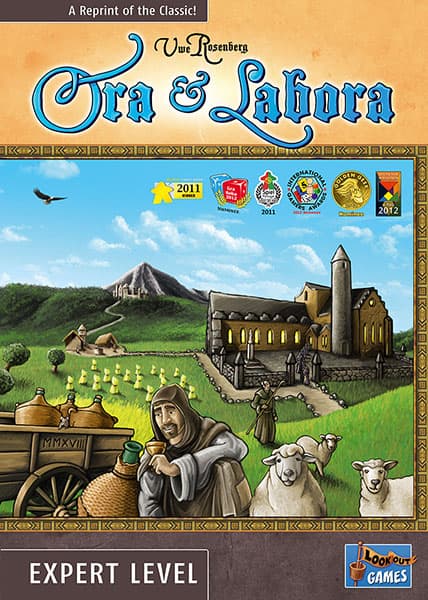
Ora et Labora
2011In *Ora et Labora*, Latin for 'Pray and Work', players step into the shoes of a monastic leader during the medieval era, tasked with expanding a small priory into a thriving and prosperous domain. Designed by the acclaimed Uwe Rosenberg, this game challenges players to skillfully manage resources, land, and labor to construct a powerful economic engine. The ultimate goal is to accumulate the most wealth and victory points by building an impressive landscape of buildings and settlements, proving your monastery to be the most industrious and prestigious. The game is a heavyweight strategic experience, demanding careful planning and foresight from its very first turn.
The gameplay revolves around a sophisticated blend of worker placement and resource management, elevated by several unique mechanical twists. Each player commands three clergymen who are placed on building cards to activate production or conversion actions. A key strategic consideration is that once a worker is placed, they cannot be used again until all three have been deployed. Players can also pay opponents to use their buildings, creating a layer of player interaction. A central feature is the innovative production wheel, which dictates the availability of basic resources each round. Instead of simply accumulating tokens, players must time their actions to gather goods when the wheel shows a high supply. These raw materials are then funneled through an intricate network of buildings to create refined goods like books, relics, and spirits, showcasing a deeply satisfying engine-building core.
*Ora et Labora* is celebrated by strategy gamers for its immense depth and high replayability. The spatial puzzle of arranging buildings on your personal landscape is a critical and engaging challenge; placement matters not only for optimizing your production chains but also for maximizing the scoring of settlements. The game further enhances its longevity by including two distinct scenarios, France and Ireland, which feature different buildings and resources, demanding new strategies with each playthrough. This combination of deep engine-building, a clever resource system, and a demanding spatial element makes *Ora et Labora* a classic and rewarding experience for those who relish complex, 'big box' eurogames.
1-4 120m⚖️ 4.3

RANK #246
Village
2011In Village, you are entrusted with the fate of a multi-generational family living in a medieval hamlet. Your primary objective is to guide your family members through their lives, helping them achieve greatness and earn the most prestige points. This is not just a game of prosperity but also of legacy. As your family members work in various professions—from farming and crafting to politics and religion—they contribute to your growing reputation. The game cleverly weaves the narrative of life and death into its core, where the ultimate goal is to have your most accomplished family members immortalized in the village chronicle, ensuring their story, and your victory, is remembered for ages.
The gameplay combines worker placement with a unique action selection mechanism. Each round begins with various action spaces on the board being populated with influence cubes of different colors. On your turn, you'll select a cube from a space, which then allows you to perform the associated action. These actions are diverse, allowing you to harvest grain, produce goods at a workshop, sell wares at the market, travel to distant lands, or gain influence in the church or village council. A standout mechanic is the treatment of time as a finite resource. Many actions cost time, which is tracked on your personal farm board. When your time marker completes a full circle, one of your oldest family members passes away. How and where they die is crucial; a life well-lived could mean a prestigious entry in the chronicle, while an uncelebrated death leads to an unmarked grave. The game concludes when either the chronicle or the graveyard fills, triggering the final scoring.
Village has earned critical acclaim, including the prestigious 2012 Kennerspiel des Jahres award, for its brilliant synthesis of theme and mechanics. Players love the poignant and surprisingly personal experience of managing a family lineage. The ever-present ticking clock and the inevitability of death add a layer of thematic depth rarely seen in Euro-style games. It forces players to make tough, long-term decisions about which family members to specialize and when to let them go for the sake of the family's legacy. This creates a compelling narrative arc within a strategically robust framework, offering a deeply engaging and memorable experience that goes beyond simple point optimization. It’s a game where every choice matters, not just for the score, but for the story you create for your family.
2-4 90m⚖️ 3.1
RANK #2,187
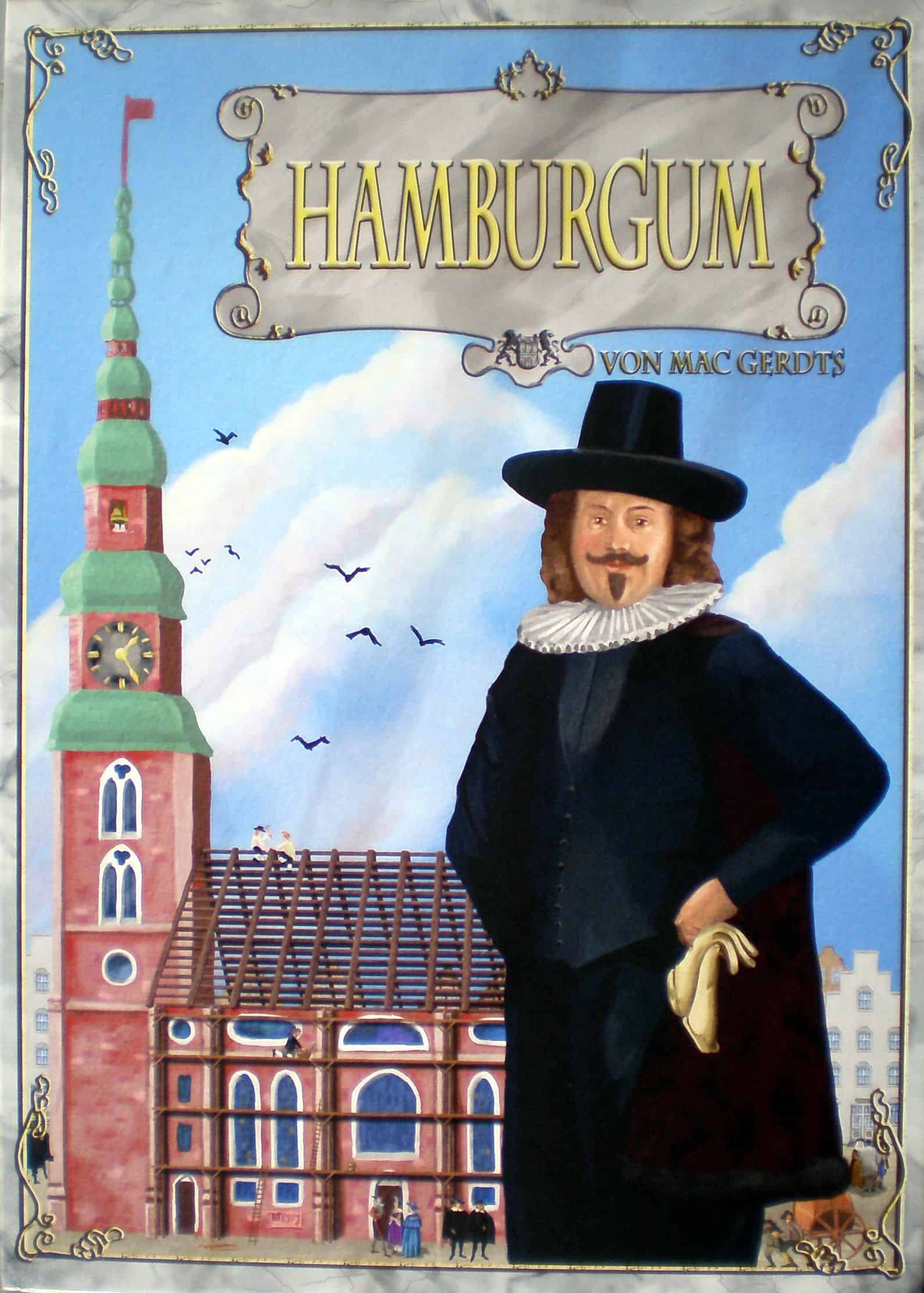
Hamburg
2022Hamburg (2022) invites players to step into the bustling shoes of influential merchants during the Hanseatic League era, aiming to build the most prosperous and prestigious city districts. As a standalone title by Mac Gerdts, it challenges you to optimize your actions and resources to construct magnificent buildings, acquire valuable goods, and expand your influence across the historic city. The ultimate goal is to accumulate the most victory points by the game's end, demonstrating your superior strategic acumen and urban planning prowess within this vibrant economic simulation.
At its core, Hamburg features an innovative rondel-based action selection system, a signature mechanic of Mac Gerdts. Players move their marker around a circular track, choosing an action at their destination and potentially paying to access actions further along. This forces tough decisions: take a nearby, cheaper action now, or pay more for a preferred action later? Complementing this is a robust market system where commodity prices fluctuate based on player actions, demanding careful timing and resource management. Players will acquire building permits, collect resources, construct various types of buildings (houses, churches, city walls), and leverage their unique player powers to gain an advantage.
Hamburg is celebrated for its deep strategic gameplay, offering a rich eurogame experience that rewards intricate decision-making without overwhelming complexity. Its tight economic engine, dynamic market, and the elegant rondel mechanic create a constant push and pull, ensuring high replayability and engaging player interaction. Fans praise its intricate decision-making, where every action has ripple effects, and the satisfaction of watching your city grow from a few humble houses to a thriving metropolis. It's a game for those who appreciate elegant design, economic puzzles, and the reward of long-term strategic planning.
2-4 120m⚖️ 3.6
BoxNo Cover Art
Round of Fire
2017Round of Fire is a strategic board game designed for 2-4 players, where each player takes on the role of a leader in a medieval kingdom. The goal of the game is to accumulate wealth and influence by collecting resources, building structures, and managing your kingdom's economy. Players must navigate the challenges of war, diplomacy, and natural disasters while making strategic decisions to outmaneuver their opponents.
The gameplay involves a combination of resource management, area control, and engine-building mechanics. Each player starts with a small village and must expand it by collecting resources, building new structures, and recruiting units. The game features a unique 'fire' mechanism, where players can use fire to destroy their opponents' structures or disrupt their economy.
One of the key aspects of Round of Fire is its thematic depth. Players must balance short-term goals with long-term strategies, taking into account the needs of their kingdom and the actions of their opponents. The game also features a high level of replayability, as each playthrough offers a unique combination of challenges and opportunities.
Overall, Round of Fire is a challenging and engaging board game that requires strategic thinking and planning. It's an excellent choice for fans of strategy games who are looking for a new challenge.
m⚖️ 4.0
BoxNo Cover Art
There Grew a Kingdom is a strategic board game designed for 2-4 players, where each player takes on the role of a monarch vying to build and manage their own kingdom. The game's objective is to accumulate points by constructing buildings, managing resources, and making strategic decisions that impact the growth and prosperity of your kingdom. Players must balance short-term needs with long-term goals, all while navigating the challenges and opportunities presented by the game's unique mechanics.
Gameplay involves a combination of area control, resource management, and engine-building elements. Each player starts with a small plot of land and a limited set of resources, which they must use to construct buildings, recruit units, and expand their kingdom. As players progress through the game, they will encounter various challenges and events that require strategic decision-making and adaptability.
One of the key features of There Grew a Kingdom is its modular board, which consists of interlocking tiles that represent different regions of the kingdom. Players can choose to focus on specific areas or spread their resources thin across multiple regions, adding a layer of complexity and replayability to the game. The game also includes a variety of building types, each with its own unique abilities and requirements, allowing players to tailor their strategy to suit their playstyle.
There Grew a Kingdom is a game that rewards strategic thinking, resource management, and adaptability. It's an engaging and challenging experience for fans of strategic board games, offering a high level of replayability due to the modular board and variable player powers.
m⚖️ 4.0
Showing 13 to 19 of 19 games