Historical Games
Browse all Historical board games in the Meeple Pulse database.
Styles
Themes
AbstractAdventureAncientAnimalsArtBusinessCard GameCo-operativeComic BookCooperativeCrimeEconomicEnvironmentalismExplorationFantasyHistoricalHorrorHumorIntrigueLiteraryMagicMarvelMedievalModernMuseumMysteryMythologyNatureNauticalPoliticalPress Your LuckSatireSci-FiSocial CommentarySocial InteractionSpaceSuperheroesThematicTravelWarWesternWord-Guessing
Mechanics
3D PlacementActingAction / DexterityAction DraftingAction Point AllowanceAction Point Allowance SystemAction Point SystemAction PointsAction ProgrammingAction QueueAction RetrievalAction SelectionAction/EventAlliancesAlternate ActivationApp-AssistedApp-DrivenArea ControlArea InfluenceArea MajorityArea Majority / InfluenceArea MovementArgumentationAsymmetricAsymmetric FactionsAsymmetric GameAsymmetric PowersAsymmetrical PowersAuction & BiddingAuction/BiddingAuctioningBag BuildingBettingBetting and BluffingBetting and WageringBetting and WagersBiddingBingoBlind BiddingBluffingCampaign / Battle Card DrivenCampaign / LegacyCampaign / Legacy GameCampaign / Mission-basedCampaign / ScenariosCampaign GameCampaign PlayCard DraftingCard DrawingCard DrivenCard Driven ActionCard Driven CombatCard Driven Dice AllocationCard Driven MovementCard ManagementCard PlayCard Play / Hand ManagementCard Play Conflict ResolutionCard SheddingCard-Driven MovementCharacter CreationCharacter ProgressionChit-Pull SystemCo-op PlayCo-operative GameCo-operative PlayCode-breakingCombat ResolutionCombo ChainCommand CardsCommodity SpeculationCommunication LimitsContract FulfillmentContractsCooperative GameCooperative GameplayCooperative PlayCooperative Trick-takingDebateDeck BuildingDeck ConstructionDeck, Bag, and Pool BuildingDeck-BuildingDeductionDexterityDice DraftingDice PlacementDice RollingDiplomatic InfluenceDraftingDynamic Battle SystemEnclosureEnd Game BonusesEngine BuildingEngine-BuildingEscape RoomEvent DrivenExplorationFarmingFlip and WriteFollowFollow ActionGrid CoverageGrid MovementHand ManagementHex-and-CounterHexagon GridHidden MovementHidden RolesI Cut You ChooseIncomeInfluence / Area MajorityLadder ClimbingLegacyLegacy ElementsLegacy GameLegacy SystemLimited CommunicationLine DrawingLine of SightMancalaMap MovementMarketMarket DraftingMarket ManipulationMarket MechanicMarket SpeculationMatchingMeasurement MovementMemoryMission ObjectivesModular BoardModular Board ConstructionMovement TemplatesMulti-Use CardsMulti-use CardsMultiple ScenariosMust FollowNarrative ChoiceNarrative Choice / ParagraphNegotiationNegotiation MechanicsNetwork & Route BuildingNetwork BuildingNetwork and Route BuildingOne vs ManyOne vs. ManyOpen DraftingPaper-and-PencilPartnershipsPattern BuildingPattern RecognitionPick-up and DeliverPlayer EliminationPlayer InteractionPlayer JudgePoint SaladPoint to Point MovementPolyominoesPush Your LuckPush-Your-LuckPuzzlePuzzle-LikePuzzle-SolvingRaceReal-TimeRecipe FulfillmentResource ManagementRole PlayingRole SelectionRoll / Spin and MoveRondelRoute BuildingRoute-BuildingRoute/Network BuildingSanity SystemScenario / Campaign PlayScenario / Mission / Campaign GameScenario / Mission FunctionSecret Unit DeploymentSemi-Cooperative GameSet CollectionSheddingSimulationSimultaneous ActionSimultaneous Action SelectionSimultaneous Hidden AllocationSocial DeductionSocial InteractionSolo / Solitaire GameSpace ExplorationStat Check / Skill CheckStock HoldingStorytellingStrategic PlanningTableau BuildingTactical Decision-MakingTake ThatTargeted CluesTeam PlayTeam-Based GameTeam-Based GuessingTeamworkTech TreesTech Trees / Tech TracksTechnology & Armament TracksTechnology TreeTension & Aggression TracksTile DraftingTile LayingTile PlacementTime TrackTime TravelTower DefenseTrack MovementTradingTrick-takingTug of WarTurn Order: PassTurn Order: Stat-BasedUnit PlacementVariable Phase OrderVariable Player PowersVariable Set-upVariable SetupVictory Point TracksVotingWord AssociationWord GameWord GuessingWord-GuessingWord-guessingWordplayWorker Placement
BoxNo Cover Art
RANK #86
Maracaibo
2019One of the key appeals of Maracaibo is its thematic depth and historical accuracy. The game's designers have done extensive research on the era of colonialism, incorporating many authentic details into the game's mechanics and components. Players who enjoy games with strong themes and historical context will find much to appreciate in Maracaibo. Additionally, the game's engine-building mechanics and resource management challenges provide a high level of replayability, making it an excellent choice for players looking for a game that can be enjoyed multiple times.
2-4 60m⚖️ 3.5
BoxNo Cover Art
RANK #119
The Voyages of Marco Polo is a game that challenges players to navigate the Silk Road, collecting valuable resources and completing missions while avoiding obstacles and rival traders.
2-4 60m⚖️ 3.5

RANK #137
Caylus
2005Caylus is a quintessential strategy game that casts players as master builders in 13th-century France. Tasked by King Philip the Fair, you must contribute your resources and labor to the grand construction of a new castle, while simultaneously developing the road and village that lead to it. The ultimate goal is to accumulate the most prestige points by the time the castle is complete, thereby earning the king's favor. Widely regarded as a foundational title in the worker placement genre, Caylus is celebrated for its strategic depth and minimal reliance on luck. Beyond the initial random setup of a few buildings, every decision rests squarely on the players' shoulders, making each victory a testament to superior planning and foresight.
The gameplay revolves around a central road where players, in turn order, place their workers on various buildings. This is the core 'worker placement' mechanic, where each placement costs money and grants access to specific actions—from gathering essential resources like wood, stone, and food, to constructing new commercial or residential buildings that expand the game board itself. A truly distinctive element is the movement of the Provost marker. Players can spend money to move this pawn along the road, and at the end of the round, any worker placed on a building beyond the Provost is not activated. This introduces a tense and highly interactive layer of blocking and manipulation, as players vie to ensure their own actions resolve while thwarting their opponents'. The game's pace is dictated by another marker, the Bailiff, whose movement can be accelerated or slowed by the Provost's final position, directly impacting the game's length.
What makes Caylus an enduring classic is its elegant fusion of simple rules with profound strategic possibilities. The Provost mechanism, in particular, elevates the game from a simple optimization puzzle to a dynamic and interactive struggle. It forces players to be constantly aware of their opponents' intentions and to balance the cost of moving the Provost against the potential benefits of activating their workers. This low-luck, high-interaction design ensures that every game is a unique challenge, full of difficult decisions and rewarding long-term planning. For enthusiasts of heavyweight Eurogames, Caylus offers a masterclass in design, providing a deeply satisfying and highly replayable experience that has rightfully earned its place as a cornerstone of modern board gaming.
2-5 120m⚖️ 3.8
BoxNo Cover Art
RANK #153
Rising Sun
2018Rising Sun is a strategic board game designed for 2-4 players, set in feudal Japan during the Sengoku period. Players take on the roles of daimyos, vying for control and dominance over the island of Honshu. The game's objective is to accumulate victory points by controlling provinces, eliminating opponents, and completing objectives.
2-4 120m⚖️ 3.5
BoxNo Cover Art
RANK #155
Yokohama
2016Yokohama is a strategic game for 2-4 players that takes approximately 45-60 minutes to play. The goal of the game is to build a thriving city by collecting and trading resources, managing your workforce, and constructing buildings. Players take on the role of mayors tasked with developing their respective cities in Japan's second-largest metropolitan area.
The gameplay revolves around resource management, where players collect and trade cards featuring various goods such as food, textiles, and ceramics. These resources are used to construct buildings, which provide bonuses and benefits. The game also features a unique mechanic called 'workforce management,' where players must manage their workforce's skills and abilities to optimize their building construction.
One of the key aspects of Yokohama is its thematic appeal. Players become immersed in the world of 19th-century Japan, with beautifully illustrated cards and components that evoke a sense of nostalgia and wonder. The game also features a high level of replayability, thanks to the random distribution of resources and building cards.
Overall, Yokohama offers a unique blend of strategic resource management, workforce optimization, and thematic immersion, making it an engaging experience for players who enjoy strategic games with depth.
2-4 45m⚖️ 3.0
RANK #169
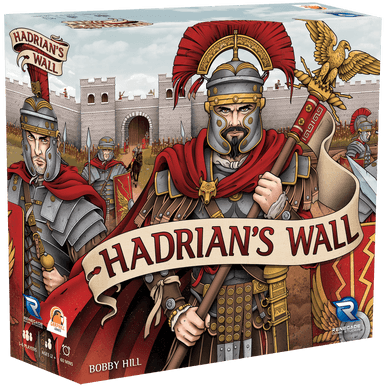
Hadrian's Wall
2021In Hadrian's Wall, you assume the demanding role of a Roman General charged with a monumental task: the construction and defense of a critical segment of the wall that separates Roman Britannia from the unconquered north. This is a deeply strategic 'flip-and-write' game where your ultimate objective is to prove your superior command by amassing the most victory points. Your final score is a reflection of your overall success, tallied across four distinct paths to glory: Renown for your grand constructions, Piety for honoring the gods, Valour for your military prowess, and Discipline earned by managing your domain efficiently. The player who best balances civic development with unwavering defense against the relentless Picts will be celebrated as the most distinguished general in the Empire.
The game unfolds over six years, each a tense round of planning, building, and fighting. Each year begins with a shared 'Fate' card that provides a foundation of resources and workers for all players. You then supplement these supplies by drawing from your personal deck, strategically choosing one card for its immediate resources and another for its potential end-game scoring objectives. The heart of each round is the simultaneous action phase, where you allocate your workers—Soldiers, Builders, Citizens, and Slaves—and spend resources to fill in spaces on your two intricate player sheets. One sheet tracks the progress of your wall, forts, and defenses, while the other maps out the growth of your civilian settlements. Marking off boxes often triggers powerful combos, unlocking additional resources or actions in a satisfying cascade, allowing for clever and explosive turns. The year culminates in a climactic attack by the Picts, where your carefully built defenses are put to the test.
Hadrian's Wall stands out for its remarkable depth and complexity, offering a 'crunchy', thinky experience that elevates the flip-and-write genre. While players act simultaneously, the gameplay is a focused 'multi-player solitaire' puzzle, where the primary challenge is optimizing your own engine of progress. The true magic lies in discovering the intricate synergies on your player sheets and engineering powerful chain reactions where a single action can fuel a dozen more. This engine-building element, combined with the constant pressure to erect sufficient defenses before the annual Pict assault, creates a compelling and highly rewarding strategic challenge. It’s a game that appeals to players who relish complex decision-making, meticulous planning, and the immense satisfaction of watching their personal section of the Roman frontier flourish under their command.
1-6 60m⚖️ 3.0
BoxNo Cover Art
RANK #182
War Chest
2018War Chest is a game of strategic resource management and tactical deployment, where players take on the roles of medieval warlords vying for dominance. The objective is to accumulate wealth, influence, and military might by collecting and trading resources, constructing buildings, and recruiting troops. Players must balance their short-term needs with long-term goals, as the game's dynamic economy and shifting alliances keep them on their toes.
Gameplay revolves around a modular board, composed of interlocking tiles that represent different regions of a medieval kingdom. Each tile offers unique opportunities for resource collection, trade, or combat. Players must navigate this ever-changing landscape, adapting to new challenges and opportunities as they arise. The game's mechanics are designed to promote strategic thinking, planning, and execution, making it an engaging experience for players who enjoy complex strategy games.
One of the key features that sets War Chest apart is its focus on player interaction and negotiation. Players must form alliances, trade resources, and make deals with each other in order to achieve their goals. This social aspect adds a layer of depth and replayability to the game, as players must navigate the complex web of relationships between them.
War Chest is a game that rewards strategic thinking, planning, and execution. It's a challenging experience that will keep players engaged for hours, with a high level of replayability due to its modular board and dynamic economy.
m⚖️ N/A
BoxNo Cover Art
RANK #219
In The Red Cathedral, players take on the roles of construction teams building Saint Basil's Cathedral in Moscow. Each player has a unique goal: to gain the favor of the Tsar by building and ornamenting sections of the church. Gameplay involves gathering resources, satisfying requirements to build or ornament a section, and other point-scoring opportunities. The game features a central rondel where players choose one of five dice to move based on what die face is showing, allowing for strategic planning and potential for plans to be thwarted by opponents.
1-4 30m⚖️ 2.5
RANK #242
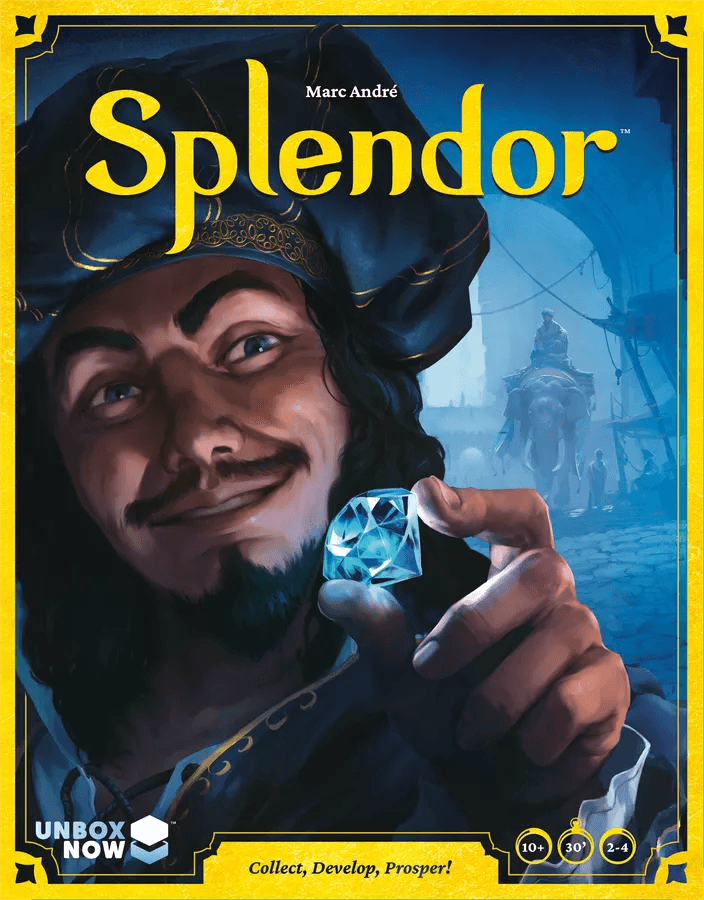
Splendor
2014In Splendor, players assume the roles of ambitious gem merchants during the Renaissance, all vying to become the most influential and prestigious trader in the land. The ultimate goal is to be the first to accumulate 15 prestige points. You will strategically invest your resources to acquire gem mines, develop better methods of transportation, and commission artisans to transform raw jewels into magnificent works of art. These investments not only build your wealth but also attract the attention of powerful nobles, whose patronage is crucial for securing victory and establishing your legacy as a master merchant.
The gameplay is celebrated for its streamlined and intuitive turn structure. Each turn, a player chooses just one of a few simple actions: take gem tokens that act as currency, reserve a valuable development card for future acquisition, or purchase a development card from the central display. These cards are the core of the game's compelling engine-building mechanic. Every card you purchase grants a permanent gem bonus, making subsequent purchases cheaper and creating a satisfying sense of escalating power. As you collect specific combinations of card bonuses, you automatically earn the favor of noble patrons, who grant substantial prestige points. The game ends once a player reaches 15 points, and at the end of that round, the merchant with the highest score wins.
Splendor's enduring popularity lies in its perfect balance of accessibility and strategic depth, making it an ideal 'gateway' game for those new to the hobby. The high-quality, weighty gem tokens provide a wonderfully tactile experience that elevates the gameplay. While the rules are easy to learn, the game presents meaningful choices on every turn. Players must constantly weigh the benefits of expanding their economic engine against the immediate need to score points. This elegant tension, combined with a brisk playing time and significant replay value, has solidified Splendor's reputation as a modern classic for families and strategy enthusiasts alike.
2-4 30m⚖️ 1.8
RANK #243
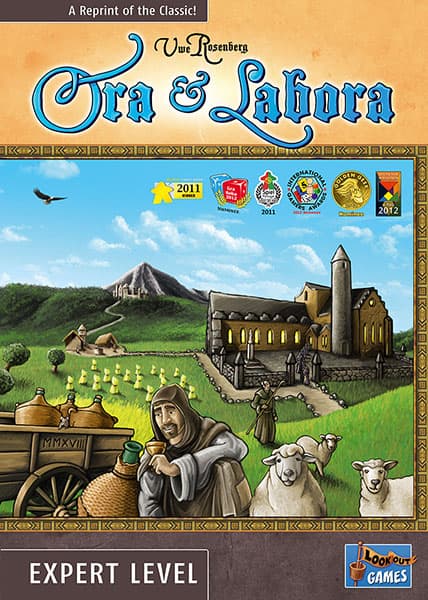
Ora et Labora
2011In *Ora et Labora*, Latin for 'Pray and Work', players step into the shoes of a monastic leader during the medieval era, tasked with expanding a small priory into a thriving and prosperous domain. Designed by the acclaimed Uwe Rosenberg, this game challenges players to skillfully manage resources, land, and labor to construct a powerful economic engine. The ultimate goal is to accumulate the most wealth and victory points by building an impressive landscape of buildings and settlements, proving your monastery to be the most industrious and prestigious. The game is a heavyweight strategic experience, demanding careful planning and foresight from its very first turn.
The gameplay revolves around a sophisticated blend of worker placement and resource management, elevated by several unique mechanical twists. Each player commands three clergymen who are placed on building cards to activate production or conversion actions. A key strategic consideration is that once a worker is placed, they cannot be used again until all three have been deployed. Players can also pay opponents to use their buildings, creating a layer of player interaction. A central feature is the innovative production wheel, which dictates the availability of basic resources each round. Instead of simply accumulating tokens, players must time their actions to gather goods when the wheel shows a high supply. These raw materials are then funneled through an intricate network of buildings to create refined goods like books, relics, and spirits, showcasing a deeply satisfying engine-building core.
*Ora et Labora* is celebrated by strategy gamers for its immense depth and high replayability. The spatial puzzle of arranging buildings on your personal landscape is a critical and engaging challenge; placement matters not only for optimizing your production chains but also for maximizing the scoring of settlements. The game further enhances its longevity by including two distinct scenarios, France and Ireland, which feature different buildings and resources, demanding new strategies with each playthrough. This combination of deep engine-building, a clever resource system, and a demanding spatial element makes *Ora et Labora* a classic and rewarding experience for those who relish complex, 'big box' eurogames.
1-4 120m⚖️ 4.3
RANK #269
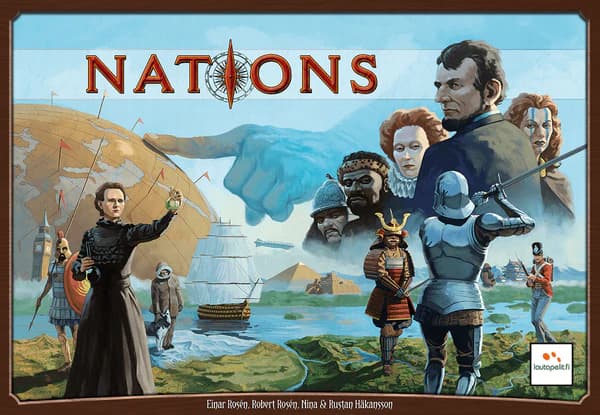
Nations
2013In Nations, you take the helm of a burgeoning civilization, guiding it from the annals of antiquity to the cusp of the First World War. Your ultimate objective is not conquest, but the creation of a lasting legacy, measured in victory points earned through cultural achievements, magnificent wonders, valuable colonies, and historical renown. Players must skillfully navigate the challenges of history to build the most prestigious and prosperous nation. The game is an epic race to accumulate the most 'books', which symbolize your civilization's accumulated knowledge and cultural impact, proving your dominance through wisdom and development rather than brute force.
The game unfolds over eight rounds, divided into four historical ages: Antiquity, Medieval, Renaissance, and Industrial. Each round is a meticulously structured sequence of phases. Players begin by preparing for the challenges ahead, revealing new progress cards and a pivotal event card. The heart of the game is the action phase, where players take turns performing one action at a time, with the player possessing the strongest military going first. Actions are varied and strategic: you might purchase a new technology or building from a shared card row, deploy your workers to activate structures for resources, or assign an architect to the monumental task of constructing a world wonder. Competition is indirect but fierce, as players vie for military superiority to set the turn order and manage the effects of historical events, all while managing resources and keeping their populace stable.
Nations is celebrated for offering a profound and satisfying civilization-building experience within a streamlined and manageable playtime. It captures the grand sweep of history without the complex combat systems or map-based conflicts common to the genre, instead focusing on a tense, indirect struggle for supremacy. Its unique appeal stems from the delicate balancing act required to succeed. You must constantly weigh the immediate needs of your people—food and stability—against long-term investments in military, culture, and economic infrastructure. The variable card market and unpredictable events ensure that each game presents a new strategic puzzle, making Nations a highly replayable and engaging journey through time for strategy enthusiasts.
1-5 120m⚖️ 3.4
BoxNo Cover Art
RANK #298
Anno 1800: The Board Game, a captivating Eurogame released in 2020, beautifully translates the intricate city-building experience of its video game namesake into a tabletop format. Designed by the esteemed Martin Wallace, this strategy title immerses players in the heart of the Industrial Revolution, tasking them with developing a thriving island economy. The overarching goal is a strategic "race" to satisfy the increasingly complex needs of your population, represented by a hand of Population Cards that players aim to empty. It’s a game of careful planning, resource optimization, and dynamic player interaction, where every decision shapes your burgeoning industrial empire.
The core gameplay loop revolves around selecting one of nine distinct actions on your turn, a mechanism that provides a flexible yet constrained strategic environment. Instead of traditional resource accumulation, players "produce" goods by exhausting population cubes from various building tiles, instantly generating the necessary resources for current actions. These resources are then used to either play the crucial Population Cards from your hand, unlocking points and bonuses, or to construct new, higher-tier industries that produce more advanced goods. Population management is key: increasing your workforce grants more actions per round, but also forces you to draw more Population Cards, extending the challenge of fulfilling your citizens' demands and escalating the strategic race.
What truly sets Anno 1800 apart is its innovative and dynamic trade system. If a player lacks a specific resource, they can trade with any opponent who possesses the corresponding industry. This trade is non-refusable; the active player spends a trade token, and the recipient gains one gold, without expending their own resources or actions. This ingenious system strongly encourages players to specialize their industries rather than attempting to produce every good, fostering a high degree of player interaction and negotiation throughout the game. Fans praise its ability to replicate the video game's recursive production chains and satisfying engine-building without becoming overly bogged down in calculations, offering a rewarding, "puzzle-like" experience for strategists and optimization enthusiasts.
2-4 120m⚖️ 3.8