Nature Games
Browse all Nature board games in the Meeple Pulse database.
Styles
Themes
AbstractAdventureAncientAnimalsArtBusinessCard GameCo-operativeComic BookCooperativeCrimeEconomicEnvironmentalismExplorationFantasyHistoricalHorrorHumorIntrigueLiteraryMagicMarvelMedievalModernMuseumMysteryMythologyNatureNauticalPoliticalPress Your LuckSatireSci-FiSocial CommentarySocial InteractionSpaceSuperheroesThematicTravelWarWesternWord-Guessing
Mechanics
3D PlacementActingAction / DexterityAction DraftingAction Point AllowanceAction Point Allowance SystemAction Point SystemAction PointsAction ProgrammingAction QueueAction RetrievalAction SelectionAction/EventAlliancesAlternate ActivationApp-AssistedApp-DrivenArea ControlArea InfluenceArea MajorityArea Majority / InfluenceArea MovementArgumentationAsymmetricAsymmetric FactionsAsymmetric GameAsymmetric PowersAsymmetrical PowersAuction & BiddingAuction/BiddingAuctioningBag BuildingBettingBetting and BluffingBetting and WageringBetting and WagersBiddingBingoBlind BiddingBluffingCampaign / Battle Card DrivenCampaign / LegacyCampaign / Legacy GameCampaign / Mission-basedCampaign / ScenariosCampaign GameCampaign PlayCard DraftingCard DrawingCard DrivenCard Driven ActionCard Driven CombatCard Driven Dice AllocationCard Driven MovementCard ManagementCard PlayCard Play / Hand ManagementCard Play Conflict ResolutionCard SheddingCard-Driven MovementCharacter CreationCharacter ProgressionChit-Pull SystemCo-op PlayCo-operative GameCo-operative PlayCode-breakingCombat ResolutionCombo ChainCommand CardsCommodity SpeculationCommunication LimitsContract FulfillmentContractsCooperative GameCooperative GameplayCooperative PlayCooperative Trick-takingDebateDeck BuildingDeck ConstructionDeck, Bag, and Pool BuildingDeck-BuildingDeductionDexterityDice DraftingDice PlacementDice RollingDiplomatic InfluenceDraftingDynamic Battle SystemEnclosureEnd Game BonusesEngine BuildingEngine-BuildingEscape RoomEvent DrivenExplorationFarmingFlip and WriteFollowFollow ActionGrid CoverageGrid MovementHand ManagementHex-and-CounterHexagon GridHidden MovementHidden RolesI Cut You ChooseIncomeInfluence / Area MajorityLadder ClimbingLegacyLegacy ElementsLegacy GameLegacy SystemLimited CommunicationLine DrawingLine of SightMancalaMap MovementMarketMarket DraftingMarket ManipulationMarket MechanicMarket SpeculationMatchingMeasurement MovementMemoryMission ObjectivesModular BoardModular Board ConstructionMovement TemplatesMulti-Use CardsMulti-use CardsMultiple ScenariosMust FollowNarrative ChoiceNarrative Choice / ParagraphNegotiationNegotiation MechanicsNetwork & Route BuildingNetwork BuildingNetwork and Route BuildingOne vs ManyOne vs. ManyOpen DraftingPaper-and-PencilPartnershipsPattern BuildingPattern RecognitionPick-up and DeliverPlayer EliminationPlayer InteractionPlayer JudgePoint SaladPoint to Point MovementPolyominoesPush Your LuckPush-Your-LuckPuzzlePuzzle-LikePuzzle-SolvingRaceReal-TimeRecipe FulfillmentResource ManagementRole PlayingRole SelectionRoll / Spin and MoveRondelRoute BuildingRoute-BuildingRoute/Network BuildingSanity SystemScenario / Campaign PlayScenario / Mission / Campaign GameScenario / Mission FunctionSecret Unit DeploymentSemi-Cooperative GameSet CollectionSheddingSimulationSimultaneous ActionSimultaneous Action SelectionSimultaneous Hidden AllocationSocial DeductionSocial InteractionSolo / Solitaire GameSpace ExplorationStat Check / Skill CheckStock HoldingStorytellingStrategic PlanningTableau BuildingTactical Decision-MakingTake ThatTargeted CluesTeam PlayTeam-Based GameTeam-Based GuessingTeamworkTech TreesTech Trees / Tech TracksTechnology & Armament TracksTechnology TreeTension & Aggression TracksTile DraftingTile LayingTile PlacementTime TrackTime TravelTower DefenseTrack MovementTradingTrick-takingTug of WarTurn Order: PassTurn Order: Stat-BasedUnit PlacementVariable Phase OrderVariable Player PowersVariable Set-upVariable SetupVictory Point TracksVotingWord AssociationWord GameWord GuessingWord-GuessingWord-guessingWordplayWorker Placement
RANK #57
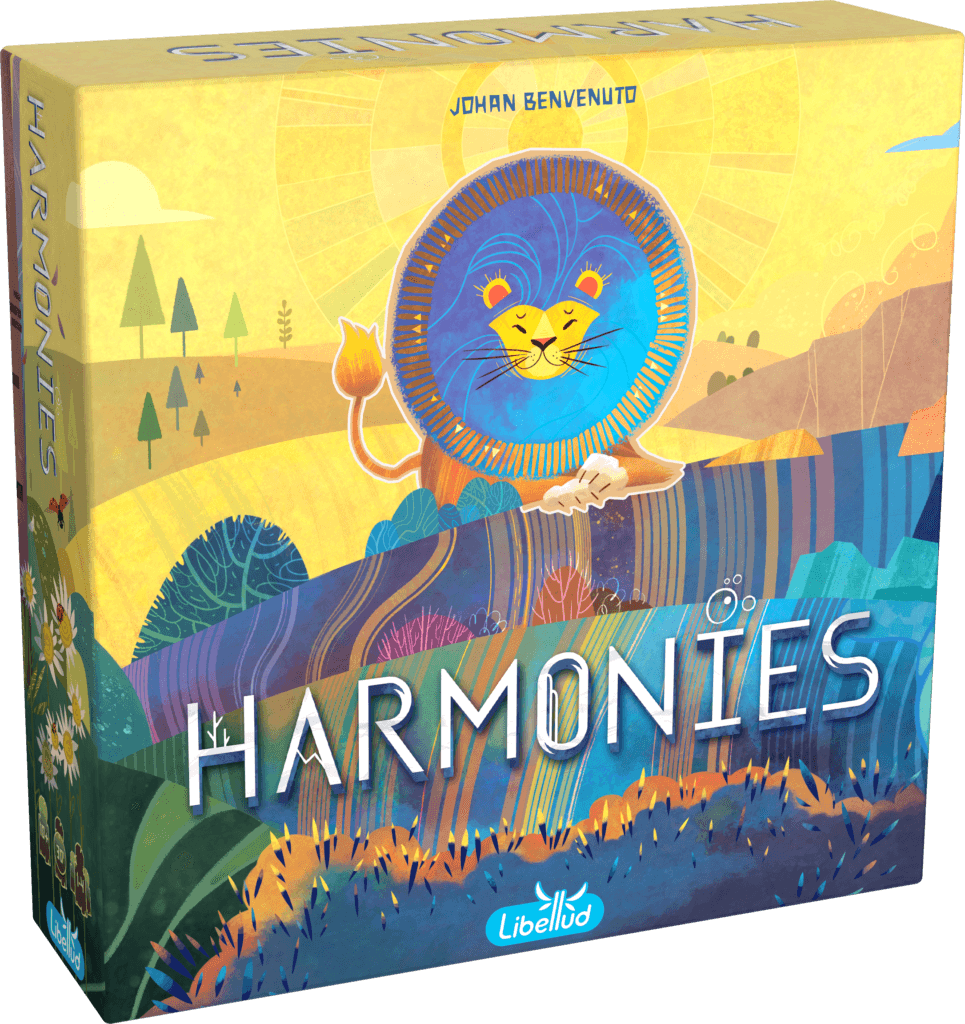
Harmonies
2024In Harmonies, players take on the role of nature spirits, tasked with creating vibrant and flourishing ecosystems. This visually stunning game invites you to craft a personal landscape, a miniature world filled with mountains, forests, rivers, and fields. The ultimate goal is to build habitats that are so inviting and well-balanced that they attract a diverse array of animal species. By carefully arranging natural elements into specific patterns, you earn victory points for the wildlife you successfully house. The player who creates the most harmonious and populous environment, demonstrating a deep connection to the natural world, will be declared the winner. It's a game of poetic construction and gentle strategy, where every piece placed contributes to a beautiful, three-dimensional diorama on your player board.
The gameplay loop is elegant and intuitive, centered around an open drafting mechanic. On your turn, you will select a group of three element tokens from a central market. These tokens represent different terrain types—water, trees, mountains, fields, and buildings. You must then place all three of these tokens onto your personal hexagonal grid. A key innovation in Harmonies is its verticality; tokens can be stacked on top of one another to create 3D features. For example, placing a green token on a brown one forms a tree, while stacking grey tokens creates towering mountain ranges. This adds a unique spatial puzzle to the tile-laying. In addition to placing tokens, you can claim animal cards from a shared display. Each card shows a specific habitat pattern required by that species. Once you successfully replicate that pattern on your board, you can place an animal cube onto your creation, scoring points and completing the card.
Harmonies has captured the hearts of players with its serene theme and engaging, puzzle-like gameplay. The act of building a tangible, 3D landscape is deeply satisfying, offering a strong sense of creation and accomplishment. While the rules are straightforward enough for families and newcomers to learn quickly, the game reveals layers of strategic depth. The decision of which tokens to draft and where to place them to optimally fulfill multiple animal cards at once presents a constant, rewarding challenge. The game also boasts significant replayability, thanks to a solo mode for individual play and an expert variant that introduces "Nature's Spirit" cards, which provide unique end-game scoring objectives. This blend of accessibility, strategic nuance, and beautiful production makes Harmonies a standout title for anyone who enjoys clever pattern-building and creating something beautiful on the tabletop.
1-4 45m⚖️ 1.9

RANK #59
Cascadia
2021Welcome to the vibrant wilderness of the Pacific Northwest! Cascadia is an award-winning puzzle game that invites players to build their own thriving ecosystems. In this beautifully illustrated game, your goal is to create the most harmonious environment by carefully selecting and placing habitat tiles and populating them with native wildlife. You'll compete to build the largest contiguous areas of different terrains—forests, prairies, wetlands, mountains, and rivers—while also strategically placing wildlife tokens to satisfy unique scoring conditions. Success requires a keen eye for patterns and a bit of foresight, as you balance the dual objectives of expanding your habitats and fulfilling the specific needs of the animals that call them home. The player who creates the most balanced and synergistic environment, scoring points for both land and fauna, will be declared the winner.
The gameplay in Cascadia is elegant and accessible, centered around a simple yet engaging turn structure. On your turn, you must choose one of the four available pairs, each consisting of a hexagonal habitat tile and a wooden wildlife token. This core choice presents a compelling dual-layered puzzle. You must decide where to place the new habitat tile to expand your personal landscape, aiming to create large, unbroken corridors of matching terrain types. Simultaneously, you must place the accompanying animal token—be it a bear, elk, salmon, hawk, or fox—onto a suitable tile in your environment. Each of the five animal species scores points based on a specific scoring card drawn at the beginning of the game, introducing significant variability. Bears might want to be in pairs, while hawks prefer to be solitary. To add a layer of tactical flexibility, players can spend 'nature tokens' to break the pairing rule, allowing them to choose any tile and any token from the display, opening up crucial strategic opportunities.
Cascadia has captured the hearts of players worldwide due to its perfect blend of simplicity and strategic depth. It serves as an excellent 'gateway' game, with rules that can be taught in minutes, making it approachable for families and new gamers. However, the shifting puzzle of the tile display and the variable scoring objectives for the wildlife provide a satisfying challenge for even seasoned strategists. The game's replayability is immense; with multiple scoring cards for each animal, no two games ever feel quite the same. This variability, combined with the tactile pleasure of placing the chunky tiles and wooden tokens, creates a deeply rewarding experience. The serene and beautiful artwork by Beth Sobel further elevates the game, immersing players in the tranquil beauty of the natural world it represents. It's a peaceful yet competitive puzzle that rewards clever planning and adaptability.
1-4 45m⚖️ 1.9

RANK #3,418
Wispwood
2025Wispwood invites players into a luminous, enchanted woodland where the primary objective is to harness the ethereal glow of magical wisps to guide a wandering cat through the shadows. In this visually striking experience, players act as tenders of the forest, strategically placing light sources to illuminate the dense foliage and create paths that appeal to the feline's natural curiosity. The game strikes a delicate balance between a peaceful, thematic journey and a calculated spatial puzzle. As the forest floor becomes a canvas of color and light, every tile placed serves the dual purpose of expanding the illuminated reaches of the woods and securing the favor of the elusive forest inhabitant. The overarching goal is not just to build a beautiful landscape, but to optimize the placement of these glowing elements to maximize influence over the game's final scoring conditions.
The core gameplay revolves around a drafting board featuring eight distinct positions, each offering a combination of face-up wisp tiles and specific polyomino shapes that range from two to four blocks in size. Over the course of three distinct rounds, players must carefully select their pieces to build out their personal forest tableau. The mechanic of tile-laying is elevated by the presence of conditional scoring elements that change based on goal cards, ensuring that no two sessions feel the same. Between rounds, the forest undergoes a phase of transformation where it fades and expands, forcing players to adapt their long-term strategies to the shifting landscape while maintaining the wisps they have already established. This evolution adds a layer of depth to the drafting process, as players must consider not just the immediate utility of a shape, but how it will interact with future expansions and the ever-changing requirements of the forest's magic.
What truly distinguishes Wispwood from other polyomino-based games is its blend of accessible drafting and surprisingly intricate scoring logic. While the act of placing colorful shapes is intuitive, the high volume of conditional bonuses requires players to maintain a sharp focus on efficiency and spatial planning. The game's appeal lies in its puzzle-like nature, where every decision carries weight, yet the theme remains light and enchanting. Enthusiasts of the genre will appreciate the solo-friendly design and the tactical flexibility required to navigate the drafting board's eight spots. Whether you are navigating solo challenges or competing in a four-player group, the game offers a satisfying progression as your forest grows from a few scattered lights into a radiant, interconnected ecosystem. With its quick playtime and high replayability, it serves as an excellent mid-weight title that rewards both casual play and more intense, analytical approaches to tile optimization.
1-4 45m⚖️ 2.2
RANK #11,619
Flowers
2024In the charming and fast-paced game Flowers, players take on the role of gardeners cultivating their own personal floral displays. This is a clever and puzzle-like tile-placement game where the goal is to score the most points by arranging cards into beautiful monochromatic fields. However, beauty isn't everything; each card also has a numerical value that imposes strict grouping rules that must be met by the end of the game. It’s a delightful challenge of balancing spatial arrangement with numerical constraints, offering a thoughtful experience that blossoms for solo players and small groups alike.
The gameplay loop is deceptively simple. On each turn, a player selects a card from one of three central piles and adds it to their personal garden tableau. This single action is fraught with strategic depth due to the game's dual scoring objectives. To score positive points, cards must belong to a 'field'—a contiguous group of at least five cards of the same color. At the same time, players must plan for the end-game accounting of the numbers printed on the cards. All '4' cards must end up in groups of exactly four, '3's in groups of three, '2's in pairs, and '1's must not be adjacent to any other '1's. Any card that fails to satisfy its numerical grouping requirement is removed from the garden and counts for negative points, creating a tense and engaging puzzle.
Flowers is celebrated for its elegance and remarkable accessibility, with rules that can be taught in just a few minutes, making it an ideal choice for families or as an introductory game. Beneath this simple exterior lies a surprisingly deep and brain-burning challenge. Every card placement is a meaningful decision, forcing players to weigh the immediate benefit of expanding a colorful field against the long-term strategic necessity of satisfying the number groupings. This core tension between two distinct goals makes for a highly replayable and engaging experience, appealing to anyone who enjoys spatial puzzles and compact, clever card games. Its quick playtime and dedicated solo mode further cement its status as a versatile and rewarding filler game.
1-4 15m⚖️ 1.4

RANK #15,813
Keystone: North America – Second Edition invites players to step into the professional boots of a dedicated wildlife biologist, tasking them with the restoration and preservation of vibrant, interconnected ecosystems across the North American continent. The primary objective is to strategically arrange diverse species cards within a personal player grid to simulate a flourishing and stable natural habitat. Players must carefully balance the specific requirements of various flora and fauna, ensuring that their biological selections provide the necessary synergies to create a resilient environment. Whether you are competing head-to-head against a rival researcher or tackling the unique challenges of the wilderness in a solo capacity, the ultimate goal remains to generate the highest conservation score by fostering high levels of biodiversity and protecting essential keystone species.
The gameplay experience centers on a refined and engaging blend of open drafting and tile-placement mechanics. During each turn, players must select species cards from a common central market, weighing the specific habitat requirements and biological classifications of the animals they wish to introduce to their board. These cards are then placed onto a square grid, where their spatial relationship to neighboring cards becomes critical for scoring. Points are predominantly awarded based on color-coded habitat chains and numerical sequences, rewarding players who can visualize complex ecological patterns several turns in advance. The inclusion of special 'Keystone' animals provides powerful scoring bonuses but requires sophisticated planning to integrate effectively, making every placement a meaningful puzzle of tactical ecological balance.
What truly distinguishes this second edition is its impressive versatility and the depth of its thematic immersion. The game features a robust solo and cooperative narrative campaign through the 'Field Journal,' a fully illustrated adventure book that leads players through twenty unique scenarios across diverse North American climates. This edition has been specifically streamlined to provide a premium experience for one to two players while maintaining the 'brain-burning' strategic depth that enthusiasts of the original version celebrated. Featuring stunning, scientifically-inspired artwork from a talented team of illustrators, the game serves as both a challenging tactical exercise and a poignant tribute to the importance of conservation biology. Its elegant combination of beginner-friendly rules and rewarding strategic complexity makes it a definitive title for nature lovers and board game veterans alike.
1-2 45m⚖️ 2.0

Garden Club
2026Step into the tranquil yet surprisingly competitive world of 'Garden Club', a beautifully designed two-player board game where participants take on the roles of enthusiastic cultivators vying for the esteemed title of Club President. Over the course of three distinct seasons—Spring, Summer, and Fall—players must carefully curate a shared community garden while simultaneously nurturing their own personal harvests. By expertly planting a vibrant array of fruits, vegetables, and flowers, contenders strive to complete secret club objectives and cultivate the most impressive arrangements. With its welcoming nature theme and approachable rule set, it offers a cozy aesthetic masking a deeply engaging tactical puzzle that unfolds over an efficient 30 to 45 minutes of playtime.
The core gameplay loop centers around a clever combination of open drafting, tile placement, and engine building mechanics. Each turn, a player selects two double-sided tiles from four available stacks. One side features various types of produce and blooming flowers, while the reverse side displays harvest multipliers. Decisions carry significant weight, as one drafted tile must be added to the central shared garden, while the other is placed on the player's individual harvest board. During the initial Spring round, players establish a foundational four-by-four grid in the community area. However, as Summer and Fall arrive, the available actions decrease, and players must begin stacking tiles directly on top of previously planted flora. This three-dimensional layering dynamic forces constant tactical shifts, as players cover up opponents' carefully arranged patterns to score points through secret project cards and matching sets.
What truly sets 'Garden Club' apart is the brilliant tension between the shared play space and personal progression. End-of-season scoring introduces a fascinating area majority mechanic, where points for vegetable sets in the communal garden are only awarded to the player who controls the most of that specific produce type on their private harvest board. This delicate balancing act—deciding whether to improve your own multipliers or sabotage your rival's carefully laid garden plots—makes every single decision impactful. Aided by specialized tool cards like the Spade or Garden Fork, players can cleverly manipulate the grid to their advantage. Praised as highly accessible yet sneakily strategic, this lightweight duel perfectly caters to casual gaming couples and seasoned enthusiasts alike who appreciate a cutthroat spatial puzzle wrapped in a charming, botanical package.
2 45m⚖️ 2.3